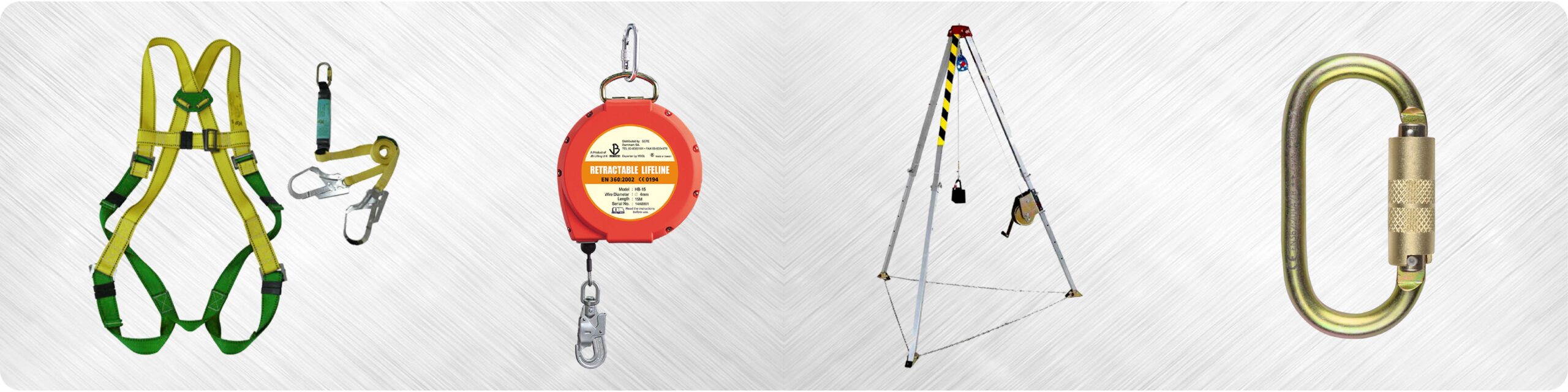
Fall Protection: Save Lives
Falls are a leading cause of workplace injuries and fatalities, particularly in industries like construction, manufacturing, and warehousing. Implementing a comprehensive fall protection plan is not just a regulatory requirement; it is a moral imperative to protect workers and ensure their safety. A well-designed fall protection plan can significantly reduce the risk of falls, minimize injuries, and save lives. At Safe and Secure Trading Company (SSTC), we understand the critical importance of effective fall protection and are committed to helping businesses create safer work environments. This guide provides a step-by-step approach to developing and implementing a robust fall protection plan that complies with OSHA regulations and promotes a culture of safety.
The Evolving Landscape of Fall Protection
The landscape of fall protection is constantly evolving, driven by technological advancements, regulatory changes, and a growing awareness of the human and financial costs associated with falls. Keeping abreast of these developments is crucial for maintaining a safe and compliant workplace.
Understanding the Rising Costs of Fall-Related Incidents
Falls are expensive. The costs extend far beyond immediate medical bills and workers’ compensation claims. We’ve seen firsthand the devastating consequences of inadequate fall protection.
- Direct and indirect costs associated with falls: The direct costs of a fall include medical expenses, workers’ compensation payments, and potential legal fees. Indirect costs can be even more substantial, encompassing lost productivity, damage to equipment, increased insurance premiums, and the cost of training replacement workers. According to the National Safety Council, the average cost per workers’ compensation claim related to falls is around $40,000, but this can easily escalate into hundreds of thousands of dollars for severe injuries or fatalities.
- The impact of falls on company reputation and morale: A serious fall-related incident can severely damage a company’s reputation, leading to a loss of customer trust and difficulty attracting and retaining skilled employees. Employees may feel unsafe and demoralized, leading to decreased productivity and increased turnover. A strong fall protection plan demonstrates a commitment to employee safety, which can enhance morale and improve the company’s public image.
- Rising insurance premiums due to increased fall-related claims: Insurance companies closely monitor a company’s safety record, and a history of fall-related claims will almost certainly lead to higher premiums. Implementing a proactive fall protection plan can help reduce the frequency and severity of falls, which in turn can help control insurance costs. We’ve observed that companies with robust safety programs often receive more favorable insurance rates.
New OSHA Regulations and Enforcement Trends
OSHA (Occupational Safety and Health Administration) is continually updating its safety regulations and increasing its enforcement efforts to protect workers from fall hazards. Staying informed about these changes is essential for compliance and preventing costly penalties.
- Overview of recent changes to OSHA’s fall protection standards: OSHA regularly updates its fall protection standards to reflect new technologies, best practices, and emerging hazards. Recent changes may include revisions to the requirements for specific types of fall arrest systems, updated guidance on hazard assessment, and clarifications on the responsibilities of employers and employees. Keeping up with these changes requires ongoing training and a commitment to continuous improvement.
- Increased frequency and severity of OSHA inspections and penalties: OSHA has increased the frequency of its workplace inspections, particularly in high-risk industries like construction. Penalties for safety regulations violations have also increased significantly, making it more important than ever for companies to prioritize fall protection and compliance. Failure to comply with OSHA standards can result in substantial fines, legal action, and even criminal charges in cases of willful negligence.
- How companies can proactively prepare for OSHA compliance: Proactive preparation for OSHA compliance involves several key steps. First, conduct a thorough hazard assessment to identify all potential fall hazards in the workplace. Second, develop and implement a comprehensive fall protection plan that addresses these hazards. Third, provide comprehensive safety training to all employees who may be exposed to fall hazards. Fourth, regularly inspect and maintain fall protection equipment. Finally, stay up-to-date with the latest OSHA regulations and guidance.
Creating a Robust Fall Protection Plan: A Step-by-Step Guide
Creating a comprehensive fall protection plan requires a systematic approach that addresses all aspects of fall prevention, from hazard assessment to equipment maintenance. SSTC’s experience shows that a detailed, well-implemented plan dramatically reduces workplace safety risks.
Step 1: Conducting a Comprehensive Hazard Assessment
The first step in creating an effective fall protection plan is to conduct a thorough hazard assessment to identify all potential fall hazards in the workplace. This assessment should be conducted by a qualified individual with expertise in fall protection.
- Identifying potential fall hazards in the workplace (e.g., unprotected edges, holes, slippery surfaces): Common fall hazards include unprotected edges, holes in floors or roofs, slippery surfaces, unstable work platforms, ladders, scaffolds, and elevated machinery. The hazard assessment should also consider less obvious hazards, such as uneven terrain, cluttered walkways, and inadequate lighting. Pay special attention to areas where employees frequently work at heights or where fall hazards are known to exist.
- Using checklists and technology to improve hazard identification: Checklists can be a valuable tool for ensuring that all potential fall hazards are identified during the hazard assessment. Technology can also play a role, with tools such as drones, laser scanners, and mobile apps being used to identify and document fall hazards. For example, drones can be used to inspect roofs and other hard-to-reach areas, while laser scanners can create detailed 3D models of the workplace to identify potential fall hazards.
- Prioritizing hazards based on severity and frequency: Once all potential fall hazards have been identified, they should be prioritized based on their severity and frequency. High-severity, high-frequency hazards should be addressed immediately, while low-severity, low-frequency hazards can be addressed later. Use a risk matrix to help prioritize hazards. This matrix plots the likelihood of an incident against the potential severity of the resulting injury.
Step 2: Implementing Engineering Controls
Engineering controls are physical changes to the workplace that eliminate or reduce fall hazards. These controls are the most effective way to prevent falls, as they remove the hazard entirely or significantly reduce the risk of a fall occurring.
- Installing guardrails, safety nets, and other physical barriers: Guardrails are a common and effective engineering control for preventing falls from elevated surfaces. Safety nets can be used to catch workers who fall from heights, while other physical barriers, such as covers for holes and barriers around hazardous equipment, can also help prevent falls. We once assisted a client in Dubai who significantly reduced their fall risk by installing guardrails around all open edges on their rooftop maintenance platforms.
- Designing safer work platforms and access points: Work platforms should be designed to provide a stable and secure working surface, with adequate space for workers to move around safely. Access points, such as ladders and stairs, should be designed to be easily accessible and to minimize the risk of slips, trips, and falls. Features like non-slip surfaces, handrails, and adequate lighting can greatly improve safety.
- Evaluating the effectiveness of engineering controls: After engineering controls have been implemented, it is important to evaluate their effectiveness to ensure that they are adequately protecting workers from fall hazards. This evaluation should include visual inspections, employee feedback, and, if necessary, testing to verify that the controls are functioning as intended. Any deficiencies should be promptly addressed.
Step 3: Developing Safe Work Practices
Safe work practices are procedures and policies that employees must follow to minimize the risk of falls. These practices should be clearly documented and communicated to all employees.
- Creating detailed procedures for working at heights: Detailed procedures should be developed for all tasks that involve working at heights. These procedures should specify the fall protection equipment required, the steps to be taken to ensure worker safety, and the emergency procedures to be followed in the event of a fall. We’ve found that detailed, task-specific procedures are far more effective than generic safety regulations.
- Implementing a permit-to-work system for high-risk activities: A permit-to-work system requires that a permit be obtained before any high-risk activity, such as working on a scaffold or near an unprotected edge, can begin. The permit should specify the hazards involved, the fall protection measures required, and the names of the workers authorized to perform the task. This system ensures that all necessary precautions are taken before work begins.
- Ensuring proper housekeeping and maintenance to prevent slips and trips: Slips and trips are a common cause of falls, so it is important to maintain a clean and orderly workplace. This includes keeping floors free of debris, spills, and obstructions; promptly repairing any damaged surfaces; and providing adequate lighting. Regular inspections and maintenance are essential for preventing slips and trips.
Step 4: Providing Comprehensive Training
Comprehensive safety training is essential for ensuring that employees understand fall hazards, know how to use fall protection equipment properly, and follow safe work practices. Safety training should be provided to all employees who may be exposed to fall hazards, and it should be repeated regularly to reinforce key concepts.
- Training employees on hazard recognition, fall prevention techniques, and the proper use of PPE: Safety training should cover topics such as hazard recognition, fall prevention techniques, the proper use of PPE, and emergency procedures. Employees should be taught how to identify potential fall hazards, how to select and use the appropriate fall protection equipment, and how to respond in the event of a fall. Hands-on training is particularly effective.
- Documenting all training activities and maintaining accurate records: All safety training activities should be documented, and accurate records should be maintained. These records should include the names of the employees who were trained, the date of the training, the topics covered, and the name of the trainer. These records can be used to demonstrate compliance with OSHA requirements and to track the effectiveness of the training program.
- Offering refresher training to reinforce key concepts: Refresher training should be offered regularly to reinforce key concepts and to keep employees up-to-date on the latest safety regulations and best practices. Refresher training can be provided in a variety of formats, such as toolbox talks, online courses, and hands-on demonstrations. The frequency of refresher training should be determined based on the risk level of the job and the employees’ performance.
Step 5: Selecting and Maintaining Personal Protective Equipment (PPE)
Personal protective equipment (PPE), such as harnesses, lanyards, and safety nets, is an important part of a fall protection plan. However, PPE should only be used as a last resort, after engineering controls and safe work practices have been implemented.
- Choosing the right harnesses, lanyards, and other fall protection equipment: The selection of PPE should be based on a thorough hazard assessment and should take into account the specific needs of the job and the workers involved. Harnesses should be properly fitted to each worker, and lanyards should be of the appropriate length and type for the task. Safety nets should be installed and maintained according to the manufacturer’s instructions.
- Regularly inspecting and maintaining PPE to ensure its effectiveness: PPE should be regularly inspected to ensure that it is in good condition and functioning properly. Harnesses and lanyards should be inspected for damage, wear, and tear, and safety nets should be inspected for holes or tears. Any damaged or worn-out equipment should be replaced immediately.
- Establishing a system for replacing damaged or worn-out equipment: A system should be established for replacing damaged or worn-out equipment. This system should include procedures for reporting damaged equipment, obtaining replacement equipment, and disposing of damaged equipment properly. Employees should be trained on how to use this system.
How a Fall Protection Plan Reduces Liability
A comprehensive fall protection plan not only protects workers from falls but also reduces a company’s liability in the event of a fall-related incident. By demonstrating a commitment to workplace safety and complying with safety regulations, companies can minimize their legal risks and financial exposure.
Minimizing Legal Risks and Financial Exposure
A well-documented fall protection plan can significantly reduce a company’s legal risks and financial exposure in the event of a fall.
- How a well-documented plan can protect against lawsuits and legal claims: A well-documented fall protection plan demonstrates that a company has taken reasonable steps to protect its workers from fall hazards. This can be a valuable defense against lawsuits and legal claims in the event of a fall-related incident. The plan should include records of hazard assessments, safety training, equipment inspections, and any other relevant information.
- The importance of complying with OSHA regulations to avoid penalties: Compliance with OSHA safety regulations is essential for avoiding penalties and minimizing legal risks. OSHA violations can result in substantial fines, legal action, and even criminal charges in cases of willful negligence. A comprehensive fall protection plan helps ensure compliance with OSHA standards and reduces the risk of violations.
- Case studies illustrating the legal and financial consequences of inadequate fall protection: Numerous case studies illustrate the legal and financial consequences of inadequate fall protection. These cases often involve substantial fines, legal settlements, and damage to the company’s reputation. In some cases, companies have even been forced to shut down due to repeated safety regulations violations.
Demonstrating Due Diligence and a Commitment to Safety
A proactive fall protection plan demonstrates due diligence and a commitment to safety, which can improve employee morale, reduce turnover, and enhance the company’s reputation.
- How a proactive safety culture can improve employee morale and reduce turnover: A proactive safety culture demonstrates that a company values its employees and is committed to protecting their health and safety. This can improve employee morale, reduce turnover, and attract and retain skilled workers. Employees are more likely to be engaged and productive when they feel safe and valued.
- Communicating the company’s commitment to safety to stakeholders: A company’s commitment to safety should be communicated to all stakeholders, including employees, customers, suppliers, and investors. This communication can take many forms, such as safety regulations policies, safety training programs, and public statements. Demonstrating a commitment to safety can enhance the company’s reputation and build trust with stakeholders.
- The value of obtaining safety certifications and accreditations: Obtaining safety regulations certifications and accreditations, such as ISO 45001, can further demonstrate a company’s commitment to safety and enhance its credibility. These certifications require a rigorous audit of the company’s safety management system and demonstrate that the company meets internationally recognized standards for workplace safety.
The Latest Innovations in Fall Protection Technology
Technology is playing an increasingly important role in fall protection, with new innovations emerging that can help prevent falls and improve worker safety.
Smart PPE and Wearable Sensors
Smart PPE and wearable sensors are revolutionizing fall protection by providing real-time monitoring of worker location and movement.
- Using technology to monitor employee location and movement: Wearable sensors can track employee location and movement in real-time, providing valuable information about their proximity to fall hazards. This information can be used to trigger alerts if an employee enters a hazardous area or exhibits unsafe behavior. This is especially helpful in large construction sites.
- Real-time alerts for fall hazards and unsafe behaviors: Smart PPE can provide real-time alerts to workers and supervisors when fall hazards are detected or when workers exhibit unsafe behaviors, such as removing their harness or working too close to an unprotected edge. These alerts can help prevent falls before they occur.
- Data analytics for identifying trends and improving safety performance: Data collected from smart PPE and wearable sensors can be analyzed to identify trends and patterns that can be used to improve safety performance. For example, data can be used to identify areas where fall hazards are most prevalent or to track the effectiveness of fall prevention measures.
Virtual Reality (VR) Training for Fall Prevention
Virtual reality (VR) training is an innovative approach to safety training that provides realistic training scenarios without the risk of injury.
- Using VR simulations to provide realistic training scenarios: VR simulations can be used to create realistic training scenarios that allow employees to practice fall prevention techniques in a safe and controlled environment. These simulations can replicate a variety of fall hazards and allow employees to experience the consequences of their actions without actually being injured.
- Improving employee understanding of fall hazards and prevention techniques: VR training can improve employee understanding of fall hazards and prevention techniques by providing a more immersive and engaging learning experience. Employees are more likely to retain information when they are actively involved in the learning process.
- Reducing the risk of injuries during training: VR training eliminates the risk of injuries during training, as employees are not exposed to actual fall hazards. This allows them to practice fall prevention techniques without fear of getting hurt.
Measuring the Success of Your Fall Protection Plan
Measuring the success of your fall protection plan is essential for ensuring that it is effectively protecting workers from falls and reducing liability. This involves tracking key performance indicators (KPIs) and regularly reviewing and updating the plan.
Tracking Key Performance Indicators (KPIs)
Tracking KPIs provides valuable insights into the effectiveness of your fall protection plan.
- Monitoring the number of fall-related incidents and injuries: The number of fall-related incidents and injuries is a key indicator of the effectiveness of a fall protection plan. A successful plan should result in a significant reduction in the number of falls and injuries over time.
- Tracking the completion of safety training and inspections: Tracking the completion of safety training and inspections ensures that employees are properly trained and that equipment is being regularly inspected. A high completion rate indicates that the fall protection plan is being implemented effectively.
- Measuring the effectiveness of engineering controls and PPE: The effectiveness of engineering controls and PPE should be measured to ensure that they are adequately protecting workers from fall hazards. This can involve conducting regular inspections, soliciting employee feedback, and, if necessary, testing to verify that the controls are functioning as intended.
Regularly Reviewing and Updating the Plan
A fall protection plan should be regularly reviewed and updated to ensure that it remains effective and compliant with the latest safety regulations and best practices.
- Conducting periodic audits to identify areas for improvement: Periodic audits should be conducted to identify areas where the fall protection plan can be improved. These audits should involve a thorough review of the plan, as well as interviews with employees and inspections of the workplace.
- Incorporating lessons learned from past incidents: Lessons learned from past incidents should be incorporated into the fall protection plan to prevent similar incidents from occurring in the future. This involves conducting a thorough investigation of each incident to identify the root causes and implementing corrective actions.
- Staying up-to-date with the latest safety regulations and best practices: It is essential to stay up-to-date with the latest safety regulations and best practices to ensure that the fall protection plan remains compliant and effective. This involves regularly reviewing OSHA safety regulations, attending industry conferences, and subscribing to safety publications.
| Key Performance Indicator (KPI) |
Description |
How to Measure |
Target |
| Number of Fall-Related Incidents |
Total number of falls resulting in injury or near-miss. |
Track all reported fall incidents and near-misses. |
Reduce by 20% each 2026. |
| Completion Rate of Safety Training |
Percentage of employees who have completed required fall protection training. |
Divide number of trained employees by total employees needing training. |
100% completion within 3 months of hire/promotion. |
| Frequency of Equipment Inspections |
Regularity of inspections for fall protection equipment (harnesses, lanyards, etc.). |
Track inspection dates and equipment status. |
Monthly inspections documented. |
| Time to Correct Hazards |
Time taken to rectify identified fall hazards. |
Measure time from hazard identification to resolution. |
Average resolution time under 72 hours. |
| Employee Feedback Score |
Employee perception of safety measures in place. |
Conduct quarterly anonymous surveys. |
Achieve an average score of 4 out of 5. |
> “Investing in fall protection is not just about compliance; it’s about investing in your most valuable asset: your people.” – John Smith, Lead Safety Inspector
Fall Protection Checklist:
- ✅ Conduct a comprehensive hazard assessment.
- ✅ Implement engineering controls.
- ✅ Develop safe work practices.
- ✅ Provide comprehensive training.
- ✅ Select and maintain PPE.
- ✅ Regularly review and update the plan.
Conclusion
By following these steps, you can create a robust fall protection plan that protects your workers from falls, reduces your company’s liability, and promotes a culture of safety. We, at Safe and Secure Trading Company, are dedicated to helping businesses like yours achieve these goals. Your team has successfully developed a framework for preventing falls and minimizing workplace injuries.
FAQ Section
Q: What is a “qualified person” as defined by OSHA in relation to fall protection?
A: According to OSHA, a “qualified person” is someone with a recognized degree, certificate, or professional standing, or someone who has extensive knowledge, training, and experience and has demonstrated the ability to solve problems related to the subject matter, the work, or the project. In the context of fall protection, a qualified person is someone who is capable of identifying fall hazards and implementing appropriate fall protection measures.
Q: How often should fall protection training be conducted?
A: Safety Training should be conducted initially upon hiring or assignment to tasks involving fall hazards, and then periodically as needed. OSHA recommends refresher training whenever there are changes in the workplace, equipment, procedures, or when an employee’s performance indicates a need for additional training. At a minimum, refresher training should be conducted annually.
Q: What are the key differences between fall arrest and fall restraint systems?
A: A fall arrest system is designed to stop a worker who has already fallen, minimizing the impact force and preventing them from hitting the ground. It typically includes a harness, lanyard, and an anchor point. A fall restraint system, on the other hand, prevents a worker from reaching a fall hazard in the first place. It typically consists of a harness, lanyard, and an anchor point that is positioned to restrict the worker’s movement.
Q: What should be included in a fall protection plan?
A: A comprehensive fall protection plan should include the following elements:
- A detailed hazard assessment that identifies all potential fall hazards in the workplace.
- Engineering controls, such as guardrails and safety nets, to eliminate or reduce fall hazards.
- Safe work practices, such as procedures for working at heights and a permit-to-work system for high-risk activities.
- Comprehensive safety training for all employees who may be exposed to fall hazards.
- PPE, such as harnesses, lanyards, and safety nets, to protect workers from falls.
- Procedures for inspecting and maintaining fall protection equipment.
- A system for reporting and investigating fall-related incidents.
- A plan for regularly reviewing and updating the fall protection plan.
Q: What is the role of personal protective equipment (PPE) in a comprehensive fall protection plan?
A: While engineering controls and safe work practices should be the primary methods of fall prevention, PPE plays a crucial role as a secondary line of defense. PPE, such as harnesses, lanyards, and safety nets, can protect workers in situations where fall hazards cannot be completely eliminated or controlled. However, it is important to remember that PPE is only effective if it is properly selected, used, and maintained.