Geared vs. Plain Trolley: Key Differences
Introduction: Geared vs. Plain – Understanding the Basics
Choosing the right trolley for your lifting needs is essential for ensuring safety, efficiency, and productivity in your workplace. At Safe and Secure Trading Company (SSTC), we understand the importance of selecting the appropriate equipment for each specific task. This article will delve into the key differences between geared and plain trolleys, helping you make an informed decision for your material handling requirements. We will explore their mechanics, applications, and suitability for various industrial environments.
Defining Geared Trolleys: Mechanics and Operation
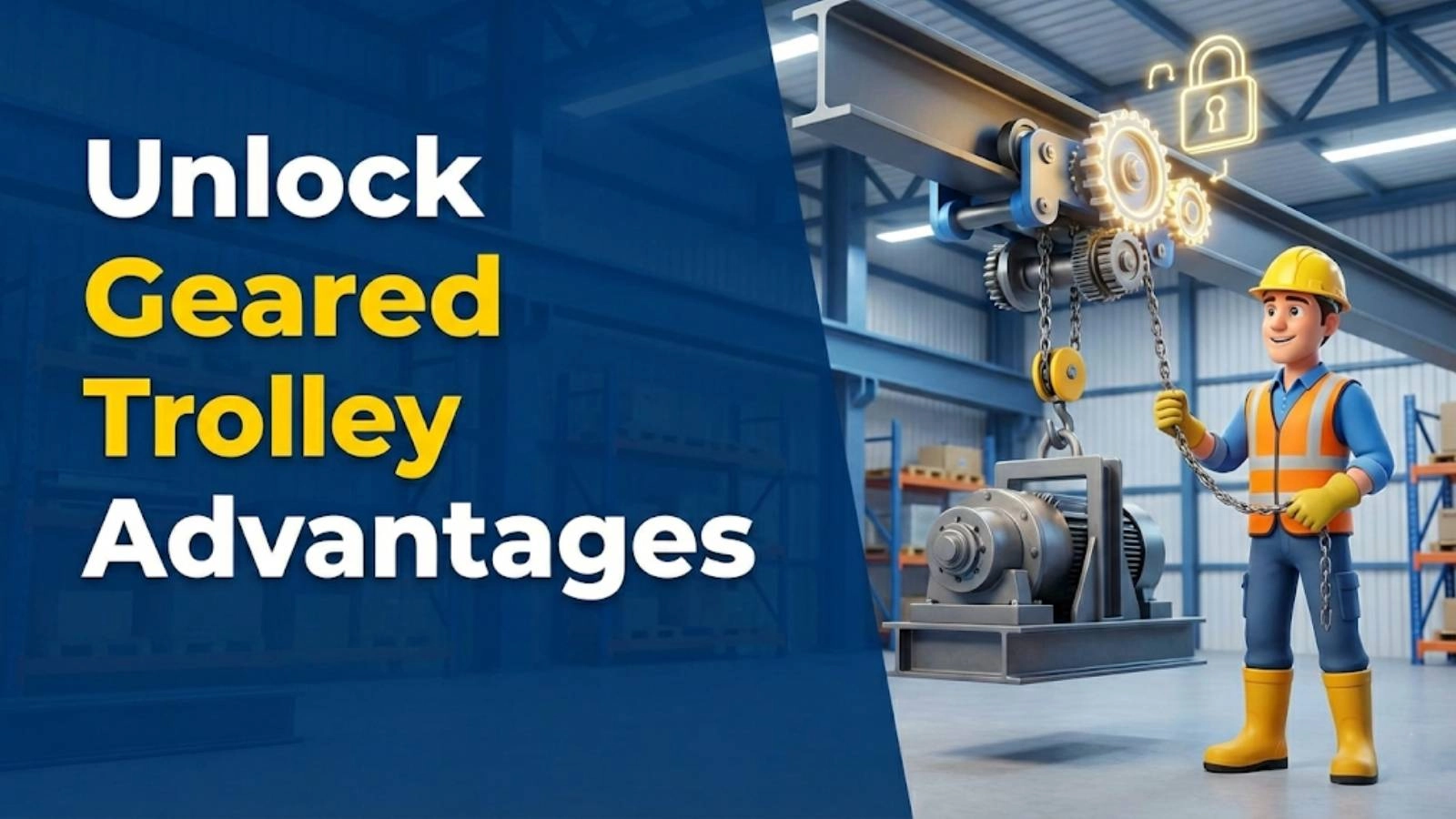
Geared trolleys utilize a gear system to facilitate smooth and controlled movement along a beam. This system typically involves a hand chain that, when pulled, engages a series of gears to precisely move the trolley and its load. The geared mechanism provides a mechanical advantage, allowing operators to move heavy loads with less physical effort than a plain trolley. The gear system also provides more control over the trolley’s movement, which is especially important for precision placement of loads.
Geared trolleys are commonly used in manufacturing plants, workshops, and construction sites where heavy materials need to be moved and positioned accurately. They are also ideal for applications that require frequent lifting and moving of heavy items, as the geared mechanism reduces operator fatigue and increases efficiency. These trolleys are often used in conjunction with chain hoists or other lifting devices to create a complete lifting and moving system.
[IMAGE: Close-up of a geared trolley showing the gear mechanism and hand chain.]
Defining Plain Trolleys: Simplicity and Functionality
Plain trolleys, also known as push trolleys, operate on a much simpler principle. They rely on manual pushing or pulling to move along a beam. These trolleys do not have a gear system; instead, they utilize wheels or rollers to travel along the beam’s flange. The operator must apply direct force to move the trolley and its load, which can be more physically demanding than using a geared trolley, especially with heavier loads.
Plain trolleys are commonly used in applications where loads are relatively light, movement is infrequent, or precise positioning is not critical. Warehouses, small workshops, and maintenance facilities are common environments for plain trolleys. Their simplicity makes them a cost-effective option for occasional lifting and moving tasks. They are a reliable, low-maintenance solution for basic material handling needs.
[IMAGE: A plain trolley attached to a beam, ready for manual movement.]
The Core Question: Which Trolley Type Suits Your Needs?
Selecting the right trolley type depends on several factors, including load capacity, the operating environment, and the frequency of use. Geared trolleys offer greater mechanical advantage and control, making them suitable for heavy loads and frequent use. Plain trolleys, on the other hand, are a more economical choice for lighter loads and less frequent applications.
Matching the right trolley to the job is crucial for both safety and efficiency. Using an inadequate trolley can lead to accidents, equipment damage, and worker injuries. Therefore, it’s essential to carefully assess your specific requirements and choose a trolley that meets those needs. As SSTC, we advise our clients to consider all relevant factors to ensure they are using the most appropriate equipment for their operations.
Deep Dive: Mechanical Differences and Implications
The mechanical differences between geared and plain trolleys significantly impact their performance and suitability for various applications. Understanding these differences is essential for selecting the best trolley for your specific needs. We’ll examine the principles behind gear ratios, the effort required for operation, and the resulting speed and precision.
Gear Ratios and Mechanical Advantage in Geared Trolleys
The gear ratio in a geared trolley determines the mechanical advantage it provides. A higher gear ratio means that less force is required to move a given load, but the hand chain must be pulled a greater distance. Conversely, a lower gear ratio requires more force but less chain movement.
This mechanical advantage is crucial when handling heavy loads. By using a geared trolley, operators can move substantial weights with minimal physical strain, reducing the risk of injury and improving overall efficiency. For many of our clients here in Dammam, we’ve seen that the benefits of mechanical advantage significantly improve productivity and workplace safety.
Calculating the efficiency of different gear ratios involves considering factors such as friction and the weight of the trolley itself. While a higher gear ratio provides greater mechanical advantage, it can also introduce more friction, which reduces overall efficiency. It is important to choose a gear ratio that balances force reduction and efficiency for optimal performance.
Manual Operation vs. Powered Assistance: Analyzing Effort
Operating a plain trolley requires direct physical effort to push or pull the load along the beam. This can be strenuous, especially when dealing with heavier loads or longer distances. The amount of force required depends on the weight of the load and the rolling resistance of the trolley’s wheels.
Geared trolleys, on the other hand, reduce the physical effort needed through their gear mechanism. The operator pulls on a hand chain, which turns the gears and moves the trolley. This provides a mechanical advantage, allowing for easier movement of heavy loads.
Data suggests that the average force exertion required to move a 1-ton load with a plain trolley can be significantly higher than with a geared trolley. This difference in physical effort can lead to operator fatigue and potential strain injuries when using plain trolleys for heavy or frequent lifting. Therefore, geared trolleys are often the preferred choice for applications requiring frequent or heavy lifting.
Speed and Precision: A Comparative Analysis
Plain trolleys can generally be moved more quickly than geared trolleys, provided the load isn’t too heavy for manual operation. The operator can simply push or pull the trolley along the beam at a comfortable pace. However, controlling the speed and precision of movement can be challenging, especially with heavier loads.
Geared trolleys, while typically slower in overall speed due to the gear reduction, offer greater precision and control. The operator can precisely position the load by carefully pulling the hand chain, allowing for fine adjustments and accurate placement. This precision is particularly important in manufacturing and assembly operations where components must be aligned with exactness.
[IMAGE: A graph comparing the speed of a geared trolley versus a plain trolley under various load weights.]
Load Capacity and Weight Distribution: Key Considerations
Understanding load capacity and weight distribution is paramount when selecting and using trolleys. Safe Working Load (SWL) is a critical factor to consider, and proper weight distribution is essential for stability and safety.
Understanding Safe Working Load (SWL) and its Importance
Safe Working Load (SWL) refers to the maximum weight a trolley is designed to safely support. This rating is typically marked on the trolley and should never be exceeded. Exceeding the SWL can lead to equipment failure, accidents, and serious injuries. Always verify the SWL rating before operating any trolley. Overloading is a major cause of accidents. At SSTC, we always emphasize this in our safety training.
“Always verify the SWL rating before operating any trolley. Overloading is a major cause of accidents.” – Safety Engineering Journal
The SWL takes into account the trolley’s material strength, design, and intended use. It provides a safety margin to account for variations in load weight, dynamic forces, and potential wear and tear. Ignoring the SWL is a serious safety violation that can have catastrophic consequences.
Comparing Load Capacity Ranges for Geared and Plain Trolleys
Both geared and plain trolleys are available in a wide range of load capacities to suit various applications. Plain trolleys typically range from 500 lbs to 6 tons, while geared trolleys can handle loads from 1 ton to 10 tons or more. The specific load capacity will depend on the trolley’s construction, materials, and design.
Factors affecting load capacity include the type of steel used, the thickness of the trolley’s components, and the design of the wheel or roller system. Heavier-duty trolleys will be constructed from stronger materials and have more robust designs to handle larger loads. It’s crucial to select a trolley with a load capacity that meets or exceeds your maximum anticipated load weight.
Weight Distribution and Stability Analysis
Proper weight distribution is essential for maintaining trolley stability and preventing accidents. An unevenly distributed load can cause the trolley to tilt, slip, or even fall off the beam. Always ensure that the load is centered on the trolley and that the weight is evenly distributed across the trolley’s wheels or rollers.
Geared trolleys and plain trolleys have different weight distribution characteristics due to their designs. Geared trolleys, with their more complex mechanisms, may have a slightly different center of gravity than plain trolleys. However, the principles of proper weight distribution remain the same for both types. Tips for ensuring proper load balancing include using lifting slings to center the load, adjusting the load position on the trolley, and avoiding sudden movements that can shift the load.
Environmental Factors and Application Suitability
The environment in which a trolley operates can significantly impact its performance and longevity. Corrosion resistance, temperature sensitivity, and cleanroom compatibility are important considerations when selecting a trolley for a specific application. At SSTC, we always take the time to understand our client’s application before recommending a solution.
Corrosion Resistance and Material Selection
Different trolley materials offer varying degrees of corrosion resistance. Steel trolleys are commonly used in general industrial applications, but they are susceptible to rust and corrosion in humid or corrosive environments. Stainless steel trolleys offer superior corrosion resistance and are ideal for applications in food processing plants, chemical facilities, and marine environments.
The suitability of each material depends on the specific environmental conditions. For example, a steel trolley may be adequate in a dry, indoor environment, while a stainless steel trolley is essential in a coastal or offshore setting. Other factors to consider include exposure to chemicals, salt spray, and extreme temperatures.
Temperature Sensitivity and Operational Limits
Temperature can affect trolley performance and longevity. Extreme temperatures can cause materials to expand or contract, potentially affecting the trolley’s fit and function. High temperatures can also degrade lubricants, leading to increased friction and wear.
Geared and plain trolleys have different operational temperature limits based on their materials and design. Typically, the operational temperature range for most trolleys is between -20°C and +50°C. However, some specialized trolleys are designed to operate in extreme temperatures outside this range. It’s important to consult the manufacturer’s specifications to determine the temperature limits for a specific trolley model.
Cleanroom Compatibility and Special Applications
Cleanroom environments require specialized equipment that minimizes particle generation and contamination. Standard trolleys may not be suitable for cleanroom use due to their potential to shed particles from wheels, gears, and other components. Cleanroom-compatible trolleys are designed with special materials and features to minimize contamination risks.
These trolleys typically use non-shedding wheels, sealed bearings, and smooth surfaces to prevent particle accumulation. They may also be constructed from stainless steel or other corrosion-resistant materials to withstand frequent cleaning and sanitization. Special applications may also require specialized trolley designs, such as explosion-proof trolleys for use in hazardous environments.
Safety Features and Operational Risks
Safety is paramount when using trolleys for material handling. Brake systems, chain integrity, and risk assessment are crucial aspects of safe trolley operation. We’ve always made safety our top priority.
Brake Systems and Locking Mechanisms
Brake systems are essential safety features for geared trolleys, preventing unwanted movement of the load. These systems typically consist of a friction brake that engages when the hand chain is released. This prevents the load from creeping or slipping, ensuring precise positioning and preventing accidents.
Locking mechanisms provide an additional layer of safety by securely holding the trolley in place. These mechanisms can be engaged to prevent the trolley from moving, even if the brake is not fully engaged. Plain trolleys lack a dedicated braking system, relying solely on friction and operator control to prevent movement. This lack of braking can increase the risk of accidents, especially when handling heavy loads on inclined surfaces.
Chain Integrity and Maintenance Requirements
The chain in a geared trolley is a critical component that must be regularly inspected for wear, damage, and proper lubrication. A worn or damaged chain can break, causing the load to fall and potentially resulting in serious injuries. Inspecting chain integrity involves checking for stretched links, corrosion, cracks, and other signs of damage.
Recommended maintenance schedules for geared trolley chains typically include regular lubrication to reduce friction and prevent corrosion. The chain should also be periodically cleaned to remove dirt and debris that can accelerate wear. Replacing a worn or damaged chain is essential for maintaining the trolley’s safety and reliability.
Risk Assessment and Safe Operating Procedures
Identifying potential hazards associated with each trolley type is crucial for developing safe operating procedures. Risk assessment involves evaluating the likelihood and severity of potential accidents, such as overloading, dropping the load, or collisions with other objects.
Developing safe operating procedures includes guidelines for proper trolley selection, pre-use inspections, safe lifting techniques, and emergency procedures. Operators should be trained on these procedures and required to follow them at all times. For many of our clients here in Dammam, we’ve seen the importance of properly assessing workplace hazards before using these trolleys. Regular safety audits can help identify potential hazards and ensure that safe operating procedures are being followed.
Installation and Maintenance: A Practical Guide
Proper installation and maintenance are crucial for ensuring the safe and reliable operation of trolleys. This includes selecting the right beam, following installation procedures, and performing regular inspections and preventative maintenance.
Proper Beam Selection and Compatibility
Matching the trolley to the appropriate beam size and type is essential for ensuring proper support and load-bearing capacity. The beam must be strong enough to support the combined weight of the trolley, the load, and any dynamic forces that may be applied. The beam’s flange width and thickness must also be compatible with the trolley’s wheels or rollers.
Ensuring proper beam support involves verifying that the beam is securely attached to the building structure and that it is free from defects or damage. The beam should be inspected regularly for signs of corrosion, bending, or cracking. If any damage is detected, the beam should be repaired or replaced before using the trolley.
Installation Procedures: Step-by-Step Instructions
Installing both geared and plain trolleys requires careful attention to detail and adherence to manufacturer’s guidelines. The installation process typically involves attaching the trolley to the beam, adjusting the wheels or rollers for proper fit, and verifying that the trolley moves smoothly along the beam.
Detailed instructions for installing both geared and plain trolleys can be found in the manufacturer’s manuals. These manuals provide step-by-step guidance on each aspect of the installation process, including torque specifications, alignment procedures, and safety precautions. Following the manufacturer’s guidelines is essential for ensuring a safe and reliable installation.
Regular Inspection and Preventative Maintenance
Regular inspection and preventative maintenance are crucial for extending trolley lifespan and ensuring safety. Checklists for inspecting trolleys should include items such as wheel condition, brake function (for geared trolleys), chain integrity, and overall structural integrity.
Preventative maintenance tasks may include lubricating wheels and chains, tightening bolts and fasteners, and replacing worn or damaged parts. A well-maintained trolley will operate more smoothly, safely, and reliably, reducing the risk of accidents and downtime.
Cost Analysis: Initial Investment vs. Long-Term Value
When choosing between geared and plain trolleys, it’s essential to consider not only the initial purchase price but also the long-term costs associated with maintenance and replacement. A total cost of ownership (TCO) analysis can help you make an informed decision.
Comparing Purchase Prices for Geared and Plain Trolleys
Plain trolleys generally have a lower initial purchase price compared to geared trolleys. This is due to their simpler design and fewer components. However, the price difference may vary depending on the load capacity, brand, and features. Analyzing the initial purchase costs for different models and load capacities is crucial for making a budget-conscious decision.
While a lower initial price may be attractive, it’s important to consider the long-term costs associated with each type of trolley. A cheaper trolley may require more frequent maintenance or replacement, potentially offsetting the initial cost savings.
Maintenance Costs and Replacement Frequency
Geared trolleys typically have higher maintenance costs compared to plain trolleys due to their more complex mechanisms. This may include the cost of lubricating and replacing chains, repairing brakes, and maintaining gear systems. Plain trolleys, with their simpler design, generally require less maintenance.
Estimating maintenance costs over the trolley’s lifespan involves considering factors such as the frequency of use, the operating environment, and the quality of the trolley’s components. Predicting replacement frequency is also important. A well-maintained trolley will last longer, but eventually, all trolleys will need to be replaced due to wear and tear.
Total Cost of Ownership (TCO) Calculation
Calculating the TCO for each trolley type involves considering all expenses associated with owning and operating the trolley over its lifespan. This includes the initial purchase price, maintenance costs, repair costs, replacement costs, and any downtime costs associated with trolley failure.
By calculating the TCO, you can compare the overall cost-effectiveness of geared and plain trolleys and make an informed decision based on your specific needs and budget. While a plain trolley may have a lower initial cost, a geared trolley may offer a lower TCO over the long term due to its increased durability and reduced maintenance requirements.
Case Studies and Real-World Applications
Real-world examples can illustrate the benefits of choosing the right trolley type for specific applications. Let’s examine a few case studies highlighting the advantages of both geared and plain trolleys.
Geared Trolley in a Manufacturing Environment: A Success Story
In a manufacturing plant, a geared trolley was used to move heavy components along an assembly line. The geared mechanism allowed operators to precisely position the components, improving efficiency and reducing the risk of errors. The mechanical advantage provided by the geared trolley also reduced operator fatigue, leading to increased productivity and fewer workplace injuries. The implementation of the geared trolley significantly improved the plant’s overall efficiency and safety.
Plain Trolley in a Warehouse Setting: A Cost-Effective Solution
In a warehouse setting, a plain trolley was used to occasionally move light loads from one location to another. The plain trolley provided a cost-effective solution for these occasional lifting needs. While it required more physical effort than a geared trolley, the loads were light enough that it wasn’t a significant issue. The plain trolley proved to be a reliable and economical choice for this specific application.
Client Testimony: Choosing the Right Trolley for Specific Workflow
We once worked with a client choosing between a geared trolley and a plain trolley for their metal fabrication shop. They needed to move steel plates of varying sizes and weights. They found the geared trolley was better for their specific workflow because its smooth, controlled movement minimized the risk of damaging the plates and provided the necessary precision for aligning them with welding jigs. The client also appreciated the reduced physical strain on their workers, leading to increased job satisfaction and fewer complaints.
Conclusion: Making the Right Choice for Your Needs
Choosing between a geared and plain trolley depends on several factors, including load capacity, frequency of use, environmental conditions, and budget. Understanding the key differences between these trolley types is essential for making an informed decision.
Summary of Key Differences and Advantages
Geared trolleys offer greater mechanical advantage, allowing for easier movement of heavy loads. They also provide more precise control and are ideal for applications requiring frequent lifting. Plain trolleys are a more economical choice for lighter loads and less frequent applications. They are simple, reliable, and require less maintenance.
Recommendations Based on Specific Requirements
If you need to move heavy loads frequently and require precise positioning, a geared trolley is the best choice. If you only need to move lighter loads occasionally and are looking for a cost-effective solution, a plain trolley may be sufficient. Consider the operating environment, potential hazards, and maintenance requirements when making your decision.
Final Verdict: Geared vs. Plain – Which Trolley Wins?
For heavy, frequent use and high precision: Geared trolleys. For light, occasional use and budget constraints: Plain trolleys. As Safe and Secure Trading Company, we’re committed to providing the best equipment for your needs, and with our expertise, we’re confident you can make the right choice.
FAQ Section
Q: What is the main difference between a geared and a plain trolley?
A: The main difference is that a geared trolley uses a gear system for easier and more controlled movement, while a plain trolley relies on manual pushing or pulling.
Q: When should I use a geared trolley?
A: Use a geared trolley when you need to move heavy loads frequently, require precise positioning, and want to reduce physical strain on operators.
Q: When is a plain trolley the better choice?
A: A plain trolley is a good choice for lighter loads, infrequent use, and situations where budget is a primary concern.
Q: What is SWL and why is it important?
A: SWL stands for Safe Working Load, which is the maximum weight a trolley is designed to safely support. Exceeding the SWL can lead to equipment failure and accidents.
Q: How do I maintain a geared trolley?
A: Regular maintenance for a geared trolley includes lubricating the chain, inspecting for wear and damage, and ensuring the brake system is functioning correctly.
Q: Can I use a plain trolley on an inclined surface?
A: It’s generally not recommended to use a plain trolley on an inclined surface, especially with heavy loads, due to the lack of a braking system.
Q: What materials are trolleys typically made from?
A: Trolleys are typically made from steel or stainless steel, depending on the application and environmental conditions.
Q: How do I choose the right size trolley for my beam?
A: Ensure the trolley’s wheel or roller width is compatible with the beam’s flange width. Consult the manufacturer’s specifications for compatibility information.
Q: Are there special trolleys for cleanroom environments?
A: Yes, cleanroom-compatible trolleys are designed with special materials and features to minimize particle generation and contamination.
Q: What safety precautions should I take when using a trolley?
A: Always verify the SWL, ensure proper weight distribution, inspect the trolley before use, and follow safe operating procedures. Avoid sudden movements and never exceed the trolley’s load capacity.