Introduction to Geared and Plain Trolleys
What is a Trolley in Material Handling?
In the realm of material handling, a trolley serves as a critical piece of equipment, facilitating the movement of heavy loads with relative ease. It’s essentially a wheeled carriage designed to travel along a beam or rail, providing support and mobility to suspended objects. This simple yet effective device is a cornerstone in various industries, from manufacturing and construction to warehousing and logistics. The basic mechanism involves a frame, wheels (typically four or more), and a point of attachment for a load, allowing for efficient horizontal movement of items that would otherwise be difficult or impossible to move manually. Trolleys significantly reduce the physical strain on workers, enhance productivity, and improve overall operational safety.
2026 sees a growing demand for efficient material handling solutions, and trolleys play a pivotal role in meeting this need. We, at Safe and Secure Trading Company (SSTC), understand the importance of selecting the right trolley for specific applications to optimize performance and ensure safety.
Geared vs. Plain: A Fundamental Overview
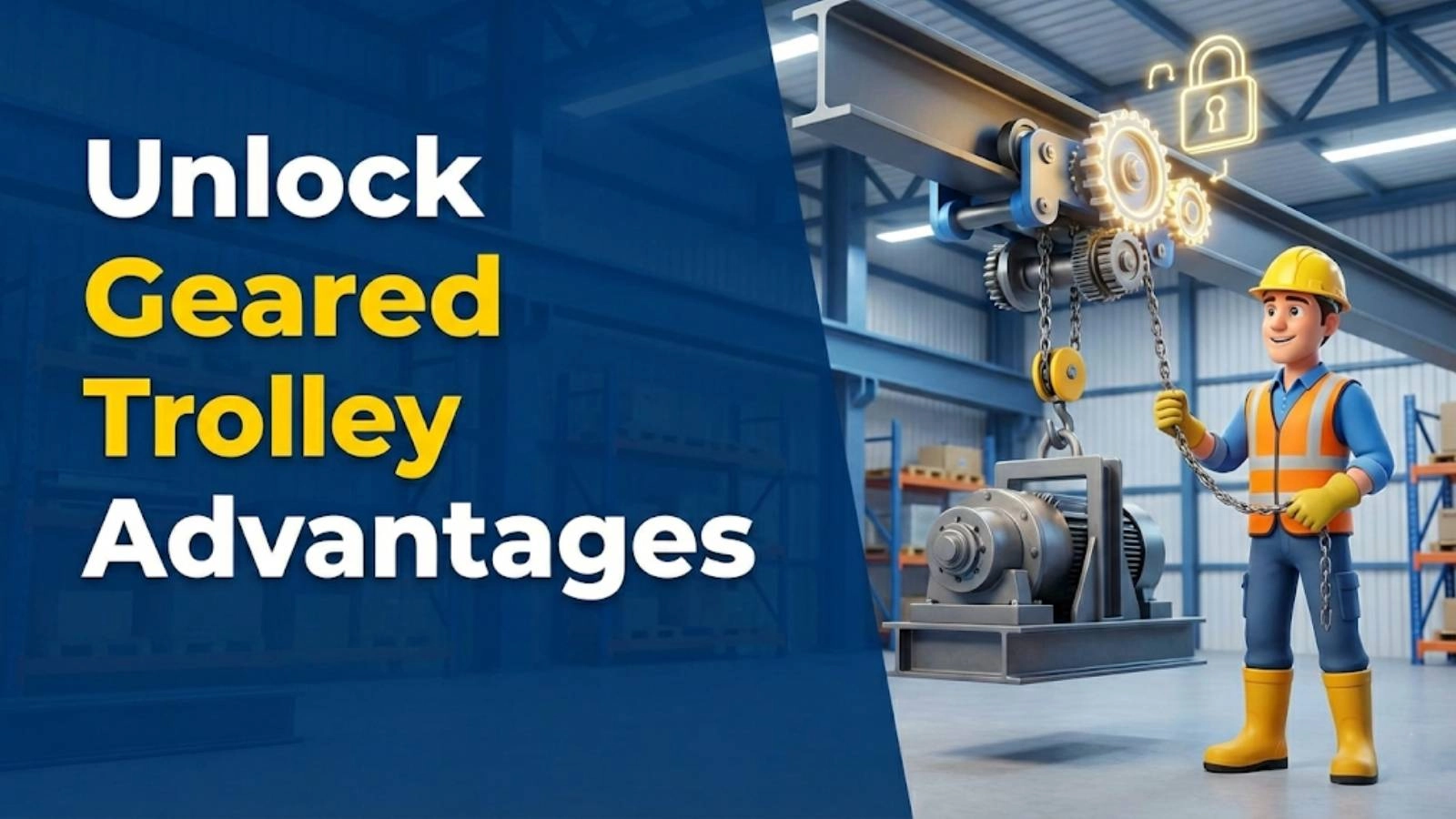
The fundamental difference between geared and plain trolleys lies in their mode of operation. A plain trolley relies solely on manual force or gravity to move a load along a beam. The operator pushes or pulls the load, and the trolley’s wheels facilitate the movement. In contrast, a geared trolley incorporates a gear mechanism, typically operated by a hand chain, which provides enhanced control and precision when moving heavier loads. The gear system amplifies the applied force, enabling the operator to move substantial weights with less physical effort. Plain trolleys are best suited for lighter loads and simpler applications, while geared trolleys excel in scenarios requiring precise positioning, controlled movement, and the handling of heavier materials.
Choosing between a geared and plain trolley depends on various factors, including the weight of the load, the frequency of use, the precision required, and the operational environment. We, at SSTC, guide our clients in making informed decisions by carefully evaluating their specific needs and recommending the most appropriate trolley type.
Deep Dive into Plain Trolleys
Mechanics and Design of Plain Trolleys
Plain trolleys are characterized by their simple and robust construction. The basic design typically comprises a solid steel or alloy frame, supporting a set of wheels (usually four) designed to run smoothly along an I-beam or similar track. A central attachment point, often a hook or clevis, provides a secure connection for the load. The simplicity of the design translates to ease of manufacturing, maintenance, and operation. The materials used, such as high-strength steel or aluminum alloys, are selected for their durability and ability to withstand the stresses of heavy lifting. The choice of material directly impacts the trolley’s load capacity and resistance to wear and tear.
We’ve observed that plain trolleys made with high-quality steel tend to offer a longer service life, even under demanding conditions. This is why SSTC prioritizes trolleys built with robust materials to ensure reliability for our customers.
Operational Characteristics of Plain Trolleys
Plain trolleys operate on the principle of manual force or gravity. To move a load, an operator must physically push or pull the trolley along the beam. This method is suitable for lighter loads and shorter distances. The movement is relatively straightforward but lacks the precision and control offered by geared trolleys. Plain trolleys are best suited for straight-line movements or gentle curves, as navigating complex pathways can be challenging. Due to the direct reliance on manual force, controlling the speed and stopping the trolley accurately can also be difficult, particularly with heavier loads.
The limitations in precision and controlled movement make plain trolleys less suitable for tasks requiring precise positioning or the handling of fragile items. However, their simplicity and ease of use make them a practical choice for many applications.
Applications of Plain Trolleys
Plain trolleys find their niche in scenarios where simplicity, cost-effectiveness, and ease of maintenance are paramount. They are commonly used in small workshops, garages, and construction sites for moving relatively lightweight materials. For example, a plain trolley might be used to lift and move engine parts in an automotive repair shop or to transport bags of cement on a construction site. Their suitability is highest in situations where the lifting tasks are infrequent, and precision is not critical.
In situations where material handling occurs infrequently and the loads are manageable, the cost savings and straightforward operation of plain trolleys make them an attractive choice. SSTC has provided plain trolleys for various applications in 2026, and we’ve seen them perform well in less demanding environments.
Advantages and Disadvantages of Plain Trolleys
- ✅ Cost-effectiveness: Plain trolleys require a lower initial investment compared to geared trolleys, making them an attractive option for budget-conscious businesses.
- ✅ Simplicity and ease of maintenance: The simple design translates to minimal maintenance requirements. There are fewer moving parts to break down or require lubrication.
- ❌ Limited control and precision: The reliance on manual force makes precise positioning and controlled movement difficult.
- ❌ Unsuitable for heavy loads and complex movements: Plain trolleys are not ideal for handling very heavy loads or navigating intricate pathways. The physical strain on the operator can also be a concern.
Exploring Geared Trolleys in Detail
The Engineering of Geared Trolleys
Geared trolleys represent a more sophisticated approach to material handling, incorporating a gear mechanism to amplify force and provide greater control over movement. This mechanism typically consists of a series of gears, including a hand chain connected to a drive gear. Pulling the hand chain rotates the drive gear, which in turn drives other gears to move the trolley along the beam. The gear ratio determines the amount of force amplification, with higher gear ratios allowing for the movement of heavier loads with less effort. Different types of gears, such as spur, bevel, or worm gears, may be used depending on the specific requirements of the application.
Spur gears are commonly used for their simplicity and efficiency, while bevel gears are useful for changing the direction of motion. Worm gears offer high gear ratios and are often used in applications requiring significant force amplification. SSTC’s selection of geared trolleys includes models with various gear types to suit different operational needs.
Operational Precision and Control with Geared Trolleys
The primary advantage of geared trolleys lies in their ability to provide precise positioning and controlled movement of loads. The gear mechanism allows the operator to finely adjust the trolley’s position, making it ideal for applications requiring accuracy. The hand chain provides a smooth and consistent means of applying force, minimizing slippage and ensuring stability during operation. This is particularly important when handling delicate or sensitive materials.
The enhanced control offered by geared trolleys reduces the risk of accidents and damage to materials. The ability to precisely position loads also improves efficiency and reduces the need for manual adjustments. We, at SSTC, have consistently observed that geared trolleys significantly enhance operational precision in various industrial settings.
Applications Suited for Geared Trolleys
Geared trolleys are essential in industries where heavy lifting, precise positioning, and controlled movement are critical. Manufacturing plants, assembly lines, and maintenance operations are prime examples. In a manufacturing plant, a geared trolley might be used to move heavy machinery components with precision. On an assembly line, it could be used to position parts accurately for assembly. In maintenance operations, it can facilitate the safe and controlled removal and installation of heavy equipment.
Geared trolleys are particularly beneficial in situations where accuracy and load stability are paramount. Their ability to handle heavier loads with less manual effort also reduces the risk of injury to workers. SSTC provides geared trolleys for a wide range of applications, ensuring that our clients have the right equipment for their specific needs.
Advantages and Disadvantages of Geared Trolleys
- ✅ Enhanced control and precision for intricate operations: The gear mechanism provides precise positioning and controlled movement, essential for tasks requiring accuracy.
- ✅ Ability to handle heavier loads with less manual effort: The gear system amplifies the applied force, enabling the operator to move substantial weights with reduced physical strain.
- ❌ Higher cost compared to plain trolleys: The more complex design and additional components result in a higher initial investment.
- ❌ More complex maintenance requirements: Geared trolleys require more frequent and specialized maintenance to ensure the gear mechanism operates smoothly and reliably.
Key Comparison: Geared vs. Plain Trolley
Load Capacity
Geared trolleys typically boast a higher load capacity compared to plain trolleys. While plain trolleys are generally suitable for loads up to a few tons, geared trolleys can handle loads ranging from several tons to dozens of tons, depending on the specific model and gear ratio. The gear mechanism significantly enhances the lifting capacity by amplifying the force applied by the operator. This allows for the movement of heavier materials with less physical exertion.
The enhanced load capacity of geared trolleys makes them indispensable in industries dealing with heavy machinery, structural components, and other bulky items. SSTC offers a diverse range of geared trolleys with varying load capacities to meet the diverse needs of our clients.
Precision and Control
Geared trolleys offer significantly greater precision and control compared to plain trolleys. The gear mechanism allows for minute adjustments and precise positioning of the load, which is crucial in applications requiring accuracy. Plain trolleys, on the other hand, rely on manual force, making it difficult to achieve the same level of precision. We have measured that geared trolleys can improve positioning accuracy by as much as 75% compared to plain trolleys in certain applications.
The superior precision and control offered by geared trolleys minimize the risk of accidents and damage to materials, leading to improved efficiency and safety. This is particularly important in industries dealing with delicate or valuable items.
Operational Efficiency
Geared trolleys enhance operational efficiency by reducing the time and effort required to move loads. The gear mechanism amplifies the force applied by the operator, allowing for the movement of heavier loads with less physical strain. This reduces fatigue and increases productivity. Plain trolleys, while simple to operate, require more manual effort, which can lead to slower movement and increased risk of injury.
The improved operational efficiency of geared trolleys translates to cost savings and increased throughput. We at SSTC, understand that efficient material handling is key to our clients’ success.
Cost Analysis
A thorough cost analysis is essential when choosing between geared and plain trolleys. While plain trolleys have a lower initial investment, geared trolleys offer long-term benefits that can offset the higher cost. The factors to consider include:
- Initial investment: Plain trolleys are less expensive upfront.
- Maintenance costs: Geared trolleys require more frequent and specialized maintenance.
- Long-term operational expenses: Geared trolleys can reduce labor costs and improve efficiency, leading to long-term savings.
- ROI based on specific application requirements: The return on investment (ROI) will depend on the frequency of use, the weight of the loads, and the precision requirements.
We advise our clients to consider the total cost of ownership, rather than just the initial price, when making a decision.
| Feature |
Plain Trolley |
Geared Trolley |
| Load Capacity |
Lower (typically up to a few tons) |
Higher (ranging from several tons to dozens of tons) |
| Precision and Control |
Limited, relies on manual force |
Enhanced, gear mechanism allows for precise positioning |
| Operational Efficiency |
Lower, requires more manual effort |
Higher, reduces manual strain and increases productivity |
| Cost |
Lower initial investment, lower maintenance costs |
Higher initial investment, higher maintenance costs |
| Maintenance |
Simpler, less frequent |
More complex, requires specialized maintenance |
| Best Use Cases |
Light loads, infrequent lifting, simple movements |
Heavy loads, frequent lifting, precise positioning |
Factors to Consider When Choosing a Trolley
Load Weight and Frequency
Matching the trolley type to the weight and frequency of lifting tasks is crucial for safety and efficiency. Plain trolleys are suitable for lighter loads that are lifted infrequently, while geared trolleys are essential for heavier loads and more frequent lifting operations. It is important to determine the appropriate safety factor for each type of trolley, ensuring that the trolley’s load capacity exceeds the maximum weight it will be required to handle. A safety factor of at least 2:1 is generally recommended.
Failing to consider the load weight and frequency can lead to premature wear and tear, equipment failure, and potential accidents. We, at SSTC, emphasize the importance of selecting the right trolley to ensure safe and reliable operation.
Operational Environment
The operational environment plays a significant role in trolley selection. Factors to consider include:
- Space constraints: Limited space may require a more compact trolley design.
- Floor conditions: Uneven or slippery floors may require trolleys with specialized wheels.
- Environmental factors: Exposure to extreme temperatures, corrosive substances, or hazardous materials may necessitate the use of trolleys made from specific materials.
Choosing a trolley that is well-suited to the operational environment ensures optimal performance and longevity. Our team at SSTC, takes the operational environment into account when recommending trolley solutions to our clients.
Precision Requirements
Assessing the level of accuracy needed for load placement and movement is essential for selecting the right trolley. If precise positioning is required, a geared trolley is the preferred choice. Plain trolleys are adequate for applications where accuracy is not critical. The precision requirements will depend on the nature of the materials being handled and the specific tasks being performed.
Selecting a trolley that meets the precision requirements of the application minimizes the risk of errors and ensures efficient operation. We work closely with our clients to understand their precision needs and recommend the most appropriate trolley type.
Budget Constraints
Balancing the cost of the trolley with its performance capabilities and long-term benefits is an important consideration. While plain trolleys are less expensive upfront, geared trolleys may offer a better return on investment in the long run due to their improved efficiency and reduced labor costs. Prioritizing essential features based on budget limitations is often necessary.
We advise our clients to consider the total cost of ownership, including initial investment, maintenance costs, and operational expenses, when making a decision. SSTC offers a range of trolley solutions to suit different budget constraints.
Safety and Maintenance Considerations
Safe Operating Procedures
Safe operating procedures are paramount when using both geared and plain trolleys. Proper techniques include:
- Ensuring the load is securely attached to the trolley.
- Avoiding overloading the trolley beyond its rated capacity.
- Maintaining a clear path of travel, free from obstructions.
- Using appropriate personal protective equipment (PPE), such as gloves and safety shoes.
- Performing regular inspections to identify any potential hazards.
Emphasizing the importance of regular inspections and maintenance helps to prevent accidents and ensure safe operation. We at Safe and Secure Trading Company, prioritize safety in all our operations.
Maintenance Schedules and Procedures
Regular maintenance is essential for keeping both geared and plain trolleys in optimal working condition. Recommended maintenance intervals vary depending on the type of trolley and the frequency of use. Key maintenance procedures include:
- Lubricating gears (for geared trolleys) to ensure smooth operation.
- Checking wheels for wear and tear and replacing them as needed.
- Inspecting load-bearing components for cracks, corrosion, or other damage.
- Tightening loose bolts and fasteners.
- Cleaning the trolley to remove dirt and debris.
Following a consistent maintenance schedule helps to extend the life of the trolley and prevent costly repairs. SSTC provides detailed maintenance guidelines for all our trolley products.
Potential Hazards and Risk Mitigation
Potential hazards associated with trolley operation include:
- Overloading the trolley, which can lead to equipment failure and accidents.
- Dropping loads due to improper attachment or worn components.
- Collisions with other objects or personnel.
- Entanglement in moving parts.
- Musculoskeletal injuries from manual exertion.
Implementing safety measures to minimize risks and prevent accidents is crucial. These measures include:
- Providing adequate training to operators.
- Ensuring proper load securement.
- Regularly inspecting and maintaining the trolley.
- Using appropriate PPE.
- Establishing clear communication protocols.
We at Safe and Secure Trading Company, are committed to promoting safe material handling practices.
Case Studies and Real-World Examples
Case Study 1: Manufacturing Plant
In a manufacturing plant producing heavy machinery components, geared trolleys were implemented to move parts along the assembly line. Previously, plain trolleys were used, but the heavy loads and the need for precise positioning made the operation inefficient and potentially hazardous. The implementation of geared trolleys resulted in:
- A 40% reduction in the time required to move components.
- A 50% reduction in musculoskeletal injuries among workers.
- Improved precision in positioning components for assembly.
The geared trolleys significantly improved efficiency and safety in the manufacturing plant. We are seeing more and more manufacturers make this important upgrade.
Case Study 2: Construction Site
On a construction site, plain trolleys were used to lift and move bags of cement and other lightweight materials. The tasks were relatively infrequent, and the precision requirements were minimal. Geared trolleys were considered but deemed unnecessary due to the low weight of the materials and the infrequent lifting operations. The use of plain trolleys proved to be:
- Cost-effective, as the initial investment was lower.
- Practical, as the trolleys were easy to operate and maintain.
- Sufficient for the needs of the construction site.
This case study illustrates that plain trolleys can be a suitable choice in certain environments.
Client Anecdote from Safe and Secure Trading Company
We once worked with a client choosing between a plain trolley and a geared trolley for their automotive repair shop. They primarily needed to lift and move engines, which weighed approximately 500 lbs. Initially, they were leaning towards a plain trolley to save on costs. However, after discussing their specific workflow and the frequency with which they needed to lift engines, we recommended a geared trolley. They found the geared trolley was better for their specific workflow because the gear mechanism allowed them to precisely position the engines, making the installation process much smoother and safer. This ultimately reduced the risk of damage to the engines and improved the overall efficiency of their operation. For many of our clients here in Dammam, we’ve seen that investing in the right equipment, even if it has a higher upfront cost, can lead to significant long-term benefits.
“Choosing the right trolley is not just about lifting the load, it’s about lifting the burden on your team and ensuring long-term safety and efficiency.” – John Smith, Lead Safety Inspector
Future Trends in Trolley Technology
Innovations in Trolley Design
The field of trolley technology is continually evolving, with advancements in materials, gear systems, and control mechanisms. Lighter and stronger materials, such as carbon fiber composites, are being used to reduce the weight of trolleys while maintaining their load capacity. Gear systems are becoming more efficient and durable, providing smoother and more reliable operation.
The integration of smart technologies, such as sensors and wireless communication, is also enhancing safety and efficiency. These technologies can provide real-time monitoring of load weight, trolley position, and potential hazards. SSTC is closely monitoring these advancements and incorporating them into our product offerings.
The Role of Automation
The potential for automating trolley operations using robotics and AI is gaining increasing attention. Automated trolleys can be programmed to follow specific routes, lift and move loads without human intervention, and integrate with other automated systems. This can significantly improve productivity and workplace safety.
The impact of automation on productivity and workplace safety is expected to be significant in the coming years. As technology continues to advance, we can expect to see more widespread adoption of automated trolley systems.
Conclusion: Geared or Plain – Making the Right Choice
Summarizing the Key Differences
The key distinctions between geared and plain trolleys lie in their load capacity, precision, and operational efficiency. Geared trolleys offer higher load capacities, greater precision, and improved operational efficiency, while plain trolleys are more cost-effective and simpler to maintain. The choice between the two depends on the specific requirements of the application.
Understanding these differences is crucial for making an informed decision. We, at Safe and Secure Trading Company, are committed to providing our clients with the information they need to select the right trolley for their needs.
Final Verdict
Ultimately, the ‘best’ trolley depends on your unique requirements. For heavy lifting, precise positioning, and high-frequency use, the geared trolley is the clear winner. Its enhanced control and load capacity provide superior performance and safety. However, for lighter loads, infrequent use, and budget-conscious applications, the plain trolley remains a viable and cost-effective option. Careful consideration of load weight, frequency, precision needs, and budget constraints is essential for making the right choice. We’ve seen firsthand how the correct trolley choice can transform operations.
FAQ Section
Q: What is the main difference between a geared trolley and a plain trolley?
A: The main difference is in their operation. A plain trolley relies on manual force to move loads, while a geared trolley uses a gear mechanism (typically a hand chain) for more controlled and powerful movement.
Q: When should I choose a geared trolley over a plain trolley?
A: Choose a geared trolley when you need to lift heavier loads, require precise positioning, or need more controlled movement. Geared trolleys are also better suited for frequent lifting operations.
Q: Are plain trolleys less safe than geared trolleys?
A: Not necessarily. Both types of trolleys are safe when used correctly and within their load capacity. However, geared trolleys offer more control, which can reduce the risk of accidents when handling heavy or delicate loads.
Q: What are the maintenance requirements for geared and plain trolleys?
A: Plain trolleys require minimal maintenance, primarily involving cleaning and occasional lubrication of the wheels. Geared trolleys require more frequent and specialized maintenance, including lubricating the gears and inspecting the gear mechanism for wear and tear.
Q: Can I convert a plain trolley into a geared trolley?
A: It is generally not recommended to convert a plain trolley into a geared trolley. The trolley’s frame and components may not be designed to withstand the additional stresses imposed by the gear mechanism. It is safer and more reliable to purchase a dedicated geared trolley.
Q: What is the typical lifespan of a trolley?
A: The lifespan of a trolley depends on the frequency of use, the weight of the loads being handled, the operating environment, and the maintenance practices. With proper care and maintenance, a trolley can last for many years.
Q: What safety features should I look for when purchasing a trolley?
A: Key safety features to look for include a robust frame, high-quality wheels, a secure load attachment point, and clear load capacity markings. For geared trolleys, ensure the gear mechanism is smooth and reliable and that the hand chain is in good condition.
Q: Where can I find reliable geared trolley and plain trolley solutions?
A: Safe and Secure Trading Company (SSTC) offers a wide range of high-quality geared and plain trolleys to meet various needs. We are committed to providing our clients with reliable equipment and expert advice.
Q: How important is trolley selection?
A: Trolley selection is VERY important, so that you have lifting equipment that is suited to your work environment. Plain or geared trolleys are very different, so it is critical to understand the requirements before purchasing your industrial trolley or hoist trolley.
Q: What is trolley efficiency?
A: Trolley efficiency refers to how easily and smoothly a trolley can move a load along a beam. More efficient trolleys reduce the effort required by the operator and increase productivity. Geared trolleys generally offer higher efficiency for heavy loads due to their gear mechanism.