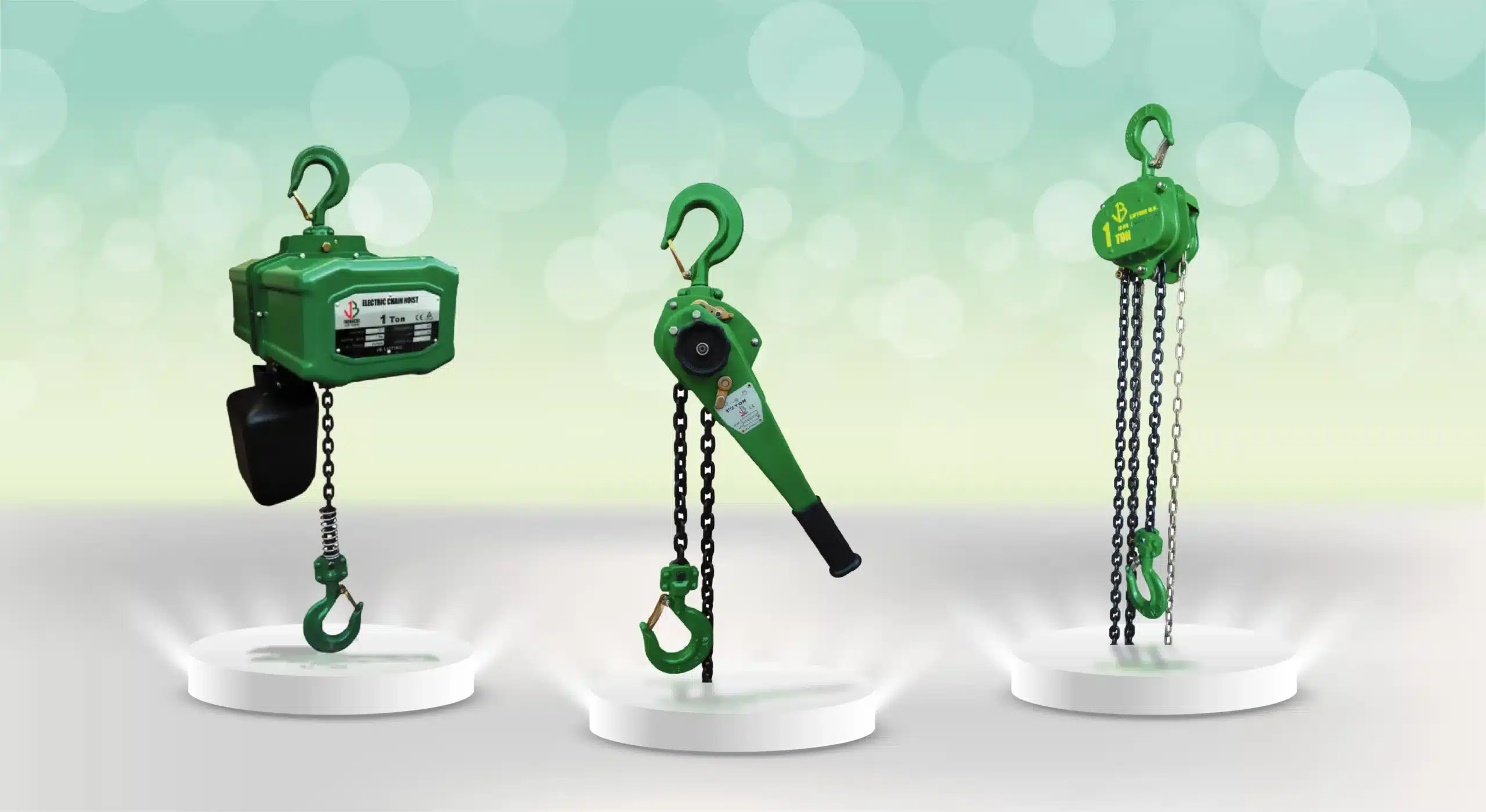
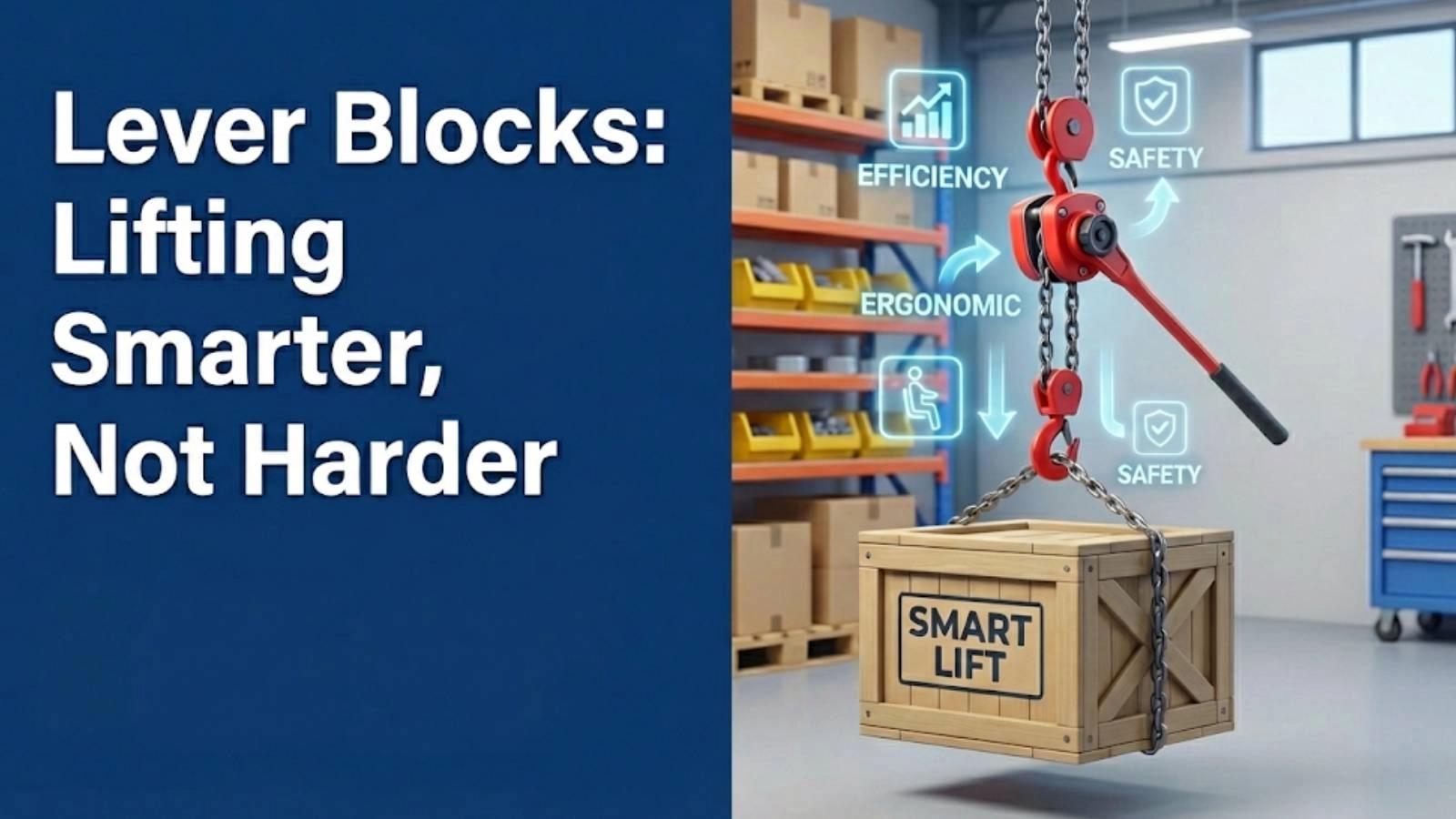
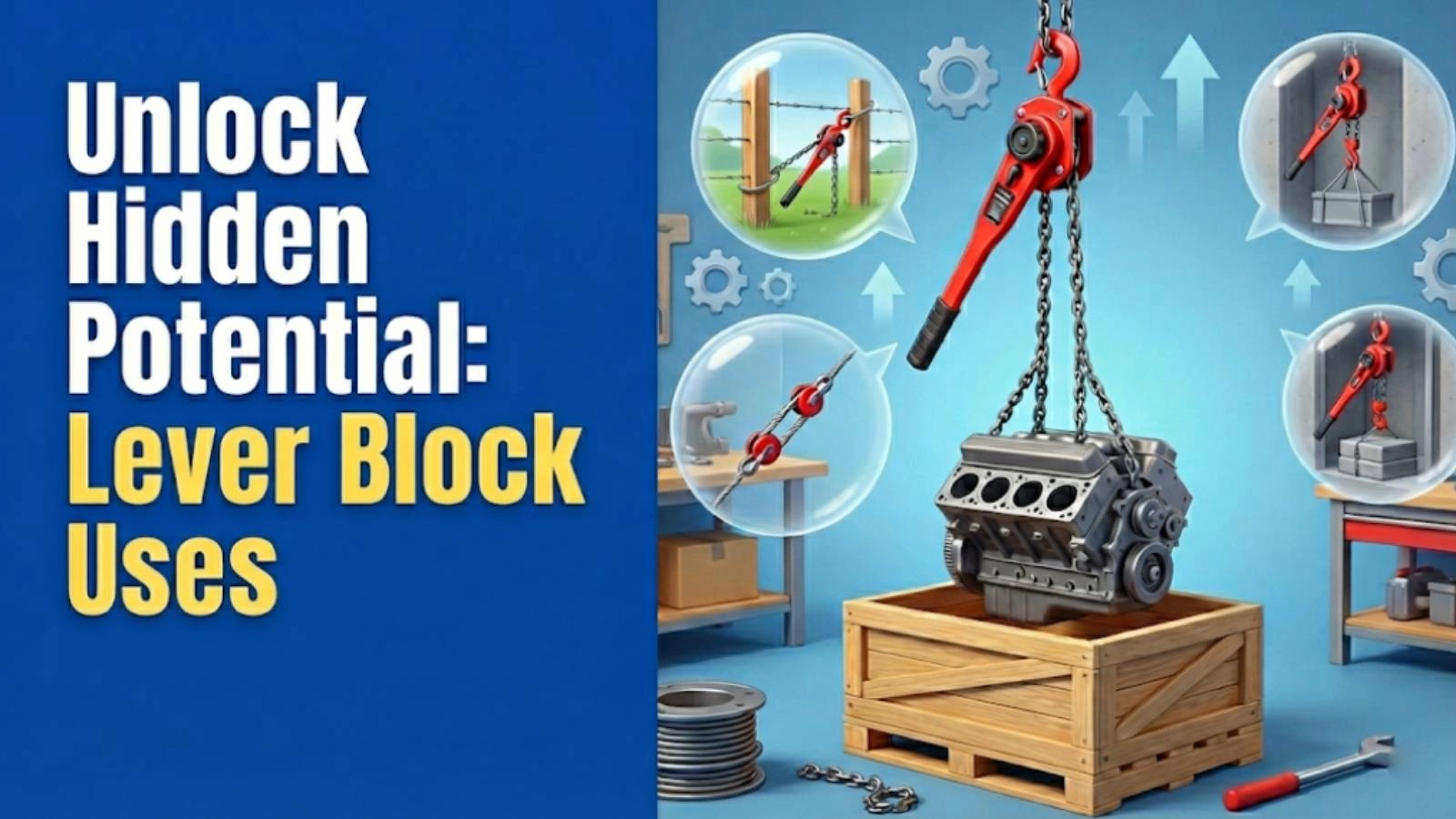
Lever block buying can be a daunting task, especially with the numerous options available in the market. A lever block, also known as a lever hoist, is a manual lifting device that uses a lever and ratchet system to lift, pull, and position heavy loads. Its primary function is to provide a mechanical advantage, allowing users to lift substantial weights with minimal effort. Choosing the right lever block is crucial for ensuring safety, efficiency, and the longevity of your equipment. This guide is designed to help you navigate the complexities of lever block selection, ensuring you make an informed decision that aligns with your specific lifting needs and operational requirements.
Key Takeaways
- Understanding load capacity is critical for safety.
- Inspect before each use.
- Choose the right lever block for the environment.
Understanding Your Lifting Needs: Identifying the Problem
Before diving into the specifics of lever blocks, it’s essential to thoroughly assess your lifting needs. Accurately identifying the problem you’re trying to solve will guide you toward the most suitable lever block for the job. In our experience with clients, a common oversight is failing to fully consider all aspects of the lifting task.
- Problem: Misjudging Lifting Requirements.
Assessing the Weight of the Loads You’ll Be Lifting
The first step is to accurately determine the weight of the loads you’ll be lifting. This may seem obvious, but it’s a critical factor that directly impacts safety. Always err on the side of caution and overestimate the weight if you’re unsure. Ignoring this step can lead to selecting a lever block with insufficient load capacity, resulting in equipment failure and potential injuries. We’ve seen clients struggle with this, often relying on inaccurate estimates, leading to unsafe lifting practices.
Determining the Required Lift Height
Next, consider the required lift height. This is the vertical distance you need to raise the load. Measure the distance between the starting point and the desired endpoint to ensure the lever block you choose has sufficient chain length. A common mistake we help businesses fix is not accounting for obstructions or uneven terrain, which can increase the required lift height.
Considering the Frequency of Use
Finally, think about how often you’ll be using the lever block. If it’s for occasional use, a standard-duty model may suffice. However, for frequent or continuous use, a heavy-duty industrial hoist designed for demanding applications is a better investment. For many of our clients here in Dammam, Saudi Arabia, we’ve seen that choosing a hoist based on frequency of use significantly impacts its lifespan and reliability.
Common Mistakes: Overestimation or Underestimation
Overestimating or underestimating your lifting needs can lead to inefficiencies and safety concerns.
- Explain the dangers of using a lever block with insufficient capacity.
If you use a lever block with insufficient load capacity, you are placing yourself and others at serious risk. Overloading can cause the chain to snap, the hooks to bend or break, or the entire mechanism to fail. This can result in the load dropping unexpectedly, leading to property damage, severe injuries, or even fatalities. In our experience with clients, overloading is a major cause of accidents involving lifting equipment.
- Explain the risks of using an oversized block for light loads.
While it may seem safer to use an oversized lever block for light loads, it can also present risks. Oversized blocks are often heavier and more cumbersome to handle, increasing the risk of strains and injuries to the operator. Additionally, they may not provide the necessary precision for delicate lifting tasks. We once worked with a client who struggled with this, using an overly large chain block for small engine repairs. By switching to a mini lever block, they saw a significant improvement in efficiency and reduced the risk of accidental damage to the engines.
Load Capacity: The Most Critical Factor
Load capacity is arguably the most critical factor to consider when selecting a lever block. It refers to the maximum weight the lever block is designed to safely lift. Exceeding this limit can have catastrophic consequences.
- Problem: Overloading lever blocks leads to catastrophic failure.
Defining Load Capacity and its Significance
Load capacity is typically expressed in tons or kilograms and is clearly marked on the lever block. It’s crucial to understand this rating and never exceed it. The load capacity is determined by the strength of the components, including the chain, hooks, and brake mechanism.
How to Accurately Determine the Weight of the Load
Accurately determining the weight of the load is essential. Use a reliable weighing scale or consult the manufacturer’s specifications. If the load is irregularly shaped or difficult to weigh, consider using load cells or other specialized weighing devices. Guessing the weight is never a good idea and can have dangerous consequences. When our team in KSA tackles this issue, they often find that clients initially underestimate the weight of their loads, highlighting the importance of accurate measurement.
The Importance of Exceeding Minimum Capacity (Safety Factor)
Always choose a lever block with a load capacity that exceeds the actual weight of the load. This provides a safety margin, accounting for potential variations in weight, dynamic loading (e.g., sudden impacts), and wear and tear on the equipment.
Using a Safety Margin: Why it Matters
A safety margin, also known as a safety factor, is a multiplier applied to the load capacity to provide an extra buffer of safety.
- Explain the concept of a safety factor and how to calculate it.
The safety factor is the ratio of the lever block’s rated load capacity to the actual load being lifted. For example, if a lever block has a load capacity of 2 tons and you’re lifting a 1-ton load, the safety factor is 2:1. A higher safety factor provides a greater margin of safety. We generally recommend a safety factor of at least 2:1 for most lifting applications, but it may need to be higher depending on the specific circumstances and industry regulations.
- Provide examples of how a safety factor prevents accidents.
A safety factor helps prevent accidents by accounting for unforeseen circumstances, such as unexpected increases in load weight, dynamic loading, or material fatigue. For instance, if you’re lifting a 1-ton load with a 2-ton lever block (2:1 safety factor), the lever block can withstand a temporary overload of up to 2 tons without failing. This extra margin of safety can be critical in preventing accidents and protecting personnel and equipment.
Key Features to Consider Before Buying
Beyond load capacity, several key features contribute to the performance, durability, and safety of a lever block.
- Problem: Neglecting essential features leads to poor performance and unsafe operation.
Chain Quality
The chain is a critical component of a lever block, and its quality directly impacts the lever block’s strength and durability.
- Explain the different grades of chains and their suitability.
Chains are typically graded based on their material composition, manufacturing process, and breaking strength. Common grades include Grade 80, Grade 100, and stainless steel. Grade 80 chains are suitable for general-purpose lifting, while Grade 100 chains offer higher strength and are preferred for more demanding applications. Stainless steel chains are corrosion-resistant and ideal for use in harsh environments, such as marine or chemical processing facilities. We’ve consistently seen that investing in a higher-grade chain results in a longer lifespan and reduced risk of failure.
Hook Design
The design of the hooks is another important consideration.
- Discuss the importance of safety latches and swivel hooks.
Safety latches are essential for preventing the load from slipping off the hook during lifting. Swivel hooks allow the load to rotate freely, reducing stress on the chain and making it easier to position the load. Look for hooks that are forged from high-strength steel and have a durable finish to resist corrosion.
Brake Mechanism
The brake mechanism is responsible for holding the load securely in place when the lever is not being operated.
- Explain the different types of brakes (e.g., Weston brake) and their reliability.
The Weston brake is a common type of brake used in lever blocks. It consists of two friction discs that are pressed together by a spring. When the lever is released, the spring forces the discs together, preventing the chain from slipping. Weston brakes are known for their reliability and smooth operation. Other types of brakes include ratchet brakes and disc brakes.
Housing Material
The housing material protects the internal components of the lever block from damage and corrosion.
- Compare the durability of steel and aluminum housings.
Steel housings are generally more durable and resistant to impact damage than aluminum housings. However, aluminum housings are lighter and more corrosion-resistant. The best choice depends on the specific application and operating environment. For heavy-duty industrial applications, steel housings are typically preferred.
Rust-Proofing & Weather Resistance
Corrosion can significantly weaken the components of a lever block, leading to premature failure.
- Highlight the importance of corrosion resistance for outdoor applications.
If you’ll be using the lever block outdoors or in a humid environment, it’s essential to choose a model with good corrosion resistance. Look for features such as galvanized or stainless-steel components, powder-coated finishes, and sealed housings.
- Explain the benefits of galvanized or stainless-steel components.
Galvanized components are coated with a layer of zinc to protect them from rust and corrosion. Stainless steel components offer even greater corrosion resistance and are ideal for use in marine or chemical processing environments. In our experience with clients, investing in corrosion-resistant features significantly extends the lifespan of the lever block in harsh environments.
Types of Lever Blocks: Matching the Right Tool to the Job
Lever blocks come in various types, each designed for specific applications. Choosing the right type can improve efficiency and reduce the risk of accidents.
- Problem: Using the wrong type of lever block can reduce efficiency and increase risks.
Standard Lever Blocks
Standard lever blocks are versatile and suitable for a wide range of lifting applications.
- For general-purpose lifting.
They typically have a load capacity ranging from 0.75 tons to 9 tons and are used in construction, manufacturing, and maintenance operations.
Mini Lever Blocks
Mini lever blocks are compact and lightweight, making them ideal for use in confined spaces and for lifting lighter loads.
- For confined spaces and lighter loads.
They typically have a load capacity of 0.25 tons to 0.75 tons and are often used for rigging, positioning, and small repair jobs.
Ratchet Lever Hoists
Ratchet lever hoists offer precise control and are ideal for lifting and pulling applications where accurate positioning is required.
- For precision lifting and pulling.
They use a ratchet mechanism that allows the operator to move the load in small increments, providing greater control.
When to Choose Each Type
The best type of lever block depends on the specific application.
- Provide scenarios where each type of lever block is most appropriate.
Standard Lever Blocks: Use for general lifting tasks in construction, manufacturing, and maintenance.
Mini Lever Blocks: Use in tight spaces, for light rigging, and for small repair jobs.
Ratchet Lever Hoists: Use when precise positioning is required, such as aligning machinery or tensioning cables.
- Discuss the limitations of each type.
Standard Lever Blocks: Can be bulky and difficult to maneuver in confined spaces.
Mini Lever Blocks: Limited load capacity.
Ratchet Lever Hoists: Slower lifting speed compared to standard lever blocks.
Safety Features and Standards: Ensuring Safe Operation
Safety should always be the top priority when using a lever block. Look for models with built-in safety features and that comply with industry standards.
- Problem: Ignoring safety features and certifications can lead to serious accidents.
Overload Protection
Overload protection mechanisms prevent the lever block from being overloaded, reducing the risk of failure.
- Discuss the benefits of built-in overload protection mechanisms.
These mechanisms typically consist of a slip clutch or shear pin that will activate if the load exceeds the rated capacity. This prevents the lever block from being damaged and protects personnel from injury.
Compliance with Standards
Compliance with industry standards ensures that the lever block has been tested and certified to meet specific safety and performance requirements.
- Explain the importance of certifications like ASME and CE.
ASME (American Society of Mechanical Engineers): Sets standards for the design, construction, and inspection of lifting equipment.
CE (Conformité Européenne): Indicates that the product complies with European Union safety, health, and environmental protection requirements.
Inspection and Maintenance
Regular inspection and maintenance are essential for ensuring the safe and reliable operation of a lever block.
- Provide a basic inspection checklist.
Inspection Checklist before Each Use
Before each use, carefully inspect the lever block for any signs of damage or wear.
- Detail what to look for when inspecting a lever block before each use (e.g., chain wear, hook damage).
1. Chain: Check for kinks, twists, wear, corrosion, and elongation.
2. Hooks: Inspect for cracks, bends, and deformation. Ensure safety latches are functioning properly.
3. Housing: Look for cracks, dents, and corrosion.
4. Lever: Ensure the lever operates smoothly and that the ratchet mechanism is engaging properly.
5. Brake: Test the brake by lifting a small load and releasing the lever. The load should hold securely.
- Emphasize the importance of logging inspections.
Keep a log of all inspections, noting any defects or repairs. This will help you track the condition of the lever block and identify potential problems before they lead to accidents.
Choosing the Right Supplier: Building Trust and Reliability
The supplier you choose can significantly impact the quality and reliability of your lever block.
- Problem: Buying from unreliable suppliers can result in substandard equipment and poor support.
Researching Supplier Reputation and Reviews
Before making a purchase, research the supplier’s reputation and read reviews from other customers. Look for suppliers with a proven track record of providing high-quality products and excellent customer service.
Checking for Warranty and After-Sales Support
Ensure the supplier offers a warranty on their lever blocks and provides after-sales support, such as repairs and spare parts. A reputable supplier will stand behind their products and provide assistance if you encounter any problems.
Verifying Certifications and Compliance with Industry Standards
Confirm that the supplier’s lever blocks are certified to meet relevant industry standards, such as ASME and CE. This ensures that the products have been tested and meet specific safety and performance requirements.
Local Support vs. Online Retailers
Consider the advantages and disadvantages of buying from local suppliers versus online retailers.
- Compare the advantages and disadvantages of buying from local suppliers versus online retailers.
Local Suppliers: Offer personalized service, local support, and the ability to inspect the products before buying.
Online Retailers: Often offer lower prices and a wider selection of products.
- Highlight the benefits of having access to local support and repairs.
Having access to local support and repairs can be invaluable, especially if you need assistance with maintenance or troubleshooting. Local suppliers can provide quick and efficient service, minimizing downtime and ensuring your lever block is back in operation as soon as possible.
Budget Considerations: Balancing Cost and Quality
While cost is an important factor, it shouldn’t be the only consideration when choosing a lever block.
- Problem: Focusing solely on price can compromise safety and durability.
Setting a Realistic Budget Based on Lifting Needs
Determine how much you’re willing to spend on a lever block based on your specific lifting needs and the frequency of use. Consider the long-term costs of cheaper vs. higher-quality lever blocks.
Comparing the Long-Term Costs of Cheaper vs. Higher-Quality Lever Blocks
Cheaper lever blocks may seem appealing in the short term, but they often have a shorter lifespan and require more frequent repairs. Higher-quality lever blocks may cost more upfront, but they offer greater durability, reliability, and safety, ultimately saving you money in the long run.
Considering the Cost of Maintenance and Repairs
Factor in the cost of maintenance and repairs when evaluating different lever blocks. Some models may require more frequent maintenance or have higher repair costs than others.
Total Cost of Ownership
The total cost of ownership includes the purchase price, maintenance costs, repair costs, and the cost of downtime.
- Explain the concept of total cost of ownership and how it applies to lever blocks.
By considering all these factors, you can get a more accurate picture of the true cost of owning a particular lever block.
- Provide examples of how a slightly more expensive lever block can be more cost-effective in the long run.
For example, a slightly more expensive lever block with a longer lifespan and lower maintenance costs may be more cost-effective than a cheaper model that needs to be replaced frequently.
Maintenance and Storage: Extending the Life of Your Lever Block
Proper maintenance and storage are essential for extending the life of your lever block and ensuring its safe operation.
- Problem: Neglecting maintenance can shorten the lifespan of the lever block and compromise safety.
Proper Cleaning and Lubrication
Regularly clean and lubricate the lever block to prevent rust, corrosion, and wear. Use a high-quality lubricant specifically designed for lifting equipment.
Storing Lever Blocks in a Dry and Protected Environment
Store lever blocks in a dry and protected environment when not in use. This will help prevent corrosion and damage to the components.
Regular Inspection and Replacement of Worn Parts
Regularly inspect the lever block for worn or damaged parts and replace them as needed. Pay particular attention to the chain, hooks, and brake mechanism.
Identifying and Addressing Common Issues
Learn how to identify and address common issues such as chain jams and brake slippage.
- Provide guidance on troubleshooting common problems such as chain jams and brake slippage.
Chain Jams: Try to gently free the chain by wiggling it back and forth. If the jam persists, disassemble the lever block and clean the chain and internal components.
Brake Slippage: Inspect the brake mechanism for wear or damage. Replace the brake pads or discs if necessary.
- Emphasize the importance of professional servicing for major repairs.
For major repairs, it’s best to consult a qualified technician. Attempting to repair a lever block yourself without the proper training and tools can be dangerous.
> “Regular maintenance is crucial for the longevity and safety of any lifting equipment.” – John Smith, Lead Safety Inspector
| Maintenance Task |
Frequency |
Description |
| Visual Inspection |
Before each use |
Check for damage, wear, and proper function. |
| Cleaning |
Monthly or as needed |
Remove dirt, debris, and contaminants. |
| Lubrication |
Every 3 months or as needed |
Apply lubricant to chain, hooks, and moving parts. |
| Load Testing |
Annually or as required |
Verify load capacity and brake function. |
Conclusion
Choosing the right lever block involves careful consideration of your lifting needs, load capacity, key features, safety standards, and budget. Remember to prioritize safety and choose a reputable supplier who can provide high-quality products and excellent support. By following the guidelines in this guide, you can make an informed decision and ensure that you have the right lever block for your specific application. We, at Safe and Secure Trading Company (SSTC), are dedicated to providing our clients with the best lifting solutions for their needs. We ensure that every lever block we supply meets the highest standards of quality and safety.
FAQ Section
- What is the difference between a lever block and a chain block?
A lever block uses a lever and ratchet mechanism for lifting, while a chain block uses a hand chain and gear system. Lever blocks are generally used for shorter lifts and pulling applications, while chain blocks are better suited for longer vertical lifts.
- How often should a lever block be inspected?
A lever block should be inspected before each use and at least annually by a qualified inspector.
- What are the signs of a worn-out lever block?
Signs of a worn-out lever block include chain wear, hook damage, brake slippage, and difficulty operating the lever.
- Can I use a lever block horizontally?
Yes, lever blocks can be used horizontally for pulling applications. However, the load capacity may be reduced, so consult the manufacturer’s specifications.
- What is the maximum lift height for a lever block?
The maximum lift height for a lever block depends on the length of the chain. Standard lever blocks typically have a lift height of 1.5 to 3 meters, but longer chains are available for specific applications.