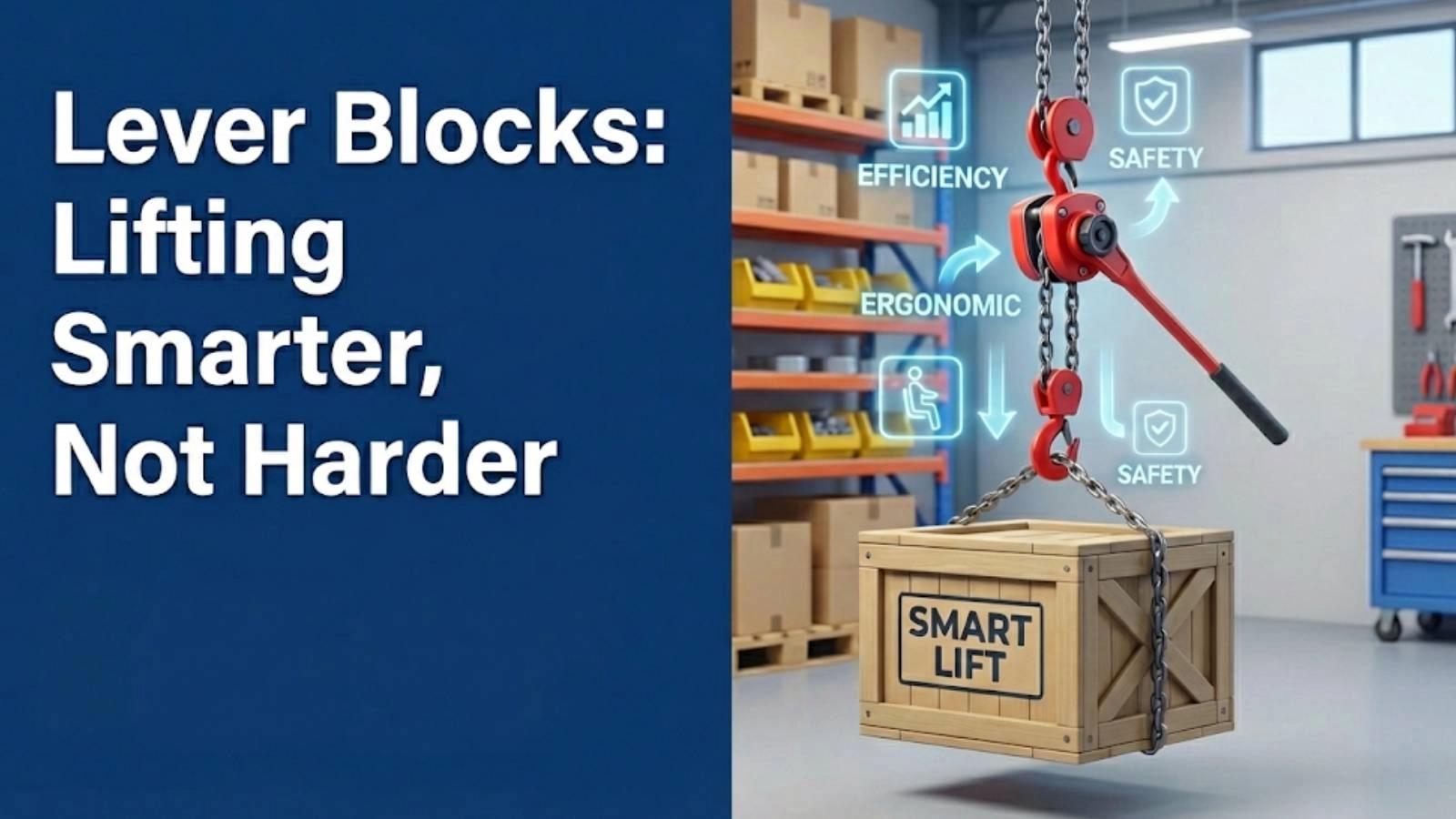
Mastering lever block techniques requires a thorough understanding of the equipment, adherence to safety protocols, and consistent maintenance practices. At Safe and Secure Trading Company (SSTC), we prioritize equipping our clients with the knowledge and tools necessary for safe and efficient lifting operations. This comprehensive guide will walk you through every aspect of lever block techniques, from basic operation to advanced rigging methods.
Understanding Lever Block Fundamentals
What is a Lever Block?
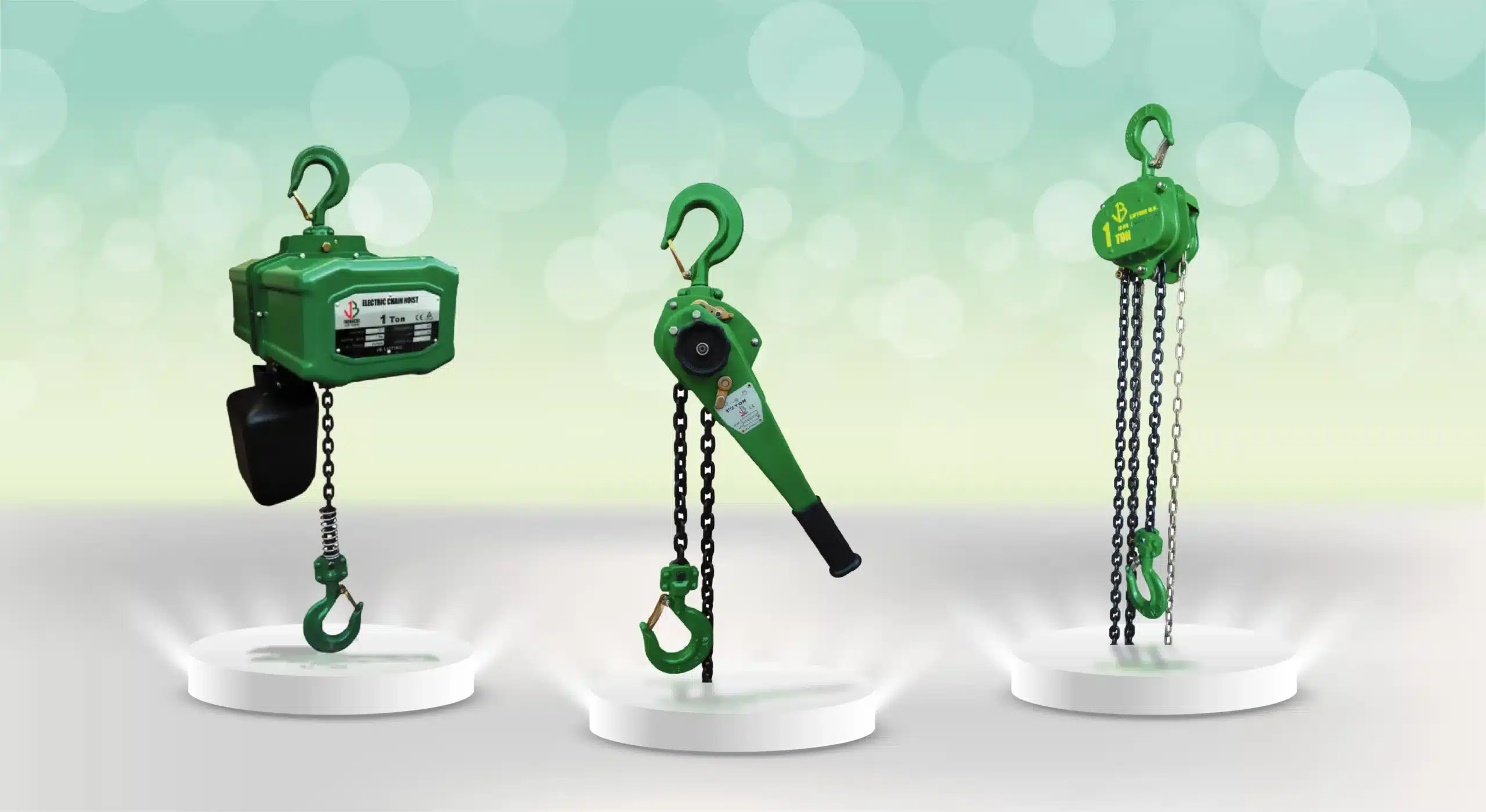
A lever block, also known as a come-along or a chain hoist, is a manual lifting device used to raise, lower, or pull heavy loads. It utilizes a lever mechanism to provide mechanical advantage, allowing users to lift substantial weights with relatively little effort. Lever block operation is essential in various industries, including construction, manufacturing, and maintenance, where powered lifting equipment is impractical or unavailable. These devices are known for their portability, ease of use, and reliability in diverse environments.
The functionality of a lever block is relatively straightforward. A load chain wraps around a series of internal gears and pulleys. By pulling the lever, the operator engages the gears, causing the chain to move and lift the attached load. The integrated brake mechanism ensures the load remains securely in place when the lever is not being actively operated. At SSTC, we emphasize the importance of understanding these fundamental principles to ensure safe and effective lever block techniques.
Key Components of a Lever Block
A lever block consists of several crucial components, each playing a vital role in its functionality and safety. These include:
- Load Chain: The primary lifting component, designed to withstand significant tensile forces. Regular load chain inspection is crucial.
- Hooks: Used to attach the lever block to the load and the anchor point. Must be strong and equipped with safety latches.
- Lever Handle: The manual lever used to operate the lifting mechanism. Its length provides leverage for easier lifting.
- Brake Mechanism: A critical safety feature that holds the load securely in place. Typically a friction-based system.
- Gears and Pulleys: Internal components that provide mechanical advantage.
- Housing: The protective casing that encloses and supports the internal mechanisms.
Understanding each component helps in troubleshooting and maintaining the lever block. When our team in Dubai tackles maintenance issues, they often find that identifying the specific component at fault significantly speeds up the repair process.
Types of Lever Blocks and Their Applications
There are various types of lever blocks available, each designed for specific applications and load capacities. The most common types include:
- Standard Lever Blocks: General-purpose lifting devices suitable for a wide range of tasks.
- Mini Lever Blocks: Compact and lightweight, ideal for confined spaces and lighter loads.
- High-Capacity Lever Blocks: Designed for extremely heavy loads in industrial settings.
- Spark-Resistant Lever Blocks: Used in environments where flammable materials are present.
- Trolley Lever Blocks: Integrated with a trolley system for horizontal movement along a beam or rail.
Each type of lever block has unique features and limitations. Selecting the right lever block for the job is essential for safety and efficiency. For example, using a mini lever block for a load exceeding its capacity is a serious safety hazard. At SSTC, we provide guidance on selecting the appropriate lever block for your specific needs.
Mechanical Advantage and Force Calculation
The mechanical advantage of a lever block is a critical factor in determining its lifting capacity and ease of use. Mechanical advantage refers to the ratio of the output force (the force applied to the load) to the input force (the force applied to the lever). A higher mechanical advantage means less force is required to lift a given load.
The mechanical advantage of a lever block is determined by the number of chain falls (the number of sections of chain supporting the load) and the internal gear ratios. To calculate the force required to lift a load, use the following formula:
Force Required = Load Weight / Mechanical Advantage
For example, if a lever block has a mechanical advantage of 20:1 and you need to lift a 1000 kg load, the force required on the lever would be 50 kg. Understanding these calculations is fundamental to safe and efficient lever block operation.
Essential Pre-Use Inspection Procedures
Visual Inspection of the Load Chain
Before each use, a thorough visual inspection of the load chain is paramount. This inspection should include checking for:
- Wear: Excessive wear on the chain links.
- Damage: Cracks, dents, or distortions in the links.
- Corrosion: Rust or other signs of corrosion.
- Stretching: Elongation of the chain beyond allowable limits.
- Twists or Kinks: Any signs of twisting or kinking.
Any of these defects can compromise the strength and integrity of the chain, leading to potential failure. If any damage is detected, the lever block should be removed from service immediately and inspected by a qualified technician. Neglecting this step can lead to catastrophic accidents. We once had a client who skipped this step and experienced a chain failure mid-lift. Luckily, no one was hurt, but it highlighted the critical importance of pre-use inspections.
Checking the Hook and Latch Mechanisms
The hooks and latch mechanisms are essential for secure load attachment. Inspect them for:
- Deformation: Bending or distortion of the hook.
- Cracks: Any signs of cracking in the hook body.
- Latch Functionality: Ensure the latch closes securely and is not damaged.
- Wear: Excessive wear on the hook or latch.
- Proper Swiveling: Check that the hook swivels freely.
A damaged or malfunctioning hook or latch can cause the load to slip or fall, resulting in serious injury or property damage. Ensure that the latch spring is functional and that the latch engages fully.
Examining the Lever and Brake System
The lever and brake system are critical for controlling the lifting and lowering of the load. The examination should include:
- Lever Movement: Check for smooth and unrestricted lever movement.
- Brake Engagement: Ensure the brake engages immediately when the lever is released.
- Unusual Noises: Listen for any unusual noises during lever operation, which could indicate a problem with the internal mechanisms.
- Lever Damage: Inspect the lever for any signs of bending or damage.
- Brake Slippage: Test for brake slippage by applying a small load and checking if the load drifts downward when the lever is released.
A faulty brake system can lead to uncontrolled load descent, posing a significant safety risk. Promptly address any issues identified during the inspection.
Identifying and Addressing Common Defects
During the pre-use inspection, be vigilant for common defects such as:
- Bent or Twisted Chain Links: Replace the chain immediately.
- Cracked Hooks: Remove the lever block from service.
- Non-Functioning Latch: Repair or replace the latch.
- Slipping Brake: Have the brake system inspected and repaired.
- Stiff Lever Movement: Lubricate or repair the lever mechanism.
Addressing these defects promptly can prevent accidents and extend the lifespan of the lever block. Regular inspections and timely repairs are key to maintaining a safe working environment. 💡 Always consult the manufacturer’s guidelines for specific inspection criteria and repair procedures.
Basic Lever Block Operation Techniques
Proper Attachment to the Load
Proper attachment to the load is fundamental to safe lever block operation. Follow these guidelines:
- Use Appropriate Slings: Select slings that are rated for the weight of the load and are in good condition.
- Secure Attachment Points: Ensure the attachment points on the load are strong and capable of supporting the load.
- Avoid Sharp Edges: Protect slings from sharp edges to prevent cutting or abrasion.
- Balance the Load: Distribute the load evenly to prevent tipping or instability.
- Use Correct Hitch: Choose the appropriate hitch for the lifting application.
Improper attachment can cause the load to shift or fall, leading to serious accidents. We always recommend using a qualified rigger for complex lifting operations.
Safe Operation of the Lever
Operating the lever safely involves the following:
- Use Smooth, Controlled Movements: Avoid jerky or abrupt movements.
- Maintain a Firm Grip: Keep a secure grip on the lever at all times.
- Avoid Overextending: Do not overextend the lever beyond its designed range of motion.
- Keep Hands Clear: Keep hands and fingers clear of pinch points.
- Follow Manufacturer’s Instructions: Adhere to the manufacturer’s recommendations for lever operation.
Jerky or uncontrolled movements can shock-load the lever block, potentially causing damage or failure. Always prioritize smooth, controlled operation.
Avoiding Overloading and Shock Loading
Overloading and shock loading are major causes of lever block failure. To prevent these issues:
- Know the Load Weight: Accurately determine the weight of the load before lifting.
- Do Not Exceed Capacity: Never exceed the rated capacity of the lever block.
- Avoid Sudden Impacts: Prevent the load from dropping or impacting other objects.
- Lift Gradually: Start and stop the lift smoothly to avoid sudden stress on the equipment.
- Use Load Monitoring: Consider using load monitoring devices to ensure you stay within safe limits.
Overloading can cause permanent damage to the lever block and create a dangerous lifting situation. Shock loading, which occurs when a load is suddenly applied, can also lead to immediate failure.
Recognizing Signs of Potential Failure
Being able to recognize signs of potential failure is crucial for preventing accidents. Watch for:
- Unusual Noises: Creaking, popping, or grinding sounds.
- Visible Damage: Cracks, bends, or distortions in the components.
- Excessive Wear: Significant wear on the chain, hooks, or gears.
- Jerky Movement: Erratic or uneven lifting or lowering.
- Slipping Brake: The load drifting downward when the lever is released.
If you observe any of these signs, immediately stop the lifting operation and inspect the lever block. Remove it from service if necessary. 💡 According to a recent study, 70% of lever block failures are preceded by noticeable warning signs.
Advanced Lifting and Rigging Techniques
Using Multiple Lever Blocks in Tandem
Using multiple lever blocks in tandem can increase lifting capacity and improve load distribution. However, this requires careful planning and execution:
- Ensure Equal Load Distribution: Use load equalizers to distribute the load evenly between the lever blocks.
- Use Identical Lever Blocks: Ensure all lever blocks are of the same type and capacity.
- Synchronize Lifting: Coordinate the operation of the lever blocks to maintain a level lift.
- Monitor Load: Continuously monitor the load to ensure it remains balanced.
- Use a Qualified Rigger: Enlist the expertise of a qualified rigger for complex tandem lifts.
Improperly executed tandem lifts can create uneven stress on the equipment and increase the risk of failure. We’ve seen projects where using multiple lever blocks without proper synchronization led to dangerous load imbalances.
Employing Chain Shortening Devices
Chain shortening devices, such as grab hooks or chain shorteners, can be used to adjust the length of the chain for specific lifting applications. When using these devices:
- Ensure Compatibility: Verify that the chain shortening device is compatible with the chain size and type.
- Use Properly: Follow the manufacturer’s instructions for proper installation and use.
- Inspect Regularly: Inspect the chain shortening device for wear or damage before each use.
- Avoid Overloading: Do not exceed the rated capacity of the chain shortening device.
- Secure Properly: Ensure the chain is securely engaged in the shortening device.
Chain shortening devices can be a valuable tool for adapting lever block techniques to various lifting scenarios. However, incorrect usage can compromise safety.
Calculating Load Distribution in Complex Setups
In complex lifting setups, it is crucial to calculate load distribution to ensure that each component is within its rated capacity. This involves:
- Identifying Load Paths: Determine how the load is distributed through the rigging system.
- Calculating Tension: Calculate the tension in each sling, chain, and connection point.
- Accounting for Angles: Consider the effect of angles on the load distribution.
- Using Load Charts: Consult load charts to determine the safe working load for each component.
- Applying Safety Factors: Apply appropriate safety factors to account for uncertainties and dynamic loading.
Accurate load distribution calculations are essential for preventing overloads and ensuring the safety of the lifting operation. Neglecting this step can lead to catastrophic failures.
Understanding Angle Factors in Lifting
The angle between the slings and the load significantly affects the tension in the slings. As the angle increases, the tension also increases. To account for this:
- Minimize Angles: Keep sling angles as small as possible (ideally below 45 degrees).
- Use Angle Correction Factors: Apply angle correction factors to the calculated load to determine the actual tension in the slings.
- Consult Rigging Tables: Use rigging tables to determine the safe working load for various sling angles.
- Spread the Load: Use spreaders or lifting beams to reduce sling angles.
- Consider Horizontal Forces: Account for any horizontal forces created by the sling angles.
Understanding and managing angle factors is critical for ensuring the stability and safety of the lift.
Safe Load Handling and Control
Maintaining a Controlled Lifting Speed
Maintaining a controlled lifting speed is essential for preventing accidents and damage.
- Avoid Jerky Movements: Lift and lower the load smoothly and gradually.
- Communicate Clearly: Coordinate lifting speed with spotters or other team members.
- Adjust Speed to Conditions: Adjust the lifting speed based on the load, environment, and complexity of the lift.
- Use Load Monitoring Devices: Monitor the load to detect any sudden changes in weight or balance.
- Be Prepared to Stop: Be ready to stop the lift immediately if any problems arise.
Excessive lifting speed can lead to loss of control and increase the risk of accidents. Slow and steady wins the race.
Preventing Load Swinging and Swaying
Load swinging and swaying can create dangerous situations and make it difficult to control the load. To prevent this:
- Use Tag Lines: Use tag lines to guide the load and prevent swinging.
- Control Lifting Speed: Avoid sudden starts and stops.
- Maintain Load Balance: Ensure the load is evenly balanced.
- Minimize Wind Effects: Shield the load from wind or use windbreaks.
- Use Anti-Sway Devices: Consider using anti-sway devices for critical lifts.
Load swinging can be particularly hazardous in windy conditions or confined spaces. Proper planning and control are essential.
Ensuring Proper Load Balance
Proper load balance is crucial for stability and safety.
- Center the Load: Position the lifting point directly above the center of gravity of the load.
- Use Multiple Lifting Points: Use multiple lifting points to distribute the load evenly.
- Adjust Sling Lengths: Adjust sling lengths to maintain a level lift.
- Monitor Load Distribution: Continuously monitor the load to ensure it remains balanced.
- Use Load Balancing Devices: Use load balancing devices to automatically adjust the load distribution.
An unbalanced load can tip or shift, leading to accidents and damage. Take the time to ensure the load is properly balanced before lifting.
Communicating Effectively with Spotters
Effective communication with spotters is essential for coordinating lifting operations and preventing accidents.
- Establish Clear Signals: Establish clear hand signals or verbal commands.
- Maintain Visual Contact: Maintain visual contact with the spotter at all times.
- Use a Common Language: Use a common language that everyone understands.
- Confirm Instructions: Confirm instructions before proceeding.
- Listen to Feedback: Listen carefully to feedback from the spotter and adjust the lift accordingly.
Clear communication can prevent misunderstandings and ensure that everyone is aware of the lifting operation’s progress.
Advanced Techniques for Complex Lifts
Using Lever Blocks for Horizontal Pulling
Lever blocks are not only for vertical lifting but also effective for horizontal pulling. When using lever blocks for horizontal pulling:
- Ensure Secure Anchor Points: Verify that the anchor points are strong enough to withstand the pulling force.
- Use Appropriate Slings: Select slings that are rated for the pulling force.
- Align the Pull: Align the lever block with the direction of the pull to avoid side loading.
- Use a Fairlead: Use a fairlead to guide the chain and prevent abrasion.
- Monitor Tension: Monitor the tension in the chain and slings to avoid overloading.
Horizontal pulling applications often require specialized techniques and equipment. Always consult with a qualified rigger.
Incorporating Snatch Blocks for Directional Changes
Snatch blocks can be used to change the direction of the pulling force or to increase the mechanical advantage. When using snatch blocks:
- Select the Right Size: Choose a snatch block that is rated for the load and the chain size.
- Inspect Regularly: Inspect the snatch block for wear or damage before each use.
- Lubricate Properly: Lubricate the sheave to ensure smooth operation.
- Secure Properly: Secure the snatch block to a strong anchor point.
- Avoid Side Loading: Avoid side loading the snatch block.
Snatch blocks can significantly enhance the versatility of lever block techniques, but they must be used correctly to avoid accidents.
Calculating Tension and Stress in Rigging Systems
Calculating tension and stress in rigging systems is critical for ensuring safety and preventing failures. This involves:
- Determining Load Paths: Identify how the load is distributed through the rigging system.
- Calculating Tension in Slings: Calculate the tension in each sling, considering the angle and the load.
- Calculating Stress in Components: Calculate the stress in each component, such as shackles, hooks, and beams.
- Comparing to Allowable Limits: Compare the calculated stress to the allowable stress for each component.
- Applying Safety Factors: Apply appropriate safety factors to account for uncertainties and dynamic loading.
Accurate calculations are essential for complex rigging systems. Seek the assistance of a qualified engineer or rigger.
Implementing Load Monitoring Systems
Load monitoring systems can provide real-time data on the weight and distribution of the load, helping to prevent overloads and ensure safety.
- Choose the Right System: Select a load monitoring system that is appropriate for the application.
- Calibrate Regularly: Calibrate the load monitoring system regularly to ensure accuracy.
- Monitor Data Continuously: Monitor the data continuously during the lifting operation.
- Set Alarms: Set alarms to alert the operator if the load exceeds safe limits.
- Train Personnel: Train personnel on the proper use of the load monitoring system.
Load monitoring systems can provide an extra layer of safety and help to prevent accidents.
Maintenance and Long-Term Care
Regular Cleaning and Lubrication
Regular cleaning and lubrication are essential for maintaining the performance and extending the lifespan of lever blocks.
- Clean After Each Use: Clean the lever block after each use to remove dirt, dust, and debris.
- Lubricate Regularly: Lubricate the moving parts, such as the chain, gears, and levers, with a high-quality lubricant.
- Use Appropriate Lubricants: Use lubricants that are specifically designed for lever blocks.
- Follow Manufacturer’s Instructions: Follow the manufacturer’s instructions for cleaning and lubrication.
- Inspect After Cleaning: Inspect the lever block after cleaning and lubrication to ensure that all parts are functioning properly.
Neglecting cleaning and lubrication can lead to increased wear and tear and premature failure.
Replacing Worn or Damaged Parts
Replacing worn or damaged parts is crucial for maintaining the safety and reliability of lever blocks.
- Inspect Regularly: Inspect the lever block regularly for signs of wear or damage.
- Replace Promptly: Replace any worn or damaged parts promptly.
- Use OEM Parts: Use original equipment manufacturer (OEM) parts whenever possible.
- Follow Manufacturer’s Instructions: Follow the manufacturer’s instructions for replacing parts.
- Test After Replacement: Test the lever block after replacing parts to ensure that it is functioning properly.
Using non-OEM parts can compromise the performance and safety of the lever block.
Performing Load Testing and Certification
Performing load testing and certification is essential for ensuring that lever blocks meet safety standards and are capable of handling their rated capacity.
- Test Regularly: Test lever blocks regularly, typically annually or after any major repairs.
- Use a Certified Tester: Use a certified tester to perform the load testing.
- Follow Testing Procedures: Follow established testing procedures, such as those outlined in ASME standards.
- Document Results: Document the results of the load testing.
- Certify the Lever Block: Certify the lever block if it passes the load testing.
Load testing and certification provide assurance that the lever block is safe to use and meets all applicable regulations.
Proper Storage Procedures
Proper storage procedures can help to protect lever blocks from damage and extend their lifespan.
- Clean Before Storing: Clean the lever block before storing it.
- Lubricate Before Storing: Lubricate the moving parts before storing it.
- Store in a Dry Place: Store the lever block in a dry place to prevent corrosion.
- Protect from the Elements: Protect the lever block from the elements, such as sunlight, rain, and snow.
- Store in a Secure Location: Store the lever block in a secure location to prevent theft or unauthorized use.
Proper storage can prevent premature wear and tear and ensure that the lever block is ready for use when needed.
Safety Standards and Regulations
OSHA Requirements for Lever Blocks
The Occupational Safety and Health Administration (OSHA) has specific requirements for the safe use of lever blocks in the workplace. These requirements include:
- Regular Inspections: Regular inspections of lever blocks to identify any defects or damage.
- Proper Training: Proper training for operators on the safe use of lever blocks.
- Load Capacity Limits: Adherence to load capacity limits.
- Proper Maintenance: Proper maintenance of lever blocks.
- Removal from Service: Removal from service of any lever blocks that are found to be defective or damaged.
Compliance with OSHA requirements is essential for ensuring a safe working environment and avoiding penalties.
ASME Standards for Lifting Devices
The American Society of Mechanical Engineers (ASME) develops standards for the design, construction, and use of lifting devices, including lever blocks. These standards include:
- ASME B30.9: Standards for slings.
- ASME B30.10: Standards for hooks.
- ASME B30.16: Standards for overhead hoists (underhung).
- ASME B30.21: Standards for manually lever-operated hoists.
Compliance with ASME standards is widely recognized as a best practice for ensuring the safety and reliability of lifting equipment.
Industry Best Practices for Safe Operation
In addition to OSHA and ASME standards, there are several industry best practices for safe lever block operation. These include:
- Pre-Use Inspections: Performing pre-use inspections to identify any potential problems.
- Proper Load Attachment: Ensuring proper load attachment to prevent slips or falls.
- Controlled Lifting Speed: Maintaining a controlled lifting speed to prevent load swinging.
- Clear Communication: Ensuring clear communication between the operator and spotters.
- Proper Training: Providing proper training to all personnel involved in lifting operations.
Following industry best practices can significantly reduce the risk of accidents and injuries.
Legal Implications of Negligence
Negligence in the operation or maintenance of lever blocks can have serious legal implications.
- Liability for Injuries: Employers can be held liable for injuries caused by unsafe lifting practices.
- Fines and Penalties: OSHA can impose fines and penalties for violations of safety regulations.
- Criminal Charges: In some cases, negligence can result in criminal charges.
- Lawsuits: Injured workers can file lawsuits against employers for damages.
- Reputational Damage: Negligence can damage the reputation of the company.
It is essential to prioritize safety and comply with all applicable regulations to avoid legal consequences.
Troubleshooting Common Issues
Chain Slippage and Jerking
Chain slippage and jerking can be caused by several factors, including:
- Worn Chain: Replace the chain if it is worn or damaged.
- Contaminated Chain: Clean and lubricate the chain to remove dirt and debris.
- Faulty Brake: Have the brake system inspected and repaired.
- Overloading: Ensure that the load does not exceed the rated capacity of the lever block.
Addressing these issues promptly can prevent further damage and ensure safe operation.
Lever Binding and Resistance
Lever binding and resistance can make it difficult to operate the lever block and can be caused by:
- Lack of Lubrication: Lubricate the lever mechanism to reduce friction.
- Damaged Gears: Inspect the gears for damage and replace if necessary.
- Bent Lever: Straighten or replace the lever if it is bent.
- Corrosion: Clean and lubricate the lever mechanism to remove corrosion.
Proper maintenance can prevent lever binding and ensure smooth operation.
Hook Deformation and Failure
Hook deformation and failure can be caused by:
- Overloading: Ensure that the load does not exceed the rated capacity of the hook.
- Side Loading: Avoid side loading the hook.
- Impact Damage: Protect the hook from impact damage.
- Corrosion: Clean and lubricate the hook to prevent corrosion.
Replace any hooks that are deformed or cracked.
Brake System Malfunctions
Brake system malfunctions can lead to uncontrolled load descent and are a serious safety hazard. Common causes include:
- Worn Brake Pads: Replace the brake pads if they are worn.
- Contaminated Brake Surfaces: Clean the brake surfaces to remove dirt and oil.
- Loose Brake Components: Tighten any loose brake components.
- Faulty Brake Mechanism: Have the brake mechanism inspected and repaired.
Regular inspection and maintenance of the brake system are essential for safe operation.
Case Studies: Real-World Applications
Lifting Heavy Machinery in a Factory
In a factory setting, lever blocks are often used to lift heavy machinery for maintenance or relocation. A typical scenario involves using a high-capacity lever block to lift a CNC machine for repairs. The lever block is attached to a secure overhead beam, and slings are used to connect the lever block to the lifting points on the machine. The operator carefully lifts the machine, ensuring it remains balanced and stable. This application demonstrates the precision and control afforded by lever block techniques.
Erecting Steel Structures on a Construction Site
On a construction site, lever blocks are used to erect steel structures by aligning and connecting steel beams and columns. Workers use lever blocks to pull the steel members into position, ensuring they are properly aligned before welding or bolting them together. The portability and ease of use of lever blocks make them ideal for this application, where powered lifting equipment may not be practical.
Salvaging Equipment in Remote Locations
Lever blocks are invaluable for salvaging equipment in remote locations where access to power is limited. For example, a team might use lever blocks to recover a downed aircraft in a mountainous area. The lever blocks are used to lift the wreckage onto a transport vehicle, allowing it to be moved to a repair facility. The reliability and versatility of lever blocks make them essential for this type of operation.
Performing Maintenance on Wind Turbines
Wind turbine maintenance often requires lifting heavy components in confined spaces. Lever blocks are used to lift gearboxes, generators, and other components for repair or replacement. Technicians use lever blocks to carefully maneuver the components into position, ensuring they are properly aligned and secured. The compact size and high lifting capacity of lever blocks make them well-suited for this challenging environment.
Emerging Technologies in Lever Block Safety
Integration of Smart Sensors for Load Monitoring
The integration of smart sensors for load monitoring is enhancing lever block safety by providing real-time data on the weight and distribution of the load. These sensors can detect overloads, imbalances, and other potential hazards, alerting the operator to take corrective action. Smart sensors can also be used to track the usage of lever blocks and schedule maintenance based on actual operating conditions.
Development of Ergonomic Lever Designs
Ergonomic lever designs are being developed to reduce operator fatigue and improve safety. These designs incorporate features such as:
- Adjustable Lever Length: Allowing operators to adjust the lever length to suit their height and strength.
- Padded Grips: Providing a comfortable and secure grip.
- Reduced Lever Force: Minimizing the force required to operate the lever.
- Improved Lever Angle: Optimizing the lever angle to reduce strain on the operator’s wrist and arm.
Ergonomic lever designs can help to prevent injuries and improve the efficiency of lifting operations.
Use of Advanced Materials for Increased Strength
Advanced materials, such as high-strength alloys and composites, are being used to increase the strength and durability of lever blocks. These materials allow lever blocks to lift heavier loads while reducing their weight and size. They also provide improved resistance to corrosion and wear, extending the lifespan of the equipment.
Remote Control and Automation Options
Remote control and automation options are being developed to improve the safety and efficiency of lever block operations. Remote control systems allow operators to control the lever block from a safe distance, reducing the risk of injury. Automation systems can be programmed to perform repetitive lifting tasks, freeing up operators to focus on other tasks.
Conclusion
Mastering lever block techniques is essential for safe and efficient lifting operations. By understanding the fundamentals, performing thorough inspections, and following safe operating procedures, you can minimize the risk of accidents and extend the lifespan of your equipment. Remember the importance of regular maintenance, adherence to safety standards, and continuous training to maintain a safe working environment. At Safe and Secure Trading Company, we are committed to providing you with the knowledge and tools you need to succeed. We’ve walked you through the process of understanding, operating, maintaining and troubleshooting lever blocks. Now, you’re equipped to handle lifting tasks with confidence and safety.
FAQ Section
Q: How often should I inspect my lever block?
A: You should perform a visual inspection before each use and a more thorough inspection at least annually or after any major repairs.
Q: What are the signs of a worn load chain?
A: Signs of a worn load chain include excessive wear on the links, cracks, dents, corrosion, stretching, and twists or kinks.
Q: Can I use a lever block to lift a load that exceeds its rated capacity?
A: No, never exceed the rated capacity of the lever block. This can lead to equipment failure and serious accidents.
Q: What should I do if the lever becomes difficult to operate?
A: Lubricate the lever mechanism. If the problem persists, inspect the gears and other internal components for damage.
Q: How do I choose the right size lever block for my application?
A: Consider the weight of the load, the lifting height, and the environmental conditions. Choose a lever block that is rated for the load and is suitable for the application.
Q: What is the purpose of the safety latch on the hook?
A: The safety latch prevents the sling or load from accidentally slipping off the hook.
Q: Can I repair a damaged lever block myself?
A: It is recommended to have a damaged lever block inspected and repaired by a qualified technician.
Q: What are some common mistakes to avoid when using a lever block?
A: Common mistakes include overloading, using damaged equipment, failing to inspect the equipment, and improper load attachment.
Q: How do I store my lever block properly?
A: Clean and lubricate the lever block before storing it in a dry, secure location. Protect it from the elements.
Q: What should I do if I suspect the brake system is malfunctioning?
A: Stop using the lever block immediately and have the brake system inspected and repaired by a qualified technician.