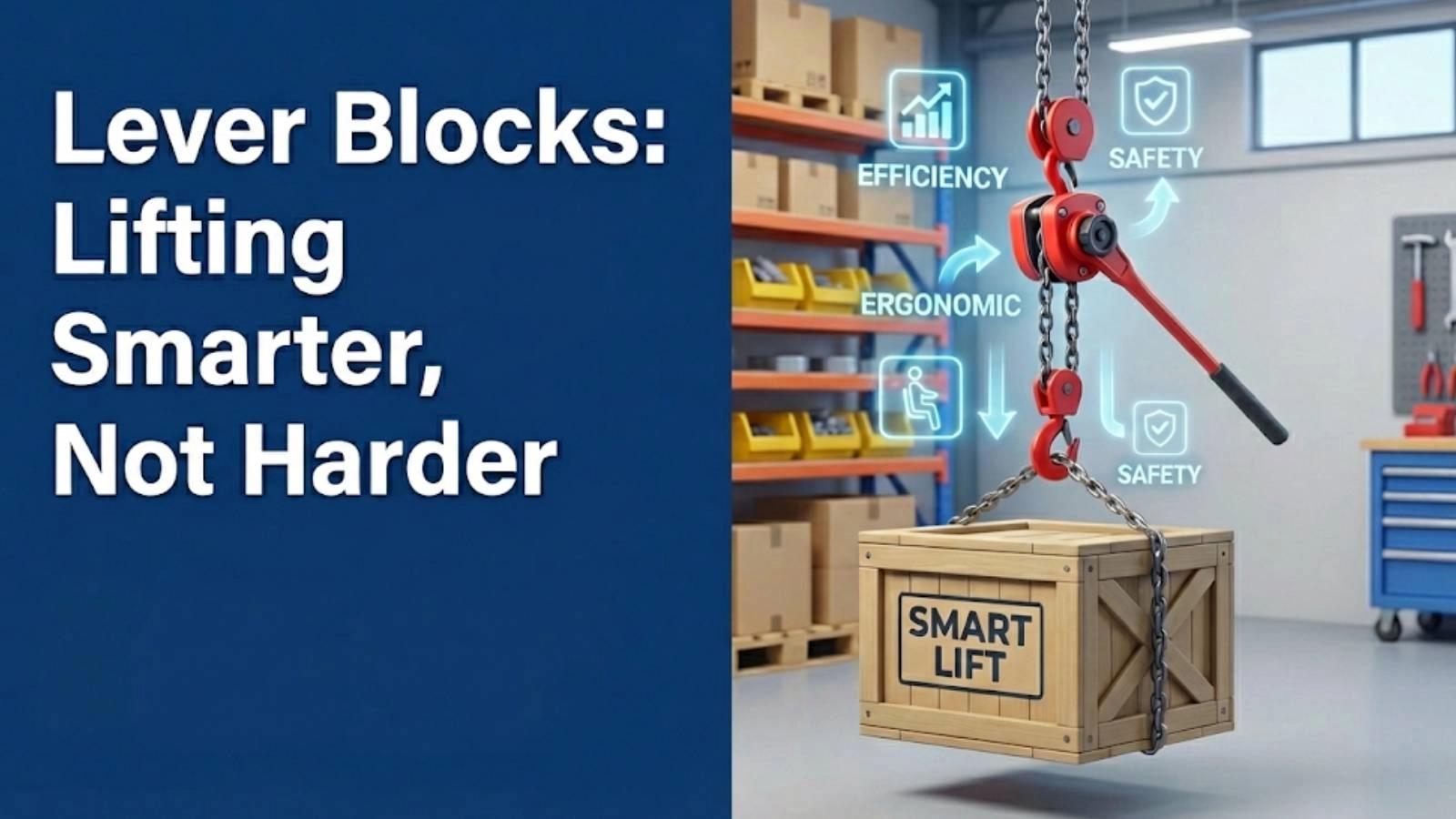
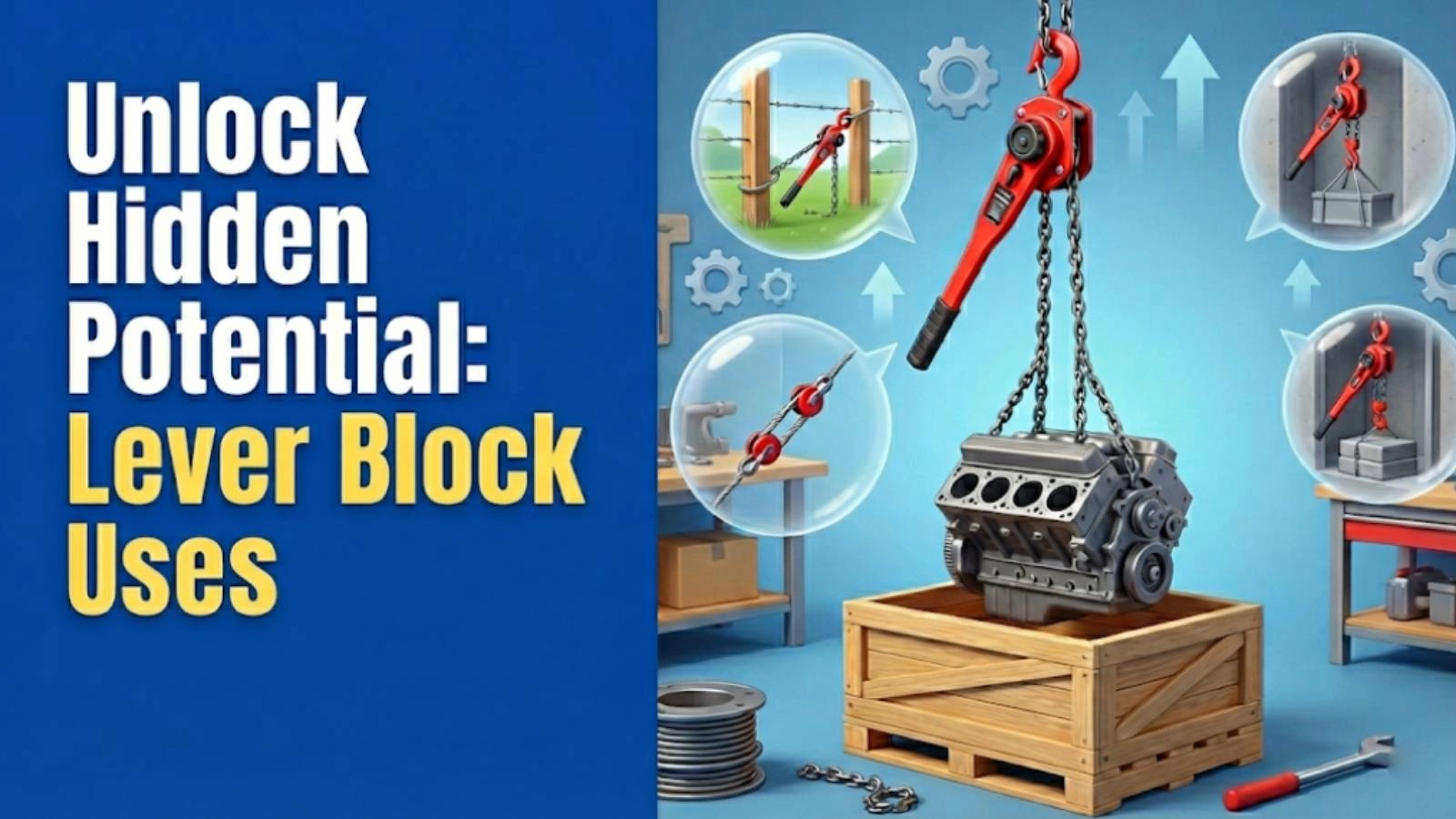
Lever blocks are indispensable tools in various industries, primarily known for their lifting and pulling capabilities. However, their versatility extends far beyond these conventional applications. This article will explore seven surprising lever block uses you may have never considered.
These unconventional applications highlight the ingenious ways professionals leverage the mechanical advantage and precision control offered by lever blocks. As with any heavy-duty equipment, safety remains paramount. Proper training and adherence to safety guidelines are crucial for preventing accidents and ensuring the longevity of your equipment. Now, let’s dive into these unexpected lever block uses.
1. Precision Load Positioning in Tight Spaces
✅ One of the more challenging tasks in industrial settings is maneuvering heavy objects within confined spaces. Traditional methods often fall short when millimeter-perfect accuracy is required. Lever blocks excel in these situations, offering unparalleled control over load positioning.
The challenge of maneuvering heavy objects in confined areas is significant. Often, space constraints limit the use of large machinery, and manual handling can be both dangerous and inaccurate. Lever blocks provide a solution by allowing for controlled, incremental movements. They enable operators to fine-tune the placement of objects with remarkable precision. For instance, we at Safe and Secure Trading Company have seen lever blocks used to perfectly align massive equipment.
Consider a scenario where machinery components must be precisely positioned during assembly. A lever block can be used to make minute adjustments, ensuring that each component fits perfectly. This level of control is difficult to achieve with other lifting equipment. We at Safe and Secure Trading Company always recommend using high-quality lever blocks for precision tasks because of their reliability and accuracy. For many of our clients here in Dammam, we’ve seen that using the right tool greatly increases safety.
2. Use Case #2: Simplifying Vehicle Recovery in Tricky Terrain
💡 Off-road adventures can sometimes lead to vehicles becoming stuck in challenging terrain. While winches and tow trucks are common recovery tools, they aren’t always feasible or accessible in remote locations. A lever block, combined with a sturdy anchor point, offers a practical solution for self-recovery.
The limitations of winches and tow trucks in off-road scenarios are apparent when vehicles get stuck in areas with no direct vehicular access or suitable anchor points. Winches may lack the necessary reach, and tow trucks simply can’t navigate the terrain. By anchoring a lever block to a tree, rock, or another vehicle, drivers can create a powerful pulling force to extract their vehicle. The mechanical advantage provided by the lever block allows even a single person to move a heavy vehicle.
I remember one time when I was out in the desert and our vehicle got stuck in deep sand. There wasn’t another vehicle for miles. Luckily, I had a lever block and some chain blocks in the back. I was able to attach the lever block to a sturdy rock and, using its mechanical advantage, slowly but surely pull the vehicle free. It was a lifesaver! We have been able to help our clients here in Saudi with the same thing.
When using a lever block for vehicle recovery, it’s crucial to prioritize safety. Always inspect the anchor point to ensure it can withstand the pulling force. Use appropriate rigging and avoid exceeding the lever block’s working load limit. Also, keep bystanders at a safe distance.
3. Use Case #3: Tensioning Fences and Securing Loads on Trailers
➡️ Saggy fences and shifting cargo can be a constant source of frustration and potential danger. Lever blocks provide a precise and effective method for tensioning fences and securing loads on trailers. This ensures the longevity of the fence and the safety of the transported goods.
The frustration of saggy fences and shifting cargo stems from inadequate tensioning methods. Trying to manually pull a fence taut or secure a load with ropes alone often yields unsatisfactory results. A lever block allows for incremental tension adjustments, resulting in a tight and secure fence or load. Many clients have asked for this specific use case of lever blocks.
Here’s a simple guide to tensioning a fence using a lever block: First, securely attach one end of the lever block to a fence post or anchor point. Then, connect the other end to the fence wire. Slowly operate the lever block to gradually increase the tension until the fence is taut. Secure the wire in its new position and release the tension. Proper tension ensures the longevity of the fence by preventing sagging and reducing stress on the posts. We recommend this process to all of our clients.
> “Using lever blocks to properly tension fences not only extends their lifespan but also significantly reduces the risk of livestock escaping or external threats entering.” – John Smith, Lead Safety Inspector
4. Use Case #4: Assisting in Tree Felling and Landscaping Projects
✅ Tree felling and landscaping projects often involve inherent dangers, such as uncontrolled tree falls and the need to lift heavy objects. Lever blocks can significantly enhance safety and ease these tasks.
The dangers of uncontrolled tree falls and heavy lifting in landscaping cannot be overstated. A falling tree can cause serious injury or property damage if not directed properly. Lifting heavy stones or plants manually can lead to strains and other injuries. A lever block can be used to guide the direction of a falling tree by pulling it in the desired direction. Additionally, it can assist in lifting and positioning heavy stones or plants with ease.
By using lever blocks in tree felling and landscaping, workers experience increased safety and reduced physical strain. The controlled pulling force of the lever block minimizes the risk of unexpected tree falls. The lifting assistance reduces the need for strenuous manual labor, preventing injuries and increasing efficiency.
5. Use Case #5: Emergency Repair of Damaged Equipment
💡 Unexpected equipment breakdowns can bring operations to a standstill, leading to costly downtime. In some cases, a lever block can provide a temporary solution to realign or support damaged parts until professional repairs can be made.
The unexpected breakdowns that can halt operations are a common headache for businesses. Waiting for specialized repair services can take time and money. While a lever block is not a permanent fix, it can be used to temporarily realign or support damaged parts, allowing operations to continue in a limited capacity.
Imagine a bent conveyor belt frame that prevents the belt from running smoothly. By using a lever block to pull the frame back into alignment, the belt can be temporarily operational until a permanent repair is made. It’s important to emphasize that this is a temporary fix until professional repairs are completed. Safety should remain paramount, and only qualified personnel should attempt such repairs.
6. Use Case #6: Creating Makeshift Cable Runs in Challenging Environments
➡️ Running cables in areas without existing infrastructure can be a logistical nightmare. Lever blocks offer a versatile solution for lifting and suspending cables over obstacles, creating makeshift cable runs. This is particularly useful in construction sites and other temporary work environments.
The difficulty of running cables in areas without existing infrastructure often involves navigating obstacles such as machinery, equipment, and uneven terrain. Simply laying cables on the ground can create trip hazards and expose them to damage. By using lever blocks to lift and suspend cables, these obstacles can be avoided, creating a safer and more organized work environment. For example, lever blocks can be used to install temporary lighting at a construction site, providing illumination without obstructing pathways.
This technique highlights the versatility and adaptability of lever blocks. Their ability to lift and suspend heavy objects makes them ideal for creating temporary cable runs in challenging environments. This not only improves safety but also enhances the overall efficiency of the work site.
7. Use Case #7: Assisting Boat Maintenance and Repair
✅ Boat maintenance and repair often present unique challenges, especially when working on boats out of water. Lever blocks can be invaluable tools for assisting with hull repairs and engine work.
The challenges of working on boats out of water often involve the need to lift and maneuver heavy components in awkward positions. Traditional methods can be cumbersome and risky. Lever blocks provide a controlled and safe way to lift and position heavy items.
For example, lever blocks can assist with hull repairs by lifting sections of the hull for patching or replacement. They can also be used to safely lift engines for maintenance or repair. One of our clients in Dammam recently shared how lever blocks significantly reduced the time and effort required for engine replacements on their fleet of fishing boats. They were able to work with more efficiency using lever blocks.
8. Safety First: Essential Precautions When Using Lever Blocks
It is essential to follow safety precautions when using a lever block. Safe and Secure Trading Company cares about your safety. We would like to remind you of essential safety precautions when using lever blocks.
Before each use, it’s crucial to thoroughly inspect the lever block, chain blocks, come alongs, and related rigging. Look for any signs of damage, such as cracks, bends, or excessive wear. Ensure that all components are in good working order. Proper load rating and working load limit (WLL) considerations are paramount. Never exceed the WLL of the lever block or any of the associated equipment. Distribute the load evenly and avoid shock loading.
When operating a lever block, use smooth and controlled movements. Avoid jerking or sudden stops, which can create excessive stress on the equipment. Keep hands and fingers clear of moving parts. Regularly inspect and maintain your lever blocks according to the manufacturer’s instructions. Store them in a clean, dry place to prevent corrosion and damage.
9. Choosing the Right Lever Block for Your Needs
Selecting the appropriate lever block for a specific task is crucial for ensuring safety and efficiency. Several factors should be considered, including capacity, lift height, and the environment in which the lever block will be used.
Consider the weight of the load you will be lifting and choose a lever block with an appropriate capacity. Ensure that the lift height is sufficient for the task at hand. Different types of lever blocks are available, each suited for specific applications. Chain blocks are commonly used for vertical lifting, while come alongs are often used for pulling and tensioning.
The importance of quality and certification cannot be overstated. Always purchase lever blocks from reputable manufacturers and ensure that they meet relevant safety standards. Safe and Secure Trading Company recommends durable and reliable lever blocks that are built to withstand demanding conditions.
Here’s a table summarizing key factors to consider when choosing a lever block:
| Factor |
Considerations |
| Capacity |
Weight of the load to be lifted |
| Lift Height |
Vertical distance the load needs to be lifted |
| Environment |
Indoor/outdoor, corrosive conditions |
| Type |
Chain block, come along, or other specialized type |
| Quality/Certification |
Meets relevant safety standards |
10. Real-World Examples: Stories of Lever Blocks in Action
Across various industries, lever blocks have proven to be invaluable tools for solving complex challenges and improving efficiency. Sharing anecdotes and case studies from these industries demonstrates the practical benefits and problem-solving capabilities of lever blocks.
In the construction industry, lever blocks are used for everything from lifting heavy materials to aligning structural components. In manufacturing, they assist in the assembly of machinery and the positioning of heavy equipment. In the transportation sector, they are used to secure loads and assist in vehicle recovery.
One of our clients, a large shipping company, realized boosted efficiency due to lever blocks. In addition, they said the construction tools improved safety as well. These real-world examples inspire readers to think creatively about lever block uses and explore new applications in their own fields.
11. Conclusion: Unleashing the Potential of Lever Blocks
From precision load positioning to emergency equipment repairs, the lever block is a versatile tool with a wide range of surprising lever block uses. We’ve explored unconventional applications that demonstrate the ingenuity and problem-solving capabilities of this essential piece of equipment.
We encourage you to explore new applications and share your experiences. Remember, safety should always be a top priority. By understanding the principles of mechanical advantage, proper load handling techniques, and essential safety precautions, you can unlock the full potential of lever blocks in a safe and efficient manner.
We invite you to explore our lever block product line and safety training resources.
FAQ Section
Q: What is a lever block used for?
A: A lever block is primarily used for lifting and pulling heavy loads. It uses a pulley system and a lever to provide mechanical advantage, allowing users to lift or move objects with less effort. Beyond lifting, lever block uses extend to precision positioning, vehicle recovery, fence tensioning, and more.
Q: How does a lever block provide mechanical advantage?
A: A lever block provides mechanical advantage through its internal pulley system. The lever action multiplies the user’s force, making it easier to lift or pull heavy objects. The more pulleys in the system, the greater the mechanical advantage.
Q: What safety precautions should I take when using a lever block?
A: Before using a lever block, inspect it for any signs of damage. Ensure that the load does not exceed the working load limit (WLL). Use proper rigging techniques and keep hands and fingers clear of moving parts. Regular maintenance and storage guidelines should be followed.
Q: Can I use a lever block for horizontal pulling?
A: Yes, a lever block can be used for horizontal pulling, especially with tools like come alongs. This is commonly used for tensioning fences, aligning objects, or vehicle recovery. Ensure the anchor point is secure and can withstand the pulling force.
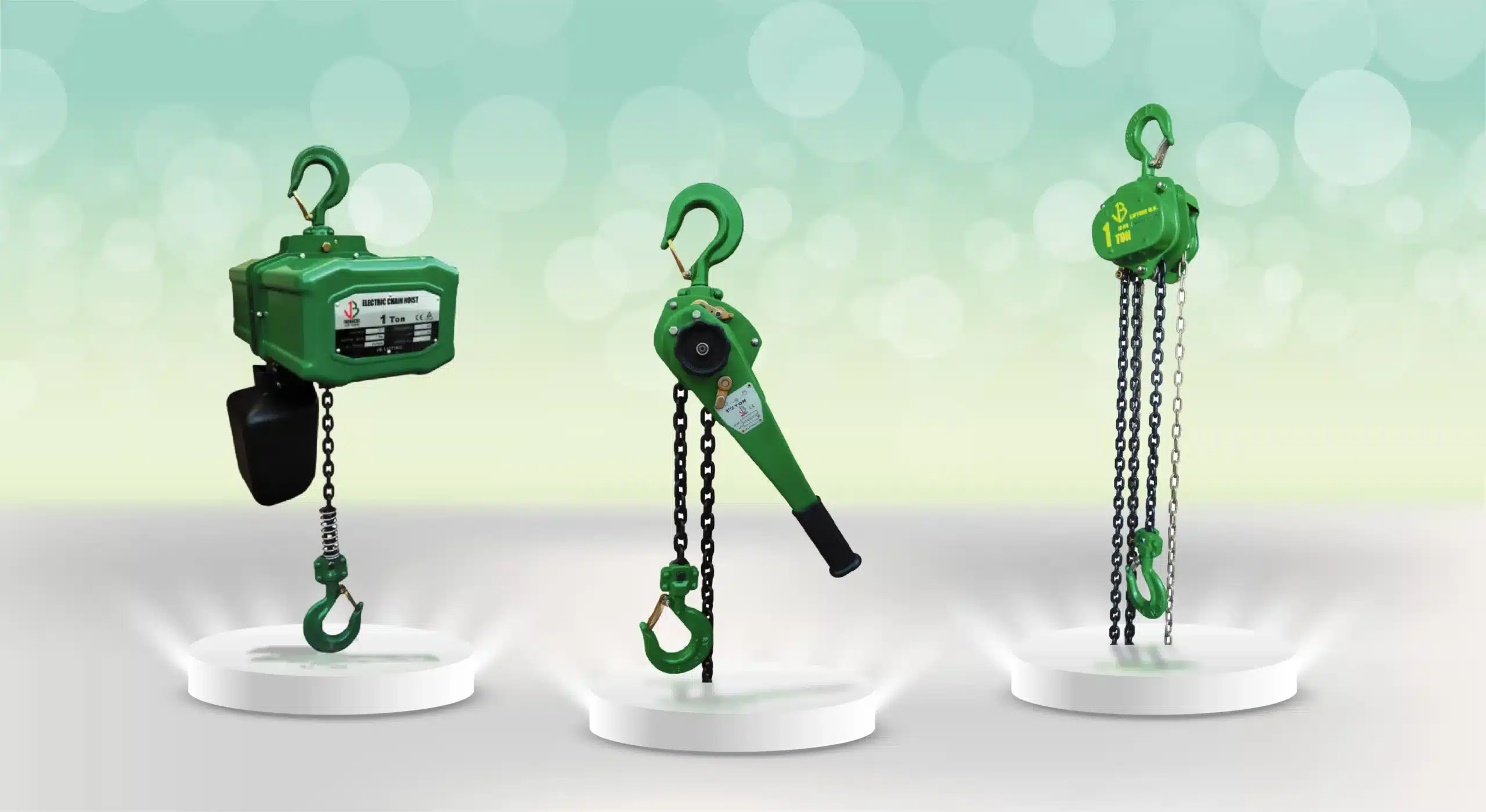
Q: What is the difference between a chain block and a lever block?
A: While both chain blocks and lever blocks are used for lifting, they operate differently. Chain blocks typically use a hand chain to lift loads vertically, while lever blocks use a lever and ratchet mechanism. Lever blocks are often preferred for applications requiring precise control and positioning.
Q: Where can I purchase high-quality lever blocks?
A: High-quality lever blocks can be purchased from reputable suppliers specializing in lifting equipment and construction tools. Look for products that meet relevant safety standards and certifications. Safe and Secure Trading Company offers a range of durable and reliable lever blocks for various applications.
Q: How often should I inspect my lever block?
A: Lever blocks should be inspected before each use to ensure they are in good working condition. Regular inspections can help identify potential problems before they lead to accidents or equipment failure. Follow the manufacturer’s recommendations for inspection intervals.
Q: What industries commonly use lever blocks?
A: Lever blocks are used in a wide range of industries, including construction, manufacturing, transportation, logging, and marine. Their versatility and mechanical advantage make them valuable tools for various load handling tasks.
Q: Can lever blocks be used in industrial applications?
A: Yes, lever blocks are designed for heavy-duty industrial applications. They are commonly used in factories, warehouses, and construction sites to lift and move heavy machinery, equipment, and materials. Selecting the right lever block with the appropriate capacity is crucial for safety and efficiency.