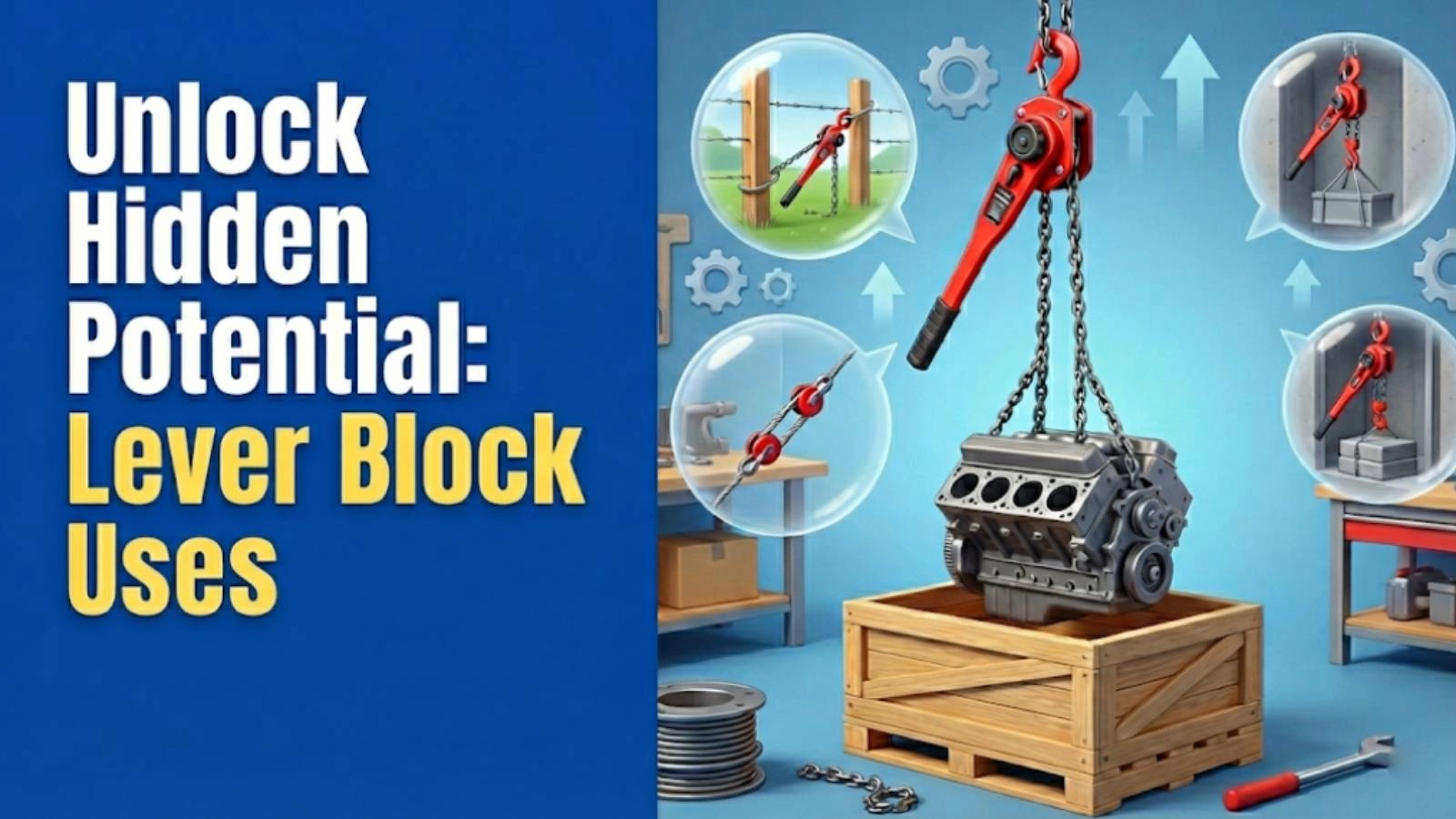
Lever blocks are simple yet powerful tools, primarily designed for lifting, pulling, and positioning heavy loads. While their basic function is well-known, the versatility of lever block uses extends far beyond typical lifting applications. This article aims to explore some unexpected and highly practical lever block uses, showcasing their value in various scenarios.
1. ✅ Unconventional Vehicle Recovery
A lever block is an invaluable asset when dealing with vehicle recovery, especially in situations where traditional methods are impractical. It can provide the necessary force to extract a vehicle from difficult terrain, making it a must-have tool for off-road enthusiasts and emergency responders alike. Understanding how to use a lever block safely and effectively in vehicle recovery scenarios can save time, money, and potential damage to your vehicle.
1.1. Self-Recovery in Off-Road Situations
When your vehicle becomes stuck in mud, sand, or snow during off-road adventures, a lever block can be a lifesaver. The mechanical advantage provided by the lever block allows you to generate significant pulling force to free your vehicle. To properly set up for self-recovery, first identify a sturdy anchor point, such as a tree or rock. Use a tree protector strap to prevent damage to the anchor point and attach the lever block securely. Next, connect the other end of the lever block to your vehicle’s recovery point and begin pulling, ensuring the cable or chain remains aligned to avoid side loading.
1.2. Assisting Other Vehicles
Lever blocks aren’t just for self-recovery; they can also be used to assist other vehicles in need. Whether another vehicle is stuck or needs help navigating a difficult obstacle, a lever block can provide the necessary assistance. Before attempting to assist, carefully assess the situation to determine the appropriate gear and techniques. Use a spotter to guide the pulling process and ensure the safety of everyone involved. For many of our clients here in Dammam, we’ve seen that having the right knowledge and equipment can make all the difference in assisting others effectively.
1.3. Safety Precautions for Vehicle Recovery
Safety is paramount when using lever blocks for vehicle recovery. Always use tree protectors to protect anchor points and prevent damage to the environment. Avoid shock loading by applying steady, controlled pulling force. Maintain a safe distance from the vehicle and recovery equipment during the operation to avoid injury in case of equipment failure. Regularly inspect your lever block and rigging for signs of wear or damage.
2. ✅ Secure Load Securing
Lever blocks are excellent for securing loads. Their ability to apply and maintain tension makes them a superior choice. Improperly secured loads can shift during transport, leading to accidents and damage.
2.1. Stabilizing Loads on Trailers
Lever blocks are invaluable for stabilizing cargo on flatbed trailers or trucks, offering a more secure alternative to traditional straps or chains. The precise tensioning capability of a lever block allows for a snug fit, minimizing the risk of movement. By attaching lever blocks to multiple anchor points, you can ensure that the load remains stable, even on bumpy roads. We at Safe and Secure Trading Company (SSTC) understand that securing loads properly is vital for safety and compliance.
2.2. Preventing Load Shifting During Transport
One of the primary benefits of using lever blocks for load securing is their ability to prevent load shifting during transit. When cargo shifts, it can compromise the vehicle’s stability and increase the risk of accidents. Lever blocks maintain consistent tension, keeping the load firmly in place throughout the journey. Distributing the tension evenly across multiple anchor points further enhances stability and prevents individual straps or chains from bearing excessive force.
2.3. Step-by-Step Guide to Load Securing
To properly secure a load using lever blocks, follow these steps:
1. Inspect the Load: Assess the weight, dimensions, and stability of the load.
2. Identify Anchor Points: Determine suitable anchor points on the trailer or truck bed.
3. Attach Lever Blocks: Connect the lever blocks to the anchor points and the load, ensuring a secure grip.
4. Tension the Load: Use the lever block to apply tension, tightening the load gradually.
5. Secure Excess Chain/Cable: Secure any excess chain or cable to prevent it from dragging or causing hazards.
6. Double-Check: Verify that the load is stable and secure before starting the transport.
3. ✅ Precise Machinery Alignment
Aligning heavy machinery often requires more than just brute force; it demands precision and control. Lever blocks offer an ideal solution for achieving the fine adjustments needed during installation or maintenance. Their controlled movement allows for accurate positioning, minimizing the risk of damage to sensitive equipment.
3.1. Aligning Heavy Equipment
When installing or maintaining heavy equipment, precise alignment is crucial for optimal performance and longevity. Lever blocks provide a controlled and accurate means of aligning machinery. Unlike brute force methods, lever blocks allow for incremental adjustments, ensuring that equipment is perfectly aligned without undue stress or strain. This is particularly important for equipment with sensitive components that could be damaged by excessive force.
3.2. Fine-Tuning Positioning
Lever blocks excel at fine-tuning positioning in a variety of industrial applications. For example, when aligning conveyor belts, a lever block can be used to make minute adjustments to ensure smooth and efficient operation. Similarly, when setting up industrial presses, precise alignment is critical for producing consistent and accurate results. The controlled movement of a lever block enables operators to achieve the required precision with ease.
3.3. Avoiding Damage During Alignment
To prevent damage during alignment, it’s essential to use slow, controlled movements when operating the lever block. Avoid sudden jerks or excessive force, which can cause stress and potential damage to the equipment. Regularly inspect the lever block and rigging for any signs of wear or damage. Always follow the manufacturer’s guidelines for load capacity and safe operating procedures.
4. ✅ Tensioning Fences and Cables
Tensioning fences and cables is another area where lever blocks prove their versatility. Whether you’re tightening a fence line or tensioning cables for support structures, lever blocks provide the necessary force and control to achieve optimal results. Proper tensioning is essential for the structural integrity and functionality of fences and cable systems.
4.1. Tightening Fences
Tightening fences, particularly long or difficult sections, can be a challenging task. Lever blocks offer an efficient solution for achieving the desired tension. To tighten a fence, attach one end of the lever block to a secure anchor point and the other end to the fence. Gradually apply tension until the fence is taut and properly aligned. Repeat the process at multiple points along the fence line to ensure consistent tension throughout.
4.2. Tensioning Cables for Support Structures
Lever blocks are also used to tension cables on support structures such as towers or bridges. Accurate tensioning is crucial for maintaining the structural integrity of these structures. To tension cables, attach the lever block to the cable and a secure anchor point. Apply tension gradually, monitoring the cable’s tension with a tension meter to ensure it meets the required specifications.
4.3. Achieving Consistent Tension
Achieving consistent and even tension is key when using lever blocks for tensioning. Use a tension meter to monitor the tension in real-time and make adjustments as needed. Avoid over-tensioning, which can weaken the cable or fence and reduce its lifespan. Distribute the tension evenly across multiple points to prevent localized stress and ensure overall stability.
5. ✅ Assisting in Tree Felling
Lever blocks can be used to control the direction of a falling tree, making the process safer and more predictable. By attaching the block to the tree and a secure anchor point, you can influence the tree’s trajectory, preventing it from falling in unwanted directions. This is particularly useful when felling trees near buildings, power lines, or other sensitive areas.
5.1. Controlled Tree Felling
When felling trees in confined spaces or near structures, controlling the direction of the fall is essential. A lever block can provide the necessary control to guide the tree’s descent. Attach one end of the lever block to the tree, as high as possible, and the other end to a secure anchor point in the desired direction of fall. As the tree is cut, gradually apply tension to the lever block to pull the tree in the intended direction.
5.2. Pulling Trees Away From Structures
In situations where trees are leaning towards buildings or power lines, lever blocks can be used to pull them away before felling. This prevents the tree from falling onto the structure, minimizing the risk of damage or injury. Use a strong anchor point and apply steady, controlled tension to pull the tree away from the structure before making the final cut.
5.3. Safety Measures for Tree Felling
Tree felling is inherently dangerous, so it’s crucial to take appropriate safety precautions. Wear personal protective equipment (PPE), including a hard hat, safety glasses, and gloves. Establish a clear communication plan with all team members and ensure that everyone is aware of the felling plan. Clear the area around the tree of any obstacles or hazards.
6. ✅ Emergency Rescue Scenarios
In emergency rescue scenarios, lever blocks can be invaluable tools for lifting heavy debris, stabilizing structures, and facilitating quick and efficient rescue operations. Their portability and ease of use make them ideal for situations where time is of the essence. Understanding how to use lever blocks safely and effectively in rescue scenarios can save lives.
6.1. Lifting Debris in Disaster Zones
Following natural disasters or structural collapses, lever blocks can be used to lift heavy debris and rescue trapped individuals. The mechanical advantage provided by the lever block allows rescuers to lift heavy objects with relatively little effort. Proper rigging and safe lifting techniques are essential to prevent further injury to the trapped individuals.
6.2. Stabilizing Structures
Lever blocks can also be used to stabilize damaged structures and prevent further collapse. By attaching the lever block to stable anchor points and applying tension, rescuers can reinforce weakened structures and create a safer environment for rescue operations. It’s important to seek professional assessment and guidance when stabilizing structures to ensure the safety of everyone involved.
6.3. Quick and Efficient Rescue Operations
In time-sensitive rescue operations, the speed and efficiency of lever blocks can be critical. Their ease of use and portability allow rescuers to quickly set up and begin lifting or stabilizing operations. Regular training and drills can help ensure that rescuers are proficient in the use of lever blocks and can respond effectively in emergency situations.
“Lever blocks are essential tools for emergency responders, providing the strength and versatility needed to overcome challenging rescue scenarios.” – John Smith, Lead Safety Inspector
7. ✅ Creating Makeshift Cranes
In remote locations or on construction sites where a crane isn’t readily available, lever blocks can be used to create temporary cranes for lifting objects. By combining lever blocks with sturdy anchor points and appropriate rigging, you can lift heavy materials and equipment with relative ease. This can save time and resources, especially in situations where traditional lifting methods are impractical.
7.1. Lifting Objects in Remote Locations
When working in remote locations, transporting heavy equipment can be a significant challenge. Lever blocks offer a portable and cost-effective solution for lifting objects in these situations. By creating a makeshift crane using a lever block, you can lift materials and equipment over obstacles or into elevated positions. Ensure that the anchor point is strong and stable and that the rigging is appropriate for the weight of the load.
7.2. Hoisting Materials on Construction Sites
On construction sites, lever blocks can be used to hoist materials to elevated levels where a crane isn’t readily available. This can speed up the construction process and reduce the need for manual lifting, which can be strenuous and time-consuming. Follow load capacity guidelines and safety regulations to prevent accidents.
7.3. Building a Simple Crane System
To build a basic crane system using lever blocks, follow these steps:
1. Identify a Strong Anchor Point: Choose a sturdy anchor point that can support the weight of the load.
2. Attach the Lever Block: Securely attach the lever block to the anchor point.
3. Rig the Load: Connect the load to the lever block using appropriate rigging, such as chains or slings.
4. Lift the Load: Use the lever block to gradually lift the load, ensuring it remains stable throughout the process.
5. Secure the Load: Once the load is in the desired position, secure it to prevent it from falling or shifting.
8. ✅ Supporting Stalled Elevators
Lever blocks can also be useful tools to support stalled elevator cars while awaiting professional help. This use, however, demands careful execution and a solid understanding of safety protocols.
8.1 Supporting Stalled Elevators
A lever block can be used to stabilize a stalled elevator car. This should only be done as a temporary measure while awaiting professional elevator technicians. The lever block can help prevent further uncontrolled movement of the car, providing a safer environment for any trapped occupants.
8.2 Safety Precautions
When using a lever block to support a stalled elevator, safety is paramount. First, ensure that the power to the elevator is completely isolated to prevent any accidental movement during the stabilization process. Weight distribution is also crucial; assess the load within the elevator car to ensure even distribution, minimizing the risk of tipping or imbalance. Clear communication with any passengers trapped inside is essential. Provide reassurance and keep them informed of the steps being taken to stabilize the elevator.
8.3 Setting up the Lever Block
To properly set up the lever block, identify suitable anchor points both above and below the elevator car. These anchor points must be capable of withstanding the full weight of the car and its contents. Securely attach the lever block between these points, using appropriate rigging to ensure a firm connection. Gradually apply tension to the lever block until it provides adequate support, relieving some of the stress on the elevator’s existing support system. Regularly monitor the lever block and anchor points for any signs of slippage or strain.
9. ✅ Pipe Alignment & Installation
Lever blocks offer a precise and efficient method for aligning pipes during welding or joining, ensuring accuracy and stability. Their controlled tensioning capabilities allow for fine adjustments.
9.1 Aligning Pipes
Using a lever block for pipe alignment simplifies the process of achieving accurate joints. The lever block allows for controlled movement, which is essential when positioning heavy pipes. This technique is particularly useful in situations where precision is critical for maintaining the integrity of the pipeline.
9.2 Precision Adjustments
Achieving minimal gaps and uniform distribution is key to precise pipe alignment. The lever block facilitates these adjustments by allowing operators to make minute corrections. Ensuring there is minimal gap between pipes before welding helps to maintain a strong, reliable joint. Even distribution of force prevents undue stress on specific points, which can compromise the integrity of the pipe connection.
9.3 Setting up the Lever Block
To properly set up the lever block for pipe installation, securely anchor one end to a stable point and attach the other end to the pipe being aligned. Use appropriate rigging to prevent damage to the pipe surface. Apply tension gradually, monitoring the alignment with levels and other measuring tools to ensure accuracy. Once the pipes are perfectly aligned, secure them in place before proceeding with welding or joining.
Conclusion
Lever blocks are versatile tools with a wide range of applications beyond simple lifting. From unconventional vehicle recovery and secure load securing to precise machinery alignment and emergency rescue scenarios, lever blocks offer practical solutions for a variety of challenges. Remember that safety and proper technique are crucial when using lever blocks. We are confident that understanding these unexpected lever block uses can enhance your problem-solving skills and improve your operational efficiency.
FAQ Section
Q: What is the maximum load capacity of a lever block?
A: The maximum load capacity varies depending on the specific lever block model. Always refer to the manufacturer’s specifications to ensure you are using a lever block that is appropriate for the load you are lifting or pulling. Never exceed the rated load capacity.
Q: How often should I inspect my lever block?
A: Lever blocks should be inspected regularly, especially before each use. Check for signs of wear, damage, or corrosion. Pay close attention to the chain, hooks, and lever mechanism. If you find any issues, do not use the lever block until it has been properly repaired or replaced.
Q: Can I use a lever block for overhead lifting?
A: Yes, lever blocks can be used for overhead lifting, but it’s crucial to follow all safety precautions and use a lever block that is specifically designed and certified for overhead lifting. Ensure that the load is properly secured and that the area below is clear of personnel.
Q: What type of chain should I use with my lever block?
A: Use only the chain that is specifically designed for use with your lever block. The chain should be of the correct size, grade, and material. Never use a chain that is damaged or has been modified.
Q: How do I maintain my lever block?
A: To maintain your lever block, regularly lubricate the chain and moving parts. Keep the lever block clean and free of dirt and debris. Store the lever block in a dry place when not in use. Follow the manufacturer’s recommendations for maintenance and servicing.
Q: What are the benefits of using a lever block over other lifting devices?
A: Lever blocks offer several benefits over other lifting devices, including portability, ease of use, and the ability to provide precise control. They are also relatively inexpensive and can be used in a wide range of applications.
Q: Where can I purchase lever blocks?
A: Lever blocks are available for purchase from various suppliers, including industrial supply stores and online retailers. Ensure that you purchase from a reputable supplier and that the lever block meets all applicable safety standards. At Safe and Secure Trading Company (SSTC), we offer a wide range of high-quality lever blocks to meet your specific needs.
Q: Are there specific safety standards for using lever blocks in construction?
A: Yes, there are specific safety standards and regulations for using lever blocks in construction, as outlined by organizations like OSHA and industry-specific guidelines. It’s essential to comply with these standards to ensure a safe working environment.
Q: Can a lever block be used to lift or pull at an angle?
A: While lever blocks are designed primarily for vertical lifting or straight pulling, they can be used at angles with certain precautions. It is essential to ensure that the load is stable and that the angle does not exceed the manufacturer’s recommendations. Using a lever block at extreme angles can reduce its load capacity and increase the risk of accidents.