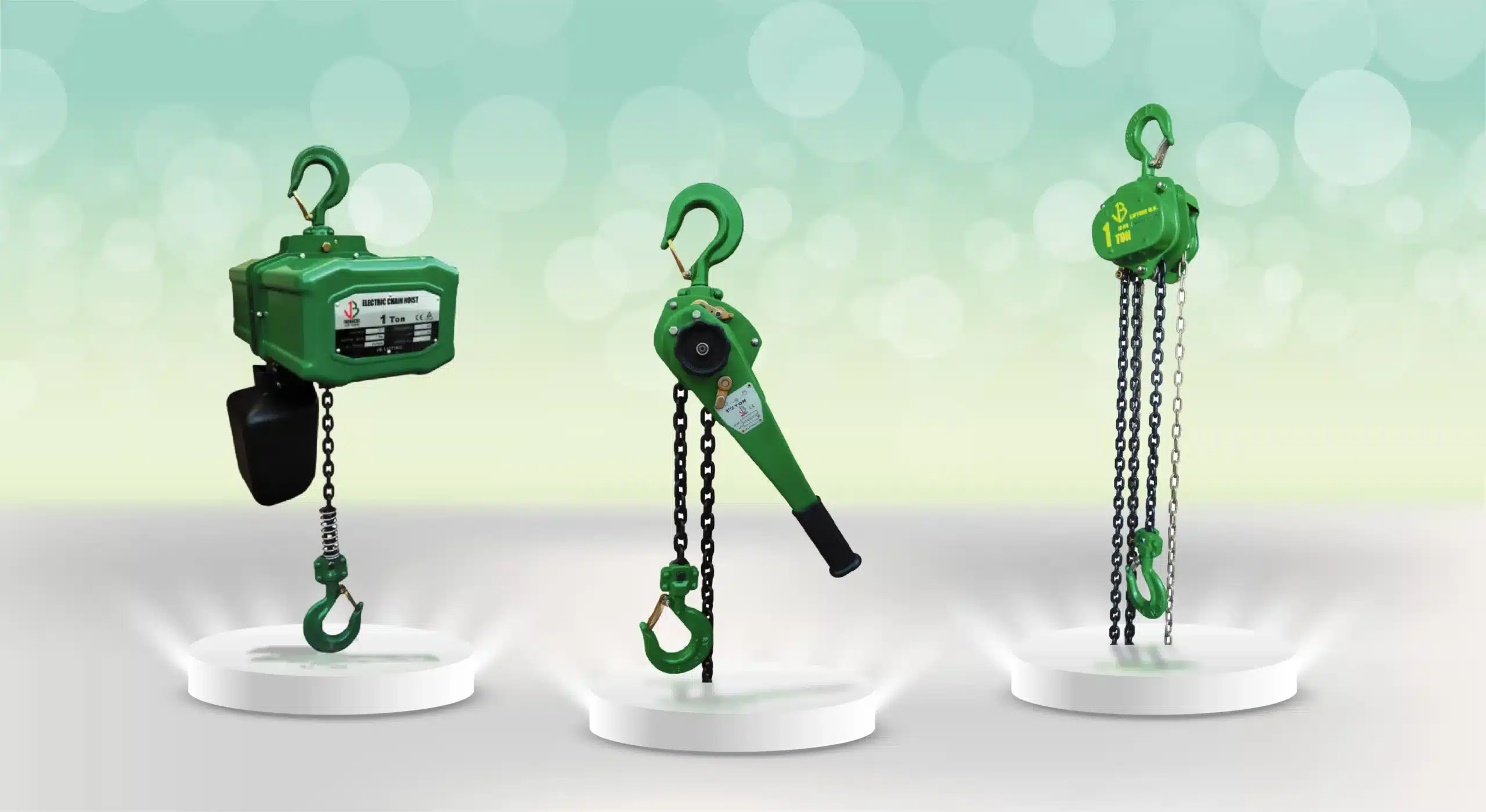
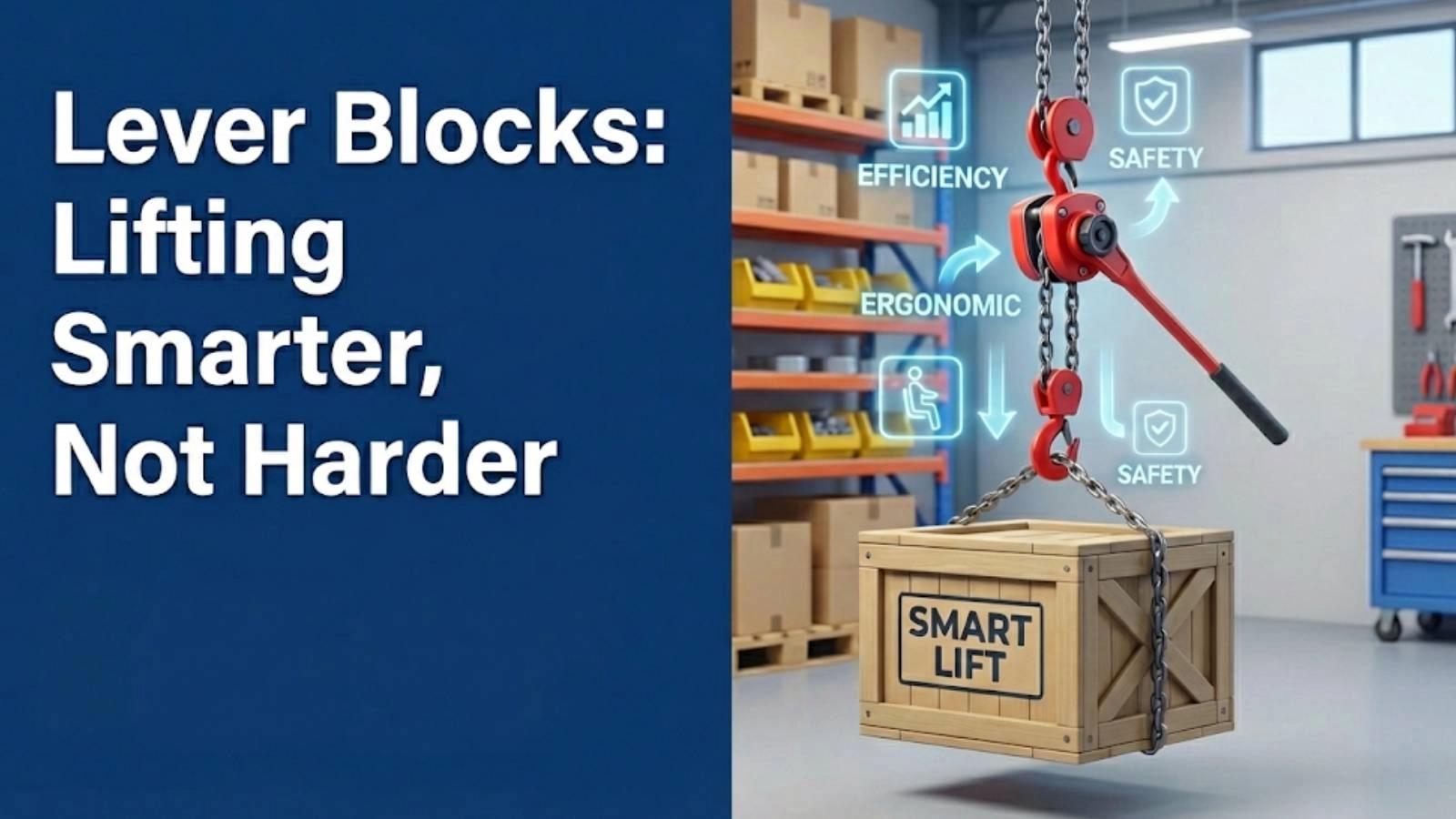
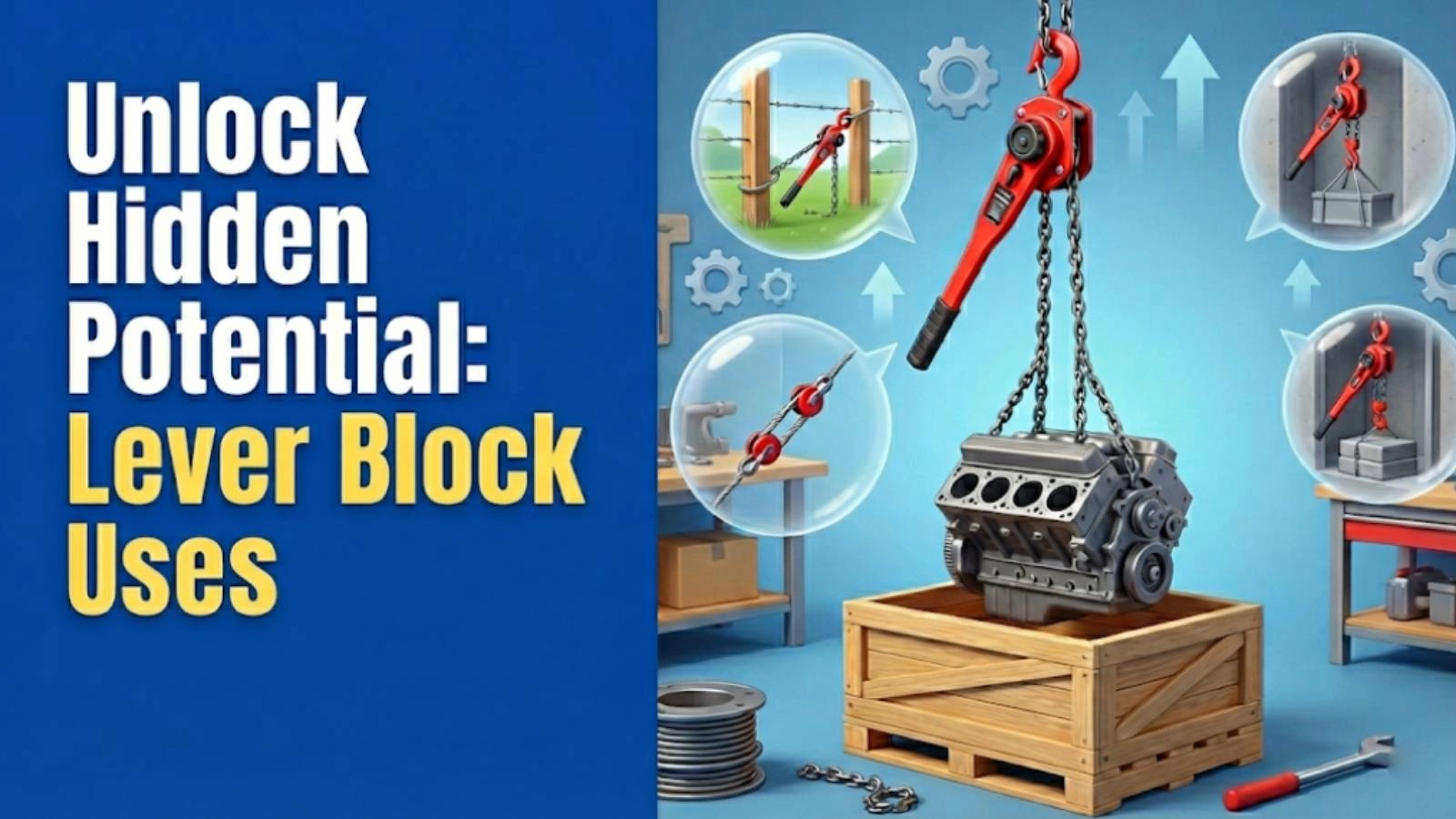
Lever Block: Unexpected Superpowers
Lever blocks, often seen as simple lifting tools, possess a range of capabilities that extend far beyond basic vertical hoisting. These versatile devices offer solutions to various challenges across industries like construction, manufacturing, and even forestry. Understanding the full spectrum of lever block uses can unlock significant efficiencies and safety improvements in numerous applications.
1. Introduction: Beyond the Basics of Lever Blocks
Lever blocks are indispensable tools in various industries, yet their true potential is often underestimated. Many perceive them merely as devices for lifting heavy objects vertically, overlooking the broader range of applications where they can significantly enhance efficiency and safety. By expanding our understanding of these versatile tools, we can unlock solutions to numerous challenges in diverse fields.
1.1 The Common Misconception: Lever Blocks are Just for Lifting
The typical image of a lever block involves lifting heavy materials in a construction site or a warehouse. This perception, while valid, limits the appreciation for its capabilities. Many users and even some professionals fail to recognize that lever blocks are equally adept at pulling, tensioning, and positioning, making them a multifaceted tool for various tasks beyond simple lifting.
1.2 A Problem-Solving Powerhouse: Unveiling Hidden Capabilities
Lever blocks are not just about brute force; they offer controlled and precise application of power, making them invaluable in situations requiring finesse. By understanding the mechanics and adaptability of lever blocks, we can leverage their problem-solving attributes to overcome obstacles in unconventional scenarios. Whether it’s aligning pipes for welding or recovering a stuck vehicle, lever blocks provide a reliable solution when other tools fall short.
2. Problem: Stuck Vehicle Recovery
✅ When vehicles become immobilized in challenging terrains, a lever block can be a lifesaver. Its ability to provide significant pulling force, combined with its portability, makes it an ideal tool for vehicle recovery in situations where traditional towing methods are impractical. With the right setup, a lever block can extract vehicles from mud, snow, sand, and other difficult conditions.
2.1 The Muddy Mess: Recovering Vehicles from Difficult Terrains
Vehicles frequently encounter situations where they become bogged down in mud, snow, or sand, rendering them immobile. Traditional towing methods may not always be feasible, especially in remote locations or when access is limited. A lever block, with its compact size and powerful pulling capability, offers a practical solution for extracting vehicles from these challenging terrains.
2.2 Anchor Points and Leverage: The Physics of Vehicle Recovery
Successful vehicle recovery using a lever block depends on identifying stable anchor points and maximizing leverage. Trees, large rocks, or dedicated ground anchors can serve as secure attachment points for the lever block. By strategically positioning the anchor point and utilizing the lever block’s mechanical advantage, the operator can generate sufficient pulling force to free the stuck vehicle. For many of our clients here in Dammam, we’ve seen that a good understanding of physics can drastically improve recovery times.
3. Problem: Tensioning Fences and Securing Loads
💡Lever blocks are invaluable for achieving precise tension in fencing and ensuring cargo stability during transportation. Their controlled pulling power enables consistent tensioning of fence wires, resulting in secure and long-lasting fences. Similarly, when used with chains or straps, lever blocks tightly secure loads on trucks and trailers, preventing shifting and potential damage during transit.
3.1 Fencing Frustrations: Achieving Tight and Secure Fences
Installing or repairing fences often requires achieving proper tension to ensure the fence is taut and secure. Manually tensioning fence wires can be difficult and inconsistent, leading to sagging fences that are less effective. A lever block provides a controlled and consistent method for applying tension, resulting in fences that are strong, durable, and aesthetically pleasing.
3.2 Cargo Control: Securing Loads on Trucks and Trailers
Cargo stability is paramount during transportation to prevent accidents and damage to goods. Shifting loads can compromise vehicle stability and pose a significant safety risk. Lever blocks, when used in conjunction with chains or straps, provide a reliable means of tightly securing cargo, preventing movement and ensuring the safe delivery of goods. This is vital for many of our clients operating logistics companies across the region.
4. Problem: Moving Heavy Machinery
➡️ Moving heavy machinery within a facility or construction site presents unique challenges, particularly when space is limited. Lever blocks offer a compact and controlled solution for maneuvering equipment in tight areas, allowing for precise placement without the need for large machinery. Their fine-tuned control minimizes the risk of damage to the equipment or the surrounding environment.
4.1 Confined Spaces: Maneuvering Equipment in Tight Areas
Limited space and accessibility often complicate the task of moving heavy machinery. Traditional methods, such as forklifts or cranes, may not be feasible in confined areas. Lever blocks, with their compact design and powerful pulling capabilities, provide a practical solution for maneuvering equipment in tight spaces, allowing for precise positioning without the need for extensive maneuvering room.
4.2 Precise Placement: Achieving Accurate Positioning
Accurate placement of heavy machinery is often critical for operational efficiency and safety. Imprecise positioning can lead to misalignment, equipment damage, or even workplace accidents. Lever blocks offer fine-tuned control, enabling operators to achieve accurate positioning with minimal effort. This precision reduces the risk of damage and ensures that equipment is correctly aligned for optimal performance.
5. Problem: Rigging and Stage Setup
✨Lever blocks play a crucial role in rigging and stage setup, providing the necessary lifting and positioning capabilities for heavy equipment. In theaters, they are used to lift and position lighting, sound, and scenery equipment safely and precisely. Similarly, at events, lever blocks facilitate the setup of banners, decorations, and displays, ensuring they are level, stable, and visually appealing.
5.1 Theater Tech: Lifting and Positioning Stage Equipment
Theatrical productions rely on precise and safe rigging operations to suspend lighting, sound, and scenery equipment. The weight and complexity of these items require reliable lifting solutions that offer fine-tuned control. Lever blocks provide the necessary precision and safety, ensuring that stage equipment is positioned accurately and securely, enhancing the overall performance.
5.2 Event Rigging: Setting Up Banners and Decorations
Events often involve hanging large banners, decorations, and displays, which can be cumbersome and challenging. Ensuring that these items are level, stable, and securely fastened is essential for creating a visually appealing and safe environment. Lever blocks offer a convenient and reliable method for lifting and securing these items, ensuring they are properly positioned and can withstand the elements. We often see our clients using them to set up large events in Riyadh.
6. Problem: Tree Felling and Limb Removal
✅ Lever blocks enhance the safety and control of tree felling and limb removal operations. By applying controlled pulling force, they can direct the falling direction of a tree, minimizing the risk of damage to surrounding structures or injury to personnel. Similarly, lever blocks facilitate the safe removal of large or hazardous tree limbs, preventing uncontrolled falls and ensuring a clean and safe work environment.
6.1 Controlled Direction: Safely Felling Trees
Felling trees can be a hazardous task, particularly when working in close proximity to buildings, power lines, or other obstacles. Controlling the direction of the falling tree is crucial for preventing damage and ensuring the safety of personnel. A lever block, attached to the tree with a rope or cable, allows operators to pull the tree in the desired direction during felling, minimizing the risk of uncontrolled falls.
6.2 Limb Removal: Removing Dangerous or Unwanted Branches
Removing large or hazardous tree limbs can be challenging, especially when working at height. Uncontrolled limb falls can cause significant damage and pose a serious safety risk. A lever block provides a controlled pulling force, allowing for the safe and precise removal of tree limbs. By gradually applying tension, operators can ensure a clean break and prevent the limb from falling unexpectedly.
7. Problem: Pipe Alignment and Installation
💡Lever blocks are indispensable tools for precisely aligning pipes for welding and assisting with pipe placement during infrastructure installations. Their controlled pulling force enables accurate alignment, ensuring strong and leak-proof joints. During infrastructure projects, lever blocks facilitate the safe and efficient movement and positioning of heavy pipes, reducing the risk of injury and improving overall project efficiency.
7.1 Welding Prep: Aligning Pipes for Welding
Precise alignment of pipes is essential for achieving strong and leak-proof welds. Misaligned pipes can result in weak joints that are prone to failure. Lever blocks provide a controlled pulling force, allowing operators to precisely align pipes before welding. By ensuring proper alignment, lever blocks contribute to the integrity and longevity of welded pipe systems.
7.2 Infrastructure Installs: Assisting with Pipe Placement
Infrastructure installations often involve moving and positioning heavy pipes, which can be a challenging and hazardous task. The weight and size of these pipes require reliable lifting and positioning solutions. Lever blocks offer a safe and efficient method for moving and positioning pipes, reducing the risk of injury and improving overall project efficiency.
8. Problem: Demolition Projects
➡️ Lever blocks offer controlled pulling force for safely collapsing structures during demolition projects and removing specific portions of a building while leaving others intact. In controlled demolition, they ensure that the collapse occurs away from sensitive areas. In selective demolition, lever blocks enable the precise removal of specific structures, minimizing collateral damage and ensuring the safety of the surrounding environment.
8.1 Controlled Collapse: Assisting in Controlled Demolition
Controlled demolition requires precise and predictable collapse of structures to minimize the risk of damage to surrounding buildings and infrastructure. Lever blocks can be used to apply controlled pulling force to weaken specific structural elements, directing the collapse away from sensitive areas. This controlled approach enhances safety and minimizes the environmental impact of demolition projects.
8.2 Selective Demolition: Removing Specific Structures
Selective demolition involves removing specific portions of a building while leaving others intact. This technique requires precise and controlled removal methods to avoid damaging the remaining structure. Lever blocks provide the necessary control, allowing operators to selectively pull down specific structures with minimal collateral damage. This approach is particularly useful in urban environments where space is limited and precision is paramount.
9. Safety First: Best Practices for Lever Block Uses
Safety should always be the top priority when using lever blocks. This includes understanding and adhering to weight restrictions, regularly inspecting equipment for wear and tear, and providing comprehensive training for safe operation. By following these best practices, operators can minimize the risk of accidents and ensure a safe working environment.
9.1 Load Limits: Understanding and Adhering to Weight Restrictions
Overloading lever blocks can lead to equipment failure and potentially serious injury. Each lever block has a specific load limit that should never be exceeded. Operators must always check and adhere to the manufacturer’s load limit, taking into account the weight of the load and any additional forces that may be applied.
9.2 Inspection: Regularly Inspecting Equipment for Wear and Tear
Damaged or worn-out lever blocks pose a significant safety risk. Regular inspection is essential for identifying and replacing worn parts before they lead to accidents. Operators should inspect lever blocks for signs of wear, such as bent hooks, damaged chains, or cracked housings. Any damaged or worn parts should be replaced immediately.
9.3 Training: Proper Training for Safe Operation
Lack of knowledge of safe operating procedures is a common cause of accidents involving lever blocks. Comprehensive training is essential for ensuring that operators understand the proper use of lever blocks, including rigging techniques, load calculations, and safety precautions. Training should cover all aspects of lever block operation, from pre-use inspection to safe lifting and lowering techniques.
“Lever blocks are simple to use, but require knowledge and understanding of the weights being lifted.” – John Smith, Lead Safety Inspector
Expert Quote
| Lever Block Use |
Benefit |
Industry |
| Vehicle Recovery |
Extracts vehicles from difficult terrains |
Automotive, Off-Roading |
| Tensioning Fences |
Achieves tight and secure fences |
Agriculture, Construction |
| Moving Heavy Machinery |
Maneuvers equipment in tight areas |
Manufacturing, Construction |
| Rigging and Stage Setup |
Lifts and positions stage equipment |
Entertainment, Theater |
| Tree Felling |
Controls direction of falling trees |
Forestry, Landscaping |
| Pipe Alignment |
Aligns pipes for welding |
Construction, Infrastructure |
| Demolition Projects |
Assists in controlled demolition |
Construction, Demolition |
Link Bait HTML Table
Lever blocks are versatile tools that go far beyond simple lifting. From vehicle recovery and fence tensioning to moving heavy machinery and assisting in demolition projects, their applications are vast and varied. Understanding these diverse lever block uses can unlock significant efficiencies and safety improvements across numerous industries. The versatility of manual hoist applications makes it a must-have in every professional’s toolkit.
Conclusion
Lever blocks are more than just lifting devices; they are problem-solving tools with a wide range of applications. Whether it’s recovering a stuck vehicle, tensioning a fence, or positioning heavy machinery, lever blocks offer a reliable and controlled solution. By understanding the full spectrum of lever block uses and adhering to safety best practices, operators can unlock significant efficiencies and safety improvements. At Safe and Secure Trading Company, we are committed to providing high-quality lever blocks and expert guidance to help our clients maximize their potential. We offer expert guidance on rigging applications, tensioning applications, pulling applications, industrial lever block selection, and construction lever block uses. Contact us today for all your lifting equipment uses and manual hoist applications!
FAQ Section
Q: What is a lever block and how does it work?
A: A lever block, also known as a chain hoist or come along, is a manual lifting device that uses a lever and gear system to multiply the force applied by the operator. This allows for the lifting or pulling of heavy loads with relatively little effort. The operator pulls on a lever, which rotates a gear mechanism that lifts or pulls the load via a chain or cable. Lever blocks are commonly used in construction, manufacturing, and other industries where heavy lifting is required.
Q: What are the primary lever hoist applications?
A: Lever hoists are primarily used for lifting, pulling, and positioning heavy loads in various industries. Common lever hoist applications include:
Lifting equipment and materials on construction sites
Moving heavy machinery in manufacturing facilities
Tensioning fences and securing loads on trucks
Recovering stuck vehicles
Rigging and stage setup in theaters and events
Tree felling and limb removal
Pipe alignment and installation
Demolition projects
Q: What is the difference between a lever block and a chain block?
A: While the terms are sometimes used interchangeably, there is a key difference between lever blocks and chain blocks. A chain block typically uses a hand chain to lift loads vertically, whereas a lever block uses a lever to pull or lift loads in various directions. Chain blocks are generally used for vertical lifting applications, while lever blocks offer more versatility for pulling, tensioning, and positioning tasks. Understanding chain block uses versus lever block uses is crucial for choosing the right tool.
Q: What are some safety precautions to take when using a lever block?
A: Safety should always be the top priority when using a lever block. Here are some essential safety precautions:
Always check and adhere to the manufacturer’s load limit.
Regularly inspect the lever block for signs of wear and tear, such as bent hooks, damaged chains, or cracked housings.
Ensure that the load is properly secured before lifting or pulling.
Use appropriate rigging techniques and hardware.
Never stand directly under a suspended load.
Provide comprehensive training for operators on the proper use of lever blocks.
Wear appropriate personal protective equipment (PPE), such as gloves and safety glasses.
Q: What are the advantages of using a lever block compared to other lifting methods?
A: Lever blocks offer several advantages over other lifting methods, including:
Portability: Lever blocks are compact and lightweight, making them easy to transport and use in various locations.
Versatility: Lever blocks can be used for lifting, pulling, and positioning loads in various directions.
Precision: Lever blocks offer fine-tuned control, allowing for accurate placement of heavy objects.
Safety: When used correctly, lever blocks provide a safe and controlled method for lifting and moving heavy loads.
Cost-effectiveness: Lever blocks are a relatively inexpensive lifting solution compared to other methods, such as cranes or forklifts.
Q: How do I choose the right size and capacity of lever block for my needs?
A: Selecting the right size and capacity of lever block is crucial for ensuring safe and efficient operation. Consider the following factors:
Load Weight: Determine the maximum weight of the loads you will be lifting or pulling.
Lifting Height/Pulling Distance: Determine the maximum height you will need to lift the load or the maximum distance you will need to pull it.
Working Environment: Consider the environmental conditions in which the lever block will be used, such as temperature, humidity, and exposure to corrosive substances.
Duty Cycle: Estimate how frequently the lever block will be used.
Consult with Experts: If you are unsure about which size and capacity of lever block to choose, consult with a qualified rigging professional or supplier like us at Safe and Secure Trading Company.
Q: What are some common come along uses in construction?
A: Come alongs, which are types of lever blocks, are frequently used in construction for a variety of tasks. Some common come along uses include:
Positioning steel beams and other structural components
Aligning pipes for welding
Tensioning cables and wires
Moving heavy equipment in tight spaces
Assisting in demolition projects
Securing loads on trucks and trailers
Q: How often should a lever block be inspected?
A: Lever blocks should be inspected regularly to ensure they are in safe working condition. The frequency of inspection depends on the usage and environmental conditions, but a general guideline is to inspect lever blocks:
Before each use: Perform a visual inspection for any obvious signs of damage or wear.
Monthly: Conduct a more thorough inspection, including checking the chain, hooks, and lever mechanism.
Annually: Have a qualified professional perform a comprehensive inspection and certification.
Q: What type of maintenance is required for a lever block?
A: Proper maintenance is essential for prolonging the life of a lever block and ensuring safe operation. Common maintenance tasks include:
Cleaning: Regularly clean the lever block to remove dirt, grease, and other contaminants.
Lubrication: Lubricate the chain and lever mechanism to ensure smooth operation.
Inspection: Regularly inspect the lever block for signs of wear and tear.
Replacement of Worn Parts: Replace any worn or damaged parts immediately.
Proper Storage: Store the lever block in a dry and clean environment when not in use.
Q: Can a lever block be used horizontally for pulling?
A: Yes, lever blocks are designed to be used horizontally for pulling applications as well as for vertical lifting. This versatility makes them ideal for a wide range of tasks, such as:
Recovering stuck vehicles
Tensioning fences and cables
Moving heavy objects horizontally
Aligning pipes for welding
Pulling trees in a desired direction during felling
Q: What are some potential hazards associated with using lever blocks?
A: While lever blocks are generally safe when used correctly, there are potential hazards to be aware of:
Overloading: Exceeding the lever block’s load limit can cause equipment failure and injury.
Damaged Equipment: Using a damaged or worn-out lever block can increase the risk of accidents.
Improper Rigging: Using improper rigging techniques or hardware can cause the load to slip or fall.
Unstable Loads: Lifting or pulling unstable loads can cause them to shift or collapse.
* Lack of Training: Lack of knowledge of safe operating procedures can lead to accidents.