Lever Block vs. Come Along: Showdown
Introduction: Lever Block vs. Come Along – Understanding the Basics
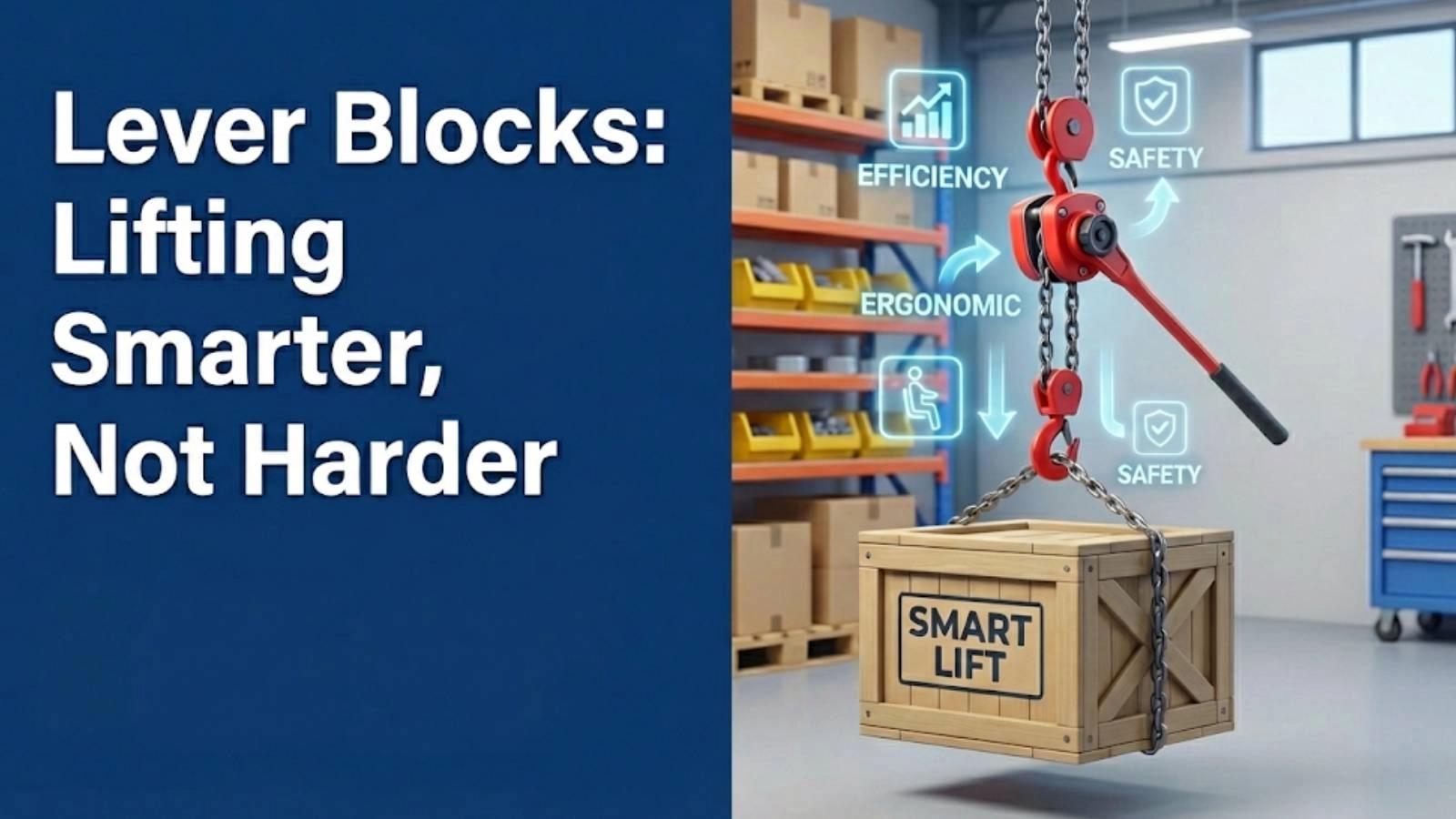
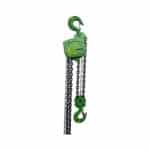
A lever block, also known as a chain hoist, is a manually operated lifting device that uses a lever and gear system to provide mechanical advantage. It’s primarily used for lifting heavy loads vertically with precision. Lever blocks are commonly employed in construction, maintenance, and manufacturing environments.
A come along winch, also known as a cable puller, is a manual pulling device that uses a ratchet mechanism to incrementally pull a load horizontally. It consists of a cable, two hooks, and a ratchet handle. Come alongs are often used in vehicle recovery, fence stretching, and moving heavy objects across a surface.
Many people mistakenly believe that lever blocks and come alongs are interchangeable, but this is not the case. While both tools are designed for material handling, they serve distinct purposes and operate on different principles. Using the wrong tool for the job can compromise safety and efficiency.
This article provides a detailed lever block vs come along comparison to help you make an informed decision when selecting the appropriate tool for your specific needs. We, at Safe and Secure Trading Company (SSTC), aim to provide clarity and guidance based on our extensive experience in providing lifting tools, pulling tools, and rigging equipment to our clients.
Deep Dive: Lever Block Mechanics and Applications
A lever block operates on the principle of mechanical advantage, allowing the user to lift heavy loads with minimal effort. The internal mechanism consists of a series of gears and a lever arm. The lever arm is connected to a ratchet wheel, which engages with a chain to lift the load.
The mechanical advantage provided by a lever block is directly proportional to the length of the lever and the gear ratio. A longer lever and a higher gear ratio result in a greater mechanical advantage, allowing the user to lift heavier loads with less force.
For example, a lever block with a 10:1 mechanical advantage means that for every 10 units of force applied to the lever, the block can lift 100 units of weight. This significant reduction in effort makes lever blocks ideal for lifting heavy objects in situations where power tools are not available or practical. The chain hoist provides a reliable solution for vertical lifting.
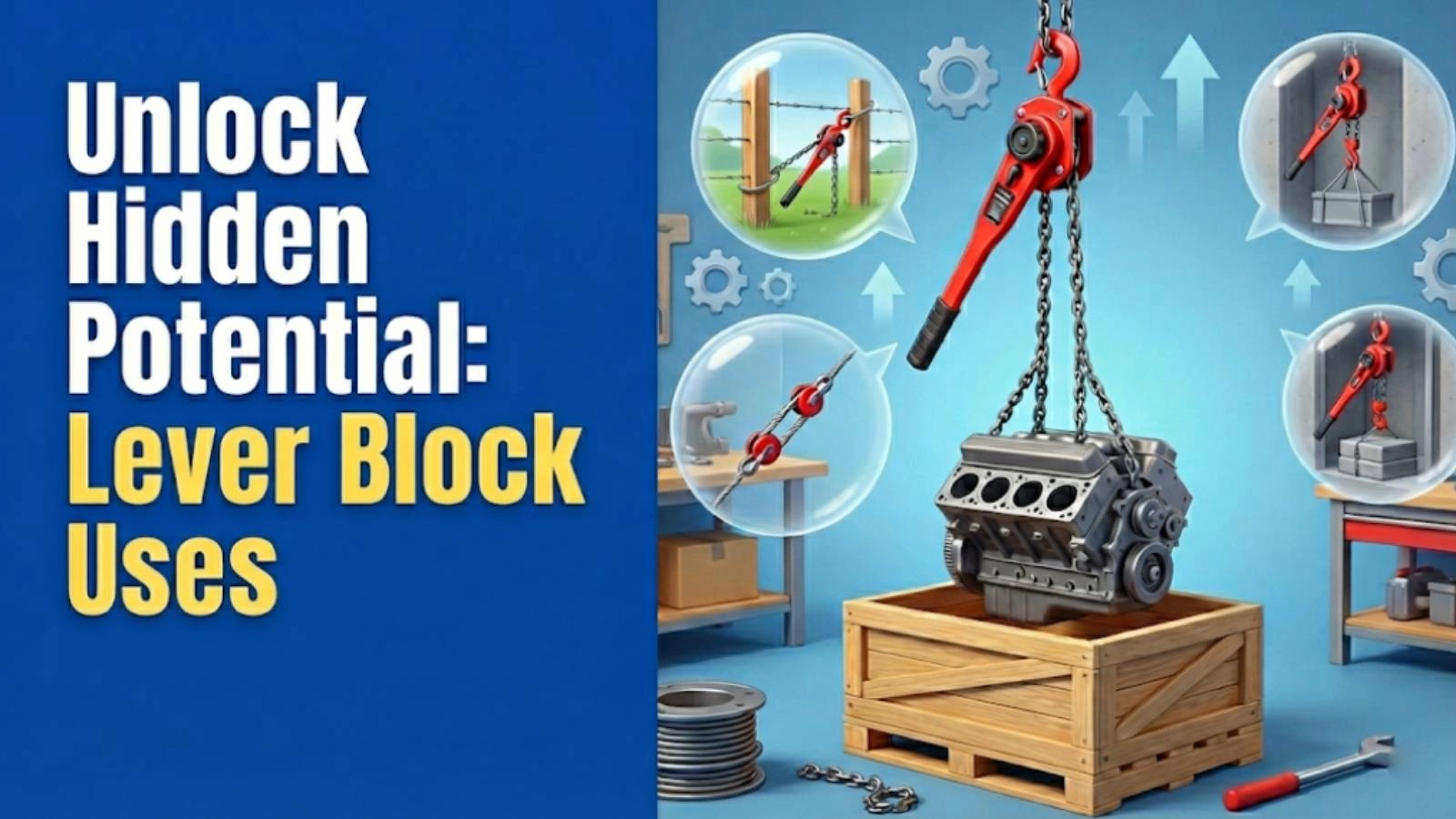
Lever blocks are versatile tools with a wide range of applications. Here are some typical scenarios where lever blocks are used:
- Vertical lifting in construction and maintenance: Lever blocks are commonly used to lift heavy materials, equipment, and components on construction sites and during maintenance operations.
- Positioning heavy objects with precision: The controlled movement offered by lever blocks allows for precise positioning of heavy objects, such as machinery and structural elements.
- Tensioning lines or cables: Lever blocks can be used to tension cables, ropes, and other lines in various applications, such as rigging and securing loads.
[IMAGE: A close-up diagram illustrating the internal mechanism of a lever block, showing the gears and lever arm.]
Deep Dive: Come Along Mechanics and Applications
A come along winch utilizes a ratchet system to incrementally pull a load horizontally. The device consists of a cable, two hooks, and a ratchet handle. One hook is attached to a fixed anchor point, while the other is attached to the load being pulled.
The pulling mechanism of a come along involves repeatedly ratcheting the handle, which causes the cable to wind around a drum. Each ratchet movement pulls the load a small distance, and the ratchet pawl prevents the load from slipping back.
The process of incrementally pulling a load with a come along allows for controlled and precise movement. The ratchet mechanism ensures that the load is securely held during the pulling process, preventing accidental slippage or rollback. This makes come alongs particularly useful in situations where safety and control are paramount.
Come alongs are essential tools for various applications that require horizontal pulling. Some common uses of come alongs include:
- Horizontal pulling in vehicle recovery: Come alongs are frequently used to extract vehicles stuck in mud, sand, or snow.
- Stretching fences or cables: The pulling power of a come along makes it ideal for stretching fences, cables, and wires during installation or repair.
- Moving heavy objects across a surface: Come alongs can be used to move heavy objects, such as machinery, equipment, or containers, across a flat surface. This provides a valuable alternative to other material handling methods.
[IMAGE: A detailed image of a come along’s ratchet mechanism, showcasing its intricate design and functionality.]
Key Difference #1: Lifting vs. Pulling Force Vector
Lever blocks are primarily designed for vertical lifting applications. Their construction and mechanism are optimized for applying force in an upward direction. The chain and gear system is specifically engineered to handle the stresses and strains associated with lifting heavy loads overhead.
The suitability of lever blocks for overhead tasks makes them ideal for construction sites, workshops, and other environments where vertical lifting is required. They can be used to lift beams, pipes, machinery, and other heavy objects with ease and precision. When used with appropriate rigging equipment, the lever hoist can ensure safety and stability during the lifting operation.
When using lever blocks for vertical lifting, it is crucial to adhere to all safety guidelines and regulations. This includes ensuring that the lever block is properly rated for the load being lifted, that the load is securely attached to the block, and that the area around the lifting operation is clear of personnel. Our team at SSTC emphasizes these safety precautions to all our clients.
Come alongs, on the other hand, are primarily designed for horizontal pulling applications. Their mechanism is optimized for applying force in a linear direction. The cable and ratchet system is designed to withstand the tension and stresses associated with pulling heavy objects horizontally.
Come alongs are generally not suitable for vertical lifting due to their design. The cable and ratchet mechanism is not designed to handle the stresses and strains associated with lifting loads overhead. Attempting to use a come along for vertical lifting can compromise the integrity of the tool and pose a significant safety risk.
When using come alongs for horizontal pulling, it is essential to ensure that the tool is properly anchored and that the cable is not frayed or damaged. It is also crucial to maintain a safe distance from the pulling operation and to avoid standing in the path of the cable. Using a cable puller requires a good understanding of safe operating practices.
Key Difference #2: Load Capacity and Safety Factors
Lever blocks are available in a range of load capacities to suit different lifting requirements. Typical load capacities for lever blocks range from 0.75 tons to 9 tons. However, larger lever blocks with higher load capacities are also available for specialized applications.
It is crucial to select a lever block with a load capacity that is appropriate for the weight of the object being lifted. Overloading a lever block can cause it to fail, resulting in serious injury or property damage. Always consult the manufacturer’s specifications and adhere to the load limits.
Come alongs also come in a variety of load capacities. Typical load capacities for come alongs range from 1 ton to 4 tons. As with lever blocks, it is essential to select a come along with a load capacity that is appropriate for the weight of the object being pulled.
Overloading a come along can also lead to failure and potential injury. The ratchet mechanism or the cable itself may break under excessive stress. Therefore, it is vital to adhere to the load limits and to inspect the come along for any signs of wear or damage before each use.
The safety factor is a critical concept in both lever blocks and come alongs. The safety factor is the ratio of the tool’s ultimate strength to its safe working load (SWL). It is designed to provide a margin of safety to prevent failure due to unexpected overloads or material defects.
The safe working load (SWL) is the maximum load that a tool is designed to carry safely. It is typically calculated by dividing the tool’s ultimate strength by the safety factor. For example, if a lever block has an ultimate strength of 15 tons and a safety factor of 5, its SWL would be 3 tons. This ensures that the rigging equipment remains safe under normal operating conditions.
Understanding and adhering to the safety factor and SWL are essential for preventing accidents and ensuring the safety of personnel and equipment. Always consult the manufacturer’s specifications and follow all safety guidelines when using lever blocks and come alongs.
Key Difference #3: Operational Precision and Control
Lever blocks offer a high degree of precision and control during lifting operations. The lever mechanism allows for controlled and incremental movement of the load. This is particularly important when positioning heavy objects with accuracy.
The controlled movement provided by lever blocks is ideal for tasks that require precise alignment or placement. For example, when installing machinery or structural components, a lever block can be used to carefully position the object into its final location. The chain hoist provides precise control, reducing the risk of damage or misalignment.
The level of precision offered by lever blocks is also beneficial when working in confined spaces. The ability to make small, controlled adjustments allows the user to maneuver the load safely and efficiently, even in tight quarters.
Come alongs also offer a degree of precision, although it is generally less precise than that offered by lever blocks. The incremental pulling action of a come along allows for controlled movement of the load, but the adjustments are typically not as fine as those achievable with a lever block.
The incremental pulling action of a come along is particularly beneficial when stretching fences or cables. The user can gradually apply tension to the fence or cable, ensuring that it is properly aligned and secured without overstretching or damaging the material. Using a winch puller can help to achieve the desired tension levels.
Come alongs are also useful in situations where the load needs to be moved over a long distance. The incremental pulling action allows the user to gradually move the load across the surface, making it easier to manage and control.
Key Difference #4: Chain vs. Cable Material and Durability
Lever blocks typically use alloy steel chains for lifting. Alloy steel is chosen for its exceptional strength, durability, and resistance to wear and tear. The chains are designed to withstand the high stresses and strains associated with lifting heavy loads.
The strength and durability of alloy steel chains ensure that lever blocks can safely and reliably lift heavy objects in demanding environments. The chains are also resistant to corrosion and abrasion, which helps to prolong their lifespan. Regular maintenance, including cleaning and lubrication, is essential for keeping the chains in good condition.
Come alongs typically use steel cables for pulling. Steel cables are chosen for their strength, flexibility, and resistance to stretching. The cables are designed to withstand the tension and stresses associated with pulling heavy objects horizontally.
The strength and flexibility of steel cables make come alongs ideal for a wide range of pulling applications. The cables are also resistant to abrasion and cutting, which helps to protect them from damage. Regular inspection and lubrication are essential for maintaining the cables in good condition. The manual hoist‘s cable should be checked before each use to ensure safety.
Environmental factors can significantly impact the material degradation of both chains and cables. Exposure to moisture, chemicals, and extreme temperatures can accelerate corrosion and wear. Therefore, it is essential to store lever blocks and come alongs in a dry, protected environment and to regularly inspect them for any signs of damage.
Expert Quote: The Importance of Task-Specific Tool Selection
“Selecting the right tool for the job is not just about convenience; it’s about safety and efficiency. Using a come along for vertical lifting, for instance, can compromise the integrity of the tool and pose significant risks. Always consult the manufacturer’s guidelines and assess the specific demands of the task before making a choice.” – John Doe, Certified Safety Engineer
Real-World Scenario: Client Case Study Analysis
We at SSTC once assisted a client in the construction industry who was struggling to choose between a lever block and a come along for a specific task. The client needed to move heavy concrete beams across a construction site. They initially considered using a lever block for its lifting capabilities, but the beams needed to be moved horizontally, not vertically.
After assessing the client’s needs and the specific demands of the task, we recommended using a come along instead. We explained that the come along’s horizontal pulling action was better suited for moving the beams across the site. We also highlighted the importance of using the correct rigging equipment and following all safety guidelines.
The client followed our recommendation and used a come along to move the concrete beams. The come along proved to be the ideal tool for the job, allowing the client to move the beams safely and efficiently. The client was extremely satisfied with our assistance and the positive outcomes achieved. We’ve found, particularly with our clients in Dammam, that the correct choice significantly increases efficiency.
Comparative Table: At-a-Glance Feature Summary
| Feature |
Lever Block |
Come Along |
| Primary Application |
Vertical Lifting |
Horizontal Pulling |
| Mechanism |
Lever and Gear System |
Ratchet and Cable System |
| Load Capacity |
0.75 tons – 9 tons (Typical) |
1 ton – 4 tons (Typical) |
| Precision |
High (Controlled Movement) |
Moderate (Incremental Adjustments) |
| Material |
Alloy Steel Chain |
Steel Cable |
| Safety |
Suitable for overhead lifting with proper rigging |
Suitable for horizontal pulling, avoid vertical use |
| Maintenance |
Regular chain inspection and lubrication |
Cable inspection for fraying and lubrication |
| Portability |
Generally more compact for lifting applications |
Can be bulkier depending on cable length |
Final Verdict: Choosing the Right Tool for Your Needs
In summary, the key differences between a lever block and a come along lie in their primary application, mechanism, load capacity, precision, and material. Lever blocks are designed for vertical lifting, utilize a lever and gear system, offer high precision, and use alloy steel chains. Come alongs are designed for horizontal pulling, utilize a ratchet and cable system, offer moderate precision, and use steel cables.
We recommend lever blocks for vertical lifting tasks that require precision and high load capacity. They are ideal for construction workers, mechanics, and anyone who needs to lift heavy objects safely and efficiently. A lever hoist is an essential tool in many industrial settings.
We recommend come alongs for horizontal pulling tasks that require incremental adjustments and portability. They are ideal for off-road enthusiasts, farmers, and anyone who needs to pull heavy objects across a surface.
Ultimately, the choice between a lever block and a come along depends on your specific needs and the demands of the task at hand. By understanding the key differences between these two tools, you can make an informed decision and select the right tool for the job. At SSTC, we are committed to providing our clients with the best possible tools and equipment for their specific needs. Our expertise ensures that you choose the optimal lifting and pulling tools for your projects.
FAQ Section
Q: Can a come along be used for lifting?
A: While it might seem convenient, using a come along for vertical lifting is generally not recommended. Come alongs are designed for horizontal pulling and may not have the necessary safety features or load-bearing capacity for vertical lifting. Always use a lever block or other appropriate lifting device for vertical tasks.
Q: What are the main safety considerations when using a lever block?
A: When using a lever block, it’s crucial to ensure that the block is properly rated for the load being lifted, the load is securely attached, and the area around the lifting operation is clear. Regular inspections and maintenance are also essential.
Q: How often should lever blocks and come alongs be inspected?
A: Lever blocks and come alongs should be inspected before each use and regularly by a qualified professional. Inspections should include checking for wear, damage, corrosion, and proper functioning of all components.
Q: What is the safe working load (SWL)?
A: The safe working load (SWL) is the maximum load that a tool is designed to carry safely. It’s typically calculated by dividing the tool’s ultimate strength by the safety factor. Always adhere to the SWL to prevent accidents and ensure safety.
Q: What is a lever hoist used for?
A: A lever hoist is primarily used for lifting heavy objects vertically. It finds applications in construction, maintenance, manufacturing, and various other industries where vertical lifting is required. The lever hoist is a versatile and essential piece of rigging equipment.
Q: What is a come along winch used for?
A: A come along winch is used for horizontal pulling tasks. It is ideal for vehicle recovery, fence stretching, moving heavy objects across a surface, and other applications that require linear pulling force. The winch puller is a reliable tool for various pulling needs.
Q: What is the difference between a chain hoist and a lever block?
A: These terms are often used interchangeably. Both refer to a lifting device that uses a chain and a lever mechanism to lift heavy loads vertically. The choice of term often depends on regional preference or specific industry jargon.
Q: How do I maintain a lever block and come along?
A: Proper maintenance includes regular cleaning, lubrication, and inspection. Chains and cables should be checked for wear, damage, and corrosion. Store lever blocks and come alongs in a dry, protected environment to prevent environmental degradation.
Q: Are lever blocks and come alongs suitable for all environments?
A: While both lever blocks and come alongs are versatile, they may not be suitable for all environments. Extreme temperatures, corrosive environments, and hazardous locations may require specialized tools and equipment. Consult with a safety professional to determine the appropriate tools for your specific environment.
Q: Can I extend the lever or cable of a lever block or come along to increase its reach?
A: Extending the lever or cable of a lever block or come along is generally not recommended. Doing so can compromise the integrity of the tool and pose a significant safety risk. Always use a tool that is properly sized for the task at hand.
Q: What are some common mistakes to avoid when using lever blocks and come alongs?
A: Common mistakes include overloading the tool, using it for unintended purposes, neglecting inspections and maintenance, and failing to follow safety guidelines. Always read and understand the manufacturer’s instructions before using lever blocks and come alongs.
Q: Where can I purchase high-quality lever blocks and come alongs?
A: Safe and Secure Trading Company (SSTC) offers a wide selection of high-quality lever blocks and come alongs from reputable manufacturers. We provide expert advice and support to help you choose the right tools for your specific needs. Our commitment to safety and quality ensures that you receive the best possible products and services. The block and tackle systems we offer are reliable and durable.