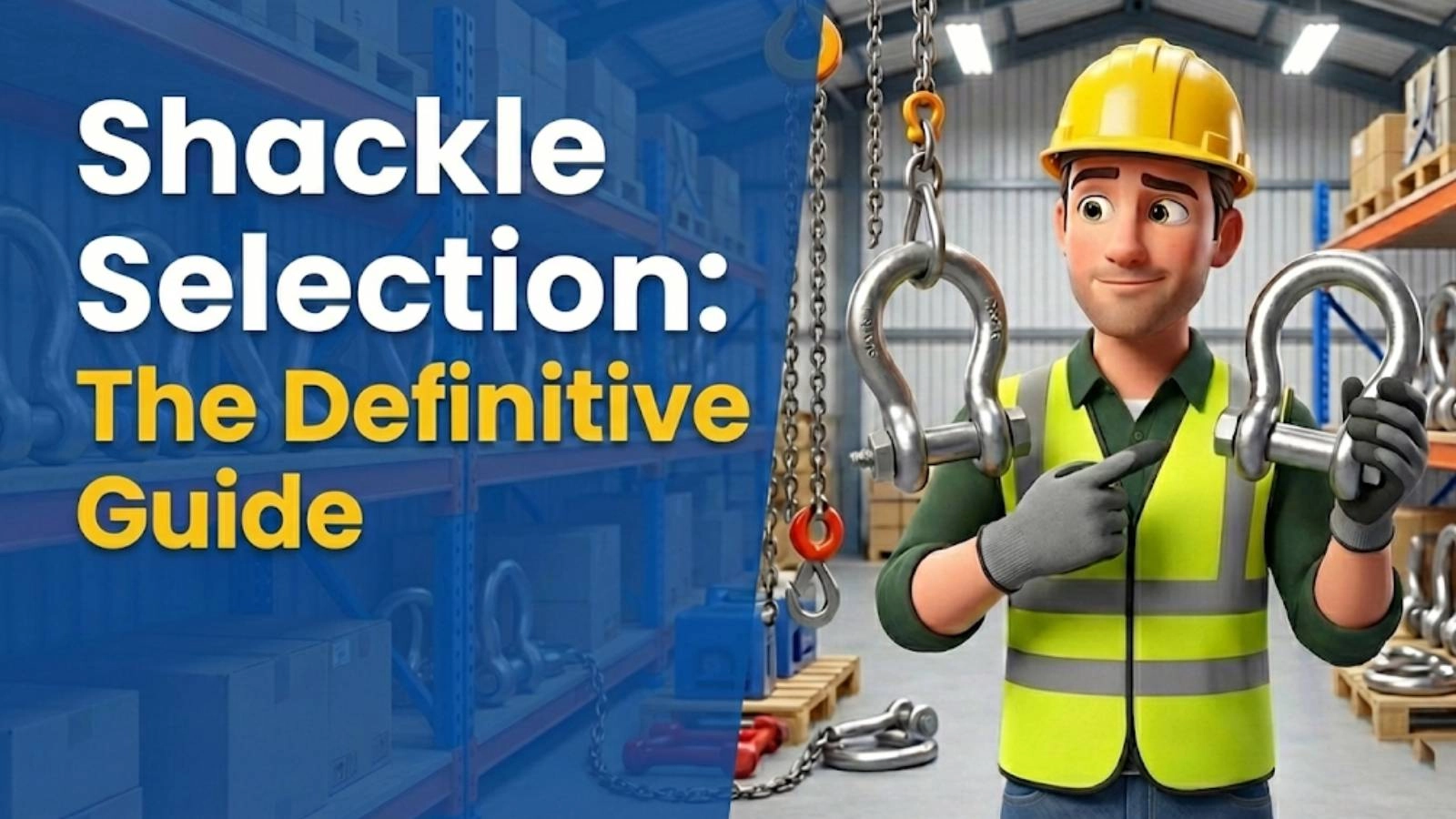
Here are 5 reasons lifting shackles fail, plus 7 more critical factors for safety.
Lifting shackles are indispensable tools in rigging and hoisting operations, but their failure can lead to catastrophic consequences, including property damage, serious injuries, and even fatalities. Understanding the common causes of lifting shackle failure is crucial for implementing preventative measures and ensuring safe lifting practices. As experts at Safe and Secure Trading Company (SSTC), we’ve seen firsthand the devastating results of neglecting proper shackle maintenance and usage. This guide outlines the primary reasons why lifting shackle failure occurs and provides actionable solutions to mitigate these risks.
1. Exceeding the Working Load Limit (WLL)
✅ The most common cause of lifting shackle failure is exceeding the Working Load Limit (WLL). This occurs when the load being lifted exceeds the shackle’s rated capacity. This can happen due to miscalculation, ignorance of the WLL, or unforeseen dynamic loading. Overloading a shackle places excessive stress on its material, leading to deformation, cracking, and ultimately, catastrophic failure.
Problem: Unrecognized Overloads
Many operators are unaware of the shackle’s WLL or miscalculate the load weight, often relying on estimations rather than precise measurements. Dynamic loading, also known as shock loading, is another significant factor. Sudden jerks, impacts, or rapid acceleration during a lift can create forces far exceeding the static load weight, leading to unrecognized overloads.
Solution: Accurate Load Assessment & De-rating
Thoroughly assess the load weight before any lifting operation begins. Use calibrated load cells or other accurate measuring devices to determine the precise weight. Account for dynamic loading by de-rating the shackle’s WLL. For example, in situations where unpredictable movements or shock loads are anticipated, reduce the WLL by 20% or more. Ensure the WLL is clearly marked on the shackle body and is easily visible to all personnel involved in the lifting operation.
2. Improper Shackle Pin Engagement
💡 Improper shackle pin engagement is another critical factor in lifting shackle failure. This happens when the shackle pin is not fully tightened or is misaligned, creating uneven stress distribution and bending moments on the shackle body. This can also occur from “three-legged” hitches where the load is concentrated.
Problem: Side Loading and Bending
When shackle pins are not fully engaged, it creates a bending moment on the shackle body. This is exacerbated when using “three-legged” hitches, which concentrate the load on a small portion of the shackle, significantly increasing the risk of failure. Side loading, where the load is applied at an angle to the shackle, also contributes to bending stresses, further compromising the shackle’s integrity.
Solution: Correct Rigging Techniques
Always fully tighten the shackle pin by hand, and then use a wrench to ensure a final, secure tightening. Avoid “three-legged” hitches whenever possible. Instead, use a spreader bar or multiple shackles to distribute the load evenly. If side loading is unavoidable, use shackles specifically designed for this purpose, such as bow shackles, which are more resistant to bending forces. For many of our clients here in Dammam, we’ve seen that proper training in rigging techniques drastically reduces these types of failures.
3. Corrosion and Material Degradation
➡️ Corrosion and material degradation are insidious causes of lifting shackle failure. Over time, exposure to harsh environments, such as saltwater, chemicals, or extreme temperatures, can weaken the shackle material, leading to hidden flaws and eventual failure.
Problem: Weakened Metal and Hidden Flaws
Exposure to corrosive substances can lead to the gradual erosion of the shackle’s metal structure, weakening its overall strength. Fatigue cracks can develop over time due to repeated stress cycles, often going unnoticed until they propagate to a critical size, leading to sudden and unexpected failure. These flaws are often hidden beneath surface corrosion, making visual inspection alone insufficient.
Solution: Regular Inspection and Maintenance
Implement a rigorous inspection program to identify signs of corrosion, cracks, or deformation. This program should include both visual inspections and, where appropriate, non-destructive testing methods, such as dye penetrant testing or ultrasonic testing. Clean and lubricate shackles regularly with a suitable lubricant to prevent corrosion and reduce friction. Replace shackles that show any signs of damage or have reached the end of their service life. Consider using shackles made of corrosion-resistant materials, such as stainless steel or galvanized steel, in harsh environments.
4. Incorrect Shackle Type Selection
✨ Choosing the incorrect shackle type for the application is a significant contributor to lifting shackle failure. Different shackle types are designed for specific purposes and load characteristics. Using a shackle that is not suitable for the intended application can lead to premature wear, deformation, and ultimately, failure.
Problem: Mismatch Between Shackle and Application
Using the wrong type of shackle, such as a chain shackle instead of a bow shackle, for a particular application can create undue stress and increase the risk of failure. Insufficient material strength for the intended load is another common problem, especially when dealing with heavy or dynamic loads. A smaller shackle may seem easier to work with, but it could lead to problems.
Solution: Proper Shackle Selection and Matching
Select the correct shackle type based on the lift configuration, load characteristics, and environmental conditions. Ensure that the shackle material is compatible with the environment and the load being lifted. For complex or critical lifts, consult with a qualified rigging specialist to ensure the appropriate shackle is selected. Pay attention to the temperature range of the shackle, as some materials become brittle at low temperatures, increasing the risk of failure. For our clients, we often create a matrix to ensure they choose the right shackle for each application.
5. Lack of Regular Inspection and Training
⚙️ The absence of regular inspection and proper training is a pervasive issue that contributes significantly to lifting shackle failure. Without routine inspections, damage or wear can go unnoticed until it’s too late. Untrained operators may misuse shackles, leading to premature failure and potentially dangerous situations.
Problem: Undetected Damage and Improper Use
Without regular inspections, damage or wear, such as cracks, corrosion, or deformation, can go unnoticed until it reaches a critical point, leading to sudden failure. Untrained operators may use shackles incorrectly, such as exceeding the WLL or using them in configurations that create excessive stress, accelerating wear and tear.
Solution: Implement Comprehensive Inspection Programs and Training
Train operators on proper shackle usage, inspection procedures, and load assessment techniques. Establish a written inspection program with documented procedures and defined inspection frequency. Keep detailed records of all inspections, repairs, and replacements, including dates, findings, and corrective actions. Consider using color-coding or other visual aids to track inspection dates and ensure compliance.
> “Regular inspections are not just a best practice; they’re a necessity. Identifying and addressing potential issues early can prevent catastrophic failures.” – John Smith, Lead Safety Inspector
6. Sharp Bends or Kinks in the Rigging
⛓️ Sharp bends or kinks in the rigging setup can dramatically increase the likelihood of lifting shackle failure. When slings or other rigging components are forced into unnatural angles, it creates concentrated stress points that can exceed the shackle’s capacity.
Problem: Stress Concentrations Leading to Failure
Using shackles with slings that have sharp bends or kinks concentrates stress on specific points of the shackle and sling. This uneven distribution significantly reduces the overall capacity and lifespan of both components. These stress concentrations can lead to premature wear, cracking, and eventual failure, even if the overall load is within the shackle’s WLL.
Solution: Employ Smooth, Rounded Connections
Ensure that slings are properly seated within the shackle bow without any sharp bends or kinks. Use rounded edge protectors between the sling and shackle when necessary to distribute the load evenly and prevent abrasion. Avoid any rigging configurations that force the sling into unnatural or tight angles. We often advise our clients to use wider bow shackles in situations where some angularity is unavoidable.
7. Shackle Pin Thread Damage
🔩 Damaged or corroded threads on a shackle pin pose a serious risk and can contribute to lifting shackle failure. Compromised threads prevent proper tightening and secure engagement, leading to instability and potential loosening during a lift.
Problem: Compromised Pin Strength and Security
Damaged or corroded threads on the shackle pin prevent proper tightening, leaving the connection vulnerable. A loose or improperly secured pin is prone to loosening further during a lift due to vibration and movement, potentially causing catastrophic failure. Even seemingly minor thread damage can significantly reduce the pin’s holding capacity.
Solution: Careful Pin Inspection and Replacement
Thoroughly inspect shackle pin threads for damage, corrosion, or wear before each use. Use a wire brush to clean the threads, removing any dirt, debris, or corrosion. Replace shackle pins with damaged threads immediately – do not attempt to use them. Consider using self-locking shackle pins for enhanced security, especially in critical lifting applications.
8. Mixing Shackle Components
🔗 Combining shackle bodies and pins from different manufacturers or with mismatched specifications is a recipe for lifting shackle failure. Incompatible parts can significantly reduce the shackle’s overall working load limit (WLL) and lead to unpredictable failures.
Problem: Incompatible Parts and Reduced Capacity
Using shackle bodies and pins from different manufacturers or with different specifications creates a mismatch in material properties, dimensions, and thread engagement. This can significantly reduce the shackle’s overall working load limit (WLL) and lead to unpredictable failure. Even if the individual components appear similar, subtle differences can compromise the shackle’s integrity.
Solution: Maintain Shackle Sets and Traceability
Always use shackle bodies and pins that are specifically designed to be used together as a matched set. Maintain traceability of shackle components to ensure proper matching. If a shackle pin needs replacement, replace it with a pin from the original manufacturer with the same specifications. Proper record-keeping and labeling are essential for maintaining shackle sets.
9. Poor Storage Practices
📦 Improper storage of shackles can lead to environmental damage and accelerated wear, increasing the risk of lifting shackle failure. Exposure to moisture, chemicals, and physical damage during storage can compromise the shackle’s integrity and reduce its lifespan.
Problem: Environmental Damage and Accelerated Wear
Improper storage of shackles exposes them to moisture, chemicals, and physical damage, leading to corrosion, weakening of the metal, and reduced lifespan. Shackles left exposed to the elements can quickly develop rust and corrosion, while those stored improperly can be bent, scratched, or otherwise damaged.
Solution: Implement Organized Storage Procedures
Store shackles in a clean, dry, and well-ventilated area, away from corrosive substances and extreme temperatures. Use dedicated storage racks or bins to prevent physical damage and tangling. Consider applying a protective coating to shackles stored for extended periods, especially in humid or corrosive environments. Regularly inspect stored shackles for signs of damage or corrosion before use.
10. Ignoring Proof Load Testing
🧪 Neglecting proof load testing is a critical oversight that can contribute to lifting shackle failure. Proof load testing verifies the integrity and strength of the shackle before use, identifying any manufacturing defects or weaknesses.
Problem: Undetected Manufacturing Defects
Proof load testing is a critical step in verifying the integrity and strength of the shackle before it is put into service. Ignoring this important step leaves the shackle vulnerable to undetected manufacturing defects, such as internal cracks or flaws in the material. These defects can compromise the shackle’s load-bearing capacity and lead to sudden failure.
Solution: Verify Proof Load Certification
Ensure that all shackles have been proof load tested and certified by a reputable testing facility. Look for proof load markings on the shackle body. Maintain records of proof load testing for traceability and compliance with safety standards. Proof load testing should be performed according to established industry standards and documented thoroughly.
11. Applying Paint or Coatings to Shackles
🎨 Applying paint or other coatings to shackles can obscure critical signs of damage and wear, making it difficult to identify potential lifting shackle failure points during inspection. These coatings can hide cracks, corrosion, and other surface imperfections.
Problem: Hiding Defects and Masking Wear
Paint or coatings can conceal cracks, corrosion, and other signs of damage that would otherwise be visible during inspection. This makes it difficult to identify potential failure points and assess the shackle’s overall condition. Coatings can also trap moisture against the metal surface, accelerating corrosion.
Solution: Keep Shackles Clean and Uncoated
Avoid applying paint or coatings to shackles unless specifically recommended by the manufacturer. If coatings are necessary, use a thin, transparent coating that does not obscure the shackle’s surface. Use a wire brush to remove any existing paint or coatings that are obscuring the shackle’s surface. Focus on regular cleaning and visual inspections to identify potential problems.
12. Using Makeshift or Modified Shackles
🛠️ Using makeshift or modified shackles is an extremely dangerous practice that significantly increases the risk of lifting shackle failure. These non-standard shackles lack proper testing and certification, making their strength and reliability unpredictable.
Problem: Unpredictable Strength and Safety Risks
Using shackles that have been homemade, modified, or repaired compromises their integrity and introduces significant safety risks. These shackles lack proper testing and certification, making their strength and reliability unpredictable. Attempting to weld, bend, or otherwise alter a shackle can create stress concentrations and weaken the material.
Solution: Never Use Makeshift Shackles
Only use shackles that have been manufactured and certified to meet recognized safety standards. Never attempt to repair or modify a shackle, as this can significantly reduce its strength and reliability. Dispose of any damaged or questionable shackles immediately and replace them with certified replacements. Emphasize the importance of using only certified rigging equipment in all training programs.
Conclusion
Understanding the causes of lifting shackle failure is essential for ensuring safe lifting operations. By focusing on WLL compliance, proper rigging techniques, regular inspection and maintenance, and correct shackle selection, we can significantly reduce the risk of accidents and protect personnel and equipment. We, at Safe and Secure Trading Company, are committed to providing our clients with the highest quality rigging equipment and expert advice to ensure their operations are safe and secure.
FAQ Section
Q: What is the most common cause of lifting shackle failure?
A: Exceeding the Working Load Limit (WLL) is the most common cause.
Q: How often should lifting shackles be inspected?
A: Shackles should be inspected before each use and regularly, as part of a comprehensive inspection program.
Q: What are the signs of a damaged shackle?
A: Signs of damage include corrosion, cracks, deformation, and damaged threads.
Q: Can I use a shackle with a bent pin?
A: No, never use a shackle with a bent or damaged pin. Replace it immediately.
Q: What is dynamic loading and how does it affect shackles?
A: Dynamic loading refers to sudden jerks or impacts that create forces exceeding the static load weight. It can significantly increase the stress on shackles and lead to failure.
Q: How do I choose the right type of shackle for my application?
A: Consider the lift configuration, load characteristics, and environmental conditions. Consult with a rigging specialist for complex or critical lifts.
Q: What is proof load testing?
A: Proof load testing is a process that verifies the integrity and strength of the shackle before use.
Q: Can I paint my shackles?
A: Avoid painting shackles, as it can hide signs of damage.
Q: What should I do with a damaged shackle?
A: Dispose of any damaged or questionable shackles immediately and replace them with certified replacements.
Q: Where should I store my shackles when not in use?
A: Store shackles in a clean, dry, and well-ventilated area, away from corrosive substances and extreme temperatures.