Shackle safety factors are paramount in any lifting or rigging operation. At Safe and Secure Trading Company (SSTC), we understand that using the correct shackle and adhering to strict safety protocols can prevent accidents, injuries, and costly equipment damage. This comprehensive guide will delve into the intricacies of shackle safety, covering everything from material strength to inspection criteria.
Understanding Shackle Safety Factors
A shackle safety factor is the ratio between the minimum breaking strength (MBS) of a shackle and its working load limit (WLL). It essentially provides a cushion against unexpected stresses, dynamic loading, and other factors that can compromise the integrity of the shackle. Understanding and adhering to appropriate shackle safety factors is crucial for safe rigging practices. Ignoring these factors can lead to catastrophic failures. In our experience, a lack of understanding about shackle safety factors is a common cause of rigging incidents.
The shackle working load limit is the maximum weight that a shackle is designed to safely lift. The working load limit, often abbreviated as WLL, is clearly marked on the shackle itself. It’s crucial to never exceed this limit.
The minimum breaking strength (MBS), also known as ultimate tensile strength (UTS), represents the point at which the shackle will fail under tension. The safety factor is calculated by dividing the MBS by the WLL. For example, a shackle with an MBS of 50,000 lbs and a WLL of 10,000 lbs has a safety factor of 5:1.
Different applications require different safety factors. Critical lifts, such as those involving human lives or expensive equipment, demand higher safety factors. Non-critical lifts may allow for lower safety factors, but it’s always best to err on the side of caution.
Why Shackle Safety Factors Matter
Shackle safety factors matter because they account for variables that are difficult to predict or control in real-world lifting scenarios. These variables include:
- Dynamic Loading: Sudden impacts or jerky movements can significantly increase the load on a shackle beyond the static weight being lifted.
- Angle Loading: When shackles are used at an angle, the load on each shackle leg increases. This increased load must be factored into the shackle selection.
- Wear and Tear: Over time, shackles can become worn, corroded, or damaged, reducing their strength.
- Unexpected Overloads: Unforeseen circumstances, such as a sudden increase in wind or a shifting load, can cause a shackle to be overloaded.
- Material Fatigue: Repeated loading and unloading can cause fatigue in the shackle material, weakening it over time.
Without adequate shackle safety factors, these variables can easily push a shackle beyond its capacity, leading to failure.
Types of Shackles and Their Safety Considerations
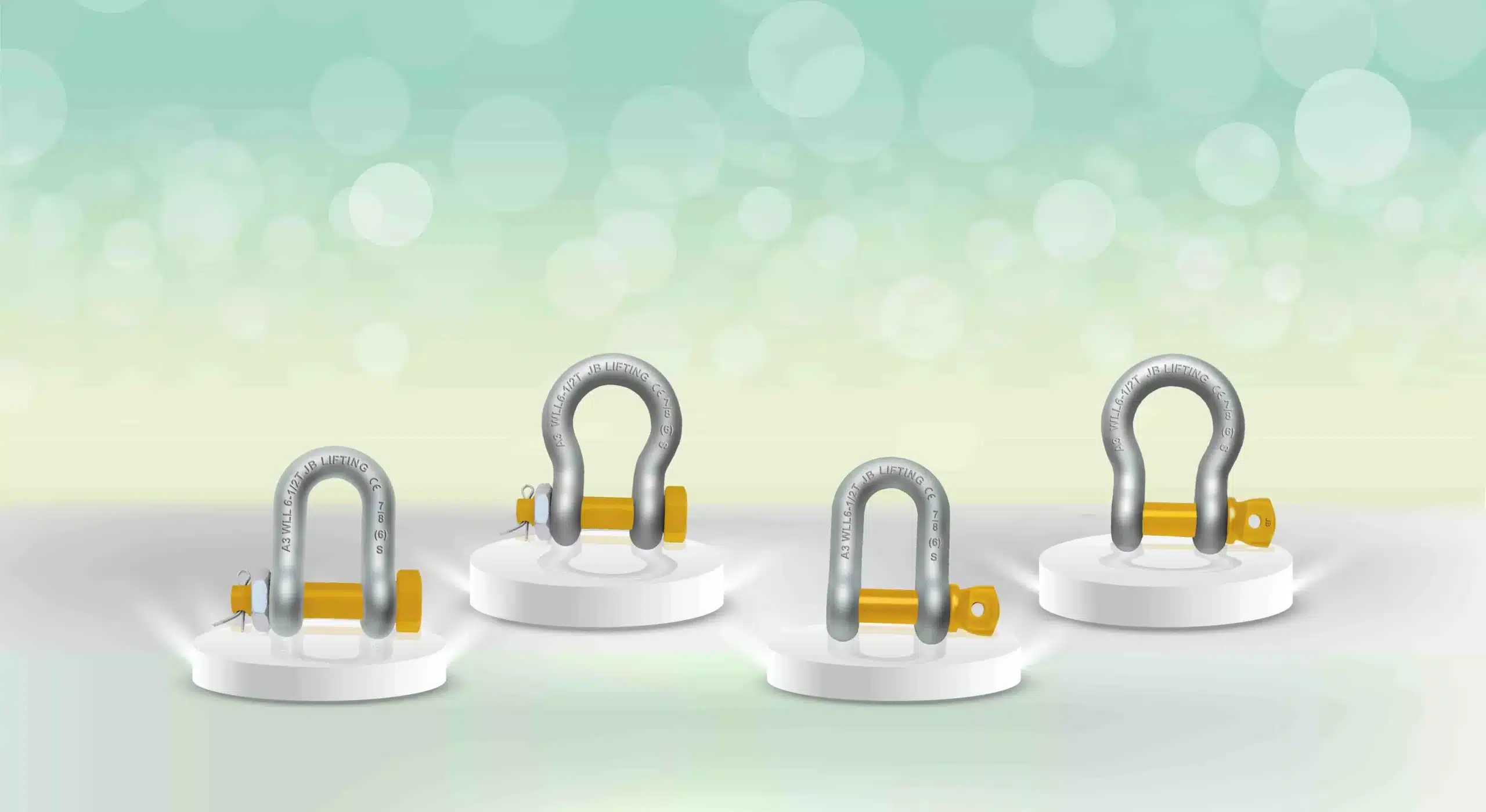
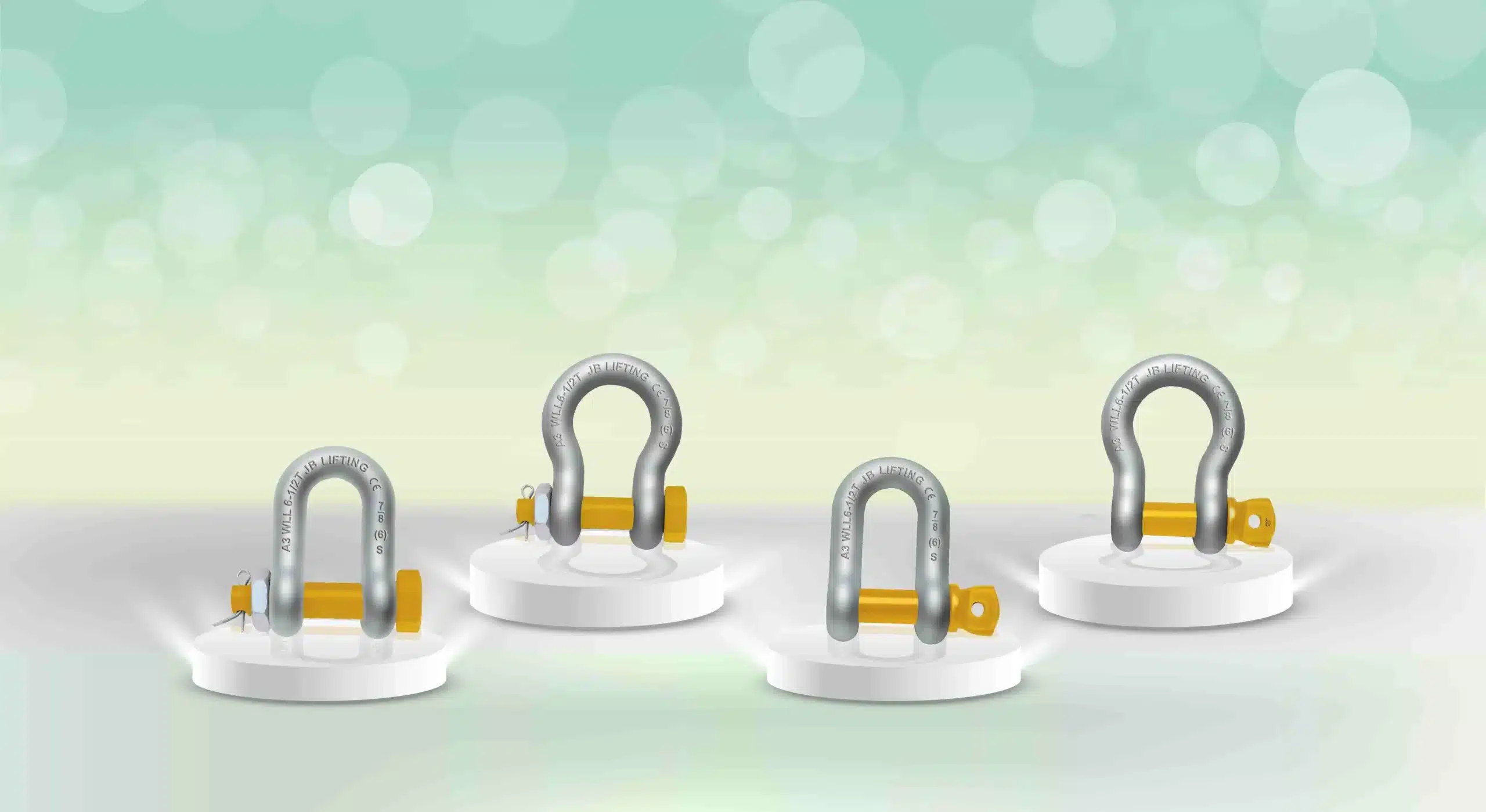
Shackles come in various types, each designed for specific applications and with its own set of safety considerations. The most common types include:
- Anchor Shackles (Bow Shackles): These shackles have a larger, rounded bow that allows for greater flexibility in connecting to different types of hardware.
- Chain Shackles (D-Shackles): These shackles have a narrower, D-shaped bow and are typically used for inline connections.
- Screw Pin Shackles: These shackles have a pin that is screwed into the shackle body.
- Bolt Type Shackles: These shackles have a pin that is secured with a bolt and nut.
- Safety Pin Shackles: These shackles have a pin with a spring-loaded mechanism that prevents it from accidentally coming loose.
Anchor Shackles
Anchor shackles, also known as bow shackles, are characterized by their large, rounded bow shape. This design makes them suitable for applications where multiple connection points are required or where the load may be applied at an angle. The wider bow allows for greater flexibility in connecting to slings, chains, and other rigging hardware.
When using anchor shackles, it’s important to consider the following safety factors:
- Angle Loading: Anchor shackles are more susceptible to angle loading than chain shackles. The angle of the load must be carefully considered when selecting the appropriate size and type of shackle.
- Pin Orientation: The shackle pin should be oriented so that it is not subjected to bending forces. Ideally, the pin should be perpendicular to the direction of the load.
- Secure Pinning: Ensure the shackle pin is fully engaged and properly secured. For screw pin shackles, tighten the pin securely. For bolt-type shackles, ensure the bolt is properly torqued and the nut is secured with a cotter pin.
Chain Shackles
Chain shackles, or D-shackles, have a narrower, D-shaped bow. This design makes them ideal for inline connections where the load is applied directly along the axis of the shackle. Chain shackles are commonly used to connect chains, wire ropes, and other rigging components in a straight line.
Key safety considerations for chain shackles include:
- Inline Loading: Chain shackles are designed for inline loading only. Avoid using them in applications where the load is applied at an angle.
- Pin Engagement: Ensure the shackle pin is fully engaged and properly tightened. A loose pin can weaken the shackle and lead to failure.
- Material Compatibility: Ensure the shackle material is compatible with the materials of the connected components to prevent corrosion or other adverse reactions.
Screw Pin vs. Bolt Type Shackles
Screw pin shackles and bolt type shackles are two common types of shackle pin designs. Each has its own advantages and disadvantages in terms of safety and application.
Screw Pin Shackles:
- Pros: Easy to install and remove, no tools required.
- Cons: Can loosen under vibration or repeated loading, less secure than bolt type shackles.
- Safety Considerations: Regularly inspect the pin for tightness. Use a wire or other locking device to prevent the pin from loosening. Not recommended for critical lifts or dynamic loading applications.
Bolt Type Shackles:
- Pros: More secure than screw pin shackles, less likely to loosen under vibration, suitable for critical lifts and dynamic loading.
- Cons: Requires tools for installation and removal, more time-consuming to install.
- Safety Considerations: Ensure the bolt is properly torqued and the nut is secured with a cotter pin. Inspect the bolt and nut for damage or corrosion.
The choice between screw pin shackles and bolt type shackles depends on the specific application and the level of safety required. Bolt type shackles are generally preferred for critical lifts and applications where dynamic loading is a concern.
Shackle Material and Strength
The material used to manufacture a shackle plays a crucial role in its strength and durability. Common shackle materials include:
- Carbon Steel: A strong and cost-effective material suitable for many general-purpose applications.
- Alloy Steel: Offers higher strength and toughness than carbon steel, making it ideal for heavy-duty applications.
- Stainless Steel: Provides excellent corrosion resistance, making it suitable for marine and other harsh environments.
Carbon Steel Shackles
Carbon steel shackles are a popular choice for general-purpose lifting and rigging applications due to their strength and affordability. They are typically manufactured from medium or high-carbon steel and are heat-treated to improve their strength and toughness.
However, carbon steel shackles are susceptible to corrosion, especially in wet or humid environments. They should be regularly inspected for rust and other signs of corrosion, and they should be properly lubricated to prevent seizing. Carbon steel shackles are also not recommended for use in applications where they will be exposed to high temperatures, as this can reduce their strength.
Alloy Steel Shackles
Alloy steel shackles offer superior strength and toughness compared to carbon steel shackles. They are manufactured from various alloy steels, such as chromium-molybdenum steel, which provides excellent resistance to wear, impact, and fatigue.
Alloy steel shackles are commonly used in heavy-duty lifting and rigging applications, such as construction, mining, and offshore operations. They are also a good choice for applications where the shackle will be subjected to dynamic loading or high stress.
While alloy steel shackles are more resistant to corrosion than carbon steel shackles, they are not immune to it. Regular inspection and maintenance are still necessary to ensure their continued safe operation.
Stainless Steel Shackles
Stainless steel shackles are the preferred choice for applications where corrosion resistance is paramount. They are manufactured from various grades of stainless steel, such as 304 or 316, which contain chromium and nickel to provide excellent protection against rust and other forms of corrosion.
Stainless steel shackles are commonly used in marine, chemical, and food processing environments, where exposure to corrosive substances is unavoidable. They are also a good choice for applications where hygiene is important, as they are easy to clean and sanitize.
While stainless steel shackles are highly corrosion-resistant, they are generally not as strong as carbon steel or alloy steel shackles. It’s important to select a stainless steel shackle with an appropriate working load limit for the intended application.
Importance of Shackle Material Strength
Shackle material strength is a critical factor in ensuring the safe operation of any lifting or rigging system. The shackle must be able to withstand the maximum load it is expected to bear, as well as any additional stresses caused by dynamic loading, angle loading, or other factors.
Using a shackle made from an inappropriate material or with insufficient strength can lead to catastrophic failure, resulting in serious injury or property damage. It’s essential to carefully consider the application and select a shackle made from a material that is strong enough to handle the anticipated loads and environmental conditions.
Here’s a table summarizing the common shackle materials:
| Material |
Strength |
Corrosion Resistance |
Common Applications |
| Carbon Steel |
High |
Low |
General-purpose lifting, rigging |
| Alloy Steel |
Very High |
Moderate |
Heavy-duty lifting, construction, mining |
| Stainless Steel |
Moderate |
Excellent |
Marine, chemical, food processing |
Understanding Shackle Load Capacity
The shackle load capacity is the maximum weight that a shackle is designed to safely lift. It’s crucial to understand and respect the shackle load capacity to prevent overloading and potential failure. The shackle load capacity is typically marked on the shackle body, often in tons or pounds. This marking represents the shackle working load limit (WLL).
Working Load Limit (WLL)
The working load limit (WLL) is the maximum load that a shackle is designed to sustain during normal operation. It’s determined by dividing the minimum breaking strength (MBS) by the safety factor. The WLL is typically marked on the shackle body and should never be exceeded.
Exceeding the WLL can lead to permanent deformation of the shackle, weakening it and increasing the risk of failure. In our team’s experience in Dubai, we’ve seen firsthand how overloading shackles can lead to catastrophic accidents on construction sites. It is vital to train personnel and implement strict protocols to prevent overloading.
Proof Load
The proof load is a test load that is applied to a shackle to verify its strength and integrity. It’s typically performed by the manufacturer and is a multiple of the WLL. The proof load is not the same as the MBS; it’s a non-destructive test that ensures the shackle can withstand the specified load without permanent deformation.
Break Test
The break test, also known as the ultimate tensile test, is a destructive test that determines the minimum breaking strength (MBS) of a shackle. In this test, the shackle is subjected to increasing tension until it fails. The load at which the shackle breaks is recorded as the MBS.
The break test is used to verify the shackle’s design and manufacturing process and to ensure that it meets the required safety standards. The MBS is used to calculate the WLL and the safety factor.
Dynamic Loading Considerations
Dynamic loading occurs when a load is suddenly applied or changed, creating forces that are greater than the static weight of the load. Dynamic loading can be caused by sudden starts and stops, impacts, or vibrations.
When selecting a shackle for dynamic loading applications, it’s important to consider the following factors:
- Impact Factor: The impact factor is a multiplier that accounts for the increased forces caused by dynamic loading. The impact factor depends on the severity of the dynamic loading and can range from 1.5 to 10 or more.
- Shackle Size: Select a shackle with a WLL that is greater than the static load multiplied by the impact factor.
- Shackle Type: Bolt type shackles are generally preferred for dynamic loading applications because they are more resistant to loosening under vibration.
Angle Loading Considerations
Angle loading occurs when the load is applied to a shackle at an angle rather than directly along its axis. Angle loading increases the stress on the shackle legs and reduces its effective WLL.
When using shackles in angle loading applications, it’s important to consider the following factors:
- Angle of Load: The greater the angle of the load, the greater the stress on the shackle legs.
- WLL Reduction: The WLL of the shackle must be reduced to account for the angle of the load. The amount of reduction depends on the angle of the load.
- Shackle Type: Anchor shackles are generally better suited for angle loading applications than chain shackles because their wider bow provides more flexibility.
Here’s a guideline for angle loading considerations:
- 0 degrees (inline): WLL = 100%
- 45 degrees: WLL = 70%
- 90 degrees: WLL = 50%
These are general guidelines; always consult the manufacturer’s specifications for the specific shackle being used.
> “Understanding shackle load capacity is not just about following numbers; it’s about understanding the forces at play and how they impact the integrity of the rigging system.” – Mark Johnson, Lead Safety Inspector
Shackle Safety Standards and Regulations
Shackle safety standards and regulations are in place to ensure that shackles are manufactured, tested, and used safely. These standards and regulations vary depending on the region and the application.
Key Standards Organizations
Several organizations develop and publish shackle safety standards, including:
- ASME (American Society of Mechanical Engineers): ASME standards cover a wide range of lifting and rigging equipment, including shackles.
- ASTM International (American Society for Testing and Materials): ASTM standards specify the material properties, testing methods, and performance requirements for shackles.
- EN (European Norm): EN standards are used in Europe and cover the design, manufacture, and testing of shackles.
- ISO (International Organization for Standardization): ISO standards are used worldwide and cover various aspects of shackle safety.
Compliance and Certification
Compliance with shackle safety standards is often mandatory, especially in regulated industries such as construction, mining, and offshore operations. Manufacturers must certify that their shackles meet the applicable standards, and users must ensure that they are using certified shackles that are appropriate for the intended application.
Certification typically involves testing the shackle to verify that it meets the required performance criteria. Certified shackles are usually marked with a symbol or label indicating the standard to which they comply.
Legal Implications of Non-Compliance
Failure to comply with shackle safety standards and regulations can have serious legal consequences. In the event of an accident, companies and individuals may be held liable for damages, injuries, or fatalities if it is found that they were using non-compliant shackles or that they failed to follow safe rigging practices.
In addition to legal liability, non-compliance can also result in fines, penalties, and loss of business. It’s essential to stay informed about the applicable shackle safety standards and regulations and to ensure that all lifting and rigging operations are conducted in accordance with these requirements.
Shackle Inspection Criteria and Maintenance
Regular shackle inspection and maintenance are crucial for ensuring their continued safe operation. Shackles should be inspected before each use and periodically by a qualified inspector.
Pre-Use Inspection Checklist
Before using a shackle, perform a visual inspection to check for the following:
- Damage: Look for cracks, dents, gouges, or other signs of damage.
- Wear: Check for excessive wear on the shackle body or pin.
- Corrosion: Inspect for rust or other signs of corrosion.
- Deformation: Look for any bending or deformation of the shackle body or pin.
- Proper Pin: Ensure the shackle has the correct pin type and size.
- Legible Markings: Verify that the WLL and other markings are legible.
If any of these conditions are present, the shackle should be removed from service and replaced.
Periodic Inspection by Qualified Personnel
In addition to pre-use inspections, shackles should be periodically inspected by a qualified inspector. The frequency of periodic inspections depends on the severity of the operating conditions and the frequency of use.
Periodic inspections should include a more thorough examination of the shackle, including:
- Dimensional Measurements: Verify that the shackle dimensions are within the manufacturer’s specifications.
- Non-Destructive Testing (NDT): Use NDT methods, such as magnetic particle testing or ultrasonic testing, to detect hidden cracks or flaws.
- Load Testing: Perform a load test to verify the shackle’s strength and integrity.
Maintenance Best Practices
Proper maintenance can extend the life of a shackle and prevent premature failure. Maintenance best practices include:
- Cleaning: Clean shackles regularly to remove dirt, grease, and other contaminants.
- Lubrication: Lubricate the shackle pin threads to prevent seizing.
- Storage: Store shackles in a dry, protected location to prevent corrosion.
- Proper Use: Use shackles only for their intended purpose and within their rated capacity.
Removal from Service Criteria
A shackle should be removed from service if any of the following conditions are present:
- Cracks or Fractures: Any visible cracks or fractures in the shackle body or pin.
- Excessive Wear: Wear exceeding 10% of the original dimensions.
- Deformation: Bending or deformation exceeding 5% of the original dimensions.
- Corrosion: Significant corrosion that weakens the shackle.
- Illegible Markings: WLL or other markings are no longer legible.
- Failed Inspection: Fails a pre-use or periodic inspection.
It’s important to have a written procedure for removing shackles from service and to ensure that all personnel are trained on this procedure.
Shackle Failure Modes and Prevention
Understanding the common shackle failure modes is essential for preventing accidents and ensuring safe rigging practices. Common failure modes include:
- Overloading: Exceeding the shackle’s WLL.
- Angle Loading: Applying the load at an angle.
- Fatigue: Repeated loading and unloading.
- Corrosion: Rust or other forms of corrosion.
- Improper Pinning: Using the wrong pin or failing to properly secure the pin.
- Manufacturing Defects: Flaws in the shackle material or manufacturing process.
Overloading Prevention
Overloading is one of the most common causes of shackle failure. To prevent overloading:
- Know the Load: Accurately determine the weight of the load being lifted.
- Select the Right Shackle: Choose a shackle with a WLL that is greater than the weight of the load.
- Use a Load Monitor: Use a load monitor to track the load being applied to the shackle.
- Train Personnel: Train personnel on the importance of not exceeding the WLL.
Angle Loading Prevention
Angle loading can significantly reduce the WLL of a shackle. To prevent angle loading:
- Minimize the Angle: Keep the angle between the load and the shackle as small as possible.
- Use Anchor Shackles: Anchor shackles are better suited for angle loading applications than chain shackles.
- Reduce the WLL: Reduce the WLL of the shackle to account for the angle of the load.
- Use Spreaders: Use spreaders to distribute the load evenly between multiple shackles.
Fatigue Prevention
Fatigue can weaken a shackle over time, leading to failure. To prevent fatigue:
- Reduce Stress: Minimize the stress on the shackle by avoiding sudden starts and stops.
- Use Alloy Steel Shackles: Alloy steel shackles are more resistant to fatigue than carbon steel shackles.
- Rotate Shackles: Rotate shackles in and out of service to distribute the wear.
- Regular Inspections: Conduct regular inspections to detect signs of fatigue.
Corrosion Prevention
Corrosion can significantly weaken a shackle. To prevent corrosion:
- Use Stainless Steel Shackles: Stainless steel shackles are highly resistant to corrosion.
- Apply Protective Coatings: Apply protective coatings to carbon steel and alloy steel shackles.
- Store Shackles Properly: Store shackles in a dry, protected location.
- Regular Cleaning and Lubrication: Regularly clean and lubricate shackles to prevent corrosion.
Improper Pinning Prevention
Improper pinning can lead to shackle failure. To prevent improper pinning:
- Use the Correct Pin: Use the correct pin type and size for the shackle.
- Secure the Pin Properly: Ensure the pin is fully engaged and properly secured.
- Inspect the Pin Regularly: Inspect the pin for damage or corrosion.
- Use Bolt Type Shackles: Bolt type shackles are more secure than screw pin shackles.
Manufacturing Defect Prevention
Manufacturing defects can lead to shackle failure. To prevent failures due to manufacturing defects:
- Purchase from Reputable Manufacturers: Purchase shackles from reputable manufacturers who have a proven track record of quality.
- Inspect Shackles Upon Receipt: Inspect shackles upon receipt for any signs of defects.
- Follow Safety Standards: Ensure that the shackles meet the applicable safety standards.
Summary of Prevention Methods
Here’s a concise summary of shackle failure prevention methods:
- ✅ Overloading: Know the load, select the right shackle, use a load monitor, train personnel.
- ✅ Angle Loading: Minimize the angle, use anchor shackles, reduce the WLL, use spreaders.
- ✅ Fatigue: Reduce stress, use alloy steel shackles, rotate shackles, regular inspections.
- ✅ Corrosion: Use stainless steel shackles, apply protective coatings, store shackles properly, regular cleaning and lubrication.
- ✅ Improper Pinning: Use the correct pin, secure the pin properly, inspect the pin regularly, use bolt type shackles.
- ✅ Manufacturing Defects: Purchase from reputable manufacturers, inspect shackles upon receipt, follow safety standards.
Common Misconceptions About Shackle Safety
There are several common misconceptions about shackle safety that can lead to dangerous practices. Addressing these misconceptions is crucial for promoting a safe working environment.
Myth: All shackles of the same size have the same WLL.
Reality: This is incorrect. The WLL of a shackle depends on its material, design, and manufacturing process. Always check the WLL marked on the shackle body before use. A client once assumed this and used a stainless steel shackle with a lower WLL than required, thankfully we caught this before a lift. We demonstrated how checking the WLL saved them from a potentially disastrous outcome.
Myth: A slightly bent shackle is still safe to use.
Reality: Any deformation of a shackle can significantly reduce its strength and increase the risk of failure. A bent shackle should be immediately removed from service.
Myth: Oiling a shackle is unnecessary.
Reality: Lubricating the shackle pin threads helps to prevent seizing and ensures that the pin can be properly tightened. This is especially important for shackles used in harsh environments.
Myth: Visual inspection is enough to determine if a shackle is safe.
Reality: While visual inspection is important, it may not detect hidden cracks or flaws. Periodic inspections by qualified personnel, including non-destructive testing, are necessary to ensure the shackle’s continued safe operation.
Myth: Shackles can be used for any lifting application as long as the WLL is not exceeded.
Reality: Different types of shackles are designed for specific applications. Using a shackle in an application for which it is not intended can be dangerous, even if the WLL is not exceeded. For example, using a screw pin shackle for a critical lift or dynamic loading application is not recommended.
Conclusion
Understanding and applying proper shackle safety factors is essential for preventing accidents, injuries, and equipment damage in lifting and rigging operations. By adhering to safety standards, conducting regular inspections, and addressing common misconceptions, we can ensure a safe working environment. We are committed to providing our clients with the highest quality shackles and the expertise to use them safely. Ignoring shackle safety compromises lives.
FAQ Section
Q: What is the most important factor to consider when selecting a shackle?
A: The most important factor is the working load limit (WLL). Always choose a shackle with a WLL that is greater than the weight of the load being lifted, taking into account any dynamic loading or angle loading.
Q: How often should shackles be inspected?
A: Shackles should be inspected before each use and periodically by a qualified inspector. The frequency of periodic inspections depends on the severity of the operating conditions and the frequency of use.
Q: What should I do if I find a damaged shackle?
A: Immediately remove the shackle from service and replace it with a new one. Do not attempt to repair a damaged shackle.
Q: Can I use a screw pin shackle for a critical lift?
A: Screw pin shackles are generally not recommended for critical lifts or dynamic loading applications. Bolt type shackles are more secure and are preferred for these applications.
Q: How do I determine the correct safety factor for a shackle?
A: The appropriate safety factor depends on the application and the applicable safety standards. Consult with a qualified rigging professional to determine the correct safety factor for your specific needs.
Q: What is the difference between the WLL and the MBS?
A: The WLL (working load limit) is the maximum load that a shackle is designed to safely lift. The MBS (minimum breaking strength) is the load at which the shackle will fail. The safety factor is the ratio between the MBS and the WLL.
Q: Where can I find information on shackle safety standards and regulations?
A: Information on shackle safety standards and regulations can be found on the websites of organizations such as ASME, ASTM International, EN, and ISO.
Q: What are the best practices for storing shackles?
A: Store shackles in a dry, protected location to prevent corrosion. Clean and lubricate shackles before storing them.
Q: How does angle loading affect the WLL of a shackle?
A: Angle loading reduces the effective WLL of a shackle. The greater the angle of the load, the greater the reduction in WLL.
Q: Are stainless steel shackles stronger than carbon steel shackles?
A: Generally, no. Stainless steel shackles typically have a lower strength compared to carbon steel shackles for the same size. However, they offer superior corrosion resistance.