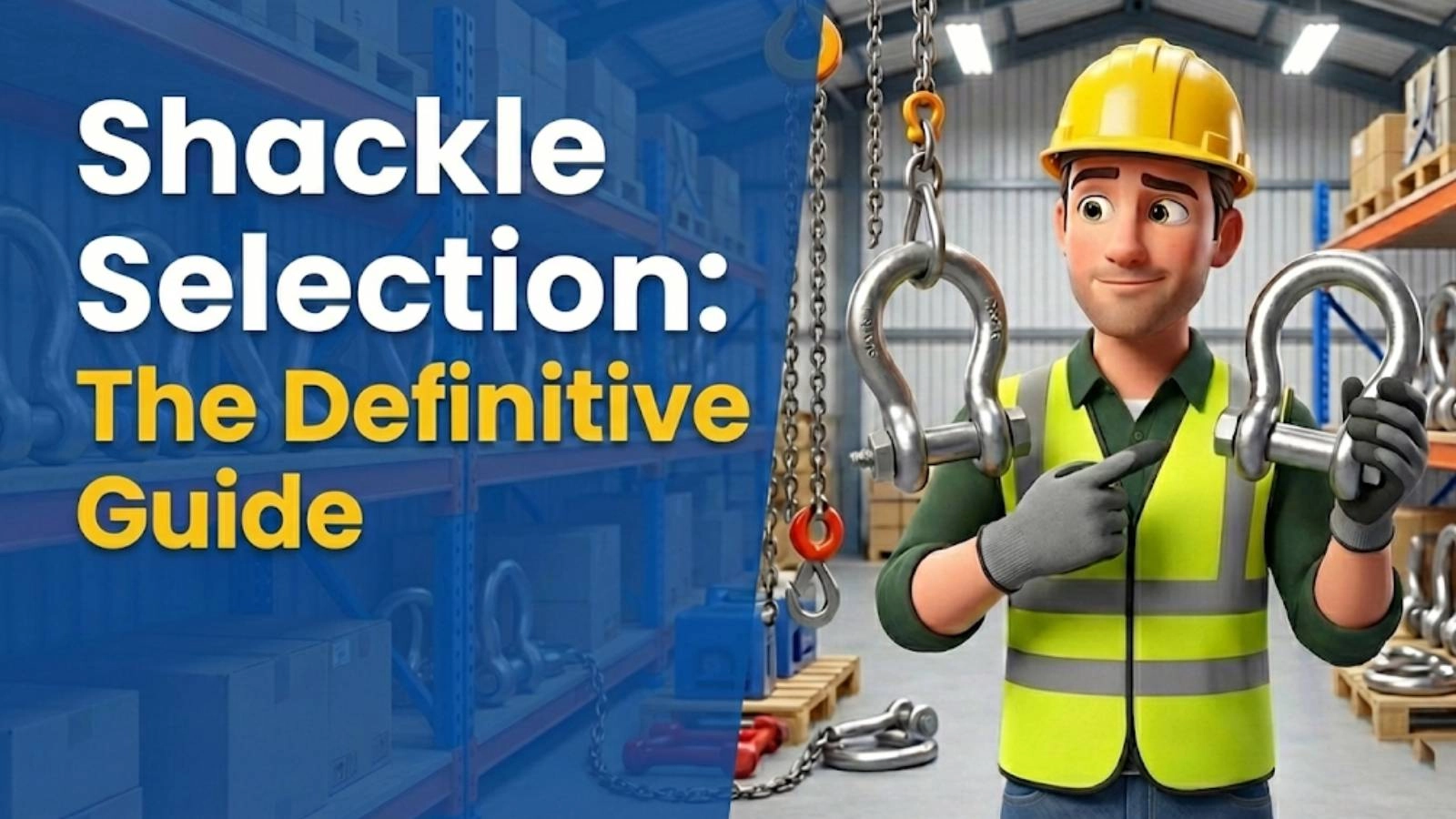
Understanding and optimizing lifting shackle lifespan is critical for ensuring safety and maximizing operational efficiency in various industries. A compromised shackle can lead to catastrophic failures, resulting in serious injuries, property damage, and costly downtime. By understanding the factors that affect shackle lifespan, users can implement proactive measures to mitigate risks and prolong the service life of these essential lifting components.
1.1. The Importance of Shackle Integrity
Maintaining the integrity of shackles is paramount in any lifting operation. The potential dangers of using damaged or corroded shackles include unexpected breakage, leading to dropped loads and potential harm to personnel. Regular inspections and adherence to safe lifting practices are essential to prevent such incidents. Understanding the expected shackle lifespan helps in planning timely replacements and avoiding risks associated with aging equipment.
1.2. Scope of the Article
In this article, we’ll explore five key factors that significantly influence the lifting shackle lifespan. These include material selection, environmental conditions, load management, proper usage, and proactive inspection and maintenance. Each section will provide actionable advice and practical takeaways to help you make informed decisions and implement best practices in your operations. By the end, you’ll have a clear understanding of how to maximize the lifespan of your shackles and enhance overall safety.
2. ✅ Material Matters: Choosing the Right Shackle
Selecting the right shackle material is the first and most crucial step in maximizing its lifespan. The material dictates the shackle’s strength, durability, and resistance to various environmental factors. By understanding the properties of different materials, you can choose the most appropriate shackle for your specific application. We always tell our clients to consider the lifting environment as the first thing before purchasing a shackle.
2.1. Carbon Steel vs. Alloy Steel
Carbon steel shackles are cost-effective and suitable for general lifting purposes in relatively benign environments. However, they are more susceptible to corrosion and have lower ductility compared to alloy steel. Alloy steel shackles, on the other hand, offer a higher strength-to-weight ratio and better resistance to shock loads and extreme temperatures, making them ideal for heavy lifting and demanding conditions. When selecting between the two, consider the specific requirements of your application and the potential hazards involved. For example, many of our clients here in Dammam, we’ve seen that alloy steel performs better in the oil and gas sector due to its resilience.
2.2. Galvanization and Other Coatings
Galvanization, epoxy coatings, and other protective treatments play a vital role in preventing shackle corrosion, especially in harsh environments. Galvanization involves coating the steel with a layer of zinc, which acts as a barrier against moisture and corrosive elements. Epoxy coatings provide an additional layer of protection against chemicals and abrasion. These coatings can significantly extend the shackle lifespan, reducing the need for frequent replacements. When using shackles in marine or chemical-intensive environments, ensure they are properly coated to prevent premature degradation.
2.3. Material Certification
Material certifications, such as ASTM, EN, and others, ensure that shackles meet specific quality and performance standards. These certifications verify the shackle’s material composition, manufacturing process, and load-bearing capacity. Always check for valid certifications before purchasing shackles to ensure they meet your safety requirements. Using certified shackles provides peace of mind and reduces the risk of using substandard or counterfeit products. It’s also important to keep certification documentation for auditing purposes.
3. ✅ Environmental Factors: Combating Corrosion and Wear
The environment in which shackles are used can significantly impact their lifespan. Exposure to saltwater, extreme temperatures, and chemicals can accelerate corrosion and wear, leading to premature failure. Implementing protective measures and selecting appropriate materials are crucial for mitigating these risks. Our experience shows that paying attention to environmental factors can increase shackle lifespan by up to 50%.
3.1. Saltwater Exposure
Saltwater is highly corrosive and can rapidly degrade steel shackles, especially those made of carbon steel. When using shackles in marine environments, it is essential to choose corrosion-resistant materials such as stainless steel or alloy steel with a durable coating like hot-dip galvanization. Regular maintenance practices, such as rinsing shackles with fresh water after each use and applying a corrosion-inhibiting lubricant, can further extend their lifespan. We advise clients to avoid carbon steel shackles in marine environments due to the high risk of corrosion.
3.2. Temperature Extremes
Extreme temperatures, both hot and cold, can affect the strength and lifespan of shackles. High temperatures can reduce the steel’s tensile strength, while low temperatures can make it more brittle and prone to cracking. When selecting shackles, ensure they are rated for the expected temperature range of your application. For example, using shackles in extremely cold environments requires materials that maintain their ductility at low temperatures. In some regions we operate, we recommend shackles specifically designed for extreme temperatures.
3.3. Chemical Exposure
Exposure to chemicals can degrade shackle materials and coatings, leading to corrosion and reduced strength. Different chemicals have varying effects on different materials, so it is important to choose shackles that are resistant to the specific chemicals they will be exposed to. For example, stainless steel offers excellent resistance to many chemicals, while certain coatings can protect carbon steel from specific corrosive agents. Always consult with a material specialist or the shackle manufacturer to ensure compatibility.
4. ✅ Load Management: Staying Within Limits
Proper load management is critical for ensuring the safe and prolonged lifespan of lifting shackles. Exceeding the shackle’s Working Load Limit (WLL) or subjecting it to dynamic and shock loads can lead to immediate failure or reduced lifespan. Understanding load limits and implementing safe rigging practices are essential. We consistently remind our clients that exceeding the WLL is a major cause of shackle failure.
4.1. Working Load Limit (WLL) vs. Breaking Strength
The Working Load Limit (WLL) is the maximum load that a shackle is designed to safely handle under normal operating conditions. Breaking strength, on the other hand, is the load at which the shackle is expected to fail. It is crucial to stay within the WLL at all times, as exceeding it can significantly reduce the shackle’s lifespan and increase the risk of failure. The WLL is typically marked on the shackle itself, and it is the user’s responsibility to ensure that the load never exceeds this limit.
4.2. Dynamic Loading and Shock Loads
Dynamic loading and shock loads occur when the load is suddenly applied or when the load shifts during lifting. These types of loads can significantly increase the stress on the shackle, potentially exceeding its WLL and leading to failure. To minimize dynamic and shock loads, use smooth and controlled lifting techniques, avoid sudden stops or starts, and ensure the load is properly balanced. Consider using shackles with a higher WLL to provide an extra margin of safety when dynamic loading is unavoidable.
4.3. Angle of Lift Considerations
The angle of lift affects the load on shackles because as the angle increases, the force exerted on each shackle increases. Using appropriate rigging techniques and calculating the effective load based on the angle of lift is crucial to ensure that the WLL is not exceeded. The effective load can be significantly higher than the actual weight of the load, especially at larger angles. Always use load charts and consult with rigging experts to determine the appropriate shackle size and configuration for your lifting application.
5. ✅ Proper Usage: Best Practices for Shackle Application
Proper usage of shackles is essential for maintaining their lifespan and ensuring safe lifting operations. Incorrect installation, side loading, and incompatible hardware can all contribute to premature wear and failure. By following best practices for shackle application, you can minimize these risks and prolong the service life of your shackles. We’ve seen incidents where improper pin installation lead to significant delays and near-miss accidents.
5.1. Correct Pin Installation
Correct pin installation is crucial for ensuring the shackle functions as intended and can withstand the designed load. The pin should be fully threaded into the shackle body and tightened to the manufacturer’s specified torque. Before each use, inspect the pin for any signs of damage, such as bent threads or cracks. Never use a damaged pin, as it can compromise the shackle’s strength and increase the risk of failure. Always follow the manufacturer’s recommendations for pin installation and torque specifications.
5.2. Avoiding Side Loading
Side loading occurs when the load is applied at an angle to the shackle’s bow, rather than in a straight line. This type of loading can create excessive stress on the shackle and significantly reduce its WLL and lifespan. To prevent side loading, ensure that the load is properly aligned with the shackle’s axis and use spreader bars or other rigging techniques to distribute the load evenly. Regularly inspect shackles for signs of side loading, such as deformation or bending.
5.3. Mating Hardware Compatibility
Ensuring compatibility between shackles and other rigging hardware, such as slings and hooks, is essential for safe and efficient lifting operations. The hardware should be appropriately sized and rated for the intended load, and it should be compatible with the shackle’s dimensions and design. Using mismatched or incompatible hardware can create stress concentrations and increase the risk of failure. Always consult with a rigging expert to ensure that all hardware components are properly matched.
6. ✅ Inspection and Maintenance: A Proactive Approach
Regular inspection and maintenance are essential for identifying potential problems before they lead to shackle failure. A proactive approach to inspection and maintenance can significantly extend the shackle lifespan and ensure safe lifting operations. Neglecting these crucial steps can lead to unexpected failures and potentially dangerous situations. SSTC always advises our clients to incorporate robust inspection programs.
6.1. Pre-Use Inspection Checklist
A pre-use inspection checklist should include a visual inspection for cracks, deformation, corrosion, and other signs of damage. Check the shackle body and pin for any signs of wear or distortion. Ensure that the pin is properly threaded and tightened. If any damage is detected, remove the shackle from service immediately and replace it with a new one. This quick check can help identify potential issues before they escalate into serious problems.
6.2. Periodic Thorough Inspections
Periodic thorough inspections should be conducted by qualified personnel at regular intervals, such as monthly or quarterly. These inspections should include a more detailed examination of the shackle, including non-destructive testing (NDT) methods if applicable. NDT methods, such as magnetic particle testing or ultrasonic testing, can detect hidden cracks or defects that are not visible to the naked eye. Document all inspection findings in detailed reports and maintain a record of all inspections.
6.3. Lubrication and Cleaning
Proper lubrication and cleaning can help maintain shackle performance and prevent corrosion. Lubricate the shackle pin threads regularly with a corrosion-inhibiting lubricant to ensure smooth operation and prevent seizing. Clean the shackle body and pin with a mild detergent and water to remove dirt, debris, and corrosive substances. Avoid using harsh chemicals or abrasive cleaners, as they can damage the shackle’s coating or material.
7. 💡 Documentation and Record Keeping: Maintaining a History
Maintaining accurate records of shackle identification, purchase dates, usage history, and inspection findings is essential for effective shackle management. Proper documentation and record-keeping can help track shackle lifespan, identify potential problems, and ensure compliance with safety regulations. Without proper record-keeping, it is difficult to determine when a shackle should be retired from service. Our company policy requires meticulous record-keeping for all lifting equipment.
7.1. Shackle Identification and Tracking
Each shackle should be clearly identified with a unique identification number or code. This identification number should be recorded in a database or spreadsheet, along with the shackle’s purchase date, material, WLL, and other relevant information. Use a tracking system to monitor the shackle’s usage history, including the dates and types of lifts it has been used for. This information can help identify shackles that are being used excessively or in demanding applications, which may require more frequent inspections.
7.2. Inspection Reports
All inspection findings should be documented in detailed reports, including the date of the inspection, the name of the inspector, the shackle identification number, and a description of any defects or damage found. The inspection report should also include a recommendation for whether the shackle should be returned to service, repaired, or retired. Maintain a central repository for all inspection reports and make them easily accessible to relevant personnel.
7.3. Retirement Criteria
Establish clear criteria for retiring shackles from service based on wear, damage, or exceeding their lifespan. These criteria should be based on the manufacturer’s recommendations, industry standards, and the specific requirements of your application. Typical retirement criteria include cracks, deformation, excessive corrosion, or exceeding a specified number of lifts. Properly dispose of retired shackles to prevent them from being used again.
8. ➡️ Training and Competency: Ensuring Safe Practices
Providing comprehensive training programs for all personnel involved in lifting operations is essential for ensuring safe practices and maximizing shackle lifespan. Training programs should cover topics such as shackle selection, inspection, usage, and maintenance. Competency assessment and regular refresher training are also crucial for maintaining a high level of safety. We’ve found that well-trained operators are far less likely to misuse or damage shackles.
8.1. Operator Training Programs
Operator training programs should include both theoretical and practical instruction. Theoretical instruction should cover topics such as shackle types, materials, WLL, and inspection criteria. Practical instruction should provide hands-on experience with shackle selection, installation, and usage. Training programs should be tailored to the specific needs of the operators and the types of lifting operations they will be performing.
8.2. Competency Assessment
Assess operator competency through written exams and practical demonstrations. Written exams can test operators’ knowledge of shackle selection, inspection, and usage. Practical demonstrations can assess operators’ ability to properly install and use shackles in a safe and efficient manner. Provide regular refresher training to ensure that operators maintain their competency and stay up-to-date on the latest safety practices.
8.3. Following Manufacturer’s Guidelines
Always follow the manufacturer’s guidelines for shackle usage, inspection, and maintenance. The manufacturer’s guidelines provide specific recommendations for the shackle’s intended use, load limits, inspection intervals, and maintenance procedures. Deviating from the manufacturer’s guidelines can void the shackle’s warranty and increase the risk of failure. Contact the manufacturer or a qualified rigging expert if you have any questions about the shackle’s usage or maintenance.
9. HTML Table: Shackle Material Comparison
9.1. Creating a Clear Comparison Table
| Material |
Pros |
Cons |
Typical Applications |
Lifespan Considerations |
| Carbon Steel |
High strength, cost-effective |
Susceptible to corrosion, lower ductility |
General lifting, non-corrosive environments |
Requires regular inspection and maintenance to prevent rust |
| Alloy Steel |
Higher strength-to-weight ratio, better ductility, more resistant to shock loads |
More expensive than carbon steel |
Heavy lifting, dynamic loading, harsh conditions |
Longer lifespan than carbon steel if properly maintained |
| Stainless Steel |
Excellent corrosion resistance |
Lower strength than carbon or alloy steel, higher cost |
Marine environments, chemical processing, food industry |
Long lifespan in corrosive environments but lower load capacity needs consideration |
10. 💡 Expert Insight: Quote on Shackle Safety
10.1. Adding Authority with Expert Opinions
“Regular inspection and diligent maintenance are paramount to ensuring the longevity and safety of lifting shackles. Never compromise on these critical steps.” – John Davidson, Senior Rigging Engineer
11. Top 3 Tips for Maximizing Shackle Lifespan
11.1 Concise Summary List
Here are our top 3 tips:
1. Regularly inspect shackles before each use.
2. Choose the right material based on your environment.
3. Stay within the WLL to prevent overload.
12. ✅ Conclusion: Prioritizing Shackle Longevity and Safety
12.1. Recap of Key Takeaways
In summary, maximizing lifting shackle lifespan involves careful material selection, proactive environmental protection, diligent load management, proper usage techniques, and consistent inspection and maintenance. By paying attention to these five key factors, you can significantly extend the service life of your shackles and improve the safety of your lifting operations. Prioritizing shackle safety is crucial for protecting personnel, preventing equipment damage, and ensuring operational efficiency.
12.2. Final Thoughts and Recommendations
We encourage you to implement the practices discussed in this article to extend shackle lifespan and improve safety in your operations. Our commitment to safety and quality makes us your ideal partner. We are confident that by following these guidelines, you can create a safer and more efficient working environment.
FAQ Section
Q: How often should lifting shackles be inspected?
A: Lifting shackles should undergo a pre-use inspection before each lift and periodic thorough inspections by qualified personnel, typically monthly or quarterly, depending on usage and environmental conditions.
Q: What are the key signs of a damaged lifting shackle?
A: Key signs of damage include cracks, deformation, excessive corrosion, bent or damaged pins, and worn threads. Any shackle exhibiting these signs should be removed from service immediately.
Q: Can a lifting shackle be used if it has exceeded its lifespan?
A: No, a lifting shackle that has exceeded its lifespan or shows signs of wear and tear beyond acceptable limits should be retired from service to prevent potential failures.
Q: What is the difference between WLL and breaking strength?
A: The Working Load Limit (WLL) is the maximum load a shackle is designed to safely handle, while the breaking strength is the load at which the shackle is expected to fail. Always stay within the WLL.
Q: How does saltwater exposure affect lifting shackles?
A: Saltwater is highly corrosive and can rapidly degrade steel shackles, especially those made of carbon steel. Use corrosion-resistant materials and coatings in marine environments.
Q: What type of shackle is best for lifting heavy loads?
A: Alloy steel shackles are best for lifting heavy loads due to their high strength-to-weight ratio and resistance to shock loads and extreme temperatures.
Q: How important is shackle safety in lifting operations?
A: Shackle safety is paramount in lifting operations. Compromised shackles can lead to catastrophic failures, resulting in serious injuries, property damage, and costly downtime.
Q: What is shackle load capacity?
A: Shackle load capacity refers to the maximum weight a shackle can safely lift, as determined by its Working Load Limit (WLL).
Q: How does the angle of lift affect the load on shackles?
A: As the angle of lift increases, the force exerted on each shackle increases. Use appropriate rigging techniques and calculate the effective load to ensure the WLL is not exceeded.
Q: What is the importance of WLL shackle?
A: A WLL shackle’s importance lies in its clearly marked Working Load Limit, which ensures users stay within the safe operating parameters, preventing overloads and potential failures.
Q: What should a lifting shackle maintenance program include?
A: A comprehensive lifting shackle maintenance program should include regular inspections, lubrication, cleaning, proper storage, and adherence to manufacturer’s guidelines.
Q: What are some common types of shackle failure?
A: Common types of shackle failure include overload failures, corrosion-induced failures, fatigue failures from repeated stress, and failures due to improper usage or installation.
Q: What is shackle corrosion and how can it be prevented?
A: Shackle corrosion is the degradation of shackle material due to environmental factors like saltwater or chemicals. Prevention involves using corrosion-resistant materials, protective coatings, and regular maintenance.
Q: What is lifting shackle lifespan and how can it be maximized?
A: Lifting shackle lifespan is the duration a shackle can safely operate before needing replacement. It can be maximized by choosing the right material, managing loads, avoiding environmental hazards, and implementing regular inspections and maintenance.
Q: What is the proper shackle material for chemical exposure?
A: Stainless steel or shackles with specific chemical-resistant coatings are ideal for environments with chemical exposure. Always consult with a material specialist to ensure compatibility.
Q: What are safe lifting practices involving shackles?
A: Safe lifting practices include ensuring proper shackle selection, adhering to WLL, avoiding side loading, performing regular inspections, and providing adequate operator training.