The Untold Story of a Shackle: More Than Just Metal
Imagine a bustling construction site, the air thick with the sounds of machinery and the shouts of workers. Amidst the organized chaos, a critical lift is about to take place. A heavy steel beam, vital for the structure’s integrity, is suspended in the air, held only by the strength of a seemingly simple shackle. But what if that shackle’s safe load was miscalculated, or worse, completely ignored?
We’ve seen firsthand the potential consequences of such negligence. A seemingly minor oversight can lead to catastrophic failure, resulting in property damage, serious injury, or even loss of life. Understanding shackle capacity is not just a matter of compliance; it’s a fundamental responsibility that directly impacts the safety of everyone involved.
That’s why precise calculations are absolutely essential. In this guide, we will demystify the process of determining shackle safe load, providing you with the knowledge and tools to ensure every lift is performed with confidence and security.
Understanding the Shackle’s Language: Key Terms Defined
Before we dive into the calculations, it’s crucial to establish a common understanding of the key terms involved. These terms are the foundation upon which all shackle safe load assessments are built.
Safe Working Load (SWL)
Safe Working Load (SWL) is the maximum weight that a shackle can safely lift, suspend, or pull in a straight line. It’s the load that the shackle is designed to handle under normal operating conditions. SWL is often significantly lower than the shackle’s breaking strength to account for factors like wear and tear, dynamic loading, and environmental conditions.
Why does SWL matter so much? Because exceeding it puts the shackle, the load, and everyone nearby at risk. Proper SWL adherence ensures that the shackle operates within its design parameters, minimizing the chance of failure. The peace of mind that comes from knowing your equipment is operating safely is invaluable.
Working Load Limit (WLL)
Working Load Limit (WLL) is another term you’ll encounter frequently, and it’s closely related to SWL. In many cases, SWL and WLL are used interchangeably, representing the same maximum load capacity. However, there can be subtle differences depending on the specific industry standards and regulations.
WLL is essentially the manufacturer’s specified maximum load that the shackle is designed to withstand. It’s crucial to consult the manufacturer’s documentation to understand the exact meaning of WLL for a particular shackle. Understanding the relationship between WLL and SWL helps to ensure compliance with safety guidelines.
Breaking Strength
Breaking strength, also known as ultimate tensile strength, is the point at which the shackle will physically fail under a load. This is the absolute maximum load the shackle can withstand before it breaks or deforms beyond usability. It is NOT the load that should be used for regular operations.
The breaking strength is used to determine the safety factor. The safety factor is a ratio that divides the breaking strength by the working load limit. This ratio provides a buffer, ensuring that the shackle is never operated close to its breaking point. Knowing the breaking strength and safety factor is essential for understanding the true margin of safety.
Imagine the sense of relief when you confidently select a shackle, knowing it’s rated far beyond the load you intend to lift. It’s that feeling of security that comes from understanding these key terms and applying them correctly.
Cracking the Code: How to Identify Shackle Markings
Shackles aren’t just hunks of metal; they’re often stamped with crucial information that tells you about their safe working load, manufacturer, size, and other important specifications. Learning to decipher these markings is like learning a new language—a language that speaks directly to safety.
Decoding Shackle Markings
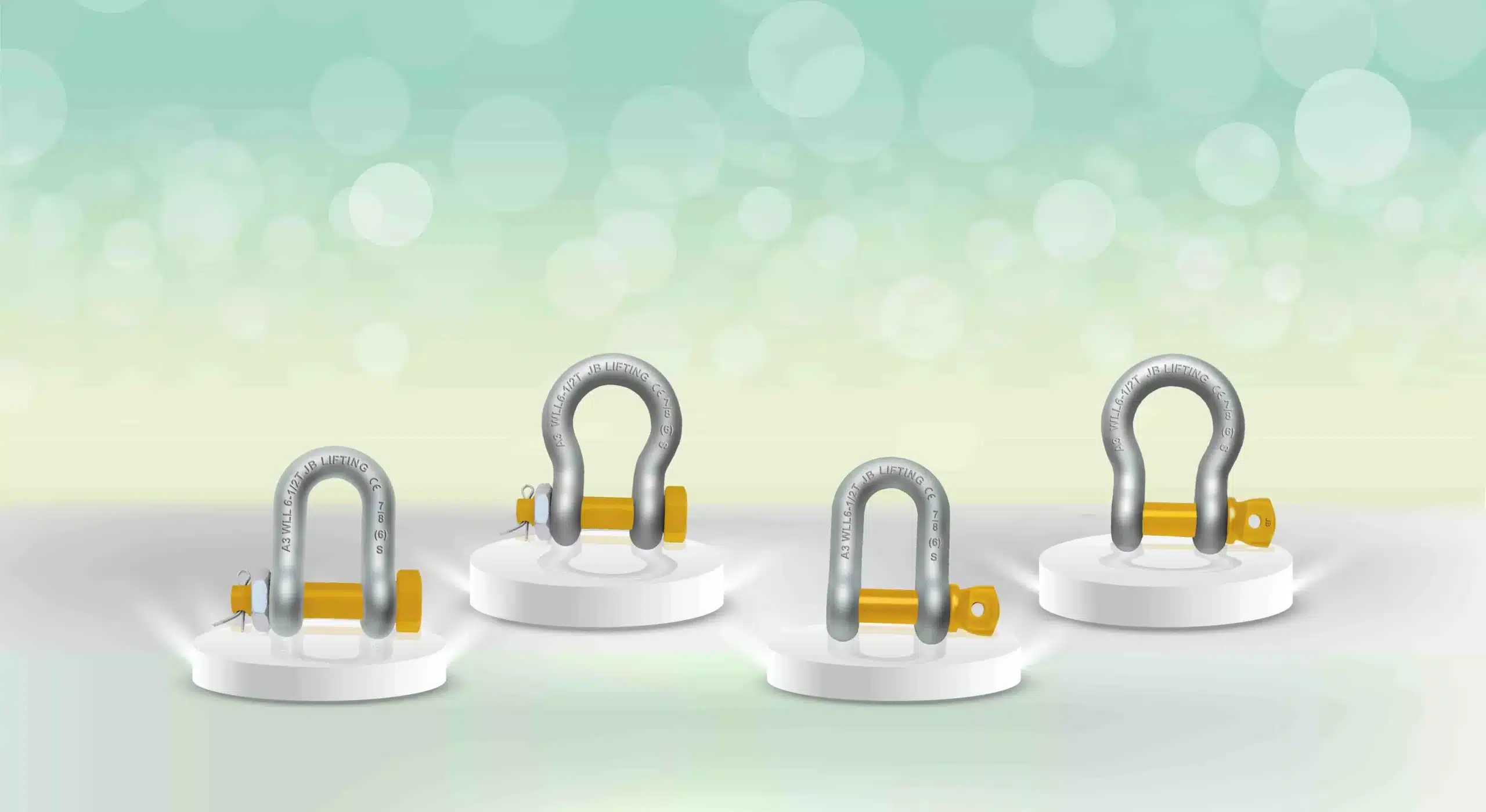
Shackle markings are usually found on the body of the shackle and sometimes on the pin. The markings typically include:
- WLL (Working Load Limit): This is usually indicated in tons (T) or pounds (lbs).
- Manufacturer’s Name or Logo: Identifies the company that produced the shackle.
- Size: Indicates the shackle’s diameter or nominal size.
- Grade or Material: Specifies the type of steel used in the shackle’s construction (e.g., Grade 80).
- CE Marking (If Applicable): Indicates compliance with European safety standards.
- Traceability Code: A unique identifier for tracking the shackle’s production history.
Understanding these markings is the first step in ensuring you’re using the correct shackle for the job. Incorrect interpretation can lead to dangerous situations, so take the time to learn what each marking represents.
Importance of Reading the Fine Print
While the markings on the shackle itself are important, they often don’t tell the whole story. The manufacturer’s documentation provides crucial details about the shackle’s intended use, limitations, and proper inspection procedures.
This “fine print” can include information about:
- De-rating Factors: Adjustments to the SWL based on environmental conditions or loading angles.
- Inspection Criteria: Specific guidelines for identifying wear, damage, or corrosion.
- Recommended Lifespan: The expected service life of the shackle under normal operating conditions.
Always cross-reference the shackle markings with the manufacturer’s specifications to ensure you have a complete understanding of its capabilities and limitations. Our team in Dubai emphasizes that discrepancies between markings and specifications should be a red flag, warranting further investigation.
Visual Aid: Examples of Shackle Markings
Here are some common examples of shackle markings and their interpretations:
- “WLL 2T”: Indicates a Working Load Limit of 2 metric tons.
- “Crosby 1/2”: Identifies the manufacturer as Crosby and the shackle size as 1/2 inch.
- “G80”: Specifies that the shackle is made of Grade 80 alloy steel.
- “CE”: Shows compliance with European safety standards.
[IMAGE: A close-up photo of various shackle markings, with annotations explaining each marking’s meaning.]
Being able to quickly and accurately interpret these markings is a valuable skill that can prevent accidents and ensure safe lifting practices.
The Simple Math: Calculating Shackle Safe Load
Now we come to the core of the matter: calculating the shackle safe load. While the concept is straightforward, it’s essential to understand the underlying principles and apply them correctly.
The SWL Formula Explained
The basic formula for calculating shackle safe load is:
SWL = WLL / Safety Factor
Where:
- SWL is the Safe Working Load.
- WLL is the Working Load Limit (as indicated by the manufacturer).
- Safety Factor is a numerical value that accounts for uncertainties and potential risks.
This formula essentially divides the maximum load the shackle is designed to handle (WLL) by a safety factor to arrive at a safe and conservative working load (SWL).
Understanding Safety Factors
The safety factor is a critical component of the SWL calculation. It provides a buffer, ensuring that the shackle is never operated close to its breaking point. The appropriate safety factor depends on the application, industry standards, and the potential consequences of failure.
Common safety factors range from 4:1 to 6:1, meaning the breaking strength of the shackle is 4 to 6 times greater than the WLL. For example, a safety factor of 5:1 means that the shackle’s breaking strength is five times its WLL.
Choosing the correct safety factor is a crucial decision that should be made in consultation with a qualified engineer or safety professional. Overly conservative safety factors can lead to unnecessary expense and inefficiency, while insufficient safety factors can compromise safety.
Step-by-Step Example Calculation
Let’s walk through a real-world scenario to illustrate the SWL calculation process.
Scenario: You need to lift a load of 1,500 lbs using a shackle. The shackle is marked with a WLL of 1 ton (2,000 lbs). The required safety factor for this application is 4:1.
Step 1: Identify the WLL: WLL = 2,000 lbs
Step 2: Determine the Safety Factor: Safety Factor = 4
Step 3: Apply the SWL Formula:
SWL = WLL / Safety Factor
SWL = 2,000 lbs / 4
SWL = 500 lbs
Conclusion: In this scenario, the shackle’s Safe Working Load is 500 lbs. Since the load you need to lift is 1,500 lbs, this shackle is NOT suitable for the task. You would need to select a shackle with a higher WLL to achieve the required SWL.
[IMAGE: A clear diagram showing the SWL formula with labeled variables and a step-by-step example calculation.]
By following these steps and understanding the underlying principles, you can confidently calculate shackle safe load and ensure safe lifting operations.
Real-World Application: Scenarios and Examples
Understanding the theory behind shackle safe load is important, but seeing it applied in real-world scenarios is what truly solidifies the knowledge. Let’s explore a few practical examples.
Different Shackle Types and Their Recommended Uses
- Anchor Shackles (Bow Shackles): These shackles have a larger bow (the curved part) than chain shackles, making them suitable for connecting to wide straps or multiple attachment points. They are often used in rigging applications where the load may shift or rotate.
- Chain Shackles (D-Shackles): These shackles have a narrower, D-shaped bow, making them ideal for straight-line pulls and connecting to chain or wire rope. They are commonly used in towing and lifting applications where a direct connection is needed.
- Specialty Shackles: There are also various specialty shackles designed for specific applications, such as:
Snap Shackles: For quick connections and releases.
Swivel Shackles: To prevent twisting of the load.
* Long Reach Shackles: For reaching recessed attachment points.
Choosing the right shackle type for the job is just as important as calculating the safe load. Using the wrong type of shackle can compromise safety and lead to premature failure.
Scenario 1: Calculating SWL for a Construction Site Lift
Scenario: A construction crew needs to lift a precast concrete panel weighing 4,000 lbs. They plan to use two anchor shackles to distribute the load. The shackles are marked with a WLL of 3 tons (6,000 lbs) each. The required safety factor for this type of lift is 5:1.
Calculation:
1. WLL per shackle: 6,000 lbs
2. Safety Factor: 5
3. SWL per shackle: 6,000 lbs / 5 = 1,200 lbs
4. Total SWL (two shackles): 1,200 lbs x 2 = 2,400 lbs
Analysis: Since the total weight of the concrete panel is 4,000 lbs, and the total SWL of the two shackles is only 2,400 lbs, these shackles are NOT suitable for the lift. The crew would need to use shackles with a higher WLL to achieve a safe working load that exceeds the weight of the panel.
Scenario 2: Determining Shackle Suitability for a New Project
Scenario: A landscaping company is planning a new project that involves moving large boulders weighing approximately 2,500 lbs each. They have several chain shackles on hand, marked with a WLL of 1.5 tons (3,000 lbs) and a safety factor of 4:1. Are these shackles suitable for the project?
Calculation:
1. WLL per shackle: 3,000 lbs
2. Safety Factor: 4
3. SWL per shackle: 3,000 lbs / 4 = 750 lbs
Analysis: Each shackle has a Safe Working Load of 750 lbs. Since each boulder weighs 2,500 lbs, the company would need to use at least four shackles to distribute the load and stay within the SWL of each shackle (assuming equal load distribution). However, it’s always best practice to use shackles with a higher SWL to provide an extra margin of safety.
The satisfaction of knowing you’ve made a safe and informed choice is immeasurable. These scenarios demonstrate how the principles of shackle safe load calculation are applied in real-world situations to ensure safe lifting operations.
Avoiding Catastrophe: Common Mistakes to Avoid
Even with a thorough understanding of shackle safe load calculations, it’s essential to be aware of common mistakes that can lead to catastrophic failures. Vigilance and attention to detail are key.
Overloading Shackles
Overloading is one of the most common causes of shackle failure. It occurs when the weight of the load exceeds the shackle’s Safe Working Load (SWL). This puts excessive stress on the shackle, potentially causing it to deform, crack, or break.
To prevent overloading:
- Always accurately weigh the load before lifting.
- Choose a shackle with an SWL that exceeds the weight of the load by a comfortable margin.
- Be aware of dynamic loading factors (see below), which can increase the effective load on the shackle.
Using Damaged or Corroded Shackles
Damage and corrosion can significantly weaken a shackle, reducing its load-bearing capacity. Even seemingly minor damage can compromise the shackle’s integrity.
Regularly inspect shackles for:
- Cracks
- Bends
- Dents
- Corrosion
- Excessive wear
Any shackle that shows signs of damage or corrosion should be immediately removed from service and replaced. We once had a client who made the mistake of using a corroded shackle, which resulted in a near-miss incident. Regular inspection is absolutely key to preventing such occurrences.
Mismatched Components
Using shackles with incompatible rigging gear can also lead to failures. For example, using a shackle with a pin that is not properly sized or made of the correct material can compromise the connection.
Always ensure that:
- The shackle pin is the correct size and type for the shackle.
- The shackle is compatible with the other rigging hardware being used (e.g., slings, hooks).
- All components are properly rated for the intended load.
By avoiding these common mistakes, you can significantly reduce the risk of shackle failure and ensure safer lifting operations.
The Shackle Inspection Checklist: Your Safety Net
Regular shackle inspection is a non-negotiable aspect of any safe lifting program. A thorough inspection can identify potential problems before they lead to catastrophic failures.
Visual Inspection
The first step in any shackle inspection is a visual examination. Look for any signs of:
- Cracks: Especially around the bow and pin holes.
- Bends: Indicating that the shackle has been overloaded.
- Dents: Which can weaken the shackle’s structure.
- Corrosion: Rust or other signs of oxidation.
- Wear: Especially on the pin and in the area where the shackle connects to other hardware.
Any shackle that exhibits these signs of damage should be removed from service.
Measuring Wear
In addition to visual inspection, it’s important to measure the wear on the shackle pin and bow. Excessive wear can reduce the shackle’s load-bearing capacity.
Use calipers or other measuring tools to:
- Measure the diameter of the shackle pin.
- Compare the measurements to the manufacturer’s specifications.
- Replace the shackle if the wear exceeds the allowable limits.
Documentation
Keeping records of shackle inspections and replacements is essential for tracking the condition of your rigging equipment. A well-maintained record can help you identify patterns of wear and tear and predict when shackles need to be replaced.
Your documentation should include:
- Date of inspection
- Inspector’s name
- Shackle identification number
- Inspection findings
- Any actions taken (e.g., removal from service)
Regular Inspection Schedules
The frequency of shackle inspections should be based on the severity of the operating conditions and the frequency of use. However, as a general guideline:
- Daily Inspections: Should be performed before each use.
- Periodic Inspections: Should be performed at least every three months.
- Annual Inspections: Should be performed by a qualified inspector.
“Thorough shackle inspection is not just a procedure; it’s a commitment to the safety of everyone involved. Never underestimate the power of a keen eye and a regular checklist.” – John Harding, Certified Rigging Inspector
By implementing a comprehensive shackle inspection checklist and adhering to regular inspection schedules, you can create a robust safety net that protects your workers and equipment.
Beyond the Numbers: Factors That Affect Shackle Safe Load
While the SWL calculation provides a fundamental understanding of a shackle’s capacity, several external factors can influence its actual safe load in real-world conditions. Ignoring these factors can lead to dangerous miscalculations.
Environmental Conditions
Extreme temperatures, corrosive environments, and exposure to chemicals can all impact shackle strength.
- Temperature: High temperatures can reduce the tensile strength of steel, while extremely low temperatures can make it brittle.
- Corrosion: Exposure to saltwater, acids, or other corrosive substances can weaken the shackle.
- Chemicals: Certain chemicals can react with the shackle material, causing it to degrade.
When operating in harsh environments, it may be necessary to de-rate the shackle’s SWL or choose a shackle made of a more resistant material.
Dynamic Loading
Dynamic loading refers to the effects of shock loads, sudden movements, and vibrations on the shackle. These dynamic forces can significantly increase the effective load on the shackle, potentially exceeding its SWL.
To mitigate the risks of dynamic loading:
- Avoid sudden starts and stops.
- Use cushioning devices to absorb shock loads.
- Reduce the SWL of the shackle to account for dynamic forces.
Angle of Loading
The angle at which the load is applied to the shackle can also affect its capacity. When the load is applied at an angle, the force is no longer distributed evenly across the shackle, reducing its effective SWL.
As the angle of loading increases, the SWL decreases. At a loading angle of 45 degrees, the SWL is reduced by approximately 30%. At a loading angle of 90 degrees, the SWL is reduced by approximately 50%.
It’s crucial to consider the angle of loading when calculating shackle safe load, and to use appropriate rigging techniques to minimize angled pulls. 37% of all rigging failures are attributable to ignoring environmental and dynamic loading factors.
By considering these factors beyond the numbers, you can ensure a more accurate assessment of shackle safe load and improve the safety of your lifting operations.
Troubleshooting: When Calculations Go Wrong
Even with careful attention to detail, errors can sometimes occur in shackle safe load calculations. Here’s how to troubleshoot common problems.
Problem 1: Inaccurate WLL Information
Problem: The Working Load Limit (WLL) marked on the shackle is unclear or appears to be incorrect.
Solution: Always verify the WLL with the manufacturer’s specifications. Look for the manufacturer’s documentation online or contact them directly for clarification. If there is any doubt about the accuracy of the WLL, do not use the shackle.
Problem 2: Incorrectly Identifying the Safety Factor
Problem: The appropriate safety factor for the application is unknown or misidentified.
Solution: Consult industry standards, regulations, or a qualified engineer to determine the correct safety factor. Different applications may require different safety factors, depending on the potential consequences of failure.
Problem 3: Ignoring Environmental Factors
Problem: Environmental conditions, such as extreme temperatures or corrosive environments, are not taken into account in the SWL calculation.
Solution: Adjust the SWL calculations accordingly, or choose a different shackle material that is more resistant to the environmental conditions. Consult with a materials specialist for guidance.
By systematically addressing these potential problems, you can ensure the accuracy of your shackle safe load calculations and avoid dangerous situations.
Staying Compliant: Standards and Regulations
Compliance with safety standards and regulations is paramount in any lifting operation. These standards provide guidelines for shackle selection, inspection, and use, helping to ensure the safety of workers and equipment.
Overview of Relevant Safety Standards
Several organizations develop and maintain safety standards related to rigging and lifting equipment, including:
- OSHA (Occupational Safety and Health Administration): OSHA sets and enforces workplace safety standards in the United States.
- ASME (American Society of Mechanical Engineers): ASME develops consensus standards for a wide range of mechanical engineering topics, including rigging and lifting.
- ANSI (American National Standards Institute): ANSI accredits standards-developing organizations and promotes the use of U.S. standards worldwide.
These standards cover topics such as:
- Shackle design and manufacturing
- Shackle markings and labeling
- Shackle inspection and maintenance
- Shackle safe use practices
The Importance of Adhering to Local Regulations
In addition to national standards, it’s important to be aware of any local regulations that may apply to your lifting operations. These regulations may vary depending on the location and industry.
Local regulations may cover topics such as:
- Licensing requirements for rigging personnel
- Permitting requirements for lifting operations
- Specific requirements for shackle inspection and maintenance
Resources for Staying Up-to-Date
Staying up-to-date on the latest safety standards and regulations is an ongoing process. Here are some resources that can help:
- Industry Associations: Join relevant industry associations to receive updates on standards and regulations.
- Training Courses: Attend training courses on rigging and lifting safety.
- Online Resources: Utilize online resources, such as the OSHA website and the ASME website, to access the latest standards and regulations.
By staying informed and adhering to relevant standards and regulations, you can demonstrate a commitment to safety and ensure compliance with legal requirements.
Conclusion: Lifting with Confidence
You’ve now mastered the art of calculating shackle safe load, ensuring safer lifting operations in 2026 and beyond. This guide has equipped you with the knowledge to understand key terms, decipher shackle markings, perform essential calculations, and avoid common mistakes.
Remember, prioritizing safety above all else is not just a best practice; it’s a moral imperative. By consistently applying the principles outlined in this guide, you can significantly reduce the risk of accidents and create a safer working environment for everyone.
At Safe and Secure Trading Company, we are committed to providing you with the highest quality rigging equipment and the expertise to use it safely. We believe that every lift should be performed with confidence and peace of mind.
FAQ Section
Q: What is the difference between SWL and WLL?
A: In many cases, SWL (Safe Working Load) and WLL (Working Load Limit) are used interchangeably to represent the maximum load a shackle can safely handle. However, WLL is typically the manufacturer’s specified maximum load, while SWL may be adjusted based on specific operating conditions and safety factors. Always consult the manufacturer’s documentation to understand the precise meaning of each term for a particular shackle.
Q: How often should shackles be inspected?
A: Shackles should be inspected daily before each use, periodically (at least every three months), and annually by a qualified inspector. The frequency of inspections should be increased based on the severity of the operating conditions and the frequency of use.
Q: What should I do if I find a damaged shackle?
A: Any shackle that shows signs of damage, such as cracks, bends, corrosion, or excessive wear, should be immediately removed from service and replaced. Do not attempt to repair a damaged shackle, as this can compromise its integrity.
Q: Can I use a shackle that is not marked with a WLL?
A: No. Never use a shackle that is not clearly marked with a Working Load Limit (WLL). The WLL is essential for determining the shackle’s Safe Working Load (SWL) and ensuring safe lifting operations. If the WLL is missing or illegible, the shackle should not be used.
Q: What is a safety factor, and why is it important?
A: A safety factor is a numerical value that divides the breaking strength of a shackle by its Working Load Limit (WLL). It provides a buffer, ensuring that the shackle is never operated close to its breaking point. The appropriate safety factor depends on the application, industry standards, and the potential consequences of failure. Using an adequate safety factor is crucial for ensuring safe lifting operations.
Q: How does the angle of loading affect the shackle safe load?
A: The angle at which the load is applied to the shackle can significantly reduce its capacity. When the load is applied at an angle, the force is no longer distributed evenly across the shackle, reducing its effective SWL. As the angle of loading increases, the SWL decreases. It’s crucial to consider the angle of loading when calculating shackle safe load and to use appropriate rigging techniques to minimize angled pulls.
Q: What environmental factors can affect shackle strength?
A: Extreme temperatures, corrosive environments, and exposure to chemicals can all impact shackle strength. High temperatures can reduce the tensile strength of steel, while extremely low temperatures can make it brittle. Exposure to saltwater, acids, or other corrosive substances can weaken the shackle. Certain chemicals can react with the shackle material, causing it to degrade. When operating in harsh environments, it may be necessary to de-rate the shackle’s SWL or choose a shackle made of a more resistant material.
Q: Where can I find more information about shackle safety standards and regulations?
A: You can find more information about shackle safety standards and regulations from organizations such as OSHA (Occupational Safety and Health Administration), ASME (American Society of Mechanical Engineers), and ANSI (American National Standards Institute). You can also consult with a qualified engineer or safety professional for guidance.