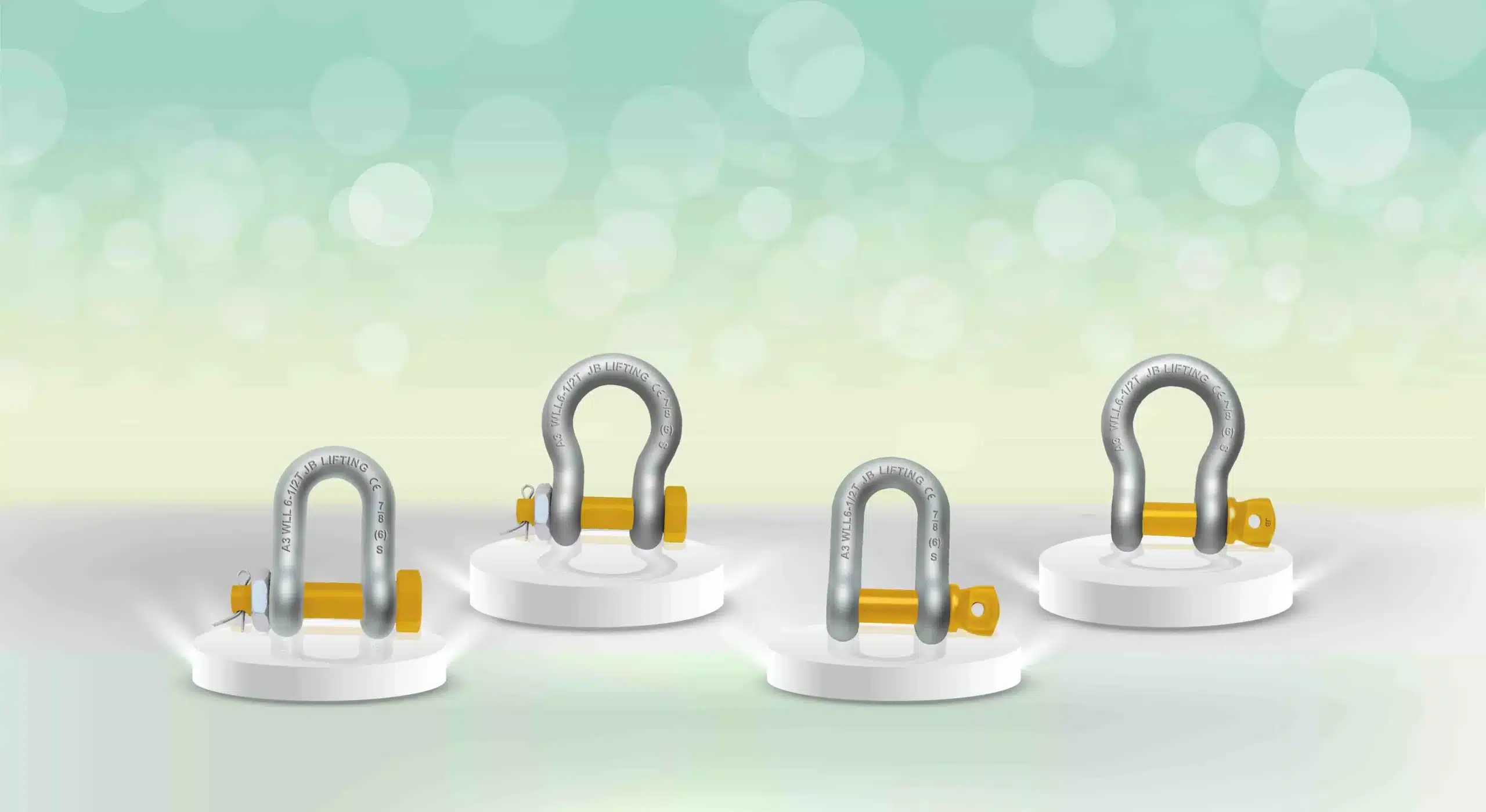
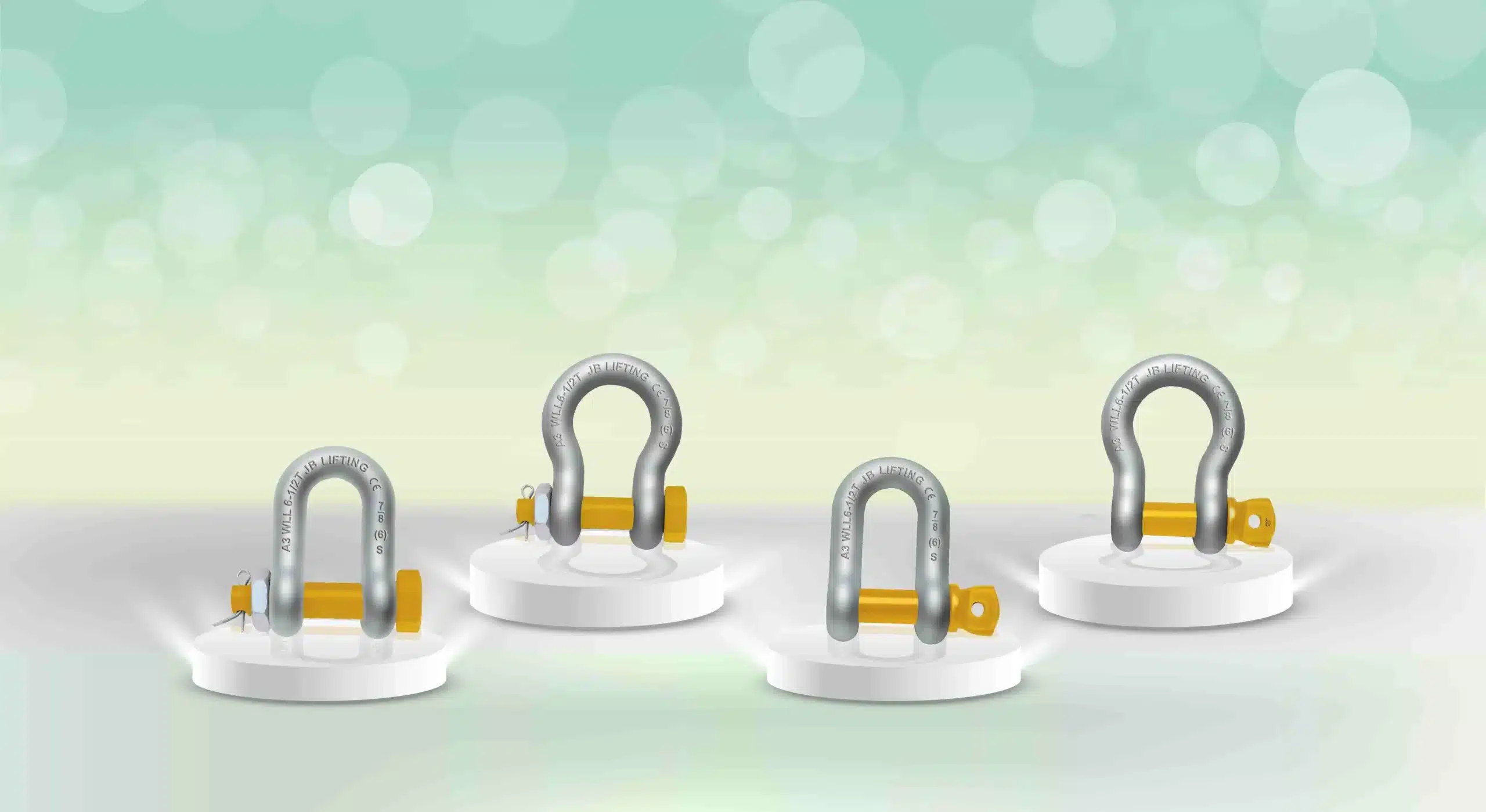
Introduction to Lifting Shackle Materials
Lifting shackles are indispensable components in rigging and hoisting operations. These U-shaped or bow-shaped devices, secured with a pin, connect slings, chains, and other lifting accessories to loads. Selecting the correct lifting shackle materials is paramount for ensuring safety, efficiency, and preventing catastrophic failures. The material dictates a shackle’s strength, durability, resistance to environmental factors, and overall suitability for a specific task.
The choice of lifting shackle materials directly impacts the shackle’s working load limit and its ability to withstand the stresses of lifting. An incorrect choice can lead to deformation, breakage, and potential harm to personnel and equipment. Therefore, a thorough understanding of the properties and applications of different materials is essential for safe rigging practices.
This guide will provide a comprehensive overview of the most common lifting shackle materials: steel (carbon and alloy), stainless steel, and synthetic fibers. We will delve into their respective properties, advantages, disadvantages, and typical applications. Our analysis will equip you with the knowledge to make informed decisions and select the optimal lifting shackle materials for your specific needs.
Carbon Steel Shackles: Properties and Applications
Carbon steel shackles are a frequently used option in rigging due to their cost-effectiveness and availability. They are manufactured from steel alloys with a carbon content typically ranging from 0.05% to 2.1% by weight. The specific grade of carbon steel used influences the shackle’s mechanical properties.
[IMAGE: A close-up showing the grain structure of carbon steel.]
Mechanical Properties: Tensile Strength, Yield Strength, and Elongation
The mechanical properties of carbon steel shackles are crucial for determining their load-bearing capabilities. Tensile strength refers to the maximum stress the material can withstand before breaking, while yield strength indicates the stress at which the material begins to deform permanently. Elongation measures the amount of deformation the material can undergo before fracture. Higher tensile and yield strengths are desirable for lifting applications.
Carbon steel generally has a lower tensile and yield strength compared to alloy steel. The amount of elongation a carbon steel shackle can sustain before breaking is generally good, allowing for some deformation before failure. These properties determine its suitability for various lifting tasks.
Advantages: Cost-Effectiveness and Availability
One of the primary advantages of carbon steel shackles is their cost-effectiveness. They are generally less expensive than alloy steel or stainless steel shackles, making them a budget-friendly option for many applications. Furthermore, carbon steel is widely available, ensuring easy procurement and replacement.
Disadvantages: Susceptibility to Corrosion and Lower Strength-to-Weight Ratio
Despite their advantages, carbon steel shackles are susceptible to corrosion, especially in humid or marine environments. Rust formation can significantly weaken the shackle, compromising its load-bearing capacity. Additionally, carbon steel has a lower strength-to-weight ratio compared to alloy steel, meaning a carbon steel shackle of the same strength will be heavier and bulkier.
Typical Applications: General Lifting, Construction, and Non-Critical Environments
Carbon steel shackles are commonly used in general lifting applications, construction sites, and other non-critical environments where the risk of corrosion is minimal and high strength is not a primary requirement. We’ve found that, here in Riyadh, many construction companies use carbon steel shackles for basic lifting tasks.
Inspection and Maintenance Guidelines for Carbon Steel Shackles
Regular inspection and maintenance are crucial for ensuring the safe use of carbon steel shackles. Before each use, visually inspect the shackle for signs of corrosion, cracks, deformation, or wear. Clean the shackle regularly and apply a protective coating to prevent rust formation. Shackles exhibiting any signs of damage should be immediately removed from service. As Lead Safety Inspector, John Smith states, > “Regular visual inspection and proper lubrication are critical for maintaining the integrity of carbon steel shackles and preventing premature failure.”
Alloy Steel Shackles: High Strength and Durability
Alloy steel shackles offer superior strength and durability compared to carbon steel shackles. They are manufactured from steel alloys containing specific amounts of alloying elements such as chromium, molybdenum, nickel, and manganese. These elements enhance the steel’s mechanical properties, making it suitable for demanding lifting applications.
[IMAGE: A microscopic view of alloy steel, highlighting the uniform distribution of alloying elements.]
Explanation of Alloy Steel Composition and Alloying Elements
The addition of alloying elements to steel alters its microstructure and enhances its properties. Chromium improves corrosion resistance and hardness, molybdenum increases tensile strength and toughness, nickel enhances toughness and weldability, and manganese improves hardenability and strength. The specific combination and concentration of these elements determine the alloy steel’s characteristics.
Enhanced Mechanical Properties: Higher Tensile Strength and Fatigue Resistance Compared to Carbon Steel
Alloy steel shackles exhibit significantly higher tensile strength, yield strength, and fatigue resistance compared to carbon steel shackles. This means they can withstand greater loads and resist failure under repeated stress cycles. The superior mechanical properties of alloy steel make it ideal for heavy lifting and critical applications.
Advantages: Superior Strength-to-Weight Ratio and Improved Durability
One of the key advantages of alloy steel shackles is their superior strength-to-weight ratio. They can handle heavier loads than carbon steel shackles of the same size and weight, making them easier to handle and transport. Furthermore, alloy steel is more durable and resistant to wear and tear, extending the shackle’s lifespan.
Disadvantages: Higher Cost and Potential for Brittle Failure if Improperly Treated
Alloy steel shackles are generally more expensive than carbon steel shackles due to the cost of alloying elements and the more complex manufacturing processes involved. Additionally, alloy steel can be susceptible to brittle failure if improperly heat-treated or subjected to excessive stress.
Typical Applications: Heavy Lifting, Critical Lifts, and Harsh Environments
Alloy steel shackles are commonly used in heavy lifting operations, critical lifts where safety is paramount, and harsh environments where high strength and durability are essential. We often recommend alloy steel shackles for our clients involved in offshore drilling, due to their superior performance in demanding conditions. For many of our clients here in Dammam, we’ve seen that alloy steel shackles offer a longer service life when used in heavy-duty applications.
Heat Treatment Processes and Their Impact on Alloy Steel Shackle Performance
Heat treatment processes, such as quenching and tempering, are crucial for optimizing the mechanical properties of alloy steel shackles. Quenching involves rapidly cooling the steel to increase its hardness, while tempering involves reheating the steel to reduce brittleness and improve toughness. Proper heat treatment ensures that the shackle meets the required strength and ductility standards.
Stainless Steel Shackles: Corrosion Resistance and Special Uses
Stainless steel shackles are prized for their exceptional corrosion resistance and hygienic properties. They are manufactured from steel alloys containing a minimum of 10.5% chromium. The chromium forms a passive layer of chromium oxide on the surface of the steel, preventing rust and corrosion.
[IMAGE: A stainless steel shackle immersed in seawater, showing no signs of corrosion.]
Composition of Stainless Steel and its Resistance to Corrosion
The addition of chromium to steel creates a self-healing protective layer that resists corrosion in a wide range of environments. Other alloying elements, such as nickel, molybdenum, and titanium, can further enhance the corrosion resistance and mechanical properties of stainless steel.
Different Grades of Stainless Steel Used in Shackle Manufacturing
Several grades of stainless steel are used in shackle manufacturing, including 304, 316, and duplex stainless steel. Grade 304 is a general-purpose stainless steel offering good corrosion resistance. Grade 316 contains molybdenum, which enhances its resistance to chloride corrosion, making it suitable for marine environments. Duplex stainless steel offers even higher strength and corrosion resistance.
Advantages: Excellent Corrosion Resistance, Hygienic Properties, and Aesthetic Appeal
Stainless steel shackles offer excellent corrosion resistance, making them ideal for marine, chemical processing, and food industry applications. Their hygienic properties make them suitable for environments where cleanliness is critical. Additionally, stainless steel has an aesthetic appeal, making it a popular choice for architectural rigging and decorative applications.
Disadvantages: Lower Strength Compared to Alloy Steel and Higher Cost
Stainless steel shackles generally have lower strength compared to alloy steel shackles. They are also more expensive due to the cost of alloying elements and specialized manufacturing processes.
Typical Applications: Marine Environments, Chemical Processing, Food Industry, and Architectural Rigging
Stainless steel shackles are commonly used in marine environments where exposure to saltwater is a concern, chemical processing plants where resistance to corrosive chemicals is essential, the food industry where hygienic properties are paramount, and architectural rigging where aesthetics are important. We’ve seen many of our clients in the food processing industry switching to stainless steel shackles to comply with stringent hygiene regulations.
Considerations for Using Stainless Steel Shackles in High-Temperature Environments
The strength of stainless steel can decrease at high temperatures. Therefore, it is important to consider the operating temperature when selecting stainless steel shackles for high-temperature applications. Consult with the manufacturer to ensure that the shackle is suitable for the intended temperature range.
Synthetic Shackles: Lightweight and Flexible Alternatives
Synthetic shackles are a relatively new innovation in rigging technology. They are made from high-strength synthetic fibers, such as High Modulus Polyethylene (HMPE), which offer exceptional strength-to-weight ratios and flexibility.
[IMAGE: A synthetic shackle connecting a tow rope to a vehicle, showcasing its flexibility.]
Introduction to Synthetic Materials Used in Shackles
HMPE fibers, such as Dyneema and Spectra, are the most common materials used in synthetic shackles. These fibers are known for their extremely high tensile strength, low weight, and resistance to abrasion.
Advantages: Extremely Lightweight, Flexible, and Non-Conductive
Synthetic shackles are significantly lighter than steel shackles, making them easier to handle and transport. Their flexibility allows them to conform to the shape of the load, reducing stress concentrations. Additionally, synthetic shackles are non-conductive, making them safe for use in electrical environments.
Disadvantages: Susceptibility to Abrasion, UV Degradation, and Cutting
Despite their advantages, synthetic shackles are susceptible to abrasion, UV degradation, and cutting. Abrasion can weaken the fibers, reducing their strength. UV exposure can cause the fibers to degrade over time. Sharp edges can easily cut synthetic shackles, leading to catastrophic failure.
Typical Applications: Offshore Lifting, Rescue Operations, and Applications Where Weight is a Concern
Synthetic shackles are commonly used in offshore lifting operations where weight reduction is critical, rescue operations where flexibility and ease of handling are essential, and applications where non-conductivity is required.
Inspection and Care Guidelines for Synthetic Shackles
Regular inspection and care are crucial for ensuring the safe use of synthetic shackles. Before each use, visually inspect the shackle for signs of abrasion, cuts, or UV degradation. Protect the shackle from sharp edges and excessive exposure to sunlight. Clean the shackle with mild soap and water.
Load Limitations and Safety Factors for Synthetic Shackles
Synthetic shackles have specific load limitations and safety factors that must be strictly adhered to. Consult the manufacturer’s specifications to determine the appropriate working load limit and safety factor for the shackle. Reduce the working load limit if the shackle is exposed to abrasion or UV degradation.
Comparing Mechanical Properties: A Detailed Analysis
A direct comparison of the mechanical properties of different lifting shackle materials is essential for informed decision-making. This analysis will focus on tensile strength, yield strength, and elongation, providing a clear understanding of their relative performance.
[IMAGE: A graph comparing the tensile strength of carbon steel, alloy steel, stainless steel, and synthetic shackles.]
Side-by-Side Comparison of Tensile Strength, Yield Strength, and Elongation for Each Material
The following table provides a side-by-side comparison of the typical mechanical properties of different lifting shackle materials:
| Material |
Tensile Strength (MPa) |
Yield Strength (MPa) |
Elongation (%) |
| Carbon Steel |
400-600 |
200-350 |
15-30 |
| Alloy Steel |
800-1200 |
600-1000 |
12-25 |
| Stainless Steel (304) |
500-700 |
200-300 |
40-50 |
| Synthetic (HMPE) |
Dependent on diameter and construction |
Dependent on diameter and construction |
Varies |
Graphical Representation of Stress-Strain Curves for Different Shackle Materials
Stress-strain curves visually represent the behavior of materials under load. They depict the relationship between stress (force per unit area) and strain (deformation). Alloy steel typically exhibits a higher yield strength and ultimate tensile strength compared to carbon steel, indicating its ability to withstand greater loads before permanent deformation or fracture. Stainless steel shows good elongation. Synthetic materials show a different curve reflecting their elastic properties.
Discussion of Safety Factors and Their Importance in Shackle Selection
Safety factors are crucial in lifting applications to account for uncertainties in load estimation, material properties, and environmental conditions. A safety factor is the ratio of the minimum breaking strength (MBS) to the working load limit (WLL). Higher safety factors provide a greater margin of safety. For example, shackles used in overhead lifting typically require a higher safety factor than those used in non-critical applications.
Impact of Temperature on Mechanical Properties
Temperature can significantly affect the mechanical properties of lifting shackle materials. High temperatures can reduce the strength and stiffness of steel, while low temperatures can increase its brittleness. Synthetic materials can also be affected by temperature, with some fibers becoming brittle at low temperatures. It is essential to consider the operating temperature range when selecting shackle materials.
Creep and Relaxation Behavior of Synthetic Materials
Creep is the tendency of a solid material to deform permanently under sustained stress. Relaxation is the decrease in stress in a solid material under sustained strain. Synthetic materials, such as HMPE, can exhibit creep and relaxation behavior over time, which can affect their load-bearing capacity. It is essential to consider these factors when using synthetic shackles in long-term lifting applications.
Standards and Certifications: Ensuring Quality and Safety
Adherence to industry standards and certifications is paramount for ensuring the quality and safety of lifting shackles. These standards specify the requirements for design, manufacturing, testing, and inspection.
[IMAGE: A shackle marked with relevant standards and certifications.]
Overview of Relevant Standards for Lifting Shackles
Several standards govern the manufacturing and use of lifting shackles, including:
- ASME B30.26: Rigging Hardware
- EN 13889: Forged Steel Shackles for General Lifting Purposes – Dee Shackles and Bow Shackles
- Federal Specification RR-C-271: Chains and Attachments, Alloy Steel
These standards specify the requirements for material selection, manufacturing processes, testing procedures, and marking.
Explanation of Certifications and Testing Procedures
Certifications, such as those from DNV GL or Lloyd’s Register, provide independent verification that a shackle meets the requirements of a specific standard. Testing procedures, such as proof testing and break testing, are used to verify the shackle’s load-bearing capacity. Proof testing involves applying a load equal to a multiple of the working load limit (WLL) to verify that the shackle can withstand the load without permanent deformation. Break testing involves applying an increasing load until the shackle fails to determine its minimum breaking strength (MBS).
Importance of Selecting Shackles from Reputable Manufacturers
Selecting shackles from reputable manufacturers is crucial for ensuring quality and reliability. Reputable manufacturers have established quality control processes and adhere to industry standards. They also provide material certificates and traceability information.
Traceability and Material Certificates
Traceability refers to the ability to track the history of a shackle, from its raw material source to its final manufacturing and testing. Material certificates provide documentation of the shackle’s material composition and mechanical properties. These documents are essential for verifying the shackle’s compliance with industry standards.
Understanding the Working Load Limit (WLL) and its Relationship to the Breaking Strength
The Working Load Limit (WLL) is the maximum load that a shackle is designed to carry safely. The Minimum Breaking Strength (MBS) is the minimum load at which the shackle is expected to fail. The safety factor is the ratio of the MBS to the WLL. For example, if a shackle has a WLL of 1 ton and a safety factor of 5, its MBS would be 5 tons. Always adhere to the WLL marked on the shackle and never exceed it.
Environmental Considerations and Applications
The environment in which a lifting shackle is used can significantly affect its performance and lifespan. Different environments pose different challenges, such as corrosion, extreme temperatures, and exposure to chemicals.
[IMAGE: A chart showing the compatibility of different shackle materials with various environmental conditions.]
Analyzing How Different Environments Affect Shackle Material Performance
- Marine Environments: Saltwater can cause corrosion in carbon steel shackles. Stainless steel shackles are the preferred choice for marine applications.
- Chemical Environments: Exposure to corrosive chemicals can degrade the strength of steel and synthetic shackles. Select shackle materials that are resistant to the specific chemicals present in the environment.
- Extreme Temperatures: High temperatures can reduce the strength of steel shackles, while low temperatures can increase their brittleness. Synthetic shackles can also be affected by extreme temperatures.
Selecting the Appropriate Material Based on the Specific Environmental Conditions
- For marine environments, stainless steel shackles are the best choice due to their excellent corrosion resistance.
- For chemical environments, select shackle materials that are resistant to the specific chemicals present.
- For extreme temperature environments, consult with the manufacturer to ensure that the shackle is suitable for the intended temperature range.
Corrosion Protection Methods for Steel Shackles
Several methods can be used to protect steel shackles from corrosion, including:
- Galvanizing: Applying a zinc coating to the steel surface.
- Coatings: Applying protective coatings, such as epoxy or polyurethane, to the steel surface.
UV Resistance of Synthetic Shackles and Protective Measures
Synthetic shackles are susceptible to UV degradation. Protective measures include:
- Using UV-resistant fibers.
- Applying UV-protective coatings.
- Storing shackles in a dark, dry place when not in use.
Inspection and Maintenance: Extending Shackle Lifespan
Regular inspection and maintenance are crucial for extending the lifespan of lifting shackles and ensuring their safe operation. A proactive approach to inspection and maintenance can prevent unexpected failures and accidents.
[IMAGE: A technician inspecting a shackle for cracks and deformation.]
Detailed Inspection Criteria for Each Material Type
- Carbon Steel Shackles: Inspect for corrosion, cracks, deformation, and wear.
- Alloy Steel Shackles: Inspect for cracks, deformation, and wear.
- Stainless Steel Shackles: Inspect for pitting, crevice corrosion, and signs of degradation.
- Synthetic Shackles: Inspect for abrasion, cuts, UV degradation, and fiber damage.
Visual Inspection for Cracks, Deformation, and Corrosion
Visually inspect shackles for any signs of damage, such as cracks, deformation, or corrosion. Pay close attention to areas where stress concentrations are likely to occur, such as the bow and the pin.
Proof Testing Procedures and Frequency
Proof testing involves applying a load equal to a multiple of the working load limit (WLL) to verify that the shackle can withstand the load without permanent deformation. Proof testing should be performed periodically, as recommended by industry standards and the manufacturer.
Proper Storage and Handling Practices
Proper storage and handling practices can help to extend the lifespan of lifting shackles. Store shackles in a clean, dry place away from corrosive environments. Avoid dropping or dragging shackles, as this can cause damage.
Lubrication Guidelines for Steel Shackles
Lubricating steel shackle pins can reduce friction and wear, making it easier to install and remove the pin. Use a lubricant that is compatible with the shackle material and the environment.
Retirement Criteria for Damaged or Worn Shackles
Any shackle that exhibits signs of damage, such as cracks, deformation, excessive corrosion, or fiber damage, should be immediately removed from service. Do not attempt to repair damaged shackles. Replace them with new shackles that meet the required standards and specifications.
Cost Analysis: Material Costs and Long-Term Value
A comprehensive cost analysis should consider not only the initial purchase price of lifting shackles but also their long-term value, including durability, maintenance requirements, and replacement frequency.
[IMAGE: A graph comparing the lifecycle costs of different shackle materials.]
Comparison of the Initial Cost of Shackles Made from Different Materials
The initial cost of lifting shackles varies depending on the material, size, and manufacturer. Carbon steel shackles are generally the least expensive, while stainless steel and alloy steel shackles are more expensive. Synthetic shackles can also be relatively expensive, depending on the fiber type and construction.
Evaluating the Long-Term Value Based on Durability, Maintenance Requirements, and Replacement Frequency
While carbon steel shackles may have a lower initial cost, they may require more frequent replacement due to their susceptibility to corrosion. Alloy steel and stainless steel shackles offer greater durability and require less maintenance, potentially resulting in lower long-term costs. Synthetic shackles may have a shorter lifespan than steel shackles, depending on the application and environmental conditions.
Lifecycle Cost Analysis Considering Factors Such as Corrosion Protection and Inspection Costs
A lifecycle cost analysis should consider all costs associated with owning and operating lifting shackles, including:
- Initial purchase price
- Corrosion protection costs (e.g., galvanizing, coatings)
- Inspection costs
- Maintenance costs
- Replacement costs
By considering all of these factors, you can determine the most cost-effective lifting shackle material for your specific needs.
Case Studies: Real-World Shackle Material Selection
Analyzing real-world scenarios and case studies can provide valuable insights into the factors that influence shackle material selection and the consequences of making the wrong choice.
Analyzing Specific Lifting Scenarios and the Rationale Behind the Material Selection
- Offshore Lifting: Alloy steel shackles are often chosen for offshore lifting operations due to their high strength-to-weight ratio and resistance to corrosion.
- Food Processing: Stainless steel shackles are the preferred choice for food processing applications due to their hygienic properties and resistance to corrosion.
- Construction: Carbon steel shackles may be suitable for general lifting tasks on construction sites, but alloy steel shackles are recommended for critical lifts.
Examples of Failures Due to Improper Material Selection or Usage
Failures can occur when shackles are used in environments for which they are not designed or when they are subjected to loads exceeding their working load limit. For example, using a carbon steel shackle in a marine environment can lead to rapid corrosion and failure. Overloading a shackle can cause it to deform or break.
Lessons Learned from Industry Case Studies
Industry case studies highlight the importance of:
- Selecting the appropriate shackle material for the specific application and environment.
- Adhering to the working load limit.
- Regularly inspecting and maintaining shackles.
- Training personnel on proper rigging practices.
Conclusion: Choosing the Right Lifting Shackle Material
Selecting the appropriate lifting shackle material is a critical decision that can significantly impact the safety, efficiency, and cost-effectiveness of rigging operations. Carbon steel shackles offer cost-effectiveness for general use, while alloy steel provides enhanced strength and durability for heavy lifting. Stainless steel is ideal for corrosive environments, and synthetic shackles offer lightweight solutions where needed.
By understanding the properties, advantages, and disadvantages of each material, and by considering the specific application, environment, and budget, you can make informed decisions that ensure safe and reliable lifting operations. Remember to prioritize safety and compliance with industry standards when selecting and using lifting shackles. We are committed to providing you with the knowledge and resources you need to make the best choices for your lifting needs.
FAQ Section
Q: What is the most important factor to consider when selecting a lifting shackle material?
A: The most important factor is the specific application and environment in which the shackle will be used. Consider the load requirements, potential for corrosion, temperature extremes, and other environmental factors.
Q: How often should lifting shackles be inspected?
A: Lifting shackles should be inspected before each use and periodically, as recommended by industry standards and the manufacturer.
Q: Can damaged lifting shackles be repaired?
A: No, damaged lifting shackles should not be repaired. They should be immediately removed from service and replaced with new shackles that meet the required standards and specifications.
Q: What is the difference between the Working Load Limit (WLL) and the Minimum Breaking Strength (MBS)?
A: The Working Load Limit (WLL) is the maximum load that a shackle is designed to carry safely. The Minimum Breaking Strength (MBS) is the minimum load at which the shackle is expected to fail. The safety factor is the ratio of the MBS to the WLL.
Q: Are synthetic shackles as strong as steel shackles?
A: Synthetic shackles can be as strong as steel shackles for certain applications, but they are more susceptible to abrasion, UV degradation, and cutting. It is important to select the appropriate synthetic shackle for the specific application and to follow the manufacturer’s recommendations for use and care.
Q: What are the different types of shackle material types available?
A: The main types of shackle material types are carbon steel, alloy steel, stainless steel, and synthetic fibers.
Q: What are some of the common steel shackles used in the industry?
A: Common steel shackles include carbon steel shackles and alloy shackles. These are known for their durability and strength in various lifting applications.
Q: How do alloy shackles compare to carbon steel shackles in terms of shackle strength?
A: Alloy shackles generally have higher shackle strength compared to carbon steel shackles, making them suitable for heavier loads and more demanding applications.
Q: What are the advantages of using synthetic shackles in lifting operations?
A: Synthetic shackles are lightweight, flexible, and non-conductive, making them ideal for applications where weight is a concern or electrical hazards are present.
Q: What is the significance of the shackle working load limit in ensuring shackle safety?
A: The shackle working load limit (WLL) is the maximum load that a shackle is designed to handle safely. Adhering to the WLL is crucial for preventing shackle failure and ensuring shackle safety during lifting operations.
Q: What factors are considered in a shackle material comparison?
A: A shackle material comparison considers factors such as tensile strength, yield strength, corrosion resistance, weight, cost, and suitability for specific environmental conditions.
Q: What are the key components of a shackle selection guide?
A: A shackle selection guide provides information on different types of shackles, their material properties, working load limits, and recommended applications to help users choose the appropriate shackle for their needs.
Q: What are some important shackle inspection criteria to consider?
A: Important shackle inspection criteria include checking for cracks, deformation, corrosion, wear, and proper alignment of the shackle pin.
Q: What shackle standards are used to ensure the quality and safety of lifting shackles?
A: Relevant shackle standards include ASME B30.26, EN 13889, and Federal Specification RR-C-271. These standards specify the requirements for design, manufacturing, testing, and inspection of lifting shackles.
Q: How does stainless steel shackles compare to carbon steel shackles in terms of corrosion resistance?
A: Stainless steel shackles have superior corrosion resistance compared to carbon steel shackles, making them suitable for marine and other corrosive environments.