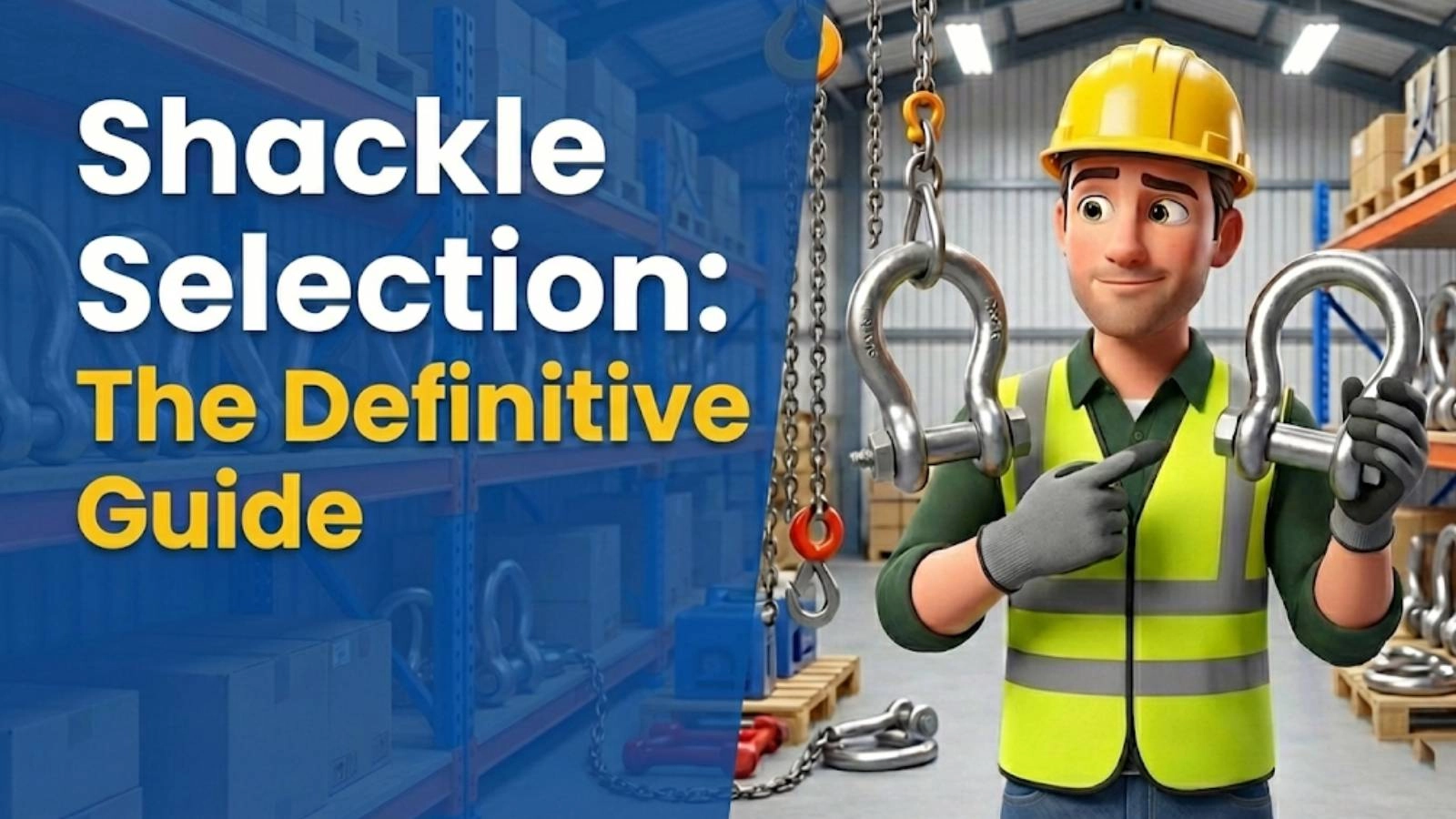
Lifting Shackle Safety: A Masterclass
Lifting shackles are indispensable tools in a wide array of industries, from construction and manufacturing to marine operations and entertainment. Their primary role is to provide a secure and reliable connection point in rigging systems, enabling the safe lifting and movement of heavy loads. However, their simplicity can be deceptive. Ensuring lifting shackle safety requires a comprehensive understanding of their types, proper usage, inspection protocols, and adherence to industry standards. This guide serves as your masterclass in achieving optimal lifting shackle safety.
Key Takeaways for Lifting Shackle Safety
Quick Safety Wins
- Regular Inspections: Conduct inspections before each use to identify any signs of damage.
- Proper Load Limits: Never exceed the Working Load Limit (WLL) of the shackle.
- Correct Shackle Type: Use the appropriate shackle type (bow or anchor) for the specific application.
Why These Are Critical
- Prevent equipment failure and workplace accidents.
- Ensure compliance with safety regulations.
- Extend the lifespan of lifting equipment.
Understanding Lifting Shackles: An In-Depth Overview 🧐
Defining Lifting Shackles
Lifting shackles are essential components in rigging and lifting operations, acting as a pivotal link between the load and the lifting device. These U-shaped or bow-shaped metal connectors, typically secured with a pin or bolt, provide a robust and flexible connection point. Their primary function is to connect slings, chains, or other rigging hardware to the load being lifted, ensuring a secure and reliable connection throughout the lifting process. Without properly rated and maintained shackles, the entire lifting operation is compromised, potentially leading to catastrophic failure.
[IMAGE: Illustration showing a shackle connecting a sling to a load being lifted by a crane.]
Shackles are not just simple connectors; they are engineered components designed to withstand specific loads and forces. Their design and material composition are carefully considered to ensure they meet stringent safety standards. The role of shackles in connecting different rigging components cannot be overstated. They serve as the critical interface between the lifting equipment and the load, distributing the weight and preventing stress concentrations that could lead to failure. The proper selection and application of shackles are therefore paramount to ensuring lifting shackle safety.
Types of Lifting Shackles: Anchor vs. Bow
Understanding the different types of lifting shackles is crucial for selecting the right tool for the job. The two most common types are anchor shackles (also known as D-shackles) and bow shackles (also known as omega shackles). Each type has its own unique design characteristics and is suited for different applications.
- Anchor Shackles (D-Shackles): Anchor shackles, characterized by their “D” shape, are designed for applications where the load is applied in a straight line. The narrower bow of the anchor shackle makes it ideal for connecting directly to lifting eyes or other hardware where space is limited. Their design minimizes bending stress and ensures efficient load transfer.
Applications: Anchor shackles are commonly used in applications such as connecting slings to loads with single attachment points, securing loads in transportation, and general rigging tasks where a direct, in-line connection is required. They are particularly useful in situations where the shackle is subjected to primarily tensile forces.
Advantages: The primary advantage of anchor shackles is their strength and stability under direct loading conditions. Their compact design makes them less prone to side loading compared to bow shackles. They are also generally more cost-effective.
- Bow Shackles (Omega Shackles): Bow shackles, distinguished by their larger, rounded “omega” shape, are designed for applications involving multiple sling legs or angular loading. The wider bow of the bow shackle allows for greater freedom of movement and accommodates larger sling eyes, making it suitable for more complex rigging configurations.
Applications: Bow shackles are frequently used in situations where multiple slings converge on a single shackle, such as in bridle assemblies. They are also preferred when the load direction is not perfectly aligned with the shackle axis, as their wider bow can better accommodate angular loading.
Advantages: The main advantage of bow shackles is their versatility. They can handle a wider range of loading conditions and accommodate larger sling sizes. The larger bow also reduces the risk of sling pinching and allows for more even load distribution.
Choosing between anchor and bow shackles depends on the specific requirements of the lifting operation. Factors to consider include the load type, sling configuration, and potential for angular loading. Using the wrong type of shackle can compromise safety and increase the risk of failure. We at SSTC often advise our clients to carefully assess their lifting needs and select the appropriate shackle type to ensure lifting shackle safety.
Shackle Materials and Manufacturing Standards
The materials used in the construction of lifting shackles play a critical role in their strength, durability, and overall lifting shackle safety. Common materials include alloy steel, carbon steel, and stainless steel, each offering different properties and suited for various applications.
- Alloy Steel: Alloy steel shackles are the most common choice for heavy-duty lifting applications. Alloy steel offers a high strength-to-weight ratio, excellent toughness, and resistance to deformation under load. These shackles are typically heat-treated to further enhance their strength and durability, making them ideal for demanding environments.
- Carbon Steel: Carbon steel shackles are a more economical option for lighter-duty applications. While they offer good strength, they are not as resistant to wear and corrosion as alloy steel shackles. Carbon steel shackles are often used in general-purpose rigging tasks where extreme strength and durability are not required.
- Stainless Steel: Stainless steel shackles are used in corrosive environments, such as marine and chemical processing applications. Stainless steel offers excellent resistance to rust and corrosion, ensuring long-term reliability in harsh conditions. However, stainless steel shackles are generally less strong than alloy steel shackles and are therefore used in applications where corrosion resistance is paramount.
The manufacturing process of lifting shackles is also critical to their safety and performance. Reputable manufacturers adhere to stringent quality control procedures to ensure that their shackles meet or exceed industry standards. These processes typically involve:
- Forging: The shackle body and pin are typically forged from a single piece of metal, ensuring consistent strength and grain structure.
- Machining: Precise machining is used to create accurate threads and smooth surfaces, minimizing stress concentrations.
- Heat Treatment: Heat treatment processes, such as quenching and tempering, are used to optimize the mechanical properties of the steel.
- Testing: Each shackle undergoes rigorous testing to verify its strength and load-bearing capacity. This may include proof testing, where the shackle is subjected to a load greater than its WLL, and non-destructive testing, such as magnetic particle inspection, to detect any hidden flaws.
Relevant standards like ASTM, EN, and ISO provide guidelines for the design, manufacturing, and testing of lifting shackles. Adherence to these standards ensures that shackles meet minimum safety requirements and are suitable for their intended applications. For many of our clients here in Dammam, Saudi Arabia, we’ve seen that understanding and complying with these standards is essential for maintaining lifting shackle safety.
The Critical Importance of Regular Shackle Inspections 🛠️
Regular shackle inspections are paramount for maintaining lifting shackle safety. These inspections help identify potential defects and ensure that shackles are fit for their intended purpose. A comprehensive inspection program should include pre-use inspections, routine inspections, and periodic thorough examinations.
Pre-Use Inspection Checklist: A Detailed Guide
Before each use, a thorough visual inspection of the shackle is essential. This inspection should focus on identifying any signs of damage or wear that could compromise its strength and safety.
- Visual Inspection: Carefully examine the shackle body and pin for any signs of cracks, bends, corrosion, or excessive wear. Cracks are particularly dangerous and can lead to sudden failure. Bends or deformations indicate that the shackle may have been overloaded. Corrosion can weaken the metal and should be addressed immediately.
- Thread Inspection: Inspect the threads on both the shackle pin and the shackle body for damage or deformation. Damaged threads can prevent the pin from being fully tightened, reducing the shackle’s load-bearing capacity. Clean and lubricate the threads as necessary to ensure smooth operation.
- Pin Inspection: Verify that the shackle pin is straight and fits securely into the shackle body. The pin should be the correct type and size for the shackle. Check for any signs of wear, bending, or damage to the pin. Ensure that the pin is fully engaged and properly secured.
[IMAGE: A close-up photo of a person inspecting the threads of a shackle pin with a magnifying glass.]
A common mistake we help businesses fix is neglecting this pre-use inspection, assuming the shackle is in good condition. In our experience with clients, even a quick visual check can identify critical issues before they lead to accidents.
Establishing a Routine Inspection Schedule
In addition to pre-use inspections, a routine inspection schedule should be established based on the intensity of usage and environmental factors. Shackles used in heavy-duty applications or corrosive environments should be inspected more frequently.
- Frequency Guidelines: The frequency of routine inspections should be determined by a qualified person based on the specific operating conditions. As a general guideline, shackles used daily should be inspected weekly, while shackles used less frequently can be inspected monthly. Shackles exposed to harsh environments should be inspected more often.
- Documentation: All inspection results and corrective actions should be documented in a written record. This record should include the date of the inspection, the name of the inspector, the condition of the shackle, and any repairs or replacements made. Maintaining accurate records helps track the shackle’s history and identify any recurring issues.
Identifying and Addressing Common Shackle Defects
Recognizing common shackle defects is crucial for preventing accidents. Here are some of the most common defects to look for:
- Cracks and Deformations: Any cracks or deformations in the shackle body or pin are grounds for immediate removal from service. Cracks can propagate rapidly under load, leading to catastrophic failure. Deformations indicate that the shackle has been overloaded and its structural integrity has been compromised.
- Corrosion and Pitting: Corrosion and pitting can significantly weaken the shackle’s metal. Evaluate the severity of the corrosion and its impact on the shackle’s strength. Light surface rust can be removed with a wire brush, but severe corrosion requires replacement of the shackle.
- Wear and Elongation: Measure the shackle’s dimensions and compare them to the manufacturer’s specifications. Excessive wear or elongation indicates that the shackle has been subjected to excessive stress and should be replaced. Pay particular attention to wear on the pin and the shackle body where they come into contact.
“Regular inspections are the cornerstone of lifting shackle safety. Identifying and addressing defects early can prevent costly accidents and save lives.” – John Smith, Lead Safety Inspector
Mastering Safe Shackle Usage Techniques 👷♂️
Safe shackle usage techniques are essential for preventing accidents and ensuring the longevity of your rigging equipment. This involves understanding load limits, proper orientation, and avoiding common misuse scenarios.
Calculating Safe Working Loads (SWL) and Working Load Limits (WLL)
Understanding the difference between Safe Working Load (SWL) and Working Load Limit (WLL) is crucial for lifting shackle safety. These terms define the maximum load that a shackle is designed to handle safely.
- SWL vs. WLL: SWL is a more conservative rating that includes a safety factor, while WLL is the maximum load that the shackle is proof-tested to withstand. In practice, WLL is the more commonly used term and represents the maximum load that should ever be applied to the shackle.
- Calculating Load Limits: The WLL of a shackle is typically marked on the shackle body. Always refer to the manufacturer’s specifications to determine the correct WLL for your shackle. Never exceed the WLL under any circumstances.
- Safety Factors: Shackles are designed with a safety factor, which is the ratio of the shackle’s ultimate tensile strength to its WLL. This safety factor provides a margin of error to account for unforeseen loads or stresses. However, relying on the safety factor to exceed the WLL is dangerous and can lead to failure.
[IMAGE: A diagram illustrating the WLL marked on a shackle and explaining the concept of a safety factor.]
Proper Shackle Orientation and Alignment
Proper shackle orientation and alignment are critical for ensuring that the load is distributed evenly and that the shackle is not subjected to excessive stress.
- Alignment with Load Direction: Ensure that the shackle is aligned with the direction of the load. Avoid side loading, which occurs when the load is applied at an angle to the shackle body. Side loading can significantly reduce the shackle’s load-bearing capacity.
- Avoiding Side Loading: Use spacers or washers to center the load on the shackle pin and prevent side loading. If side loading is unavoidable, reduce the WLL of the shackle accordingly. Consult the manufacturer’s specifications for guidance on reducing the WLL for side loading conditions.
- Eccentric Loading: Avoid eccentric loading, which occurs when the load is not centered on the shackle pin. Eccentric loading can create uneven stress distribution and increase the risk of failure.
Avoiding Common Shackle Misuse Scenarios
Misusing shackles can compromise their integrity and lead to accidents. Here are some common misuse scenarios to avoid:
- Using Shackles as Chain Shorteners: Never use shackles as makeshift chain shorteners. This practice can subject the shackle to excessive stress and increase the risk of failure. Use properly rated chain shorteners instead.
- Exceeding Load Limits: Always adhere to the shackle’s WLL. Exceeding the load limit can cause the shackle to deform or break. Be aware of dynamic loading, which occurs when the load is suddenly applied or jerked. Dynamic loading can create forces that exceed the shackle’s WLL.
- Shock Loading: Avoid shock loading, which is a sudden and forceful impact on the shackle. Shock loading can create stresses that exceed the shackle’s WLL and lead to immediate failure. Ensure that loads are lifted and lowered smoothly and gradually.
Understanding Shackle Failure Modes and Prevention ⚠️
Understanding the common shackle failure modes is crucial for implementing effective prevention strategies and ensuring lifting shackle safety. Shackles can fail due to overload, corrosion, fatigue, or improper usage.
Overload Failures: Causes and Consequences
Overload failures occur when the shackle is subjected to a load that exceeds its WLL. This can happen due to miscalculation of the load weight, dynamic loading, or using a shackle that is not properly rated for the application.
- Overload Scenarios: Overload scenarios can arise in various situations, such as lifting a load that is heavier than expected, using a shackle with an incorrect WLL, or failing to account for dynamic loading.
- Impact on Shackle Integrity: Overloading can cause the shackle to deform, crack, or break. Even if the shackle does not immediately fail, overloading can weaken its structure and make it more susceptible to future failure.
- Case Studies: There have been numerous accidents caused by overloading shackles. These accidents often result in serious injuries or fatalities. One such case involved a construction worker who was injured when a shackle failed while lifting a steel beam. The investigation revealed that the shackle was not rated for the weight of the beam, and the load was also subjected to dynamic loading.
Corrosion-Related Failures: Identification and Mitigation
Corrosion can significantly weaken shackles, especially in harsh environments. Types of corrosion affecting shackles include rust, pitting, and galvanic corrosion.
Rust: Rust is the most common type of corrosion, occurring when iron or steel is exposed to moisture and oxygen.
Pitting: Pitting corrosion is a localized form of corrosion that creates small holes or pits in the metal surface.
Galvanic Corrosion: Galvanic corrosion occurs when two dissimilar metals are in contact in the presence of an electrolyte.
Coatings: Applying protective coatings, such as paint or galvanizing, can help prevent corrosion.
Material Selection: Using corrosion-resistant materials, such as stainless steel, is an effective way to mitigate corrosion in harsh environments.
Regular Maintenance: Regular cleaning and lubrication can help prevent corrosion by removing contaminants and protecting the metal surface.
Fatigue Failures: Understanding Cyclic Loading Effects
Fatigue failures occur when shackles are subjected to repeated cyclic loading. Cyclic loading can cause microscopic cracks to form in the metal, which gradually grow over time until the shackle fails.
- Fatigue Failure Mechanisms: Fatigue failure is a process that involves crack initiation, crack propagation, and final fracture. The number of cycles required to cause fatigue failure depends on the magnitude of the stress and the material properties of the shackle.
- Recommendations for Reducing Risks:
Reduce Stress: Minimizing the stress on the shackle can help prolong its fatigue life.
Use High-Strength Materials: Using shackles made from high-strength materials can improve their resistance to fatigue failure.
* Regular Inspections: Regular inspections can help detect fatigue cracks before they lead to failure.
Shackle Maintenance and Storage Best Practices 🧰
Proper maintenance and storage are crucial for extending the life of your shackles and ensuring their continued safety. Neglecting these practices can lead to premature wear, corrosion, and ultimately, failure.
Cleaning and Lubrication Procedures
Regular cleaning and lubrication are essential for preventing corrosion and ensuring smooth operation of your shackles.
- Recommended Cleaning Agents: Use mild soap and water to clean shackles. Avoid using harsh chemicals or abrasive cleaners, which can damage the metal.
- Recommended Lubricants: Use a high-quality lubricant specifically designed for rigging equipment. Apply the lubricant to the threads and bearing surfaces of the shackle.
- Frequency of Cleaning and Lubrication: Clean and lubricate shackles after each use, especially if they have been exposed to dirt, moisture, or corrosive substances.
Proper Storage Techniques to Prevent Damage
Proper storage can protect shackles from damage and extend their lifespan.
- Dry and Protected Environments: Store shackles in a dry, protected environment, away from moisture, chemicals, and extreme temperatures.
- Avoiding Corrosive Substances: Keep shackles away from corrosive substances, such as acids, solvents, and salt water.
- Organized Storage: Store shackles in an organized manner to prevent them from being damaged or lost. Use racks, bins, or other storage containers to keep shackles separated and protected.
Repairing Damaged Shackles: When and How
Determining when a shackle can be repaired and how to repair it safely is crucial for maintaining lifting shackle safety.
- Guidelines for Repair: Minor damage, such as small scratches or dings, may be repairable. However, shackles with cracks, significant corrosion, or deformation should be immediately removed from service and replaced.
- Approved Repair Methods: Only qualified personnel should perform shackle repairs. Approved repair methods may include grinding, welding, or heat treatment.
- Certification Requirements: Repaired shackles must be re-certified to ensure that they meet the original manufacturing standards. The certification should be performed by a qualified third-party inspection agency.
We’ve consistently seen that proper maintenance and storage significantly extend the lifespan of lifting shackles and reduce the risk of accidents. For our clients here in Dammam, Saudi Arabia, implementing these practices has resulted in a safer and more efficient work environment.
Industry Standards and Regulations for Shackle Safety 📜
Adhering to industry standards and regulations is crucial for ensuring lifting shackle safety and compliance. These standards provide guidelines for the design, manufacturing, testing, inspection, and use of lifting shackles.
OSHA Requirements for Lifting and Rigging
The Occupational Safety and Health Administration (OSHA) sets forth requirements for lifting and rigging equipment, including shackles, to ensure worker safety.
- Relevant OSHA Standards: OSHA 29 CFR 1926.251 covers the safe use of rigging equipment for material handling. This standard includes requirements for inspection, maintenance, and use of shackles.
- Compliance Requirements: Employers must comply with OSHA standards by providing training to workers on the proper use of rigging equipment, conducting regular inspections, and maintaining records of inspections and maintenance.
ASME Standards for Lifting Shackles
The American Society of Mechanical Engineers (ASME) develops and publishes standards for lifting and rigging equipment, including ASME B30.26 for rigging hardware.
- In-depth Review of ASME B30.26: ASME B30.26 provides detailed requirements for the design, manufacturing, testing, inspection, and use of shackles. This standard covers various aspects of shackle safety, including load ratings, inspection criteria, and operating practices.
- Certification and Testing Requirements: ASME B30.26 specifies the certification and testing requirements for shackles. Manufacturers must certify that their shackles meet the requirements of the standard, and users must conduct regular inspections and testing to ensure continued compliance.
International Standards: EN and ISO
International standards, such as EN (European Norm) and ISO (International Organization for Standardization), provide additional guidelines for lifting shackle safety.
- Comparison of EN and ISO Standards: EN standards are widely used in Europe, while ISO standards are used globally. Both sets of standards provide requirements for the design, manufacturing, testing, and use of shackles.
- Impact on Global Trade: Compliance with international standards is essential for companies that trade lifting equipment globally. These standards ensure that shackles meet minimum safety requirements and are compatible with equipment used in different countries.
Advanced Shackle Technologies and Innovations 💡
The field of lifting shackle technology is continually evolving, with new innovations aimed at improving safety, efficiency, and usability.
Smart Shackles with Load Monitoring Capabilities
Smart shackles are equipped with sensors and electronics that allow for real-time load monitoring and data logging.
- Description of Technology: Smart shackles use load cells to measure the force applied to the shackle. This data is transmitted wirelessly to a computer or mobile device, allowing users to monitor the load in real-time.
- Real-Time Load Monitoring: Real-time load monitoring can help prevent overloading and ensure that the shackle is operating within its safe working load limit.
- Data Logging Features: Data logging features allow users to track the load history of the shackle, which can be useful for identifying potential fatigue issues.
High-Performance Shackle Materials and Coatings
Advances in materials science have led to the development of high-performance shackle materials and coatings.
- Advanced Materials: High-strength alloys and composites offer improved strength-to-weight ratios and corrosion resistance compared to traditional steel shackles.
- Specialized Coatings: Specialized coatings, such as ceramic coatings and nano-coatings, can provide enhanced corrosion protection and wear resistance.
Ergonomic Shackle Designs for Enhanced Usability
Ergonomic shackle designs focus on improving the usability and safety of shackles for workers.
- Ergonomic Features: Ergonomic shackles may include features such as rounded edges, non-slip grips, and easy-to-use locking mechanisms.
- Benefits of Ergonomic Shackles: Ergonomic shackles can reduce the risk of hand injuries and improve worker comfort, leading to increased productivity and safety.
Case Studies: Learning from Real-World Shackle Incidents 📚
Analyzing real-world shackle incidents can provide valuable insights into the causes of accidents and help prevent similar incidents in the future.
Analyzing Shackle Failure Case Studies
Detailed examination of past shackle-related accidents.
- Detailed Examination: Examine the circumstances surrounding the accident, including the type of shackle used, the load being lifted, and the environmental conditions.
- Identification of Root Causes: Identify the root causes of the accident, such as overloading, corrosion, improper usage, or lack of inspection.
- Contributing Factors: Identify any contributing factors, such as inadequate training, poor communication, or lack of safety procedures.
Lessons Learned from Incident Investigations
Recommendations for preventing similar incidents in the future.
- Preventive Measures: Implement preventive measures based on the lessons learned from the incident investigation.
- Improved Training: Provide improved training to workers on the proper use of shackles and other rigging equipment.
- Enhanced Safety Procedures: Implement enhanced safety procedures to prevent overloading, corrosion, and improper usage of shackles.
Improving Safety Culture Through Education and Training
The role of training and education in promoting shackle safety.
- Training Programs: Implement comprehensive training programs for workers on the proper use of shackles and other rigging equipment.
- Safety Meetings: Conduct regular safety meetings to discuss shackle safety and other relevant topics.
- Promoting Awareness: Promote a culture of safety awareness by encouraging workers to report any potential hazards or safety concerns.
Conclusion
Adhering to stringent lifting shackle safety protocols is not just about ticking boxes; it’s about fostering a culture of safety that protects lives and ensures operational excellence. By understanding the nuances of shackle types, mastering inspection techniques, and implementing rigorous maintenance schedules, you safeguard your operations against potential disasters. We at SSTC have consistently seen that a proactive approach to lifting shackle safety significantly reduces workplace accidents and boosts overall productivity. Implement these guidelines diligently, and you’ll create a safer, more efficient work environment.
FAQ Section
Q: How often should lifting shackles be inspected?
A: Lifting shackles should be inspected before each use and periodically, depending on the frequency and severity of usage. A documented routine inspection schedule is recommended.
Q: What is the difference between an anchor shackle and a bow shackle?
A: Anchor shackles (D-shackles) have a smaller, more confined bow, making them suitable for in-line loading. Bow shackles (omega shackles) have a larger, rounder bow, allowing for wider sling attachments and angular loading.
Q: What does WLL stand for, and why is it important?
A: WLL stands for Working Load Limit, which is the maximum weight a shackle is designed to safely handle. Exceeding the WLL can lead to shackle failure and serious accidents.
Q: Can damaged shackles be repaired?
A: Minor damage may be repairable following manufacturer’s guidelines and certified procedures. However, shackles with cracks, significant corrosion, or deformation should be immediately removed from service and replaced.
Q: Where can I find more information on shackle safety standards?
A: Consult OSHA regulations, ASME standards (e.g., B30.26), and international standards (EN and ISO) for detailed information on lifting shackle safety and compliance.