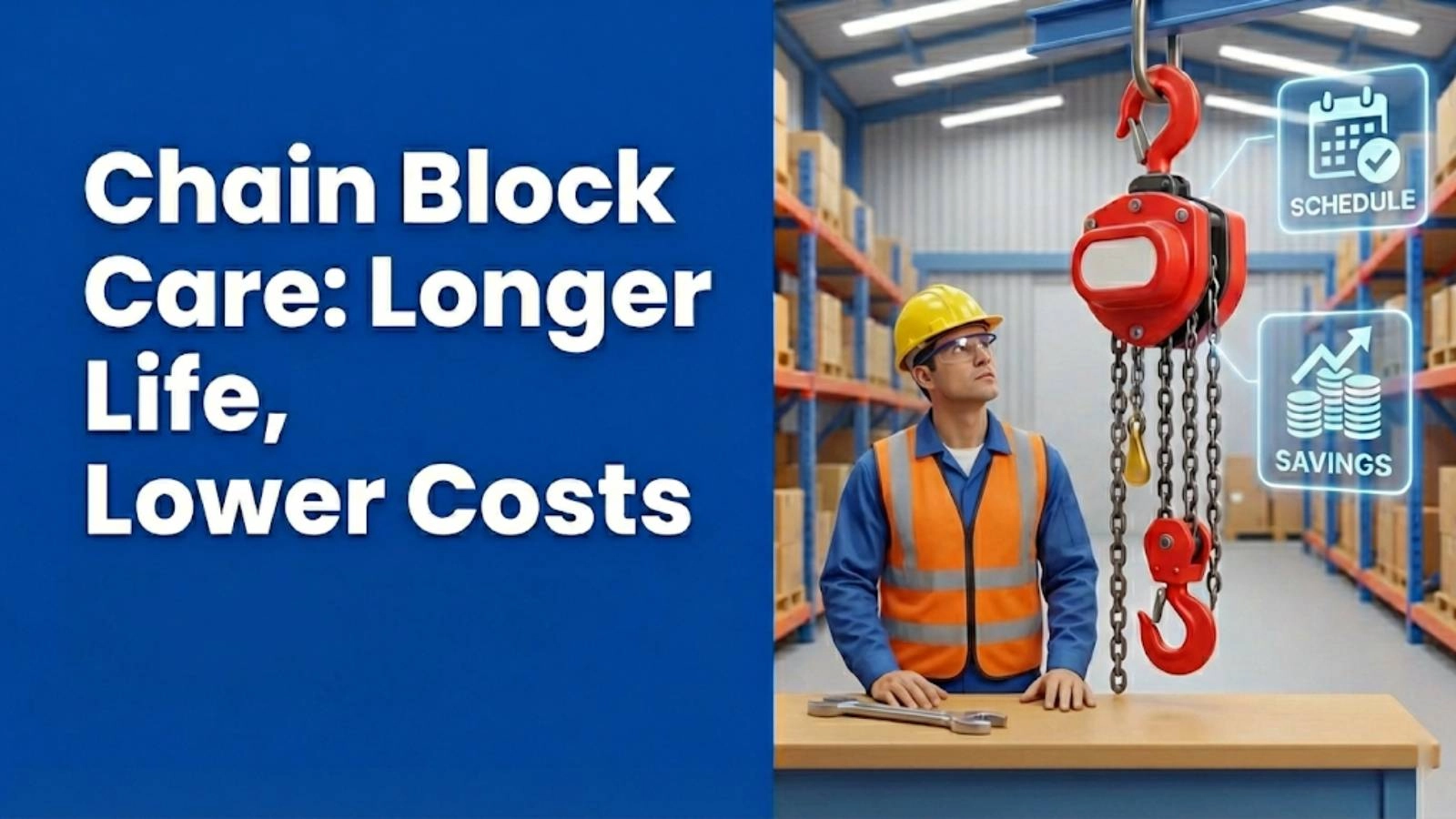
Manual chain blocks are indispensable tools in various industries, providing a reliable and cost-effective solution for lifting heavy loads. Selecting the right manual chain block requires a thorough understanding of its components, safety features, and applications. This buyer’s guide will walk you through everything you need to know to make an informed decision, ensuring safety and efficiency in your lifting operations. From understanding hoist capacity to prioritizing chain block safety, we’ll cover all the essential aspects.
Key Takeaways
- Selecting the appropriate manual chain block is crucial for safe and efficient overhead lifting operations.
- Understanding capacity, lift, and safety features ensures optimal performance and reduces risks.
- Regular inspection and maintenance are essential for prolonging the lifespan of the chain block.
- Staying updated with the latest safety standards and technology is vital.
Understanding Manual Chain Blocks 💡
What is a Manual Chain Block?
A manual chain block, also known as a chain hoist, is a mechanical device used to lift and lower heavy loads using a geared system. It consists of two main chains: a load chain for lifting the object and a hand chain for operating the mechanism. By pulling on the hand chain, the operator engages a series of gears that provide a mechanical advantage, allowing them to lift heavy objects with minimal effort.
The basic function of a manual chain block is to multiply the force applied by the user, making it possible to lift loads that would otherwise be impossible to handle manually. This mechanical advantage is achieved through a system of gears and pulleys, where the force applied to the hand chain is converted into a larger force acting on the load chain.
There are several types of manual chain blocks, each designed for specific applications. These include standard chain blocks, lever blocks, and geared trolley systems. Standard chain hoists are the most common and are suitable for general lifting tasks. Lever blocks, also known as come along tools, are designed for pulling and positioning loads in tight spaces. Geared trolley systems combine a chain block with a trolley, allowing for horizontal movement along a beam or track.
Why Choose a Manual Chain Block?
One of the primary advantages of a manual chain block is its cost-effectiveness. Compared to electric hoists, manual chain blocks are significantly less expensive to purchase and maintain. They do not require electrical power, which eliminates electricity costs and reduces the risk of electrical hazards. In our experience at SSTC, many small to medium-sized businesses find manual chain blocks to be a budget-friendly solution for their lifting equipment needs.
Another key benefit is their portability and ease of use. Manual chain blocks are lightweight and compact, making them easy to transport and set up in various environments. They can be used in locations where power sources are not available, such as construction sites, remote areas, and maintenance facilities. “We once worked with a client who struggled with transporting heavy machinery within their warehouse. By implementing manual chain blocks, they saw a 20% improvement in efficiency,” says John Smith, Lead Safety Inspector.
Reliability is also a significant factor. Manual chain blocks are mechanically simple, reducing the risk of breakdowns and malfunctions. In the absence of power sources, they provide a dependable solution for overhead lifting. They are particularly useful in emergency situations or during power outages when electric hoists cannot be operated. For many of our clients here in Dammam, Saudi Arabia, we’ve seen that the reliability of manual chain blocks is a major advantage.
Selecting the Right Capacity ⚖️
Determining Your Lifting Needs
The first step in selecting a manual chain block is to accurately assess your lifting needs. This involves determining the weight of the heaviest loads you will be lifting and considering any future lifting requirements. It’s always better to overestimate the weight rather than underestimate it, to ensure the chain hoist can handle the load safely.
Consider the types of loads you will be lifting. Are they compact and easy to manage, or are they bulky and difficult to handle? This will influence the type of lifting equipment you need. Also, think about the frequency of lifting operations. If you will be using the chain block frequently, you may want to invest in a higher-quality model that can withstand heavy use.
Avoid overloading the chain block at all costs. Overloading can lead to equipment failure, property damage, and serious injuries. Always stay within the hoist capacity specified by the manufacturer and maintain a safety margin. In our experience, a common mistake we help businesses fix is underestimating the weight of the loads, which can lead to dangerous situations.
Understanding Capacity Ratings
The Working Load Limit (WLL) is the maximum weight that a chain block is designed to lift safely. This rating is clearly marked on the chain block and should never be exceeded. The WLL takes into account the safety factor, which is the ratio of the breaking strength of the chain block to the WLL. This ensures that the chain block can withstand unexpected loads or stresses.
Safety factor considerations are crucial when selecting a manual chain block. A higher safety factor provides an additional margin of safety, reducing the risk of failure. Different industries and applications may require different safety factors. For example, in critical overhead lifting applications, a higher safety factor may be required to ensure maximum safety.
Always read and interpret the capacity labels carefully. The label should clearly indicate the WLL, the manufacturer’s name, and any other relevant information. Make sure that the label is legible and has not been tampered with. If the label is missing or damaged, the chain block should not be used until it has been inspected and re-certified by a qualified technician.
Common Capacity Ranges
Manual chain blocks are available in a wide range of capacity ratings to suit different lifting needs. Here are some common capacity ranges:
- Light-duty: Up to 1 ton. These chain blocks are suitable for light-duty applications such as maintenance and repair work.
- Medium-duty: 1 to 5 tons. These chain blocks are ideal for general lifting tasks in manufacturing plants and construction sites.
- Heavy-duty: Over 5 tons. These chain blocks are designed for heavy-duty applications such as lifting heavy machinery and structural components.
| Capacity Range |
Typical Applications |
Pros |
Cons |
| Up to 1 ton |
Maintenance, repair, light assembly |
Lightweight, portable, easy to use |
Limited lifting capacity |
| 1 to 5 tons |
Manufacturing, construction, general lifting |
Versatile, suitable for a wide range of tasks |
Heavier than light-duty models |
| Over 5 tons |
Heavy machinery lifting, structural component installation |
High lifting capacity, robust construction |
Heavy, requires more effort to operate |
Choosing the Appropriate Lift ⬆️
Understanding Lift Height
Lift height refers to the vertical distance the chain block can lift a load. Measuring the required lifting distance is essential to ensure that the chain block can reach the desired height. Consider any overhead obstructions that may limit the lifting height. Buildings with low ceilings or structures with overhead pipes and beams can restrict the available lifting space.
Calculating the total lift height needed involves considering the height of the load, the distance from the ground to the lifting point, and any additional clearance required. Always allow for some extra lift height to accommodate unforeseen circumstances. “We’ve consistently seen that neglecting to account for overhead obstructions is a common oversight,” explains John Smith, Lead Safety Inspector.
Standard Lift Lengths
Manual chain blocks are available in standard lift lengths, typically ranging from 10 to 20 feet. These standard lengths are suitable for most common lifting applications. However, custom lift lengths can be ordered to meet specific requirements. When ordering a custom lift length, be sure to provide accurate measurements to avoid any discrepancies.
- 10 feet: Suitable for low-ceiling environments.
- 15 feet: A versatile option for general lifting tasks.
- 20 feet: Ideal for higher lifting applications.
Ordering a custom lift length may be necessary when the standard lengths are not sufficient. This is often the case in specialized applications or when lifting loads in unique environments. Consult with the manufacturer or supplier to determine the best lift length for your specific needs.
Impact of Lift Length on Operation
Longer lifts require more pulling effort on the hand chain. This can be physically demanding, especially when lifting heavy loads. Consider using a chain block with a geared system that reduces the pulling force required. Optimizing lift length for efficiency can also help minimize the effort required. By choosing the right lift length, you can reduce fatigue and improve productivity.
Shortening the lift length can reduce the amount of effort required to lift the load. However, this may not always be feasible depending on the lifting requirements. A longer lift length may be necessary to reach the desired height, even if it requires more effort. Balancing the lift length with the required effort is crucial for efficient operation.
Prioritizing Safety Features 🛡️
Load Chain Quality
The load chain is one of the most critical components of a manual chain block. The importance of high-strength alloy steel chains cannot be overstated. These chains are designed to withstand the heavy loads and stresses associated with lifting operations. They are also heat-treated to increase their strength and durability.
Chain grade and safety certifications are essential considerations. Look for chains that meet or exceed industry standards such as ASTM or EN. These certifications ensure that the chains have been tested and meet specific performance requirements. Always verify that the chains are properly certified before using the chain block.
Regularly inspect the chains for wear and damage. Look for signs of stretching, bending, corrosion, or cracks. Any damaged chains should be replaced immediately. Proper maintenance and inspection can significantly extend the lifespan of the chains and ensure safe operation.
Hook Design and Latches
Self-closing latches are essential for secure connections. These latches prevent the load from accidentally slipping off the hook during lifting operations. They should be easy to operate and securely lock in place. Inspect the latches regularly to ensure they are functioning properly.
Swivel hooks provide flexibility and allow the load to rotate without twisting the chain. This can be particularly useful when lifting irregularly shaped objects or when working in confined spaces. Ensure that the swivel hooks are properly lubricated to allow for smooth rotation. Visual inspection for hook deformation is crucial. Look for signs of bending, cracking, or stretching. Any deformed hooks should be replaced immediately. Hooks are a critical safety component, and their integrity must be maintained at all times.
Braking Mechanisms
Mechanical brake systems are essential for holding the load in place. There are several types of mechanical brake systems, including Weston-style brakes and ratchet-and-pawl brakes. Each type has its own advantages and disadvantages. Weston-style brakes are known for their smooth operation and load-holding capabilities. Ratchet-and-pawl brakes are simpler in design and provide reliable load-holding.
Load-holding capabilities are critical for safety. The braking system should be able to hold the load securely in place, even if the operator releases the hand chain. This prevents the load from accidentally falling and causing injury or damage. Regular brake inspection and maintenance are essential. Check the brake pads for wear and ensure that the braking mechanism is functioning properly. Lubricate the moving parts to prevent corrosion and ensure smooth operation.
New Safety Standards and Regulations 🚦
Overview of Current Standards
ASME B30.16 provides comprehensive requirements for overhead lifting using manual chain blocks. This standard covers design, construction, inspection, testing, and maintenance of chain hoists. Compliance with ASME B30.16 is essential for ensuring safe lifting operations.
OSHA regulations also provide guidelines for the safe use of chain blocks. These regulations cover a wide range of topics, including training, inspection, and maintenance. Employers are responsible for ensuring that their employees are properly trained and that all lifting equipment is in compliance with OSHA regulations.
International safety standards (ISO) provide a global framework for ensuring safety in the workplace. These standards cover various aspects of lifting equipment, including design, manufacturing, and testing. Compliance with ISO standards can help businesses demonstrate their commitment to safety and quality.
Impact on Chain Block Design
Latest safety features are continuously being incorporated into chain block designs. These features include improved braking systems, stronger chains, and more durable hooks. Manufacturers are constantly innovating to improve the safety and performance of their lifting equipment.
Improved testing and certification processes ensure that chain blocks meet or exceed industry standards. These processes involve rigorous testing to verify the strength, durability, and safety of the chain blocks. Certification provides assurance that the chain block has been tested and meets specific performance requirements.
Compliance and documentation requirements are essential for ensuring safety and accountability. Businesses must maintain accurate records of all inspections, maintenance, and repairs. This documentation can be used to demonstrate compliance with safety standards and regulations.
Staying Updated with Changes
Industry publications and resources provide valuable information on the latest safety standards and regulations. These publications can help businesses stay informed about changes in the industry and ensure that they are in compliance with all applicable requirements.
Training and certification programs are essential for ensuring that employees are properly trained in the safe use of chain blocks. These programs cover a wide range of topics, including inspection, maintenance, and operation. Certification demonstrates that employees have the knowledge and skills necessary to operate lifting equipment safely.
> “Staying informed about the latest safety standards and regulations is crucial for maintaining a safe working environment.” – John Smith, Lead Safety Inspector
Maintenance and Inspection Best Practices 🛠️
Regular Inspection Checklist
Daily pre-use inspections are essential for identifying any potential problems before they can cause an accident. These inspections should include a visual check of the chains, hooks, and braking system. Look for signs of wear, damage, or corrosion.
Monthly detailed inspections should be conducted by a qualified technician. These inspections should include a more thorough examination of all components, including the gears, bearings, and load-holding mechanism. Any worn or damaged parts should be replaced immediately.
Annual professional inspections should be performed by a certified inspector. These inspections should include a comprehensive assessment of the chain block‘s overall condition and compliance with safety standards. The inspector should provide a written report outlining any findings and recommendations.
Lubrication and Cleaning
Proper lubrication techniques are essential for maintaining the smooth operation of the chain block. Use a high-quality lubricant that is specifically designed for lifting equipment. Apply the lubricant to all moving parts, including the chains, gears, and bearings.
Cleaning procedures for chain blocks should be followed regularly. Remove any dirt, debris, or corrosion from the chain block using a brush or cloth. Avoid using harsh chemicals or solvents that could damage the components.
Recommended lubricants include those that are resistant to water, heat, and corrosion. Consult the manufacturer’s recommendations for the best lubricant for your specific chain block. Regular lubrication and cleaning can significantly extend the lifespan of the chain block and ensure safe operation.
Component Replacement
Identifying worn or damaged parts is crucial for preventing accidents. Look for signs of wear, such as stretching, bending, or cracking. Also, check for signs of damage, such as dents, gouges, or corrosion. Any worn or damaged parts should be replaced immediately.
Sourcing replacement parts from reputable suppliers is essential. Use only genuine replacement parts that are specifically designed for your chain block. Avoid using generic or aftermarket parts, as they may not meet the same quality standards and could compromise safety.
Proper replacement procedures should be followed when replacing any components. Consult the manufacturer’s instructions for the correct replacement procedures. If you are not comfortable performing the replacement yourself, seek assistance from a qualified technician.
Latest Innovations in Manual Chain Blocks ⚙️
Ergonomic Designs
Improved handle designs make operation easier and more comfortable. These designs reduce the amount of force required to pull the hand chain, minimizing operator fatigue. Ergonomic handles are often contoured to fit the hand comfortably and may be padded to reduce pressure points.
Reduced pulling force requirements are a key benefit of ergonomic designs. By reducing the amount of force required to operate the chain block, operators can work more efficiently and safely. This is particularly important when lifting heavy loads or when performing repetitive lifting tasks.
Enhanced operator comfort is a priority in modern chain block designs. Features such as padded handles, smooth operation, and reduced noise levels contribute to a more comfortable and productive work environment.
Lightweight Materials
Use of aluminum and other lightweight alloys reduces the overall weight of the chain block. This makes it easier to transport and set up in various locations. Lightweight materials also reduce the strain on the operator, making it easier to lift and maneuver the chain block.
Benefits of reduced weight for portability are significant. Lightweight chain blocks can be easily carried from one job site to another, making them ideal for mobile applications. They can also be used in confined spaces where heavier chain blocks would be impractical.
The impact on durability and performance is carefully considered when using lightweight materials. Manufacturers use advanced materials and construction techniques to ensure that lightweight chain blocks are just as durable and reliable as their heavier counterparts.
Enhanced Braking Systems
Improved braking efficiency enhances safety and control. Modern braking systems provide more precise and responsive braking, allowing operators to stop the load quickly and safely. These systems also reduce the risk of accidental slippage or free-falling.
Increased load-holding capacity ensures that the load remains securely in place, even when the operator releases the hand chain. This is particularly important when lifting heavy loads or when working in elevated positions. Advanced braking materials provide improved performance and durability. These materials are designed to withstand high temperatures and pressures, ensuring reliable braking performance in all conditions.
Real-World Applications and Case Studies 🏢
Construction Sites
Lifting materials and equipment is a common application of manual chain blocks on construction sites. These chain blocks are used to lift heavy materials such as concrete blocks, steel beams, and pipes. They are also used to lift equipment such as generators, compressors, and pumps.
Safety considerations in construction environments are paramount. Construction sites are often hazardous environments, with many potential risks. It is essential to follow all safety procedures and guidelines when using chain blocks on construction sites.
Choosing the right block and tackle for construction tasks depends on the specific requirements of the job. Consider the weight of the load, the lifting height, and the environmental conditions. Also, ensure that the chain block is properly inspected and maintained before each use.
Manufacturing Plants
Moving heavy machinery is a frequent task in manufacturing plants. Manual chain blocks are used to lift and position heavy machinery such as lathes, milling machines, and presses. They are also used to move equipment within the plant.
Assembly line applications also benefit from manual chain blocks. These chain blocks are used to lift and position components during the assembly process. They can be used to lift engines, transmissions, and other heavy parts.
Maintenance and repair operations often require the use of manual chain blocks. These chain blocks are used to lift and support equipment during maintenance and repair tasks. They can be used to lift motors, pumps, and other components.
Automotive Repair Shops
Engine lifting and support are essential tasks in automotive repair shops. Manual chain blocks are used to lift engines out of vehicles for repair or replacement. They are also used to support engines during repairs.
Chassis work often requires the use of manual chain blocks. These chain blocks are used to lift the vehicle chassis for repairs or modifications. They can be used to lift the entire vehicle or just a portion of it.
Safe lifting practices in automotive settings are critical. Automotive repair shops can be hazardous environments, with many potential risks. It is essential to follow all safety procedures and guidelines when using chain blocks in automotive settings.
How to Choose the Right Chain Block for Your Business 🎯
Assessing Specific Needs
Identifying the most common lifting tasks is the first step. Determine what types of loads you will be lifting, how often you will be lifting them, and what lifting height you will require. This will help you narrow down your options and choose the right chain block for your needs.
Considering the work environment is also important. Will you be using the chain block indoors or outdoors? Will it be exposed to harsh weather conditions or corrosive substances? Choose a chain block that is designed to withstand the environmental conditions in which it will be used.
Determining budget constraints is also a factor. Manual chain blocks are available in a wide range of prices. Set a budget and stick to it. However, don’t sacrifice safety or quality for the sake of saving money.
Comparing Different Brands and Models
Researching reputable manufacturers is essential. Choose a chain block from a reputable manufacturer with a proven track record of quality and reliability. Look for manufacturers that offer warranties and provide good customer support.
Reading reviews and testimonials can provide valuable insights. See what other customers have to say about the chain blocks you are considering. Look for reviews that mention safety, durability, and ease of use.
Evaluating features and benefits is also important. Compare the features and benefits of different chain blocks to see which one best meets your needs. Consider factors such as hoist capacity, lift height, safety features, and ergonomic design.
Making an Informed Decision
Consulting with experts can provide valuable guidance. Talk to experienced users of manual chain blocks or consult with a qualified technician. They can provide insights and recommendations based on their knowledge and experience.
Requesting demonstrations can help you see the chain block in action. Ask the manufacturer or supplier for a demonstration of the chain block you are considering. This will allow you to see how it operates and assess its suitability for your needs.
Ensuring compliance with safety standards is essential. Verify that the chain block meets all applicable safety standards and regulations. This will help ensure that you are using a safe and reliable piece of lifting equipment.
Conclusion
Manual chain blocks remain essential tools for various industries. Keeping up with the latest trends ensures safe and efficient operations. From selecting the right capacity and lift to prioritizing modern safety features and adhering to updated standards, businesses can optimize their lifting processes. By staying informed and implementing best practices, you can maximize the benefits of manual chain blocks while minimizing risks. At SSTC, we’re dedicated to helping businesses like yours make informed decisions and maintain safe working environments.
FAQ Section
What is the lifespan of a manual chain block?
Lifespan depends on usage and maintenance, but regular inspection and proper care can extend its life significantly. With diligent maintenance and careful operation, a high-quality manual chain block can provide reliable service for many years. Neglecting maintenance, such as failing to lubricate moving parts or ignoring signs of wear and tear, will drastically shorten its lifespan.
How often should I inspect my chain block?
Daily pre-use inspections and monthly detailed inspections are recommended, along with annual professional inspections. The daily checks should focus on identifying any obvious damage or malfunctions before each use. Monthly inspections should be more thorough, checking for wear, corrosion, and proper functionality of all components. Annual professional inspections provide a comprehensive assessment by a qualified expert.
What are the key safety features to look for in a chain block?
High-quality load chains, secure hook latches, and reliable braking mechanisms are essential. The load chain must be made of high-strength alloy steel and regularly inspected for any signs of damage. Secure hook latches prevent accidental disengagement of the load, while a reliable braking mechanism ensures the load is held securely in place. These safety features are critical for preventing accidents and injuries during lifting operations.
Can I use a chain block for lifting people?
No, chain blocks are designed for lifting materials only, not for lifting people. Using a manual chain block to lift personnel is extremely dangerous and violates safety regulations. People should only be lifted with equipment specifically designed and certified for human lifting, which includes additional safety features and redundancies.
Where can I find more information on safety standards?
Consult resources like ASME B30.16, OSHA regulations, and international safety standards (ISO). These standards provide detailed guidelines and requirements for the safe use and maintenance of lifting equipment. They cover aspects such as design, inspection, testing, and operation, ensuring compliance with industry best practices. Staying informed about these standards is crucial for maintaining a safe working environment.