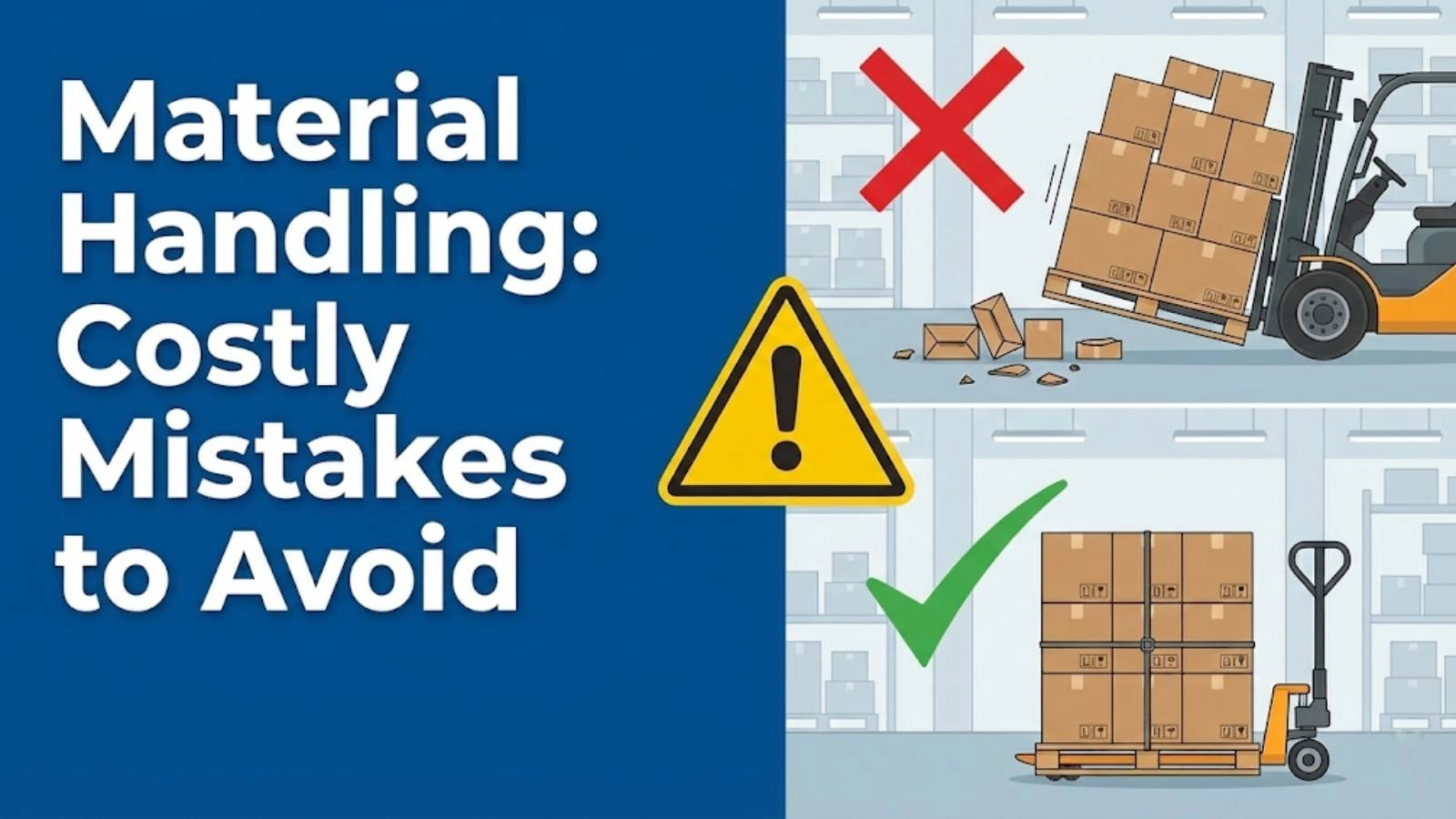
Material handling automation is revolutionizing how businesses manage their supply chains, optimize warehouse operations, and streamline production processes. At Safe and Secure Trading Company (SSTC), we’ve seen firsthand how effective automation can transform a company’s bottom line, improve safety, and enhance overall efficiency. This article dives deep into the world of material handling automation, exploring its various facets, benefits, challenges, and future trends. Our goal is to provide you with a comprehensive understanding of this critical concept and help you determine if it’s the right solution for your business.
Understanding Material Handling Automation
Defining Material Handling Automation
What exactly is material handling automation? Simply put, it’s the use of automated equipment and systems to move, store, control, and protect materials and products throughout a facility or supply chain.
Material handling itself encompasses a wide range of activities, including:
- Moving raw materials from receiving to storage.
- Transporting components between workstations.
- Picking and packing orders in a warehouse.
- Loading and unloading trucks and containers.
- Sorting and distributing finished goods.
Material handling automation takes these traditionally manual tasks and replaces them with automated solutions, such as conveyors, robots, and automated guided vehicles (AGVs). This leads to increased efficiency, reduced labor costs, and improved accuracy.
The role of automation in optimizing material flow is crucial. By automating these processes, businesses can significantly reduce bottlenecks, minimize delays, and improve the overall speed and efficiency of their operations. A client once asked us about optimizing their warehouse layout. We showed them how applying material handling automation led to a measurable lift in their KPIs.
The evolution of material handling automation has been a long and fascinating journey. From simple conveyor belts to sophisticated robotic systems, the technology has advanced rapidly over the past century. Early forms of automation focused primarily on moving materials from one point to another, while modern systems incorporate advanced sensors, software, and AI to optimize material flow in real-time.
“Material handling automation is not just about replacing manual labor; it’s about creating a more efficient, accurate, and resilient supply chain.” – John Miller, Supply Chain Consultant
Types of Material Handling Systems
Material handling automation encompasses a wide array of systems, each designed for specific tasks and environments. Understanding these different types of systems is crucial for choosing the right solutions for your business. Let’s explore some of the most common types of material handling equipment.
Conveyor systems are one of the most fundamental and widely used types of material handling equipment. They are designed to move materials continuously along a fixed path, making them ideal for high-volume applications.
Belt conveyors: applications and limitations. Belt conveyors use a continuous belt to transport materials, making them suitable for handling a wide range of products, from small packages to large items. They are commonly used in manufacturing plants, distribution centers, and airports. However, belt conveyors may not be ideal for handling irregularly shaped or fragile items.
Roller conveyors: gravity-powered vs. powered options. Roller conveyors use a series of rollers to support and move materials. Gravity-powered roller conveyors are a simple and cost-effective solution for moving materials downhill, while powered roller conveyors can move materials horizontally or uphill. They are often used in assembly lines, packaging operations, and shipping departments.
Overhead conveyors: maximizing floor space. Overhead conveyors are suspended from the ceiling, freeing up valuable floor space. They are often used in manufacturing plants to transport materials between workstations and in distribution centers to sort and route packages. In our experience, overhead conveyors are particularly useful in facilities with limited floor space.
- Automated Guided Vehicles (AGVs):
Automated Guided Vehicles (AGVs) are driverless vehicles that can navigate a facility autonomously, transporting materials from one location to another. They are often used in manufacturing plants, warehouses, and hospitals. AGVs offer a flexible and scalable solution for material handling, as they can be easily reprogrammed and redeployed to different tasks.
Laser-guided AGVs: precision and adaptability. Laser-guided AGVs use lasers to scan their surroundings and navigate using a map of the facility. They offer high precision and accuracy, making them ideal for applications that require precise positioning.
Magnetic tape-guided AGVs: cost-effectiveness and ease of installation. Magnetic tape-guided AGVs follow a magnetic tape that is laid on the floor. They are a cost-effective and easy-to-install solution for simple material handling tasks.
Vision-guided AGVs: flexibility in dynamic environments. Vision-guided AGVs use cameras and computer vision to navigate their surroundings. They offer greater flexibility than laser-guided or magnetic tape-guided AGVs, as they can adapt to changes in the environment without requiring reprogramming or modifications to the infrastructure. We’ve found that vision-guided AGVs excel in dynamic environments where layouts frequently change.
- Automated Storage and Retrieval Systems (AS/RS):
Automated Storage and Retrieval Systems (AS/RS) are automated systems that store and retrieve materials from a warehouse or distribution center. They are designed to maximize space utilization, improve inventory accuracy, and reduce labor costs.
Unit-load AS/RS: handling individual items. Unit-load AS/RS are designed to handle individual items, such as pallets or containers. They typically use cranes or shuttles to move materials in and out of storage.
Mini-load AS/RS: efficient storage of smaller parts. Mini-load AS/RS are designed to handle smaller parts and components. They are often used in manufacturing plants to store and retrieve parts for assembly lines.
Vertical Lift Modules (VLMs): space-saving solutions. Vertical Lift Modules (VLMs) are enclosed storage systems that use a vertical column of trays or carriers to store materials. They are a space-saving solution for storing small parts and components. Our team in Dubai often recommends VLMs for clients facing space constraints.
Robotic systems are becoming increasingly popular in material handling due to their versatility, precision, and ability to perform repetitive tasks. They can be used for a wide range of applications, from picking and packing to assembly and welding.
Articulated robots: versatility in complex tasks. Articulated robots have multiple joints, allowing them to perform complex movements and tasks. They are often used in manufacturing plants to assemble products, weld parts, and paint surfaces.
SCARA robots: high-speed assembly and pick-and-place. SCARA robots are designed for high-speed assembly and pick-and-place operations. They are commonly used in electronics manufacturing, packaging, and food processing.
Collaborative robots (cobots): safe human-robot interaction. Collaborative robots (cobots) are designed to work safely alongside humans. They are equipped with sensors and safety features that prevent them from causing harm to workers. Cobots are often used in assembly lines, kitting operations, and inspection tasks.
The Benefits of Material Handling Automation
Material handling automation offers a wide range of benefits, including increased efficiency, improved accuracy, enhanced safety, and scalability. Let’s explore these benefits in more detail.
Increased Efficiency and Productivity
One of the primary benefits of material handling automation is increased efficiency and productivity. By automating manual tasks, businesses can significantly reduce the time and labor required to move materials through their facilities.
- Reducing manual labor and associated costs. Automation reduces the need for manual labor, leading to significant cost savings. This is especially important in industries with high labor costs or where it is difficult to find and retain workers.
- Faster throughput and shorter cycle times. Automated systems can move materials much faster than manual labor, resulting in faster throughput and shorter cycle times. This can lead to increased production capacity and improved customer service.
- Optimizing space utilization within the warehouse. Automated storage and retrieval systems (AS/RS) can significantly improve space utilization within a warehouse. By storing materials in a dense and organized manner, businesses can maximize the use of their available space and reduce the need for costly expansions.
Improved Accuracy and Reduced Errors
Material handling automation can also significantly improve accuracy and reduce errors. Manual material handling is prone to human error, which can lead to costly mistakes, such as mis-shipments, damaged goods, and inventory inaccuracies.
- Minimizing human error in picking, packing, and shipping. Automated systems can minimize human error in picking, packing, and shipping by using sensors, scanners, and software to verify that the correct items are being handled.
- Real-time inventory tracking and management. Automated systems can provide real-time inventory tracking and management, allowing businesses to monitor their inventory levels and movements. This can help to prevent stockouts, reduce waste, and improve order fulfillment accuracy.
- Enhanced order fulfillment accuracy. By automating the order fulfillment process, businesses can significantly improve order fulfillment accuracy. This can lead to increased customer satisfaction and reduced returns.
Enhanced Safety and Ergonomics
Safety is a paramount concern in any workplace. Material handling automation can significantly enhance safety and ergonomics by reducing the need for manual lifting and repetitive tasks.
- Reducing workplace injuries associated with manual lifting and repetitive tasks. Manual lifting and repetitive tasks are major causes of workplace injuries. Automation can eliminate or reduce these tasks, leading to a safer and more comfortable working environment.
- Creating a safer and more comfortable working environment. In addition to reducing the risk of injury, automation can also create a safer and more comfortable working environment. Automated systems can be designed to handle hazardous materials or operate in dangerous environments, protecting workers from exposure to risks.
- Compliance with safety regulations. Material handling automation can help businesses comply with safety regulations, such as OSHA standards. Automated systems can be designed to meet specific safety requirements, ensuring that workers are protected from hazards.
Scalability and Flexibility
Businesses need to be able to adapt to changing demands and fluctuating volumes. Material handling automation offers the scalability and flexibility to meet these challenges.
- Adapting to changing demands and fluctuating volumes. Automated systems can be easily scaled up or down to meet changing demands. This allows businesses to respond quickly to changes in customer orders or market conditions.
- Easily integrating new technologies and expanding existing systems. Material handling automation systems are designed to be easily integrated with new technologies and expanded as needed. This allows businesses to stay ahead of the curve and take advantage of the latest innovations.
- Supporting diverse product types and handling requirements. Automated systems can be designed to handle a wide range of product types and handling requirements. This makes them suitable for businesses with diverse product lines or complex material handling needs.
Assessing Your Needs for Automation
Before investing in material handling automation, it’s essential to assess your needs and determine if it’s the right solution for your business. This involves evaluating your current processes, defining your automation goals, and determining the scope of automation.
Evaluating Current Material Handling Processes
The first step in assessing your needs for automation is to evaluate your current material handling processes. This involves identifying bottlenecks, analyzing labor costs, and assessing safety risks.
- Identifying bottlenecks and inefficiencies. Look for areas in your material handling processes where there are delays, backups, or excessive manual labor. These are potential areas where automation could improve efficiency.
- Analyzing labor costs and error rates. Calculate the labor costs associated with your current material handling processes. Also, track the number of errors that occur, such as mis-shipments or damaged goods. These data points will help you determine the potential cost savings and accuracy improvements that automation could provide.
- Assessing safety risks and ergonomic challenges. Identify any safety risks or ergonomic challenges associated with your current material handling processes. Automation can help to reduce these risks and create a safer working environment.
Defining Automation Goals and Objectives
Once you have evaluated your current processes, the next step is to define your automation goals and objectives. What do you hope to achieve by automating your material handling operations?
- Increasing throughput and reducing cycle times. Do you want to increase the speed at which you can move materials through your facility?
- Improving order accuracy and customer satisfaction. Are you looking to reduce errors in order fulfillment and improve customer satisfaction?
- Lowering operating costs and maximizing ROI. Do you want to reduce labor costs, improve space utilization, and maximize your return on investment?
Determining the Scope of Automation
Finally, you need to determine the scope of automation. Will you focus on specific areas or processes, or will you implement a complete system overhaul?
- Focusing on specific areas or processes. You may choose to automate only certain areas of your material handling operations, such as order picking or shipping.
- Phased implementation vs. complete system overhaul. A phased implementation involves gradually automating your material handling processes over time, while a complete system overhaul involves automating everything at once. A phased approach can be less disruptive and more manageable, while a complete overhaul can provide more immediate and significant benefits.
- Integration with existing systems and infrastructure. Consider how the automated system will integrate with your existing WMS, ERP, and other systems. Ensure that the new system is compatible with your existing infrastructure.
Implementation Strategies for Material Handling Automation
Implementing material handling automation requires careful planning and execution. Here are some key strategies to consider.
Planning and Design
Proper planning and design are crucial for a successful automation implementation.
- Selecting the right automation technologies for your needs. Choose the automation technologies that are best suited for your specific needs and requirements.
- Designing an efficient and ergonomic layout. Design a layout that is efficient, ergonomic, and optimized for automated material handling.
- Considering future expansion and scalability. Plan for future expansion and scalability to ensure that your automated system can grow with your business.
Integration and Testing
Seamless integration and thorough testing are essential for ensuring that your automated system functions properly.
- Ensuring seamless integration with existing WMS, ERP, and other systems. Ensure that the automated system integrates seamlessly with your existing WMS, ERP, and other systems.
- Thorough testing and validation of all automated processes. Test and validate all automated processes to ensure that they are functioning correctly.
- Training employees on new systems and procedures. Provide training to employees on the new systems and procedures to ensure that they are comfortable and proficient in using them.
Change Management
Implementing automation can be a significant change for your organization. Effective change management is essential for ensuring a smooth transition.
- Communicating the benefits of automation to employees. Communicate the benefits of automation to employees to gain their support and understanding.
- Addressing concerns and managing resistance to change. Address any concerns that employees may have and manage resistance to change.
- Providing ongoing training and support. Provide ongoing training and support to employees to ensure that they can effectively use the new systems and procedures.
Cost Considerations and ROI
Investing in material handling automation involves significant costs, but it also offers the potential for significant returns.
Initial Investment Costs
- Equipment costs: robots, AGVs, conveyors, etc. The cost of the equipment itself can be a significant portion of the initial investment.
- Installation and integration costs. Installation and integration costs can also be substantial, depending on the complexity of the system.
- Software and licensing fees. Software and licensing fees are required for the control and management of the automated system.
Ongoing Operating Costs
- Maintenance and repair costs. Automated systems require regular maintenance and repair, which can add to the operating costs.
- Energy consumption. Automated systems consume energy, which can be a significant operating cost.
- Software updates and support. Software updates and support are required to keep the automated system running smoothly and securely.
Calculating ROI
- Quantifying the benefits of automation: increased efficiency, reduced errors, lower labor costs, etc. Quantify the benefits of automation to determine the potential return on investment.
- Comparing the costs of automation with the expected returns. Compare the costs of automation with the expected returns to determine if the investment is worthwhile.
- Considering the long-term strategic benefits of automation. Consider the long-term strategic benefits of automation, such as increased competitiveness and improved customer service.
> “The key to a successful material handling automation project is to carefully analyze your needs, choose the right technologies, and implement a well-planned and executed strategy.” – Sarah Jones, Automation Engineer
Here’s a sample table showcasing potential ROI calculations for different levels of material handling automation. Please note that these are estimates and will vary greatly depending on the specific implementation.
| Automation Level |
Initial Investment |
Annual Operating Cost |
Annual Savings |
ROI (Years) |
| Basic Conveyor System |
$50,000 |
$5,000 |
$20,000 |
2.5 |
| AGV Implementation |
$200,000 |
$20,000 |
$80,000 |
2.5 |
| Full AS/RS System |
$1,000,000 |
$100,000 |
$400,000 |
2.5 |
Common Misconceptions about Material Handling Automation
Despite the numerous benefits of material handling automation, there are some common misconceptions that need to be addressed.
Myth: Automation is too expensive for small businesses.
- Truth: There are scalable automation solutions available for businesses of all sizes. Smaller businesses can start with basic automation solutions and gradually expand as their needs grow.
- Phased implementation can help manage costs. A phased implementation allows businesses to spread out the costs of automation over time.
- The long-term ROI often outweighs the initial investment. The long-term ROI of automation often outweighs the initial investment, making it a worthwhile investment for small businesses.
Myth: Automation will eliminate jobs.
- Truth: Automation can create new, higher-skilled jobs. While automation may eliminate some manual labor jobs, it also creates new jobs in areas such as system management, maintenance, and programming.
- Focus shifts from manual labor to system management and maintenance. The focus shifts from manual labor to system management and maintenance, requiring workers to develop new skills.
- Retraining and upskilling opportunities for existing employees. Businesses can provide retraining and upskilling opportunities for existing employees to help them transition to these new roles.
Future Trends in Material Handling Automation
The field of material handling automation is constantly evolving, with new technologies and trends emerging all the time.
The Rise of Artificial Intelligence (AI)
- AI-powered robots for advanced object recognition and manipulation. AI-powered robots can use computer vision and machine learning to recognize and manipulate objects with greater accuracy and dexterity.
- Predictive maintenance to minimize downtime and maximize equipment life. AI can be used to predict when equipment is likely to fail, allowing businesses to perform preventative maintenance and minimize downtime.
- Optimized routing and scheduling for AGVs and other automated systems. AI can be used to optimize the routing and scheduling of AGVs and other automated systems, improving efficiency and reducing congestion.
The Internet of Things (IoT)
- Real-time monitoring and control of material handling equipment. IoT sensors can be used to monitor the performance of material handling equipment in real-time, providing valuable data for process optimization.
- Data-driven insights for process optimization. The data collected by IoT sensors can be analyzed to identify areas where processes can be improved.
- Improved communication and collaboration between different systems. IoT can improve communication and collaboration between different systems, such as WMS, ERP, and automated material handling equipment.
The Growth of Collaborative Robotics (Cobots)
- Safe and flexible human-robot collaboration. Cobots are designed to work safely alongside humans, making them ideal for applications where human-robot collaboration is required.
- Task-specific cobots for a wide range of applications. Cobots can be programmed to perform a wide range of tasks, making them a versatile solution for material handling automation.
- Increased adoption in smaller and more dynamic environments. Cobots are becoming increasingly popular in smaller and more dynamic environments, where traditional automation solutions may not be feasible.
Real-World Examples of Successful Material Handling Automation
To illustrate the benefits of material handling automation, let’s look at some real-world examples.
Case Study 1: Automotive Manufacturing
- How a leading automotive manufacturer used robotic systems to automate assembly lines. A leading automotive manufacturer used robotic systems to automate its assembly lines, resulting in increased productivity, improved quality, and enhanced safety.
- The impact on productivity, quality, and safety. The implementation of robotic systems led to a significant increase in productivity, improved product quality, and a safer working environment.
- Lessons learned from the implementation process. The manufacturer learned the importance of careful planning, thorough testing, and effective change management.
Case Study 2: E-commerce Fulfillment
- How an e-commerce giant used AS/RS and AGVs to optimize warehouse operations. An e-commerce giant used AS/RS and AGVs to optimize its warehouse operations, resulting in faster order fulfillment, improved accuracy, and reduced labor costs.
- The impact on order fulfillment speed and accuracy. The implementation of AS/RS and AGVs led to a significant improvement in order fulfillment speed and accuracy.
- Challenges and solutions in managing a high-volume, fast-paced environment. The e-commerce company faced challenges in managing a high-volume, fast-paced environment, but it was able to overcome these challenges by implementing robust systems and processes.
Conclusion: Is Material Handling Automation Right for You?
Understanding the core principles, benefits, and challenges of material handling automation is crucial for making informed decisions. Consider your current processes, future goals, and budget constraints. Properly implemented, material handling automation can be a game-changer for your business, driving efficiency, reducing costs, and enhancing competitiveness in 2026. We, at Safe and Secure Trading Company, are committed to helping businesses navigate this complex landscape and find the right automation solutions for their needs.
FAQ Section
Q: What is the first step in implementing material handling automation?
A: The first step is to thoroughly assess your current material handling processes to identify bottlenecks, inefficiencies, and safety risks.
Q: How can I determine the ROI of material handling automation?
A: You can calculate the ROI by quantifying the benefits of automation (e.g., increased efficiency, reduced errors, lower labor costs) and comparing them with the initial investment and ongoing operating costs.
Q: What are some common types of material handling equipment?
A: Common types of material handling equipment include conveyor systems, automated guided vehicles (AGVs), automated storage and retrieval systems (AS/RS), and robotic systems.
Q: Is material handling automation only for large companies?
A: No, there are scalable automation solutions available for businesses of all sizes. Small businesses can start with basic automation solutions and gradually expand as their needs grow.
Q: Will automation eliminate jobs?
A: Automation may eliminate some manual labor jobs, but it also creates new jobs in areas such as system management, maintenance, and programming. Retraining and upskilling opportunities can help existing employees transition to these new roles.
Q: How can I ensure a smooth implementation of material handling automation?
A: Ensure a smooth implementation by carefully planning and designing the system, integrating it seamlessly with existing systems, thoroughly testing all automated processes, and providing ongoing training and support to employees.
Q: What are some future trends in material handling automation?
A: Some future trends include the rise of artificial intelligence (AI), the Internet of Things (IoT), and the growth of collaborative robotics (cobots). These technologies are enabling more advanced, efficient, and flexible material handling solutions.
Q: How does Safe and Secure Trading Company (SSTC) help businesses with material handling automation?
A: At SSTC, we provide expert consulting services to help businesses assess their needs, select the right automation technologies, and implement successful material handling automation solutions. We leverage our experience and expertise to guide our clients through every step of the process, from planning and design to integration and training. We understand that every business is unique, so we tailor our solutions to meet the specific needs and requirements of each client.