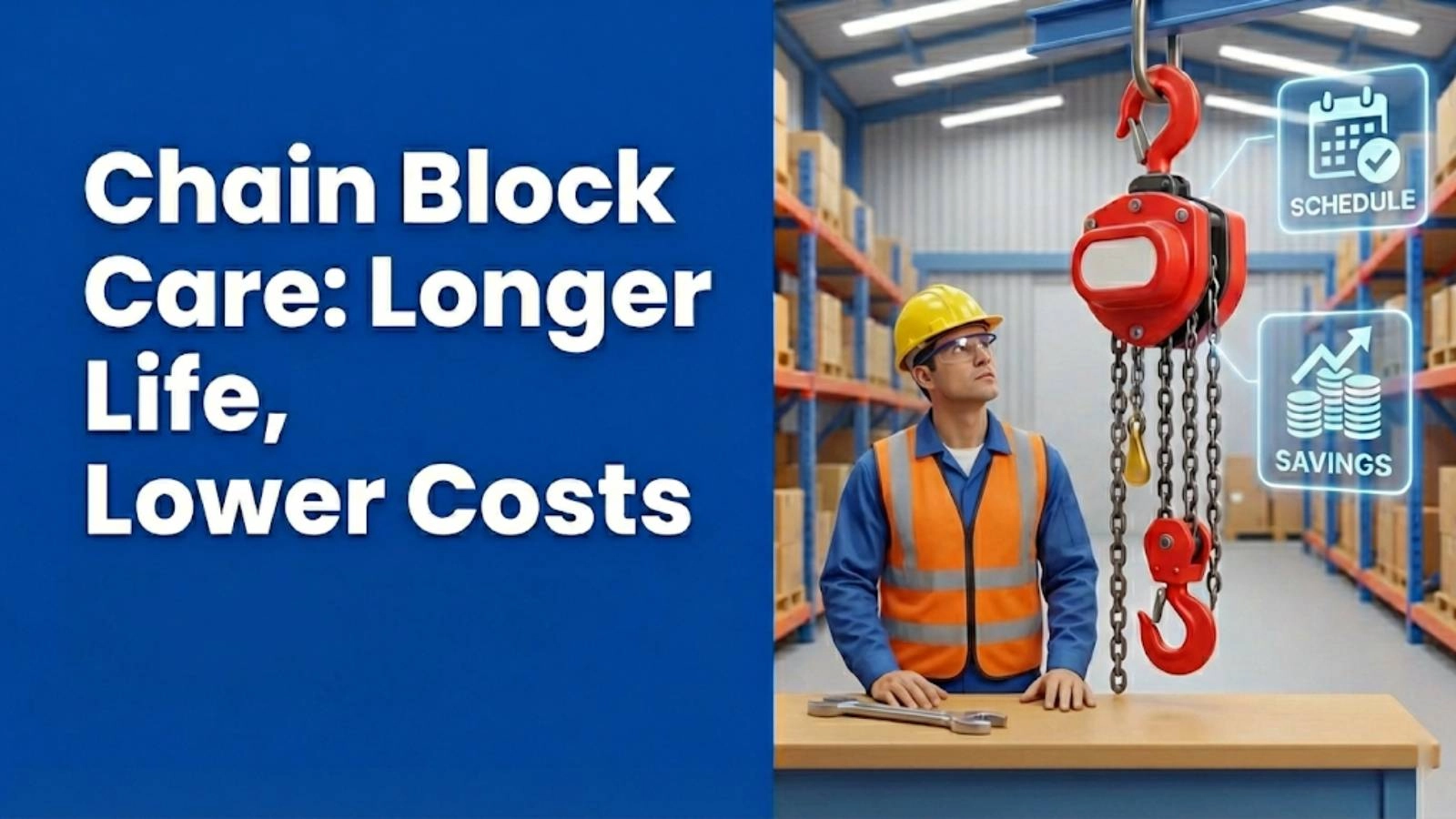
A chain block operation is a vital part of many industrial and construction tasks. These simple yet powerful tools enable the safe and efficient lifting of heavy loads in a variety of settings. However, the potential for accidents and injuries associated with chain blocks is significant without proper operation.
Understanding the risks and adhering to stringent safety protocols is critical to preventing accidents, protecting workers, and ensuring operational efficiency. This guide provides a detailed, step-by-step approach to safe chain block operation, covering everything from pre-use inspections to regular maintenance. By following these guidelines, you can minimize risks and maximize the lifespan of your lifting equipment.
Understanding Chain Block Components and Terminology
Before delving into the specifics of safe chain block operation, it’s important to understand the components and terminology associated with these devices. A chain block, also known as a manual chain hoist or chain fall, is a mechanical device used to lift and lower heavy loads using a system of gears and chains. Familiarizing yourself with these parts is the foundation for chain block safety.
- Load Chain: The load chain is the primary lifting component of the manual chain hoist. It’s a high-strength chain designed to bear the weight of the load being lifted.
- Hand Chain: The hand chain is used by the operator to apply force, which is then mechanically amplified to lift the load. Pulling on the hand chain rotates the internal gears, moving the load chain.
- Hooks: Chain blocks have two hooks: an upper hook for suspending the block from an overhead support and a lower hook for attaching to the load. These hooks are typically equipped with safety latches to prevent accidental disengagement.
- Housing: The housing encloses and protects the internal gears and mechanisms of the chain block. It provides structural support and a mounting point for the hooks.
- Gears: The internal gears provide the mechanical advantage needed to lift heavy loads with minimal effort. They multiply the force applied to the hand chain, allowing the operator to lift significantly heavier objects than they could lift manually.
Understanding the terminology is just as important as knowing the components.
- Working Load Limit (WLL): The WLL is the maximum weight that the lifting equipment is designed to lift safely. It’s crucial to never exceed the WLL of a chain block to prevent equipment failure and accidents.
- Safety Factor: The safety factor is the ratio between the chain block‘s breaking strength and its WLL. It provides a margin of safety to account for variations in material strength and unexpected loads. A typical safety factor for chain hoists is 4:1 or 5:1.
- Overload: An overload occurs when the weight of the load exceeds the WLL of the chain block. Overloading can cause permanent damage to the lifting equipment and poses a significant safety risk.
- Block and Tackle: While a chain block itself can be considered a type of block and tackle system, the term generally refers to any system using ropes and pulleys to gain mechanical advantage.
Each component plays a vital role in the lifting process. The load chain bears the brunt of the weight, while the hand chain allows the operator to control the lift. The hooks provide secure attachment points, and the housing protects the internal mechanisms. Without a full understanding of these parts, proper lever block operation can be compromised. As our team in Dubai always emphasizes, understanding these parts is not just about knowing what they’re called but understanding how they interact to ensure a safe lift.
Pre-Operation Inspection: Identifying Potential Hazards
Pre-use inspections are an indispensable part of chain block safety. Identifying potential hazards before each lift can prevent accidents and equipment failures.
The load chain is the primary component responsible for bearing the weight of the load, so it requires careful inspection.
- Check for wear, corrosion, and damage to links: Look for any signs of wear, such as thinning or elongation of the links. Corrosion can weaken the chain and make it more susceptible to failure. Damage, such as nicks, gouges, or cracks, can significantly reduce the chain’s strength.
- Measure chain stretch and compare to allowable limits: Over time, the load chain may stretch due to repeated use. Excessive stretch can indicate that the chain has been overloaded or is nearing the end of its service life. Use a chain gauge to measure the stretch and compare it to the manufacturer’s allowable limits.
- Inspect weld integrity of the chain links: The weld joints are the weakest points of the chain. Inspect each weld for cracks, porosity, or other signs of defects.
Hooks are another critical component that requires meticulous inspection.
- Check for cracks, deformation, and wear: Hooks can develop cracks due to fatigue or impact. Deformation, such as bending or twisting, can indicate that the hook has been overloaded. Wear on the hook’s bearing surface can reduce its strength.
- Ensure safety latches are functioning correctly: Safety latches prevent the load from accidentally slipping off the hook. Ensure that the latches are in place, are functioning properly, and engage fully.
- Verify hook opening is within tolerance: The hook opening should be within the manufacturer’s specified tolerance. An excessively wide opening can indicate that the hook has been overloaded or deformed.
The block housing and other components also require inspection to guarantee safe lever block operation.
- Inspect for cracks, dents, and other damage: The housing protects the internal mechanisms of the chain block. Inspect it for any signs of damage that could compromise its structural integrity.
- Ensure smooth operation of the hand chain: The hand chain should move freely and smoothly without binding or catching. Any resistance could indicate a problem with the internal gears or mechanisms.
- Verify proper lubrication: Proper lubrication is essential for the smooth operation of the chain block. Check that all moving parts are adequately lubricated.
Documenting inspections and reporting defects is critical for maintaining a safe working environment. Maintain a log of all inspections, noting the date, time, and findings. Report any defects or concerns to a supervisor or qualified technician immediately. Defective rigging equipment should be taken out of service until it can be repaired or replaced. We once had a client who overlooked a small crack in a hook; thankfully, they caught it during a subsequent inspection, preventing a potentially catastrophic failure.
Safe Lifting Practices: A Step-by-Step Guide
Safe chain block operation relies on following a series of well-defined steps. Each step is vital for preventing accidents and ensuring the safe lifting and lowering of loads.
Step 1: Planning the Lift
Planning the lift is the first and most important step in safe chain block operation. A poorly planned lift can lead to accidents, injuries, and equipment damage.
- Assess the weight and dimensions of the load: Accurately determining the weight and dimensions of the load is critical for selecting the appropriate lifting equipment and rigging. Use a calibrated scale or consult the manufacturer’s specifications to determine the weight.
- Determine the center of gravity: The center of gravity is the point at which the load is perfectly balanced. Identifying the center of gravity is essential for ensuring a stable and controlled lift. An off-center load can cause the chain block to tip or swing, posing a safety hazard.
- Select appropriate lifting points: Choose lifting points that are strong enough to support the weight of the load. Ensure that the lifting points are evenly distributed around the center of gravity to maintain balance.
Step 2: Choosing the Right Chain Block
Selecting the appropriate chain block for the job is vital for safe and efficient lifting. Using an undersized or unsuitable chain block can lead to equipment failure and accidents.
- Ensure the chain block’s WLL exceeds the load weight: The chain block‘s WLL must be greater than the weight of the load. This provides a safety margin to account for dynamic loading and unexpected forces.
- Consider the required lifting height: Select a chain block with a load chain length that is sufficient for the required lifting height. Ensure that the chain has enough slack to allow for safe and controlled lifting.
- Select a chain block appropriate for the environment: Consider the environment in which the chain block will be used. For hazardous environments, such as those with flammable materials, use a spark-resistant manual chain hoist.
Step 3: Attaching the Chain Block
Attaching the chain block securely to a suitable overhead support structure is critical for safe lifting. A weak or unstable support structure can collapse under the weight of the load.
- Securely attach the chain block to a suitable overhead support structure: Use an I-beam, trolley, or other structurally sound support. Ensure that the support structure is capable of withstanding the weight of the load and the forces generated during lifting.
- Verify the support structure’s load-bearing capacity: Consult with a qualified engineer or structural expert to verify the load-bearing capacity of the support structure.
- Use appropriate rigging hardware: Use shackles, slings, or other rigging equipment to connect the chain block to the support structure. Ensure that the rigging hardware is in good condition and has a WLL that is equal to or greater than the chain block‘s WLL.
Step 4: Attaching the Load
Attaching the load securely to the chain block is vital for preventing accidents. An improperly attached load can slip or fall, causing serious injuries or damage.
- Use appropriate lifting slings or chains: Select lifting slings or chains that are designed for the type of load being lifted. Ensure that the slings or chains are in good condition and have a WLL that is equal to or greater than the weight of the load.
- Ensure the load is balanced and secure: Distribute the weight of the load evenly across the slings or chains to maintain balance. Secure the load to the slings or chains using appropriate fasteners or connectors.
- Avoid sharp edges that could damage the slings: Protect the slings from sharp edges by using padding or edge protectors. Sharp edges can cut or abrade the slings, reducing their strength and increasing the risk of failure.
Step 5: Lifting the Load
Lifting the load smoothly and steadily is crucial for maintaining control and preventing accidents. Jerky or sudden movements can cause the load to swing or shift, increasing the risk of instability.
- Use a smooth, steady motion to lift the load: Avoid jerking or sudden movements. Apply force to the hand chain gradually and evenly.
- Avoid jerking or sudden movements: Jerking or sudden movements can create dynamic forces that exceed the chain block‘s WLL.
- Keep the load close to the ground initially: Keeping the load close to the ground initially allows you to assess the stability of the lift and make any necessary adjustments.
Step 6: Positioning the Load
Carefully guiding the load to its desired location is vital for preventing collisions and ensuring a safe landing.
- Carefully guide the load to its desired location: Use smooth, controlled movements to guide the load to its final position.
- Use tag lines to control the load’s movement: Tag lines are ropes attached to the load that allow workers to control its movement from a safe distance.
- Ensure the landing area is clear and stable: Before lowering the load, ensure that the landing area is clear of obstacles and that the ground is stable enough to support the weight of the load.
Step 7: Lowering the Load
Lowering the load slowly and smoothly is just as important as lifting it safely. Free-falling loads can cause serious injuries or damage.
- Lower the load slowly and smoothly: Avoid free-falling. Apply force to the hand chain gradually and evenly to lower the load in a controlled manner.
- Avoid free-falling: Free-falling can create dynamic forces that exceed the chain block‘s WLL and damage the lifting equipment.
- Ensure the load is properly supported before detaching the slings: Before detaching the slings, ensure that the load is fully supported by the landing surface.
By following these steps meticulously, operators can significantly reduce the risk of accidents and ensure safe chain block operation.
Common Mistakes to Avoid During Chain Block Operation
Even with proper training, mistakes can happen. Being aware of common pitfalls is essential for preventing accidents and ensuring chain block safety.
- Overloading the chain block: Exceeding the WLL of the chain block is one of the most dangerous mistakes. Always verify the weight of the load and ensure that it does not exceed the chain block‘s capacity.
- Using damaged or worn-out equipment: Using damaged or worn-out lifting equipment can lead to equipment failure and accidents. Regularly inspect the chain block and rigging equipment for signs of damage or wear, and replace any defective items immediately.
- Improperly attaching the load: Failing to attach the load securely can cause it to slip or fall, resulting in serious injuries or damage. Always use appropriate lifting slings or chains and ensure that the load is balanced and secure.
- Working under a suspended load: Working under a suspended load is extremely dangerous. If the chain block fails or the load slips, workers could be crushed or seriously injured.
- Neglecting pre-use inspections: Skipping pre-use inspections can lead to overlooking critical defects or damage that could cause equipment failure. Always perform a thorough inspection before each lift.
- Failing to use proper personal protective equipment (PPE): PPE, such as hard hats, safety glasses, and gloves, can protect workers from injuries caused by falling objects, sharp edges, or other hazards. Always wear appropriate PPE when operating a chain block.
Troubleshooting Common Chain Block Problems
Even with careful operation, chain blocks can sometimes experience problems. Knowing how to troubleshoot common issues can help you resolve them quickly and safely.
- Chain slippage: Chain slippage can be caused by worn or damaged chain links, a dirty or corroded chain, or an overloaded chain block. To resolve chain slippage, inspect the chain for damage and replace any worn or damaged links. Clean and lubricate the chain to remove dirt and corrosion. Ensure that the load does not exceed the chain block‘s WLL.
- Difficulty lifting or lowering the load: Difficulty lifting or lowering the load can be caused by a lack of lubrication, a binding chain, or a damaged gear mechanism. To resolve this issue, lubricate all moving parts of the chain block. Inspect the chain for kinks or twists and straighten them out. If the problem persists, consult a qualified technician to inspect the gear mechanism.
- Chain binding or jamming: Chain binding or jamming can be caused by a misaligned chain, a damaged chain guide, or foreign objects lodged in the chain. To resolve chain binding or jamming, carefully inspect the chain path for obstructions. Remove any foreign objects and ensure that the chain is properly aligned.
- Hook latch malfunction: Hook latch malfunction can be caused by a bent or broken latch spring, a corroded latch mechanism, or debris lodged in the latch. To resolve hook latch malfunction, inspect the latch for damage and replace any broken parts. Clean and lubricate the latch mechanism to remove corrosion.
Regular Maintenance and Storage for Longevity
Regular maintenance and proper storage are essential for extending the lifespan of your chain block and ensuring its safe operation. Implementing a proactive maintenance program can prevent costly repairs and downtime.
- Cleaning and lubrication procedures: Clean the chain block regularly to remove dirt, dust, and debris. Use a mild detergent and water to clean the housing and other components. Lubricate all moving parts with a high-quality lubricant to reduce friction and prevent corrosion.
- Chain inspection and replacement intervals: Inspect the load chain regularly for signs of wear, corrosion, or damage. Replace the chain at the manufacturer’s recommended intervals, or sooner if necessary.
- Proper storage techniques to prevent corrosion and damage: Store the chain block in a dry, clean environment to prevent corrosion and damage. Hang the chain block from its upper hook to prevent the chain from tangling or kinking.
- Record-keeping of maintenance activities: Maintain a log of all maintenance activities, including cleaning, lubrication, inspections, and repairs. This record will help you track the chain block‘s performance and identify potential problems early on.
Regulatory Compliance and Safety Standards
Adhering to regulatory compliance and safety standards is crucial for ensuring chain block safety and preventing accidents. Familiarize yourself with the relevant regulations and standards in your jurisdiction.
- Overview of relevant OSHA regulations and ANSI standards: In the United States, the Occupational Safety and Health Administration (OSHA) has regulations governing the safe use of lifting equipment, including chain blocks. The American National Standards Institute (ANSI) also publishes standards for chain hoists and other rigging equipment.
- Importance of adhering to manufacturer’s recommendations: Always follow the manufacturer’s recommendations for the safe operation and maintenance of the chain block. The manufacturer’s instructions provide specific guidance on load limits, inspection procedures, and maintenance intervals.
- Training and certification requirements for chain block operators: Many jurisdictions require operators to be trained and certified in the safe use of chain blocks. Training programs typically cover topics such as equipment inspection, safe lifting practices, and regulatory compliance.
Expert Advice and Best Practices
> “Always prioritize safety over speed. A thorough inspection before each lift can prevent accidents and extend the life of your equipment.” – John Smith, Certified Lifting Equipment Inspector
Conclusion: Ensuring Safe and Efficient Chain Block Operation
In conclusion, safe chain block operation is essential for protecting workers, preventing accidents, and ensuring operational efficiency. By following the steps outlined in this guide, you can minimize the risks associated with lifting heavy loads. Remember to conduct thorough pre-use inspections, adhere to safe lifting practices, avoid common mistakes, troubleshoot common problems, and maintain your lifting equipment regularly. Continuous training and awareness are also critical for promoting a safe working environment. By prioritizing safety, you can ensure that your chain block operations are both safe and efficient. We are confident that these practices will enhance your team’s safety.
FAQ Section
Q: How often should I inspect my chain block?
A: You should inspect your chain block before each use, as well as periodically, depending on the frequency of use and the severity of the operating environment. Frequent inspections can reveal problems early on.
Q: What are the signs of a worn or damaged load chain?
A: Signs of a worn or damaged load chain include: stretched links, corrosion, cracks, nicks, gouges, and excessive wear. If you notice any of these signs, the chain should be replaced immediately.
Q: Can I repair a damaged chain block myself?
A: It is generally not recommended to repair a damaged chain block yourself, unless you are a qualified technician with the proper training and tools. Improper repairs can compromise the safety of the lifting equipment. It’s always best to consult a professional.
Q: What is the proper way to store a chain block?
A: Store the chain block in a dry, clean environment to prevent corrosion and damage. Hang the chain block from its upper hook to prevent the chain from tangling or kinking. Proper storage will keep your chain block in top condition.
Q: What should I do if I overload a chain block?
A: If you overload a chain block, stop the lifting operation immediately. Inspect the chain block for any signs of damage, such as bent hooks or stretched chains. Take the lifting equipment out of service until it can be inspected by a qualified technician.
Q: What is the difference between a chain block and a lever block?
A: While both are manual chain hoists, a chain block uses a hand chain to lift loads vertically, whereas a lever block uses a lever to ratchet the chain, often used for pulling or tensioning in various directions.
Q: Where can I find more information about chain block safety regulations?
A: You can find more information about chain block safety regulations from OSHA, ANSI, and other regulatory agencies in your jurisdiction. You can also consult with a qualified safety professional or lifting equipment supplier.