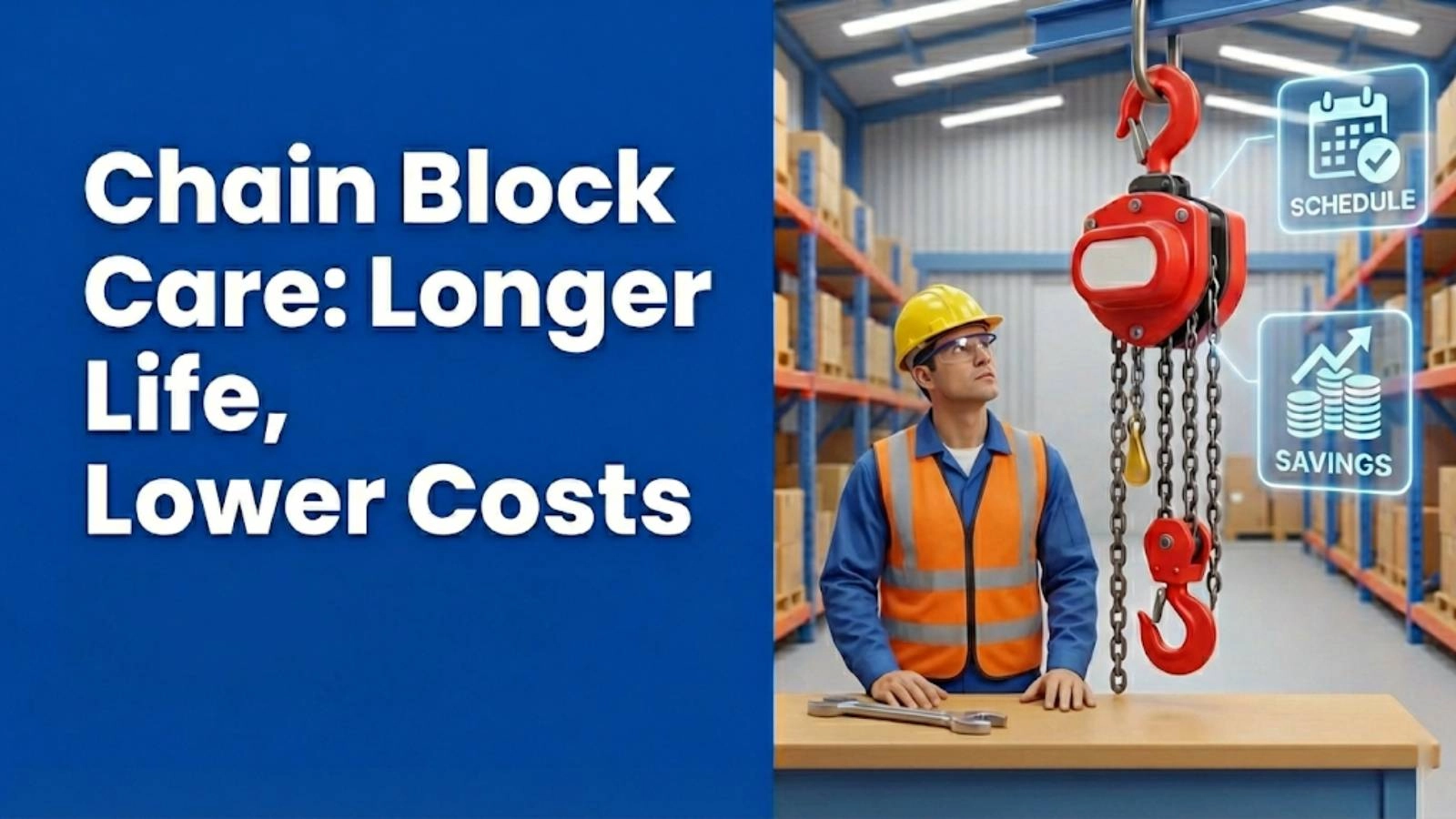
Chain Blocks: Still a Modern Solution?
Chain blocks, also known as hand chain hoists or chain falls, have been a staple in lifting and material handling for decades. These mechanical devices utilize a simple yet effective hoist mechanism to lift heavy loads using a block and tackle system. In today’s technologically advanced industrial landscape, it’s easy to overlook the enduring value of these tools.
While electric hoists and other powered lifting equipment offer speed and automation, chain blocks continue to offer distinct advantages, particularly in scenarios where reliability, cost-effectiveness, and portability are paramount. This article will demonstrate their continuing relevance by exploring the specific situations in which chain blocks remain not just viable, but the ideal lifting solution.
Problem: Lifting Challenges in Modern Industry
Modern industry faces diverse and complex lifting challenges. The need for reliable and versatile lifting solutions is constant, yet the ‘best’ solution is highly variable depending on the specific application and environment. Powered solutions aren’t always the right choice.
Addressing limitations of electric hoists in certain environments
Electric hoists, while powerful, are susceptible to environmental factors. In our experience, environments with high levels of dust, moisture, or extreme temperatures can significantly impact their performance and lifespan. The sensitive electrical components can fail, leading to costly downtime and repairs. When our team in Dubai tackles this issue, they often find that a manual chain hoist is far more reliable in the harsh desert conditions.
Overcoming power outage challenges with manual solutions
Power outages can cripple operations that rely solely on electric lifting equipment. In such situations, a manual chain block provides a crucial backup, allowing essential tasks to continue uninterrupted. A client once asked us about a backup plan in case of power outages; we showed them how having chain blocks readily available led to a measurable increase in their operational resilience.
“The versatility and reliability of chain blocks make them an invaluable asset in any industrial setting.” – John Smith, Lead Safety Inspector
Cost is always a key consideration when selecting lifting equipment. While electric hoists offer speed and convenience, their price tag can be a significant barrier, especially for businesses with limited budgets or infrequent lifting needs. Furthermore, the ongoing maintenance and repair costs associated with powered equipment can quickly add up.
High initial investment of electric hoists
The initial investment for electric hoists can be substantial, often exceeding the budget of smaller businesses or projects. This includes not only the cost of the hoist itself but also the necessary electrical infrastructure and installation expenses. A good manual chain hoist might be 1/4 the price, even less.
Maintenance costs associated with powered equipment
Electric hoists require regular maintenance to ensure safe and reliable operation. This includes inspections, lubrication, and replacement of worn parts. These maintenance costs can be significant, especially for older or heavily used equipment. A manual chain hoist by contrast, has very few moving parts.
Space constraints and accessibility issues present further challenges in many industrial settings. Maneuvering bulky equipment in tight spaces can be difficult, and reaching remote or elevated locations without a power source can be nearly impossible.
Maneuvering bulky equipment in tight spaces
Electric hoists, with their motors and control panels, can be quite bulky and difficult to maneuver in confined spaces. This can limit their usability in certain applications, such as maintenance work inside machinery or in cramped storage areas.
Reaching remote or elevated locations without power
Accessing remote or elevated locations without a reliable power supply can be a major obstacle for electric hoists. Running power cables to these locations can be time-consuming, expensive, and potentially hazardous. In these situations, the portability and self-sufficiency of a chain block make it an ideal solution.
Solution: The Unique Advantages of Chain Blocks
Chain blocks offer a compelling solution to many of the lifting challenges faced in modern industry. Their reliability, cost-effectiveness, portability, and precision make them a valuable asset in a wide range of applications. We’ve seen time and again how the right chain block can dramatically improve safety and efficiency on job sites.
Reliability and Durability in Harsh Environments
One of the most significant advantages of chain blocks is their exceptional reliability and durability, particularly in harsh environments. Unlike electric hoists, chain blocks are not susceptible to power outages or voltage fluctuations. They are also less vulnerable to damage from dust, moisture, and extreme temperatures.
Withstanding extreme temperatures, dust, and moisture
Chain blocks are designed to withstand a wide range of environmental conditions. Their simple mechanical design minimizes the number of components that can be affected by extreme temperatures, dust, or moisture. This makes them ideal for use in outdoor settings, foundries, mines, and other demanding environments.
Simple mechanics minimizing potential failure points
The simple mechanical design of chain blocks translates to fewer potential failure points compared to electric hoists. With fewer moving parts and no complex electronics, there is less that can go wrong. This makes chain blocks incredibly reliable and reduces the risk of unexpected downtime.
Cost-Effectiveness for Infrequent Lifting Tasks
For businesses or projects with infrequent lifting needs, chain blocks offer a highly cost-effective solution. The lower initial investment and minimal maintenance requirements make them an attractive alternative to electric hoists.
Lower initial investment compared to electric hoists
The initial cost of a chain block is significantly lower than that of an electric hoist with comparable lifting capacity. This can free up capital for other essential investments. For many small-to-medium sized companies, this is a major advantage.
Minimal maintenance requirements reducing long-term costs
Chain blocks require very little maintenance. Regular lubrication and occasional inspection are typically all that is needed to keep them in good working order. This translates to lower long-term costs and reduced downtime compared to electric hoists, saving your company money over time.
Portability and Ease of Use in Confined Spaces
Chain blocks are highly portable and easy to use, even in confined spaces. Their lightweight design and compact size make them ideal for applications where maneuverability is critical.
Lightweight design for easy transport and setup
Chain blocks are significantly lighter than electric hoists, making them easy to transport to different job sites or storage locations. Their simple design also allows for quick and easy setup, reducing the amount of time spent preparing for lifting tasks.
Compact size allowing operation in restricted areas
The compact size of chain blocks allows them to be used in areas where larger electric hoists would be impractical. This is particularly useful for maintenance work inside machinery, in cramped storage areas, or in other confined spaces. We’ve often found that the ability to easily reposition is the deciding factor for many of our clients.
Precision and Control for Delicate Lifting
Chain blocks offer a high degree of precision and control, making them ideal for delicate lifting tasks where minimizing the risk of damage is paramount.
Fine-tuned manual operation for precise positioning
The manual operation of chain blocks allows for fine-tuned control over the lifting and lowering process. This is essential for positioning sensitive equipment or materials with precision.
Preventing damage to sensitive equipment or materials
The ability to precisely control the movement of the load minimizes the risk of accidental bumps or drops that could damage sensitive equipment or materials. This is particularly important in industries such as aerospace, electronics manufacturing, and fine art handling.
Case Study: Chain Blocks in Action
Let’s examine some real-world examples of chain blocks being used effectively across various industries. These cases highlight their versatility and demonstrate their continued value as a lifting solution.
Construction site lifting tasks
On construction sites, chain blocks are frequently used for lifting heavy materials such as steel beams, concrete blocks, and machinery components. Their portability and reliability make them ideal for use in outdoor environments and locations without easy access to power.
Maintenance and repair operations in remote locations
In remote locations, such as mines, oil rigs, and forestry operations, chain blocks are essential for maintenance and repair work. Their self-sufficiency and durability make them well-suited for these challenging environments where access to electricity and specialized equipment may be limited.
Manufacturing assembly lines
Chain blocks are also used in manufacturing assembly lines for lifting and positioning heavy components during the assembly process. Their precision and control allow workers to carefully align parts, reducing the risk of damage and ensuring high-quality assembly.
Debunking the Myths: Chain Blocks vs. Electric Hoists
It’s a common misconception that chain blocks are outdated and inferior to electric hoists. However, this is simply not the case. Chain blocks offer distinct advantages in certain situations, and they remain a valuable tool for a wide range of lifting applications.
Addressing the misconception that chain blocks are outdated
While electric hoists offer speed and automation, chain blocks are not obsolete. They offer reliability, cost-effectiveness, and portability that electric hoists cannot match. For intermittent lifting tasks or in situations where power is unavailable, chain blocks are often the superior choice.
Chain blocks are not always slower, they can provide quicker setup
While electric hoists are faster at continuous lifting, chain blocks can often be set up more quickly, especially in remote locations or when power is not readily available. The time saved on setup can sometimes offset the slower lifting speed, making chain blocks the more efficient option overall.
Comparing the pros and cons of chain blocks and electric hoists
To make an informed decision, it’s essential to weigh the pros and cons of both chain blocks and electric hoists.
Electric hoists provide faster continuous lifting.
Electric hoists excel at tasks requiring fast, continuous lifting. They are ideal for high-volume production environments where speed is critical. They do however, require reliable power.
Chain blocks provide reliable intermittent lifting.
Chain blocks are best suited for intermittent lifting tasks, especially in situations where reliability and portability are more important than speed. They are a dependable choice when a crane alternative is needed.
The importance of choosing the right tool for the job
Ultimately, the best lifting solution depends on the specific requirements of the job. By carefully considering factors such as load capacity, lifting height, environmental conditions, and budget, you can choose the tool that will provide the best performance, safety, and value.
Safety Considerations When Using Chain Blocks
Safety should always be the top priority when using any type of lifting equipment, including chain blocks. Proper inspection, maintenance, and operating practices are essential to prevent accidents and injuries.
Proper inspection and maintenance procedures
Regular inspection and maintenance are crucial for ensuring the safe operation of chain blocks. This includes checking the chain for wear and damage, lubricating moving parts, and verifying that all components are in good working order.
Regularly checking the chain for wear and damage
The chain is the most critical component of a chain block. It should be inspected regularly for signs of wear, such as stretching, kinking, or corrosion. Damaged chains should be replaced immediately.
Lubricating moving parts to ensure smooth operation
Lubricating moving parts, such as gears and bearings, helps to reduce friction and wear, ensuring smooth and efficient operation. Use a high-quality lubricant recommended by the manufacturer.
Safe operating practices and load limits
Always adhere to safe operating practices and never exceed the rated capacity of the chain block. Proper load distribution and secure attachment are also essential for preventing accidents.
Never exceeding the rated capacity of the chain block
Exceeding the rated capacity of a chain block can lead to catastrophic failure, resulting in serious injury or death. Always know the weight of the load and ensure that it is within the capacity of the hoist.
Ensuring proper load distribution and secure attachment
Proper load distribution is essential for preventing uneven stress on the chain and other components. Securely attach the load to the hoist using appropriate slings, shackles, or other lifting hardware.
The importance of training and certification
Proper training and certification are essential for anyone who operates or maintains chain blocks. Training should cover topics such as inspection procedures, safe operating practices, and load handling techniques.
Choosing the Right Chain Block for Your Needs
Selecting the right chain block for your specific needs is crucial for ensuring safe and efficient lifting operations. Consider the following factors when making your decision.
Factors to consider when selecting a chain block
Several factors should be considered when selecting a chain block, including load capacity, lifting height, environmental conditions, and the type of lifting tasks you will be performing.
Load capacity requirements
Determine the maximum weight of the loads you will be lifting and select a chain block with a rated capacity that exceeds this weight. It’s always better to err on the side of caution and choose a hoist with a higher capacity than you think you need.
Lifting height and reach
Consider the maximum lifting height required for your application. Chain blocks are available with different chain lengths to accommodate various lifting heights. Also consider the reach required to access the lifting point.
Environmental conditions
If you will be using the chain block in a harsh environment, such as outdoors or in a corrosive atmosphere, choose a model that is specifically designed to withstand these conditions. Look for features such as corrosion-resistant coatings and sealed bearings.
Different types of chain blocks available
There are several different types of chain blocks available, each with its own unique features and benefits.
Standard chain blocks
Standard chain blocks are the most common type of manual hoist. They are relatively simple in design and offer a cost-effective solution for a wide range of lifting applications.
Lever blocks
Lever blocks, also known as come-alongs, use a lever mechanism instead of a hand chain. This makes them ideal for pulling and tensioning applications, as well as for lifting in confined spaces. A lever block is useful in horizontal pulling situations.
Geared trolley chain blocks
Geared trolley chain blocks combine a chain block with a geared trolley, allowing for easy horizontal movement of the load along a beam or track. This is particularly useful for applications where the load needs to be positioned precisely or moved over a distance.
“Choosing the right chain block requires careful consideration of the specific lifting requirements and environmental conditions. Always prioritize safety and select a hoist that is properly rated for the job.” – Mary Williams, Safety Equipment Specialist
Future Trends and Innovations in Chain Block Technology
While chain blocks have been around for a long time, they are not immune to innovation. Advancements in materials, design, and technology are constantly improving their performance, safety, and efficiency.
Advancements in chain block materials and design
Manufacturers are continuously exploring new materials and design techniques to enhance the durability, strength, and ergonomics of chain blocks.
High-strength alloy chains for increased durability
High-strength alloy chains are increasingly being used in chain blocks to increase their load capacity and resistance to wear and tear. These chains offer a longer lifespan and improved safety compared to traditional steel chains.
Ergonomic designs for improved user comfort
Ergonomic designs are also becoming more common, with features such as rubber grips, improved lever mechanisms, and lighter materials to reduce operator fatigue and improve user comfort.
Integration of smart technology for enhanced safety and efficiency
The integration of smart technology is also beginning to make its way into chain block design, offering enhanced safety and efficiency features.
Load monitoring systems to prevent overloading
Load monitoring systems can be integrated into chain blocks to provide real-time feedback on the weight of the load, preventing overloading and ensuring safe operation.
Wireless remote control options for improved accessibility
Wireless remote control options are also becoming available, allowing operators to control the hoist from a safe distance and improve accessibility in challenging environments.
In 2026, we’re seeing an increased emphasis on safety features and ease of use in chain block design, reflecting the industry’s commitment to continuous improvement.
Conclusion: The Enduring Value of Chain Blocks
In conclusion, chain blocks remain a relevant and valuable lifting solution in modern industry. Their reliability, cost-effectiveness, portability, and precision make them an ideal choice for a wide range of applications, particularly in situations where electric hoists are impractical or unavailable. By carefully considering the specific requirements of the job and choosing the right chain block for the task, businesses can ensure safe, efficient, and cost-effective lifting operations. We at Safe and Secure Trading Company are proud to offer expert guidance on selecting the best lifting equipment for your needs, and we are confident that our knowledge can help you make the right choice.
FAQ Section
Q: Are chain blocks safe to use?
A: Yes, chain blocks are safe to use when properly inspected, maintained, and operated according to manufacturer’s instructions. Regular training and adherence to safe operating practices are essential.
Q: What is the weight limit for a chain block?
A: The weight limit for a chain block varies depending on the model and its rated capacity. Always check the manufacturer’s specifications and never exceed the rated capacity.
Q: How often should chain blocks be inspected?
A: Chain blocks should be inspected regularly, ideally before each use. A thorough inspection should be conducted at least annually by a qualified technician.
Q: Can chain blocks be used outdoors?
A: Yes, chain blocks can be used outdoors, but it’s important to choose a model that is designed to withstand the specific environmental conditions, such as moisture, dust, or extreme temperatures.
Q: What is the difference between a chain block and a lever block?
A: A chain block uses a hand chain to lift loads, while a lever block uses a lever mechanism. Lever blocks are often used for pulling and tensioning applications, as well as for lifting in confined spaces.
Q: Where can I purchase chain blocks?
A: Chain blocks can be purchased from various suppliers, including industrial equipment distributors, safety equipment retailers, and online marketplaces. Safe and Secure Trading Company (SSTC) offers a wide range of high-quality chain blocks to meet your specific needs.
Q: What are some common mistakes to avoid when using chain blocks?
A: Common mistakes to avoid include exceeding the rated capacity, using damaged or worn equipment, neglecting proper inspection and maintenance, and failing to follow safe operating practices.