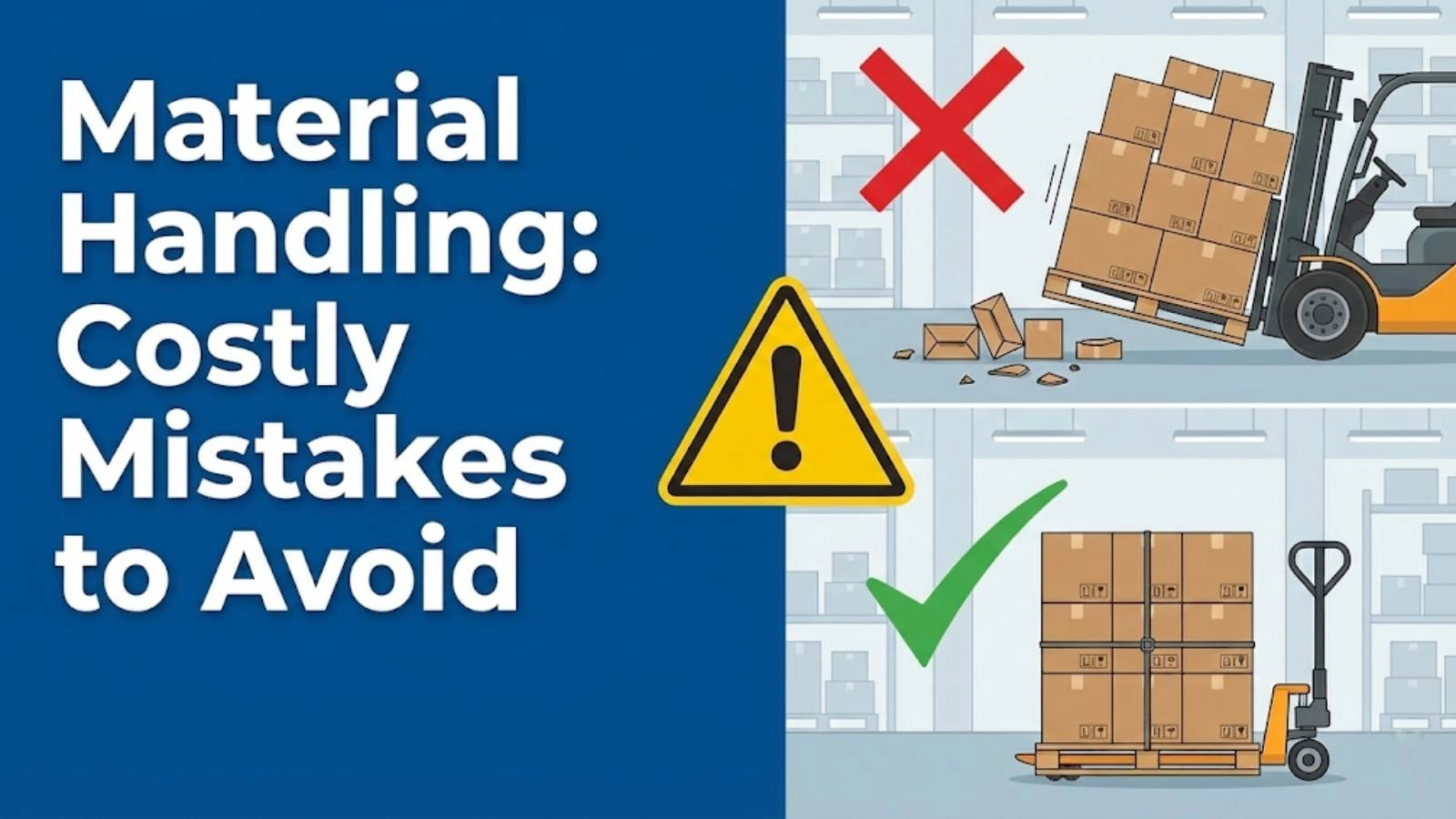
Material Handling: Is Automation Right?
The question of whether to automate material handling is a critical one for businesses of all sizes in 2026. It’s a decision that can significantly impact efficiency, productivity, and profitability. However, jumping into automation without careful consideration can lead to costly mistakes and disappointing results. This guide will walk you through the key steps to determine if material handling automation is the right choice for your business.
Key Takeaways: Material Handling Automation
- Automation isn’t a one-size-fits-all solution. Understand your specific needs first.
- A phased implementation approach minimizes disruption and risk.
- Ignoring employee training can negate the benefits of automation.
- Calculate the total cost of ownership (TCO), including maintenance and upgrades.
- Data analysis is crucial for optimizing automated systems and maximizing ROI.
Understanding Your Material Handling Needs 🤔
Defining Your Current Processes
One of the biggest mistakes we see companies make is not thoroughly mapping their current material handling processes before even considering automation. It’s like trying to build a house without a blueprint.
To avoid this, conduct a detailed analysis of your current workflows. Identify bottlenecks, inefficiencies, and areas for improvement. This includes tracking the material flow, analyzing labor costs, and identifying error-prone processes. Understand how materials move from receiving to storage, through production, and finally to shipping. Consider using process mapping tools or flowcharts to visually represent your current state. A common problem is that many companies don’t understand the time and cost associated with moving the materials, so you must be exact in your process.
2026 presents new opportunities and challenges in the realm of material handling, with technology constantly evolving. We’ve consistently seen that the more detailed the initial assessment, the smoother the transition to automation.
Identifying Pain Points and Opportunities
Focusing solely on the perceived benefits of automation without addressing underlying problems is a recipe for disappointment. Automation is a tool, not a magic wand.
Pinpoint specific pain points in your current material handling operations, such as high labor costs, frequent errors, safety concerns, and delays. Once you identify these challenges, determine if automation is the appropriate solution for each. For instance, if you’re experiencing high error rates in order fulfillment, automation might help reduce these errors through automated picking and packing systems. On the other hand, if your primary issue is a lack of storage space, automation alone won’t solve the problem; you might need to consider expanding your warehouse.
One of our clients here in Dammam, Saudi Arabia, struggled with high labor costs due to inefficient material handling. By implementing automated conveyors and sortation systems, they were able to reduce their labor costs by 30% and improve throughput significantly.
Setting Realistic Goals and Objectives
Expecting immediate and dramatic results from automation without setting clear, measurable goals is another common pitfall. It’s crucial to approach automation with realistic expectations.
Establish specific, measurable, achievable, relevant, and time-bound (SMART) goals for your automation project. Examples include reducing labor costs by X%, increasing throughput by Y%, or decreasing error rates by Z%. Make sure your goals are aligned with your overall business strategy. Monitor your progress regularly and adjust your approach as needed. Consider using key performance indicators (KPIs) to track your progress and identify areas for improvement.
Avoiding Common Automation Pitfalls ⚠️
Overlooking Scalability
Implementing an automation system that cannot adapt to future growth or changing business needs is a short-sighted approach that can lead to problems down the road.
Choose a scalable automation solution that can be easily expanded or modified to accommodate increased volume, new product lines, or changes in warehouse layout. Consider modular automation systems that can be easily added or removed as needed. Look for vendors who offer flexible solutions and can support your future growth plans. A scalable system for automated material handling will reduce changeover costs significantly, and increase efficiency.
Ignoring Integration Challenges
Failing to integrate the new automation system with existing warehouse management systems (WMS) or enterprise resource planning (ERP) systems can create data silos and hinder efficiency.
Ensure seamless integration between your automation system and other IT systems. This requires careful planning, data mapping, and testing to avoid data silos and system conflicts. Work closely with your IT team and automation vendor to ensure that all systems can communicate effectively. Consider using middleware or APIs to facilitate integration. An example of logistics automation that is crucial is the seamless integration of a conveyor system with the WMS.
Neglecting Data Analysis
Failing to collect and analyze data from the automated material handling system to identify areas for improvement is a missed opportunity to optimize performance and maximize ROI.
Implement robust data collection and analytics tools to monitor the performance of your automation system. Track key metrics such as throughput, uptime, error rates, and energy consumption. Use data to identify bottlenecks, optimize processes, and improve decision-making. Consider using data visualization tools to present data in a clear and actionable format.
Calculating the True Cost of Automation 💰
Hidden Costs: Maintenance and Upgrades
Underestimating the ongoing costs of maintenance, repairs, and software updates is a common mistake that can significantly impact the ROI of your automation project.
Factor in the long-term costs of maintaining your automation system, including preventative maintenance, replacement parts, and software upgrades. Consider service contracts or in-house maintenance teams. Develop a maintenance schedule and budget to ensure that your system is properly maintained. Be aware that some automated systems require specialized expertise to maintain, which can increase costs.
The Importance of ROI Analysis
Failing to conduct a thorough return on investment (ROI) analysis before investing in automation is like driving blind. You need to know if the investment will pay off.
Calculate the potential ROI of your automation project by comparing the upfront costs with the projected savings in labor, materials, and other expenses. Consider factors such as increased throughput, reduced errors, and improved safety. Use realistic assumptions and sensitivity analysis to account for potential risks and uncertainties. Don’t forget to factor in the time value of money.
Considering Total Cost of Ownership (TCO)
Only focusing on the initial purchase price of the automation equipment can be misleading. It’s important to consider the total cost of ownership (TCO) to get a complete picture of the investment.
Calculate the TCO of your automation system, including the purchase price, installation costs, maintenance costs, energy costs, and training costs. This provides a more accurate picture of the overall investment. Consider factors such as depreciation, insurance, and taxes. Compare the TCO of different automation solutions to make an informed decision. Understanding the TCO of different material handling solutions is crucial for making a smart investment.
Employee Training and Change Management 🧑🏫
The Human Factor in Automation
Neglecting to train employees on how to use and maintain the new automation system is a critical oversight that can undermine the success of your automation project.
Develop a comprehensive training program for employees who will be working with the automation system. This includes classroom training, hands-on training, and ongoing support. Provide clear instructions and documentation. Ensure that employees understand how to operate the system safely and efficiently.
Addressing Employee Concerns and Resistance
Failing to address employee concerns about job displacement or changes in work roles can create resistance to automation and negatively impact morale.
Communicate openly with employees about the benefits of automation and how it will impact their jobs. Emphasize that automation can create new opportunities for employees to learn new skills and take on more challenging roles. Provide training and support to help employees adapt to the new technology.
Creating a Culture of Continuous Improvement
Assuming that automation is a one-time fix and not fostering a culture of continuous improvement can prevent you from maximizing the benefits of your automation investment.
Encourage employees to provide feedback on the automation system and identify areas for improvement. Implement a process for tracking and addressing employee suggestions. Regularly review the performance of the automation system and make adjustments as needed.
Phased Implementation: A Safer Approach 🧪
Starting Small, Scaling Smart
Attempting to automate all material handling processes at once can be overwhelming and disruptive.
Implement a phased approach to automation, starting with a pilot project in a limited area of the warehouse. This allows you to test the technology, refine your processes, and minimize disruption. Start with a simple, well-defined project and gradually expand the scope of automation as you gain experience and confidence.
Testing and Optimization
Deploying the automation system without thorough testing and optimization can lead to problems and inefficiencies.
Conduct extensive testing of the automation system before deploying it throughout the warehouse. This includes testing the hardware, software, and integration with other systems. Simulate real-world conditions and scenarios. Identify and fix any bugs or glitches before going live.
Minimizing Disruption
Implementing automation in a way that disrupts existing operations can negatively impact productivity and customer service.
Plan the implementation carefully to minimize disruption to ongoing operations. This may involve scheduling the implementation during off-peak hours or using temporary staff to cover for employees who are being trained. Communicate the implementation plan clearly to all stakeholders.
Choosing the Right Automation Solution 🤝
Assessing Your Options
Selecting an automation solution based solely on price or vendor reputation can be a costly mistake.
Evaluate different automation solutions based on your specific needs, budget, and technical requirements. Consider factors such as scalability, integration capabilities, and vendor support. Research different vendors and compare their offerings. Get references and talk to other companies that have used their solutions.
Consulting with Experts
Attempting to implement automation without seeking expert advice can lead to costly mistakes and delays.
Consult with material handling automation experts who can help you assess your needs, select the right solution, and implement the system successfully. Look for experts with experience in your industry and with the specific type of automation you are considering. Get multiple opinions and compare their recommendations.
Pilot Programs and Proof of Concept
Investing in a full-scale automation system without first testing it in a pilot program can be a risky proposition.
Conduct a pilot program or proof of concept to test the automation system in a real-world environment. This allows you to identify potential problems and refine your approach before making a large investment. Use the pilot program to gather data and measure the performance of the automation system.
Data Security and System Reliability 🔒
Protecting Your Data
Failing to protect sensitive data from cyber threats can have serious consequences, including financial losses and reputational damage.
Implement robust data security measures to protect your automation system from cyber threats. This includes firewalls, intrusion detection systems, and data encryption. Train employees on data security best practices. Regularly update your security software and hardware.
Ensuring System Uptime
Not having a plan for dealing with system downtime can disrupt operations and lead to significant losses.
Develop a contingency plan for dealing with system downtime. This includes having backup systems in place, training employees on manual processes, and establishing a clear communication protocol. Regularly test your backup systems to ensure they are working properly.
Regular Security Audits
Not performing regular security audits to identify vulnerabilities can leave your automation system exposed to cyber threats.
Conduct regular security audits to identify vulnerabilities in your automation system. This may involve hiring a third-party security firm to conduct a penetration test. Address any vulnerabilities that are identified in a timely manner.
Measuring Success and Continuous Improvement 📈
Tracking Key Performance Indicators (KPIs)
Failing to track KPIs to measure the success of your automation project is like trying to navigate without a compass.
Track KPIs such as throughput, uptime, error rates, labor costs, and energy consumption to measure the success of your automation project. Set targets for each KPI and monitor your progress regularly. Use data to identify areas for improvement.
Regular Performance Reviews
Not conducting regular performance reviews to identify areas for improvement can prevent you from maximizing the benefits of your automation investment.
Conduct regular performance reviews of your automation system to identify areas for improvement. This may involve analyzing data, soliciting feedback from employees, and consulting with experts. Implement any necessary changes or upgrades.
Adapting to Change
Failing to adapt your automation system to changing business needs can lead to obsolescence and reduced ROI.
Continuously monitor your business needs and adapt your automation system accordingly. This may involve adding new features, upgrading hardware, or reconfiguring your processes. Stay up-to-date on the latest material handling equipment and technologies.
“Many companies rush into automation without fully understanding their current processes, leading to costly mistakes and disappointing results. A thorough assessment and phased implementation are key to success.” – John Smith, Logistics Consultant
Material flow can become a tangled mess when automation is implemented haphazardly, therefore planning and consideration are a high priority. The benefits of efficient supply chain automation far outweigh any potential risks. When our team in KSA tackles this issue, they often find that the initial assessment wasn’t thorough enough, and the business is missing key metrics.
Here is a brief review of a potential automation ROI for a client we assisted in Riyadh:
| Investment Item |
Cost (USD) |
| Automated Conveyor System |
$500,000 |
| Installation & Integration |
$100,000 |
| Employee Training |
$20,000 |
| Maintenance (Annual) |
$15,000 |
| Projected Annual Savings (Labor & Errors) |
$200,000 |
| Projected ROI (Years) |
3.1 |
Conclusion
Automating material handling offers significant benefits, but only if approached strategically. Avoiding these common mistakes will position you for a successful implementation, maximizing efficiency and ROI. By carefully planning, thoroughly training, and continuously monitoring your system, you can transform your operations and gain a competitive edge. We at SSTC have years of experience guiding businesses through this complex process, ensuring they avoid these pitfalls and reap the rewards of automation. Let us help you navigate this journey successfully.
FAQ Section
What is the first step in considering material handling automation?
The first step is to thoroughly analyze your current material handling processes to identify pain points and opportunities for improvement.
How important is employee training for automated systems?
Employee training is crucial. Untrained employees can lead to errors, decreased efficiency, and even damage to the automation system.
What is TCO and why is it important?
TCO stands for Total Cost of Ownership. It’s important because it considers all costs associated with the automation system, not just the initial purchase price, giving you a more accurate picture of the investment.
What is a phased implementation approach?
A phased implementation approach involves starting with a pilot project in a limited area of the warehouse before deploying the automation system throughout the entire facility.
How can I measure the success of my automation project?
You can measure the success of your automation project by tracking KPIs such as throughput, uptime, error rates, labor costs, and energy consumption.