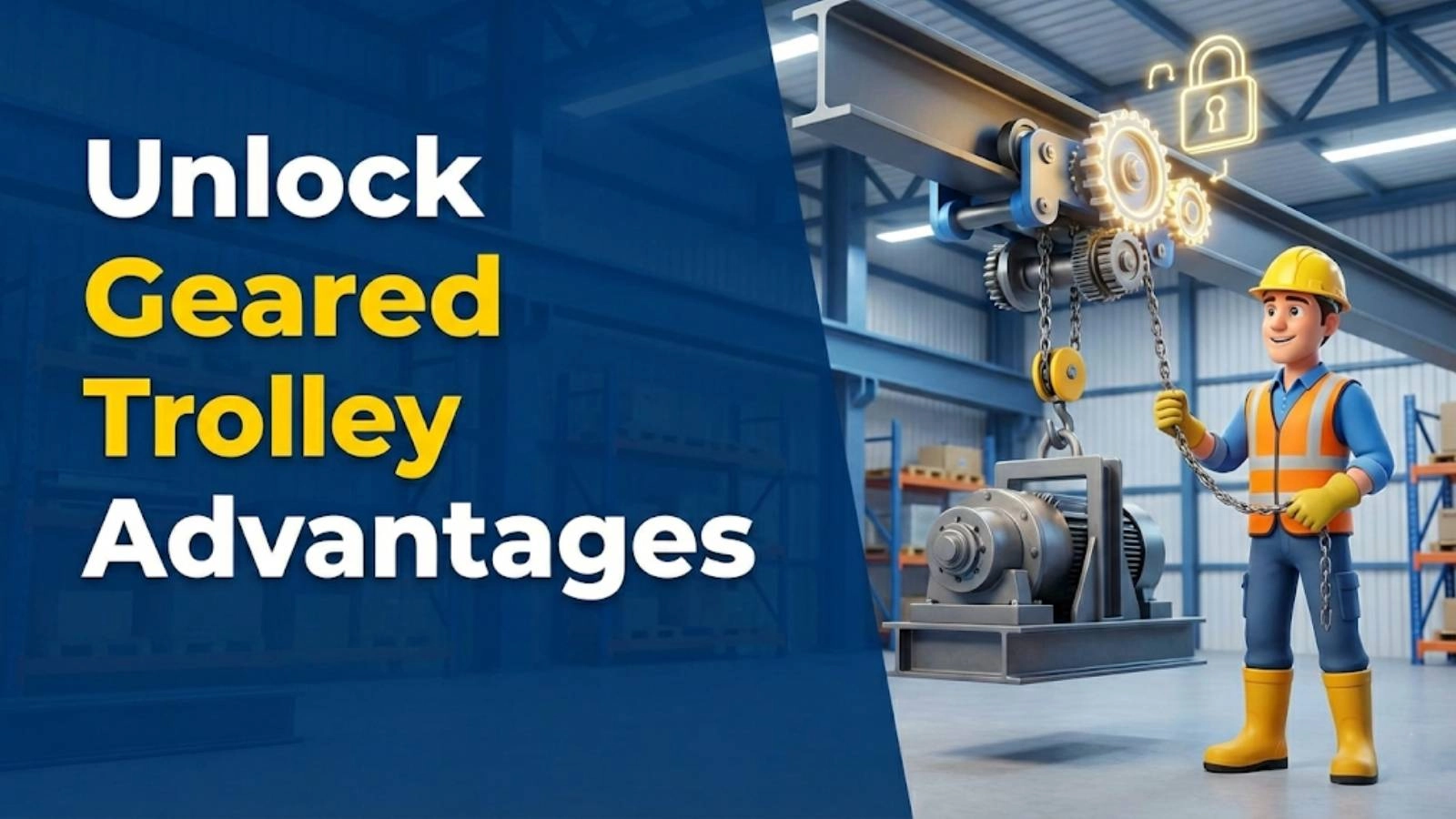
Geared trolleys are indispensable tools in material handling, providing a robust and efficient way to move heavy loads along a beam or track. These trolleys are particularly useful in situations where precision and controlled movement are paramount. Proper load control is essential, not only for the safety of personnel but also for the integrity of the materials being moved. This article will explore common mistakes that can diminish geared trolley benefits and outline how to avoid them. Understanding these pitfalls and implementing preventative measures will help you maximize the advantages of geared trolleys, ensuring a safer and more productive work environment.
1. ✅ Mistake: Overlooking Load Capacity
Understanding the trolley’s maximum load limit.
Every geared trolley has a specific load capacity, which is the maximum weight it can safely handle. This limit is clearly stated on the trolley itself and in the manufacturer’s documentation. Exceeding this limit can lead to catastrophic failures, putting both personnel and materials at risk.
Common mistake: Exceeding the load capacity and the risks involved (e.g., trolley failure, dropped load).
One of the most common and dangerous mistakes is exceeding the load capacity of the geared trolley. This can result in the trolley failing, causing the load to drop unexpectedly. Dropped loads can lead to serious injuries, damage to equipment, and costly downtime. In many of our client facilities here in Jubail, we’ve seen instances where overloaded trolleys have caused significant structural damage to the support beams and surrounding infrastructure.
How to avoid: Regularly check load weights and ensure they are within the trolley’s specified limit.
To avoid overloading, it is crucial to regularly check the weight of the loads being lifted and ensure they are within the trolley’s specified limit. Weighing scales or load cells can be used to accurately determine the weight of the load before it is lifted. Additionally, establish a clear protocol for verifying load weights before each lift to prevent accidental overloads.
Tip: Consider using a safety factor when calculating load capacity.
It’s always a good practice to incorporate a safety factor when calculating load capacity. A safety factor is a multiplier applied to the maximum load to provide a margin of safety. For example, if a trolley has a rated capacity of 1 ton, applying a safety factor of 2 would mean that the working load should not exceed 0.5 tons. This helps to account for unforeseen circumstances or variations in load distribution.
2. ✅ Mistake: Ignoring the Importance of Proper Installation
Common mistake: Improper installation leading to instability.
Improper installation of a geared trolley can significantly compromise its stability and safety. A poorly installed trolley may not sit correctly on the beam, leading to uneven load distribution and increased stress on certain components. This can result in premature wear and tear, reduced load capacity, and an increased risk of failure.
How to avoid: Following the manufacturer’s installation instructions meticulously.
The best way to avoid installation errors is to follow the manufacturer’s installation instructions meticulously. These instructions provide detailed guidance on how to properly assemble and mount the trolley. Pay close attention to torque specifications for fasteners and any specific requirements for beam compatibility.
Checking the trolley’s fit on the beam (flange width, beam size).
Before installation, it is essential to check the trolley’s fit on the beam. Ensure that the flange width and beam size are compatible with the trolley’s specifications. Using a trolley on an incompatible beam can lead to instability and increased stress on the trolley components. This is a frequent issue we’ve observed in workshops, where mismatched equipment leads to avoidable accidents.
Ensuring proper tightening of fasteners.
Proper tightening of fasteners is crucial for maintaining the stability and integrity of the trolley. Use a calibrated torque wrench to tighten fasteners to the specified torque values. Overtightening can damage the fasteners or the trolley components, while undertightening can lead to loosening and instability.
Importance of professional installation.
For complex installations or when dealing with heavy-duty trolleys, it is advisable to seek professional installation services. Professional installers have the expertise and equipment to ensure that the trolley is installed correctly and safely. They can also identify potential issues and provide recommendations for optimizing the installation.
3. ✅ Mistake: Neglecting Regular Inspection and Maintenance
Common mistake: Ignoring wear and tear, leading to unexpected failures.
Ignoring regular inspection and maintenance is a critical mistake that can lead to unexpected failures and safety hazards. Over time, trolleys are subject to wear and tear from continuous use. This can result in damaged or worn wheels, gears, and fasteners, all of which can compromise the trolley’s performance and safety.
How to avoid: Implementing a routine inspection schedule.
To prevent unexpected failures, it is essential to implement a routine inspection schedule. This schedule should include regular visual inspections of the trolley components, as well as functional tests to ensure that the trolley is operating smoothly and safely. The frequency of inspections will depend on the intensity of use and the operating environment.
Checking for damaged or worn wheels, gears, and fasteners.
During inspections, pay close attention to the condition of the wheels, gears, and fasteners. Look for signs of wear, such as cracks, deformation, or excessive play. Worn or damaged parts should be replaced promptly to prevent further damage and potential failures. For many of our clients here in Dammam, we’ve seen that proactive replacement of worn parts significantly reduces downtime and maintenance costs.
Lubricating moving parts to ensure smooth operation.
Lubrication is essential for maintaining the smooth operation of geared trolleys. Regularly lubricate moving parts, such as wheels, gears, and bearings, with an appropriate lubricant. This will reduce friction, prevent wear, and ensure that the trolley operates efficiently.
Replacing worn parts promptly.
Worn parts should be replaced promptly to prevent further damage and potential failures. Keep a stock of common replacement parts on hand to minimize downtime. When replacing parts, use only genuine replacement parts that are designed for the specific trolley model.
4. ✅ Mistake: Using the Wrong Type of Geared Trolley
Different types of geared trolleys and their suitability for different applications (e.g., push, geared, motorized).
Geared trolleys come in various types, each designed for specific applications. Common types include push trolleys, geared trolleys, and motorized trolleys. Push trolleys are manually operated and suitable for light-duty applications where precise positioning is not critical. Geared trolleys use a hand chain to provide more controlled and precise movement. Motorized trolleys are powered by an electric motor and are suitable for heavy-duty applications or where frequent movement is required.
Common mistake: Selecting a trolley that is not designed for the specific task.
Selecting a trolley that is not designed for the specific task is a common mistake that can lead to inefficiency and safety hazards. Using a push trolley for a heavy-duty application can be physically demanding and may not provide the necessary control. Conversely, using a motorized trolley for a light-duty application can be overkill and may not be cost-effective.
How to avoid: Assessing the specific needs of the application (load weight, frequency of use, travel distance) before selecting a trolley.
To avoid selecting the wrong type of trolley, it is essential to assess the specific needs of the application. Consider factors such as load weight, frequency of use, travel distance, and the level of precision required. This will help you determine the most appropriate type of trolley for the job.
5. ✅ Mistake: Failing to Properly Secure the Load
Common mistake: Inadequate load securing methods leading to shifting or dropped loads.
Failing to properly secure the load is a significant safety hazard that can lead to shifting or dropped loads. Inadequate load securing methods can result in the load becoming unstable during movement, increasing the risk of accidents and injuries. It’s essential to use appropriate securing devices and techniques to ensure that the load is safely and securely attached to the trolley.
How to avoid: Using appropriate slings, chains, or other securing devices.
To avoid load securing failures, use appropriate slings, chains, or other securing devices that are rated for the weight and size of the load. Ensure that the securing devices are in good condition and free from defects. Follow the manufacturer’s instructions for proper use and maintenance of the securing devices.
Ensuring the load is evenly distributed and balanced.
Ensure that the load is evenly distributed and balanced before lifting. Uneven load distribution can cause the trolley to tilt or become unstable, increasing the risk of accidents. Use spreader bars or other load-leveling devices to distribute the weight evenly.
Regularly inspecting securing devices for damage.
Regularly inspect securing devices for damage, such as cuts, abrasions, or corrosion. Damaged securing devices should be replaced immediately. Keep a log of inspections and replacements to ensure that securing devices are maintained in good condition.
6. ✅ Mistake: Poor Communication and Coordination During Operation
The importance of clear communication between operators.
Clear communication between operators is crucial for safe and efficient operation of geared trolleys. When multiple operators are involved in a lifting operation, it is essential that they communicate effectively to coordinate their actions and avoid misunderstandings. Poor communication can lead to accidents, especially when moving heavy or awkward loads.
Common mistake: Lack of coordination leading to accidents.
Lack of coordination between operators is a common mistake that can lead to accidents. Without clear communication and coordination, operators may move the trolley in conflicting directions or at different speeds, resulting in collisions or dropped loads. It’s essential to establish clear communication protocols and ensure that all operators are aware of their roles and responsibilities.
How to avoid: Establishing clear hand signals or communication protocols.
To avoid communication errors, establish clear hand signals or communication protocols that all operators understand and follow. Hand signals should be simple, unambiguous, and easily visible. Communication protocols should specify who is responsible for giving instructions, how instructions should be given, and how operators should acknowledge instructions.
Ensuring all personnel are aware of the load’s movement.
Ensure that all personnel in the vicinity are aware of the load’s movement. Use warning signs, barriers, or spotters to keep people away from the load’s path. Operators should also be trained to be aware of their surroundings and to anticipate potential hazards.
7. ✅ Mistake: Not Training Personnel Adequately
Common mistake: Untrained operators making critical errors.
One of the most significant mistakes is failing to provide adequate training to personnel who operate geared trolleys. Untrained operators are more likely to make critical errors that can lead to accidents, injuries, and equipment damage. Proper training is essential for ensuring that operators understand the safe operation procedures and are capable of handling various lifting scenarios.
How to avoid: Providing comprehensive training on the safe operation of geared trolleys.
To avoid accidents caused by untrained operators, provide comprehensive training on the safe operation of geared trolleys. This training should cover topics such as load capacity, proper installation, inspection, and maintenance. It should also include hands-on practice with the trolley and simulated lifting scenarios.
Covering topics such as load capacity, proper installation, inspection, and maintenance.
Training programs should cover all aspects of geared trolley operation, including load capacity limits, proper installation techniques, routine inspection procedures, and maintenance requirements. Operators should understand the importance of each of these areas and how they contribute to safe and efficient operation. Training should also emphasize the geared trolley safety protocols that SSTC advocates in all our client workshops.
“Investing in comprehensive training programs is essential for creating a safe and productive work environment. Trained operators are more likely to follow safe operating procedures and avoid accidents.” – John Smith, Lead Safety Inspector
8. ✅ Mistake: Ignoring Environmental Factors
Common mistake: Failing to consider environmental conditions that can affect trolley performance.
Failing to consider environmental conditions that can affect trolley performance is a common mistake that can lead to reduced efficiency, increased wear and tear, and potential safety hazards. Factors such as exposure to corrosive substances, extreme temperatures, and dusty environments can all impact the operation of geared trolleys.
How to avoid: Protecting trolleys from exposure to corrosive substances or extreme temperatures.
To protect trolleys from environmental damage, take steps to minimize their exposure to corrosive substances or extreme temperatures. Store trolleys in a dry, sheltered environment when not in use. Use protective coatings or covers to shield trolleys from corrosive chemicals. Insulate trolleys from extreme temperatures to prevent damage to components.
Ensuring adequate ventilation in dusty environments.
In dusty environments, ensure adequate ventilation to prevent dust from accumulating on the trolley components. Dust can clog moving parts, reduce lubrication effectiveness, and accelerate wear and tear. Use air filters or other dust control measures to minimize dust accumulation.
Here’s a summary of the top 3 ways to address this mistake:
1. Regular cleaning of the trolley.
2. Use of protective covers.
3. Implementation of dust control measures.
9. ✅ Mistake: Lack of Emergency Preparedness
Common mistake: Not having a plan in place for emergencies.
A critical oversight is not having a plan in place for emergencies involving geared trolleys. Accidents can happen despite the best precautions, and without a well-defined emergency response plan, the consequences can be severe. It’s essential to develop a comprehensive plan that addresses potential hazards and outlines the steps to be taken in the event of an emergency.
How to avoid: Developing an emergency response plan that addresses potential hazards such as dropped loads or trolley failure.
To avoid the chaos and confusion that can occur during an emergency, develop an emergency response plan that addresses potential hazards such as dropped loads or trolley failure. This plan should include procedures for evacuating the area, securing the site, and providing first aid to injured personnel. It should also outline the steps for reporting the incident and investigating the cause.
Conducting regular drills to ensure personnel are familiar with the plan.
Conduct regular drills to ensure that personnel are familiar with the emergency response plan. These drills should simulate various emergency scenarios and allow personnel to practice their roles and responsibilities. Drills will help to identify any weaknesses in the plan and provide opportunities for improvement.
Having readily available emergency equipment.
Ensure that emergency equipment, such as first aid kits, fire extinguishers, and spill containment materials, are readily available in the vicinity of the geared trolley. Train personnel on how to use this equipment and regularly inspect it to ensure that it is in good working order.
| Mistake |
How to Avoid |
Consequences |
| Overlooking Load Capacity |
Regularly check load weights |
Trolley failure, dropped load, injuries |
| Improper Installation |
Follow manufacturer’s instructions |
Instability, reduced load capacity |
| Neglecting Maintenance |
Implement routine inspections |
Unexpected failures, safety hazards |
| Using Wrong Trolley Type |
Assess application needs |
Inefficiency, safety risks |
| Failing to Secure Load |
Use appropriate securing devices |
Shifting loads, dropped loads |
| Poor Communication |
Establish clear communication protocols |
Accidents, collisions |
| Lack of Training |
Provide comprehensive training |
Critical errors, accidents |
| Ignoring Environmental Factors |
Protect from corrosive substances |
Reduced efficiency, wear and tear |
| Lack of Emergency Preparedness |
Develop emergency response plan |
Severe consequences during accidents |
Conclusion
Mastering the use of geared trolleys involves understanding and avoiding common mistakes that can compromise their efficiency and safety. By paying close attention to load capacity, installation procedures, regular maintenance, appropriate trolley selection, load securing methods, clear communication, personnel training, environmental factors, and emergency preparedness, you can unlock the full potential of geared trolleys in your material handling operations. Adhering to these guidelines not only ensures a safer working environment but also enhances productivity and reduces the risk of costly downtime. We are confident that by implementing these best practices, you’ll significantly improve the performance and longevity of your geared trolley systems.
FAQ Section
Q: What is the main advantage of using a geared trolley over a plain trolley?
A: The main advantage of a geared trolley is its ability to provide more precise and controlled movement of loads. The gear mechanism allows for smoother and more accurate positioning compared to plain trolleys, which rely solely on manual pushing or pulling. This geared trolley precision is especially beneficial when handling delicate or sensitive materials.
Q: How often should I inspect my geared trolley?
A: The frequency of inspections depends on the intensity of use and the operating environment. As a general guideline, geared trolleys should be inspected at least monthly. However, in high-use or harsh environments, more frequent inspections may be necessary. Always follow the manufacturer’s recommendations for inspection intervals.
Q: Can I use a geared trolley on any type of beam?
A: No, geared trolleys are designed to be used on specific types of beams that match their flange width and beam size specifications. Using a trolley on an incompatible beam can lead to instability and increased stress on the trolley components. Always check the trolley’s specifications and ensure compatibility with the beam before installation.
Q: What type of lubricant should I use for my geared trolley?
A: The type of lubricant to use will depend on the specific trolley model and the operating environment. Consult the manufacturer’s recommendations for the appropriate lubricant. Generally, a high-quality grease or oil designed for industrial applications is suitable.
Q: How do I determine the load capacity of my geared trolley?
A: The load capacity of a geared trolley is clearly stated on the trolley itself and in the manufacturer’s documentation. Look for a label or marking that indicates the maximum weight the trolley can safely handle. Never exceed this load capacity.
Q: What should I do if I suspect that my geared trolley is damaged?
A: If you suspect that your geared trolley is damaged, immediately remove it from service and tag it for repair. Do not attempt to use a damaged trolley, as this can lead to serious accidents. Contact a qualified technician to inspect and repair the trolley before returning it to service.
Q: Are there specific safety regulations for using geared trolleys?
A: Yes, there are often specific safety regulations for using geared trolleys, depending on the industry and location. Consult your local safety authorities or industry associations for information on applicable regulations. Ensure that all personnel are trained on these regulations and follow them diligently. These geared trolley safety regulations are paramount.
Q: How does temperature affect the operation of a geared trolley?
A: Extreme temperatures can affect the performance of a geared trolley. High temperatures can cause lubricants to thin out, reducing their effectiveness, while low temperatures can cause lubricants to thicken, increasing friction. Protect trolleys from extreme temperatures and use lubricants that are appropriate for the operating temperature range.
Q: What is the role of a manual trolley system in material handling?
A: A manual trolley system offers a cost-effective and flexible solution for material handling in various industrial settings. It is particularly useful for applications where electrical power is not readily available or where precise positioning is required.
Q: What are the geared trolley advantages in a material handling context?
A: Geared trolleys offer several advantages in material handling, including enhanced load control, improved safety, and increased precision compared to plain trolleys. Their gear mechanism allows for smooth and controlled movement, making them ideal for handling heavy or delicate loads. The geared trolley efficiency stems from the mechanical advantage gained.
Q: What is a trolley hoist and how does it work with a geared trolley?
A: A trolley hoist is a lifting device that is mounted on a trolley, allowing it to move horizontally along a beam or track. When used with a geared trolley, the hoist can be precisely positioned over a load, providing controlled and safe lifting and lowering.
Q: What are the benefits of integrating an overhead crane with a geared trolley?
A: Integrating an overhead crane with a geared trolley system provides a comprehensive material handling solution, enabling efficient lifting and horizontal movement of heavy loads within a defined area. This combination enhances productivity, improves safety, and reduces manual labor requirements. This setup significantly improves material handling processes.
Q: In what scenarios would you recommend a geared trolley vs plain trolley?
A: We recommend a geared trolley over a plain trolley when precise load control and positioning are critical, especially when handling heavy or delicate materials. Geared trolleys provide the necessary control and stability to ensure safe and efficient lifting operations, whereas plain trolleys are better suited for lighter loads and less demanding applications. The geared trolley load control is superior.