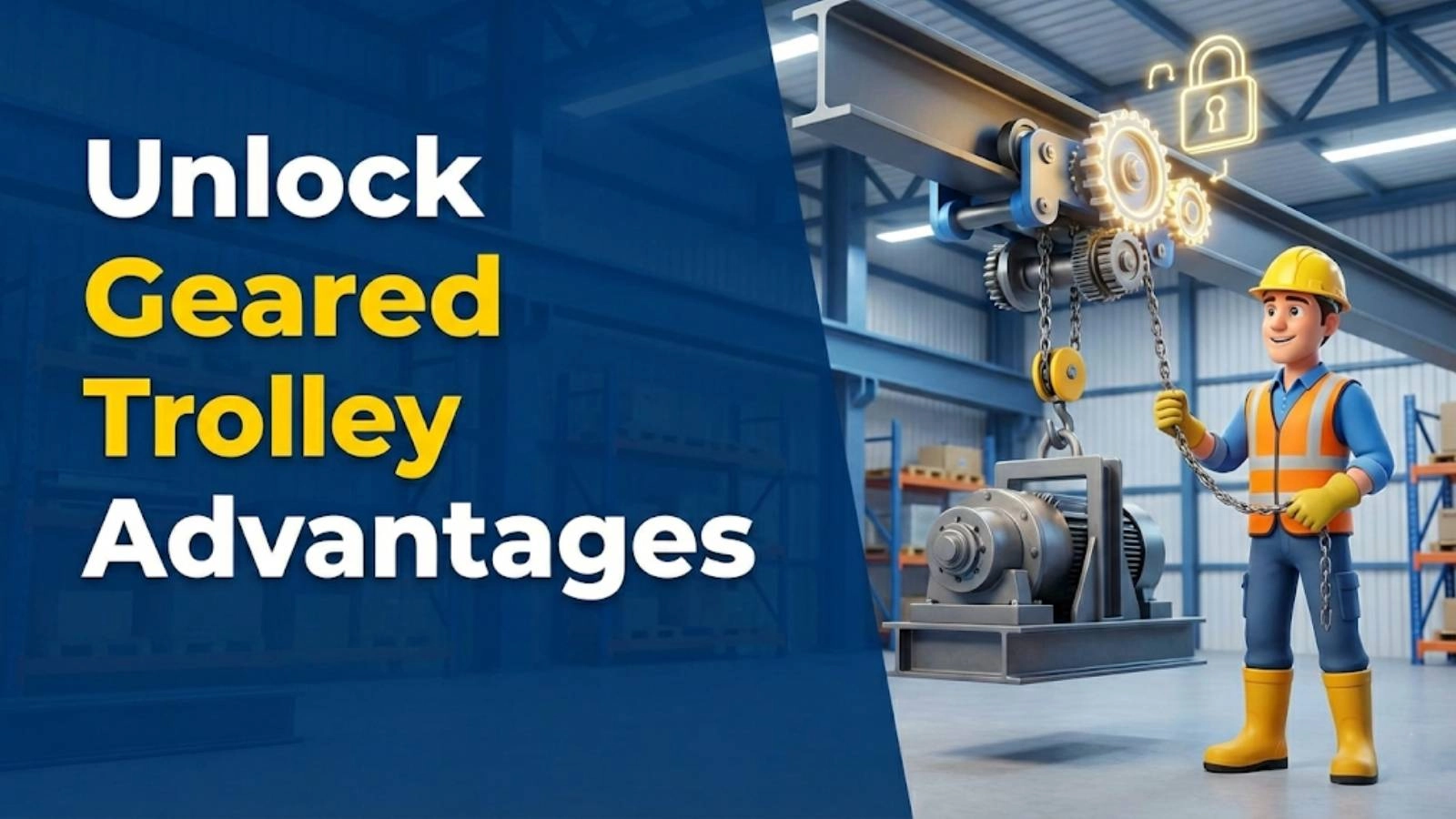
Boost Efficiency with Geared Trolleys
A geared trolley is a fundamental piece of material handling equipment used to move heavy loads horizontally along a beam. Its basic function involves suspending a hoist or lifting mechanism and allowing it to travel smoothly, controlled by a geared mechanism. In essence, it transforms a fixed lifting point into a mobile one, offering greater flexibility in material handling.
Efficient material handling is critical in industries such as manufacturing, construction, and warehousing. In manufacturing, it ensures components are moved smoothly between workstations, reducing production bottlenecks. On construction sites, it enables the precise placement of materials, improving safety and speed. Warehousing benefits from geared trolleys by facilitating the efficient loading and unloading of goods. The benefits of a smooth and properly maintained geared trolley system are numerous and will be discussed in depth throughout this article.
Geared trolleys contribute to improved productivity by reducing manual labor and speeding up material movement. They also significantly reduce physical strain on workers, minimizing the risk of injuries associated with lifting and carrying heavy loads. By enabling controlled and precise movements, they enhance safety and reduce the potential for damage to materials.
This article focuses on providing actionable tips for maximizing geared trolley efficiency. Whether you are a beginner or have some experience with material handling equipment, the insights shared here will help you optimize your operations and ensure your geared trolley performs at its best, saving you time and money.
Understanding Geared Trolley Basics
A geared trolley is more than just a simple moving device; it’s a carefully engineered system. Understanding its components is essential for proper use and maintenance.
The main components include:
- Wheels: These are designed to roll along the beam, providing smooth movement. Typically, they are made of hardened steel to withstand heavy loads and reduce wear.
- Gears: The gear mechanism allows for controlled movement along the beam. It multiplies the force applied by the operator, making it easier to move heavy loads.
- Mounting Bracket: This secures the trolley to the beam. It’s designed to distribute the load evenly and prevent slippage.
- Load Attachment Point: This is where the hoist or other lifting device is attached. It must be strong and secure to ensure the load is safely supported.
The primary difference between geared and plain (push) trolleys lies in their method of operation. A plain trolley, also known as a push trolley, requires manual pushing or pulling to move the load. This can be strenuous, especially with heavy loads. A geared trolley, on the other hand, uses a hand chain and gear system, providing mechanical advantage.
The advantages of a geared trolley are:
- Ease of Movement with Heavy Loads: The gear system makes it easier to move substantial loads with minimal effort.
- Control and Precision: The gear mechanism allows for precise positioning of the load.
- Applications: Geared trolleys are favored in scenarios demanding accurate and controlled movement, or when dealing with extremely heavy loads.
Geared trolleys vary based on their load capacity and the beam size they are designed to accommodate. Load capacities can range from a few hundred pounds to several tons. Beam sizes also vary, with different models designed for specific I-beam or H-beam dimensions. It’s crucial to select a trolley that matches both the load requirements and the beam specifications to ensure safe and efficient operation. For example, a warehouse dealing with steel coils might require a heavy-duty geared trolley system capable of handling several tons, while a smaller workshop might only need a trolley with a 1-ton capacity.
Choosing the Right Geared Trolley for Your Needs
Selecting the right geared trolley is crucial for ensuring both efficiency and safety in your material handling operations. Here’s how to approach the selection process:
Begin by assessing your load requirements. This involves determining the weight, size, and shape of the materials you will be handling. The weight is the most critical factor, as it directly dictates the required load capacity of the trolley. Also, the size and shape of the load can influence the type of lifting device you will need to attach to the trolley. For example, handling large, flat sheets of metal may require a different lifting mechanism than handling cylindrical objects.
Next, determine the appropriate beam size and type for your application. Geared trolleys are designed to fit specific beam sizes, typically I-beams or H-beams. Measure the width and height of your beam to ensure compatibility with the trolley. The beam’s structural integrity is also crucial; ensure it can support the combined weight of the trolley, the hoist, and the maximum load. We once had a client in our Dubai branch who overlooked the beam size, resulting in an unstable setup. Double-checking this specification can save a lot of headaches later on.
Consider the environment in which the trolley will be used. Indoor environments may have different requirements than outdoor settings. Outdoor trolleys should be weather-resistant and protected from corrosion. Temperature can also be a factor, especially in extreme climates. Additionally, if the environment contains corrosive substances, such as chemicals or saltwater, you will need a trolley made from corrosion-resistant materials, such as stainless steel.
Factor in the frequency of use and the required travel distance. If the trolley will be used frequently and for long distances, you may want to consider a model with smoother rolling wheels and a more robust gear mechanism. High-frequency use also means that maintenance intervals will be shorter, so choose a trolley that is easy to maintain.
For complex applications, it’s always best to consult with a qualified professional. Material handling experts can assess your specific needs and recommend the most suitable geared trolley for your application. They can also provide guidance on installation, operation, and maintenance. Ignoring this step can lead to inefficiencies or even safety hazards.
“Choosing the right geared trolley is a critical decision that impacts both productivity and safety. Always prioritize thorough assessment and professional consultation.” – John Smith, Lead Safety Inspector
Step-by-Step Guide to Safe Installation
Installing a geared trolley correctly is essential for safe and efficient operation. This step-by-step guide will walk you through the process.
Before you start, carefully inspect the beam for any damage or defects. Look for cracks, corrosion, or deformations. Ensure the beam is clean and free from debris that could interfere with the trolley’s movement. A damaged or compromised beam can lead to catastrophic failure, so this step is crucial.
Next, properly position the trolley on the beam and secure it. Follow the manufacturer’s instructions for attaching the trolley to the beam. Ensure the mounting brackets are properly aligned and tightened. Use the correct tools and torque specifications to prevent over-tightening or under-tightening. This step is critical to ensure the trolley is securely attached and will not slip or fall off the beam.
Ensure the trolley is aligned correctly and moves smoothly along the beam. Misalignment can cause excessive wear and tear on the wheels and gear mechanism. Test the trolley’s movement by pushing or pulling it along the beam. If it binds or encounters resistance, recheck the alignment and mounting. Smooth movement is essential for efficient operation and preventing overloading.
Check the load capacity markings on the trolley and verify compatibility with the hoist or lifting device you will be using. Never exceed the trolley’s load capacity. Overloading can lead to structural failure and serious accidents. Also, ensure the hoist is properly attached to the trolley and that all connections are secure. Double-check all weight ratings to ensure a safe working environment.
It’s important to emphasize following the manufacturer’s instructions. Each geared trolley model has its own specific installation requirements. Read the instructions carefully and follow them precisely. If you have any questions or doubts, consult with a qualified professional. Ignoring the manufacturer’s instructions can void the warranty and increase the risk of accidents.
Mastering the Art of Smooth Operation
Operating a geared trolley smoothly requires skill and attention to detail. The key is to use the geared mechanism to move loads with precision and control. Avoid using excessive force or jerking the hand chain, as this can damage the gear mechanism and cause the load to swing uncontrollably. Instead, apply steady, even pressure to the hand chain to achieve smooth and controlled movement.
Jerky movements or sudden stops should be avoided at all costs. These actions can create shock loads that exceed the trolley’s load capacity and cause it to fail. Also, sudden stops can cause the load to swing, potentially hitting obstacles or workers. Always start and stop gradually to minimize stress on the trolley and the load.
Maintain a steady pace to prevent overloading the trolley. Moving too quickly can put excessive strain on the gear mechanism and the wheels. A slow and steady pace allows the trolley to distribute the load evenly and maintain stability. This is particularly important when moving heavy or bulky loads.
Clear communication with team members during lifting and moving operations is essential. Use hand signals or verbal commands to coordinate movements and ensure everyone is aware of the load’s position. This helps prevent collisions and ensures the safety of workers. For instance, when our team in Dubai is coordinating a lift, they always designate a spotter to guide the trolley operator.
When maneuvering around obstacles, use caution and plan your route carefully. Avoid sharp turns or sudden changes in direction, as these can cause the load to swing. If necessary, use tag lines to guide the load around obstacles and prevent it from colliding with anything. Always prioritize safety and take your time to navigate challenging situations.
Essential Maintenance for Long-Term Efficiency
Regular maintenance is key to ensuring the long-term efficiency and reliability of your geared trolley. Neglecting maintenance can lead to premature wear and tear, reduced performance, and even safety hazards.
Lubricating the wheels and gears regularly reduces friction and ensures smooth operation. Use a high-quality lubricant specifically designed for gear mechanisms. Apply the lubricant to all moving parts, including the wheels, gears, and bearings. Frequency depends on usage, but a good rule of thumb is to lubricate at least once a month or more often if the trolley is used heavily.
Regularly inspect the trolley for wear and tear. Look for cracks, corrosion, or loose parts. Pay close attention to the wheels, gears, and mounting brackets. If you find any damage, replace the affected components promptly. Ignoring wear and tear can lead to catastrophic failure.
Tightening any loose bolts or fasteners is another essential maintenance task. Loose bolts can compromise the trolley’s structural integrity and lead to instability. Use a torque wrench to tighten the bolts to the manufacturer’s specifications. This ensures they are tight enough to hold securely but not so tight that they strip the threads.
Replace worn or damaged components promptly. Don’t wait until a part fails completely before replacing it. Worn parts can put additional stress on other components and accelerate wear and tear. Use only genuine replacement parts from the manufacturer to ensure compatibility and reliability.
Keeping the trolley clean and free from debris is also important. Dirt and debris can accumulate on the wheels and gears, increasing friction and reducing performance. Use a brush or cloth to clean the trolley regularly. Avoid using harsh chemicals that could damage the trolley’s finish or components.
“Regular maintenance is the cornerstone of geared trolley efficiency. A well-maintained trolley operates smoothly, safely, and reliably for years to come.” – John Smith, Lead Safety Inspector
Optimizing Your Workspace for Geared Trolley Use
Optimizing your workspace for geared trolley use can significantly enhance efficiency and safety.
Ensuring adequate headroom and clearance for lifting operations is paramount. Before installing a geared trolley, assess the available headroom and clearance to ensure there is enough space to lift and move loads safely. Insufficient headroom can cause collisions and damage to the trolley, the load, or the building.
Organizing the workspace to minimize obstacles and potential hazards is another important step. Remove any unnecessary equipment or materials that could obstruct the trolley’s path. Clear pathways allow for smooth and efficient movement of loads. Also, ensure the floor is level and free from tripping hazards.
Implementing clear pathways for trolley movement is essential for preventing collisions and ensuring the safety of workers. Use floor markings or signage to designate trolley routes. This helps to keep the workspace organized and prevents workers from inadvertently stepping into the trolley’s path.
Providing proper lighting improves visibility and reduces the risk of accidents. Adequate lighting allows workers to see the trolley, the load, and any potential hazards clearly. Install additional lighting fixtures if necessary to ensure the workspace is well-lit.
Storing materials in a way that facilitates easy access and handling can also improve efficiency. Organize materials by type and size, and store them in a location that is easily accessible to the trolley. This reduces the time required to retrieve and move materials.
Safety First: Preventing Accidents and Injuries
Safety should always be the top priority when operating geared trolleys. Preventing accidents and injuries requires a comprehensive approach that includes proper training, equipment maintenance, and adherence to safety procedures.
Always wear appropriate personal protective equipment (PPE), such as gloves and safety glasses. Gloves protect your hands from cuts and abrasions, while safety glasses protect your eyes from flying debris. Additional PPE may be required depending on the specific task and the environment.
Never exceed the trolley’s load capacity. Overloading can lead to structural failure and serious accidents. Always check the load capacity markings on the trolley and ensure the load is within the specified limit. If you are unsure about the weight of the load, use a scale to weigh it before lifting.
Avoid lifting loads over people or in areas with pedestrian traffic. This is a fundamental safety rule that should never be violated. If it is necessary to lift a load in an area with pedestrian traffic, use barricades or warning signs to keep people away from the area.
Conduct pre-operation inspections to identify potential safety hazards. Before each use, inspect the trolley for any signs of damage or wear and tear. Check the wheels, gears, mounting brackets, and load attachment point. If you find any problems, do not use the trolley until it has been repaired.
Train employees on proper geared trolley operation and safety procedures. Training should cover topics such as load capacity, lifting techniques, hazard identification, and emergency procedures. Employees should also be trained on how to inspect the trolley and identify potential problems.
Implementing a lockout/tagout procedure for maintenance and repairs is crucial. Before performing any maintenance or repairs on the trolley, disconnect it from the power source (if applicable) and lock out the controls to prevent accidental operation. This ensures the safety of workers performing the maintenance.
Troubleshooting Common Geared Trolley Problems
Even with proper maintenance, geared trolleys can experience problems from time to time. Troubleshooting these issues promptly can prevent further damage and downtime.
If the trolley is difficult to move, check the lubrication, alignment, and beam condition. Lack of lubrication can cause excessive friction and make it difficult to move the trolley. Misalignment can also cause binding and resistance. And, a damaged or corroded beam can interfere with the trolley’s movement.
If the trolley is making unusual noises, inspect for worn or damaged parts. Unusual noises can indicate a problem with the wheels, gears, or bearings. Replace any worn or damaged parts promptly. Ignoring these noises can lead to more serious problems.
If the trolley is slipping on the beam, verify proper installation and beam compatibility. Slippage can occur if the trolley is not properly installed or if the beam is not the correct size or type. Recheck the installation and ensure the trolley is compatible with the beam.
If the load is not lifting smoothly, check the hoist functionality and load distribution. A malfunctioning hoist can cause jerky or uneven lifting. Also, an improperly distributed load can cause the trolley to tilt or bind. Ensure the hoist is functioning properly and the load is evenly distributed.
Addressing these issues quickly can prevent further damage and downtime. Small problems can quickly escalate into larger, more expensive ones if they are not addressed promptly. By troubleshooting common problems early, you can keep your geared trolley operating efficiently and safely.
Measuring and Monitoring Geared Trolley Performance
Measuring and monitoring geared trolley performance provides valuable insights into the efficiency and effectiveness of your material handling operations. By tracking key metrics, you can identify areas for improvement and optimize your processes.
Tracking the number of lifts per day or week can provide a good indication of the trolley’s utilization rate. A low utilization rate may indicate that the trolley is not being used efficiently or that there are bottlenecks in the material handling process. A high utilization rate may indicate that the trolley is being overused and may require more frequent maintenance.
Monitoring the time required to complete lifting tasks can help identify inefficiencies in the lifting process. If lifting tasks are taking longer than expected, it may be due to factors such as poor lighting, cluttered workspaces, or inadequate training. By identifying and addressing these issues, you can improve the efficiency of the lifting process.
Calculating the overall efficiency of material handling operations can provide a comprehensive view of the performance of your geared trolley system. Efficiency can be calculated by dividing the total output (e.g., number of units moved) by the total input (e.g., time or resources expended). A low efficiency rating may indicate that there are significant problems with the material handling process.
Identifying areas for improvement and implementing corrective actions is an ongoing process. By analyzing the data collected from measuring and monitoring geared trolley performance, you can identify areas where improvements can be made. Implement corrective actions to address these issues and track the results to ensure they are effective.
Using data to justify investments in new or upgraded equipment can help you make informed decisions about your material handling equipment. By demonstrating the potential return on investment, you can justify the cost of new or upgraded equipment.
Conclusion: Recap and Next Steps
In conclusion, optimizing geared trolley efficiency is crucial for enhancing productivity, reducing strain, and ensuring safety in material handling operations. We’ve covered everything from understanding the basics and choosing the right trolley to mastering smooth operation, essential maintenance, workspace optimization, and safety protocols. Remember, a well-maintained and properly operated geared trolley can significantly improve your material handling processes.
By implementing the tips and techniques discussed in this article, you can maximize the performance of your geared trolley and minimize the risk of accidents and injuries. Embrace a proactive approach to maintenance, safety, and optimization, and you’ll see a noticeable improvement in your material handling operations.
We at Safe and Secure Trading Company are dedicated to providing you with the best solutions for your material handling needs, and we are confident you’ll see noticeable improvements in your operations using the methods outlined above.
FAQ Section
Q: How often should I lubricate my geared trolley?
A: Lubricate your geared trolley at least once a month, or more frequently if it’s used heavily. Regular lubrication reduces friction and ensures smooth operation.
Q: What type of lubricant should I use for my geared trolley?
A: Use a high-quality lubricant specifically designed for gear mechanisms. Avoid using general-purpose lubricants, as they may not provide adequate protection.
Q: How do I know if my geared trolley is overloaded?
A: Check the load capacity markings on the trolley and ensure the load is within the specified limit. If you are unsure about the weight of the load, use a scale to weigh it before lifting. Also, if the trolley struggles to move or makes unusual noises, it may be overloaded.
Q: What should I do if I find damage to my geared trolley?
A: Replace the affected components promptly. Don’t wait until a part fails completely before replacing it. Worn parts can put additional stress on other components and accelerate wear and tear.
Q: How can I prevent accidents when using a geared trolley?
A: Always wear appropriate personal protective equipment (PPE), never exceed the trolley’s load capacity, avoid lifting loads over people, and conduct pre-operation inspections. Also, ensure employees are properly trained on geared trolley operation and safety procedures.
Q: What is a push trolley?
A: A push trolley, also known as a plain trolley, requires manual pushing or pulling to move the load. This contrasts with a geared trolley, which utilizes a hand chain and gear system for mechanical advantage, making it easier to move heavy loads. Push trolleys are suitable for lighter loads and situations where precision isn’t critical.
Q: How do I choose the right geared trolley for my specific beam type?
A: Measure the width and height of your beam to ensure compatibility with the trolley. Geared trolleys are designed to fit specific beam sizes, typically I-beams or H-beams. Consult the manufacturer’s specifications to ensure the trolley is compatible with your beam type.
Q: What are the main benefits of using a geared trolley over a push trolley?
A: The main benefits include ease of movement with heavy loads, enhanced control and precision, and reduced physical strain on workers. Geared trolleys are ideal for applications requiring accurate positioning of heavy materials.
Q: How can I improve the efficiency of my geared trolley system?
A: Optimize your workspace to minimize obstacles, implement clear pathways for trolley movement, provide proper lighting, and store materials in a way that facilitates easy access and handling. Also, regularly measure and monitor geared trolley performance to identify areas for improvement.
Q: What should I do if my geared trolley is slipping on the beam?
A: Verify proper installation and beam compatibility. Slippage can occur if the trolley is not properly installed or if the beam is not the correct size or type. Recheck the installation and ensure the trolley is compatible with the beam. Also, ensure the beam surface is clean and free from debris.
Q: What kind of material handling equipment is best suited for my warehouse?
A: The best material handling equipment depends on your specific needs, including the weight and size of materials, the frequency of use, and the environment. Geared trolleys, manual trolley hoists, and overhead trolley systems are suitable for many applications, but it’s best to consult with a qualified professional to determine the best solution for your warehouse.
Q: What is involved in geared trolley maintenance?
A: Geared trolley maintenance involves regularly lubricating the wheels and gears, inspecting the trolley for wear and tear, tightening any loose bolts or fasteners, replacing worn or damaged components promptly, and keeping the trolley clean and free from debris.
Q: What safety precautions should I take when using geared trolley systems?
A: Always wear appropriate personal protective equipment (PPE), never exceed the trolley’s trolley load capacity, avoid lifting loads over people, conduct pre-operation inspections, and train employees on proper geared trolley operation and safety procedures.
Q: Are there different types of hand geared trolley systems?
A: Yes, there are different types based on load capacity, beam size compatibility (for I-beams or H-beams), and material construction (e.g., for corrosive environments). Choose one suited to your specific application.