Lever Block vs. Chain Block: The Ultimate Guide
Introduction: The Lifting Dilemma – Lever Block vs. Chain Block
Setting the Scene: A Story of Heavy Lifting
Imagine a construction worker, let’s call him Ali, on a bustling site in Riyadh. He needs to lift a heavy steel beam into place, but space is limited, and precision is key. He’s faced with a choice: a lever hoist or a chain hoist. Which one will get the job done safely and efficiently? The construction industry, and many others, frequently face this exact scenario, highlighting the critical need for reliable lifting equipment.
Introducing the Contenders: Lever Blocks and Chain Blocks
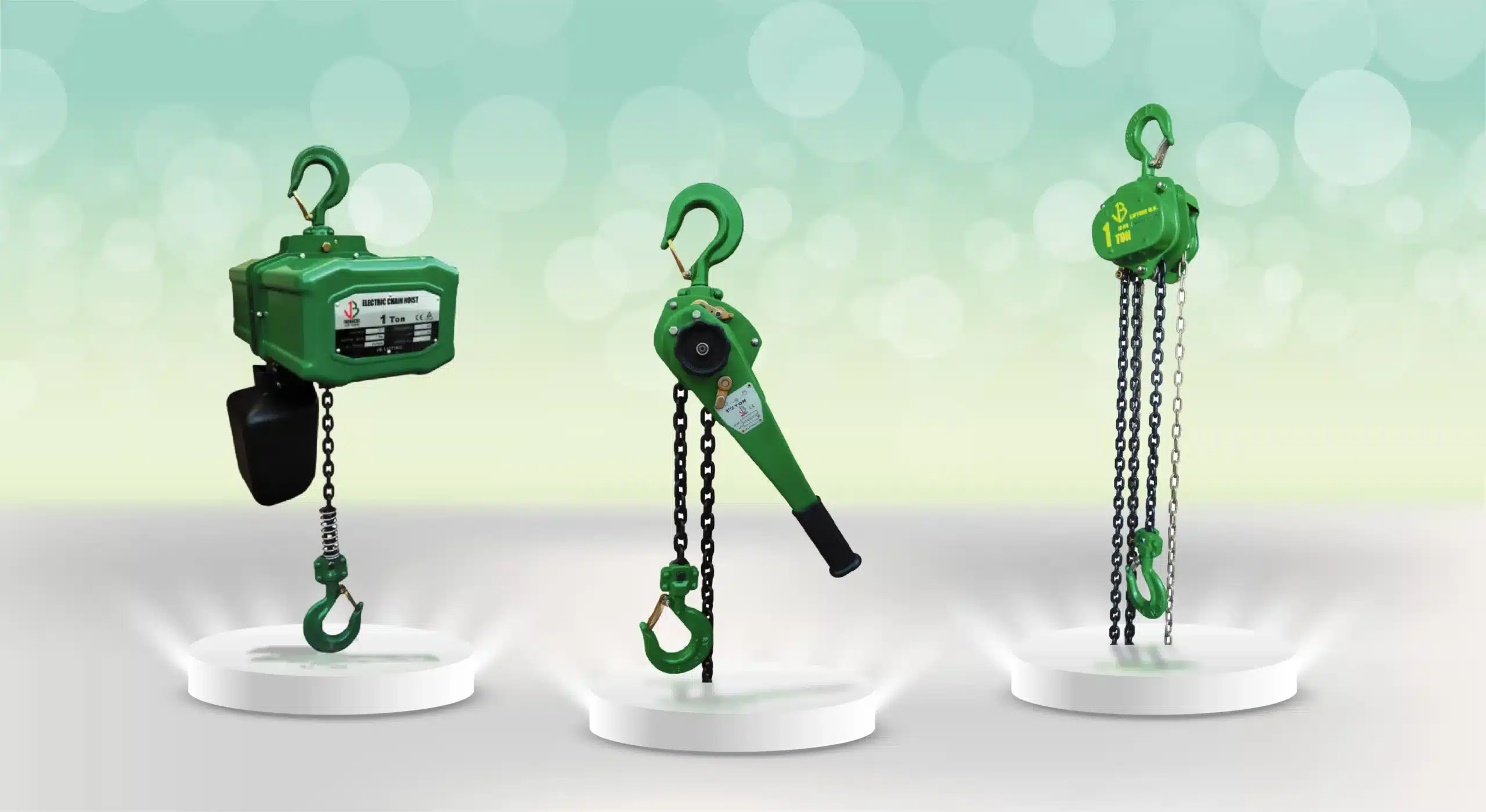
Lever blocks and chain blocks are both essential pieces of lifting equipment used to manually lift heavy loads. Both serve the same basic purpose: to provide a mechanical advantage that allows a single person to lift objects far heavier than they could manage alone. The key difference lies in their mechanism and suitability for different applications. A lever block utilizes a lever and ratchet system, while a chain block employs a gear system. These different designs lend themselves to different strengths and weaknesses.
Why This Comparison Matters: Choosing the Right Tool for the Job
Selecting the correct hoisting device, whether it’s a lever hoist or a chain hoist, is paramount for safety and efficiency in any lifting operation. Using the wrong tool can lead to accidents, equipment damage, and project delays. Understanding the nuances of each type of hoist is crucial for making informed decisions. Failing to choose the right tool can lead to scenarios where the load isn’t lifted correctly, or worse, the equipment fails, leading to a potential accident. Here at Safe and Secure Trading Company, we prioritize your safety above all else.
Deep Dive: Understanding Lever Blocks
How Lever Blocks Work: The Mechanics Explained
A lever block, also sometimes referred to as a come along, operates using a simple yet effective lever and ratchet mechanism. The operator pulls on a short lever arm, which engages a ratchet wheel connected to the load chain. Each pull advances the chain, incrementally lifting the load. This mechanical advantage allows the operator to lift heavy objects with minimal effort. The mechanical advantage is directly related to the length of the lever arm. A longer arm requires less force, but also lifts the load a shorter distance per pull.
Advantages of Lever Blocks: Portability and Precision
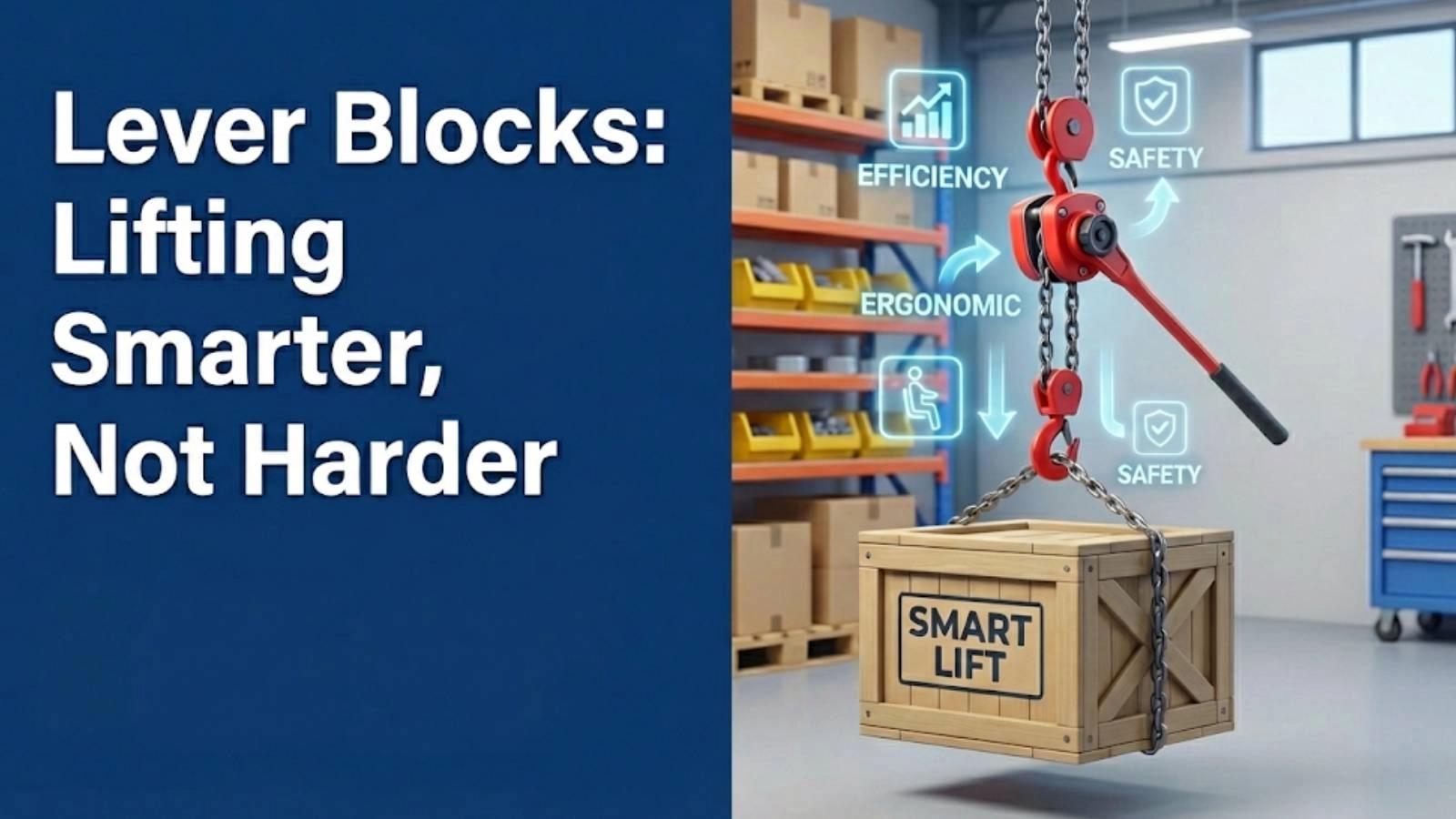
One of the primary advantages of lever blocks is their compact size and lightweight design. This makes them highly portable and easy to maneuver in tight spaces. They are particularly well-suited for applications where precision is required, such as aligning steel beams or positioning machinery. For many of our clients here in Dammam, we’ve seen that the lever block’s portability is a crucial factor in their choice.
Disadvantages of Lever Blocks: Lifting Capacity and Reach
While lever blocks excel in portability and precision, they have limitations in maximum load capacity compared to chain blocks. They are typically used for lighter loads and shorter lift heights. The shorter reach is a direct consequence of the lever mechanism, which is less efficient for extended vertical lifts.
Deep Dive: Understanding Chain Blocks
How Chain Blocks Work: The Power of Gears
Chain blocks, also known as manual chain hoists, utilize a gear system to amplify lifting force. The operator pulls on a hand chain, which rotates a series of gears. These gears are designed with specific gear ratios, multiplying the force applied by the operator. This amplified force is then transferred to the load chain, lifting the heavy object. The more complex the gear system, the greater the mechanical advantage and the heavier the load that can be lifted.
Advantages of Chain Blocks: Heavy Lifting and Extended Reach
Chain blocks are renowned for their ability to lift significantly heavier loads compared to lever blocks. Their robust gear system and durable chain allow them to handle demanding lifting tasks. They also offer a longer reach, making them ideal for high-elevation lifting applications. In our experience at SSTC, we’ve consistently observed that chain blocks are the go-to choice for tasks involving very heavy materials and significant lift heights.
Disadvantages of Chain Blocks: Size and Portability
The trade-off for their heavy-lifting capability is their greater weight and bulkier design. Chain blocks are less convenient for transporting and maneuvering in confined areas. Their size can make them less practical for jobs requiring frequent relocation or operation in tight spaces. Therefore, it’s vital to consider these limitations based on the project environment.
Feature-by-Feature Face-Off: Lever Block vs. Chain Block
Lifting Capacity: Which One Can Handle the Load?
When comparing lever block vs chain block, lifting capacity is a crucial factor. Typically, a lever block might handle up to 1 to 1.5 tons, while a chain block can easily manage 3 tons or more. Determining the required lifting capacity for a project involves accurately assessing the weight of the heaviest load and adding a safety margin. Overloading a hoist is a serious safety hazard and must be avoided at all costs. We always advise our clients to choose a hoist with a capacity that exceeds their expected maximum load.
Lift Height/Reach: Getting to the Top
The standard chain length of a chain block is typically longer than the lever arm length of a lever block, resulting in a greater lift height. The impact of lift height on overall efficiency should not be underestimated. A longer lift height can require more time and effort, particularly with a lever block where the lifting action is incremental and more repetitive.
Portability and Weight: Ease of Transportation
A significant difference between a lever block vs chain block is the portability and weight. A 1-ton lever block is considerably lighter and more compact than a 1-ton chain block. This difference is crucial in scenarios where the hoist needs to be frequently moved or used in confined spaces. The ease of transportation can directly impact the speed and efficiency of a project, especially in construction or maintenance settings.
Precision and Control: Accuracy in Positioning
Lever blocks generally offer greater precision and control for delicate tasks. The incremental lifting action of the lever allows for fine adjustments and accurate positioning. Chain blocks, while powerful, may require more careful operation to achieve the same level of precision. The choice depends on the specific needs of the task; if accuracy is paramount, a lever block is often the better choice.
Maintenance: Keeping Your Hoist in Top Condition
Both lever blocks and chain blocks require regular maintenance to ensure safe and reliable operation. Maintenance includes inspecting the chain for wear and damage, lubricating moving parts, and checking the brake mechanism. The cost and frequency of maintenance tasks can vary depending on the make and model of the hoist. Proper maintenance extends the lifespan of the equipment and prevents costly repairs or replacements.
Here’s a quick comparison table to highlight the key differences:
| Feature |
Lever Block |
Chain Block |
| Lifting Capacity |
Typically lower (up to 1-1.5 tons) |
Typically higher (3 tons or more) |
| Lift Height/Reach |
Shorter |
Longer |
| Portability and Weight |
More portable, lighter |
Less portable, heavier |
| Precision and Control |
Higher precision |
Requires more careful operation for precision |
| Maintenance |
Regular inspection and lubrication |
Regular inspection and lubrication |
| Ideal Applications |
Tight spaces, precision work, lighter loads |
Heavy lifting, high-elevation lifting |
Safety First: Using Lever Blocks and Chain Blocks Responsibly
Common Safety Hazards: Avoiding Accidents
Using lever blocks and chain blocks safely requires awareness of potential hazards. Common dangers include overloading the hoist, improper rigging techniques, and neglecting pre-use inspections. Always ensure the load is securely attached and balanced before lifting. It is also important to keep the area clear of personnel during lifting operations. Overloading can cause the hoist to fail, dropping the load and potentially causing serious injury or damage.
Pre-Use Inspection Checklist: Ensuring Safe Operation
Before each use, a thorough inspection of both lever and chain blocks is essential. This checklist should include:
- ✅ Checking the chain for wear, kinks, or damage.
- ✅ Inspecting the hooks for cracks or deformation.
- ✅ Ensuring the brake mechanism is functioning properly.
- ✅ Verifying that all labels and markings are legible.
- ✅ Lubricating moving parts as needed.
Failing to perform these checks can lead to equipment failure and accidents.
Proper Operating Procedures: Step-by-Step Guide
Operating lever blocks and chain blocks safely requires following proper procedures.
- ✅ Ensure the load is within the hoist’s rated capacity.
- ✅ Use appropriate rigging hardware and techniques.
- ✅ Maintain a firm grip on the lever or hand chain.
- ✅ Lift the load smoothly and avoid sudden jerks.
- ✅ Never leave a suspended load unattended.
- ✅ Lower the load in a controlled manner.
Real-World Applications: Where Each Hoist Shines
Lever Blocks in Action: Ideal Scenarios
Lever blocks excel in situations demanding portability and precision.
- Construction: Aligning steel beams, installing pipes in tight spaces.
- Automotive Repair: Engine removal and installation, chassis alignment.
- Landscaping: Moving heavy stones, positioning trees with accuracy.
- Maintenance: Repairing machinery in areas with limited access.
Chain Blocks in Action: Ideal Scenarios
Chain blocks are the go-to choice for heavy lifting and extended reach.
- Manufacturing: Lifting heavy machinery, assembling large components.
- Warehousing: Loading and unloading trucks, stacking heavy pallets.
- Shipbuilding: Lifting and positioning hull sections during construction.
- Mining: Handling heavy equipment and materials in underground operations.
- Construction: Lifting materials to upper floors in high-rise projects.
Making the Right Choice: Factors to Consider
Load Weight and Frequency: Matching the Hoist to the Task
Choosing the correct hoist starts with accurately assessing the load weight and considering the frequency of lifting operations. For infrequent, lighter lifts in confined spaces, a lever block might be ideal. For frequent, heavy lifts in more open environments, a chain block is likely the better choice. Selecting a hoist that is appropriately matched to the task ensures both safety and efficiency.
Working Environment: Space Constraints and Accessibility
The working environment plays a significant role in hoist selection. If space is limited and accessibility is challenging, a portable lever block offers a clear advantage. In more open environments with ample headroom, a chain block can be more practical, especially for heavier loads. Evaluating these factors is critical for optimizing workflow and minimizing potential hazards.
Budget Considerations: Balancing Cost and Performance
The initial cost of a lever block vs chain block can vary, with chain blocks generally being more expensive due to their greater lifting capacity and more robust construction. However, long-term maintenance costs should also be factored into the decision. A cheaper hoist that requires frequent repairs may end up costing more in the long run. At Safe and Secure Trading Company, we can help you evaluate these factors to make an informed investment.
Expert Opinions and Insights
Quotes from Industry Professionals: What the Experts Say
> “Chain blocks are our workhorses in the factory. They handle the heavy lifting day in and day out, keeping our production line moving smoothly.” – Maria Rodriguez, Manufacturing Engineer
Case Studies: Real-World Examples of Hoist Selection
Consider a recent construction project in Jeddah where a contractor needed to install HVAC units on the roof of a building. Due to limited access and tight spaces, they opted for lever blocks to lift and position the units with precision. This choice allowed them to complete the installation safely and efficiently, minimizing delays and ensuring accurate placement. Conversely, a manufacturing plant in Jubail relies on chain blocks to lift heavy machinery components during assembly. The high lifting capacity and extended reach of the chain blocks are essential for their operations.
Industry Standards and Regulations: Ensuring Compliance
Adhering to industry standards and regulations is paramount when using lifting equipment. OSHA and ASME provide comprehensive guidelines for hoist safety, including inspection procedures, operating requirements, and training recommendations. Compliance with these standards ensures a safe working environment and minimizes the risk of accidents. Always consult the relevant regulations and seek professional guidance to ensure your lifting operations meet the required safety standards.
Conclusion: The Final Verdict
Lever Block or Chain Block: Which One Wins?
In the lever block vs chain block debate, there is no single winner. The best choice depends entirely on the specific requirements of the task at hand. Both types of hoists offer unique advantages and disadvantages. Understanding these nuances is crucial for making an informed decision. Lever blocks excel in portability, precision, and confined spaces, while chain blocks shine in heavy lifting and extended reach applications.
Recommendations Based on Project Type: Tailoring the Choice
For light-duty, portable applications requiring precision, we recommend lever blocks. Their compact size and ease of use make them ideal for tasks such as aligning steel beams or installing pipes in tight spaces. For heavy-duty, high-capacity applications requiring extended reach, we recommend chain blocks. Their robust construction and powerful lifting capability make them well-suited for tasks such as lifting heavy machinery or loading and unloading trucks.
Final Thoughts: Investing in the Right Lifting Solution
Choosing the right lifting solution is an investment in safety, efficiency, and productivity. By carefully considering the factors discussed in this guide, you can make an informed decision that optimizes your lifting operations and minimizes potential risks. We at Safe and Secure Trading Company are committed to providing you with the best lifting equipment and expert guidance to meet your specific needs.
FAQ Section
Q: What is the main difference between a lever block and a chain block?
A: The main difference lies in their lifting mechanism. A lever block uses a lever and ratchet system, while a chain block uses a gear system. This difference affects their lifting capacity, portability, and suitability for different applications.
Q: Which type of hoist is better for lifting heavy loads?
A: Chain blocks are generally better for lifting heavy loads due to their robust gear system and higher lifting capacity.
Q: Which type of hoist is more portable?
A: Lever blocks are more portable due to their compact size and lighter weight.
Q: What safety precautions should I take when using a lever block or chain block?
A: Always inspect the hoist before each use, ensure the load is within the rated capacity, use proper rigging techniques, and keep the area clear of personnel.
Q: How often should I maintain my lever block or chain block?
A: Regular maintenance, including inspection and lubrication, should be performed frequently, ideally before each use or at least monthly, depending on usage.
Q: Can I use a lever block or chain block to lift people?
A: No, lever blocks and chain blocks are designed for lifting materials only. They should never be used to lift people.
Q: What are the common signs of wear and tear on a lever block or chain block?
A: Common signs include chain wear, hook damage, brake slippage, and difficulty operating the lever or hand chain.
Q: What is the maximum lifting capacity of a typical lever block?
A: A typical lever block has a maximum lifting capacity of around 1 to 1.5 tons.
Q: What is the maximum lifting capacity of a typical chain block?
A: A typical chain block can lift 3 tons or more.
Q: Where can I find reliable lever blocks and chain blocks?
A: Safe and Secure Trading Company offers a wide selection of high-quality lever blocks and chain blocks to meet your lifting needs.