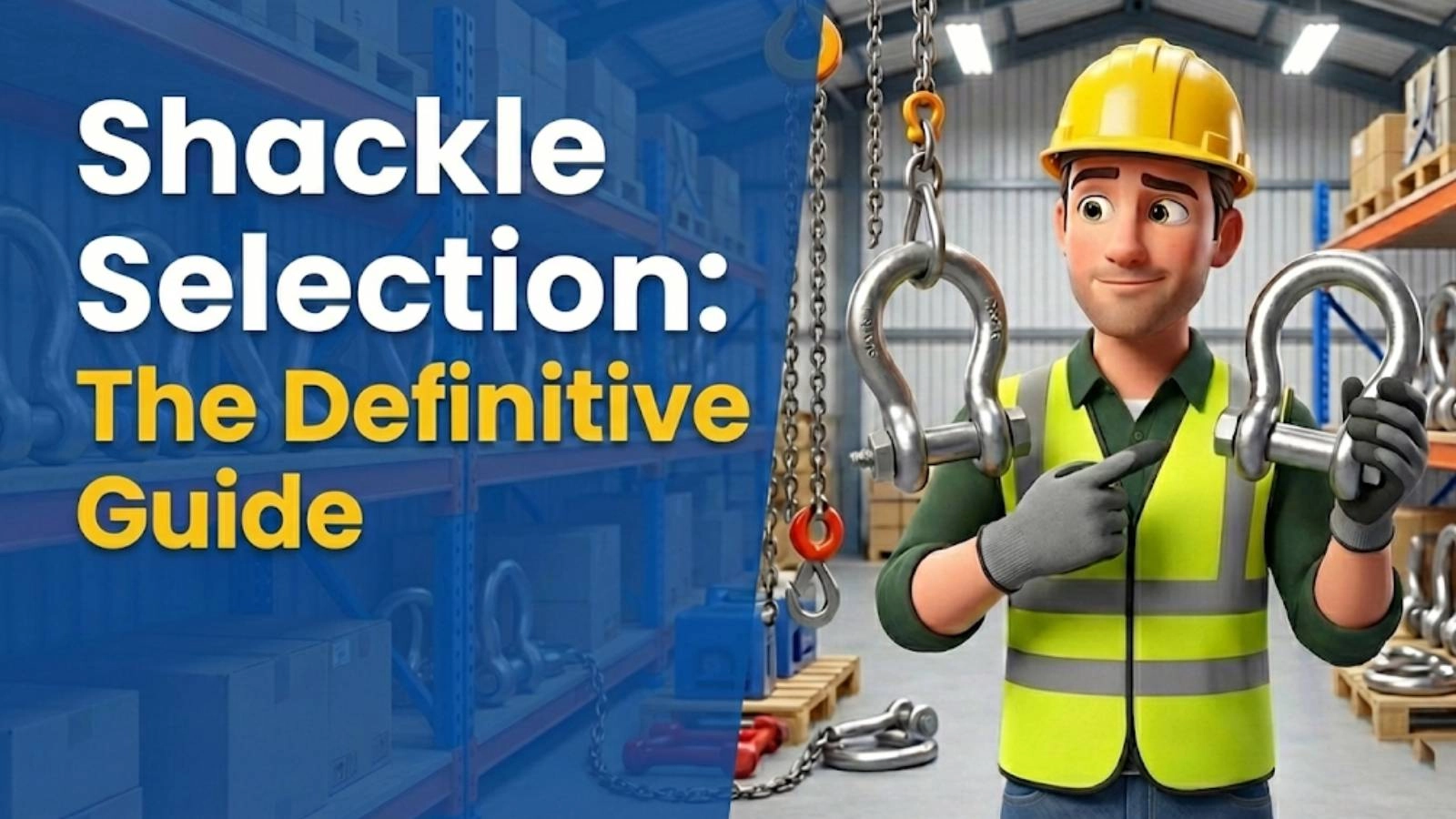
Lifting shackle replacement is a critical aspect of ensuring safety in various industries, including construction, manufacturing, and transportation. These seemingly small components play a vital role in securing heavy loads during lifting operations. A failure in a lifting shackle can lead to catastrophic consequences, including severe injuries, fatalities, and significant property damage. Therefore, understanding when and how to replace shackles is paramount for maintaining a safe working environment.
The Critical Importance of Lifting Shackle Integrity
Why Lifting Shackles Are Essential for Safe Operations
Lifting shackles are fundamental components in rigging and lifting operations, acting as the primary link between the load and the lifting equipment. They facilitate the secure attachment of slings, chains, and other rigging hardware to the load being lifted. Without properly functioning shackles, the entire lifting operation is compromised.
They connect loads to lifting devices, ensuring secure attachment, providing a reliable connection point that can withstand the intended load. Shackles distribute the weight evenly, reducing the risk of stress concentrations that could lead to failure.
Failure can lead to catastrophic accidents, injuries, and fatalities. These accidents not only cause immense human suffering but also result in substantial financial losses and legal liabilities. Safe and Secure Trading Company (SSTC) prioritizes the safe usage of lifting equipment.
The High Cost of Shackle Failure: A Real-World Perspective
The consequences of shackle failure extend far beyond the immediate physical damage. Understanding these costs can help organizations prioritize shackle maintenance and replacement.
Financial losses due to damaged equipment and downtime are a significant concern. When a shackle fails, the load it was supporting can fall, damaging the load itself, the lifting equipment, and surrounding structures. The resulting downtime for repairs and investigations can halt operations, leading to lost productivity and revenue.
Legal and regulatory repercussions for safety violations are also a major consideration. Regulatory bodies like OSHA impose strict penalties for safety violations, including those related to lifting equipment. A shackle failure that results in injury or property damage can lead to hefty fines, legal battles, and increased scrutiny from regulatory agencies. We at SSTC understand the complex environment that companies must navigate.
Reputational damage and loss of client trust can also significantly impact a company’s bottom line. A major accident caused by shackle failure can tarnish a company’s reputation, leading to a loss of client trust and future business opportunities. Maintaining a strong safety record is crucial for building and preserving a positive reputation.
Increased insurance premiums and liabilities are yet another financial burden that can arise from shackle failures. Insurance companies assess risk based on a company’s safety record. A history of accidents, including those caused by faulty lifting equipment, can lead to higher premiums or even policy cancellation.
Understanding Shackle Wear and Damage: Identifying the Risks
Common Types of Shackle Damage
Several types of damage can compromise the integrity of a lifting shackle. Recognizing these common issues is essential for effective inspection and timely replacement.
Corrosion: Rust and oxidation weakening the metal is a pervasive threat. Corrosion occurs when the shackle’s metal reacts with oxygen and moisture in the environment, leading to rust and oxidation. This weakens the metal, reducing its ability to withstand the intended load.
Deformation: Bending or distortion due to overloading can visibly alter the shackle’s shape. Deformation is a sign that the shackle has been subjected to excessive force, which can compromise its structural integrity. Even slight bending or distortion can indicate significant internal damage.
Cracks: Surface or internal cracks compromising structural integrity are often difficult to detect with the naked eye. Cracks can develop due to fatigue, stress, or manufacturing defects. Even small cracks can propagate over time, eventually leading to complete failure. Dye penetrant testing can help reveal these hidden flaws.
Thread Damage: Stripped or damaged threads on the pin prevent secure fastening. The threads on the shackle pin are crucial for ensuring a secure connection. Damaged threads can prevent the pin from being properly tightened, leading to slippage or complete disengagement under load. Our team in Dubai frequently encounters this issue due to the hot climate.
Wear: Material loss from friction and abrasion gradually reduces the shackle’s strength. Wear occurs when the shackle rubs against other surfaces during lifting operations. Over time, this friction can wear away the metal, reducing the shackle’s cross-sectional area and its ability to bear weight.
Visual Inspection: Key Indicators of Shackle Degradation
Regular visual inspections are crucial for identifying signs of wear and damage. A thorough inspection process can help prevent shackle failures and ensure safe lifting operations.
Checking for rust, pitting, or other signs of corrosion is a fundamental step. Corrosion can significantly weaken a shackle, so it’s important to look for any signs of rust, pitting (small holes), or scaling on the metal surface. Clean the shackle thoroughly before inspection to ensure you can see any underlying corrosion.
Examining the shackle body and pin for bends or distortions is equally important. Bends or distortions indicate that the shackle has been subjected to excessive force. Even slight deformations can compromise the shackle’s integrity.
Looking for any visible cracks using magnification if necessary will help identify otherwise invisible damage. Cracks can be difficult to spot with the naked eye, especially if they are small or located in hard-to-reach areas. Use a magnifying glass or other visual aids to carefully inspect the shackle for any signs of cracking.
Verifying the integrity of the shackle threads and pin engagement is essential for ensuring a secure connection. Check the threads on both the shackle pin and the shackle body for damage, such as stripping or cross-threading. Ensure that the pin can be fully engaged and tightened securely.
Measuring wear using calipers to ensure it is within acceptable limits is a quantitative way to assess damage. Wear can reduce the shackle’s cross-sectional area, weakening its ability to bear weight. Use calipers or gauges to measure the shackle’s dimensions and compare them to the manufacturer’s specifications. Replace the shackle if the wear exceeds the specified limits.
When to Replace: Defining Critical Replacement Criteria
Exceeding Wear Limits: Knowing When Enough is Enough
Understanding and adhering to manufacturer-specified wear limits is critical for ensuring shackle safety. Ignoring these limits can lead to catastrophic failures.
Understanding manufacturer-specified wear limits is the first step in proper shackle management. Manufacturers provide guidelines on the maximum allowable wear for their shackles. These limits are based on extensive testing and analysis to ensure that the shackle can safely withstand its rated load.
Using calipers or gauges to measure wear accurately is essential for determining whether a shackle has exceeded its wear limits. Accurate measurements provide objective data for making informed replacement decisions.
Establishing a clear replacement protocol based on wear measurements ensures consistency and prevents subjective judgments. A well-defined protocol outlines the specific steps to take when a shackle exceeds its wear limits, including immediate removal from service and replacement.
Implementing a system for tracking shackle wear over time provides valuable data for predicting future failures. Tracking wear patterns can help identify shackles that are wearing more quickly than expected, allowing for proactive replacement before a failure occurs. This information can be tracked in a spreadsheet.
Evidence of Cracks or Deformation: No Room for Compromise
Any evidence of cracks or deformation should be considered a critical indicator of shackle failure. There is no room for compromise when it comes to these types of damage.
Any visible cracks, regardless of size, warrant immediate replacement. Cracks are a sign that the shackle’s structural integrity has been compromised. Even small cracks can propagate rapidly under load, leading to complete failure.
Deformation indicates overloading or excessive stress, even if the shackle does not appear to be cracked. Deformation is a clear sign that the shackle has been subjected to forces beyond its design capacity.
Using dye penetrant testing to reveal hidden cracks can uncover damage that is not visible to the naked eye. Dye penetrant testing involves applying a special dye to the shackle’s surface, which seeps into any cracks. The excess dye is then removed, and a developer is applied, revealing the cracks as bright red lines.
Corrosion Beyond Surface Level: Assessing Structural Weakness
Corrosion can significantly weaken a shackle, even if it appears to be only surface deep. A thorough assessment is necessary to determine the extent of the corrosion and its impact on the shackle’s structural integrity.
Surface rust can be addressed with cleaning and coating, but this is only a temporary solution. Surface rust does not necessarily indicate significant structural damage. However, it is important to remove the rust and apply a protective coating to prevent further corrosion.
Deep corrosion weakens the metal and requires replacement. Deep corrosion penetrates the shackle’s metal, reducing its cross-sectional area and its ability to bear weight. Shackles with deep corrosion should be replaced immediately.
Conducting ultrasonic testing to assess internal corrosion can reveal damage that is not visible from the surface. Ultrasonic testing involves sending high-frequency sound waves into the shackle’s metal. The sound waves bounce off any internal flaws, providing information about the location and size of the corrosion.
Repairing Shackles: A Highly Restricted Practice
The Dangers of Unauthorized Shackle Repair
Unauthorized shackle repair can be extremely dangerous and should be avoided at all costs. These repairs can compromise the shackle’s integrity and lead to catastrophic failures.
Most shackle repairs are not permissible due to safety concerns. Shackles are designed and manufactured to specific standards. Any unauthorized repairs can alter the shackle’s properties and compromise its ability to meet those standards.
Welding can alter the metal’s properties and weaken the shackle. Welding involves heating the metal to high temperatures, which can change its crystalline structure and reduce its strength. Welded repairs are particularly dangerous because they can introduce hidden flaws that are difficult to detect.
Unauthorized repairs void the manufacturer’s warranty and liability, leaving the company responsible for any accidents or injuries that result from the repair. Manufacturers provide warranties to protect against defects in materials and workmanship. However, these warranties are typically voided if the shackle is subjected to unauthorized repairs.
> “Never compromise on safety. If a shackle shows any sign of damage, replace it immediately.” – John Smith, Lead Safety Inspector
Approved Repair Procedures: Understanding the Limitations
While most shackle repairs are not permissible, there may be limited exceptions for minor surface imperfections. However, these repairs must be performed according to strict guidelines and by qualified personnel.
Only manufacturer-approved repairs are acceptable. Manufacturers may offer approved repair procedures for certain types of minor damage, such as removing surface rust or repairing minor scratches. These repairs must be performed according to the manufacturer’s instructions and using approved materials.
These repairs are typically limited to minor surface imperfections and do not address structural damage. Approved repairs are intended to restore the shackle’s appearance and protect it from further corrosion. They do not address any underlying structural damage.
Any repair must be performed by qualified personnel with proper documentation. Qualified personnel have the training and experience necessary to perform repairs safely and effectively. All repairs should be documented in detail, including the date, the type of repair, the materials used, and the name of the person who performed the repair.
Documenting Shackle Repair and Inspections
Proper record keeping is essential for maintaining shackle safety and ensuring compliance with regulations. Detailed records provide a valuable audit trail and help track shackle usage and condition.
Proper Record Keeping for Safety and Compliance
Maintaining detailed records of all shackle inspections ensures that inspections are performed regularly and thoroughly. Inspection records should include the date of the inspection, the name of the inspector, the condition of the shackle, and any actions taken (e.g., replacement, repair).
Documenting any repairs performed and the rationale behind them provides a clear record of the shackle’s repair history. Repair records should include the date of the repair, the type of repair, the materials used, the name of the person who performed the repair, and the reason for the repair.
Tracking shackle usage and replacement dates helps predict future failures and optimize replacement schedules. Usage records should include the dates the shackle was used, the loads it was subjected to, and the environmental conditions. Replacement records should include the date of replacement and the reason for replacement.
Storing records securely for future reference and audits ensures that the information is readily available when needed. Records should be stored in a secure location and backed up regularly to prevent loss. SSTC provides record-keeping software solutions for this very reason.
Choosing the Right Replacement Shackles: Selecting for Safety and Durability
Understanding Shackle Types and Their Applications
Selecting the right type of shackle for the specific lifting application is crucial for ensuring safety and efficiency. Different types of shackles are designed for different purposes and have different strengths and limitations.
Anchor shackles (bow shackles) for multi-leg connections are ideal for connecting multiple slings or chains to a single load. Anchor shackles have a larger bow (the curved part of the shackle) than chain shackles, which allows for greater flexibility in connecting multiple rigging components.
Chain shackles (D-shackles) for in-line pulls are designed for straight-line pulling applications. Chain shackles have a narrower bow than anchor shackles, which makes them stronger in a straight line but less flexible for multi-leg connections.
Specialty shackles for specific lifting applications are available for unique rigging scenarios. These shackles may be designed for specific industries, such as offshore oil and gas, or for specific types of loads, such as pipes or containers.
Matching the Working Load Limit (WLL) to the Task
Selecting a shackle with the appropriate Working Load Limit (WLL) is essential for preventing overloading and ensuring safety. The WLL is the maximum load that a shackle is designed to safely support.
Calculating the load requirements accurately is the first step in selecting the right shackle. This involves determining the weight of the load being lifted, as well as any additional forces that may be applied, such as wind or acceleration.
Selecting shackles with a WLL that exceeds the maximum load provides a margin of safety. It is important to select a shackle with a WLL that is greater than the maximum load to account for any unexpected forces or variations in load distribution.
Considering the safety factor required for the specific application is also crucial. The safety factor is the ratio of the shackle’s breaking strength to its WLL. A higher safety factor provides a greater margin of safety.
Material Selection: Considering Environmental Factors
The material used to manufacture a shackle can significantly impact its strength, durability, and resistance to corrosion. Selecting the right material for the specific environment is essential for ensuring shackle longevity and safety.
Carbon steel shackles for general-purpose lifting are a common and economical choice. Carbon steel shackles are suitable for most general-purpose lifting applications in non-corrosive environments.
Alloy steel shackles for high-strength applications offer increased strength and durability. Alloy steel shackles are stronger than carbon steel shackles and are better suited for high-load applications.
Stainless steel shackles for corrosive environments provide excellent resistance to rust and oxidation. Stainless steel shackles are ideal for use in marine environments, chemical plants, and other corrosive environments.
Implementing a Proactive Shackle Management Program
Regular Inspection Schedules: Preventing Failures Before They Happen
Establishing a routine inspection schedule is a cornerstone of any effective shackle management program. Regular inspections help identify potential problems before they lead to failures.
Establishing a routine inspection schedule based on usage frequency ensures that shackles are inspected often enough to detect any signs of wear or damage. The frequency of inspections should be based on the shackle’s usage intensity, environmental conditions, and the potential consequences of failure.
Training personnel on proper inspection techniques ensures that inspections are performed thoroughly and accurately. Training should cover the types of damage to look for, the tools and equipment to use, and the procedures to follow.
Using checklists to ensure thorough inspections helps prevent oversights and ensures that all critical aspects of the shackle are examined. Checklists should be customized to the specific type of shackle and the specific application.
Proper Storage and Handling: Extending Shackle Lifespan
Proper storage and handling practices can significantly extend the lifespan of shackles and prevent premature failures. Protecting shackles from damage and corrosion is essential for maintaining their integrity.
Storing shackles in a clean, dry environment prevents corrosion and protects them from physical damage. Shackles should be stored in a location that is free from moisture, dust, and corrosive substances.
Protecting shackles from physical damage during storage and transport prevents dents, scratches, and other types of damage that can weaken the shackle. Shackles should be stored in a way that prevents them from being dropped, crushed, or otherwise damaged.
Avoiding exposure to corrosive substances prevents rust and oxidation. Shackles should be kept away from chemicals, acids, and other corrosive substances.
Training and Education: Empowering Safe Lifting Practices
Comprehensive training and education are essential for empowering safe lifting practices and preventing shackle-related accidents. Workers need to understand the risks associated with shackle failure and how to properly inspect, use, and replace shackles.
Providing comprehensive training on shackle inspection, usage, and replacement ensures that workers have the knowledge and skills necessary to perform their jobs safely. Training should cover the types of shackles, their applications, their limitations, and the procedures for inspecting, using, and replacing them.
Ensuring that personnel understand the risks associated with shackle failure emphasizes the importance of safety and encourages vigilance. Training should explain the potential consequences of shackle failure, including injuries, fatalities, and property damage.
Promoting a culture of safety and vigilance encourages workers to take responsibility for their own safety and the safety of others. A strong safety culture emphasizes the importance of following safe work practices and reporting any potential hazards.
Advanced Inspection Techniques for Critical Applications
Non-Destructive Testing (NDT) Methods
For critical applications where shackle failure could have catastrophic consequences, advanced inspection techniques may be necessary to detect hidden flaws and ensure shackle integrity. Non-Destructive Testing (NDT) methods allow inspectors to evaluate the condition of a shackle without damaging it.
Magnetic particle testing (MPT) for detecting surface cracks involves magnetizing the shackle and applying iron particles to the surface. Any cracks will disrupt the magnetic field, causing the iron particles to concentrate along the crack lines, making them visible.
Ultrasonic testing (UT) for detecting internal flaws involves sending high-frequency sound waves into the shackle and analyzing the reflected waves. Any internal flaws, such as cracks or voids, will reflect the sound waves differently, allowing inspectors to detect their location and size.
Radiographic testing (RT) for detecting hidden defects involves exposing the shackle to X-rays or gamma rays. The radiation passes through the shackle and creates an image on a film or detector. Any internal defects will show up as shadows on the image.
Load Testing: Verifying Shackle Integrity Under Stress
Load testing involves subjecting a shackle to a controlled load to verify its WLL and ensure that it can safely withstand the intended forces. Load testing is typically performed on a sample of shackles from each production batch or after a shackle has been repaired.
Performing load tests to confirm the shackle’s WLL provides assurance that the shackle meets its design specifications. Load tests should be performed according to industry standards and using calibrated equipment.
Documenting the results of load tests provides a record of the shackle’s performance and helps track its condition over time. Load test records should include the date of the test, the load applied, the results of the test, and the name of the person who performed the test.
Using load testing as part of a comprehensive inspection program provides a higher level of safety and confidence in shackle integrity. Load testing should be combined with other inspection methods, such as visual inspection and NDT, to provide a complete assessment of the shackle’s condition.
Troubleshooting Common Shackle Problems
Identifying and Addressing Pin Issues
The shackle pin is a critical component that must be properly installed and maintained to ensure shackle safety. Pin issues can compromise the shackle’s integrity and lead to failures.
Bent or damaged pins can compromise shackle integrity by preventing proper engagement and load distribution. Bent pins should be replaced immediately. Damaged pins may have cracks or other defects that can weaken them.
Ensure proper pin engagement and tightening to prevent slippage or disengagement under load. The pin should be fully engaged and tightened to the manufacturer’s specifications.
Replace damaged pins immediately to prevent potential failures. Damaged pins should be replaced with pins that meet the manufacturer’s specifications.
Dealing with Stuck or Seized Shackles
Stuck or seized shackles can be difficult to remove and can damage the shackle if excessive force is used. Proper techniques can help loosen the shackle without causing damage.
Use penetrating oil to loosen corroded threads, allowing for easier removal of the pin. Penetrating oil can help break down corrosion and lubricate the threads.
Avoid using excessive force, which can damage the shackle, especially the threads. Excessive force can strip the threads or bend the shackle.
Consider replacing the shackle if the pin cannot be removed safely, as forcing the issue can lead to further damage or injury. If the pin is severely stuck or seized, it may be necessary to cut the shackle.
Preventing Cross-Threading During Installation
Cross-threading can damage the shackle threads and prevent proper pin engagement. Proper installation techniques can help prevent this problem.
Ensure proper alignment of the shackle and pin before attempting to tighten the pin. Misalignment can cause the threads to cross.
Apply a lubricant to the threads to prevent seizing and facilitate smooth tightening. Lubricant can help prevent the threads from binding.
Tighten the pin by hand initially to avoid cross-threading, ensuring that the threads are properly aligned before using a wrench. Tightening the pin by hand allows you to feel if the threads are engaging properly.
Case Studies: Learning from Real-World Shackle Failures
Analyzing Past Accidents to Prevent Future Incidents
Examining case studies of shackle failures can provide valuable insights into the causes of these failures and help prevent future incidents. Learning from past mistakes is essential for improving safety practices.
Analyzing past accidents to prevent future incidents allows companies to create safer working environments. These accidents should be investigated in a timely manner and the findings should be made available.
Examining case studies of shackle failures and their causes can show patterns of what goes wrong with shackles. Identifying these patterns can help prevent future failures.
Identifying common contributing factors, such as overloading or improper inspection, highlights the need for improved training and procedures. Training and procedures must be improved in order to prevent future incidents.
Implementing preventative measures based on lessons learned ensures that the same mistakes are not repeated. It is important to learn from the past in order to prevent future incidents.
Conclusion
Understanding the critical importance of lifting shackle integrity, identifying wear and damage, and knowing when to replace them are vital for maintaining safe operations. We’ve discussed the dangers of unauthorized repairs, the importance of choosing the right replacement shackles, and the implementation of a proactive shackle management program. By following these guidelines, you significantly reduce the risk of shackle failure and create a safer working environment for everyone. We are confident that following these guidelines, you will prevent future lifting accidents.
FAQ Section
Q: How often should I inspect my lifting shackles?
A: The frequency of shackle inspections depends on usage and environmental conditions. A general guideline is to inspect shackles before each use and conduct thorough inspections at least quarterly. For high-use or harsh environments, increase the inspection frequency.
Q: What are the most common causes of shackle failure?
A: The most common causes include overloading, corrosion, wear, and improper use. Regular inspections and adherence to WLL limits can help prevent these failures.
Q: Can I repair a damaged shackle?
A: Generally, no. Unauthorized repairs are dangerous and can compromise the shackle’s integrity. Only manufacturer-approved repairs should be considered, and these are typically limited to minor surface imperfections.
Q: How do I determine the correct WLL for a shackle?
A: The WLL should be clearly marked on the shackle. Ensure that the shackle’s WLL exceeds the maximum load you intend to lift, taking into account any additional forces or safety factors.
Q: What type of shackle should I use for a specific application?
A: The type of shackle depends on the specific lifting application. Anchor shackles (bow shackles) are suitable for multi-leg connections, while chain shackles (D-shackles) are designed for in-line pulls. Specialty shackles are available for unique rigging scenarios.
Q: Where can I find high-quality replacement shackles?
A: High-quality replacement shackles can be sourced from reputable suppliers of rigging equipment. Ensure that the shackles meet industry standards and are certified for their intended use.