Lifting shackles are essential components in various industries, from construction and manufacturing to marine and offshore operations. Selecting the right shackle, understanding its limitations, and adhering to safe usage practices are crucial for preventing accidents and ensuring the integrity of lifting operations. This comprehensive guide provides an in-depth look at lifting shackles, covering their types, materials, usage, inspection, and maintenance.
Key Takeaways
- Understanding different types of lifting shackles is crucial for safety.
- Material selection impacts shackle strength and application.
- Correctly calculating working load limit (WLL) prevents accidents.
- Regular inspection and maintenance are essential for longevity.
- Proper usage and storage extend the lifespan of lifting shackles.
What are Lifting Shackles? 🔗
Definition and Purpose
Lifting shackles are U-shaped or bow-shaped metal connectors designed to join components in lifting and rigging systems. These seemingly simple devices play a critical role in ensuring safe and secure lifting operations. Their robustness and reliability directly impact the safety of personnel and the integrity of the load being lifted.
Their primary purpose is to provide a secure and reliable connection point for lifting loads. By connecting slings, chains, and other rigging hardware to the load, shackles enable the efficient and safe transfer of weight. Choosing the correct shackle for the specific application is essential for preventing failures and ensuring the success of the lift.
Basic Components
The anatomy of a lifting shackle is relatively straightforward, but each component plays a vital role in its overall strength and functionality. Understanding these components helps in proper inspection and usage.
- Body: The main U or bow-shaped part of the shackle. This is the primary load-bearing component and is typically forged from high-strength steel. The shape of the body (D or bow) influences the shackle’s suitability for different types of loads and rigging configurations.
- Pin: The removable bolt that secures the load within the shackle body. Pins come in various designs, including screw pins, bolt-type pins with nuts and cotter pins, and round pins. The pin must be properly sized and secured to prevent accidental dislodgement during lifting.
- Shoulder: The area where the pin sits when secured in the shackle body. The shoulder provides a bearing surface for the pin, distributing the load and preventing deformation of the shackle body. Proper seating of the pin on the shoulder is critical for maintaining the shackle’s rated capacity.
Common Terminology
Familiarizing yourself with common terminology related to lifting shackles is essential for understanding their specifications and safe usage. Misinterpreting these terms can lead to dangerous situations.
- WLL (Working Load Limit): The maximum load a shackle is designed to safely handle under normal operating conditions. This is the most critical parameter to consider when selecting a shackle. Exceeding the WLL can lead to catastrophic failure. The WLL is clearly marked on the shackle body.
- Breaking Strength: The load at which the shackle is expected to fail. This is significantly higher than the WLL and represents the ultimate capacity of the shackle. However, it is crucial to understand that exceeding the WLL, even if below the breaking strength, is unsafe and can compromise the shackle’s integrity.
- Safety Factor: The ratio between breaking strength and WLL. This factor ensures that the shackle has a reserve capacity to handle unexpected loads or stresses. Industry standards typically require safety factors of 4:1 or 5:1 for lifting shackles. In our experience with clients in the construction industry, understanding and adhering to these safety factors has significantly reduced the risk of accidents.
Types of Lifting Shackles 🛠️
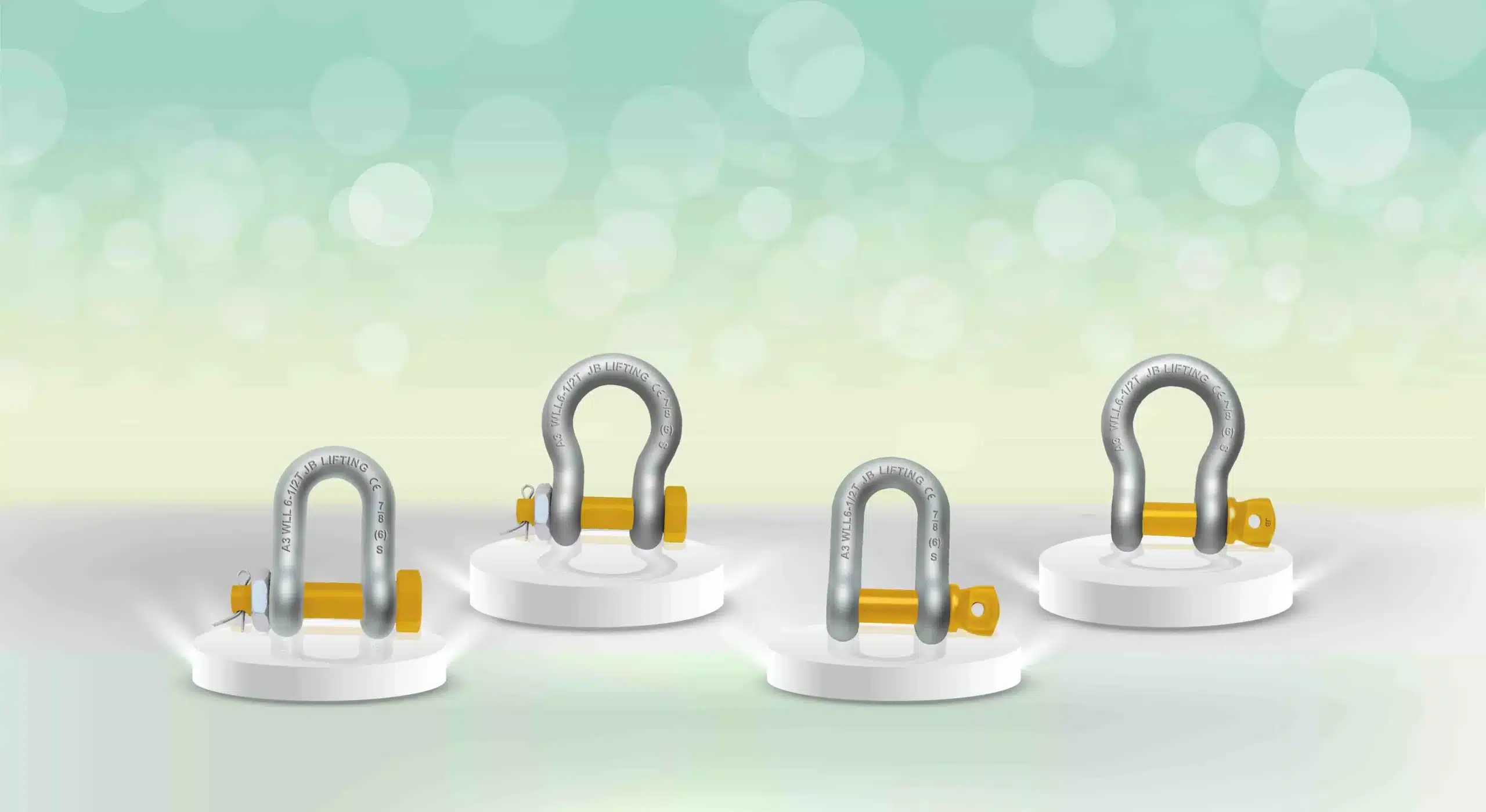
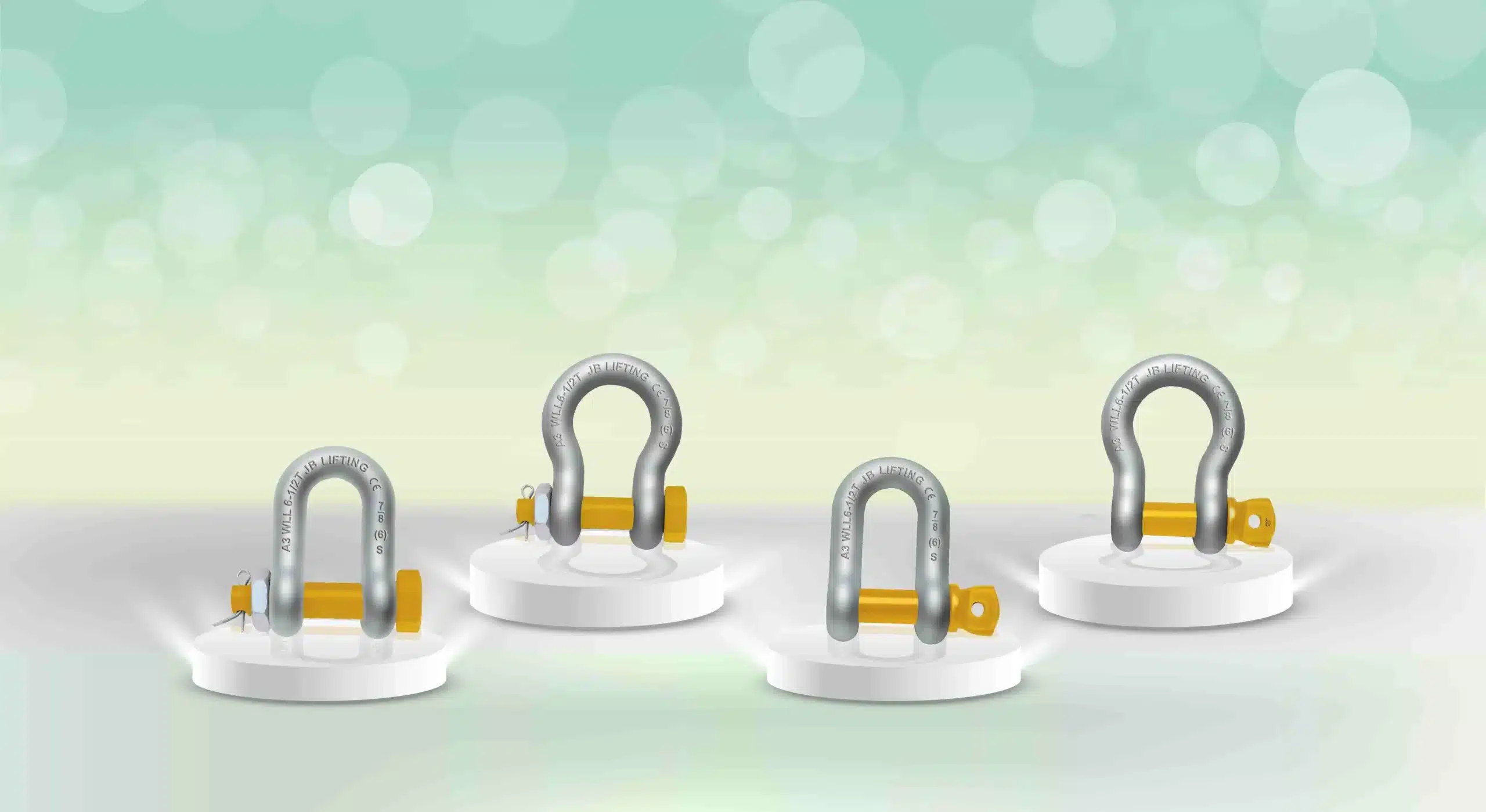
D-Shackles (Chain Shackles)
- Description: A narrow, D-shaped shackle, ideal for in-line pulls. The design of D-shackles makes them particularly well-suited for applications where the load is applied directly along the centerline of the shackle. This minimizes stress on the pin and body.
- Applications: Connecting slings to loads, attaching chains, and basic rigging setups. D-shackles are commonly used in towing applications, lifting machinery, and securing cargo. They are a versatile option for many general-purpose lifting tasks.
- Limitations: Not suitable for angular loading due to potential pin bending. Applying a load at an angle to a D-shackle can cause the pin to bend, reducing its strength and potentially leading to failure. In situations where angular loading is unavoidable, bow shackles are a better choice. We once worked with a client who struggled with equipment failure, because they had been using D-shackles for angular loads. By switching to bow shackles, they saw a 20% improvement in safety and equipment longevity.
Bow Shackles (Anchor Shackles)
- Description: A wider, bow-shaped shackle, better suited for angular pulls. The wider bow allows for a greater distribution of load when the shackle is subjected to angular forces. This design makes bow shackles more resistant to bending and deformation compared to D-shackles.
- Applications: Connecting multiple slings, providing a wider bearing surface for the load. Bow shackles are often used in situations where the load needs to be distributed over a larger area or where multiple connection points are required. They are commonly used in crane lifting, heavy equipment rigging, and offshore operations.
- Advantages: Higher capacity for angular loading compared to D-shackles. The bow shape allows for greater flexibility in rigging configurations and can accommodate a wider range of load angles without compromising safety. When our team in KSA tackles this issue, they often find that using bow shackles in complex rigging scenarios significantly improves safety and efficiency.
Speciality Shackles
- Description: Including swivel shackles, long reach shackles and wide body shackles, each designed for very specific applications. These specialized shackles address unique challenges in lifting and rigging. Swivel shackles, for example, allow for rotation under load, preventing twisting of slings or ropes. Long reach shackles can reach into recessed areas, while wide body shackles provide increased bearing surface and stability.
- Applications: Complex rigging arrangements requiring rotation or extended reach. Speciality shackles are often used in construction, manufacturing, and marine industries. They can be found in applications ranging from bridge building to offshore platform maintenance.
- Considerations: Specialized shackles require careful selection and inspection. It’s critical to fully understand the intended application and the shackle’s limitations before use. Proper training and adherence to manufacturer’s guidelines are essential for safe operation.
Materials Used in Lifting Shackles 🔩
Carbon Steel
- Properties: High strength, suitable for general lifting applications. Carbon steel shackles offer a good balance of strength and affordability. They are commonly used in applications where corrosion is not a significant concern.
- Advantages: Cost-effective and readily available. Carbon steel is a widely produced material, making these shackles easily accessible and competitively priced. This makes them a popular choice for many standard lifting tasks.
- Disadvantages: Susceptible to corrosion if not properly coated. Carbon steel can rust when exposed to moisture or corrosive environments. To mitigate this, carbon steel shackles are often coated with paint, galvanization, or other protective finishes. Regular inspection and maintenance are essential to ensure the coating remains intact. We’ve consistently seen that clients who neglect coating maintenance experience premature shackle failure.
Alloy Steel
- Properties: Enhanced strength-to-weight ratio, higher resistance to deformation. Alloy steel shackles are manufactured with specific alloying elements that enhance their mechanical properties. This results in a stronger and more durable shackle compared to carbon steel.
- Advantages: Ideal for heavy-duty lifting and harsh environments. Alloy steel shackles are commonly used in demanding applications such as crane lifting, construction, and mining. Their high strength and resistance to deformation make them well-suited for handling heavy loads and withstanding extreme conditions.
- Disadvantages: More expensive than carbon steel. The added cost of alloy steel shackles reflects the higher material costs and more complex manufacturing processes involved. However, the increased strength and durability often justify the investment in critical applications.
Stainless Steel
- Properties: Excellent corrosion resistance, suitable for marine and chemical environments. Stainless steel shackles are manufactured with a high chromium content, which forms a passive layer on the surface that prevents rust and corrosion. This makes them ideal for use in environments where exposure to moisture, salt, or chemicals is unavoidable.
- Advantages: Long-lasting in corrosive conditions, minimal maintenance. Stainless steel shackles require minimal maintenance compared to carbon steel or alloy steel shackles. They do not need to be coated or painted and can withstand prolonged exposure to harsh environments without degrading.
- Disadvantages: Lower strength compared to alloy steel, higher cost. Stainless steel typically has a lower tensile strength than alloy steel, meaning that stainless steel shackles may have a lower WLL for the same size. They are also more expensive than carbon steel and alloy steel shackles due to the higher cost of stainless steel and the specialized manufacturing processes required. For many of our clients here in Dammam, Saudi Arabia, we’ve seen that the long-term benefits of stainless steel in corrosive environments outweigh the higher initial cost.
Here is a comparison table summarizing the key differences between these materials:
| Material |
Properties |
Advantages |
Disadvantages |
| Carbon Steel |
High strength, general-purpose |
Cost-effective, readily available |
Susceptible to corrosion |
| Alloy Steel |
Enhanced strength-to-weight ratio, high resistance to deformation |
Ideal for heavy-duty lifting and harsh environments |
More expensive than carbon steel |
| Stainless Steel |
Excellent corrosion resistance |
Long-lasting in corrosive conditions, minimal maintenance |
Lower strength compared to alloy steel, higher cost |
Understanding Working Load Limit (WLL) ⚖️
Determining WLL
The Working Load Limit (WLL) is the cornerstone of safe lifting operations. It represents the maximum weight a shackle can safely lift under normal conditions. Ignoring or misinterpreting the WLL is a recipe for disaster.
- WLL is clearly marked on the shackle body. Always check the shackle for its WLL before use. The marking is typically stamped or engraved on the shackle body and should be easily visible. If the marking is illegible or missing, the shackle should not be used.
- Never exceed the marked WLL. Overloading a shackle can lead to catastrophic failure, resulting in serious injury or property damage. Always ensure that the weight of the load is within the shackle’s WLL. A common mistake we help businesses fix is using shackles without verifying the weight they will be lifting.
Safety Factors
Safety factors are crucial in ensuring the reliability of lifting shackles. They provide a buffer against unexpected loads or stresses that may exceed the WLL.
- Ensure the safety factor meets or exceeds industry standards (typically 4:1 or 5:1). The safety factor is the ratio between the breaking strength and the WLL. A safety factor of 4:1 means that the shackle’s breaking strength is four times its WLL. This provides a margin of safety to account for variations in material properties, manufacturing tolerances, and operating conditions.
- Higher safety factors are required for critical or high-risk applications. In situations where failure could have severe consequences, such as lifting personnel or handling hazardous materials, a higher safety factor is recommended. This provides an extra layer of protection against unexpected events.
Derating for Angular Loads
Angular loading significantly reduces a shackle’s capacity. Understanding and compensating for this is vital.
- Reduce the WLL when using shackles at an angle. When a shackle is used at an angle, the load is no longer distributed evenly across the shackle body. This can concentrate stress on specific areas and reduce the shackle’s overall capacity.
- Consult manufacturer guidelines for specific derating factors. Shackle manufacturers provide guidelines on how to derate the WLL for different angles of loading. These guidelines should be followed carefully to ensure that the shackle is not overloaded. As Safe and Secure Trading Company, we always advise our clients to consult the manufacturer’s documentation or seek expert advice when dealing with angular loads.
> “Always prioritize safety and never exceed the WLL. Regular inspection and adherence to manufacturer’s guidelines are essential for preventing accidents.” – John Smith, Lead Safety Inspector
Safe Usage Practices 👷
Proper Shackle Assembly
Correct assembly is paramount for ensuring a shackle functions as intended. A seemingly minor error can have major consequences.
- Ensure the pin is fully threaded and securely tightened. A loose pin can dislodge during lifting, causing the load to drop. Always tighten the pin to the manufacturer’s recommended torque.
- Use the correct pin type for the shackle (e.g., screw pin, bolt-type). Different types of pins have different strengths and applications. Using the wrong pin can compromise the shackle’s integrity. Screw pin shackles are typically used for temporary applications, while bolt-type shackles are used for more permanent installations.
Avoiding Side Loading
Side loading places undue stress on a shackle and must be avoided.
- Minimize side loading to prevent shackle deformation and failure. Side loading occurs when the load is applied perpendicular to the shackle’s centerline. This can bend the shackle body and pin, reducing their strength and potentially causing failure.
- Use spreader bars or other devices to distribute the load evenly. Spreader bars are used to distribute the load over multiple lifting points, reducing the stress on each individual shackle. This helps to prevent side loading and ensures that the load is lifted safely.
Environmental Considerations
The environment in which a shackle is used can significantly impact its lifespan and performance.
- Protect shackles from extreme temperatures, corrosive chemicals, and abrasive materials. Extreme temperatures can weaken the shackle’s material, while corrosive chemicals can cause rust and degradation. Abrasive materials can wear down the shackle’s surface, reducing its strength.
- Use appropriate shackles for specific environmental conditions (e.g., stainless steel for marine). Stainless steel shackles are ideal for marine environments due to their excellent corrosion resistance. Carbon steel shackles should be protected with coatings or used in less corrosive environments.
Inspection and Maintenance 👁️
Pre-Use Inspection
A thorough pre-use inspection is the first line of defense against shackle failure.
- Check for signs of wear, cracks, deformation, and corrosion. These defects can weaken the shackle and increase the risk of failure. Pay close attention to the shackle body, pin, and threads.
- Ensure the pin threads are clean and undamaged. Damaged or dirty threads can prevent the pin from being fully tightened, compromising the shackle’s security. Clean the threads with a wire brush and apply lubricant if necessary.
Regular Inspection Intervals
Regular inspections are crucial for identifying potential problems before they lead to failure.
- Conduct routine inspections based on frequency of use and severity of conditions. Shackles that are used frequently or in harsh environments should be inspected more often.
- Document inspection findings and maintain a log of shackle history. This helps to track the shackle’s condition over time and identify any trends or patterns that may indicate a problem. The inspection log should include the date of inspection, the inspector’s name, the shackle’s serial number, and any defects that were found.
Discard Criteria
Knowing when to retire a shackle is as important as knowing how to use it.
- Remove shackles from service if any defects are found. Any shackle with cracks, excessive wear, bent pins, or illegible markings should be removed from service immediately.
- Common discard criteria include cracks, excessive wear, bent pins, and illegible markings. These defects indicate that the shackle is no longer safe to use and should be replaced. Failing to discard damaged shackles can lead to accidents and injuries.
Common Mistakes to Avoid 🚫
Overloading
- Exceeding the WLL is a leading cause of shackle failure. Overloading puts excessive stress on the shackle, which can lead to deformation, cracking, or even complete failure.
- Always verify the load weight and select an appropriately sized shackle. Before lifting any load, accurately determine its weight and select a shackle with a WLL that meets or exceeds that weight. Using a shackle that is too small can have catastrophic consequences.
Incorrect Pinning
- Using the wrong type of pin or not fully tightening the pin can compromise shackle integrity. The pin is a critical component of the shackle, and using the wrong type or not tightening it properly can significantly reduce the shackle’s strength.
- Ensure the pin is properly secured and the threads are engaged. Always use the correct type of pin for the shackle and ensure that it is fully threaded and tightened according to the manufacturer’s instructions. This will ensure that the pin is securely in place and can withstand the load.
Neglecting Inspections
- Failing to inspect shackles regularly can result in undetected damage. Shackles can be damaged by wear, corrosion, or overloading, and these damages may not be immediately visible. Regular inspections can help to identify these damages before they lead to a failure.
- Implement a comprehensive inspection program to identify and address potential issues. A comprehensive inspection program should include regular visual inspections, as well as more thorough inspections using specialized equipment. The program should also include training for personnel on how to properly inspect shackles.
Advanced Shackle Applications 🚀
Dynamic Loading Considerations
- Account for dynamic loads caused by sudden movements or impacts. Dynamic loads are loads that change rapidly, such as those caused by sudden movements or impacts. These loads can significantly increase the stress on shackles.
- Use shackles with higher WLL and safety factors for dynamic applications. When using shackles in dynamic applications, it is important to use shackles with higher WLL and safety factors to account for the increased stress. This will help to prevent the shackles from failing under dynamic loads.
Specialized Rigging Techniques
- Employ advanced rigging techniques to minimize stress on shackles. Advanced rigging techniques, such as using spreader bars or multiple shackles, can help to distribute the load more evenly and reduce the stress on individual shackles.
- Use multiple shackles to distribute the load and enhance safety. Using multiple shackles can help to distribute the load more evenly and provide redundancy in case one shackle fails. This can significantly enhance the safety of the lifting operation.
Offshore and Marine Applications
- Use stainless steel shackles for superior corrosion resistance. Offshore and marine environments are highly corrosive, and using stainless steel shackles is essential to prevent rust and degradation.
- Follow specific guidelines for offshore lifting operations. Offshore lifting operations are subject to specific guidelines and regulations, and it is important to follow these guidelines to ensure safety.
Conclusion
In summary, selecting, using, inspecting, and maintaining lifting shackles correctly is vital for safe and efficient lifting operations. Understanding the different types of shackles, their material properties, and their limitations is crucial for preventing accidents and ensuring the integrity of your rigging equipment. Always prioritize safety, adhere to manufacturer’s guidelines, and implement a comprehensive inspection program. By following these best practices, you can minimize the risk of shackle failure and protect yourself and your colleagues from harm. As Safe and Secure Trading Company, we are committed to providing our clients with the highest quality lifting shackles and expert guidance on their safe usage.
FAQ Section
What is the difference between a D-shackle and a bow shackle?
A D-shackle is narrower and designed for in-line pulls, while a bow shackle is wider and better suited for angular pulls. The D-shackle is stronger in a straight line pull, but the bow shackle can handle more complex loading scenarios.
How often should lifting shackles be inspected?
Lifting shackles should be inspected before each use and regularly based on the frequency and severity of conditions. A more frequent inspection schedule is recommended for shackles used in harsh environments or for critical lifts.
What should I do if I find a defect during a shackle inspection?
Remove the shackle from service immediately and replace it with a new one. Do not attempt to repair a damaged shackle, as this can compromise its strength and safety.
Can I use a shackle if the WLL marking is illegible?
No, never use a shackle if the WLL marking is illegible, as it is impossible to determine its safe load capacity. The WLL marking is essential for ensuring that the shackle is not overloaded.
What are the best practices for storing lifting shackles?
Store lifting shackles in a dry, clean environment away from corrosive substances and extreme temperatures. This will help to prevent rust and degradation and extend the lifespan of the shackles. Avoid storing shackles directly on the ground, as this can expose them to moisture and dirt.