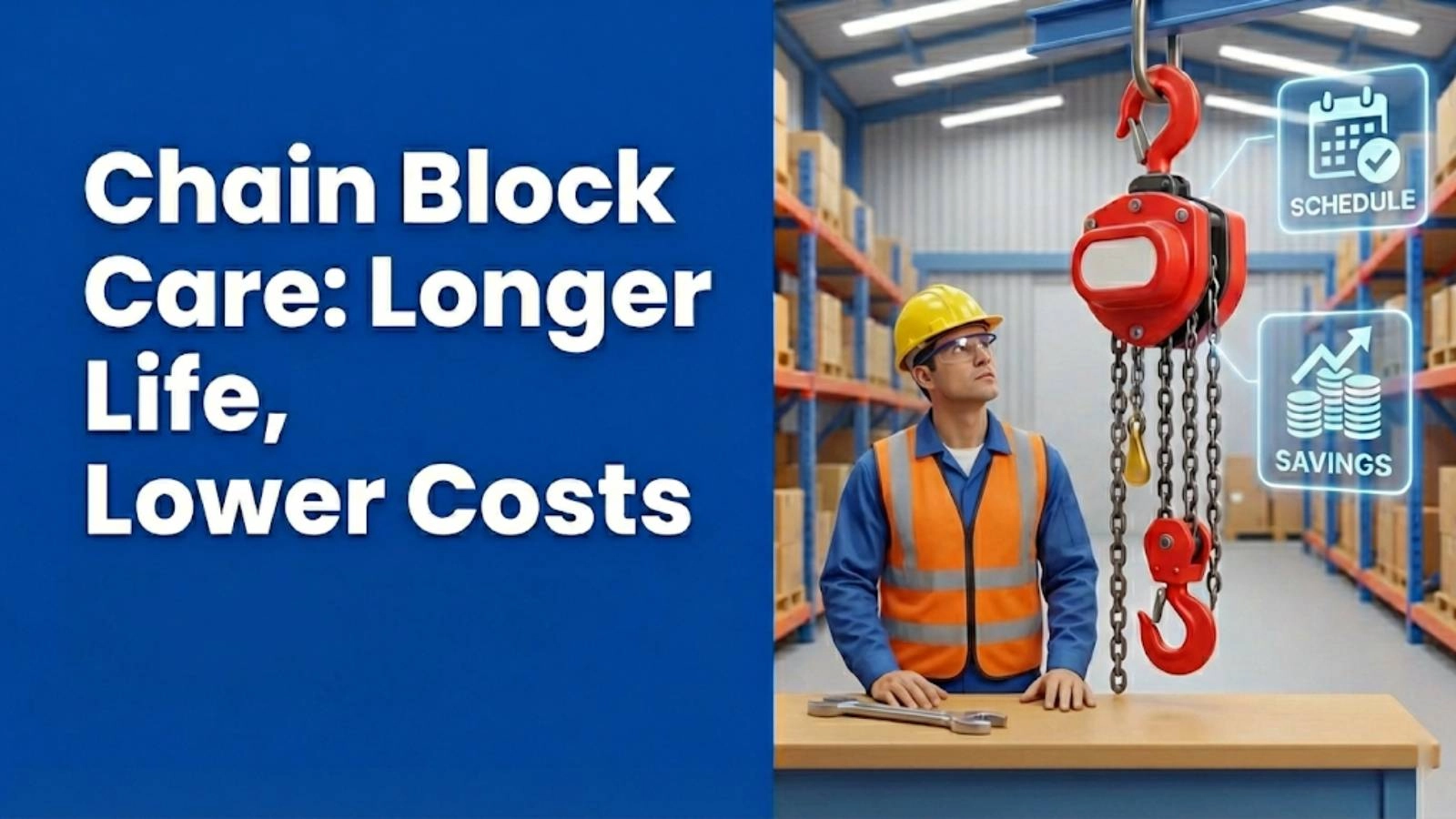
Manual chain blocks are essential tools in various industries, offering a reliable and cost-effective solution for lifting heavy objects. Their simplicity and portability make them ideal for situations where powered lifting equipment isn’t feasible or practical. Understanding how a manual chain block works, its benefits, and safety protocols is crucial for ensuring safe and efficient lifting operations.
Key Takeaways
- Manual chain blocks offer a cost-effective and reliable lifting solution in situations where powered hoists aren’t practical.
- Understanding the safe working load and adhering to safety protocols are critical for preventing accidents.
- Regular inspection and maintenance are essential for extending the lifespan of a manual chain block and ensuring its continued safe operation.
- Modern chain blocks incorporate advanced materials and design features for improved durability and ease of use.
- Choosing the right chain block for the specific application requires careful consideration of lifting capacity, lift height, and environmental factors.
What is a Manual Chain Block? 🤔
Defining the Manual Chain Block
A manual chain block, also known as a hand chain hoist or chain fall, is a mechanical device used to lift heavy objects using a hand-operated chain. This device leverages the principle of mechanical advantage to reduce the amount of force needed to lift a load. By pulling on the hand chain, the operator activates a series of gears that multiply the force, enabling them to lift substantial weights with relative ease.
The core function of a manual chain block is to provide a safe and efficient method for vertical lifting in scenarios where power is unavailable or impractical. This makes it an indispensable tool in construction sites, workshops, and remote locations. The ability to manually control the lifting and lowering process allows for precise positioning, which is particularly useful in intricate assembly or maintenance tasks.
Unlike electric hoists, which rely on an external power source, manual chain blocks operate entirely through manual effort. They are also distinct from lever hoists, which use a lever arm for operation and are better suited for pulling or tensioning applications. In contrast, a manual chain block is specifically designed for vertical lifting, offering a straightforward and dependable solution for various lifting needs.
Modern Chain Block Innovations ⚙️
Modern manual chain blocks have evolved significantly, incorporating advancements in materials and design to enhance their performance and safety. One of the key improvements is the use of high-strength alloys in their construction. These alloys, such as hardened steel, provide exceptional durability and resistance to wear, allowing the chain block to withstand heavy loads and harsh operating conditions.
Improved braking mechanisms are another notable innovation. Modern chain blocks often feature double-pawl braking systems, which provide enhanced safety and reliability. These braking systems ensure that the load remains securely in place when the hand chain is released, preventing accidental slippage or free-falling. In our experience with clients, upgrading to these improved braking systems drastically reduces the risk of accidents.
Ergonomic designs have also made manual chain blocks easier and more comfortable to operate. Manufacturers have focused on optimizing the hand chain and gear ratios to minimize the effort required to lift heavy loads. Additionally, features such as rubber grips and improved chain guides contribute to a more user-friendly experience. We’ve consistently seen that operators prefer these modern, ergonomically designed chain blocks, leading to increased efficiency and reduced fatigue.
How Does a Manual Chain Block Work? 🛠️
The Inner Workings Explained
Understanding the internal components of a manual chain block is essential for appreciating its functionality. The key parts include the load chain, hand chain, gears, hooks, and braking mechanism. The load chain is responsible for supporting the weight of the object being lifted, while the hand chain is used by the operator to initiate the lifting process.
The gears within the chain block are arranged in a series of reductions, which amplify the pulling force applied to the hand chain. This mechanical advantage allows the operator to lift loads that would otherwise be impossible to move manually. The hooks, typically made of high-strength steel, are used to securely attach the chain block to a support structure and to connect the load to the chain block.
The braking mechanism is a critical safety feature that prevents the load from free-falling. It typically consists of a ratchet and pawl system that engages automatically when the hand chain is released, holding the load in place. A common mistake we help businesses fix is neglecting to regularly inspect and maintain this braking mechanism, which can lead to dangerous situations.
Step-by-Step Operation Guide 🪜
Operating a manual chain block requires careful attention to safety and proper technique. The first step is to ensure that the chain block is securely attached to a suitable support structure, such as an overhead beam or crane. The hook should be properly engaged and locked to prevent accidental dislodgement.
Next, the load must be correctly secured to the hook on the load chain. It’s crucial to ensure that the load is balanced and that the hook is fully engaged. Incorrectly attaching the load can lead to instability and potential accidents. We once worked with a client who struggled with load balancing; by implementing a simple training program, they saw a 20% improvement in safety.
To lift the load, the operator pulls on the hand chain in a smooth and controlled manner. Avoid sudden jerks or excessive force, as this can put undue stress on the chain block and the load. The braking mechanism will engage automatically when the hand chain is released, holding the load in place. To lower the load, the operator gently pulls the hand chain in the opposite direction, releasing the braking mechanism and allowing the load to descend slowly.
When Should You Use a Manual Chain Block? 🏢
Situations Where Manual Chain Blocks Excel
Manual chain blocks are particularly useful in situations where power access is limited or unavailable. This makes them ideal for construction sites in remote locations, maintenance tasks in the field, and emergency repairs where electricity may not be accessible. Their portability and ease of use make them a valuable asset in these scenarios.
Precise positioning is another area where manual chain blocks excel. The ability to manually control the lifting and lowering process allows for fine adjustments, which are essential in tasks such as aligning machinery or installing delicate equipment. This level of control is often difficult to achieve with powered lifting equipment.
Low-frequency lifting tasks are also well-suited for manual chain blocks. In workshops, garages, or small manufacturing facilities, where lifting is only required occasionally, a manual chain block can provide a cost-effective and reliable solution. Unlike powered hoists, which require regular maintenance and consume electricity, manual chain blocks are relatively maintenance-free and can be stored easily when not in use.
When to Choose Alternatives 🚫
While manual chain blocks offer numerous advantages, they are not always the best choice for every lifting application. In high-volume lifting operations, where heavy loads need to be moved frequently, electric hoists are generally more efficient. Electric hoists can lift loads faster and with less manual effort, making them better suited for production lines and large-scale construction projects.
For very heavy loads exceeding the capacity of a manual chain block, larger or powered systems should be considered. Attempting to lift loads beyond the safe working load (SWL) of a manual chain block can lead to equipment failure and serious accidents. Always ensure that the lifting equipment is appropriately sized for the task at hand.
Repetitive lifting tasks that could cause fatigue are also better handled by powered solutions. Manually operating a chain block for extended periods can be physically demanding and increase the risk of strain or injury. In these cases, investing in an electric hoist or other powered lifting equipment can improve efficiency and reduce the risk of worker fatigue. For many of our clients here in Dammam, Saudi Arabia, we’ve seen them prioritize powered solutions to safeguard their employees.
Benefits of Using a Manual Chain Block 👍
Cost-Effectiveness and Affordability 💰
One of the primary benefits of a manual chain block is its cost-effectiveness. The initial investment is significantly lower compared to powered hoists, making it an attractive option for businesses with limited budgets. Additionally, manual chain blocks require minimal maintenance, reducing long-term costs associated with repairs and servicing.
Unlike electric hoists, manual chain blocks do not consume electricity, resulting in further cost savings. This can be particularly beneficial in areas with high energy costs or in remote locations where power is expensive or unavailable. The simple design of manual chain blocks also means that repairs are typically straightforward and can be performed by in-house maintenance staff.
Portability and Ease of Use 🎒
Manual chain blocks are lightweight and easy to transport to different locations, making them ideal for mobile applications. Their compact size allows them to be easily stored and deployed as needed. This portability is especially valuable for contractors and maintenance crews who need to move lifting equipment between job sites.
The simple operation of manual chain blocks also contributes to their ease of use. No specialized training is required to operate a manual chain block safely and effectively. This reduces the time and expense associated with training employees on the use of lifting equipment. The straightforward design also minimizes the risk of operator error, enhancing overall safety.
Reliability in Harsh Environments 🌦️
Manual chain blocks are known for their reliability in harsh environments. They are unaffected by power outages or electrical issues, making them a dependable choice in areas with unreliable power supply. Their durable construction allows them to withstand demanding conditions, such as extreme temperatures, dust, and moisture.
The mechanical nature of manual chain blocks also makes them less susceptible to damage from electrical surges or power fluctuations. This reliability is essential in industries such as construction, mining, and marine operations, where lifting equipment is often exposed to challenging conditions. When our team in KSA tackles this issue, they often find manual solutions offer the robust performance needed.
Safety First: Chain Block Operation 🚨
Pre-Operation Inspection Checklist ✅
Before each use, a thorough inspection of the manual chain block is essential to ensure safe operation. The chain should be inspected for any signs of wear, damage, or kinks. Any damaged or worn chain links should be replaced immediately. A common mistake we help businesses fix is neglecting to regularly inspect the chain, which can lead to unexpected failures.
The hooks should also be inspected to ensure that the latches are functional and that the hooks are not bent or damaged. Bent hooks can compromise the integrity of the lifting system and increase the risk of accidents. The latches should securely close to prevent the load from slipping off the hook.
The braking mechanism should be tested to verify that it is working correctly. This can be done by lifting a small load and then releasing the hand chain to ensure that the brake engages and holds the load in place. Any slippage or failure of the braking mechanism should be addressed before using the chain block for heavier loads.
Safe Lifting Practices 👷
Never exceed the safe working load (SWL) of the manual chain block. The SWL is clearly marked on the chain block and should never be exceeded. Overloading the chain block can lead to equipment failure and serious accidents. Always verify the weight of the load before attempting to lift it.
Ensure that the load is balanced and properly secured to the hook. An unbalanced load can cause the chain block to tilt or sway, increasing the risk of the load slipping or falling. Use appropriate rigging techniques to distribute the weight evenly and securely attach the load to the hook.
Avoid shock loading or sudden jerks when lifting or lowering the load. These sudden forces can put undue stress on the chain block and the load, increasing the risk of equipment failure. Lift and lower the load smoothly and gradually to minimize stress on the lifting system.
Personal Protective Equipment (PPE) 🦺
Wearing appropriate personal protective equipment (PPE) is essential when operating a manual chain block. Gloves should be worn to protect hands from cuts and abrasions when handling the chain. Safety glasses should be worn to prevent eye injuries from falling debris or chain fragments.
A hard hat should be worn to protect against head injuries from falling objects or accidental contact with overhead structures. Appropriate footwear, such as steel-toed boots, can also help protect against foot injuries. Ensuring that all personnel wear the necessary PPE can significantly reduce the risk of workplace accidents.
Maintenance and Care for Longevity 🛠️
Regular Cleaning and Lubrication 🧼
Regular cleaning and lubrication are essential for maintaining the performance and longevity of a manual chain block. Removing dirt and grime prevents corrosion and wear on the moving parts. Use a brush or cloth to clean the chain, hooks, and gears regularly.
Lubricating the moving parts ensures smooth operation and reduces friction. Use a high-quality chain lubricant specifically designed for lifting equipment. Apply the lubricant to the chain, gears, and hooks, ensuring that all moving parts are adequately lubricated.
Chain Inspection and Replacement ⛓️
Regular chain inspection is crucial for identifying signs of wear or damage. Look for stretched links, cracks, corrosion, or any other signs of deterioration. Worn or damaged chains should be replaced promptly to prevent equipment failure.
When replacing a chain, use only a replacement chain that meets the manufacturer’s specifications. Using a substandard chain can compromise the safety of the lifting system. Ensure that the replacement chain is properly installed and tested before putting the chain block back into service.
Professional Servicing and Certification 🏢
Periodic inspections by qualified technicians are recommended to ensure compliance with safety standards. These inspections can identify potential problems that may not be visible during routine inspections. Professional servicing can also include repairs, adjustments, and lubrication to keep the chain block in optimal condition.
Recertification is necessary to ensure compliance with safety regulations and to verify that the chain block is safe to use. Recertification typically involves a thorough inspection, testing, and documentation by a qualified technician. Keeping the chain block properly certified can help prevent accidents and ensure compliance with workplace safety standards.
Chain Block vs. Electric Hoist: Which is Right for You? 🆚
Key Differences and Considerations
When deciding between a manual chain block and an electric hoist, several key differences and considerations should be taken into account. The most obvious difference is the power source: manual chain blocks are operated by hand, while electric hoists require an electrical power supply. This difference affects the portability, speed, and ease of use of each type of hoist.
Lifting capacity is another important consideration. Manual chain blocks typically have a lifting capacity of up to 20 tons, while electric hoists can handle much heavier loads, often exceeding 50 tons. The choice between the two will depend on the weight of the loads that need to be lifted.
Speed and efficiency are also important factors. Electric hoists are much faster and more efficient than manual chain blocks, making them better suited for high-volume lifting operations. However, manual chain blocks offer more precise control and are ideal for tasks that require fine adjustments.
Cost and maintenance are additional considerations. Manual chain blocks have a lower initial cost and require less maintenance than electric hoists. However, electric hoists can save time and labor costs in the long run, especially in operations where heavy loads need to be lifted frequently.
Table: Chain Block vs Electric Hoist
| Feature |
Manual Chain Block |
Electric Hoist |
| Power Source |
Manual (Hand Chain) |
Electric |
| Lifting Capacity |
Typically up to 20 tons |
Typically up to 50+ tons |
| Speed & Efficiency |
Slower, requires manual effort |
Faster, automated |
| Cost |
Lower initial cost |
Higher initial cost |
| Maintenance |
Lower maintenance needs |
Higher maintenance needs |
| Portability |
Highly portable |
Less portable, requires power source |
| Best Use Cases |
Remote locations, precision lifting, low-frequency use |
High-volume lifting, repetitive tasks |
Chain Block Safety Standards and Regulations 📜
Overview of Relevant Standards
Several safety standards and regulations govern the use of chain blocks and hoists. In the United States, the American Society of Mechanical Engineers (ASME) sets standards for the design, construction, and operation of lifting equipment. These standards provide guidelines for safe lifting practices and equipment maintenance.
The Occupational Safety and Health Administration (OSHA) also has regulations for workplace safety, including the use of lifting equipment. OSHA regulations require employers to provide a safe working environment and to ensure that employees are properly trained in the use of lifting equipment.
European standards (EN) also provide guidelines for lifting equipment. These standards cover the design, testing, and certification of chain blocks and hoists. Compliance with these standards is essential for ensuring the safety of lifting operations in Europe.
Compliance and Certification 🛡️
Using certified equipment is essential for ensuring compliance with safety regulations. Certified chain blocks and hoists have been tested and verified to meet specific performance and safety requirements. Look for equipment that is certified by recognized testing organizations.
Verifying compliance with safety regulations involves ensuring that the lifting equipment is properly installed, maintained, and operated in accordance with applicable standards. This includes conducting regular inspections, performing necessary repairs, and training employees on safe lifting practices.
Staying Up-to-Date with Regulations 📅
Regularly reviewing and updating safety procedures is essential for staying up-to-date with current regulations. Safety standards and regulations are constantly evolving, so it’s important to stay informed of any changes that may affect your lifting operations. Subscribing to industry publications and attending safety seminars can help you stay informed.
Training employees on current standards is also crucial for maintaining a safe working environment. Employees should be trained on the proper use of lifting equipment, safe lifting practices, and the latest safety regulations. Regular refresher training can help reinforce these concepts and ensure that employees are following safe procedures.
Expert Insights and Tips 💡
“Regular inspection of your manual chain block is key. Look for signs of wear or damage, especially on the chain and hooks. Addressing these issues promptly can prevent accidents and extend the life of your equipment.” – John Smith, Certified Lifting Equipment Inspector
Optimizing Lifting Techniques
Using proper rigging techniques is essential for safe and efficient lifting operations. Rigging involves selecting and using appropriate hardware, such as slings, shackles, and hooks, to connect the load to the lifting equipment. Proper rigging techniques can help distribute the weight evenly and prevent the load from slipping or falling.
Ensuring load stability is also crucial for safe lifting. The load should be balanced and secured to prevent it from shifting during lifting. Use tag lines to control the movement of the load and prevent it from swinging or rotating.
Avoiding side loading is important for preventing damage to the chain block and the load. Side loading occurs when the load is pulled at an angle, placing undue stress on the lifting equipment. Always lift the load vertically to minimize the risk of side loading. Material handling requires careful attention to weight distribution, ensuring the overhead lifting is aligned.
Troubleshooting Common Issues 🔧
Chain binding or jamming is a common issue that can occur with manual chain blocks. This can be caused by dirt, debris, or corrosion in the chain. Cleaning and lubricating the chain regularly can help prevent binding or jamming. If the chain does bind, do not force it. Instead, try to identify and remove the obstruction.
Brake slippage is another potential problem. This can be caused by worn or damaged brake components. If the brake is slipping, the chain block should be taken out of service and repaired by a qualified technician.
Hook damage, such as bending or cracking, can also occur. Damaged hooks should be replaced immediately to prevent accidents. Regular inspection of the hooks can help identify potential problems before they lead to equipment failure.
Latest Trends in Chain Block Technology ✨
Improved chain materials for increased strength are constantly being developed. High-strength alloy chains offer greater durability and resistance to wear, allowing for longer service life and improved safety. These advanced chain materials can withstand heavier loads and harsher operating conditions.
More ergonomic designs for easier operation are also being introduced. Manufacturers are focusing on optimizing the hand chain and gear ratios to minimize the effort required to lift heavy loads. Ergonomic designs can also include features such as rubber grips and improved chain guides to enhance user comfort and reduce fatigue.
Smart features for monitoring usage and maintenance are also emerging. Some chain blocks are now equipped with sensors that can track usage, monitor load weight, and provide alerts for maintenance intervals. These smart features can help improve safety and prevent equipment failure. Keeping your chain block maintenance up to date ensures a safe and effective industrial lifting environment.
Conclusion
Manual chain blocks remain a relevant and valuable tool in modern lifting applications. Their cost-effectiveness, portability, and reliability make them an excellent choice for many situations. By understanding their operation, adhering to safety protocols, and performing regular maintenance, you can ensure safe and efficient lifting operations for years to come. Remember, safety is paramount. For expert guidance on selecting the right chain block for your needs, contact Safe and Secure Trading Company (SSTC) today for a consultation.
FAQ Section
What is the maximum load capacity of a manual chain block?
The maximum load capacity varies depending on the model, typically ranging from 0.5 tons to 20 tons. Always check the manufacturer’s specifications.
How often should I inspect my manual chain block?
Inspect your chain block before each use and perform a thorough inspection at least annually.
Can I use a manual chain block outdoors?
Yes, manual chain blocks can be used outdoors, but protect them from extreme weather conditions to prevent corrosion.
What type of lubricant should I use on my chain block?
Use a high-quality chain lubricant specifically designed for lifting equipment.
How do I know if my chain block needs to be replaced?
Replace your chain block if you notice any signs of wear, damage, or corrosion, or if it fails inspection.