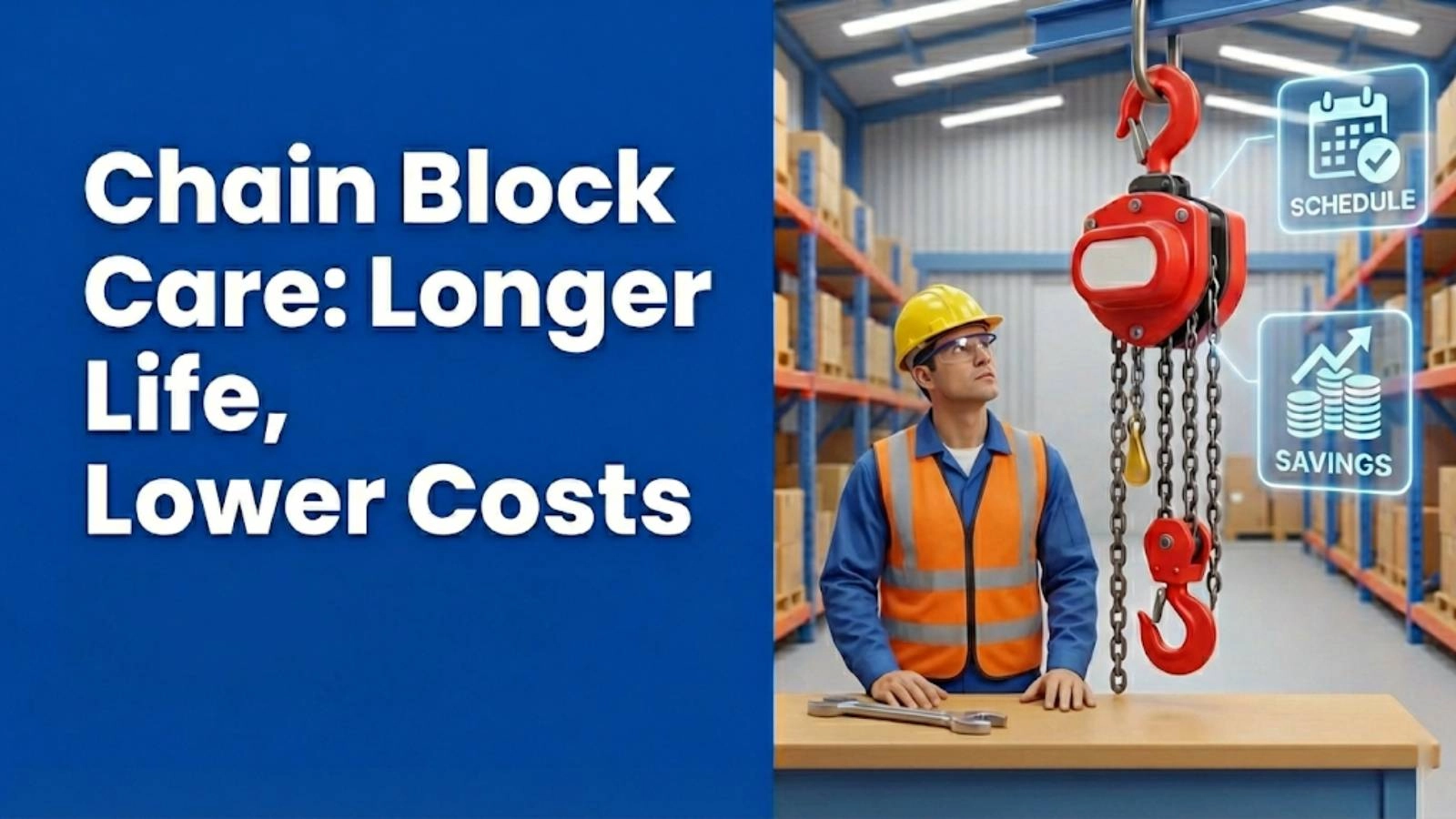
A manual chain block is an essential tool for lifting heavy loads in various industries. Selecting the right chain block involves understanding your lifting requirements, the different types available, critical safety features, and proper maintenance practices. This comprehensive guide will help you make an informed decision when purchasing a manual chain block, ensuring safety and efficiency in your operations. Safe and Secure Trading Company (SSTC) is here to guide you through every step, ensuring you choose the best equipment for your needs.
Key Takeaways
- Choosing the right manual chain block requires careful consideration of load capacity, lifting height, and safety features.
- Regular inspection and maintenance are crucial for ensuring safe and reliable operation.
- Understanding different types of chain blocks and their applications can significantly improve efficiency.
What is a Manual Chain Block and How Does It Work? ⚙️
The Basic Definition
A manual chain block, also known as a chain hoist or chain fall, is a mechanical device used to lift heavy objects using a system of gears and chains. Unlike electric hoists, a manual chain block relies on human power to operate, making it ideal for situations where electricity is not available or practical. These devices are commonly used in construction, manufacturing, and maintenance operations for lifting heavy machinery, equipment, and materials. The reliability and simplicity of a manual chain block make it a staple in many industries.
How it Works: A Step-by-Step Explanation
The hoist mechanism of a manual chain block is relatively straightforward. The operator pulls on a hand chain, which turns a series of gears within the block. This gear system multiplies the pulling force, allowing the user to lift heavy loads with minimal effort. The load chain, connected to the lifting hook, raises or lowers the load.
1. Hand Chain: The operator pulls on the hand chain, providing the input force.
2. Gears: The hand chain turns a series of gears that multiply the force. These gears are housed within the chain block’s body.
3. Load Chain: The multiplied force is transferred to the load chain, which is directly connected to the load.
4. Hooks: The load chain is attached to the load via hooks. The upper hook suspends the chain block, while the lower hook connects to the object being lifted.
This mechanical advantage enables a single person to lift loads that would otherwise require multiple people or powered equipment. In our experience with clients here in Dammam, Saudi Arabia, we’ve seen firsthand how this mechanical advantage significantly boosts productivity.
Common Applications Across Industries
Manual chain blocks find widespread use across various industries due to their portability, ease of use, and reliability.
- Construction: Lifting building materials, positioning structural components, and installing heavy equipment on-site.
- Manufacturing: Moving heavy parts, assembling machinery, and loading/unloading goods.
- Workshops: Lifting engines, machinery, and other heavy items for repair or maintenance.
- Garages: Assisting in vehicle repairs, lifting engines, and positioning heavy components.
- Warehousing: Handling heavy crates and equipment.
“The right manual chain block can significantly improve efficiency and safety in lifting operations.” – John Smith, Lead Safety Inspector
Assessing Your Lifting Needs: Key Considerations 🤔
Calculate the Maximum Load You Need to Lift
Before purchasing a manual chain block, accurately calculating the maximum load you need to lift is crucial. Always consider the heaviest item you will be lifting and add a safety factor to account for any unexpected weight variations. A common mistake we help businesses fix is underestimating the load, which can lead to equipment failure and potential accidents.
To calculate the maximum load:
1. Determine the Weight: Find the exact weight of the heaviest item you plan to lift.
2. Add a Safety Factor: Increase the weight by at least 25% to account for uneven weight distribution or unexpected loads.
3. Choose Accordingly: Select a manual chain block with a chain block capacity that exceeds this calculated weight.
For example, if you need to lift an object weighing 1000 kg, add a 25% safety factor (250 kg), making the required chain block capacity at least 1250 kg.
Determine the Required Lifting Height
The required lifting height is the vertical distance between the load and the suspension point. Accurately measuring this distance ensures that the chain block’s load chain is long enough to lift the load to the desired height. In our experience, many clients overlook this measurement, resulting in purchasing a chain block with an insufficient lifting height.
To determine the required lifting height:
1. Measure the Distance: Measure the vertical distance from the ground (or the load’s starting point) to the point where the chain block will be suspended.
2. Add Extra Length: Add a few extra feet to account for any adjustments or variations in lifting height.
3. Choose the Right Chain Length: Select a chain block with a load chain that meets or exceeds this total length.
Environmental Factors: Indoors vs. Outdoors
The environment in which the manual chain block will be used significantly impacts the type of chain block you should choose. Indoor environments typically require less robust models, while outdoor environments demand chain blocks that can withstand harsh conditions.
- Indoors: Consider factors such as humidity, dust, and the presence of chemicals. Standard chain blocks are usually sufficient for indoor use.
- Outdoors: Consider corrosion, extreme temperatures, and exposure to rain, snow, and sunlight. Opt for chain blocks with corrosion-resistant coatings and durable materials.
- Chemical Exposure: If the chain block will be exposed to corrosive chemicals, choose models specifically designed for chemical resistance. This often involves using stainless steel components or special coatings.
For many of our clients here in Dammam, Saudi Arabia, we’ve seen that corrosion is a significant concern due to the humid coastal climate. Choosing corrosion-resistant chain blocks is essential for ensuring longevity and safety.
Types of Manual Chain Blocks: Which is Right for You? 🗂️
Standard Chain Blocks: The Most Common Type
Standard chain blocks are the most widely used type of manual chain block. They are versatile, reliable, and suitable for a broad range of lifting applications. Their simple design and ease of use make them a popular choice for many industries. These manual chain blocks typically consist of a housing containing a gear system, a load chain for lifting, and a hand chain for operation.
Features of standard chain blocks include:
- Versatility: Suitable for various lifting tasks.
- Ease of Use: Simple to operate and maintain.
- Reliability: Durable construction for long-term use.
- Wide Range of Capacities: Available in various chain block capacity options to meet different lifting needs.
Lever Blocks: For Tight Spaces and Horizontal Pulling
Lever blocks, also known as come along, are designed for use in confined spaces and for horizontal pulling applications. Unlike standard chain blocks that use a hand chain, lever blocks utilize a lever that the operator ratchets back and forth to lift or pull the load. This makes them particularly useful in situations where there is limited headroom or when precise positioning is required.
Advantages of lever blocks include:
- Compact Design: Ideal for tight spaces.
- Horizontal Pulling: Suitable for pulling loads horizontally.
- Precise Positioning: Allows for fine adjustments and accurate placement.
- Portability: Lightweight and easy to transport.
Lever blocks are commonly used in construction, rigging, and maintenance operations where space is limited and precise control is necessary.
Geared Trolleys: For Smooth Horizontal Movement
Geared trolleys are used in conjunction with manual chain blocks to provide smooth horizontal movement of heavy loads. The trolley is mounted on an overhead beam or rail, and the chain block is suspended from the trolley. By turning a hand chain or gear mechanism, the trolley moves along the beam, allowing the operator to easily position the load horizontally.
Benefits of geared trolleys include:
- Smooth Movement: Provides effortless horizontal movement of heavy loads.
- Precise Positioning: Allows for accurate placement of loads along the beam.
- Increased Efficiency: Reduces the effort required to move heavy objects.
- Versatility: Compatible with various types of chain blocks and overhead beams.
Geared trolleys are commonly used in manufacturing plants, warehouses, and workshops where heavy items need to be moved efficiently and safely along a defined path.
Critical Safety Features to Look For ✅
Overload Protection: Preventing Accidents
Overload protection is a critical safety feature that prevents accidents caused by lifting loads exceeding the chain block’s chain block capacity. Overload limiters and shear pins are two common mechanisms used to provide this protection.
- Overload Limiters: These devices automatically stop the lifting mechanism when the load exceeds the rated capacity, preventing damage to the chain block and reducing the risk of accidents.
- Shear Pins: Shear pins are designed to break or shear off when the load exceeds the rated capacity, preventing further lifting. Replacing the shear pin restores the chain block to normal operation.
High-Quality Load Chain: Grade and Material
The load chain is a critical component of a manual chain block, and its quality directly impacts the safety and reliability of the lifting operation. Different grades of chain are available, each with varying strengths and load capacities.
- Grade 80 Alloy Steel Chain: This is a common choice for manual chain blocks due to its high strength-to-weight ratio and excellent durability.
- Grade 100 Alloy Steel Chain: Offers even higher strength and durability than Grade 80, making it suitable for heavy-duty applications.
- Stainless Steel Chain: Ideal for environments where corrosion is a concern, such as marine or chemical processing applications.
Choosing the right grade of chain ensures that the chain block can safely handle the intended load.
Secure Hooks with Safety Latches: Ensuring Load Stability
Secure hooks with safety latches are essential for ensuring load stability during lifting operations. Safety latches prevent the load from accidentally slipping off the hook, reducing the risk of accidents and injuries.
Importance of safety latches:
- Prevents Load Slippage: Ensures the load remains securely attached to the hook.
- Reduces Risk of Accidents: Minimizes the risk of dropped loads and potential injuries.
- Easy to Use: Simple to operate and provides added safety without hindering lifting operations.
Regular hook inspection is also crucial for identifying any signs of damage or wear. Damaged hooks should be replaced immediately to prevent accidents.
Step-by-Step Guide to Safe Operation 👷
Pre-Use Inspection: What to Check Before Each Lift
Before each lift, a thorough pre-use inspection is essential to ensure the manual chain block is in safe working condition. This inspection should include a visual examination of the chain, hooks, and housing.
- Chain Inspection: Check for any signs of damage, wear, or corrosion. Look for stretched, bent, or twisted links.
- Hook Inspection: Inspect the hooks for cracks, deformation, or damage to the safety latches.
- Housing Inspection: Examine the housing for any signs of damage, such as cracks or dents. Ensure all bolts and fasteners are tight.
Any issues identified during the pre-use inspection should be addressed before attempting to lift a load.
Proper Lifting Techniques: Avoiding Common Mistakes
Using proper lifting techniques is crucial for ensuring safety and preventing accidents. Common mistakes to avoid include:
- Jerking Motions: Avoid sudden, jerking motions when lifting the load, as this can put excessive stress on the chain block and load chain.
- Overloading: Never exceed the chain block’s chain block capacity.
- Side Loading: Avoid lifting loads at an angle, as this can damage the chain block and create instability.
- Using Damaged Equipment: Never use a chain block that is damaged or malfunctioning.
Smooth and steady pulling on the hand chain ensures a controlled and safe lifting operation.
Load Balancing: Ensuring Stability During Lifting
Proper load balancing is essential for ensuring stability during lifting. Uneven weight distribution can cause the load to shift, increasing the risk of accidents.
- Centering the Load: Ensure the load is centered beneath the chain block to distribute the weight evenly.
- Avoiding Uneven Weight Distribution: Adjust the lifting points to balance the load and prevent tipping or swaying.
- Using Multiple Lifting Points: For long or irregularly shaped loads, use multiple lifting points to distribute the weight evenly.
When our team in KSA tackles this issue, they often find that using spreader beams or multiple chain blocks can help achieve better load balancing, especially for complex lifts.
Maintaining Your Chain Block: Ensuring Longevity 🛠️
Regular Cleaning: Removing Dirt and Debris
Regular cleaning is essential for keeping your manual chain block in good working condition. Dirt and debris can accumulate on the chain and mechanism, causing friction and wear.
- Clean the Chain: Use a brush and solvent to remove dirt, grease, and debris from the load chain and hand chain.
- Clean the Housing: Wipe down the housing with a clean cloth to remove any dirt or grime.
- Inspect After Cleaning: After cleaning, inspect the chain and mechanism for any signs of damage or wear.
Lubrication: Keeping Moving Parts Working Smoothly
Proper lubrication is crucial for keeping the moving parts of your chain block working smoothly. Lubrication reduces friction, prevents corrosion, and extends the lifespan of the equipment.
- Recommended Lubricants: Use a high-quality chain lubricant or penetrating oil specifically designed for chain blocks.
- Lubrication Frequency: Lubricate the chain and mechanism regularly, especially after cleaning or exposure to wet or dusty environments.
- Application: Apply lubricant to all moving parts, including the chain, gears, and hooks.
Professional Inspections: When to Call an Expert
In addition to regular maintenance, professional inspections should be conducted annually by qualified technicians. These inspections can identify potential issues that may not be visible during routine maintenance.
- Annual Inspections: Schedule annual inspections to ensure compliance with safety regulations and identify potential problems.
- Repairs: Address any repairs promptly to prevent further damage and ensure safe operation.
- Qualified Technicians: Use qualified technicians with experience in chain block maintenance and repair.
Troubleshooting Common Issues 🔧
Chain Slippage: Identifying and Fixing the Problem
Chain slippage is a common issue that can occur with manual chain blocks. It is typically caused by a worn or damaged chain, a faulty brake mechanism, or excessive load.
- Causes of Chain Slippage: Worn chain, damaged brake, excessive load.
- Solutions: Replace the worn or damaged chain, repair or replace the brake mechanism, ensure the load does not exceed the chain block capacity.
Difficulty Lifting: Addressing Resistance and Binding
Difficulty lifting can be caused by binding points within the mechanism, lack of lubrication, or damage to the gears.
- Identifying Binding Points: Inspect the chain and mechanism for any points where movement is restricted.
- Lubrication: Apply lubricant to all moving parts to reduce friction.
- Gear Inspection: Check the gears for damage or wear.
Hook Damage: Recognizing and Replacing Damaged Hooks
Damaged hooks can compromise the safety of the lifting operation. It is essential to recognize the signs of hook damage and replace damaged hooks immediately.
- Signs of Hook Damage: Cracks, deformation, wear, damaged safety latch.
- Replacement: Replace damaged hooks with new hooks that meet the manufacturer’s specifications.
Cost vs. Value: Making a Smart Investment 💰
Initial Purchase Price: Comparing Different Brands and Models
The initial purchase price of a manual chain block can vary depending on the brand, model, and chain block capacity. When comparing different options, consider the following factors:
- Brand Reputation: Choose a reputable brand known for quality and reliability.
- Features: Evaluate the features offered by different models, such as overload protection and high-quality load chains.
- Chain Block Capacity: Select a chain block with a chain block capacity that meets your lifting needs.
Long-Term Maintenance Costs: Planning for Repairs and Inspections
Long-term maintenance costs should also be considered when making a purchase. Budget for regular cleaning, lubrication, inspections, and repairs. Investing in a high-quality chain block can reduce long-term maintenance costs by minimizing the need for repairs and replacements.
The Cost of Accidents: Prioritizing Safety Over Savings
Prioritizing safety over savings is crucial when choosing a manual chain block. The financial and human costs of accidents can far outweigh the cost of investing in high-quality, reliable equipment.
- Financial Costs: Accidents can result in property damage, equipment damage, and lost productivity.
- Human Costs: Accidents can cause serious injuries or fatalities.
Choosing a chain block with critical safety features, such as overload protection and secure hooks with safety latches, can significantly reduce the risk of accidents and their associated costs.
Conclusion
Choosing the right manual chain block involves careful consideration of your lifting needs, the different types available, critical safety features, and proper maintenance practices. By following the guidelines outlined in this guide, you can make an informed decision and ensure the safety and efficiency of your lifting operations. At Safe and Secure Trading Company, we are committed to providing you with the highest quality manual chain blocks and expert support. With our comprehensive guide, you’re now equipped to make an informed choice, ensuring safety and boosting productivity. We are confident that you can confidently select and use the correct chain block for your needs.
FAQ Section
Q: What is the difference between a chain block and a lever block?
A: A chain block uses a hand chain to lift loads vertically, while a lever block uses a lever for lifting and pulling, making it suitable for tight spaces and horizontal applications.
Q: How do I determine the right chain block capacity for my needs?
A: Calculate the maximum load you need to lift, add a safety factor of at least 25%, and choose a chain block with a chain block capacity that exceeds this calculated weight.
Q: How often should I inspect my chain block?
A: A pre-use inspection should be conducted before each lift, and a professional inspection should be performed annually by a qualified technician.
Q: What are the signs of a damaged chain block?
A: Signs of damage include cracks, deformation, wear, corrosion, and damaged safety latches.
Q: Can I use a manual chain block outdoors?
A: Yes, but choose a model with corrosion-resistant coatings and durable materials to withstand harsh environmental conditions.
Q: What type of lubricant should I use for my chain block?
A: Use a high-quality chain lubricant or penetrating oil specifically designed for chain blocks.
Q: What is overload protection and why is it important?
A: Overload protection prevents accidents by stopping the lifting mechanism when the load exceeds the rated chain block capacity, preventing damage and reducing the risk of accidents.
Q: How do I ensure load stability during lifting?
A: Center the load beneath the chain block, avoid uneven weight distribution, and use multiple lifting points for long or irregularly shaped loads.
Q: What should I do if the chain is slipping?
A: Replace the worn or damaged chain, repair or replace the brake mechanism, and ensure the load does not exceed the chain block capacity.
Q: Where can I purchase reliable manual chain blocks?
A: You can purchase reliable manual chain blocks from Safe and Secure Trading Company (SSTC).