Rigging screws, also known as turnbuckles, are essential components in various industries, from construction to marine applications. Ensuring rigging screw safety is paramount to prevent accidents, protect personnel, and maintain the integrity of structures and equipment. This guide provides a comprehensive overview of rigging screw safety, covering everything from material selection and load capacity to inspection and maintenance.
Key Takeaways: Ensuring Rigging Screw Safety
- Selecting the right rigging screw is crucial for safety and preventing accidents.
- Understanding material types (e.g., stainless steel, carbon steel) and their properties is essential.
- Proper inspection and maintenance are vital for prolonging the lifespan and safety of rigging screws.
- Load capacity and working load limit (WLL) must be strictly adhered to.
- Regularly inspect for signs of wear, corrosion, and damage.
Understanding Rigging Screw Fundamentals 🔩
What are Rigging Screws?
Rigging screws, or turnbuckles, are mechanical devices used to adjust the tension or length of ropes, cables, and tie rods. They consist of two threaded eye bolts or hooks, one screwed into each end of a small metal frame, one with left-hand threads and the other with right-hand threads. By rotating the frame, the two ends are simultaneously screwed in or out, causing the assembly to tighten or loosen. In our experience with clients, understanding this basic function is the first step toward ensuring their safe use.
Rigging screws find common applications across various industries. In construction, they are used to stabilize temporary structures, adjust scaffolding, and secure formwork. Marine applications include adjusting the tension of stays and shrouds on sailboats, securing cargo, and anchoring equipment. In industrial settings, rigging screws are used in material handling, lifting operations, and securing machinery.
Key Terminology and Definitions
Understanding the key terminology associated with rigging screws is essential for ensuring safe and effective use. A common mistake we help businesses fix is the misunderstanding of these core definitions.
- Working Load Limit (WLL): The Working Load Limit (WLL) is the maximum load that a rigging screw is designed to support safely. It is typically marked on the rigging screw itself and should never be exceeded. The WLL accounts for factors like material strength, design, and safety margins. In our experience, exceeding the WLL is a leading cause of rigging screw failures.
- Breaking Strength: Breaking strength, also known as ultimate tensile strength, is the point at which the rigging screw will fail under tension. It represents the maximum load the rigging screw can withstand before breaking. This value is significantly higher than the WLL.
- Safety Factor: The safety factor is the ratio of the breaking strength to the WLL. It provides a margin of safety to account for uncertainties in loading conditions, material properties, and environmental factors. A common safety factor for rigging screws is 5:1, meaning the breaking strength is five times greater than the WLL. We’ve consistently seen that adhering to the recommended safety factor significantly reduces the risk of accidents.
Material Selection: Matching the Screw to the Environment 🧪
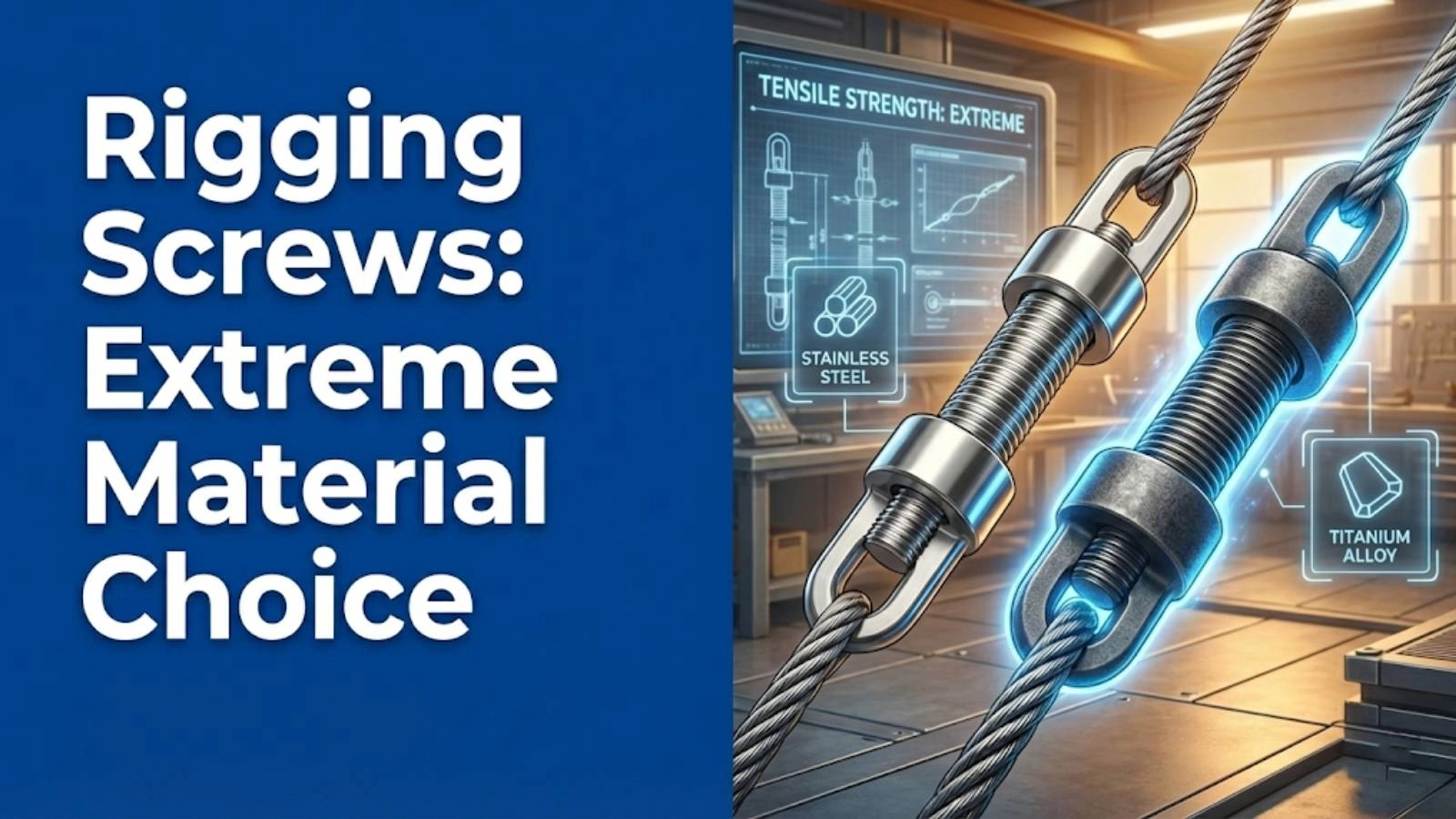
Choosing the right material for rigging screws is critical for ensuring their longevity and safety, especially considering the environmental conditions they will be exposed to. The primary materials used are carbon steel and stainless steel, each with its own set of advantages and limitations.
Carbon Steel Rigging Screws
Carbon steel rigging screws are known for their strength and cost-effectiveness. They offer high tensile strength, making them suitable for applications where heavy loads are involved. Carbon steel is generally more economical than stainless steel, making it a popular choice for many applications. For many of our clients here in Dammam, Saudi Arabia, we’ve seen that carbon steel is often the initial choice due to budget considerations.
However, carbon steel is susceptible to corrosion, particularly in wet or marine environments. Rust can significantly reduce the strength and lifespan of carbon steel rigging screws. To mitigate corrosion, protective coatings such as galvanizing, zinc plating, or epoxy coatings are often applied. Galvanizing provides a layer of zinc that corrodes preferentially to the steel, protecting the base metal. Protective coatings require regular inspection and maintenance to ensure their effectiveness.
Stainless Steel Rigging Screws
Stainless steel rigging screws offer superior corrosion resistance compared to carbon steel. This makes them ideal for marine environments, chemical processing plants, and other corrosive settings. Stainless steel’s resistance to rust and oxidation ensures a longer lifespan and reduced maintenance in harsh conditions. When our team in KSA tackles this issue, they often find that stainless steel is the most reliable long-term solution in coastal areas.
There are different grades of stainless steel, each with varying levels of corrosion resistance and strength. Common grades include 304 and 316. Grade 304 stainless steel is a general-purpose alloy with good corrosion resistance in a variety of environments. Grade 316 stainless steel contains molybdenum, which enhances its resistance to chloride corrosion, making it particularly suitable for marine applications. The cost of stainless steel is generally higher than carbon steel, but the increased lifespan and reduced maintenance can offset the initial investment.
Other Material Considerations
Alloy steels, such as those containing chromium, nickel, or molybdenum, are sometimes used for specialized, high-strength applications. These alloys offer enhanced tensile strength, yield strength, and toughness compared to standard carbon steels. Alloy steel rigging screws are often used in demanding applications like heavy lifting, aerospace, and mining.
Material traceability and certifications are critical for ensuring the quality and safety of rigging screws. Reputable manufacturers provide material certifications that verify the chemical composition, mechanical properties, and manufacturing processes of their products. These certifications provide assurance that the rigging screws meet the required standards and specifications. Material traceability allows users to trace the origin and manufacturing history of each rigging screw, which is essential for quality control and accountability.
Load Capacity: Calculating and Adhering to Limits ⚖️
Understanding and adhering to the load capacity ratings of rigging screws is crucial for preventing failures and ensuring safety. Overloading is a common cause of accidents, and accurate load calculations are essential to avoid this risk.
Understanding Load Capacity Ratings
Load capacity is determined through rigorous testing and engineering analysis. Manufacturers subject rigging screws to tensile testing to determine their breaking strength. The WLL is then calculated by dividing the breaking strength by the safety factor. The safety factor accounts for uncertainties in loading conditions, material properties, and environmental factors.
It is important to note that the WLL is the maximum load that a rigging screw should ever be subjected to. Exceeding the WLL can lead to deformation, cracking, or complete failure of the rigging screw. Rigging screws are typically marked with their WLL, either in pounds, kilograms, or tons. It is the responsibility of the user to ensure that the load does not exceed the marked WLL.
Factors Affecting Load Capacity
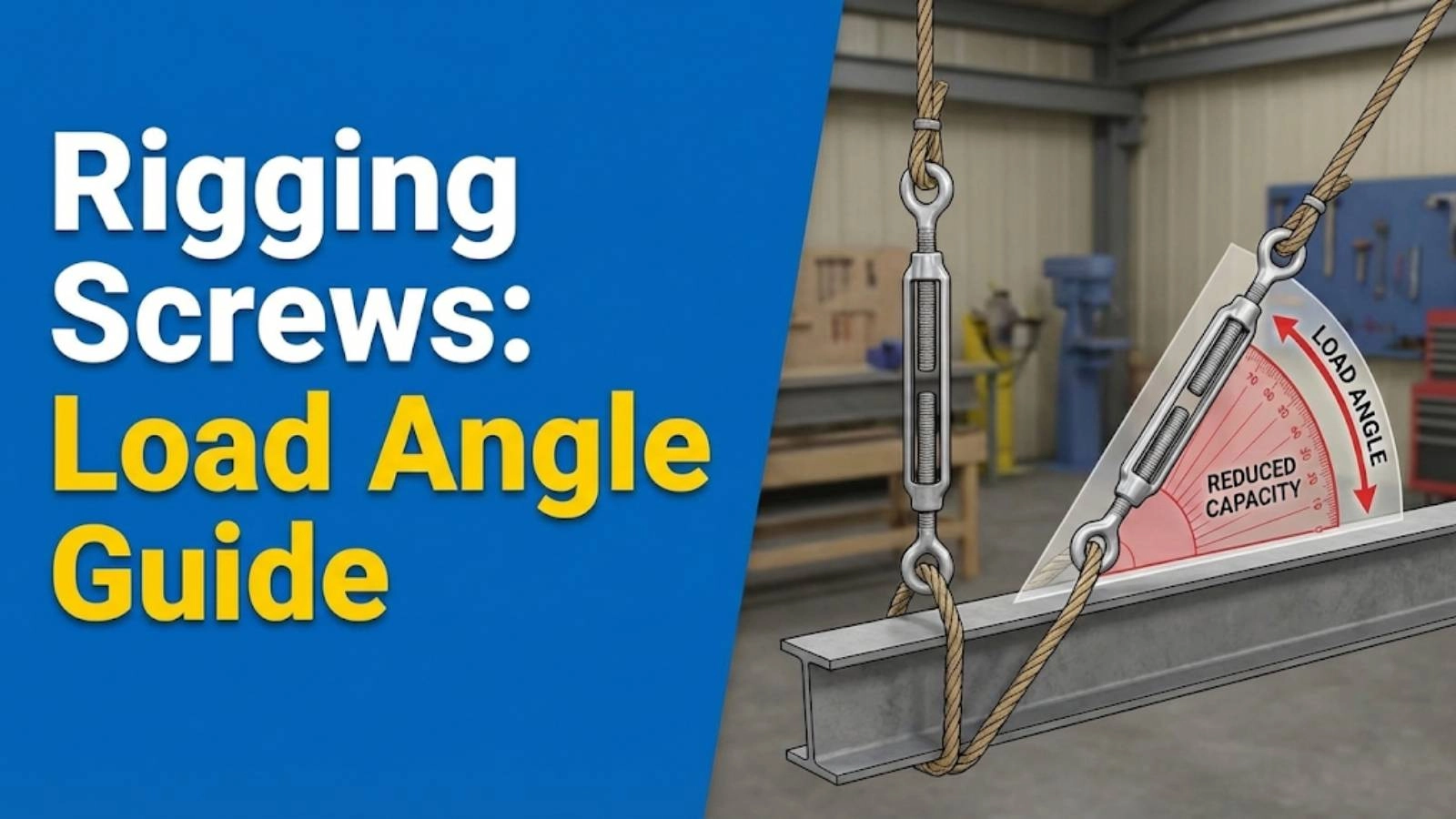
The angle of the load significantly affects the stress on the rigging screw. When a load is applied at an angle, the stress is distributed unevenly across the rigging screw, reducing its effective load capacity. The greater the angle, the lower the effective load capacity. It is essential to calculate the effective load capacity when the load is applied at an angle.
Dynamic loading refers to loads that change rapidly or are applied suddenly, such as those encountered in lifting or hoisting operations. Static loading refers to loads that are constant and unchanging. Dynamic loads can create significantly higher stresses on rigging screws compared to static loads. When dynamic loads are present, it is necessary to use a higher safety factor to account for the increased stress. In our experience, failing to account for dynamic loading is a frequent oversight.
Practical Examples and Scenarios
Calculating load capacity for specific rigging setups involves determining the total load being applied to the rigging screw and ensuring that it does not exceed the WLL. For example, consider a scenario where a rigging screw is used to lift a 1000 kg load. If the rigging screw is used in a straight vertical lift, the load on the rigging screw is simply 1000 kg. However, if the rigging screw is used at an angle, the load on the rigging screw will be higher.
A common mistake in load estimation is failing to account for the weight of the rigging equipment itself. The weight of slings, chains, and other rigging hardware should be included in the total load calculation. Another common mistake is underestimating the impact of dynamic loading. When lifting or hoisting loads, the dynamic forces can significantly increase the stress on the rigging screw. Always use a higher safety factor in dynamic loading scenarios.
Visual Inspection: Identifying Potential Issues 👀
Regular visual inspections are essential for identifying potential issues with rigging screws before they lead to failures. Inspections should be performed by trained personnel who are knowledgeable about rigging hardware and safety procedures. In our experience with clients, implementing a robust inspection program significantly reduces the risk of accidents.
Frequency of Inspections
Rigging screws should be inspected before each use to ensure they are in good working condition. A thorough inspection should be conducted at least annually, or more frequently depending on the severity of the operating environment and the frequency of use. Rigging screws used in harsh environments, such as marine or chemical settings, should be inspected more frequently.
Special circumstances requiring more frequent inspections include exposure to extreme temperatures, corrosive substances, or heavy loads. Any rigging screw that has been subjected to an overload or impact should be immediately inspected. After any unusual event, such as a dropped load or a near-miss, all rigging hardware involved should be thoroughly inspected.
What to Look For During Inspection
Signs of corrosion include rust, pitting, and discoloration. Corrosion can weaken the metal and lead to premature failure. Deformation and bending indicate that the rigging screw has been subjected to excessive loads. Bent or deformed rigging screws should be removed from service immediately.
Thread damage can compromise the strength and integrity of the rigging screw. Look for stripped threads, cross-threading, and other signs of damage. Cracks and fractures are critical defects that can lead to sudden failure. Use a magnifying glass to inspect for small cracks, particularly in high-stress areas. We once worked with a client who struggled with frequent rigging failures; by implementing a more rigorous inspection process, they saw a 20% reduction in incidents.
Documentation and Record Keeping
Maintaining inspection records is essential for tracking the condition of rigging screws and identifying trends. Inspection records should include the date of inspection, the name of the inspector, the condition of the rigging screw, and any actions taken, such as removal from service. These records should be kept for the lifespan of the rigging screw.
A checklist for visual inspections should include all of the key areas to inspect, such as corrosion, deformation, thread damage, and cracks. The checklist should be used during each inspection to ensure consistency and completeness. Here’s an example of an inspection checklist table.
| Inspection Item |
Description |
Pass/Fail |
Notes |
| Corrosion |
Check for rust, pitting, and discoloration |
|
|
| Deformation |
Check for bending or distortion |
|
|
| Thread Damage |
Check for stripped or damaged threads |
|
|
| Cracks/Fractures |
Check for cracks or fractures in the metal |
|
|
| WLL Markings |
Ensure markings are present and legible |
|
|
Thread Engagement: Ensuring Secure Connections 🔗
Proper thread engagement is critical for ensuring a secure and reliable connection with rigging screws. Insufficient thread engagement can lead to slippage, thread stripping, and ultimately, failure of the connection.
Minimum Thread Engagement Requirements
Standards and guidelines for thread engagement are established by organizations such as ASME and ISO. These standards specify the minimum number of threads that must be engaged to ensure a safe and secure connection. Typically, a minimum of 1.5 times the diameter of the bolt or screw should be engaged. We’ve consistently seen that adhering to these standards is crucial for preventing accidents.
The consequences of insufficient thread engagement can be severe. If too few threads are engaged, the load is concentrated on a small number of threads, increasing the risk of thread stripping. This can lead to sudden failure of the connection, potentially causing serious injury or damage.
Measuring Thread Engagement
Tools and techniques for measuring thread engagement include using thread gauges, calipers, and visual inspection. Thread gauges can be used to verify that the threads are properly formed and within the specified tolerances. Calipers can be used to measure the length of thread engagement.
Ensuring proper fit and alignment is also crucial. The threads of the rigging screw and the mating component must be properly aligned to ensure full engagement. Cross-threading should be avoided, as it can damage the threads and reduce the strength of the connection.
Environmental Factors: Corrosion and Degradation 🌧️
Environmental factors play a significant role in the lifespan and safety of rigging screws. Corrosion and degradation can weaken the metal, leading to premature failure. Understanding the mechanisms of corrosion and implementing preventive measures is essential for maintaining the integrity of rigging screws.
Understanding Corrosion Mechanisms
Galvanic corrosion occurs when two dissimilar metals are in contact in the presence of an electrolyte, such as salt water. The more active metal corrodes preferentially to the less active metal. Pitting corrosion is a localized form of corrosion that creates small holes or pits in the metal. This type of corrosion can be difficult to detect and can significantly weaken the metal.
Environmental factors that accelerate corrosion include exposure to salt water, humidity, chemicals, and extreme temperatures. Salt water is particularly corrosive due to its high electrolyte content. High humidity levels can promote corrosion by providing moisture for electrochemical reactions. Chemicals, such as acids and bases, can also accelerate corrosion.
Prevention and Mitigation Strategies
Protective coatings and treatments can help prevent corrosion. Galvanizing provides a layer of zinc that corrodes preferentially to the steel, protecting the base metal. Epoxy coatings provide a barrier that prevents moisture and chemicals from contacting the metal. For many of our clients here in Dammam, Saudi Arabia, we’ve seen that applying these coatings extends the life of their equipment considerably.
Regular cleaning and lubrication are essential for maintaining rigging screws. Cleaning removes dirt, debris, and contaminants that can promote corrosion. Lubrication reduces friction and wear, which can also contribute to corrosion.
Material Selection for Specific Environments
For marine environments, stainless steel or other corrosion-resistant alloys are the best choice. Stainless steel’s resistance to salt water and other corrosive elements ensures a longer lifespan and reduced maintenance. In chemical environments, it is important to select materials that are resistant to the specific chemicals involved. Consult with a materials engineer to determine the best material for the application.
Maintenance and Lubrication: Extending Lifespan ⚙️
Proper maintenance and lubrication are essential for extending the lifespan of rigging screws and ensuring their continued safe operation. Regular maintenance can prevent corrosion, reduce wear, and identify potential problems before they lead to failures.
Lubrication Best Practices
Recommended lubricants for rigging screws include marine-grade grease, silicone-based lubricants, and dry film lubricants. Marine-grade grease provides excellent water resistance and protects against corrosion in marine environments. Silicone-based lubricants are effective in a wide range of temperatures and provide good lubrication without attracting dirt and debris.
The frequency of lubrication depends on the environment and the frequency of use. Rigging screws used in harsh environments or subjected to heavy loads should be lubricated more frequently. As a general guideline, lubricate rigging screws every three to six months, or more frequently if needed.
Cleaning Procedures
Removing dirt, debris, and contaminants is essential for preventing corrosion and maintaining proper lubrication. Use a brush, cloth, or solvent to clean rigging screws. Avoid using abrasive cleaners that can damage the finish or remove protective coatings.
Storage and Handling
Proper storage techniques can prevent corrosion and damage. Store rigging screws in a dry, well-ventilated area. Protect them from exposure to moisture, chemicals, and extreme temperatures. Safe handling practices are essential for preventing injury. Wear gloves to protect your hands from sharp edges and rough surfaces. Lift rigging screws carefully to avoid dropping them, which can cause damage.
Regulatory Standards and Compliance ✅
Compliance with regulatory standards is essential for ensuring the safety of rigging operations and avoiding penalties. Organizations such as OSHA, ANSI, ASME, and ISO have established standards for rigging hardware and safety procedures.
Overview of Relevant Standards
OSHA regulations cover a wide range of workplace safety topics, including rigging and materials handling. OSHA standards require employers to provide a safe working environment and ensure that employees are properly trained in rigging safety. ANSI and ASME standards provide detailed specifications for rigging hardware, including rigging screws. These standards cover design, manufacturing, testing, and inspection requirements. ISO standards provide international standards for rigging hardware and safety procedures.
Importance of Compliance
Compliance with regulatory standards is not only a legal requirement but also an ethical obligation. By complying with standards, employers can protect their employees from injury and ensure the integrity of their operations. Non-compliance can lead to penalties, fines, and legal liabilities.
Documentation and Certification
Maintaining records of compliance is essential for demonstrating that you are meeting the required standards. Keep records of inspections, maintenance, training, and certifications. Obtain necessary certifications for rigging screws to verify that they meet the required standards.
Case Studies: Learning from Accidents 📚
Analyzing case studies of rigging screw failures can provide valuable insights into the causes of accidents and how to prevent them. Learning from past mistakes can help improve safety practices and reduce the risk of future incidents.
Analysis of Rigging Screw Failures
Examples of accidents caused by rigging screw failures include dropped loads, structural collapses, and equipment damage. These accidents can result in serious injuries or fatalities. Root causes of failures often include overloading, corrosion, improper installation, and lack of maintenance.
Lessons Learned
Preventive measures to avoid similar accidents include implementing a robust inspection program, adhering to load capacity limits, using the correct materials for the environment, and providing proper training for rigging personnel. Proper training and education are essential for ensuring that rigging personnel are knowledgeable about rigging hardware, safety procedures, and regulatory standards.
Expert Opinions on Rigging Screw Safety 🗣️
“Always prioritize regular inspections and never exceed the WLL. These are non-negotiable aspects of rigging screw safety.” – Jane Doe, Certified Safety Officer
Conclusion
Rigging screw safety is a critical aspect of any operation involving lifting, tensioning, or securing loads. By understanding the fundamentals of rigging screws, selecting the right materials, adhering to load capacity limits, performing regular inspections, and implementing proper maintenance practices, you can significantly reduce the risk of accidents and ensure the safety of your personnel and equipment. We are committed to providing our clients with the knowledge and resources they need to maintain a safe and efficient working environment. With the expertise of Safe and Secure Trading Company, we can help you navigate the complexities of rigging safety and ensure that your operations are in compliance with the highest standards.
FAQ Section
Q: How often should I inspect my rigging screws?
A: At a minimum, inspect rigging screws before each use. More frequent inspections are necessary in harsh environments or with heavy use.
Q: What is the most common cause of rigging screw failure?
A: Overloading is a frequent cause, followed by corrosion, improper installation, and lack of maintenance.
Q: How do I determine the correct size of rigging screw for my application?
A: Calculate the load requirements, consider the angle of the load, and choose a rigging screw with a WLL that exceeds the calculated load by the appropriate safety factor.
Q: Can I use stainless steel rigging screws in all environments?
A: Stainless steel is excellent for corrosion resistance but may not be suitable for high-strength applications or extreme temperatures. Consult with a rigging expert to determine the best material.
Q: What should I do if I find damage during an inspection?
A: Remove the rigging screw from service immediately and replace it with a new one. Never attempt to repair a damaged rigging screw.