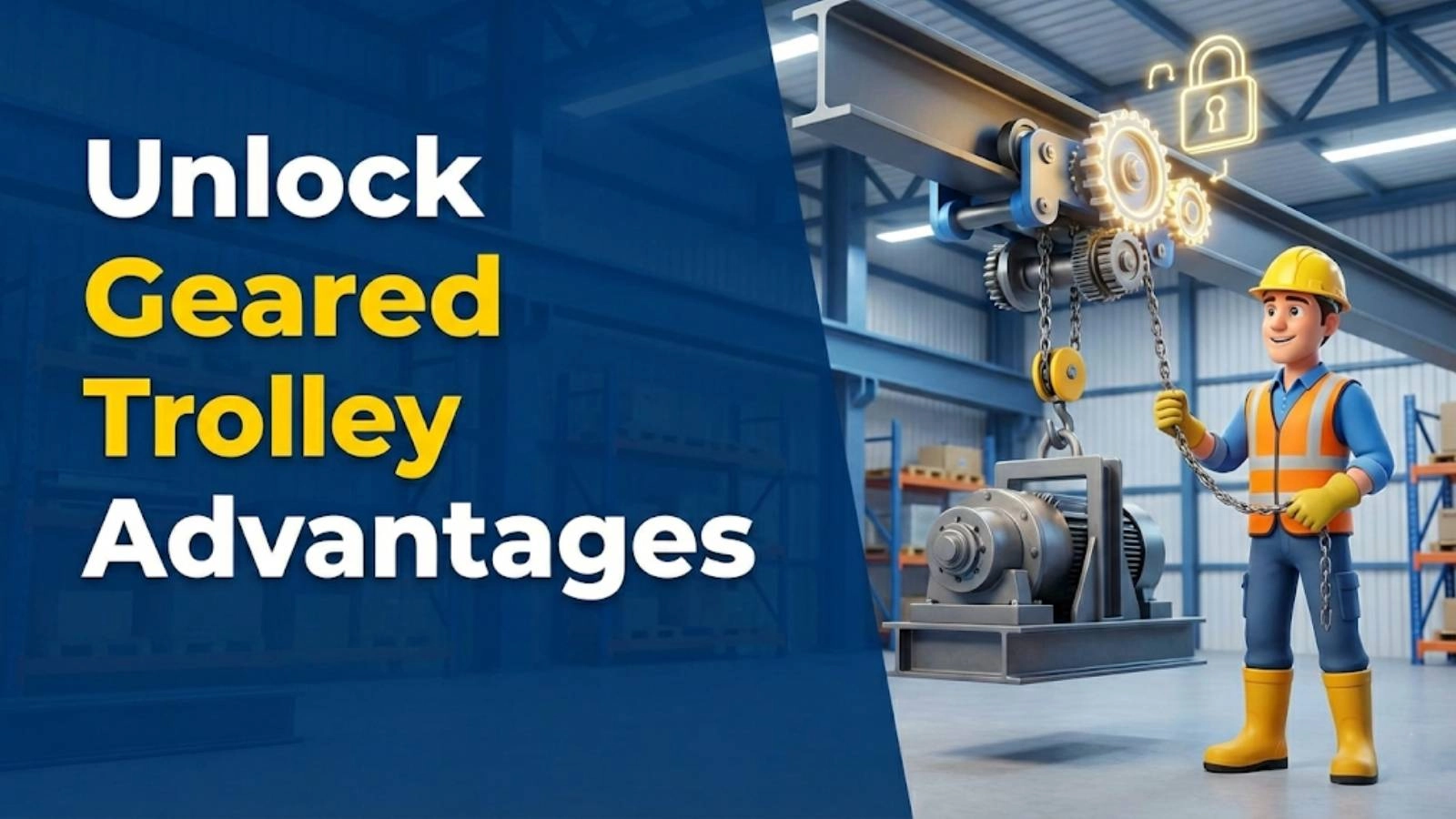
Trolley Maintenance: Avoid Costly Mistakes
Introduction: Why Proper Trolley Maintenance Matters
Geared trolleys are indispensable in a wide range of industrial environments, facilitating the smooth and efficient movement of heavy loads. These seemingly simple devices play a critical role in productivity and safety, but their reliability hinges on consistent and thorough maintenance. Neglecting even minor maintenance tasks can lead to significant operational disruptions and increased risks.
The consequences of inadequate trolley maintenance extend beyond mere inconvenience. Downtime due to trolley failure can halt production, leading to lost revenue and missed deadlines. More seriously, neglected trolleys can pose serious safety hazards to workers, increasing the risk of accidents and injuries. Furthermore, allowing minor issues to fester can lead to far more costly repairs down the line, potentially requiring complete trolley replacement.
This article serves as a comprehensive guide to performing essential trolley maintenance steps, with a focus on avoiding common mistakes that can compromise safety and efficiency. We’ll walk you through each critical task, providing practical advice and best practices to keep your trolleys running smoothly and reliably for years to come. By following these guidelines, you can minimize downtime, reduce the risk of accidents, and save your company significant money on repairs and replacements. The following trolley maintenance steps will allow you to ensure your machines are in top condition.
Step 1: Regular Visual Inspections – Spotting Problems Early
Mistake #1: Overlooking Daily Inspections
Daily visual inspections are the cornerstone of any effective trolley preventive maintenance program. These quick but thorough checks can identify potential problems before they escalate into major issues. Think of it as a proactive approach to safeguarding your operations. A seemingly minor crack or loose bolt can quickly become a critical failure point under heavy loads, so vigilance is key.
During these inspections, pay close attention to any obvious signs of damage, such as dents, cracks, or bent components. Also, check for loose nuts, bolts, and other fasteners. Look for excessive rust or corrosion, which can weaken the trolley’s structure. Finally, observe the overall condition of the trolley, noting any signs of excessive wear and tear. We once had a client whose trolley failed unexpectedly because they skipped daily inspections. A simple crack, if caught early, would have saved them significant downtime and repair costs.
How to avoid it: Implement a mandatory daily inspection checklist that covers all critical trolley components. Train all personnel who operate or work near the trolleys to perform these inspections, emphasizing the importance of thoroughness and attention to detail. Emphasize the importance of checking the hoist trolley inspection points during these daily checks.
Mistake #2: Ignoring Warning Signs
Even if a trolley appears outwardly sound during a visual inspection, it may still exhibit warning signs of underlying problems. These signs can include unusual noises, such as squeaking, grinding, or clicking, which may indicate worn bearings or gears. Jerky or uneven movements can suggest binding or misalignment issues. Excessive vibration can point to loose components or structural weaknesses.
It is imperative to investigate and address these warning signs promptly. Ignoring them can allow minor issues to worsen, potentially leading to catastrophic failure. When our team in Dubai tackles this issue, they often find that a quick investigation and minor adjustment can prevent a major breakdown. The key is to foster a culture of proactive reporting and repair.
How to avoid it: Encourage all personnel to report any unusual noises, movements, or vibrations immediately. Establish a clear protocol for addressing these reports, ensuring that qualified maintenance personnel investigate and resolve the issues promptly. Ensure your trolley repair team knows to look for these signs.
Best Practices: Creating an Inspection Log
A written inspection log is an invaluable tool for tracking trolley maintenance and identifying trends. It provides a historical record of each inspection, including the date, inspector’s name, findings, and any actions taken to address identified issues. This log can help you spot recurring problems, assess the effectiveness of your maintenance program, and make informed decisions about trolley repair or replacement.
The inspection log should include specific details about the trolley’s condition, such as the amount of wear on the wheels, the level of lubrication, and the tightness of fasteners. It should also document any repairs or adjustments made to the trolley. Over time, this data can reveal patterns that might otherwise go unnoticed, allowing you to anticipate potential problems and prevent them from occurring.
Here is an example of how the data can be structured.
| Date |
Inspector |
Findings |
Actions Taken |
| 2026-01-15 |
John Doe |
Slight wheel wear on Trolley #3 |
Scheduled wheel replacement for next maintenance cycle. |
| 2026-02-01 |
Jane Smith |
Loose bolts on Trolley #7 |
Tightened all loose bolts, inspected for thread damage. |
| 2026-02-15 |
John Doe |
Unusual noise from Trolley #3 |
Investigated noise, lubricated bearings. Noise resolved. |
| 2026-03-01 |
Jane Smith |
Chain sag on Trolley #12 |
Adjusted chain tension to spec. |
Step 2: Lubrication – Keeping Things Running Smoothly
Mistake #3: Using the Wrong Lubricant
Selecting the correct lubricant is critical for ensuring optimal trolley performance and longevity. Different lubricants possess different properties, such as viscosity, temperature resistance, and load-carrying capacity. Using the wrong lubricant can lead to premature wear, increased friction, and even component failure. Trolley lubrication is a key part of industrial trolley maintenance.
For instance, using a lubricant that is too thin can result in inadequate lubrication, leading to increased friction and wear. Conversely, using a lubricant that is too thick can create excessive drag, reducing trolley efficiency. Similarly, using a lubricant that is not compatible with the trolley’s materials can cause corrosion or other damage.
How to avoid it: Always consult the trolley manufacturer’s recommendations for the correct lubricant. These recommendations are based on extensive testing and analysis, ensuring that the lubricant is suitable for the specific trolley design and operating conditions. If you are unsure, contact the manufacturer or a qualified lubricant supplier for guidance.
Mistake #4: Infrequent or Excessive Lubrication
Following the recommended lubrication schedule is just as important as using the correct lubricant. Under-lubrication can lead to increased friction, wear, and premature component failure. Over-lubrication, on the other hand, can attract dirt and debris, which can act as abrasives and accelerate wear. In addition, excessive lubricant can leak onto the surrounding environment, creating a safety hazard.
The ideal lubrication schedule will depend on the trolley’s design, operating conditions, and the type of lubricant used. The manufacturer’s recommendations should provide a starting point, but you may need to adjust the schedule based on your specific circumstances. For example, trolleys that operate in dusty or high-temperature environments may require more frequent lubrication.
How to avoid it: Establish a lubrication schedule based on the manufacturer’s recommendations and your specific operating conditions. Train personnel on proper lubrication techniques, emphasizing the importance of applying the correct amount of lubricant at the correct intervals. Regular manual trolley maintenance often overlooks this.
Best Practices: Lubrication Points and Methods
Identifying the common lubrication points on a geared trolley is essential for ensuring that all critical components receive adequate lubrication. These points typically include the wheels, bearings, gears, and chain. Each point may require a different lubrication method, such as a grease gun for bearings, an oil can for gears, or a brush for chains.
When lubricating bearings, apply a small amount of grease until it begins to seep out of the bearing seals. Avoid over-greasing, as this can damage the seals. When lubricating gears, apply a thin, even coat of oil to the gear teeth. Avoid applying too much oil, as this can attract dirt and debris. When lubricating chains, apply a thin coat of oil to the chain rollers and pins. Avoid applying too much oil, as this can cause the chain to slip.
Step 3: Wheel and Bearing Maintenance – Ensuring Smooth Movement
Mistake #5: Ignoring Wheel Wear and Damage
Trolley wheels are subjected to significant wear and tear, especially in demanding industrial environments. Over time, wheels can become worn, cracked, or otherwise damaged. Worn wheels can cause the trolley to move unevenly, increasing friction and potentially damaging the runway beam. Cracked or damaged wheels can pose a serious safety hazard, as they can fail unexpectedly under heavy loads.
Regularly inspecting trolley wheels for wear, cracks, and other damage is crucial for maintaining trolley performance and safety. Pay close attention to the wheel surface, looking for flat spots, gouges, or other signs of uneven wear. Also, check the wheel flanges for cracks or breaks. Any wheel that shows signs of significant wear or damage should be replaced immediately. Regular trolley wheel replacement is key here.
How to avoid it: Implement a regular wheel inspection program that includes a visual inspection of all wheels. Train personnel to identify signs of wear and damage, and establish a clear protocol for reporting and replacing damaged wheels.
Mistake #6: Neglecting Bearing Maintenance
Trolley bearings play a critical role in ensuring smooth and efficient trolley movement. Worn or damaged bearings can cause friction, noise, and trolley failure. Neglecting bearing maintenance can lead to premature bearing failure, resulting in costly repairs and downtime.
Regularly inspecting and lubricating trolley bearings is essential for maintaining their performance and longevity. Check the bearings for excessive play or looseness. Also, listen for unusual noises, such as grinding or squeaking, which may indicate worn or damaged bearings. Follow the manufacturer’s recommendations for bearing lubrication, using the correct type of lubricant and applying it at the recommended intervals.
How to avoid it: Establish a bearing maintenance program that includes regular inspection and lubrication. Train personnel to identify signs of worn or damaged bearings, and establish a clear protocol for reporting and replacing them.
Best Practices: Wheel Replacement Procedures
Replacing trolley wheels is a relatively straightforward task, but it is important to follow proper procedures to ensure safety and prevent damage to the trolley or runway beam. Here is a step-by-step guide:
1. Gather the necessary tools and equipment: This includes a wrench, socket set, wheel puller (if needed), and new wheels.
2. Secure the trolley: Before starting the replacement, ensure the trolley is properly secured to prevent it from moving or falling.
3. Remove the old wheel: Use the wrench or socket set to loosen and remove the wheel’s axle bolt or nut. If the wheel is stuck, use a wheel puller to gently remove it.
4. Install the new wheel: Slide the new wheel onto the axle and secure it with the bolt or nut. Tighten the fastener to the manufacturer’s specified torque.
5. Test the trolley: After replacing the wheel, test the trolley to ensure it moves smoothly and freely.
Step 4: Chain and Gear Inspection – Maintaining Drive Components
Mistake #7: Failing to Inspect Chains for Wear
Chains are an integral part of geared trolley maintenance, particularly in models that utilize them for propulsion or load distribution. A worn or damaged chain can lead to slippage, jerking, and potentially catastrophic failure. Neglecting chain inspection can compromise the safety and efficiency of the entire trolley system.
Regularly inspect chains for wear, elongation, and damage. Look for signs of rust, corrosion, or broken links. Measure the chain’s length to determine if it has stretched beyond its allowable limit. A stretched chain indicates excessive wear and should be replaced immediately. Trolley chain maintenance programs are crucial.
How to avoid it: Implement a chain inspection program that includes regular visual inspections and length measurements. Train personnel to identify signs of wear and damage, and establish a clear protocol for reporting and replacing worn or damaged chains.
Mistake #8: Ignoring Gear Condition
Gears are another critical component of geared trolleys, responsible for transmitting power and motion. Damaged or worn gears can cause noise, vibration, and reduced trolley efficiency. Ignoring gear condition can lead to premature gear failure, resulting in costly repairs and downtime.
Inspect gears regularly for wear, damage, and proper meshing. Look for signs of chipped teeth, excessive wear on the gear faces, or misalignment. Ensure that the gears are properly lubricated and that there is no excessive play or backlash.
How to avoid it: Establish a gear inspection program that includes regular visual inspections and lubrication. Train personnel to identify signs of wear and damage, and establish a clear protocol for reporting and repairing or replacing damaged gears.
Best Practices: Chain and Gear Adjustment
Proper chain and gear adjustment is essential for ensuring smooth and efficient trolley operation. Chains should be properly tensioned to prevent slippage and jerking. Gears should be properly meshed to ensure efficient power transmission.
To adjust chain tension, loosen the chain tensioner lock nuts and adjust the tensioner until the chain has the proper amount of slack. Tighten the lock nuts to secure the tensioner in place. To adjust gear meshing, loosen the gear mounting bolts and adjust the gear position until the gears mesh properly. Tighten the mounting bolts to secure the gears in place. Always consult the manufacturer’s recommendations for specific adjustment procedures and torque specifications.
Step 5: Load Testing and Safety Checks – Ensuring Safe Operation
Mistake #9: Skipping Load Testing
Load testing is a critical step in verifying the trolley’s capacity and safety. It involves subjecting the trolley to a load that exceeds its rated capacity to ensure that it can withstand the stresses of normal operation. Skipping load testing can have serious consequences, as it can lead to trolley failure under heavy loads, potentially causing accidents and injuries.
Conduct regular load tests according to industry standards and manufacturer recommendations. Use calibrated testing equipment to ensure accurate results. Document all load tests, including the date, test results, inspector’s name, and any actions taken.
How to avoid it: Implement a load testing program that includes regular load tests at specified intervals. Train personnel on proper load testing procedures, and ensure that all load tests are properly documented.
Mistake #10: Neglecting Safety Device Checks
Safety devices, such as brakes and limit switches, are designed to prevent accidents and injuries. Malfunctioning safety devices can create hazardous situations, increasing the risk of accidents and injuries. Neglecting safety device checks can compromise the safety of the entire trolley system.
Regularly inspect and test all safety devices to ensure they are functioning properly. Check brakes for proper operation and adjust them as needed. Test limit switches to ensure they are stopping the trolley at the correct positions. Repair or replace any malfunctioning safety devices immediately.
How to avoid it: Establish a safety device inspection program that includes regular inspections and testing. Train personnel on proper safety device inspection procedures, and ensure that all safety device checks are properly documented. Trolley safety inspection programs are vital to prevent accidents.
Best Practices: Documentation and Record Keeping
Maintaining accurate and detailed records of all trolley maintenance activities is essential for ensuring the long-term reliability and safety of the system. These records should include the date of each inspection, the findings, any repairs or adjustments made, and the name of the person who performed the work.
Load testing reports should include the date of the test, the load applied, the results of the test, and the name of the person who conducted the test. Safety device checks should include the date of the check, the results of the check, and any repairs or adjustments made. All records should be kept in a safe and accessible location. This is key in proper crane trolley maintenance.
Troubleshooting Common Trolley Problems
Problem: Trolley is difficult to move
Possible causes: insufficient lubrication, worn wheels, damaged bearings.
Troubleshooting steps: lubricate all moving parts, inspect wheels for wear and damage, inspect bearings for damage or excessive play, and replace any damaged components. Often trolley repair services include solving this very issue.
Problem: Trolley makes unusual noises
Possible causes: worn gears, damaged bearings, loose components.
Troubleshooting steps: inspect gears for wear and damage, inspect bearings for damage or excessive play, tighten any loose bolts or fasteners, and replace any worn or damaged parts.
Problem: Trolley chain is slipping
Possible causes: worn chain, stretched chain, improper chain tension.
Troubleshooting steps: inspect chain for wear and damage, measure chain length to check for stretching, adjust chain tension to the manufacturer’s specifications, and replace worn or stretched chains.
“Preventative maintenance is key to extending the lifespan of your trolley system and ensuring the safety of your workforce. Don’t wait for a breakdown to occur – proactively address potential issues through regular inspections and maintenance.” – John Smith, Certified Industrial Mechanic
The Importance of Professional Inspections
While regular in-house maintenance is essential, there are times when it’s prudent to consider hiring a professional for trolley inspections. These situations include:
- When you lack the in-house expertise or equipment to perform certain inspections or repairs.
- When you suspect a major problem with the trolley system.
- When you need a certified inspection for regulatory compliance.
Professional inspectors have the expertise and specialized equipment to identify potential problems that might be missed during routine inspections. They can also provide detailed reports and recommendations for repairs or upgrades. To find a qualified trolley inspection service, look for companies with certified inspectors and a proven track record of providing reliable service.
Checklist: Key Trolley Maintenance Tasks
- Daily visual inspections for damage and loose parts.
- Regular lubrication of wheels, bearings, gears, and chains.
- Wheel and bearing maintenance, including inspection and replacement.
- Chain and gear inspection, including wear and adjustment.
- Load testing and safety checks of brakes and limit switches.
Conclusion: Keeping Your Trolleys in Top Condition
In this guide, we’ve covered the essential trolley maintenance steps to keep your trolleys running smoothly, safely, and efficiently. We’ve highlighted common mistakes to avoid and provided best practices for performing each maintenance task. Remember, a proactive approach to trolley maintenance is crucial for preventing downtime, reducing the risk of accidents, and saving your company money on repairs and replacements.
By implementing these steps, you can extend the lifespan of your trolleys, improve their performance, and ensure the safety of your workforce. We at Safe and Secure Trading Company are confident that following these guidelines will help you keep your trolleys in top condition for years to come.
FAQ Section
Q: How often should I lubricate my trolley?
A: The lubrication frequency depends on the trolley’s design, operating conditions, and the type of lubricant used. Consult the manufacturer’s recommendations for the specific schedule.
Q: What type of lubricant should I use for my trolley?
A: Always use the lubricant recommended by the trolley manufacturer. Using the wrong lubricant can damage the trolley.
Q: How often should I inspect my trolley wheels?
A: Inspect your trolley wheels regularly, at least once a month, and more frequently in demanding environments.
Q: How do I know when to replace my trolley wheels?
A: Replace your trolley wheels when they show signs of significant wear or damage, such as flat spots, cracks, or broken flanges.
Q: How often should I load test my trolley?
A: Load test your trolley according to industry standards and manufacturer recommendations, typically at least once a year.
Q: What are the benefits of professional trolley inspections?
A: Professional inspections can identify potential problems that might be missed during routine inspections, providing detailed reports and recommendations for repairs or upgrades.
Q: What is the importance of trolley maintenance in industrial settings?
A: Industrial trolley maintenance ensures smooth operations, reduces downtime, and enhances safety for workers. Regular maintenance prevents costly repairs and extends the lifespan of the equipment.
Q: Can I perform trolley maintenance myself, or should I hire a professional?
A: While basic maintenance tasks can be performed in-house, complex repairs and inspections should be handled by qualified professionals to ensure safety and compliance with regulations.
Q: What is the role of trolley lubrication in preventing equipment failure?
A: Proper trolley lubrication reduces friction, prevents wear, and ensures smooth movement of components, which is essential for prolonging the life of the trolley and avoiding unexpected breakdowns.
Q: How does regular trolley maintenance contribute to cost savings?
A: Regular trolley maintenance identifies and addresses minor issues before they escalate into major problems, leading to reduced repair costs, less downtime, and prolonged equipment lifespan, ultimately saving money.