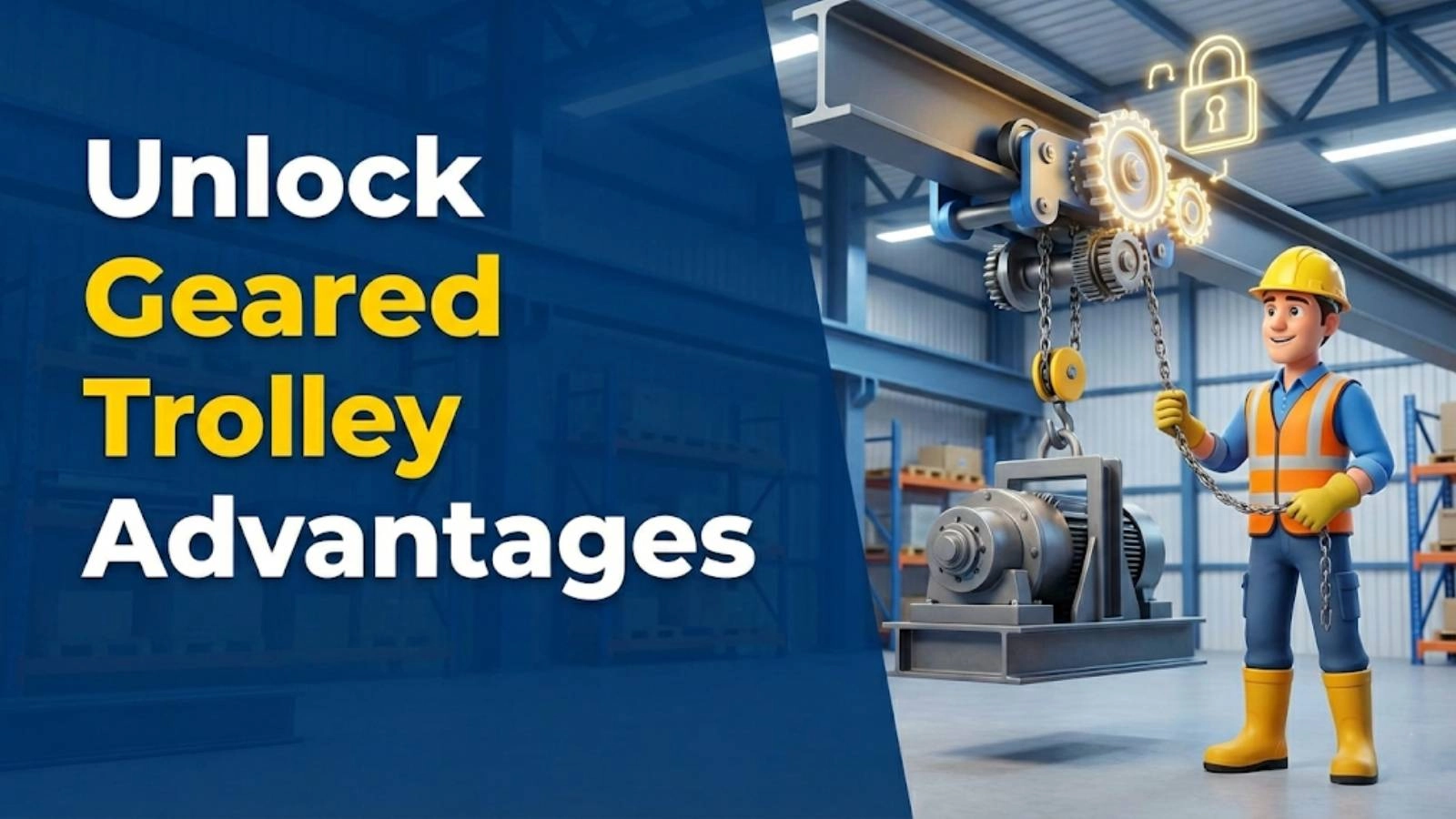
A geared trolley is an indispensable piece of equipment for any operation that involves lifting and moving heavy loads. However, selecting the right geared trolley requires careful consideration of various factors to ensure safety, efficiency, and longevity. This geared trolley buying guide will walk you through the key geared trolley features to consider when making your purchase.
1. Load Capacity and Safety Factor
✅ When selecting a geared trolley, the load capacity and safety factor are paramount. Choosing a trolley with insufficient capacity can lead to catastrophic failures, endangering personnel and damaging equipment. Conversely, an excessively large capacity might lead to unnecessary costs.
1.1. Determining Required Load Capacity
To determine the required load capacity, you must accurately assess the maximum weight the trolley will need to handle. This isn’t just about the static weight of the load. It’s also crucial to consider dynamic loads, which are the additional forces generated during lifting, acceleration, and deceleration. We recommend adding a buffer to account for unexpected overloads or variations in load weight. For many of our clients here in Dammam, we’ve seen that underestimating load requirements is a common mistake.
1.2. Understanding Safety Factors
The safety factor is a crucial aspect of geared trolley design, representing the ratio of the trolley’s ultimate load-bearing capacity to its rated working load. A higher safety factor indicates a greater margin of safety. Industry standards, such as those set by ASME and OSHA, often dictate minimum safety factors for lifting equipment. Understanding these regulations is vital for compliance and ensuring the safety of your operations. We at Safe and Secure Trading Company prioritize adherence to these standards in all our recommendations.
1.3. Consequences of Exceeding Load Limits
Exceeding the load limits of a geared trolley can have severe consequences. Overloading can cause structural damage to the trolley, leading to component failure, dropped loads, and potential injuries to workers. Ignoring load capacity ratings can also result in costly downtime and equipment replacement. For instance, we had a client who overloaded their geared trolley regularly, resulting in premature wear of the gears and eventual failure.
2. Wheel Material and Durability
✨ The wheel material significantly impacts the performance, durability, and lifespan of a geared trolley. Different materials offer varying levels of wear resistance, noise reduction, and protection for the I-beam or track on which the trolley operates. Proper wheel material selection ensures smooth and efficient operation while minimizing maintenance costs.
2.1. Analysis of Different Wheel Materials
Steel wheels offer high strength and durability, making them suitable for heavy-duty applications. Cast iron wheels provide a good balance of strength and wear resistance but can be noisy. Polyurethane wheels are known for their quiet operation and ability to protect the floor and track from damage. The coefficient of friction also varies among these materials, affecting the force required to move the trolley. For instance, polyurethane wheels generally have a higher coefficient of friction compared to steel, providing better grip.
2.2. Impact of Wheel Material on Track Wear
The choice of wheel material directly affects the wear and tear on the I-beam or track. Steel wheels, while durable, can cause significant wear on the track, especially if the track is not properly lubricated. Polyurethane wheels, on the other hand, are gentler on the track, reducing wear and extending its lifespan. For our clients in industrial settings, we often recommend polyurethane wheels to minimize track maintenance.
2.3. Evaluating Wheel Durability and Lifespan
Assessing the durability and expected lifespan of trolley wheel material involves considering factors such as the operating environment, load frequency, and maintenance practices. High temperatures, humidity, and exposure to chemicals can accelerate wheel degradation. Regular inspection and maintenance, including lubrication and replacement of worn wheels, are crucial for maximizing wheel lifespan and ensuring safe operation. We advise our clients to keep a log of wheel inspections and replacements to track performance.
3. Gear Ratio and Smooth Operation
➡️ The gear ratio of a geared trolley is a crucial factor determining the ease of movement and control, especially when handling heavy loads. A suitable gear ratio ensures that the trolley can be operated smoothly and efficiently, reducing operator strain and enhancing productivity.
3.1. Understanding Gear Ratio and its Impact
The gear ratio is the relationship between the number of teeth on the driving gear and the driven gear. A higher gear ratio means that the operator needs to apply less force to move the trolley but will result in slower movement. Conversely, a lower gear ratio requires more force but allows for faster movement. Understanding this relationship is vital for selecting a geared trolley that matches the specific application and load requirements.
3.2. Benefits of a Higher Gear Ratio
Higher gear ratios are particularly beneficial in heavy-duty applications where the loads are substantial. They provide increased mechanical advantage, allowing the operator to move heavy loads with minimal effort. This reduces operator fatigue, enhances safety, and improves overall productivity. However, the trade-off is a slower speed of movement, which might not be suitable for all applications. For many of our clients in the construction industry, we’ve recommended geared trolley features that allow higher gear ratios for enhanced safety.
3.3. Assessing the Smoothness of Operation
Evaluating the smoothness of the geared trolley‘s operation involves checking for any resistance, friction, or jerky movements. Smooth operation indicates proper gear alignment, lubrication, and overall build quality. Minimizing friction and resistance ensures efficient operation, reduces wear on the trolley components, and enhances operator comfort. We always recommend testing the trolley under load to assess its smoothness.
“The gear ratio is a critical parameter to consider, especially when dealing with heavy loads. A well-chosen gear ratio can significantly reduce operator strain and improve overall efficiency.” – John Smith, Lead Safety Inspector
4. Suspension System and Stability
✅ The suspension system plays a pivotal role in the stability and load distribution of a geared trolley. A well-designed suspension system ensures that the load is evenly distributed across the wheels, preventing tipping and ensuring safe and stable operation.
4.1. Types of Suspension Systems
Different types of suspension systems are available, each with its own advantages and disadvantages. Single-point suspension systems are simple and cost-effective but might not provide the same level of stability as multi-point suspension systems. Multi-point suspension systems distribute the load more evenly, enhancing stability and reducing the risk of tipping, especially when handling off-center loads.
4.2. Enhancing Trolley Stability
Design features such as a wide wheel base and a low center of gravity contribute significantly to trolley stability. A wider wheel base provides a more stable platform, while a low center of gravity reduces the risk of tipping. These features are particularly important when handling heavy or unbalanced loads. We always advise our clients to prioritize trolleys with these stability-enhancing features.
4.3. Impact of Suspension on Load Distribution
The suspension system affects the distribution of weight across the trolley wheels. An uneven load distribution can lead to increased wear on some wheels and reduced performance. A well-designed suspension system ensures that the load is distributed evenly, maximizing wheel lifespan and maintaining consistent trolley performance. For our clients in manufacturing, we’ve seen that proper suspension is crucial for continuous operations.
5. Safety Mechanisms and Features
✨ Safety is paramount when operating geared trolley features. Various safety mechanisms and features are incorporated into geared trolleys to prevent accidents and ensure operator safety. These include overload protection systems, anti-derailment devices, and locking mechanisms.
5.1. Overload Protection Systems
Overload protection systems, such as slip clutches and load limiters, prevent the trolley from being overloaded. These systems detect when the load exceeds the trolley’s rated capacity and automatically stop the lifting operation. This prevents damage to the trolley and reduces the risk of accidents. We consider overload protection systems to be essential safety features.
5.2. Anti-Derailment Devices
Anti-derailment devices prevent the trolley from coming off the track. These devices typically consist of side plates or guides that keep the wheels aligned with the I-beam. They are particularly important when the trolley is operating on uneven or sloped tracks. For our clients in the shipbuilding industry, anti-derailment devices are a must-have due to the dynamic environment.
5.3. Locking Mechanisms and Brakes
Locking mechanisms and brake systems secure the trolley in place when it is not in use or when the load needs to be held stationary. Different types of locking mechanisms are available, including manual brakes, friction brakes, and ratchet mechanisms. The choice of locking mechanism depends on the specific application and load requirements. We advise our clients to choose locking mechanisms that are easy to operate and provide a secure hold.
6. Ease of Installation and Maintenance
➡️ A geared trolley that is easy to install and maintain reduces downtime and labor costs. A simplified installation process ensures that the trolley can be quickly and efficiently put into operation. Easy accessibility for maintenance allows for regular inspections and repairs, extending the trolley’s lifespan.
6.1. Simplified Installation Process
A geared trolley buying guide must emphasize the importance of easy installation for reducing downtime and labor costs. Features such as pre-assembled components, clear instructions, and simple mounting mechanisms contribute to a smooth installation process. We recommend looking for trolleys that can be installed with minimal tools and expertise.
6.2. Accessibility for Maintenance
Design features that facilitate easy access to critical components are essential for maintenance and inspection. This includes easily removable covers, accessible lubrication points, and clear labeling of components. Regular maintenance, including lubrication, inspection, and replacement of worn parts, is crucial for extending the lifespan of the trolley. We always advise our clients to establish a regular maintenance schedule.
6.3. Availability of Spare Parts
The availability of spare parts and the ease of obtaining them is another important consideration. Choosing a manufacturer with a reliable supply chain ensures that spare parts can be quickly and easily obtained when needed. This minimizes downtime and ensures that the trolley can be kept in operation. For our clients with remote operations, we emphasize the importance of having a local supplier for spare parts.
7. I-Beam Compatibility and Adjustment
✅ Ensuring I-beam compatibility is a fundamental step in geared trolley selection. The trolley must be properly sized and adjustable to fit the specific I-beam dimensions. Proper fit and alignment are crucial for safe and efficient operation.
7.1. Measuring I-Beam Dimensions
Accurately measuring the I-beam flange width and thickness is essential before selecting a trolley. Using tools such as calipers and measuring tapes ensures precise measurements. These measurements are used to determine the appropriate trolley size and adjustment range. We recommend double-checking the measurements to avoid errors.
7.2. Adjustable Trolley Designs
Trolleys with adjustable flange width accommodate varying I-beam sizes. The adjustment mechanisms typically involve threaded rods or adjustable side plates. These mechanisms allow the trolley to be precisely fitted to the I-beam, ensuring a secure and stable connection. We advise our clients to choose trolleys with a wide adjustment range to accommodate different I-beam sizes.
7.3. Verifying Proper Fit and Alignment
After installation, it is important to verify proper fit and alignment. This involves checking that the trolley wheels are properly aligned with the I-beam and that the trolley moves smoothly along the track. Incorrect fitment can lead to uneven wheel wear, reduced performance, and potential safety hazards. We always recommend performing a test run with a light load to verify proper operation.
8. Corrosion Resistance and Environmental Factors
✨ Corrosion resistance is crucial for trolleys operating in harsh environments. Material selection and protective coatings play a significant role in preventing corrosion and extending the trolley’s lifespan. Environmental factors such as temperature and humidity also need to be considered.
8.1. Material Selection for Corrosion Resistance
Materials such as stainless steel and galvanized steel offer excellent corrosion resistance. Stainless steel is particularly suitable for marine environments and chemical plants, while galvanized steel provides good protection in general industrial settings. The choice of material depends on the specific operating environment and the level of corrosion resistance required. We often recommend stainless steel trolleys for our clients operating near the coast.
8.2. Protective Coatings and Finishes
Protective coatings and finishes, such as paint, powder coating, and other surface treatments, enhance corrosion resistance. These coatings provide a barrier between the metal and the environment, preventing corrosion. Powder coating offers excellent durability and resistance to chipping and scratching. We advise our clients to choose coatings that are specifically designed for their operating environment.
8.3. Impact of Temperature and Humidity
Temperature and humidity affect trolley performance and lifespan. High temperatures can cause premature wear of the wheels and gears, while high humidity can accelerate corrosion. Selecting trolleys suitable for extreme environments involves choosing materials and coatings that can withstand these conditions. For our clients in the desert, we recommend trolleys with heat-resistant wheels and corrosion-resistant coatings.
9. Manual vs. Powered Geared Trolleys
➡️ The choice between manual and powered geared trolley features depends on the specific application and load requirements. Manual trolleys are suitable for infrequent use and lighter loads, while powered trolleys are necessary for high-volume operations and heavy loads. A cost-benefit analysis helps in making the right decision.
9.1. Advantages of Manual Operation
Manual trolleys are preferred for situations where the trolley is used infrequently and the loads are relatively light. They are cost-effective and require minimal maintenance. However, manual trolleys have limitations in terms of load capacity and speed. We often recommend manual trolleys for small workshops and garages.
9.2. Benefits of Powered Operation
Powered trolleys are necessary for applications where the trolley is used frequently and the loads are heavy. They offer increased speed and efficiency, reducing operator fatigue and improving productivity. Powered trolleys are available with different types of power sources, such as electric and pneumatic. For our clients in large manufacturing plants, powered trolleys are essential.
9.3. Cost-Benefit Analysis
A cost-benefit analysis involves comparing the initial investment, operating costs, and maintenance expenses for manual and powered trolleys. Factors to consider include the frequency of use, the weight of the loads, and the labor costs. This analysis helps in determining whether the benefits of powered operation justify the additional costs. We advise our clients to carefully evaluate their needs and budget before making a decision.
| Feature |
Manual Trolley |
Powered Trolley |
| Initial Cost |
Lower |
Higher |
| Operating Costs |
Lower |
Higher |
| Maintenance |
Minimal |
More Complex |
| Load Capacity |
Lower |
Higher |
| Speed |
Slower |
Faster |
| Application |
Infrequent Use, Light Loads |
Frequent Use, Heavy Loads |
10. Ergonomic Design and User Comfort
✅ Ergonomic design is crucial for reducing operator fatigue and strain. Handle design and placement, smooth and effortless movement, and minimizing noise and vibration contribute to user comfort and productivity.
10.1. Handle Design and Placement
Ergonomic handle design reduces operator fatigue and strain. Features to look for in a handle include adjustable height, non-slip grips, and a comfortable shape. Proper handle placement ensures that the operator can maintain a comfortable posture while operating the trolley. We advise our clients to choose trolleys with handles that are easy to grip and adjust.
10.2. Smooth and Effortless Movement
Smooth and effortless movement reduces the effort required to move the trolley. Design features such as low-friction wheels and well-lubricated gears contribute to smooth movement. This improves operator efficiency and reduces the risk of injury. For our clients with operators working long shifts, smooth movement is a priority.
10.3. Minimizing Noise and Vibration
Minimizing noise and vibration during trolley operation improves worker comfort and productivity. Techniques for minimizing noise and vibration include using polyurethane wheels, sound-dampening materials, and vibration-absorbing mounts. Quiet operation reduces distractions and enhances the overall work environment. We recommend trolleys with noise levels below 85 decibels.
11. Compliance with Industry Standards and Regulations
✨ Compliance with industry standards and regulations is essential for ensuring safety and avoiding legal issues. Key standards include ASME B30.16 and OSHA 1910.179. Certification and testing verify compliance with these standards.
11.1. Overview of Relevant Standards
Key industry standards and regulations for geared trolley features include ASME B30.16, which covers overhead hoists (underhung), and OSHA 1910.179, which addresses overhead and gantry cranes. These standards specify requirements for design, construction, inspection, testing, and operation. Understanding these standards is crucial for ensuring compliance and safety.
11.2. Certification and Testing
Choosing trolleys that are certified by reputable organizations, such as UL and CSA, provides assurance that the trolleys meet industry standards. Testing procedures verify compliance with these standards, including load testing, stress testing, and safety testing. We recommend choosing trolleys that have been thoroughly tested and certified.
11.3. Documentation and Record Keeping
Maintaining proper documentation, including inspection reports, maintenance records, and operator training certificates, is necessary for demonstrating compliance and ensuring safety. Thorough record keeping allows for tracking the trolley’s performance, identifying potential issues, and scheduling maintenance. We advise our clients to establish a comprehensive documentation system.
12. Return on Investment (ROI) and Long-Term Value
➡️ Evaluating the return on investment (ROI) and long-term value is crucial for making a sound purchasing decision. Calculating the ROI involves considering the initial cost, operating expenses, maintenance costs, and increased productivity. Extending the trolley lifespan through proper maintenance maximizes the ROI.
12.1. Calculating the ROI
Calculating the ROI for a geared trolley involves considering factors such as the initial cost, operating expenses, maintenance costs, and increased productivity. The ROI is calculated by dividing the net profit by the initial investment. A higher ROI indicates a better return on investment. We advise our clients to calculate the ROI before making a purchase.
12.2. Extending Trolley Lifespan
Tips for maximizing the lifespan of a geared trolley include proper maintenance, regular inspections, and timely repairs. Proper lubrication, replacing worn parts, and avoiding overloading can significantly extend the trolley’s lifespan. Extending the lifespan reduces replacement costs and improves ROI. We always emphasize the importance of regular maintenance.
12.3. Assessing Long-Term Value
Assessing the long-term value of a geared trolley involves considering factors such as durability, reliability, and efficiency. Choosing a durable, reliable, and efficient trolley ensures that it will provide years of service. The long-term value is determined by the total cost of ownership over the trolley’s lifespan. We recommend choosing trolleys that offer the best combination of performance, durability, and cost.
Conclusion
Selecting the right geared trolley features involves carefully considering load capacity, wheel material, gear ratio, suspension system, safety mechanisms, ease of installation, I-beam compatibility, corrosion resistance, and ergonomic design. By following this geared trolley buying guide, you can make an informed decision and choose a trolley that meets your specific needs and provides long-term value. We are committed to helping you find the perfect geared trolley for your business, ensuring safety and efficiency every step of the way.
FAQ Section
Q: What is the most important factor to consider when buying a geared trolley?
A: The most important factor is the load capacity. Always ensure that the trolley’s rated load capacity meets or exceeds the maximum weight you will be lifting.
Q: How often should I inspect my geared trolley?
A: Regular inspections should be conducted at least every month, and more frequently if the trolley is used heavily or in harsh environments. Document all inspections and maintenance.
Q: What type of wheel material is best for my application?
A: It depends on your specific needs. Steel wheels are durable but can be noisy and cause track wear. Polyurethane wheels are quieter and gentler on the track but may not be suitable for extremely heavy loads.
Q: How do I determine the correct I-beam size for my geared trolley?
A: Measure the I-beam flange width and thickness and compare these measurements to the trolley’s specifications. Choose a trolley with an adjustable flange width to accommodate variations in I-beam size.
Q: What safety standards should my geared trolley comply with?
A: Your geared trolley should comply with ASME B30.16 and OSHA 1910.179 standards. Ensure that the trolley is certified by a reputable organization.
Q: What is the benefit of a higher gear ratio in a geared trolley?
A: A higher gear ratio provides increased mechanical advantage, allowing the operator to move heavy loads with less effort. This reduces operator fatigue and enhances safety.
Q: How can I extend the lifespan of my geared trolley?
A: Proper maintenance, including regular lubrication, inspection, and timely repairs, is crucial for extending the trolley’s lifespan. Avoid overloading and operating the trolley in harsh environments.
Q: What are the advantages of a powered geared trolley over a manual one?
A: Powered trolleys offer increased speed and efficiency, reducing operator fatigue and improving productivity. They are necessary for high-volume operations and heavy loads.
Q: How do I calculate the ROI for a geared trolley?
A: Calculate the ROI by dividing the net profit by the initial investment. Consider factors such as initial cost, operating expenses, maintenance costs, and increased productivity.
Q: What should I look for in an ergonomic geared trolley?
A: Look for features such as an adjustable handle, smooth and effortless movement, and minimized noise and vibration. These features reduce operator fatigue and improve comfort.