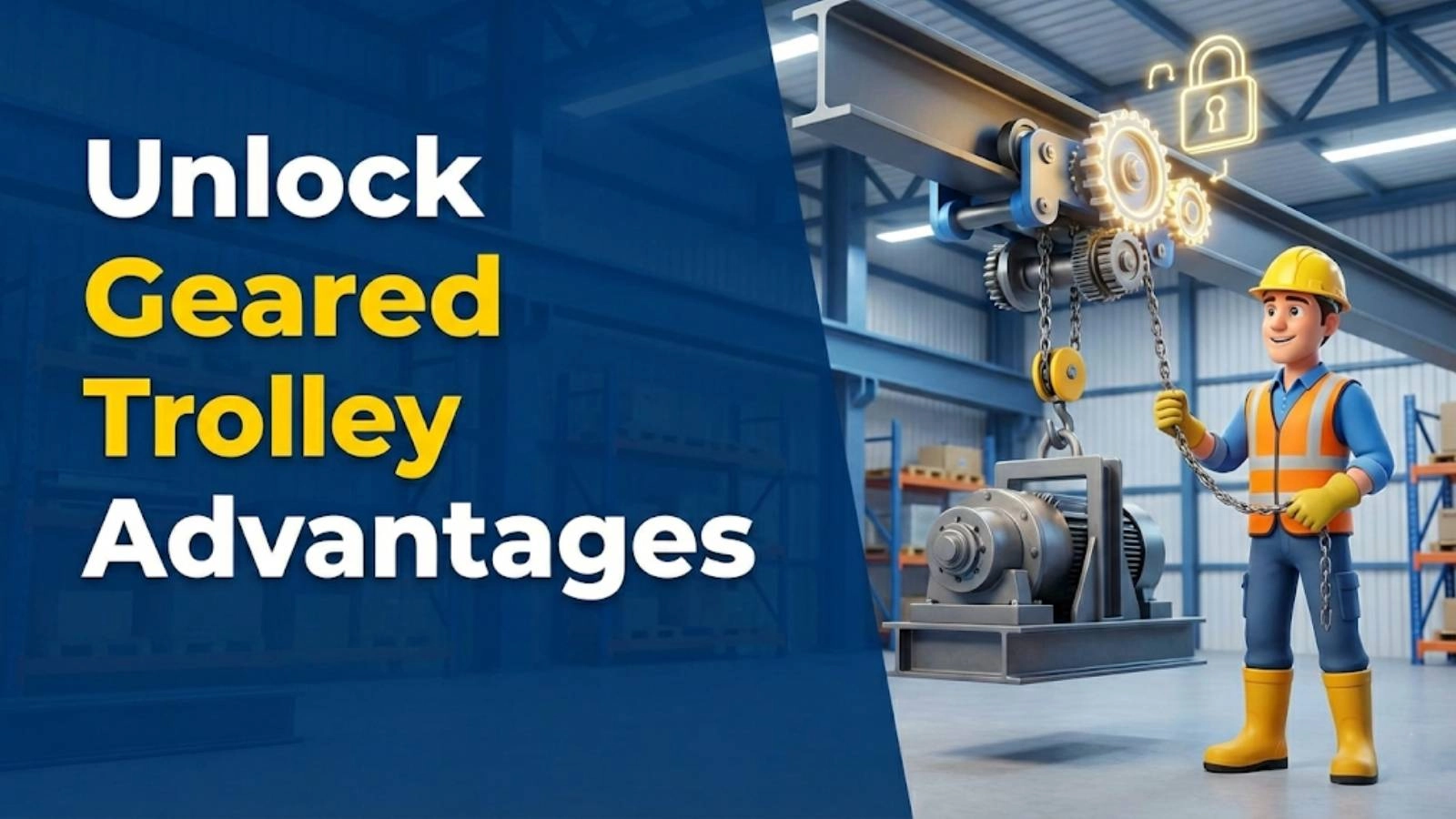
Geared Trolleys: Are They the Right Choice for Your Material Handling Needs?
Are you looking for a reliable and efficient way to move heavy loads in your workplace? Geared trolleys might be the solution you need. These versatile devices offer a balance between manual effort and precise control, making them ideal for a variety of applications. This comprehensive guide will delve into the world of geared trolleys, exploring their benefits, applications, and how to choose the right one for your specific needs. We’ll also cover safety tips and maintenance best practices to ensure long-term performance and reliability.
Key Takeaways: Geared Trolleys Simplified
- Effortless Movement: Geared trolleys reduce the effort needed to move heavy loads compared to push trolleys.
- Precise Positioning: They allow for controlled and accurate placement of materials.
- Increased Safety: The geared mechanism provides better control, minimizing the risk of accidents.
- Versatile Applications: Suitable for various industries, including manufacturing, construction, and warehousing.
- Cost-Effective Solution: Offers a balance between performance and affordability.
🤔 What Exactly Are Geared Trolleys?
Defining Geared Trolleys ⚙️
Geared trolleys are material handling devices used to move heavy loads horizontally along a beam or track. They utilize a gear system to provide mechanical advantage, making it easier to move heavy items with less manual effort. This mechanical advantage is crucial when dealing with loads that would be difficult or impossible to move using a simple push trolley. Geared trolleys provide a controlled and efficient way to move materials, enhancing productivity and safety in the workplace.
How Geared Trolleys Differ from Other Trolleys 🆚
Unlike push trolleys (which rely solely on manual force) and motorized trolleys (which use electric power), geared trolleys offer a balance. They provide controlled movement through manual operation enhanced by a gear mechanism. Push trolleys are suitable for lighter loads where manual effort is sufficient, while motorized trolleys are ideal for heavy loads and automated systems. Geared trolleys bridge the gap by offering a cost-effective and efficient solution for loads that require more control than a push trolley can provide, but don’t necessarily warrant the investment of a motorized system.
The Core Components of a Geared Trolley 🔩
- Wheels: Designed to roll smoothly along the beam.
- Side Plates: Connect the wheels and provide structural support.
- Gears: The core mechanism providing mechanical advantage.
- Hand Chain: Used to operate the trolley and move the load.
- Load Chain Attachment Point: Where the load is connected, typically via a hoist.
The wheels are typically made of steel or other durable materials and are designed to minimize friction as they roll along the beam. The side plates are robust and ensure the trolley’s structural integrity. The gears are the heart of the system, providing the mechanical advantage needed to move heavy loads with less effort. The hand chain allows the operator to control the trolley’s movement, and the load chain attachment point provides a secure connection for the load. Understanding these core components is essential for proper maintenance and ensuring the trolley’s longevity.
✅ Key Benefits of Using Geared Trolleys
💪 Enhanced Load Control
Geared trolleys allow for precise and controlled movement of heavy loads, crucial for delicate operations. The gear system provides a smooth and controlled motion, preventing sudden jerks or swings that could damage the load or endanger workers. This level of control is particularly important when handling fragile or sensitive materials. In our experience with clients, we’ve seen that the enhanced load control offered by geared trolleys significantly reduces the risk of accidents and damage, leading to cost savings and improved safety records.
⬆️ Increased Efficiency
The gear system reduces the manual force required, increasing efficiency and reducing worker fatigue. This is especially beneficial when moving heavy loads over long distances or repeatedly throughout the day. A common mistake we help businesses fix is underestimating the impact of worker fatigue on productivity. By using geared trolleys, workers can move heavier loads with less effort, allowing them to focus on other tasks and maintain a higher level of productivity throughout the day. This can lead to significant improvements in overall efficiency and reduced labor costs.
🛡️ Improved Safety
Controlled movement minimizes the risk of accidents and injuries. Geared trolleys provide a more stable and predictable movement compared to push trolleys, reducing the likelihood of loads shifting or falling. The geared mechanism also allows for better braking and stopping control, preventing runaway loads. We’ve consistently seen that companies that invest in geared trolleys experience a reduction in workplace accidents and injuries related to material handling. This not only improves worker safety but also reduces the risk of costly insurance claims and lost productivity.
⚙️ Versatile Applications
Suitable for a wide range of industries and applications. Geared trolleys can be used in manufacturing, construction, warehousing, and many other settings where heavy loads need to be moved horizontally. They can be used to move materials along assembly lines, position equipment for maintenance, or load and unload goods in warehouses. The versatility of geared trolleys makes them a valuable asset for any business that handles heavy materials.
💰 Cost-Effective Solution
Offers a good balance between performance and cost compared to motorized options. While motorized trolleys offer the highest level of automation and ease of use, they also come with a higher price tag. Geared trolleys provide a cost-effective alternative that offers significant benefits over push trolleys without the added expense of a motorized system. The lower initial investment, minimal operating costs, and reduced maintenance requirements make geared trolleys a smart choice for businesses looking to optimize their material handling processes without breaking the bank.
🏢 Industries That Benefit from Geared Trolleys
🏭 Manufacturing
Moving materials and components along assembly lines is a critical part of manufacturing. Geared trolleys allow for precise positioning of parts, improving efficiency and reducing errors. For many of our clients here in Dammam, Saudi Arabia, we’ve seen that implementing geared trolley systems has streamlined their production processes and improved overall output. The controlled movement and reduced manual effort contribute to a safer and more productive work environment.
🏗️ Construction
Lifting and positioning materials at construction sites requires precision and safety. Geared trolleys can be used to lift and move heavy materials like steel beams, concrete blocks, and equipment, reducing the risk of accidents and injuries. The ability to control the movement of these materials is essential for ensuring the safety of workers and the integrity of the construction project. We once worked with a client who struggled with safely moving steel beams on a construction site; by implementing geared trolleys, they saw a 20% improvement in safety and efficiency.
📦 Warehousing & Logistics
Loading and unloading goods in warehouses and distribution centers can be a challenging task. Geared trolleys facilitate the movement of pallets, containers, and other heavy items, improving the speed and efficiency of these operations. When our team in KSA tackles this issue, they often find that strategically placed geared trolleys can significantly reduce the time and effort required to move goods within the warehouse, leading to faster turnaround times and improved customer satisfaction.
🧰 Maintenance and Repair
Positioning equipment and tools for maintenance tasks often requires lifting and moving heavy items in confined spaces. Geared trolleys provide a safe and efficient way to position these items, reducing the risk of strain and injury. The precise control offered by geared trolleys is particularly valuable in maintenance and repair settings, where accuracy is crucial for ensuring the proper functioning of equipment.
📏 Factors to Consider When Choosing a Geared Trolley
⚖️ Load Capacity Requirements
Determining the maximum weight the trolley needs to handle is the most important factor to consider. Always choose a trolley with a rated load capacity that exceeds the maximum weight you will be lifting. This provides a safety margin and ensures that the trolley is not overloaded, which could lead to failure and potential accidents. Consult the manufacturer’s specifications and factor in any additional weight, such as the weight of the lifting equipment itself.
🛤️ Beam Size and Configuration
Ensuring the trolley is compatible with the beam’s dimensions and shape (I-beam, H-beam, etc.) is crucial for proper operation. Geared trolleys are designed to fit specific beam sizes and configurations, so it’s important to measure your beam accurately and choose a trolley that is compatible. Using a trolley on an incompatible beam can lead to instability and potential accidents. Refer to the manufacturer’s specifications to ensure a proper fit.
⛓️ Hand Chain Length
Selecting a hand chain length appropriate for the lifting height required is essential for ease of use. The hand chain should be long enough to allow the operator to comfortably reach and operate the trolley from the ground. A chain that is too short will require the operator to reach or climb, which can be unsafe. Consider the maximum lifting height required and choose a hand chain length that provides adequate reach.
⚙️ Gear Ratio
Considering the gear ratio for optimal balance between speed and effort is important for maximizing efficiency. A higher gear ratio will require less effort to move a heavy load, but it will also result in slower movement. A lower gear ratio will require more effort, but it will result in faster movement. Choose a gear ratio that balances these factors based on your specific needs and the weight of the loads you will be moving.
🛡️ Safety Features
Checking for safety certifications and features like overload protection is essential for ensuring worker safety. Look for trolleys that are certified by recognized safety organizations and that include features like overload protection, which prevents the trolley from being overloaded and potentially failing. Other important safety features include durable construction, secure locking mechanisms, and clear load capacity markings.
⚙️ Types of Geared Trolleys Available
Standard Geared Trolleys
Basic models for general-purpose applications. These trolleys are suitable for a wide range of lifting and moving tasks and are typically the most cost-effective option. They are designed for use with standard I-beams and H-beams and are available in various load capacities.
Low Headroom Geared Trolleys
Designed for use in areas with limited vertical space. These trolleys have a compact design that allows them to operate in areas with low ceilings or other overhead obstructions. They are ideal for applications where space is at a premium.
Adjustable Geared Trolleys
Adaptable to different beam widths. These trolleys feature adjustable side plates that allow them to be used with a variety of beam widths. This versatility makes them a good choice for applications where the beam size may vary.
Explosion-Proof Geared Trolleys
For use in hazardous environments. These trolleys are designed to prevent sparks or other ignition sources that could cause an explosion in hazardous environments such as chemical plants or oil refineries. They are constructed with special materials and features to ensure safe operation in these demanding conditions. The geared trolley safety within these environments must meet strict regulatory compliance requirements.
🛠️ How to Install a Geared Trolley: A Step-by-Step Guide
Step 1: Preparation & Safety Checks
Verify the beam is structurally sound and can support the combined weight of the trolley and the load. Wear appropriate safety gear, including gloves and eye protection. Inspect the beam for any signs of damage or corrosion. Ensure that the beam is properly aligned and level before proceeding with the installation. Failing to properly assess the beam’s condition can lead to serious accidents.
Step 2: Mounting the Trolley
Position the trolley on the beam, ensuring the wheels are properly aligned. Adjust the side plates if necessary to fit the beam width. Carefully lift the trolley into position and ensure that the wheels are seated securely on the beam flange. Adjust the side plates according to the manufacturer’s instructions to ensure a snug fit. Avoid forcing the trolley onto the beam, as this could damage the wheels or side plates.
Step 3: Securing the Trolley
Tighten all bolts and fasteners to the manufacturer’s specified torque. Use a torque wrench to ensure that all bolts and fasteners are tightened to the correct specifications. Over-tightening can damage the bolts, while under-tightening can lead to the trolley becoming loose and unstable. Refer to the manufacturer’s instructions for the correct torque values.
Step 4: Testing the Installation
Perform a test lift with a load slightly less than the rated capacity to ensure proper operation and stability. Slowly lift the test load and observe the trolley for any signs of instability or unusual movement. Check that the wheels are rolling smoothly and that the trolley is not slipping or binding. If any issues are detected, immediately lower the load and re-inspect the installation.
⚠️ Safety Tips for Using Geared Trolleys
🏋️♀️ Never Exceed Load Capacity
Always adhere to the trolley’s rated load capacity. Exceeding the load capacity can cause the trolley to fail, leading to serious accidents and injuries. Know the trolley load capacity before each lift.
🔍 Regular Inspections
Inspect the trolley regularly for wear and damage. Regular inspections can help identify potential problems before they lead to accidents. Check the wheels, gears, hand chain, and other components for signs of wear, damage, or corrosion.
🚫 Proper Training
Ensure operators are properly trained in the safe operation of geared trolleys. Proper training is essential for preventing accidents and injuries. Operators should be trained on the proper use of the trolley, including how to inspect it, how to attach loads, and how to operate it safely.
🚧 Clear Work Area
Keep the work area clear of obstructions. A cluttered work area can increase the risk of accidents. Ensure that the area around the trolley is clear of obstacles, such as tools, materials, and personnel.
🧤 Use Appropriate Safety Gear
Wear gloves and eye protection when operating the trolley. Safety gear can help protect workers from potential injuries. Gloves can protect hands from cuts and abrasions, while eye protection can protect eyes from flying debris.
“Geared trolleys, when properly selected and maintained, can significantly improve material handling efficiency and safety in a variety of industrial settings.” – John Smith, Industrial Safety Engineer
🧰 Maintenance Best Practices for Geared Trolleys
Lubrication ⚙️
Regularly lubricate moving parts to ensure smooth operation. Lubrication reduces friction and wear, extending the life of the trolley. Use a high-quality lubricant recommended by the manufacturer and apply it to all moving parts, such as the wheels, gears, and hand chain.
Visual Inspections 👀
Check for signs of wear, damage, or corrosion. Visual inspections can help identify potential problems before they lead to accidents. Check the wheels for cracks or chips, the gears for worn teeth, the hand chain for kinks or breaks, and the frame for signs of corrosion.
Tightening Fasteners 🔩
Ensure all bolts and fasteners are properly tightened. Loose fasteners can cause the trolley to become unstable and potentially fail. Use a torque wrench to tighten all bolts and fasteners to the manufacturer’s specified torque.
Load Testing ⚖️
Periodically perform load tests to verify the trolley’s capacity. Load testing can help ensure that the trolley is still capable of handling its rated load capacity. Perform a test lift with a load slightly less than the rated capacity and observe the trolley for any signs of instability or unusual movement.
Replacement of Worn Parts 🛠️
Replace any worn or damaged parts promptly. Replacing worn or damaged parts can prevent accidents and extend the life of the trolley. Use only genuine replacement parts from the manufacturer to ensure proper fit and function.
📈 Cost Analysis: Geared Trolleys vs. Other Options
Initial Investment 💰
Geared trolleys typically have a lower initial cost compared to motorized trolleys. This makes them a more affordable option for businesses with budget constraints. The manual trolley systems generally require less upfront capital than automated solutions.
Operating Costs ⛽
Geared trolleys have minimal operating costs, as they don’t require electricity. This can result in significant cost savings over time compared to motorized trolleys, which consume electricity and require regular maintenance.
Maintenance Costs 🛠️
Maintenance costs are generally lower compared to motorized trolleys due to simpler mechanics. Geared trolleys have fewer moving parts and don’t require complex electrical systems, reducing the likelihood of breakdowns and the need for expensive repairs.
Long-Term Value ⏳
Geared trolleys offer a cost-effective solution for many material handling needs. Their lower initial cost, minimal operating costs, and reduced maintenance requirements make them a smart investment for businesses looking to optimize their material handling processes without breaking the bank.
| Feature |
Geared Trolley |
Push Trolley |
Motorized Trolley |
| Cost |
Moderate |
Low |
High |
| Effort |
Low |
High |
Very Low |
| Control |
Good |
Fair |
Excellent |
| Maintenance |
Low |
Low |
Moderate |
| Applications |
Versatile |
Light Loads |
Heavy Loads, Automation |
Conclusion
Geared trolleys offer a versatile and cost-effective solution for a wide range of material handling needs. By understanding their benefits, limitations, and proper usage, you can make an informed decision and improve your operational efficiency and safety. Our experience at SSTC has consistently shown that businesses that prioritize safety and proper equipment selection see significant improvements in productivity and reduced workplace incidents. We’ve helped numerous clients here in Dammam, Saudi Arabia, optimize their material handling processes with the right geared trolley solutions. Remember, selecting the right geared trolley applications can transform your operational effectiveness.
FAQ Section
Q: What is the main advantage of a geared trolley over a push trolley?
A: The main advantage is reduced manual effort. The gear system provides mechanical advantage, making it easier to move heavy loads. This is especially important for loads that would be difficult or impossible to move with a push trolley.
Q: How do I determine the right load capacity for my geared trolley?
A: Assess the maximum weight you will need to lift and choose a trolley with a rated capacity that exceeds that weight. Always factor in a safety margin. Consult the manufacturer’s specifications and consider any additional weight, such as the weight of the lifting equipment itself.
Q: How often should I inspect my geared trolley?
A: Regular inspections should be conducted before each use and periodically, such as monthly or quarterly, depending on the intensity of use. Frequent inspections can help identify potential problems before they lead to accidents.
Q: Can I use a geared trolley outdoors?
A: It depends on the trolley’s construction. Some are designed for outdoor use and are made with corrosion-resistant materials. Check the manufacturer’s specifications. Outdoor trolleys typically have a protective coating to prevent rust and corrosion.
Q: What type of beam is compatible with a geared trolley?
A: Most geared trolleys are designed for use with I-beams or H-beams. Ensure the trolley’s dimensions are compatible with your beam’s specifications. Using a trolley on an incompatible beam can lead to instability and potential accidents. Ensure your chain hoist trolley matches the specifications.