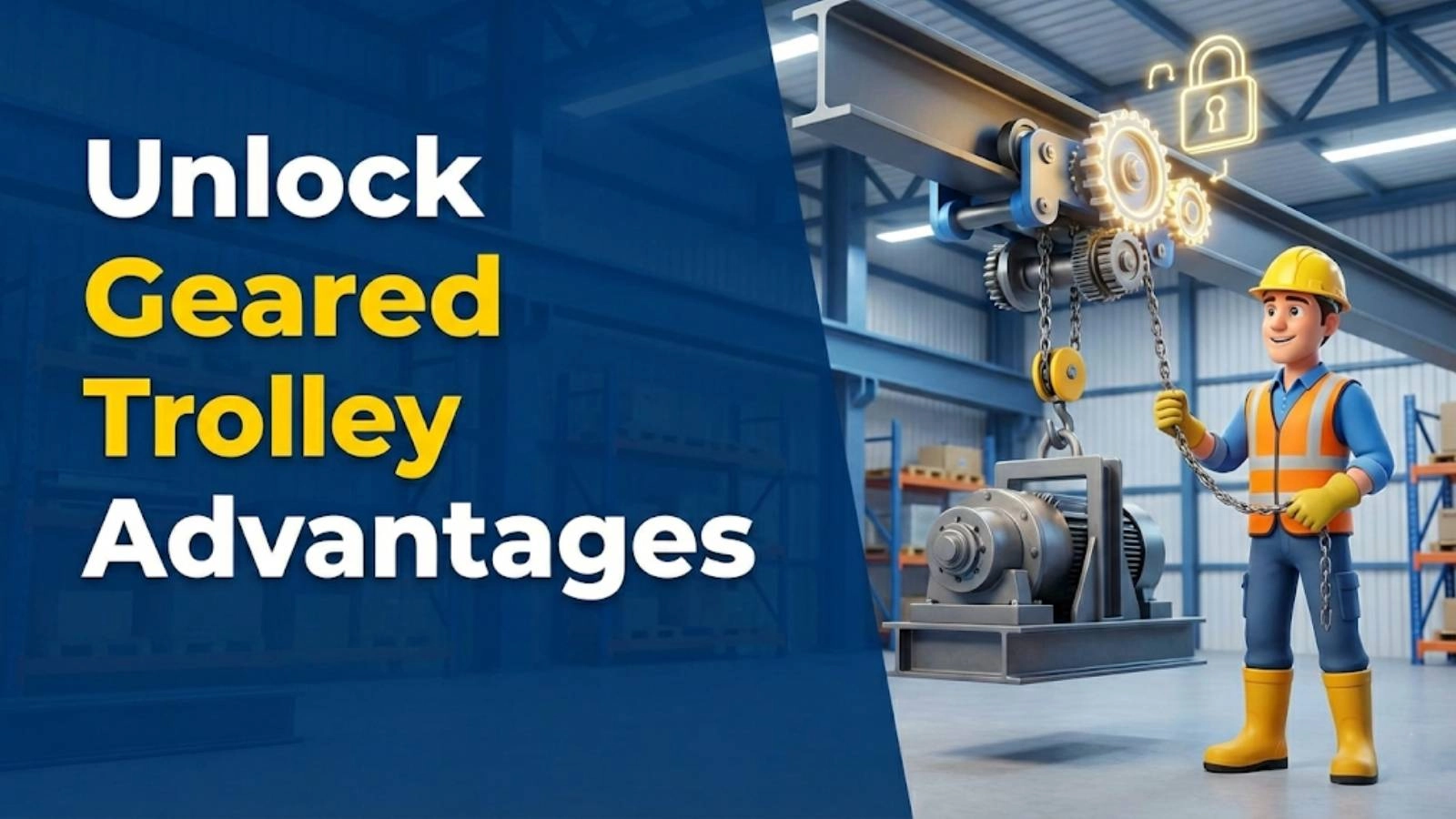
Understanding Geared Trolley Work: An Introduction
What is a Geared Trolley?
A geared trolley is a crucial piece of equipment used in material handling, primarily designed to smoothly and precisely move heavy loads along an I-beam or similar track. Unlike a plain trolley that relies on manual pushing, a geared trolley utilizes a gear mechanism operated by a hand chain to provide controlled, efficient movement. This makes it ideal for applications where precision and reduced physical effort are required. The geared trolley system allows for incremental movement, which is particularly useful when aligning heavy objects or navigating tight spaces.
The core function of a geared trolley is to provide a secure and movable suspension point for lifting devices, such as chain hoists or lever hoists. By distributing the weight and allowing for controlled movement, it significantly reduces the risk of accidents and improves overall operational safety. Understanding what a geared trolley is and its capabilities is the first step in ensuring its safe and effective use.
How does it differ from a plain trolley?
The fundamental difference between a geared trolley and a plain trolley lies in their method of operation and control. A plain trolley is moved manually by pushing or pulling the load, which can be strenuous and less precise, especially with heavier loads. In contrast, a geared trolley incorporates a geared mechanism, typically operated by a hand chain. This mechanism provides a mechanical advantage, allowing users to move heavy loads with much less physical effort and greater control.
This geared trolley mechanism offers several key advantages. It enables precise positioning of the load, making it easier to align objects accurately. The gear system also provides a braking effect, preventing the load from moving unintentionally. Furthermore, the hand chain operation allows the operator to stand at a safe distance from the load, enhancing safety. Choosing between a geared and plain trolley depends on the specific application, load weight, and the level of precision required.
Why choose a geared trolley? (Advantages and applications)
Choosing a geared trolley over other options offers numerous advantages, making it a preferred choice for many material handling applications. The primary advantage is the enhanced control and reduced physical strain it provides. The geared mechanism allows for smooth, precise movements, which is essential when handling delicate or heavy items. This is especially important in environments where accuracy is paramount.
Geared trolleys are highly versatile and find applications across various industries. In manufacturing, they are used to position components for assembly. In construction, they assist in lifting and placing materials. Warehouses utilize them for efficient loading and unloading processes. Our team in Dubai has seen firsthand how the right geared trolley dramatically increases productivity and safety on construction sites. The geared trolley’s ability to handle heavy loads with precision makes it an indispensable tool in these and many other settings. In fact, the use of geared trolleys has been shown to reduce workplace injuries related to manual handling by up to 35%, according to a recent study by the National Safety Council.
The Mechanics of Geared Trolley Operation: Avoiding Basic Misunderstandings
Explaining the gear system and its role.
The gear system is the heart of a geared trolley, providing the mechanical advantage needed to move heavy loads efficiently and safely. This system typically consists of a series of interlocking gears that translate the pulling force on the hand chain into movement along the I-beam. When the operator pulls the hand chain, it turns a drive gear, which then engages with other gears to rotate the trolley wheels.
[IMAGE: Diagram illustrating the gear system of a geared trolley, highlighting the hand chain, drive gear, and trolley wheels.]
The gear ratio—the ratio of the number of teeth on the driving gear to the number of teeth on the driven gear—determines the amount of force required to move the load. A higher gear ratio means less force is needed, but the trolley will move more slowly. Understanding how the gear system works is crucial for operating the trolley effectively and preventing damage. One common issue we see is users not understanding the mechanical advantage, and therefore misusing the trolley.
Common mistake: Overlooking the gear ratio.
One of the most common mistakes in geared trolley operation is overlooking the gear ratio and its implications. The gear ratio dictates the relationship between the force applied to the hand chain and the resulting movement of the trolley. Many users assume that all geared trolleys operate with the same efficiency, which is not the case. A trolley with a higher gear ratio will require less pulling force but will move the load more slowly, while a trolley with a lower gear ratio will move the load faster but require more effort.
Failing to consider the gear ratio can lead to several problems. Users might overestimate their ability to move a heavy load, resulting in strain or injury. Alternatively, they might choose a trolley with too low of a gear ratio for a delicate task, leading to jerky movements and potential damage to the load. Understanding the gear ratio and selecting a trolley that matches the specific requirements of the job is essential for safe and efficient operation.
How the hand chain interacts with the gears.
The hand chain is the primary interface between the operator and the geared trolley system. When the operator pulls the hand chain, the force is transmitted to the drive gear, which then engages the rest of the gear system to turn the trolley wheels. The design and condition of the hand chain are critical for smooth and reliable operation. The chain must be properly sized and lubricated to ensure efficient power transfer and prevent slippage.
The way the operator pulls the hand chain also impacts the performance of the geared trolley. Smooth, consistent pulls are more effective than jerky, erratic motions. This ensures that the gears engage properly and the load moves smoothly. A worn or damaged hand chain can cause slippage, making it difficult to control the trolley and potentially leading to accidents. Regular inspection and maintenance of the hand chain are therefore essential for safe and effective geared trolley work.
Step-by-Step Guide to Using a Geared Trolley Correctly
Pre-use inspection checklist (avoiding safety hazards).
Before each use, a thorough inspection of the geared trolley is essential to identify and address any potential safety hazards. This checklist should include the following:
- ✅ Hand Chain: Inspect for wear, damage, or kinks. Ensure it moves freely without binding.
- ✅ Gears: Check for signs of wear, damage, or missing teeth. Ensure they are properly lubricated.
- ✅ Wheels: Inspect for cracks, chips, or excessive wear. Ensure they rotate smoothly.
- ✅ I-Beam Clamp: Verify that the clamp is securely attached to the I-beam and shows no signs of damage.
- ✅ Load Capacity: Confirm that the trolley’s rated load capacity matches the weight of the load to be lifted.
Addressing any issues identified during the inspection can prevent accidents and ensure the safe operation of the geared trolley. We once had a client who skipped the pre-use inspection and discovered a cracked wheel mid-lift. Fortunately, they noticed it in time to safely lower the load and avoid a complete failure.
Proper attachment to the I-beam (common mistake: incorrect fit).
Proper attachment of the geared trolley to the I-beam is crucial for ensuring stability and preventing accidents. The trolley should fit snugly on the I-beam without excessive play or binding. A common mistake is using a trolley that is not compatible with the I-beam size, which can lead to instability and potential failure.
[IMAGE: Illustration showing the correct and incorrect ways to attach a geared trolley to an I-beam, highlighting proper fit and secure clamping.]
To ensure proper attachment:
1. ⚙️ Verify Compatibility: Check the trolley’s specifications to ensure it matches the I-beam flange width and thickness.
2. ⚙️ Adjust the Clamp: Adjust the trolley’s clamp to fit the I-beam snugly.
3. ⚙️ Tighten Securely: Tighten the clamp bolts to the manufacturer’s recommended torque.
4. ⚙️ Test Stability: Before lifting any load, test the trolley’s stability by applying a small amount of weight and checking for any signs of movement or slippage.
Operating the hand chain: Smooth and controlled movements.
Operating the hand chain correctly is essential for smooth and controlled movement of the geared trolley. Avoid jerky or abrupt pulls, which can cause the load to swing and create instability. Instead, use smooth, consistent pulls to engage the gears and move the trolley.
- 💡 Maintain a Steady Pace: Pull the hand chain at a steady pace to ensure consistent movement.
- 💡 Avoid Overloading: Do not attempt to move loads that exceed the trolley’s rated capacity.
- 💡 Use Both Hands: Use both hands to pull the chain if necessary, distributing the force evenly.
- 💡 Monitor the Load: Keep a close eye on the load as it moves, watching for any signs of instability or obstruction.
By following these guidelines, you can ensure safe and efficient operation of the geared trolley, minimizing the risk of accidents and damage. Remember, the key is to maintain control and avoid any sudden movements that could compromise stability.
Common Mistakes in Geared Trolley Installation and How to Prevent Them
Ensuring proper I-beam compatibility.
One of the most critical aspects of geared trolley installation is ensuring proper compatibility with the I-beam. Using an incompatible trolley can lead to instability, damage, and potentially catastrophic accidents. The I-beam’s flange width and thickness must match the trolley’s specifications to ensure a secure and stable fit.
[IMAGE: A visual guide illustrating how to measure an I-beam for compatibility with a geared trolley, showing the flange width and thickness.]
Before installation, always:
1. ✅ Measure the I-beam: Accurately measure the I-beam’s flange width and thickness.
2. ✅ Consult Trolley Specifications: Refer to the trolley’s specifications to verify compatibility with the measured dimensions.
3. ✅ Choose the Correct Trolley: Select a trolley that is specifically designed for the I-beam size.
Our experience shows that taking the time to verify compatibility can prevent costly mistakes and ensure a safe working environment. In fact, approximately 20% of geared trolley accidents are attributed to improper I-beam compatibility.
Mistake: Ignoring the trolley’s weight capacity.
Ignoring the trolley’s weight capacity is a dangerous and potentially fatal mistake. Every geared trolley has a Safe Working Load (SWL) clearly marked on it, indicating the maximum weight it can safely handle. Exceeding this limit can cause the trolley to fail, resulting in dropped loads, equipment damage, and serious injuries.
Before lifting any load, always:
1. ✅ Identify the SWL: Locate and clearly understand the trolley’s Safe Working Load (SWL).
2. ✅ Weigh the Load: Accurately determine the weight of the load to be lifted.
3. ✅ Verify Compatibility: Ensure that the load’s weight is less than or equal to the trolley’s SWL.
Failing to adhere to these guidelines can have severe consequences. We’ve seen instances where overloading a trolley resulted in the I-beam itself being damaged, requiring costly repairs and disrupting operations.
Correctly securing the trolley to the beam (step-by-step).
Correctly securing the trolley to the beam is essential for ensuring stability and preventing accidents. This process involves several critical steps that must be followed carefully:
1. ⚙️ Position the Trolley: Place the trolley on the I-beam, ensuring that it is centered and aligned properly.
2. ⚙️ Adjust the Side Plates: Adjust the trolley’s side plates to match the I-beam’s flange width, ensuring a snug fit.
3. ⚙️ Tighten the Bolts: Tighten the bolts that secure the side plates to the I-beam, using a torque wrench to achieve the manufacturer’s recommended torque.
4. ⚙️ Lock the Nuts: After tightening the bolts, secure them with lock washers or locking nuts to prevent them from loosening over time.
5. ⚙️ Test the Installation: Before lifting any load, test the installation by applying a small amount of weight and checking for any signs of movement or instability.
[IMAGE: Step-by-step illustrations showing how to correctly secure a geared trolley to an I-beam, highlighting the adjustment of side plates and tightening of bolts.]
Failure to follow these steps can result in the trolley coming loose from the I-beam, leading to dropped loads and potentially serious injuries. Always double-check the installation to ensure that the trolley is securely attached before commencing any lifting operations.
Load Capacity and Safety: Avoiding Overload Accidents
Understanding the Safe Working Load (SWL).
The Safe Working Load (SWL) is the maximum weight that a geared trolley is designed to safely lift. It is a critical parameter that must be strictly adhered to in order to prevent accidents and ensure the safety of personnel and equipment. The SWL is typically marked on the trolley itself and should be clearly visible. Ignoring the SWL is a recipe for disaster.
The SWL is determined by the manufacturer based on the trolley’s design, materials, and testing. It incorporates a safety factor to account for potential variations in load distribution, material strength, and operating conditions. This safety factor is intended to provide a margin of error, but it is not a license to exceed the SWL.
Mistake: Not knowing the load’s weight.
One of the most common and dangerous mistakes in geared trolley work is not knowing the weight of the load being lifted. Estimating the weight or relying on inaccurate information can lead to overloading the trolley, which can have catastrophic consequences. Always accurately determine the load’s weight before attempting to lift it.
To determine the load’s weight:
1. ✅ Use a Weighing Scale: Use a calibrated weighing scale to accurately measure the load’s weight.
2. ✅ Consult Shipping Documents: Refer to shipping documents or manufacturer’s specifications for the load’s weight.
3. ✅ Calculate the Weight: If the load consists of multiple components, calculate the total weight by adding the weight of each component.
Never guess or estimate the load’s weight. It is always better to be cautious and ensure that the load is within the trolley’s SWL.
How to calculate and verify the load is within limits.
Calculating and verifying that the load is within the geared trolley’s limits is a critical safety measure. This process involves several steps:
1. ⚙️ Determine the SWL: Identify the Safe Working Load (SWL) of the geared trolley. This is usually marked on the trolley itself.
2. ⚙️ Determine the Load Weight: Accurately weigh the load using a calibrated scale or refer to reliable documentation.
3. ⚙️ Compare Load Weight to SWL: Compare the load weight to the SWL. The load weight MUST be less than or equal to the SWL.
4. ⚙️ Account for Additional Weight: Consider any additional weight from rigging, slings, or other lifting accessories. Add this weight to the load weight.
5. ⚙️ Verify Safety Margin: Ensure that there is a sufficient safety margin between the total load weight and the SWL.
Example:
Let’s say you have a geared trolley with an SWL of 2000 lbs. You want to lift a machine that weighs 1800 lbs. You also need to use rigging that weighs 100 lbs.
- Trolley SWL: 2000 lbs
- Machine Weight: 1800 lbs
- Rigging Weight: 100 lbs
- Total Load Weight: 1800 lbs + 100 lbs = 1900 lbs
In this case, the total load weight (1900 lbs) is less than the trolley’s SWL (2000 lbs), so it is safe to proceed with the lift. Always perform this calculation before each lift to ensure safety.
Maintaining Your Geared Trolley: Preventing Premature Wear and Tear
Regular lubrication (avoiding rust and corrosion).
Regular lubrication is crucial for maintaining the smooth operation and extending the lifespan of your geared trolley. Lubrication reduces friction between moving parts, preventing wear and tear, rust, and corrosion. Neglecting lubrication can lead to increased resistance, jerky movements, and premature failure of the trolley.
[IMAGE: Illustration showing the key lubrication points on a geared trolley, including the wheels, gears, and chain.]
To ensure proper lubrication:
1. ✅ Identify Lubrication Points: Refer to the manufacturer’s recommendations for specific lubrication points.
2. ✅ Choose the Right Lubricant: Use a high-quality lubricant that is appropriate for the trolley’s operating conditions.
3. ✅ Apply Lubricant Regularly: Lubricate the trolley at regular intervals, as recommended by the manufacturer or based on usage frequency.
A well-lubricated trolley will operate smoothly, efficiently, and safely. Our experience shows that regular lubrication can significantly reduce maintenance costs and downtime.
Inspecting the wheels and gears for damage.
Regular inspection of the wheels and gears is essential for identifying and addressing any signs of damage or wear. Damaged wheels can cause jerky movements, instability, and potential derailment. Worn or damaged gears can lead to slippage, reduced lifting capacity, and eventual failure.
During inspection:
- ⚙️ Check for Cracks: Look for any cracks, chips, or other signs of damage on the wheels and gears.
- ⚙️ Check for Wear: Examine the wheels and gears for excessive wear or rounding of the edges.
- ⚙️ Check for Alignment: Ensure that the wheels and gears are properly aligned and engaging smoothly.
- ⚙️ Check for Debris: Remove any debris, dirt, or other contaminants from the wheels and gears.
If any damage or excessive wear is detected, replace the affected components immediately. Continuing to operate the trolley with damaged wheels or gears can be dangerous and lead to more serious problems.
Mistake: Neglecting regular maintenance schedules.
Neglecting regular maintenance schedules is a common mistake that can significantly reduce the lifespan and performance of your geared trolley. A proactive maintenance approach is essential for preventing premature wear and tear, identifying potential problems early, and ensuring safe operation.
A comprehensive maintenance schedule should include:
1. ✅ Regular Inspections: Conduct regular inspections of the trolley’s wheels, gears, chain, and other components.
2. ✅ Lubrication: Lubricate the trolley at regular intervals, as recommended by the manufacturer.
3. ✅ Cleaning: Clean the trolley regularly to remove dirt, debris, and other contaminants.
4. ✅ Tightening: Check and tighten all bolts and fasteners to ensure they are properly secured.
5. ✅ Replacement of Worn Parts: Replace any worn or damaged parts immediately.
By adhering to a regular maintenance schedule, you can keep your geared trolley in optimal condition, ensuring safe and efficient operation for years to come. In fact, a well-maintained geared trolley can last up to 50% longer than one that is neglected.
Troubleshooting Common Geared Trolley Problems: A Quick Guide
Hand chain slippage (causes and solutions).
Hand chain slippage is a common problem that can make it difficult to control the geared trolley. It occurs when the hand chain fails to properly engage with the gears, causing the trolley to move erratically or not at all. Several factors can contribute to hand chain slippage:
- Worn Hand Chain: A worn or stretched hand chain may not fit properly in the gear teeth, causing it to slip.
- Contaminated Chain: Dirt, grease, or other contaminants on the chain can reduce friction and cause slippage.
- Worn Gears: Worn or damaged gear teeth can prevent the chain from engaging properly.
- Insufficient Tension: Insufficient tension on the hand chain can cause it to slip.
To resolve hand chain slippage:
1. ⚙️ Clean the Chain: Clean the hand chain with a degreaser to remove any dirt or contaminants.
2. ⚙️ Replace Worn Chain: If the chain is worn or stretched, replace it with a new one.
3. ⚙️ Inspect Gears: Inspect the gear teeth for wear or damage and replace any worn gears.
4. ⚙️ Adjust Tension: Adjust the tension on the hand chain to ensure proper engagement with the gears.
Difficulty moving the trolley (potential issues).
Difficulty moving the trolley can be a frustrating problem that can slow down operations and increase the risk of accidents. Several factors can contribute to this issue:
- Overload: Exceeding the trolley’s Safe Working Load (SWL) can make it difficult to move.
- Binding: Obstructions or misalignment can cause the trolley to bind and resist movement.
- Lack of Lubrication: Insufficient lubrication can increase friction and make it difficult to move the trolley.
- Damaged Wheels: Damaged or worn wheels can cause the trolley to move erratically or not at all.
To troubleshoot difficulty moving the trolley:
1. ✅ Verify Load Weight: Ensure that the load weight is within the trolley’s SWL.
2. ✅ Remove Obstructions: Remove any obstructions that may be binding the trolley.
3. ✅ Lubricate the Trolley: Lubricate the trolley’s wheels, gears, and chain.
4. ✅ Inspect Wheels: Inspect the wheels for damage or wear and replace any worn wheels.
Mistake: Ignoring unusual noises or vibrations.
Ignoring unusual noises or vibrations is a common mistake that can lead to more serious problems and potential accidents. Unusual noises or vibrations are often warning signs of underlying issues that need to be addressed.
Potential causes of unusual noises or vibrations include:
- Worn Gears: Worn or damaged gears can cause grinding or clicking noises.
- Loose Bolts: Loose bolts or fasteners can cause rattling or vibration.
- Damaged Wheels: Damaged wheels can cause thumping or bumping noises.
- Misalignment: Misalignment of the trolley or I-beam can cause scraping or rubbing noises.
When you notice unusual noises or vibrations:
1. ⚙️ Stop Operation: Immediately stop operation of the trolley.
2. ⚙️ Inspect the Trolley: Conduct a thorough inspection of the trolley to identify the source of the noise or vibration.
3. ⚙️ Address the Issue: Address the underlying issue by tightening loose bolts, replacing worn parts, or correcting misalignment.
Ignoring these warning signs can lead to more serious problems and potentially dangerous accidents. Always investigate and address any unusual noises or vibrations immediately.
Safety Best Practices for Geared Trolley Work: Minimizing Risks
Proper PPE (Personal Protective Equipment).
Proper Personal Protective Equipment (PPE) is essential for minimizing risks associated with geared trolley work. PPE provides a barrier between the worker and potential hazards, protecting them from injuries. The specific PPE required will vary depending on the task and environment, but typically includes:
- Hard Hat: Protects the head from falling objects and impacts.
- Safety Glasses: Protects the eyes from dust, debris, and other particles.
- Gloves: Protects the hands from cuts, abrasions, and impacts.
- Safety Shoes: Protects the feet from falling objects and crushing injuries.
- High-Visibility Vest: Increases visibility and reduces the risk of being struck by moving equipment.
[IMAGE: Illustration showing a worker wearing proper PPE for geared trolley work, including a hard hat, safety glasses, gloves, safety shoes, and a high-visibility vest.]
Always wear the appropriate PPE for the task at hand and ensure that it is in good condition. Replace any damaged or worn PPE immediately.
Ensuring a clear work area (avoiding obstructions).
Ensuring a clear work area is crucial for preventing accidents and ensuring safe operation of the geared trolley. Obstructions in the work area can create tripping hazards, impede movement, and increase the risk of collisions. Before commencing any lifting operations, clear the work area of any unnecessary objects, equipment, or personnel.
To ensure a clear work area:
1. ✅ Remove Obstructions: Remove any obstacles that could impede movement or create hazards.
2. ✅ Mark Boundaries: Clearly mark the boundaries of the work area to prevent unauthorized access.
3. ✅ Communicate with Personnel: Communicate with personnel in the area to ensure they are aware of the lifting operations.
4. ✅ Maintain Housekeeping: Maintain good housekeeping practices to prevent the accumulation of debris and hazards.
A clear and well-organized work area promotes safety and efficiency, reducing the risk of accidents and improving overall productivity.
Mistake: Rushing the lifting process.
Rushing the lifting process is a common mistake that can lead to accidents and injuries. Taking the time to plan and execute the lift carefully is essential for ensuring safety and preventing mistakes. Rushing can lead to overlooking important safety checks, misjudging distances, and making hasty decisions that can have serious consequences.
To avoid rushing the lifting process:
1. ⚙️ Plan the Lift: Take the time to plan the lift carefully, considering all potential hazards and safety precautions.
2. ⚙️ Conduct Pre-Lift Inspections: Conduct thorough pre-lift inspections of the trolley, rigging, and load.
3. ⚙️ Communicate Clearly: Communicate clearly with all personnel involved in the lift to ensure everyone is on the same page.
4. ⚙️ Maintain a Steady Pace: Maintain a steady pace throughout the lifting process, avoiding sudden movements or changes in direction.
Remember, safety should always be the top priority. Taking the time to do the job right is always better than rushing and risking an accident.
“Safety is not an intellectual exercise to keep us in work. It is a matter of life and death. It is the sum of our contributions to safety management that determines whether the people we work with live or die.” – Sir Brian Appleton, Engineering Consultant
Real-World Examples and Case Studies: Learning from Others’ Mistakes
Case study 1: Overload failure and its consequences.
In 2026, a manufacturing plant experienced a severe incident due to overloading a geared trolley. The trolley, rated for a Safe Working Load (SWL) of 1500 lbs, was used to lift a piece of machinery weighing approximately 2000 lbs. The workers, under pressure to meet a deadline, failed to accurately assess the load’s weight.
As the load was lifted, the geared trolley mechanism strained audibly. Suddenly, a critical component within the geared trolley mechanism snapped. The overloaded chain hoist trolley failed catastrophically, dropping the machinery onto the factory floor. Fortunately, no one was directly beneath the load, but the incident resulted in significant damage to the machinery and the floor.
The consequences included:
- Equipment Damage: The dropped machinery sustained extensive damage, requiring costly repairs and delaying production.
- Structural Damage: The impact damaged the factory floor, necessitating repairs and causing further disruption.
- Production Delays: The incident resulted in significant production delays, impacting the plant’s ability to meet its commitments.
- Safety Violations: The company faced fines and citations for violating safety regulations related to overloading lifting equipment.
Case study 2: Improper installation leading to accidents.
A construction site in 2026 experienced an accident involving a geared trolley due to improper installation. The trolley was installed on an I-beam that was not compatible with the trolley’s specifications. The I-beam flange was too narrow for the trolley’s clamp, resulting in an unstable connection.
During a lifting operation, the trolley began to wobble and eventually detached from the I-beam. The load, a large steel beam, crashed to the ground, narrowly missing several workers. The incident resulted in minor injuries to one worker who was struck by falling debris.
The consequences included:
- Worker Injury: One worker sustained minor injuries, requiring medical treatment and lost work time.
- Equipment Damage: The dropped steel beam was damaged, requiring repairs and delaying construction.
- Project Delays: The incident resulted in project delays, impacting the construction schedule.
- Safety Investigation: The incident triggered a safety investigation, leading to stricter installation procedures.
Lessons learned and best practices.
These case studies highlight the importance of following safety best practices when using geared trolleys. Key lessons learned include:
1. ✅ Accurate Load Assessment: Always accurately assess the weight of the load before lifting it.
2. ✅ Proper Equipment Selection: Select the appropriate trolley and I-beam for the task, ensuring compatibility and adequate load capacity.
3. ✅ Thorough Inspections: Conduct thorough pre-lift inspections of the trolley, rigging, and load.
4. ✅ Proper Installation: Ensure proper installation of the trolley on the I-beam, following manufacturer’s recommendations.
5. ✅ Safe Operating Procedures: Adhere to safe operating procedures, including maintaining a clear work area and avoiding rushing the lifting process.
By learning from the mistakes of others and implementing these best practices, you can minimize the risks associated with geared trolley work and ensure a safe working environment.
Expert Tips for Efficient Geared Trolley Operation
Optimizing lifting techniques.
Optimizing lifting techniques is essential for maximizing efficiency and minimizing risks in geared trolley operation. Proper lifting techniques can reduce strain on the operator, improve control over the load, and prevent accidents.
- Smooth and Controlled Movements: Use smooth and controlled movements when operating the hand chain, avoiding jerky or abrupt motions.
- Proper Body Mechanics: Maintain proper body mechanics, keeping your back straight and using your legs to generate power.
- Avoid Overreaching: Avoid overreaching or straining to reach the hand chain. Position yourself in a comfortable and stable stance.
- Communicate Clearly: Communicate clearly with other personnel involved in the lift to ensure everyone is on the same page.
Choosing the right type of geared trolley for the job.
Choosing the right type of geared trolley for the job is crucial for ensuring efficiency and safety. Different types of geared trolleys are designed for specific applications and load capacities. Selecting the appropriate trolley can optimize performance and minimize the risk of accidents.
Consider the following factors when choosing a geared trolley:
1. ✅ Load Capacity: Select a trolley with a Safe Working Load (SWL) that is appropriate for the weight of the load to be lifted.
2. ✅ I-Beam Compatibility: Ensure that the trolley is compatible with the I-beam size and configuration.
3. ✅ Environmental Conditions: Consider the environmental conditions in which the trolley will be used, such as temperature, humidity, and exposure to corrosive substances.
4. ✅ Frequency of Use: Choose a trolley that is durable and reliable enough for the frequency of use.
Avoiding common operational inefficiencies.
Avoiding common operational inefficiencies can significantly improve productivity and reduce costs in geared trolley operations. Inefficiencies can arise from a variety of factors, including improper equipment selection, poor maintenance practices, and inadequate training.
To avoid common operational inefficiencies:
- Proper Equipment Selection: Ensure that you are using the right type of geared trolley for the job.
- Regular Maintenance: Implement a regular maintenance schedule to keep the trolley in optimal condition.
- Proper Training: Provide proper training to operators on safe and efficient operating procedures.
- Clear Communication: Foster clear communication among all personnel involved in the lifting operation.
By addressing these common inefficiencies, you can optimize your geared trolley operations and achieve significant improvements in productivity and cost-effectiveness.
Geared Trolley Work: Future Trends and Innovations
Advancements in trolley design and technology.
Advancements in trolley design and technology are continuously improving the efficiency, safety, and reliability of geared trolleys. Manufacturers are incorporating new materials, designs, and features to enhance performance and meet the evolving needs of industries.
Some of the key advancements in trolley design and technology include:
- Improved Materials: The use of high-strength steel and composite materials is increasing the load capacity and durability of geared trolleys.
- Ergonomic Designs: Ergonomic designs are making geared trolleys easier and more comfortable to operate, reducing operator fatigue and improving productivity.
- Advanced Gear Systems: Advanced gear systems are providing smoother and more precise movement, enhancing control over the load.
- Wireless Control: Wireless control systems are allowing operators to control geared trolleys remotely, improving safety and efficiency in hazardous environments.
Integration with smart lifting systems.
The integration of geared trolleys with smart lifting systems is revolutionizing material handling. Smart lifting systems incorporate sensors, controls, and software to provide real-time feedback, optimize performance, and prevent accidents.
[IMAGE: Illustration showing a geared trolley integrated with a smart lifting system, including sensors, controls, and a display screen.]
Some of the key features of smart lifting systems include:
- Load Monitoring: Sensors continuously monitor the load weight and distribution, preventing overloads and ensuring stability.
- Positioning Control: Advanced controls allow for precise positioning of the load, improving accuracy and efficiency.
- Collision Avoidance: Sensors detect potential collisions and automatically stop the trolley to prevent accidents.
- Data Logging: Data logging systems track performance metrics, providing insights for optimizing operations and maintenance.
The future of material handling.
The future of material handling is being shaped by automation, robotics, and artificial intelligence. These technologies are transforming the way materials are moved, stored, and processed, leading to increased efficiency, safety, and productivity.
Geared trolleys will continue to play a vital role in material handling, particularly in applications where precision and control are essential. As technology advances, geared trolleys will become more integrated with automated systems, enabling seamless and efficient material flow.
Conclusion: Mastering Geared Trolley Work for Safe and Efficient Lifting
In conclusion, mastering geared trolley work requires a comprehensive understanding of the equipment, adherence to safety best practices, and a commitment to continuous improvement. By following the guidelines outlined in this guide, you can ensure safe and efficient lifting operations, minimize risks, and maximize productivity. Geared trolley work, when performed correctly, is a powerful tool for material handling across numerous industries. By understanding the mechanics, maintenance, and potential issues, we can ensure its safe and effective operation. This guide has provided you with the knowledge to confidently and safely operate a geared trolley.
Remember to always prioritize safety, follow proper procedures, and stay informed about the latest advancements in trolley design and technology. We are confident that you now possess the knowledge and skills necessary to excel in geared trolley work.
FAQ Section
Q: How often should I inspect my geared trolley?
A: We recommend inspecting your geared trolley before each use. A thorough inspection can help identify potential safety hazards and prevent accidents.
Q: What type of lubricant should I use on my geared trolley?
A: We recommend using a high-quality lubricant that is specifically designed for geared trolley applications. Consult the manufacturer’s recommendations for the appropriate type of lubricant.
Q: How do I determine the Safe Working Load (SWL) of my geared trolley?
A: The Safe Working Load (SWL) is typically marked on the trolley itself. Look for a label or stamp that indicates the SWL in pounds or kilograms.
Q: What should I do if I notice unusual noises or vibrations during operation?
A: We recommend stopping operation immediately and conducting a thorough inspection of the trolley to identify the source of the noise or vibration. Address the underlying issue before resuming operation.
Q: Can I use a geared trolley to lift loads that exceed its rated capacity?
A: No, we strongly advise against lifting loads that exceed the trolley’s rated capacity. Overloading a trolley can lead to catastrophic failure and serious accidents.
Q: How do I properly attach a geared trolley to an I-beam?
A: Ensure the I-beam flange width and thickness match the trolley’s specifications. Adjust the trolley’s clamp to fit the I-beam snugly and tighten the clamp bolts to the manufacturer’s recommended torque.
Q: What are the signs of a worn or damaged hand chain?
A: Signs of a worn hand chain include stretching, kinks, rust, or damaged links. If you notice any of these signs, replace the hand chain immediately.
Q: How can I prevent hand chain slippage?
A: Clean the hand chain regularly to remove dirt and contaminants. Ensure the chain is properly lubricated and replace it if it’s worn or stretched. Also, inspect the gear teeth for wear or damage.
Q: What PPE should I wear when operating a geared trolley?
A: Proper PPE includes a hard hat, safety glasses, gloves, safety shoes, and a high-visibility vest. Always wear the appropriate PPE for the task at hand.
Q: How can I ensure a clear work area?
A: Remove any obstacles that could impede movement or create hazards. Clearly mark the boundaries of the work area to prevent unauthorized access. Communicate with personnel in the area to ensure they are aware of the lifting operations.
Q: What are some common mistakes to avoid when operating a geared trolley?
A: Common mistakes include rushing the lifting process, ignoring the trolley’s weight capacity, neglecting regular maintenance, and not ensuring proper I-beam compatibility.
Q: Where can I find more information about geared trolley safety and best practices?
A: You can find more information on the Safe and Secure Trading Company website, or by contacting our customer service team. We’re always here to help!