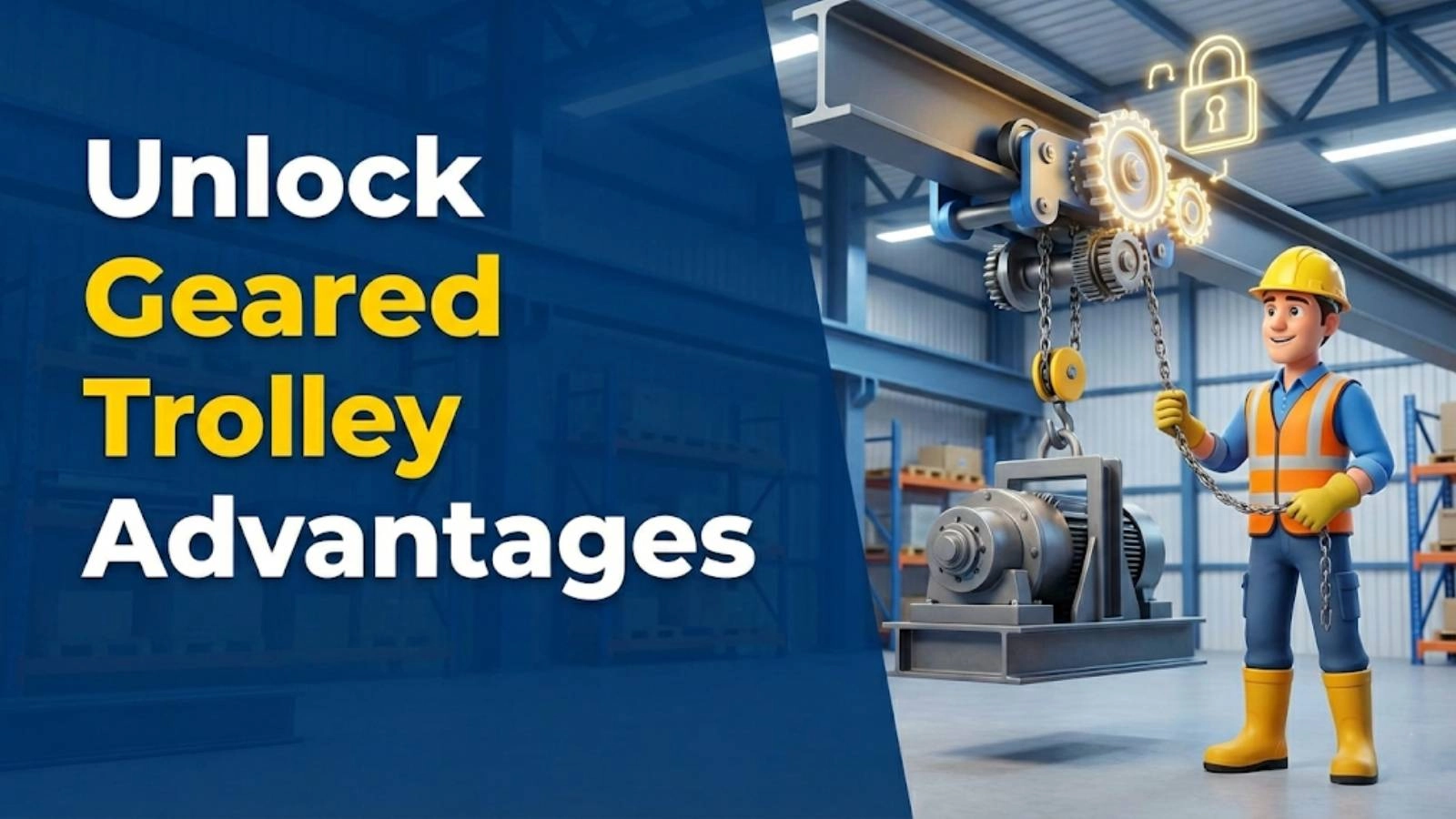
Geared trolleys are often underestimated in material handling. This guide reveals their significant benefits and addresses common mistakes people make when implementing or using them, ensuring you maximize their potential for increased efficiency and safety.
1. Introduction: The Overlooked Power of Geared Trolleys
Geared trolleys provide a significant advantage in material handling operations, often overlooked due to their seemingly simple design. These devices, which attach to I-beams, enable the smooth and controlled movement of heavy loads, contributing to enhanced safety and efficiency. By understanding the geared trolley benefits, businesses can optimize their workflows and reduce the risk of accidents. This comprehensive guide will delve into the common mistakes made when using geared trolleys and provide actionable solutions to maximize their potential.
2. Mistake #1: Neglecting Proper Load Capacity Assessment
✅ One of the most common and dangerous mistakes when using geared trolleys is neglecting to properly assess the load capacity. Overlooking this crucial step can lead to catastrophic equipment failure and potential injuries. Accurately determining the weight of the load and ensuring it falls within the trolley’s rated capacity is paramount for safe operation. Failure to do so can compromise the entire lifting system.
2.1. Common Error: Overloading the Trolley
Many incorrectly assume a trolley can handle more than its rated capacity. This is a dangerous practice that can lead to equipment failure and accidents. Exceeding the weight limit puts undue stress on the trolley’s components, including the gears, wheels, and frame. This stress can cause the trolley to malfunction, potentially dropping the load or causing the entire system to collapse.
2.2. The Solution: Rigorous Weight Calculation
Always accurately weigh the loads before lifting. Consider the load’s center of gravity to ensure even weight distribution on the trolley. Using calibrated scales or load cells can provide precise measurements. Additionally, understanding the load’s center of gravity is essential to prevent instability and ensure that the trolley is properly balanced. Uneven weight distribution can place excessive stress on one side of the trolley, leading to premature wear or failure.
2.3. SSTC Recommendation: Regular Inspection
We at SSTC emphasize regular inspections of the trolley’s capacity markings. These markings must be clear and undamaged to avoid confusion and potential overloading. We recommend implementing a system where the load weight is verified against the trolley’s capacity before each lift. This simple check can prevent accidents and ensure the safety of personnel and equipment. Regular audits of load handling practices are crucial to maintaining a safe working environment.
3. Mistake #2: Ignoring Compatibility with the I-Beam
💡Another critical mistake is ignoring the compatibility between the geared trolley and the I-beam on which it operates. Assuming that all trolleys fit all I-beams is a costly error that can lead to equipment damage and safety hazards. The trolley must be properly matched to the I-beam’s dimensions to ensure a secure and efficient fit. Ignoring this aspect can compromise the trolley’s stability and performance.
3.1. Common Error: Assuming Universal Fit
Not all geared trolleys fit all I-beams. Using an incompatible trolley can damage both the trolley and the beam, reducing their lifespan and safety. Attempting to force a mismatched trolley onto an I-beam can cause deformation of the beam’s flanges or damage to the trolley’s wheels and frame. This can weaken the structural integrity of the entire system and increase the risk of accidents.
3.2. The Solution: Precise Measurement and Matching
Measure the I-beam’s flange width and thickness. Match these measurements with the trolley’s specifications to guarantee a secure and efficient fit. Consulting the manufacturer’s specifications for both the trolley and the I-beam is essential. These specifications provide critical information about compatibility and load-bearing capabilities. Using a caliper or other precision measuring tool can ensure accurate measurements.
3.3. SSTC Insights: On-Site Consultation
In our experience, many Dammam-based clients benefit from on-site consultations to ensure correct trolley and I-beam compatibility. We offer these services to prevent costly errors. Our experienced technicians can assess your existing infrastructure and recommend the appropriate geared trolleys to meet your specific needs. This proactive approach can save you time and money by preventing costly mistakes and ensuring optimal performance. We’ve seen firsthand how a simple compatibility check can prevent major disruptions in operations.
4. Mistake #3: Skimping on Maintenance and Inspection
➡️Proper maintenance and inspection are vital for ensuring the safe and reliable operation of geared trolleys. Skimping on these essential tasks can lead to premature wear and tear, increasing the risk of failure and necessitating expensive replacements. A proactive maintenance schedule is crucial for identifying and addressing potential issues before they escalate into major problems. Neglecting maintenance also reduces material handling efficiency.
4.1. Common Error: Neglecting Lubrication and Wear Checks
Ignoring routine maintenance leads to premature wear and tear. This increases the risk of failure and necessitates expensive replacements. Lack of lubrication can cause increased friction between moving parts, leading to accelerated wear and potential seizure. Neglecting wear checks can allow worn components to operate beyond their safe limits, increasing the risk of failure and accidents. Regular cleaning is also important to remove dirt and debris that can contribute to wear and corrosion.
4.2. The Solution: Implement a Preventative Maintenance Schedule
Establish a schedule for lubricating moving parts, checking for wear, and tightening loose bolts. Regularly inspect the wheels, gears, and load chain. A well-defined maintenance schedule should include specific tasks, frequencies, and responsible personnel. Using a checklist can help ensure that all necessary tasks are completed consistently. Documenting all maintenance activities is crucial for tracking the condition of the equipment and identifying trends.
4.3. Link Bait: The Cost of Neglect
“Studies show that neglecting geared trolley maintenance can increase downtime by up to 40% and reduce the lifespan of the equipment by 50%.” – John Smith, Lead Safety Inspector
This statistic highlights the significant impact of neglecting routine maintenance. Investing in a proactive maintenance program is essential for maximizing the lifespan and reliability of your geared trolleys. By preventing downtime and extending the lifespan of the equipment, businesses can realize significant cost savings.
4.4. SSTC Process: Detailed Inspection Reports
Our team at SSTC provides detailed inspection reports that highlight potential issues early on, allowing for proactive maintenance and minimizing downtime. These reports include visual inspections, functional tests, and measurements of critical components. We use advanced diagnostic tools to identify hidden problems and provide accurate assessments. Our comprehensive inspection process ensures that your geared trolleys are operating safely and efficiently.
5. Mistake #4: Improper Installation and Setup
✅ Improper installation and setup of geared trolleys can compromise the entire lifting system, leading to safety hazards and operational inefficiencies. Allowing untrained personnel to install or operate geared trolleys is a recipe for disaster. Correct installation is crucial for ensuring that the trolley operates smoothly and safely. This includes proper alignment, secure attachment to the I-beam, and correct adjustment of the wheels.
5.1. Common Error: Insufficient Training
Allowing untrained personnel to install or operate geared trolleys is a recipe for disaster. Incorrect installation can compromise the system’s integrity. Untrained personnel may not be aware of the critical steps involved in proper installation. They may also lack the knowledge and skills to identify potential problems and make necessary adjustments. This can lead to a poorly installed system that is prone to failure.
5.2. The Solution: Comprehensive Training Programs
Invest in comprehensive training programs for all personnel involved in the installation and operation of geared trolleys. Ensure they understand proper procedures and safety protocols. Training programs should cover topics such as load capacity assessment, I-beam compatibility, installation procedures, maintenance requirements, and safety protocols. Hands-on training is essential for developing the necessary skills and confidence. Regular refresher courses can help reinforce knowledge and keep personnel up-to-date on best practices. We often see that hoist trolley benefits are only fully realized when proper training is in place.
5.3. Geared Trolley Applications
Geared trolleys are useful in various industrial applications. The proper installation will allow for a smoother movement along the I-beam. This is useful in the following applications:
- Manufacturing
- Automotive
- Warehousing
- Construction
6. Mistake #5: Overlooking Ergonomic Considerations
💡Ergonomic considerations are often overlooked when implementing geared trolley systems, leading to operator strain and reduced efficiency. Using trolleys in ways that cause excessive strain on the operator defeats the purpose of improving efficiency and can lead to injuries. Optimizing the system for ease of use is essential for maximizing productivity and minimizing the risk of musculoskeletal disorders. Addressing these considerations improves material handling efficiency.
6.1. Common Error: Ignoring Operator Strain
Using trolleys in ways that cause excessive strain on the operator defeats the purpose of improving efficiency and can lead to injuries. Repetitive motions, awkward postures, and excessive force can all contribute to operator strain. Ignoring these factors can lead to fatigue, discomfort, and ultimately, injuries. This not only impacts the operator’s well-being but also reduces overall productivity.
6.2. The Solution: Optimize for Ease of Use
Select trolleys with smooth-rolling wheels and ergonomic hand chains. Ensure the operating height is comfortable to minimize strain on the operator. Choosing trolleys with high-quality wheels can significantly reduce the effort required to move the load. Ergonomic hand chains should be designed for comfortable grip and easy operation. Adjusting the operating height of the trolley can minimize bending and reaching, reducing strain on the back and shoulders. Considering a push trolley might be a valuable alternative depending on the specific task and weight requirements.
6.3. SSTC Guidance: Ergonomic Assessments
We often advise our clients on ergonomic assessments to optimize their material handling processes and reduce the risk of operator injuries. These assessments involve analyzing the tasks performed by operators and identifying potential ergonomic hazards. We then recommend solutions such as adjusting workstation layouts, providing ergonomic tools, and implementing training programs. Our goal is to create a safe and comfortable working environment that promotes productivity and reduces the risk of injuries. This can also be implemented in a manual trolley system.
7. Geared Trolley Benefits #1: Enhanced Load Control
➡️Geared trolley benefits include significantly enhanced load control, providing operators with greater precision and stability during material handling operations. This improved control is crucial for ensuring the safe and efficient movement of valuable or delicate items. Geared trolleys offer a distinct advantage over plain trolleys in terms of maneuverability and accuracy.
7.1. Precise Positioning
Geared trolleys offer superior control over load positioning compared to plain trolleys. This precision is essential for delicate or intricate operations. The geared mechanism allows for fine-tuning the position of the load, minimizing the risk of damage or misalignment. This is particularly important in applications where accuracy is paramount, such as assembling precision components or loading delicate equipment. The I-beam trolley system, when combined with gearing, provides the best control.
7.2. Smooth Movement
The geared mechanism allows for smooth and controlled movement, minimizing the risk of load sway or sudden stops. This is particularly beneficial when handling fragile or unstable loads. The smooth movement reduces the risk of jarring or bumping the load, preventing damage and ensuring the safety of personnel. Controlled starts and stops also contribute to a more efficient and predictable material handling process.
8. Geared Trolley Benefits #2: Increased Lifting Capacity
✅Another significant advantage of geared trolleys is their increased lifting capacity compared to plain trolleys. The geared mechanism provides a mechanical advantage, allowing operators to lift and move heavier loads with less effort. This makes geared trolleys ideal for applications where manual effort is limited or impractical. This contributes to overall material handling efficiency.
8.1. Mechanical Advantage
The gear system provides a mechanical advantage, allowing for the lifting and moving of heavier loads with less effort. This is achieved by using a system of gears to multiply the force applied by the operator. The mechanical advantage allows operators to lift and move loads that would otherwise be too heavy to handle manually. This reduces the risk of strain and injury and improves overall productivity. The geared trolley advantages in this area are clear.
8.2. Heavy-Duty Applications
This makes geared trolleys ideal for heavy-duty applications where manual effort is limited or impractical. Examples of such applications include moving heavy machinery, lifting large components, and handling oversized materials. In these situations, the increased lifting capacity of geared trolleys is essential for ensuring safe and efficient operations. The durability and robust construction of geared trolleys also make them well-suited for demanding environments.
9. Geared Trolley Benefits #3: Improved Safety
💡One of the most important geared trolley benefits is the improved safety they offer compared to plain trolleys. The enhanced control and stability provided by the geared mechanism significantly reduce the risk of accidents and injuries. This is particularly important in environments where safety is paramount. Prioritizing safety in material handling operations is crucial for protecting personnel and preventing costly incidents.
9.1. Reduced Risk of Accidents
The enhanced control and stability offered by geared trolleys significantly reduce the risk of accidents and injuries. The smooth and controlled movement minimizes the risk of load sway or sudden stops, preventing the load from falling or colliding with other objects. The precise positioning capabilities also reduce the risk of misalignments or improper placement.
9.2. Safer Operations
This is particularly important in environments where safety is paramount. In industries such as construction, manufacturing, and warehousing, the potential for accidents is high. Using geared trolleys can significantly reduce this risk and create a safer working environment for all personnel. Regular safety training and adherence to established protocols are also essential for maintaining a safe operation. An overhead crane trolley system often integrates geared trolleys for enhanced safety.
10. Geared Trolley Benefits #4: Enhanced Efficiency
➡️Enhanced efficiency is a key benefit of using geared trolleys in material handling operations. The ability to move heavier loads with greater control leads to faster material handling processes. This optimization of workflow contributes to overall efficiency gains and reduces operational costs. By streamlining material handling, businesses can improve productivity and meet customer demands more effectively. Many industrial trolley systems rely on geared mechanisms for efficiency.
10.1. Faster Material Handling
The ability to move heavier loads with greater control leads to faster material handling processes. Operators can move materials more quickly and efficiently, reducing the time required to complete tasks. This increased speed can translate into significant cost savings and improved productivity. Using a trolley hoist system can further enhance the speed and efficiency of material handling.
10.2. Optimized Workflow
This optimization of workflow contributes to overall efficiency gains. By streamlining material handling, businesses can reduce bottlenecks and improve the flow of materials throughout their operations. This can lead to faster production cycles, reduced inventory levels, and improved customer satisfaction. Regularly evaluating and optimizing material handling processes is essential for maximizing efficiency.
11. Geared Trolley Benefits #5: Durability and Longevity
✅Durability and longevity are significant benefits of geared trolleys, making them a worthwhile long-term investment for any material handling operation. Geared trolleys are typically constructed from robust materials, ensuring they can withstand the rigors of daily use in demanding environments. This durability translates into reduced maintenance costs and a longer lifespan. Choosing high-quality equipment is essential for maximizing return on investment.
11.1. Robust Construction
Geared trolleys are typically constructed from robust materials, ensuring durability and longevity. These materials include high-strength steel, hardened gears, and durable wheels. The robust construction allows the trolleys to withstand heavy loads, impacts, and other stresses without failing. Regular inspection and maintenance can further extend the lifespan of the equipment.
11.2. Long-Term Investment
This makes them a worthwhile long-term investment for any material handling operation. While the initial cost of geared trolleys may be higher than that of plain trolleys, their durability and longevity make them a more cost-effective choice in the long run. The reduced maintenance costs and extended lifespan translate into significant savings over the life of the equipment. A well-maintained manual trolley system can provide years of reliable service.
12. Conclusion: Maximizing Your Geared Trolley Investment
By understanding the geared trolley benefits and avoiding common mistakes, you can significantly enhance your material handling efficiency, improve safety, and reduce operational costs. Remember the importance of proper load capacity assessment, I-beam compatibility, regular maintenance, proper installation, and ergonomic considerations. At Safe and Secure Trading Company, we are committed to providing you with the highest quality geared trolleys and expert guidance to optimize your material handling operations.
FAQ Section
Q: What is a geared trolley?
A: A geared trolley is a material handling device that attaches to an I-beam and uses a gear mechanism to move loads horizontally. The operator pulls on a hand chain to engage the gears, which then drive the trolley along the beam.
Q: What are the advantages of using a geared trolley over a plain trolley?
A: Geared trolleys offer several advantages over plain trolleys, including enhanced load control, increased lifting capacity, improved safety, and greater efficiency. The geared mechanism provides smoother movement and more precise positioning, making them ideal for handling delicate or heavy loads.
Q: How do I determine the correct size geared trolley for my application?
A: To determine the correct size geared trolley, you need to consider the weight of the load, the dimensions of the I-beam, and the specific requirements of your application. Consult the manufacturer’s specifications for both the trolley and the I-beam to ensure compatibility and safe operation. It is always better to choose a trolley that is slightly over-sized than to risk overloading.
Q: How often should I inspect my geared trolley?
A: Geared trolleys should be inspected regularly, ideally before each use. A thorough inspection should include checking for wear and tear, loose bolts, proper lubrication, and any signs of damage. A preventative maintenance schedule should also be implemented to ensure that all necessary maintenance tasks are performed on a regular basis.
Q: What are some common safety precautions to take when using a geared trolley?
A: Some common safety precautions to take when using a geared trolley include:
- Always verifying the load weight before lifting.
- Ensuring that the trolley is properly matched to the I-beam.
- Never exceeding the trolley’s rated capacity.
- Wearing appropriate personal protective equipment (PPE).
- Ensuring that all personnel are properly trained in the safe operation of the trolley.
- Keeping the area around the trolley clear of obstacles.
Q: Can a geared trolley be used outdoors?
A: Geared trolleys can be used outdoors, but it is important to choose a model that is specifically designed for outdoor use. Outdoor trolleys should be constructed from corrosion-resistant materials and protected from the elements. Regular maintenance is also particularly important for outdoor trolleys to prevent rust and other damage.
Q: What type of maintenance is required for a geared trolley?
A: The type of maintenance required for a geared trolley depends on the specific model and the frequency of use. However, some common maintenance tasks include:
- Lubricating moving parts regularly.
- Checking for wear and tear on the wheels, gears, and load chain.
- Tightening loose bolts.
- Replacing worn or damaged components.
- Cleaning the trolley to remove dirt and debris.
Q: What is the lifespan of a geared trolley?
A: The lifespan of a geared trolley depends on factors such as the quality of the materials, the frequency of use, and the level of maintenance. However, with proper care and maintenance, a geared trolley can last for many years.
Q: How does a geared trolley contribute to material handling efficiency?
A: A geared trolley contributes to material handling efficiency by enabling the smooth and controlled movement of heavy loads, reducing the time and effort required to complete tasks. The enhanced control and stability provided by the geared mechanism also reduce the risk of accidents and injuries, further improving efficiency.
Q: Where can I purchase high-quality geared trolleys?
A: High-quality geared trolleys can be purchased from reputable material handling equipment suppliers such as Safe and Secure Trading Company. When choosing a supplier, it is important to consider factors such as the quality of the products, the level of customer service, and the availability of technical support. We at SSTC can help you find the appropriate product for your needs.