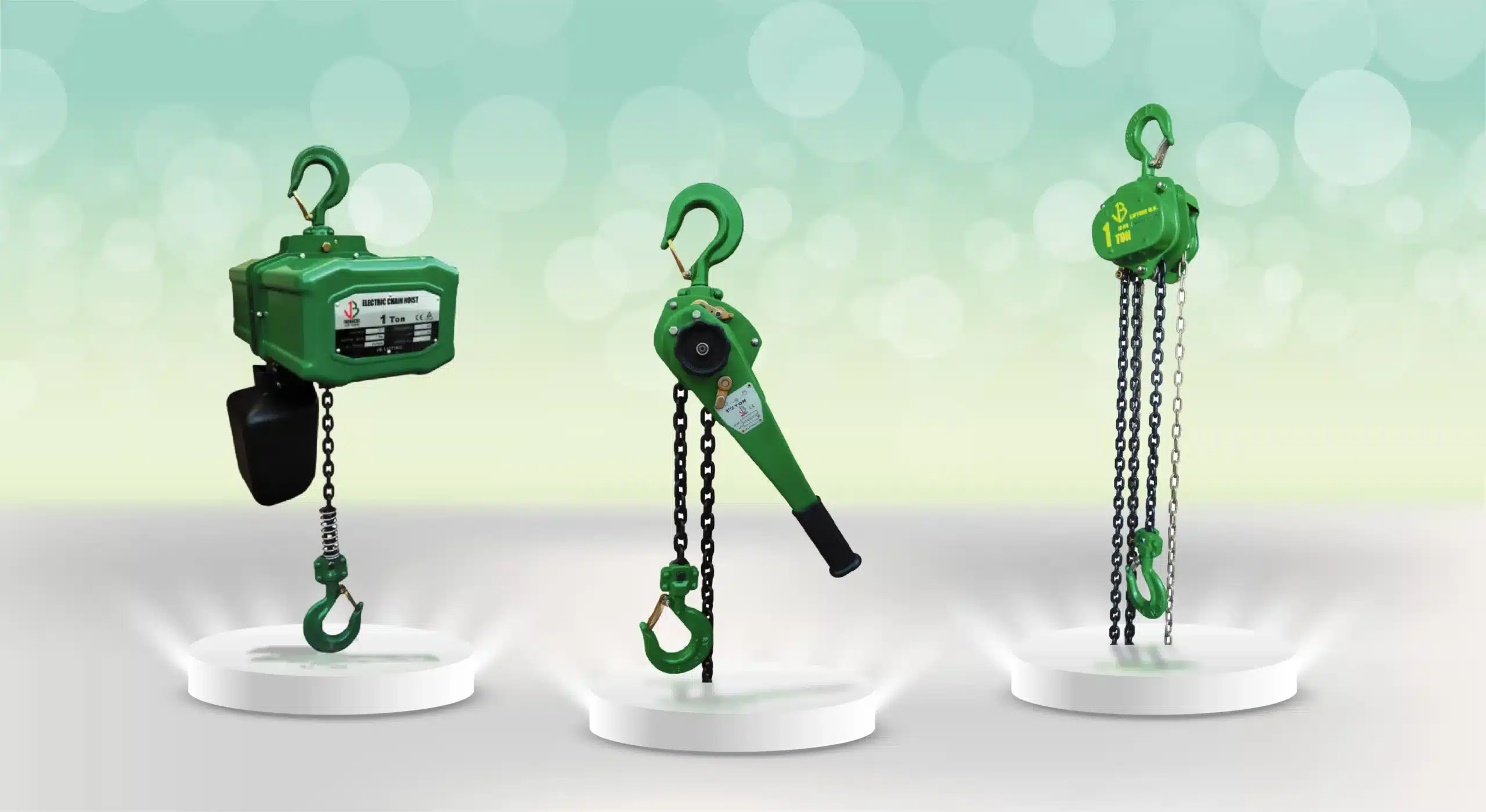
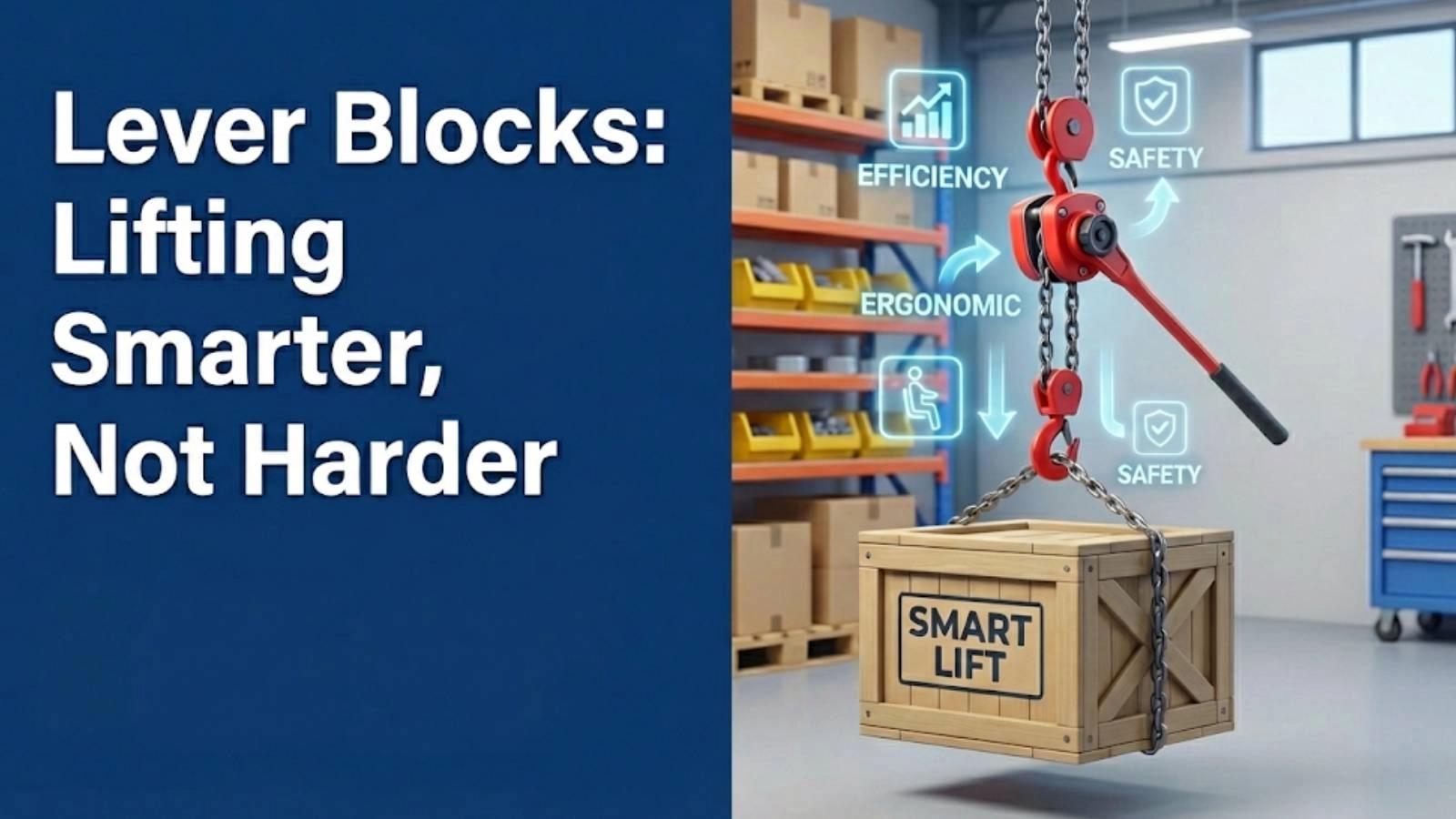
Lever block safety is paramount in industries that rely on lifting and moving heavy loads. A lever block, also known as a chain hoist or come along, is a crucial tool that provides mechanical advantage for lifting, pulling, and positioning heavy objects. However, like any piece of equipment, improper use or neglect can lead to serious accidents and injuries. At Safe and Secure Trading Company (SSTC), we’ve seen firsthand the consequences of overlooking essential safety measures. This guide aims to provide you with comprehensive knowledge to avoid common pitfalls and ensure safe lever block operation in your workplace. We will cover everything from pre-use inspections to proper maintenance, ensuring your team has the information to work safely and efficiently.
Introduction to Lever Block Safety: Avoiding Common Pitfalls
Lever blocks are indispensable in various industries, providing a reliable means of lifting and securing loads. However, their widespread use also means that accidents related to their misuse are all too common. By understanding the potential dangers and implementing the correct safety protocols, we can significantly reduce the risk of incidents.
Why Lever Block Safety Matters: Preventing Accidents
Lever blocks are essential tools across numerous industries, including construction, manufacturing, mining, and transportation. They provide a safe and efficient way to lift heavy loads in situations where traditional lifting equipment may not be feasible. Their portability and ease of use make them a favorite choice for many applications. Chain block safety and lever hoist safety are crucial for all involved.
The importance of lever blocks in various industries cannot be overstated. In construction, they are used for lifting materials, positioning structural components, and assembling frameworks. Manufacturing facilities rely on lever blocks for moving heavy machinery, loading and unloading equipment, and performing maintenance tasks. In mining operations, they are used to lift heavy equipment and materials in confined spaces.
However, the reliance on lever blocks also carries significant risks if proper safety procedures are not followed. Statistics on accidents related to improper lever block use paint a sobering picture. According to data from the Occupational Safety and Health Administration (OSHA), accidents involving lifting equipment, including lever blocks, result in thousands of injuries and fatalities each year. These accidents often stem from preventable causes, such as overloading, improper rigging, inadequate inspection, and lack of training.
Safe and Secure Trading Company has been involved in many consultations following incidents. We once consulted with a construction firm where a worker was severely injured when a lever block failed due to overloading. The worker was attempting to lift a concrete slab that exceeded the block’s working load limit. This tragic incident highlighted the critical need for proper training and adherence to load capacity ratings.
From a legal and ethical standpoint, employers have a responsibility to provide a safe working environment for their employees. This includes ensuring that all lifting equipment is properly inspected, maintained, and operated in accordance with industry standards and regulations. Failure to do so can result in significant legal penalties, including fines, lawsuits, and even criminal charges.
Moreover, there is a strong ethical imperative to prioritize workplace safety. Employees have the right to expect a safe working environment, and employers have a moral obligation to protect their well-being. By investing in safety training, implementing robust safety protocols, and promoting a culture of safety awareness, employers can demonstrate their commitment to protecting their workforce.
Common Mistakes in Lever Block Usage: An Overview
Many accidents involving lever blocks are preventable and stem from a lack of knowledge, carelessness, or a disregard for safety protocols. It is crucial to identify and address these errors to promote a safer working environment. When our team in Dubai investigates these issues, they often find a pattern of neglect.
Some of the most frequent errors in lever block usage include neglecting pre-use inspection, improper rigging techniques, ignoring the load path and environment, using damaged or unsuitable chains, incorrect operating procedures, lack of communication and coordination, ignoring personal protective equipment (PPE), and neglecting proper storage and maintenance.
Each of these errors carries significant potential consequences. Neglecting pre-use inspection can lead to using damaged or worn equipment, increasing the risk of sudden failure. Improper rigging techniques can result in instability, causing the load to shift or fall. Ignoring the load path and environment can lead to collisions or entanglement, posing a risk to personnel and equipment. Using damaged or unsuitable chains can compromise the integrity of the lifting system.
Incorrect operating procedures, such as jerky movements or overextending the lever arm, can place undue stress on the equipment, leading to premature wear or failure. Lack of communication and coordination can result in confusion, increasing the likelihood of errors and accidents. Ignoring personal protective equipment can expose workers to unnecessary risks, such as hand injuries or head trauma. Neglecting proper storage and maintenance can lead to corrosion, damage, and reduced equipment lifespan.
In the following sections, we will delve into each of these common mistakes in detail, providing practical guidance on how to avoid them and ensure safe lever block operation. By understanding the potential dangers and implementing the correct safety protocols, you can significantly reduce the risk of accidents and create a safer working environment for yourself and your colleagues. We at SSTC are dedicated to providing you with the most up-to-date and accurate safety information available.
Mistake #1: Neglecting Pre-Use Inspection
One of the most critical steps in ensuring lever block safety is performing a thorough pre-use inspection. This involves carefully examining the equipment for any signs of damage, wear, or defects that could compromise its integrity. Neglecting this step can have serious consequences, as it increases the risk of equipment failure and potential accidents.
Failing to Check for Damage or Wear
Before each use, a visual inspection of the lever block is crucial. This inspection should focus on identifying any signs of damage or wear that could compromise the equipment’s integrity. Overlooking this can lead to catastrophic failures.
Common signs of damage include bent hooks, worn chains, cracks in the housing, and damaged lever arms. Bent hooks can indicate that the lever block has been overloaded or subjected to excessive stress. Worn chains may exhibit stretching, corrosion, or link damage. Cracks in the housing can weaken the structure of the lever block, making it more susceptible to failure. Damaged lever arms can impair the proper functioning of the lifting mechanism.
The importance of a thorough visual inspection cannot be overstated. It allows you to identify potential problems before they escalate into serious issues. By detecting damage or wear early on, you can take corrective action, such as repairing or replacing the affected parts. This proactive approach can help prevent equipment failure and protect personnel from harm.
For instance, we once had a client who skipped the pre-use inspection and used a lever block with a hairline crack in the housing. During the lift, the crack propagated, causing the housing to fail and the load to drop. Fortunately, no one was injured, but the incident served as a stark reminder of the importance of pre-use inspections.
Consequences of using damaged equipment can be severe. Sudden equipment failure can result in dropped loads, causing injuries to personnel, damage to property, and disruptions to operations. In some cases, equipment failure can even be fatal.
Overlooking Load Capacity Ratings
Every lever block has a Working Load Limit (WLL), which indicates the maximum weight it is designed to lift safely. Understanding and adhering to the WLL is essential for preventing overloading and ensuring safe operation. When our Safe and Secure Trading Company team performs workplace safety audits, this is a frequent violation that we see.
The Working Load Limit (WLL) is typically marked on the lever block’s housing or on a tag attached to the equipment. It is crucial to correctly identify and interpret these markings to ensure that you do not exceed the lever block’s capacity. The WLL is usually expressed in pounds or kilograms.
Using a lever block beyond its capacity can have catastrophic consequences. Overloading the equipment can cause it to fail, resulting in dropped loads, injuries to personnel, and damage to property. In some cases, overloading can even lead to fatalities.
To avoid overloading, it is essential to accurately estimate the weight of the load before lifting it. This can be done using weighing scales, load cells, or other measuring devices. If you are unsure about the weight of the load, it is always better to err on the side of caution and use a lever block with a higher WLL.
Additionally, it is important to consider the angle of lift when determining the effective WLL. As the lifting angle increases, the stress on the lever block and its components also increases, reducing the effective WLL. We will discuss the impact of lifting angles in more detail in a later section.
Mistake #2: Improper Rigging Techniques
Proper rigging techniques are crucial for ensuring the stability and safety of lifting operations. Incorrect sling selection, improper attachment methods, and neglecting the angle of lift can all compromise safety and increase the risk of accidents.
Incorrect Sling Selection and Placement
Choosing the right type of sling for the load and lifting configuration is essential. Different types of slings, such as chain slings, wire rope slings, and synthetic slings, have different load capacities, strengths, and characteristics. Selecting the wrong type of sling can lead to sling failure and dropped loads.
For example, chain slings are typically used for heavy-duty lifting applications, while synthetic slings are preferred for delicate loads that require protection from scratches or damage. Wire rope slings offer a good balance of strength and flexibility.
How to properly attach slings to the load and the lever block is also critical. Slings should be attached in a manner that distributes the load evenly and prevents slippage. Common attachment methods include using shackles, hooks, or eye bolts. It is important to ensure that these attachments are properly sized and rated for the load being lifted.
We at SSTC have seen multiple instances where workers used undersized shackles, leading to shackle failure and dropped loads. Always verify that the shackles are rated for the WLL of the lever block and the slings.
Common sling placement errors can also compromise safety. For example, using a sling in a choker hitch configuration can reduce its load capacity by as much as 25%. Similarly, using a sling with sharp bends or kinks can weaken it and increase the risk of failure.
Neglecting the Angle of Lift
The angle of lift significantly affects the load capacity of the lifting system. As the lifting angle increases, the stress on the lever block and its components also increases, reducing the effective WLL. Understanding how lifting angles affect load capacity is essential for safe operation.
Calculating the effective WLL based on the lifting angle can be done using trigonometric formulas or load angle charts. These tools allow you to determine the maximum load that can be safely lifted at a given angle. It is important to note that the effective WLL decreases as the lifting angle increases.
Best practices for minimizing lifting angles and maximizing safety include using longer slings, spreader bars, or lifting beams. These devices help to reduce the lifting angle and distribute the load more evenly. Additionally, it is important to avoid lifting angles that exceed the manufacturer’s recommendations.
When our team in Dubai tackles this issue, they often find that workers are unaware of the impact of lifting angles on load capacity. This lack of knowledge can lead to dangerous situations and accidents.
Mistake #3: Ignoring the Load Path and Environment
The environment in which the lever block is operated plays a significant role in safety. Failing to ensure a clear and unobstructed path and overlooking environmental factors can increase the risk of accidents and injuries.
Failure to Ensure a Clear and Unobstructed Path
Before beginning any lifting operation, it is essential to identify and remove any potential obstacles in the load path. This includes ensuring that there are no obstructions in the air, on the ground, or within the vicinity of the lifting area.
Preventing collisions with nearby structures or equipment is crucial for maintaining a safe working environment. Obstacles such as pipes, electrical wires, or machinery can interfere with the movement of the load, causing it to swing or collide with nearby objects.
Maintaining a safe zone around the lifting area is also essential. This zone should be clearly marked and free from any unauthorized personnel or equipment. The size of the safe zone should be determined based on the weight and size of the load, as well as the potential for swinging or dropping.
Overlooking Environmental Factors
Weather conditions, such as wind, rain, and snow, can significantly impact lifting operations. Wind can cause the load to swing or become unstable, making it difficult to control. Rain can reduce visibility and make surfaces slippery, increasing the risk of slips and falls. Snow can add weight to the load and make it more difficult to handle.
Adjusting lifting procedures to account for environmental hazards is crucial for maintaining safety. This may involve postponing the lifting operation until the weather improves, using additional tag lines to control the load, or implementing other safety measures.
Using appropriate protective measures for equipment and personnel is also important. This may include using weather-resistant covers to protect the lever block from the elements, providing workers with appropriate clothing and footwear, and ensuring that all personnel are aware of the potential hazards. Safe lifting practices must account for the environment.
Mistake #4: Using Damaged or Unsuitable Chains
The chain is a critical component of the lever block, and its integrity is essential for safe operation. Using damaged or unsuitable chains can compromise the lifting system’s integrity and increase the risk of accidents.
Substituting Chains with Unrated Components
Using non-rated chains or components is extremely dangerous. Non-rated chains may not have the necessary strength or durability to withstand the stresses of lifting operations. This can lead to chain failure and dropped loads.
Understanding the specifications and standards for lever block chains is essential for ensuring safe operation. Lever block chains must meet specific standards for strength, ductility, and resistance to wear and corrosion. These standards are typically established by organizations such as OSHA, ANSI, and ASME.
Where to source and how to verify the authenticity of replacement chains is also important. Replacement chains should be sourced from reputable suppliers and accompanied by documentation verifying their compliance with the applicable standards. It is important to carefully inspect the replacement chains for any signs of damage or defects before using them.
Failing to Inspect Chains for Wear and Tear
Recognizing signs of chain wear is crucial for identifying potential problems before they escalate into serious issues. Common signs of chain wear include stretching, corrosion, link damage, and reduced link thickness.
The frequency and method of chain inspection should be based on the frequency of use, the severity of the lifting conditions, and the manufacturer’s recommendations. Chains should be inspected before each use and periodically throughout the day.
Proper chain maintenance and lubrication practices can help to extend the lifespan of the chain and prevent corrosion and wear. Chains should be lubricated regularly with a suitable lubricant to reduce friction and prevent rust. Additionally, chains should be cleaned to remove dirt and debris. For confined space lifting, chain integrity is even more critical.
Mistake #5: Incorrect Operating Procedures
Even with properly inspected and maintained equipment, incorrect operating procedures can lead to accidents. Safe operation requires understanding the limitations of the lever block and following established guidelines.
Jerky or Abrupt Movements
Applying sudden force to the lever block can place undue stress on the equipment and the load. This can lead to premature wear, equipment failure, and dropped loads. The dangers of applying sudden force should be avoided.
Techniques for smooth and controlled lifting and lowering include using slow, steady movements and avoiding sudden jerks or stops. The lever should be operated in a smooth, consistent manner to minimize stress on the equipment and the load.
Minimizing stress on the equipment and the load is essential for ensuring safe operation. This can be achieved by using proper rigging techniques, avoiding overloading, and following established operating procedures.
Overextending the Lever Arm
Understanding the limitations of the lever arm is crucial for preventing damage to the lever block. The lever arm is designed to operate within a specific range of motion, and overextending it can damage the mechanism.
Avoiding excessive force that can damage the mechanism is also important. The lever should be operated with a reasonable amount of force, and excessive force should be avoided. If the lever is difficult to operate, it may indicate a problem with the equipment.
Using the lever block within its designed range of motion is essential for ensuring safe operation. The lever should be operated smoothly and consistently, and the lever arm should not be overextended.
Mistake #6: Lack of Communication and Coordination
Effective communication and coordination are essential for safe lifting operations, especially when multiple personnel are involved. A breakdown in communication can lead to confusion, errors, and accidents.
Failing to Establish Clear Signals
The importance of standardized hand signals for communication cannot be overstated. Hand signals provide a clear and concise way to communicate instructions and warnings between personnel.
Ensuring all personnel understand and use the same signals is crucial for effective communication. All personnel involved in the lifting operation should be trained in the use of standardized hand signals.
Practicing effective communication techniques before the lift can help to prevent misunderstandings and errors. This may involve conducting a pre-lift briefing to discuss the lifting plan, identify potential hazards, and establish communication protocols.
Neglecting Spotters and Tag Lines
The role of spotters in guiding the load and preventing collisions is essential for safe lifting operations. Spotters are responsible for monitoring the load’s movement and ensuring that it does not collide with any nearby objects or personnel.
Using tag lines to control the load’s movement and stability is also important. Tag lines are ropes or cables attached to the load that allow personnel to control its movement and prevent it from swinging or rotating.
Ensuring spotters and tag line operators are properly trained is crucial for effective coordination. Spotters and tag line operators should be trained in the use of standardized hand signals, the principles of load control, and the identification of potential hazards.
Mistake #7: Ignoring Personal Protective Equipment (PPE)
Personal Protective Equipment (PPE) is designed to protect workers from potential hazards in the workplace. Ignoring PPE requirements can expose workers to unnecessary risks and increase the likelihood of injuries.
Failing to Wear Appropriate Gloves and Eye Protection
The importance of gloves in protecting hands from abrasion and cuts cannot be overstated. Gloves provide a barrier between the hands and the load, preventing injuries from sharp edges, rough surfaces, and other hazards.
Using eye protection to prevent debris and dust from entering the eyes is also essential. Eye protection, such as safety glasses or goggles, can protect the eyes from flying debris, dust, and other particles that can cause irritation or injury.
Selecting PPE that is suitable for the specific lifting task is crucial for ensuring adequate protection. Different types of gloves and eye protection are designed for different hazards, and it is important to select the appropriate PPE for the task at hand.
Neglecting Head Protection
The risk of head injuries from falling objects or collisions is a significant concern in lifting operations. Head injuries can result from dropped loads, swinging objects, or collisions with nearby structures.
Ensuring all personnel wear hard hats in the lifting area is essential for protecting against head injuries. Hard hats provide a protective barrier between the head and potential hazards, reducing the risk of serious head trauma.
Regularly inspecting hard hats for damage and replacing them when necessary is also important. Hard hats should be inspected for cracks, dents, and other signs of damage before each use. Damaged hard hats should be replaced immediately. Workplace safety includes proper PPE.
Mistake #8: Neglecting Proper Storage and Maintenance
Proper storage and maintenance are essential for ensuring the longevity and reliability of lever blocks. Neglecting these aspects can lead to corrosion, damage, and reduced equipment lifespan.
Improper Storage Leading to Corrosion and Damage
Best practices for storing lever blocks to prevent rust and deterioration include storing them in a dry, clean environment. Exposure to moisture, dust, and extreme temperatures can accelerate corrosion and damage to the equipment.
Protecting equipment from moisture, dust, and extreme temperatures can be achieved by storing it in a covered area, such as a storage shed or container. Additionally, the equipment should be cleaned and lubricated before being stored.
Using appropriate storage containers or covers can also help to protect the equipment from the elements. Storage containers should be made of durable materials and designed to protect the equipment from moisture, dust, and pests.
Inadequate Lubrication and Cleaning
The importance of regular lubrication for smooth operation and longevity cannot be overstated. Lubrication reduces friction between moving parts, preventing wear and tear and ensuring smooth operation.
Using the correct type of lubricant for the lever block mechanism is crucial for effective lubrication. The manufacturer’s recommendations should be followed when selecting a lubricant.
Cleaning the equipment to remove dirt and debris is also important. Dirt and debris can accumulate on the equipment, causing friction and wear. The equipment should be cleaned regularly with a brush or cloth.
Pro Tip: The Power of Load Testing
“Lever block load testing is crucial. Regular tests uncover hidden weaknesses, preventing failures that could lead to severe accidents. Don’t skip this step!” – John Smith, Safety Engineer
Troubleshooting Common Lever Block Issues
Even with proper maintenance and care, lever blocks can experience issues that require troubleshooting. Knowing how to identify and resolve these issues is essential for maintaining safe operation.
Chain Slippage
Possible causes of chain slippage include a worn chain, damaged clutch, or excessive load. Chain slippage can occur when the chain is worn or damaged, reducing its ability to grip the load. A damaged clutch can also cause chain slippage. Exceeding the lever block’s WLL can also result in chain slippage.
Solutions for chain slippage include replacing the chain, repairing the clutch, or reducing the load. If the chain is worn or damaged, it should be replaced with a new chain that meets the manufacturer’s specifications. If the clutch is damaged, it should be repaired or replaced by a qualified technician. If the load exceeds the lever block’s WLL, the load should be reduced or a lever block with a higher WLL should be used.
Difficulty in Lifting or Lowering
Possible causes of difficulty in lifting or lowering include a lack of lubrication, damaged gears, or a binding mechanism. A lack of lubrication can cause friction between moving parts, making it difficult to operate the lever block. Damaged gears can also impede the smooth operation of the lever block. A binding mechanism can result from dirt, debris, or corrosion.
Solutions for difficulty in lifting or lowering include lubricating the equipment, repairing or replacing gears, or freeing the mechanism. The equipment should be lubricated regularly with a suitable lubricant. Damaged gears should be repaired or replaced by a qualified technician. The mechanism should be cleaned and lubricated to remove any dirt, debris, or corrosion.
Lever Arm Binding
Possible causes of lever arm binding include a bent lever arm, damaged pawl, or foreign object obstruction. A bent lever arm can impede its movement. A damaged pawl can prevent the lever arm from engaging properly. A foreign object obstruction can block the lever arm’s movement.
Solutions for lever arm binding include straightening the lever arm, repairing the pawl, or removing the obstruction. If the lever arm is bent, it should be straightened by a qualified technician. If the pawl is damaged, it should be repaired or replaced by a qualified technician. Any foreign object obstruction should be removed.
Conclusion: Mastering Lever Block Safety for a Safer Workplace
Recap of Achievement
You’ve now learned the most common mistakes in lever block usage and how to avoid them. By implementing these guidelines, you significantly enhance workplace safety and prevent accidents. Ensuring safe lever block operation is a key factor in rigging safety and material handling safety.
Remember, regular inspection, proper rigging, clear communication, and adherence to safety protocols are essential for safe lever block operation. Chain block safety, come along safety, and lever hoist safety are all crucial aspects of workplace safety.
We at Safe and Secure Trading Company are confident that this comprehensive guide will empower you to create a safer working environment for yourself and your colleagues. By prioritizing lever block safety, you can protect personnel, prevent property damage, and promote a culture of safety awareness. We are confident that these safe lifting practices will protect you and your colleagues.
FAQ Section
Q: How often should lever blocks be inspected?
A: Lever blocks should be inspected before each use and periodically throughout the day, depending on the frequency of use and the severity of the lifting conditions.
Q: What are the most common signs of lever block damage?
A: Common signs of damage include bent hooks, worn chains, cracks in the housing, and damaged lever arms.
Q: What is the Working Load Limit (WLL)?
A: The Working Load Limit (WLL) is the maximum weight that a lever block is designed to lift safely.
Q: How does the angle of lift affect the load capacity of a lever block?
A: As the lifting angle increases, the stress on the lever block and its components also increases, reducing the effective WLL.
Q: What type of personal protective equipment (PPE) should be worn when operating a lever block?
A: Appropriate PPE includes gloves, eye protection, and a hard hat.
Q: How should lever blocks be stored when not in use?
A: Lever blocks should be stored in a dry, clean environment, protected from moisture, dust, and extreme temperatures.
Q: What should I do if I suspect that a lever block is damaged?
A: If you suspect that a lever block is damaged, do not use it. Remove it from service and have it inspected by a qualified technician.