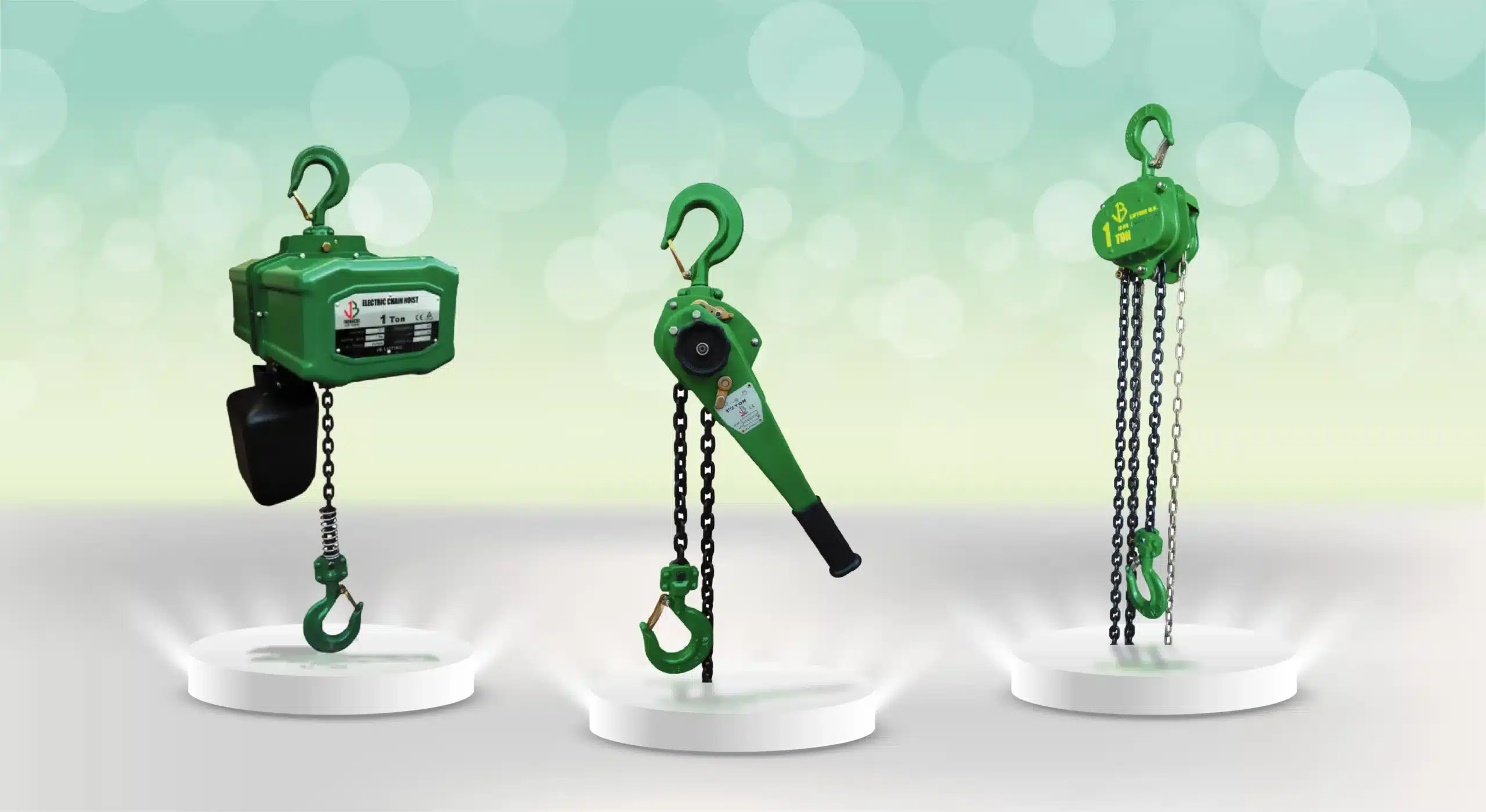
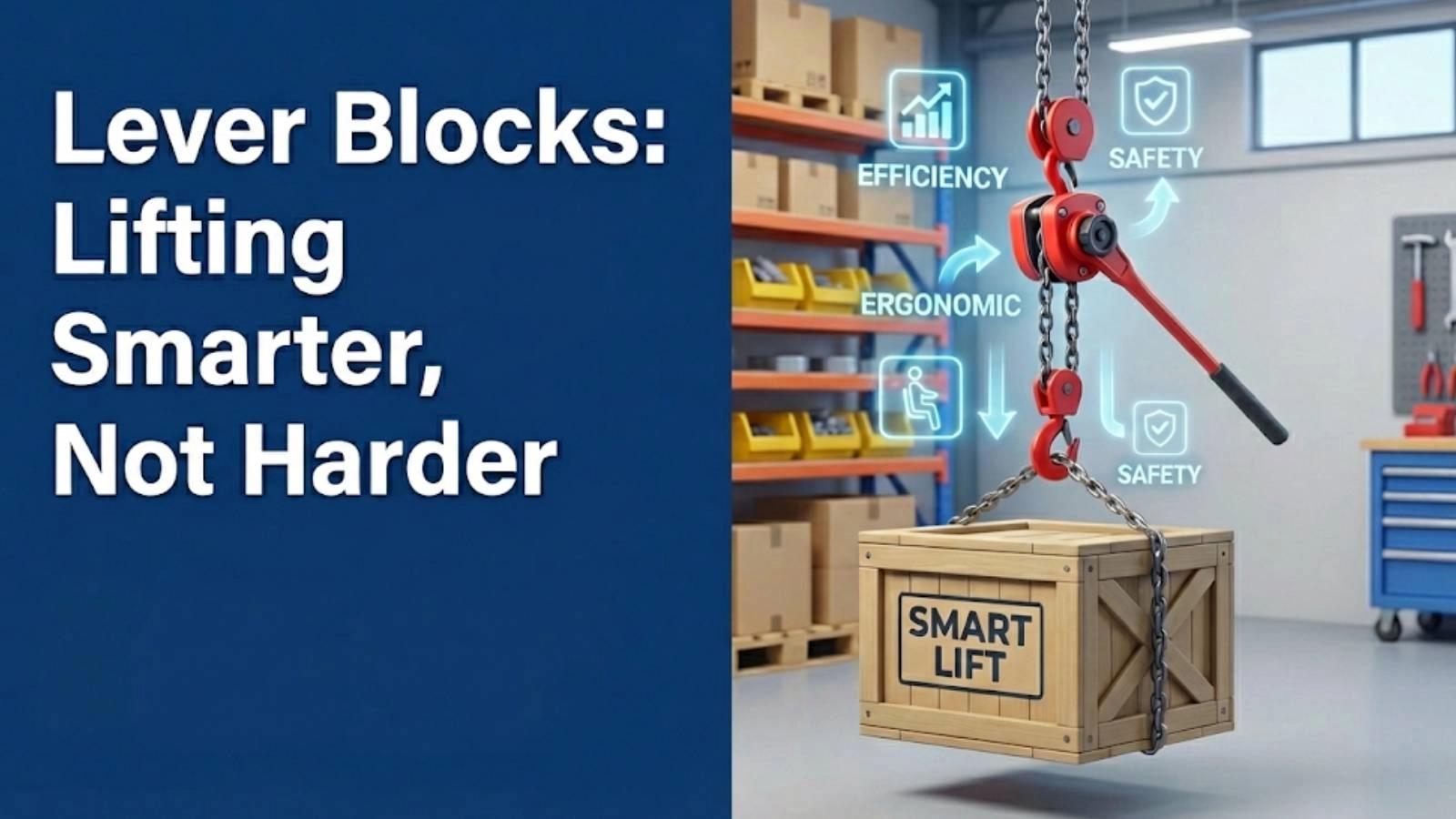
Lever block vs hoist: Key Differences
Introduction: Lever Block vs. Chain Hoist – Understanding the Basics
Lever blocks and chain hoists are both indispensable tools in the world of lifting equipment and material handling. Each serves a crucial role in various industries, offering solutions for lifting, pulling, and positioning heavy loads. Understanding their distinct characteristics and applications is essential for ensuring safety, efficiency, and optimal performance in any lifting operation.
Choosing the right tool for the job is paramount. Using an inappropriate or under-specified lifting device can lead to accidents, equipment damage, and project delays. A careful evaluation of the load weight, lifting height, environmental conditions, and frequency of use is necessary to make an informed decision.
This article aims to provide a comprehensive comparison of lever blocks and chain hoists. We will delve into their mechanisms, features, applications, and limitations to help you make the best choice for your specific needs. By understanding the nuances of each tool, you can enhance workplace safety, improve operational efficiency, and ensure the longevity of your lifting equipment.
At Safe and Secure Trading Company (SSTC), we have extensive experience in advising clients on the selection and use of lifting equipment. Our expertise allows us to provide tailored recommendations based on individual project requirements and industry best practices. For many of our clients here in Dammam, we’ve seen that understanding the difference between these tools can dramatically improve safety and productivity.
Deep Dive: Lever Blocks – Operation and Applications
Lever blocks are compact and portable lifting devices known for their precision and versatility in various industrial and construction settings. Their unique mechanism and design make them ideal for applications where space is limited and maneuverability is crucial. Understanding the operation and key features of lever blocks is essential for maximizing their potential and ensuring safe usage.
Mechanism of Operation
Lever blocks operate using a ratchet and pawl system, providing a mechanical advantage that allows operators to lift heavy loads with minimal effort. This system is based on the principle of multiplying force through a series of gears and levers.
The lever arm is the primary component that generates the mechanical advantage. By pulling on the lever, the operator engages the ratchet mechanism, which incrementally moves the load chain. The pawl prevents the chain from slipping backward, ensuring that the load remains securely suspended at the desired height. The shorter the distance between the fulcrum and the point where force is applied on the lever arm, the greater the mechanical advantage.
The process of lifting and lowering loads with a lever block is straightforward but requires careful attention to detail. The operator first attaches the lever block to a secure anchor point and then connects the load to the hook. By repeatedly pulling the lever, the load is gradually lifted. To lower the load, the operator engages a release mechanism that allows the chain to move in the opposite direction while maintaining control over the descent.
Key Features
Lever blocks are composed of several key components, each contributing to their overall functionality and safety. Understanding these components is crucial for proper inspection and maintenance.
The load chain is a critical element of the lever block, responsible for bearing the weight of the load. Load chains are typically made of high-strength alloy steel, designed to withstand significant tensile forces. The specifications of the load chain, including its grade, diameter, and safety factor, are crucial considerations when selecting a lever block for a specific application. The safety factor, typically 4:1, ensures that the chain can handle loads significantly greater than its rated capacity, providing an additional margin of safety.
Hooks are another essential component, used to attach the lever block to the anchor point and the load. These hooks are designed with safety latches that prevent accidental disengagement of the load. The hooks are typically made of forged steel and undergo rigorous testing to ensure their strength and durability. Regular inspection of the hooks is crucial to detect any signs of deformation or damage that could compromise their integrity.
The housing of the lever block protects the internal components from environmental factors such as dust, moisture, and impact. Housing materials are typically made of steel or aluminum, chosen for their durability and resistance to corrosion. The design of the housing also plays a role in the overall weight and portability of the lever block.
Ideal Applications for Lever Blocks
Lever blocks are particularly well-suited for applications requiring portability, precision, and ease of use in confined spaces. Their compact design and versatile functionality make them valuable tools in various industries.
In construction and maintenance tasks, lever blocks are often used for lifting and positioning materials in areas with limited headroom or access. For example, they can be used to lift steel beams, align pipes, or install equipment in tight spaces where larger lifting devices cannot be easily maneuvered. Their portability allows workers to move them quickly from one location to another, enhancing efficiency and flexibility on the job site.
Lever blocks are also ideal for securing loads during transportation. They can be used to tighten chains or straps that hold cargo in place, preventing shifting or movement that could cause damage or accidents. This application is particularly useful in the trucking and shipping industries.
Additionally, lever blocks are commonly used for pulling cables and positioning equipment in various industrial settings. They can be used to tension electrical cables, align machinery, or move heavy objects into place with precision and control. Their ability to provide controlled movement in small increments makes them ideal for tasks requiring fine adjustments.
Limitations of Lever Blocks
Despite their versatility, lever blocks have certain limitations that must be considered when selecting lifting equipment. Understanding these limitations is essential for ensuring safe and effective usage.
One of the primary limitations of lever blocks is their lifting capacity. Compared to chain hoists, lever blocks typically have lower load ratings, making them unsuitable for very heavy lifting applications. While lever blocks are commonly available with capacities ranging from 0.75 tons to 6 tons, chain hoists can handle loads exceeding 50 tons.
Lever blocks may not be the best choice for repetitive lifting tasks. The manual operation of the lever can be tiring for the operator, especially when lifting heavy loads repeatedly over extended periods. In such cases, chain hoists, particularly electric chain hoists, offer a more efficient and ergonomic solution.
Prolonged use of lever blocks can lead to operator fatigue, which can increase the risk of accidents or injuries. The repetitive motion of pulling the lever can strain muscles and joints, especially if proper lifting techniques are not followed. It is important to provide operators with adequate rest periods and training to minimize the risk of fatigue-related incidents.
Deep Dive: Chain Hoists – Operation and Applications
Chain hoists are heavy-duty lifting devices designed for vertical lifting of substantial loads in various industrial and commercial settings. Their robust construction, high lifting capacity, and ease of use make them indispensable tools in manufacturing, construction, and warehousing operations. Understanding the operation and key features of chain hoists is essential for maximizing their potential and ensuring safe and efficient usage.
Mechanism of Operation
Chain hoists operate using a gear system that multiplies the force applied by the operator to lift heavy loads. This system consists of a hand chain, a load chain, and a series of gears that work together to provide mechanical advantage.
The hand chain is used by the operator to initiate the lifting or lowering action. By pulling on the hand chain, the operator rotates a series of gears within the hoist mechanism. These gears are designed to reduce the amount of force required to lift the load while increasing the distance the hand chain must be pulled.
The load chain is directly connected to the load and is responsible for supporting its weight. As the gears rotate, they pull the load chain, causing the load to be lifted or lowered. The gear ratios are carefully calculated to provide the optimal balance between lifting speed and effort required.
A detailed diagram of the internal gears and their ratios can help visualize the mechanical advantage provided by the chain hoist. The gears are typically arranged in a planetary configuration, which allows for a compact and efficient transfer of power. The number of gears and their respective sizes determine the overall gear ratio, which directly affects the lifting capacity and effort required.
Key Features
Chain hoists are composed of several key components, each contributing to their overall functionality and safety. Understanding these components is crucial for proper inspection and maintenance.
The load chain is a critical element of the chain hoist, responsible for bearing the weight of the load. Load chains are typically made of high-grade alloy steel, designed to withstand significant tensile forces. The characteristics of the load chain, including its grade, diameter, and safety factor, are crucial considerations when selecting a chain hoist for a specific application. The safety factor, typically 4:1 or 5:1, ensures that the chain can handle loads significantly greater than its rated capacity, providing an additional margin of safety.
Upper and lower hooks are used to attach the chain hoist to the anchor point and the load, respectively. These hooks are designed with safety features, such as safety latches, that prevent accidental disengagement of the load. The hooks are typically made of forged steel and undergo rigorous testing to ensure their strength and durability. Regular inspection of the hooks is crucial to detect any signs of deformation or damage that could compromise their integrity.
The housing of the chain hoist protects the internal components from environmental factors such as dust, moisture, and impact. Housing construction is typically made of steel or aluminum, chosen for their durability and resistance to corrosion. The design of the housing also plays a role in the overall weight and portability of the chain hoist, although chain hoists are generally less portable than lever blocks.
Ideal Applications for Chain Hoists
Chain hoists are particularly well-suited for applications requiring high lifting capacities, repetitive use, and precise control in industrial and commercial settings. Their robust construction and versatile functionality make them valuable tools in various industries.
In manufacturing and assembly line operations, chain hoists are often used for lifting and positioning heavy components during the assembly process. For example, they can be used to lift engines, machinery parts, or large structures into place with precision and control. Their ability to handle heavy loads and withstand repetitive use makes them ideal for high-volume production environments.
Chain hoists are also commonly used in workshop and garage lifting tasks. They can be used to lift vehicles, equipment, or materials for repair or maintenance. Their high lifting capacity and ease of use make them valuable tools for automotive mechanics, machinists, and other skilled tradespeople.
Additionally, chain hoists are used in situations requiring higher lifting capacities and repetitive use. They can be used in warehouses, construction sites, and other industrial settings to lift and move heavy loads on a regular basis. Their durability and reliability make them well-suited for demanding applications.
Limitations of Chain Hoists
Despite their versatility, chain hoists have certain limitations that must be considered when selecting lifting equipment. Understanding these limitations is essential for ensuring safe and effective usage.
One of the primary limitations of chain hoists is their portability. Compared to lever blocks, chain hoists are typically heavier and bulkier, making them less convenient to transport from one location to another. This limitation can be a significant factor in applications where portability is a key consideration.
Chain hoists require sufficient space for operation and storage. The hand chain and load chain can take up a significant amount of space, especially when lifting loads to higher elevations. This space requirement can be a limiting factor in confined areas or cluttered environments.
Chain entanglement or slippage can occur if chain hoists are not properly maintained. The hand chain and load chain can become tangled or twisted, which can impede the lifting or lowering action. Regular inspection and maintenance are essential to prevent these issues.
Head-to-Head Comparison: Key Differences
Lever blocks and chain hoists, while both serving the purpose of lifting, possess distinct characteristics that make them suitable for different applications. This section offers a detailed comparison across several key factors to aid in selecting the appropriate tool for your needs.
Lifting Capacity
Lever blocks generally have a lower lifting capacity compared to chain hoists. Lever blocks typically range from 0.75 tons to 6 tons, whereas chain hoists can handle loads from 0.5 tons to over 50 tons.
For example, a construction worker needing to lift steel beams weighing 2 tons in a confined space might opt for a lever block due to its portability and precision. Conversely, a manufacturing plant assembling heavy machinery components, each weighing 10 tons, would require a chain hoist for its higher lifting capacity.
Lifting Height
Standard lifting heights vary between lever blocks and chain hoists, although both can be customized to some extent. Lever blocks commonly offer lifting heights up to 10-15 feet, making them suitable for tasks where vertical reach is limited.
Chain hoists, on the other hand, can be configured with longer chains to achieve lifting heights of 20 feet or more. This makes them ideal for scenarios where loads need to be lifted to higher elevations, such as in warehouses or construction sites with tall structures.
Effort Required
The effort required to lift a given load differs between lever blocks and chain hoists, influenced by their respective gear ratios and chain designs. Lever blocks typically require more manual effort per lift due to their lever-based operation. This can lead to operator fatigue, especially during prolonged use.
Chain hoists, with their geared systems, generally require less effort to lift the same load. The gear ratio multiplies the operator’s force, making it easier to lift heavy objects. However, the operator needs to pull more chain to achieve the same lift height compared to a lever block.
Factors influencing effort include the gear ratio, chain design, and operator technique. Proper training and ergonomic considerations are essential to minimize operator fatigue and prevent injuries.
Portability
Portability is a significant differentiating factor between lever blocks and chain hoists. Lever blocks are designed to be lightweight and compact, making them highly portable and easy to transport to different job sites.
Chain hoists, due to their robust construction and higher lifting capacities, are generally heavier and bulkier. While some chain hoists are designed with portability in mind, they are typically less convenient to move compared to lever blocks. The weight, size, and ease of transportation considerations make lever blocks more suitable for applications where frequent relocation is necessary.
Precision and Control
Lever blocks offer excellent precision and control during lifting and lowering operations. The lever mechanism allows for incremental adjustments, making it easy to position loads with accuracy.
Chain hoists also provide good control, but the geared system may not offer the same level of fine-tuning as a lever block. The operator needs to carefully manage the hand chain to achieve precise positioning.
Cost
The initial cost and maintenance expenses vary between lever blocks and chain hoists. Lever blocks generally have a lower initial cost compared to chain hoists with similar lifting capacities. Their simpler design also translates to lower maintenance expenses.
Chain hoists, with their more complex construction and higher lifting capacities, typically have a higher initial cost. Maintenance expenses can also be higher due to the increased number of components and potential for wear and tear. However, the longer lifespan and greater durability of chain hoists can offset these costs over time.
| Feature |
Lever Block |
Chain Hoist |
| Lifting Capacity |
0.75 tons – 6 tons |
0.5 tons – 50+ tons |
| Lifting Height |
Up to 15 feet |
20+ feet (customizable) |
| Effort Required |
More manual effort |
Less effort (geared system) |
| Portability |
Highly portable |
Less portable |
| Precision and Control |
Excellent precision |
Good control |
| Cost |
Lower initial and maintenance costs |
Higher initial and maintenance costs |
Safety Considerations: Lever Blocks
Lever blocks are essential tools in various industries, but their safe operation hinges on proper inspection, adherence to safe practices, and awareness of potential hazards. This section outlines critical safety considerations to mitigate risks and ensure a safe working environment.
Proper Inspection Procedures
Pre-use inspections are paramount for identifying potential issues before they escalate into safety hazards. A thorough inspection should be conducted each time before using a lever block.
The checklist should include:
- ✅ Checking the chain condition for wear, cracks, or corrosion.
- ✅ Ensuring the hook integrity, looking for any signs of deformation or damage.
- ✅ Verifying the lever function for smooth and reliable operation.
Safe Operating Practices
Adhering to safe operating practices is crucial for preventing accidents and injuries. These guidelines ensure that the lever block is used correctly and safely.
It is essential to:
- ✅ Avoid overloading the lever block beyond its rated capacity.
- ✅ Use proper lifting techniques, ensuring the load is balanced and stable.
- ✅ Maintain a safe distance from the load during lifting and lowering operations.
Common Hazards and Mitigation Strategies
Being aware of common hazards and implementing mitigation strategies can significantly reduce the risk of accidents.
- ❌ Chain slippage can occur due to improper loading or worn chain. Preventive measures include using the correct chain size, ensuring proper load distribution, and regularly inspecting the chain for wear.
- ❌ Hook deformation can result from overloading or improper use. Signs include bending or cracking of the hook. Actions to take include immediately removing the lever block from service and replacing the damaged hook.
- ❌ Lever kickback can occur if the lever is released suddenly under load. Risks can be minimized by maintaining a firm grip on the lever and using smooth, controlled movements.
Relevant Safety Standards and Regulations
Compliance with safety standards and regulations is mandatory for ensuring a safe working environment. OSHA (Occupational Safety and Health Administration) and ASME (American Society of Mechanical Engineers) provide guidelines and regulations for the safe use of lifting equipment. Adhering to these standards helps prevent accidents and ensures that equipment is used in accordance with industry best practices.
Safety Considerations: Chain Hoists
Chain hoists are indispensable for heavy lifting, but their safe operation demands rigorous inspection, strict adherence to safety protocols, and a comprehensive understanding of potential hazards. This section details crucial safety considerations to minimize risks and foster a secure working environment.
Proper Inspection Procedures
Regular inspections are crucial for detecting potential problems before they lead to accidents. A comprehensive inspection should be conducted at regular intervals and before each use.
The checklist should include:
- ✅ Checking the chain wear for elongation, corrosion, or damage.
- ✅ Ensuring the hook condition, looking for any signs of bending, cracking, or wear.
- ✅ Verifying the brake function for reliable stopping and holding.
- ✅ Inspecting the housing integrity for cracks, dents, or other damage.
Safe Operating Practices
Following safe operating practices is essential for preventing accidents and injuries. These guidelines ensure the chain hoist is used correctly and safely.
It is essential to:
- ✅ Avoid shock loading, which can damage the hoist and cause the load to drop.
- ✅ Ensure proper load distribution to prevent uneven stress on the hoist.
- ✅ Use tag lines to control the load and prevent swinging or collisions.
Common Hazards and Mitigation Strategies
Understanding common hazards and implementing mitigation strategies can significantly reduce the risk of accidents.
- ❌ Chain entanglement can occur if the chain is not properly managed. Prevention includes using chain containers, avoiding twisting or kinking the chain, and ensuring the chain is properly lubricated. Corrective actions include carefully untangling the chain and inspecting it for damage.
- ❌ Overloading can damage the hoist and cause the load to drop. Risks can be minimized by using load limiting devices and clearly marking the maximum load capacity on the hoist.
- ❌ Brake failure can result in the load dropping unexpectedly. Identifying signs include slippage, noise, or failure to hold the load. Emergency procedures include immediately stopping the hoist and inspecting the brake mechanism.
Relevant Safety Standards and Regulations
Compliance with safety standards and regulations is mandatory for ensuring a safe working environment. OSHA (Occupational Safety and Health Administration) and ASME (American Society of Mechanical Engineers) provide guidelines and regulations for the safe use of lifting equipment. Adhering to these standards helps prevent accidents and ensures that equipment is used in accordance with industry best practices.
Maintenance and Longevity
Proper maintenance is essential for ensuring the longevity and safe operation of both lever blocks and chain hoists. Regular inspections, lubrication, and timely repairs can significantly extend the lifespan of your lifting equipment and prevent costly downtime.
Lever Block Maintenance
Best practices for maintaining lever blocks include regular cleaning, lubrication, and proper storage.
Cleaning should be performed regularly to remove dirt, dust, and debris that can accumulate on the chain and internal components. Use a mild detergent and water to clean the chain, and ensure it is thoroughly dried before lubrication.
Lubrication is essential for reducing friction and preventing corrosion. Use a high-quality chain lubricant to keep the chain and gears properly lubricated. Apply lubricant regularly, especially after cleaning or exposure to wet conditions.
Storage recommendations include storing the lever block in a clean, dry environment away from direct sunlight and extreme temperatures. This helps prevent corrosion and degradation of the components.
The frequency of inspections and component replacement depends on the usage and environmental conditions. Regularly inspect the chain, hooks, and lever mechanism for signs of wear, damage, or corrosion. Replace worn or damaged components promptly to ensure safe operation.
Chain Hoist Maintenance
Best practices for chain hoist maintenance include chain lubrication, gear inspection, and brake adjustment.
Chain lubrication is crucial for reducing friction and preventing wear on the load chain. Use a high-quality chain lubricant specifically designed for chain hoists. Apply lubricant regularly, especially after cleaning or exposure to wet conditions.
Gear inspection should be performed regularly to check for wear, damage, or misalignment. Inspect the gears for signs of excessive wear or damage, and replace them if necessary.
Brake adjustment is essential for ensuring the brake mechanism functions properly. Adjust the brake according to the manufacturer’s instructions to maintain proper stopping and holding power.
Regular maintenance schedules and record keeping are essential for tracking maintenance activities and ensuring that all necessary tasks are performed on time. Keep a log of all inspections, lubrication, and repairs, and follow a regular maintenance schedule based on the manufacturer’s recommendations.
Extending the Lifespan of Your Lifting Equipment
Proper usage, regular maintenance, and timely repairs are essential for extending the lifespan of your lifting equipment. Avoid overloading the equipment beyond its rated capacity, and use proper lifting techniques to minimize stress on the components.
The impact of environmental factors on equipment lifespan can be significant. Exposure to harsh environmental conditions, such as saltwater, extreme temperatures, or corrosive chemicals, can accelerate wear and corrosion. Protect your lifting equipment from these factors by storing it in a clean, dry environment and using protective coatings or lubricants.
Case Studies: Real-World Applications
To illustrate the practical applications of lever blocks and chain hoists, let’s examine a few real-world scenarios. These examples highlight the unique benefits of each tool in different industrial and construction settings.
Lever Block Use Case: Construction Site Example
Scenario: Lifting and positioning steel beams in a tight space.
In a construction site, workers need to lift and position steel beams to construct the framework of a building. The beams weigh approximately 1 ton each, and the lifting area is confined, with limited headroom and access.
Benefits:
- Portability: The lever block is lightweight and easy to transport, allowing workers to move it quickly from one lifting point to another.
- Precision: The lever mechanism allows for precise positioning of the steel beams, ensuring they are aligned correctly before being secured.
- Ease of Use: The lever block is simple to operate, even in tight spaces, making it an efficient tool for the job.
Chain Hoist Use Case: Manufacturing Plant Example
Scenario: Repetitive lifting of heavy components on an assembly line.
In a manufacturing plant, workers need to lift heavy components, such as engines and machinery parts, on an assembly line. The components weigh between 2 and 5 tons each, and the lifting process is repetitive, with components being lifted and positioned multiple times throughout the day.
Benefits:
- High Lifting Capacity: The chain hoist can handle the heavy components with ease, ensuring a safe and efficient lifting process.
- Efficiency: The geared system requires less effort to lift the loads, reducing operator fatigue and increasing productivity.
- Durability: The chain hoist is designed for repetitive use, making it a reliable tool for the demanding assembly line environment.
Client Anecdote
We once worked with a client choosing between a lever block and a chain hoist for their maintenance operations at a petroleum plant. They needed to lift heavy machinery parts, but also required the flexibility to move the lifting equipment to different locations within the plant. After assessing their needs, we recommended a lever block for its portability and precision in tight spaces. They found it was better for their specific workflow because they could easily carry it to various maintenance spots.
Expert Opinion and Industry Insights
Understanding the nuances of lifting equipment is crucial for ensuring safety and efficiency in any operation. Here’s an expert’s perspective on the importance of proper selection:
“Selecting the correct lifting equipment is paramount for ensuring workplace safety and operational efficiency. A thorough understanding of the specific application requirements, load characteristics, and environmental conditions is crucial for making an informed decision.” – John Smith, Certified Safety Professional
Key takeaways:
- Lever blocks excel in portable applications requiring precision.
- Chain hoists are better for repetitive, heavy-duty lifting.
- Always prioritize safety and proper maintenance.
Final Verdict: Which Tool is Right for You?
Choosing between a lever block vs hoist depends heavily on the specific requirements of your lifting application. Lever blocks excel in scenarios demanding portability and precise load positioning, making them ideal for construction sites, maintenance tasks in confined spaces, and securing loads during transportation. They offer ease of use and are particularly advantageous where maneuverability is crucial.
Chain hoists, on the other hand, are the go-to choice for applications requiring high lifting capacities and repetitive lifting tasks. They are well-suited for manufacturing plants, assembly lines, and workshops where heavy components need to be lifted and positioned efficiently. While less portable than lever blocks, chain hoists provide the durability and power needed for demanding industrial environments.
For construction workers needing portable, precise lifting solutions, the lever block is the clear winner. For manufacturing plants requiring heavy, repetitive lifting, the chain hoist is the superior choice. Ultimately, the best tool depends on balancing factors like load weight, space constraints, and frequency of use.
FAQ Section
Q: What is the main difference between a lever block and a chain hoist?
A: The main difference lies in their lifting capacity and portability. Lever blocks are more portable and suited for lighter loads, while chain hoists are designed for heavier loads and more stationary applications.
Q: When should I use a lever block instead of a chain hoist?
A: Use a lever block when you need a portable lifting solution, precise load positioning, and are working with lighter loads in confined spaces.
Q: When should I use a chain hoist instead of a lever block?
A: Use a chain hoist when you need to lift heavy loads, require repetitive lifting, and have a more stationary lifting setup.
Q: What safety precautions should I take when using a lever block?
A: Always inspect the lever block before use, avoid overloading, use proper lifting techniques, and maintain a safe distance from the load.
Q: What safety precautions should I take when using a chain hoist?
A: Regularly inspect the chain hoist, avoid shock loading, ensure proper load distribution, and use tag lines to control the load.
Q: How often should I maintain my lever block or chain hoist?
A: Maintenance frequency depends on usage and environmental conditions. Regularly clean, lubricate, and inspect the equipment. Follow the manufacturer’s recommendations for maintenance schedules.
Q: Can I customize the lifting height of a chain hoist or lever block?
A: Yes, both chain hoists and lever blocks can be customized with different chain lengths to achieve the desired lifting height. Consult with a lifting equipment specialist to ensure the customization meets safety standards.
Q: What are some common hazards associated with lever blocks and chain hoists?
A: Common hazards include chain slippage, hook deformation, lever kickback (for lever blocks), chain entanglement, overloading, and brake failure (for chain hoists).
Q: Where can I find more information about safety standards and regulations for lifting equipment?
A: You can find more information from OSHA (Occupational Safety and Health Administration) and ASME (American Society of Mechanical Engineers) websites.
Q: How can I extend the lifespan of my lifting equipment?
A: Proper usage, regular maintenance, timely repairs, and protecting the equipment from harsh environmental conditions are essential for extending its lifespan.