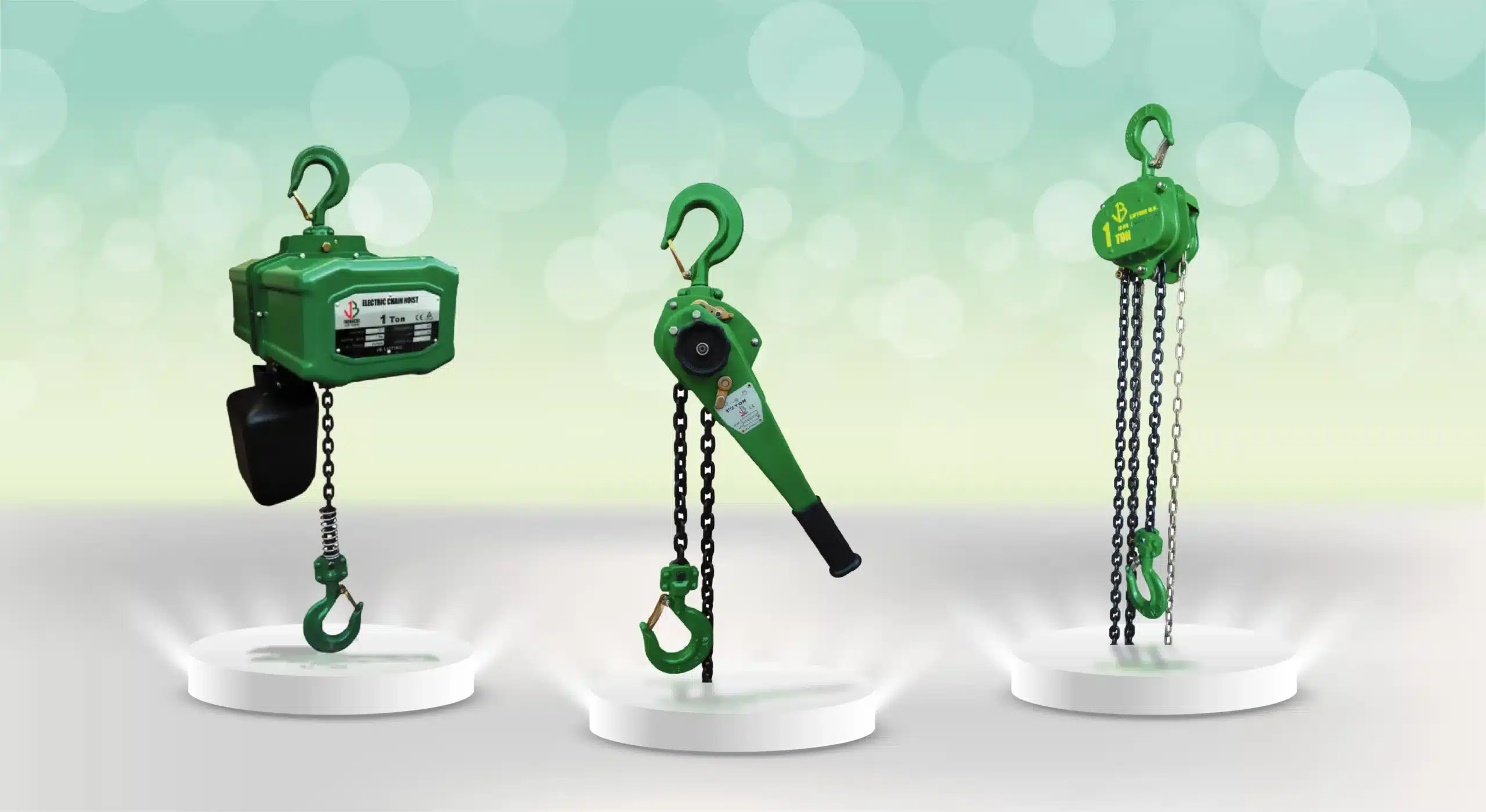
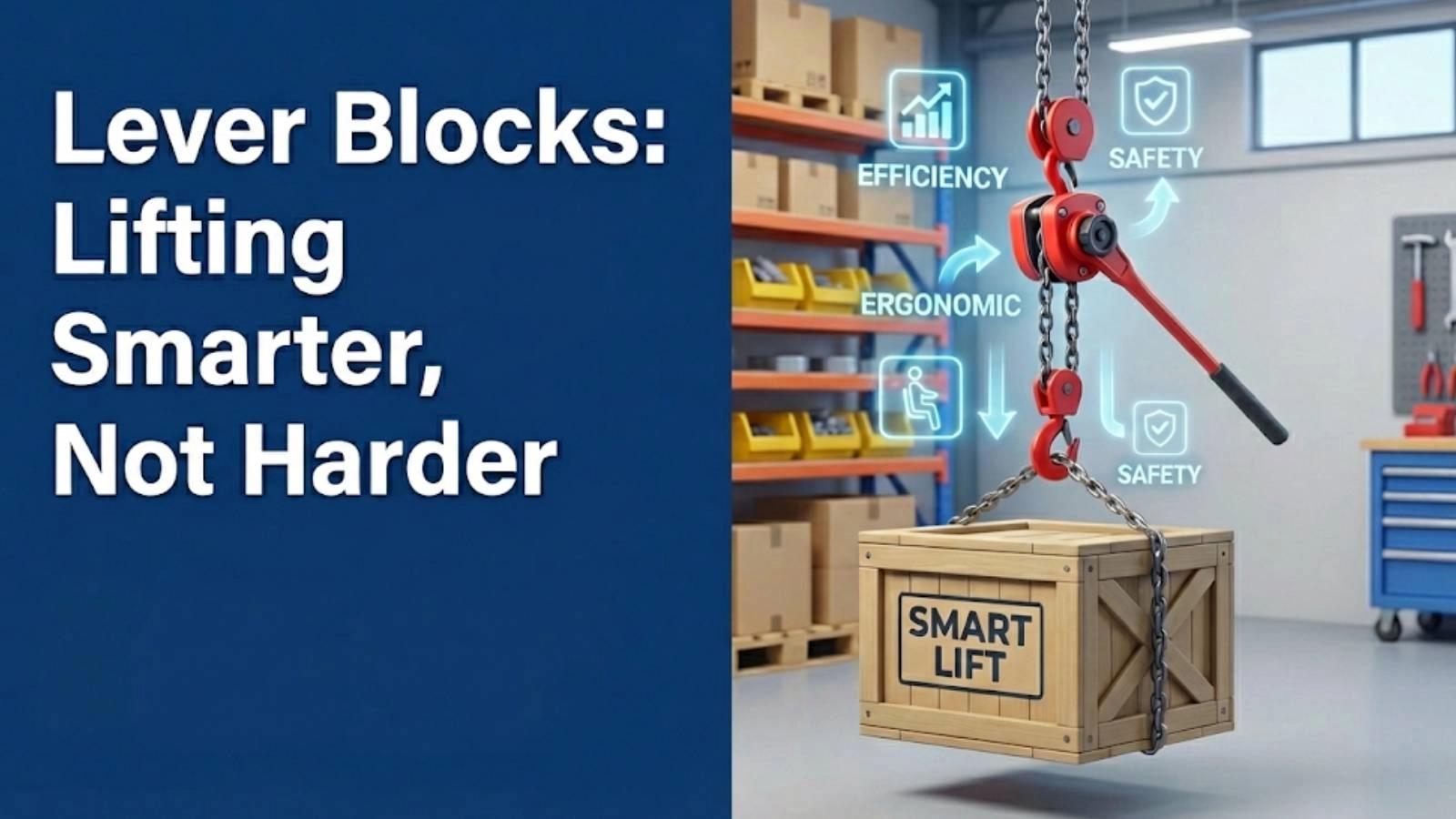
The selection of appropriate lifting equipment is critical for ensuring both efficiency and safety across various industries. With the increasing emphasis on streamlined operations and workplace safety, the demand for reliable material handling solutions continues to grow. As an expert at Safe and Secure Trading Company, we understand the nuances of lifting equipment. Choosing between a lever block and a chain block is paramount for optimizing productivity and preventing accidents.
Key Differences: Lever vs Chain Blocks – An Overview
The following table provides a concise comparison of lever blocks and chain blocks, highlighting their key attributes. This overview is designed to give you an ‘at a glance’ understanding of the core distinctions between these two essential pieces of lifting equipment. By understanding these differences, you can make an informed decision based on your specific operational needs and constraints.
| Feature |
Lever Block |
Chain Block |
| Lifting Mechanism |
Lever and Ratchet |
Gear System and Hand Chain |
| Typical Lift Height |
Shorter Lifts (up to 20 feet) |
Longer Lifts (up to 100+ feet) |
| Load Capacity |
0.25 tons to 9 tons |
0.5 tons to 50 tons+ |
| Ease of Use |
Excellent in Tight Spaces |
More Challenging in Confined Spaces |
| Cost |
Lower Initial Cost |
Higher Initial Investment |
| Application |
Horizontal Pulling, Precise Positioning |
Vertical Lifting, Heavy Loads |
Lifting Mechanism: How They Work
Understanding the underlying mechanics of lever blocks and chain blocks is essential for appreciating their unique capabilities. The lifting mechanism dictates how each type of block operates, influencing its suitability for different tasks and environments. Each mechanism provides its own advantages in terms of control, precision, and lifting power.
Lever Block
A lever block operates using a lever and ratchet mechanism. This allows for short, incremental pulling action. The operator moves the lever back and forth, engaging the ratchet to gradually lift or lower the load. This design is particularly well-suited for tasks requiring precise positioning.
The incremental pulling action of a lever block makes it ideal for situations where fine adjustments are necessary. For example, aligning steel beams during construction or tensioning cables. The lever block’s mechanism provides a high degree of control. It allows the operator to make minute adjustments with each pull, ensuring accurate placement and alignment.
Chain Block
A chain block utilizes a gear system and hand chain operation. The operator pulls on the hand chain, which turns a series of gears to lift the load. This continuous pulling motion is more efficient for lifting loads over longer distances. The mechanical advantage gained through the gear system allows for higher lifting capacities compared to lever blocks.
The gear system in a chain block provides a significant mechanical advantage, enabling it to lift heavier loads with less effort. This makes chain blocks particularly useful in manufacturing and warehousing environments. The continuous pulling motion ensures a smooth and consistent lift, reducing the risk of jerky movements that could damage the load or the surrounding equipment.
Lift Height and Range: Where They Excel
The lift height and range of a lifting block are critical considerations. The right choice depends on the specific requirements of the job. Lever blocks and chain blocks offer distinct advantages in terms of the vertical distance they can cover, influencing their application in various scenarios.
Lever Block
Lever blocks are typically used for shorter lifts, generally up to 20 feet. Their compact design and lever mechanism make them ideal for tight spaces and horizontal pulling applications. However, the maximum lift height is limited by the length of the chain and the design of the lever system.
The shorter lift height of lever blocks makes them particularly suitable for tasks in confined spaces where a longer chain would be cumbersome. For example, in automotive repair shops or on construction sites where overhead clearance is limited. Their ability to perform horizontal pulling is also advantageous in applications. These include aligning structures or moving equipment across short distances.
Chain Block
Chain blocks are better suited for higher lifts. They can be adapted for vertical applications where the lifting range needs to cover significant distances. The chain length directly affects the lifting range, with longer chains enabling higher lifts. This adaptability makes chain blocks a versatile choice for various industrial settings.
The ability to accommodate longer chain lengths allows chain blocks to be used in applications where the load needs to be lifted to considerable heights. This includes warehousing operations, where goods are often stored on high shelves, and manufacturing plants, where machinery needs to be lifted for maintenance or assembly. The vertical lifting capability of chain blocks makes them an essential tool in these environments.
Load Capacity: Handling the Heavy Loads
Load capacity is a crucial factor when selecting a lifting block. It ensures that the equipment can safely handle the intended weight without risking damage or failure. Lever blocks and chain blocks are designed to handle different load ranges, making it important to choose the right block for the job.
Lever Block
Lever blocks typically have load capacities ranging from 0.25 tons to 9 tons. While suitable for many lifting tasks, they have limitations for extremely heavy loads. It’s important to select a lever block with a load capacity that exceeds the weight of the item being lifted to ensure safe operation.
The load capacity of lever blocks makes them suitable for a wide range of applications, from lifting smaller components in manufacturing to aligning steel beams in construction. However, for extremely heavy loads, chain blocks are generally preferred due to their higher capacity and robust design.
Chain Block
Chain blocks offer a broader range of load capacities, typically ranging from 0.5 tons to 50 tons or more. This makes them advantageous for handling heavier loads than lever blocks can accommodate. Heavy-duty chain blocks are specifically designed to handle larger loads. They are ideal for industrial applications involving heavy machinery and equipment.
The higher load capacity of chain blocks makes them essential in industries where heavy lifting is a routine operation. For example, in mining, where large pieces of equipment need to be maintained and moved, or in warehousing, where heavy goods need to be loaded and unloaded. The robust design and high capacity of chain blocks ensure safe and efficient lifting in these demanding environments.
Ease of Use and Portability: User-Centric Design
Ease of use and portability are important considerations for operators who need to move and operate lifting equipment in various locations. The design and weight of lever blocks and chain blocks influence their usability, particularly in confined spaces and remote job sites. Choosing equipment that is easy to handle and operate enhances efficiency and reduces operator fatigue.
Lever Block
Lever blocks are often favored for their lightweight and compact design. This makes them easy to transport and use in confined spaces where maneuverability is limited. The lever mechanism allows for precise control. This is particularly advantageous when working in tight quarters.
The compact design and ease of use of lever blocks make them a popular choice for applications where portability and maneuverability are paramount. For example, in automotive repair shops, where mechanics often need to lift engines and other heavy components in tight spaces, or on construction sites, where workers need to move equipment around frequently.
Chain Block
Chain blocks are typically heavier and bulkier than lever blocks. This can pose challenges in tight spaces where maneuverability is limited. The hand chain operation requires more space to operate. This can be a disadvantage in confined environments.
The heavier and bulkier design of chain blocks can make them less suitable for applications where portability and maneuverability are critical. However, their higher load capacity and ability to handle longer lifts often outweigh these drawbacks in industrial settings where heavy lifting is a primary concern.
Cost Considerations: Balancing Budget and Performance
The initial cost of lifting equipment is an important consideration, but it’s also crucial to evaluate the long-term value and performance. Lever blocks and chain blocks represent different investment levels, making it essential to balance budget constraints with the specific requirements of the job. Understanding the cost-effectiveness of each type of block can help you make a sound financial decision.
Lever Block
Lever blocks typically have a lower initial cost compared to chain blocks. This makes them a cost-effective option for occasional use or for tasks that do not require heavy lifting. The lower price point allows smaller businesses and individuals to access reliable lifting equipment without a significant upfront investment.
The lower initial cost of lever blocks makes them an attractive option for applications where lifting is not a frequent or heavy-duty operation. For example, in small workshops or for occasional use on construction sites. Their cost-effectiveness makes them a practical choice for those who need reliable lifting equipment without breaking the bank.
Chain Block
Chain blocks typically require a higher initial investment than lever blocks. However, their durability, higher load capacity, and suitability for frequent, heavy-duty use provide long-term value. For businesses that rely on lifting equipment daily, the investment in a chain block can be justified by its performance and longevity.
The higher initial investment in chain blocks is often offset by their long-term value and performance in demanding industrial settings. Their ability to handle heavier loads, lift to greater heights, and withstand frequent use makes them a cost-effective choice for businesses that rely on lifting equipment as a core part of their operations.
Safety Features: Prioritizing Operator Safety
Safety is paramount when using lifting equipment. Both lever blocks and chain blocks are equipped with safety features designed to protect operators and prevent accidents. Understanding these features and adhering to safety guidelines are essential for ensuring a safe working environment.
Lever Block
Lever blocks typically include overload protection mechanisms that prevent the block from being used beyond its rated capacity. Proper training is essential to ensure that operators understand how to use the lever block safely. They must also be aware of the potential hazards associated with lifting operations.
The overload protection mechanisms in lever blocks are designed to prevent accidents caused by exceeding the block’s load capacity. This feature helps to protect both the operator and the equipment from damage. However, it’s crucial to remember that safety is not solely dependent on the equipment itself. It also relies on proper training and adherence to safety guidelines.
Chain Block
Chain blocks are equipped with braking systems that hold the load securely in place. These braking systems are designed to prevent the load from slipping or falling. Regular inspection and maintenance are essential to ensure that the braking system is functioning properly.
The braking systems in chain blocks are a critical safety feature that ensures the load remains securely suspended. Regular inspection and maintenance are essential to ensure that the braking system is functioning properly and that the chain block is safe to use.
Applications: Real-World Use Cases – What’s Trending?
Lever blocks and chain blocks find applications in diverse industries, each leveraging their unique capabilities to address specific lifting challenges. Understanding these real-world use cases can help you identify the best tool for your particular needs.
Lever Block
Lever blocks are commonly used in construction for aligning steel beams and tensioning cables. Their compact design and precise control make them ideal for these tasks. In the automotive industry, lever blocks are used for engine removal and vehicle recovery.
In landscaping, lever blocks can be used for moving large objects and felling trees. Their portability and ease of use make them a valuable tool for these outdoor applications. For many of our clients here in Dammam, we’ve seen that lever blocks are the first choice for smaller, more mobile jobs. We once worked with a client choosing between a lever and chain block. They found the lever block was better for their specific workflow because of the smaller size.
Chain Block
Chain blocks are widely used in manufacturing on assembly lines and for heavy machinery maintenance. Their high load capacity and ability to handle longer lifts make them essential in these environments. In warehousing, chain blocks are used for loading and unloading goods, facilitating the efficient movement of materials.
In mining, chain blocks are used for equipment maintenance and material handling. Their robust design and high capacity make them well-suited for the demanding conditions of mining operations. For industrial lifting tasks, we at Safe and Secure Trading Company recommend a chain block for its superior performance.
Maintenance: Keeping Your Blocks in Top Condition
Regular maintenance is crucial for ensuring the longevity and safe operation of both lever blocks and chain blocks. Proper maintenance includes regular inspections, cleaning, lubrication, and proper storage. Neglecting maintenance can lead to equipment failure and potential accidents.
It’s important to conduct regular inspections to identify any signs of wear, damage, or corrosion. Clean the blocks regularly to remove dirt and debris that can interfere with their operation. Apply lubrication to moving parts to ensure smooth operation and prevent rust. Store the blocks in a dry, protected environment to prevent damage and corrosion.
Expert Insight: Industry Trends and Future Developments
“The move towards lighter, stronger materials in both lever and chain blocks is significantly improving safety and efficiency on job sites. We’re seeing a real demand for tools that can handle more, with less effort.” – John Davis, Safety Equipment Specialist
Final Verdict: Choosing the Right Block for Your Needs
In summary, the choice between lever vs chain blocks depends on the specific requirements of your lifting task. Both types of blocks offer unique advantages. Understanding these differences is essential for making an informed decision.
- Lever Block Winner: For smaller jobs requiring precise adjustments and portability, the lever block is the ideal choice. Its compact design and ease of use make it perfect for tight spaces and on-the-go applications.
- Chain Block Winner: For heavier loads, longer lifts, and frequent use, the chain block is the superior option. Its robust design and high load capacity ensure reliable performance in demanding industrial settings.
[CTA: See our high-capacity Chain Blocks here!]
As experts from Safe and Secure Trading Company, we are confident that by considering these factors, you can select the right block to meet your specific needs and ensure a safe and efficient lifting operation.
FAQ Section
Q: What is the main difference between a lever block and a chain block?
A: The main difference lies in their lifting mechanism. A lever block uses a lever and ratchet mechanism for short, incremental pulls, while a chain block uses a gear system and hand chain for continuous lifting over longer distances.
Q: Which type of block is better for tight spaces?
A: Lever blocks are generally better for tight spaces due to their compact design and ease of maneuverability.
Q: Which type of block can handle heavier loads?
A: Chain blocks can handle heavier loads compared to lever blocks. They are designed for industrial applications requiring high lifting capacities.
Q: How often should I inspect my lever block or chain block?
A: Regular inspections should be conducted before each use to identify any signs of wear, damage, or corrosion. A more thorough inspection should be performed at least every three months.
Q: What are some common applications for lever blocks?
A: Lever blocks are commonly used in construction for aligning steel beams, in automotive repair for engine removal, and in landscaping for moving large objects.
Q: What are some common applications for chain blocks?
A: Chain blocks are widely used in manufacturing for assembly lines, in warehousing for loading and unloading goods, and in mining for equipment maintenance.
Q: How important is it to lubricate my lifting equipment?
A: Lubrication is crucial for smooth operation and preventing rust. Regularly lubricate moving parts to ensure your equipment functions properly and lasts longer.
Q: What safety features should I look for when choosing a lever block or chain block?
A: Look for overload protection mechanisms in lever blocks and reliable braking systems in chain blocks. Always ensure that the equipment is certified and meets safety standards.
Q: Can I use a lever block for horizontal pulling?
A: Yes, lever blocks are well-suited for horizontal pulling applications, such as aligning structures or tensioning cables.
Q: How does chain length affect the lifting range of a chain block?
A: The chain length directly affects the lifting range. Longer chains enable higher lifts, making chain blocks adaptable for vertical applications where significant distances need to be covered.
Q: Are lever blocks and chain blocks considered lifting equipment?
A: Yes, both lever blocks and chain blocks are essential types of lifting equipment used in various industries for material handling.
Q: What is mechanical advantage in the context of lever and chain blocks?
A: Mechanical advantage refers to the force multiplication achieved by the lever or gear system, allowing operators to lift heavy loads with less physical effort.
Q: Can a “come along” be considered a type of lever block?
A: Yes, a “come along” is often used interchangeably with a lever hoist, and it operates on a similar lever-action principle for pulling and lifting.
Q: What is the difference between a chain hoist and a lever hoist?
A: A chain hoist typically refers to a chain block that uses a hand chain and gear system, while a lever hoist uses a lever and ratchet mechanism for lifting and pulling.