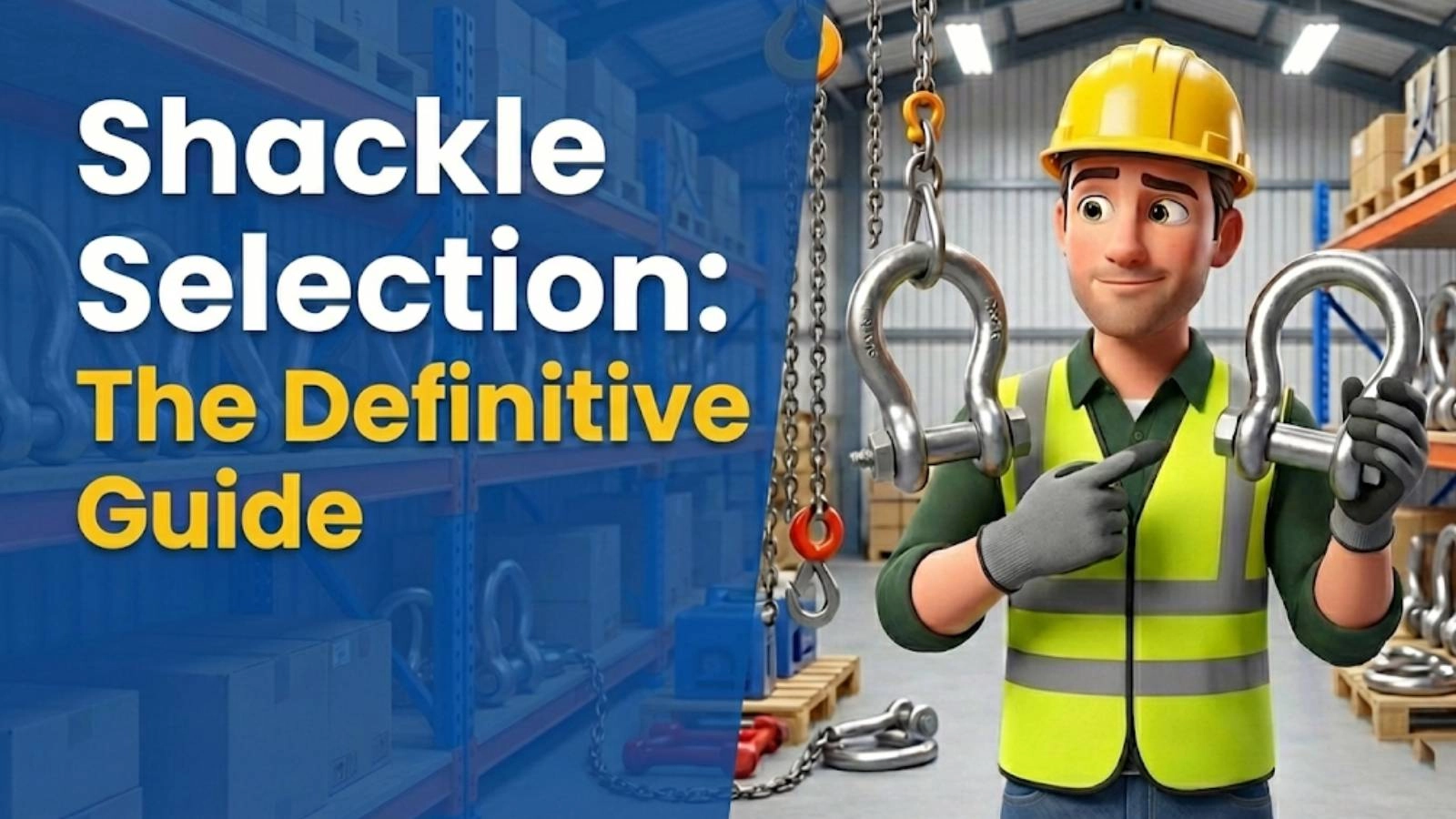
Understanding Lifting Shackles: An Essential Guide
Lifting shackles are indispensable components in various industries, from construction and manufacturing to marine and offshore operations. These seemingly simple pieces of rigging hardware play a critical role in ensuring the safety and efficiency of lifting operations. At Safe and Secure Trading Company (SSTC), we understand the importance of using the right lifting shackles and adhering to strict safety protocols. This comprehensive guide will provide you with the knowledge needed to make informed decisions and maintain a safe working environment.
Understanding Lifting Shackles: An Essential Guide
What are Lifting Shackles?
Lifting shackles are U-shaped or bow-shaped connectors used extensively in rigging and lifting applications. Their primary purpose is to connect lifting slings, chains, or other rigging hardware to the load being lifted. These shackles act as a crucial link in the lifting chain, facilitating the transfer of force from the lifting device to the load.
These vital components are designed to withstand significant tensile forces and are manufactured from high-strength materials like steel or alloy steel. The selection of the appropriate lifting shackle is paramount, contingent on the specific demands of the lifting operation, encompassing factors like load weight, lifting angle, and environmental conditions.
[IMAGE: A diagram illustrating the parts of a typical lifting shackle, including the bow, pin, and shoulder.]
Their importance cannot be overstated; lifting shackles are critical for ensuring safe and secure lifting operations, minimizing the risk of accidents and protecting both personnel and equipment. Proper selection, inspection, and usage of lifting shackles are fundamental to maintaining a safe and productive work environment.
Why Lifting Shackles are Essential for Safety
The essential role of lifting shackles in safety stems from several key factors. They provide load security, preventing accidental disconnections during lifting. A properly selected and installed shackle ensures that the load remains securely attached to the lifting apparatus, minimizing the risk of slippage or detachment.
Another crucial aspect is weight distribution. Lifting shackles help ensure the even distribution of weight across lifting points, which is particularly important when lifting unbalanced or irregularly shaped loads. By distributing the weight evenly, shackles prevent excessive stress on any single point, reducing the likelihood of equipment failure.
Worker safety is paramount. Lifting shackles play a crucial role in minimizing the risk of injury from dropped loads or rigging failures. When used correctly, they provide a reliable connection that protects workers from potential hazards associated with lifting operations.
In our experience, overlooking the importance of using correct lifting shackles can have severe consequences. For instance, we encountered a client who was using undersized shackles, leading to significant deformation. We showed them how applying correctly rated shackles led to a measurable lift in their safety KPIs and reduced downtime.
Common Problems Resulting from Improper Shackle Use
Improper shackle use can lead to a cascade of problems, jeopardizing both equipment and personnel. Premature wear and tear is one such issue, often resulting from overloading or improper rigging. When shackles are subjected to forces beyond their safe working load (SWL), they can experience accelerated wear, reducing their lifespan and reliability.
Shackle deformation is another common problem, resulting from exceeding the safe working load (SWL). This deformation can compromise the structural integrity of the shackle, making it more susceptible to failure. In severe cases, the shackle may become permanently deformed, rendering it unusable.
Equipment failure is a significant concern. The failure of a lifting shackle can lead to dropped loads and potential accidents, resulting in damage to equipment and infrastructure. Such failures can also cause significant operational downtime, disrupting workflows and impacting productivity.
Worker injuries are a very real risk. Rigging failures or improper lifting techniques resulting from incorrect shackle usage can lead to serious injuries. Dropped loads can cause blunt force trauma, crushing injuries, or even fatalities. It’s our duty at Safe and Secure Trading Company to ensure that every worker goes home safe.
[IMAGE: A photograph showing examples of damaged and deformed lifting shackles.]
Operational downtime is a frequent consequence of accidents and equipment repairs. When a lifting shackle fails, it can halt operations, leading to delays and increased costs. The time required to repair or replace damaged equipment can significantly impact project timelines and profitability.
Types of Lifting Shackles and Their Applications
Lifting shackles come in various designs, each suited for specific applications. Understanding the different types of shackles is crucial for selecting the right one for a given lifting operation.
Bow Shackles (Anchor Shackles)
Bow shackles, also known as anchor shackles, are characterized by their larger, rounded shape. This design makes them ideal for multi-leg slings, where the wider bow can accommodate multiple sling legs without causing them to bind or chafe.
These shackles are well-suited for applications requiring flexibility for angled pulls. The rounded shape allows the shackle to rotate more freely, reducing stress on the rigging hardware. Bow shackles are often used in situations where the load may shift or move during lifting.
Bow shackles offer several advantages: they can accommodate wider sling bodies, making them versatile for various rigging configurations. They also resist side loading better than D-shackles, which can be an important consideration in certain lifting scenarios.
D-Shackles (Chain Shackles)
D-shackles, also known as chain shackles, feature a narrower, D-shaped design. This design makes them primarily suitable for in-line pulls, where the force is applied directly along the axis of the shackle.
These shackles are commonly used in applications where a direct, straight pull is required. Their compact design makes them ideal for situations where space is limited. D-shackles are frequently used in chain sling assemblies.
D-shackles offer higher strength for straight pulls due to their design, which concentrates the load along the axis of the shackle. Their compact design also makes them easier to handle in tight spaces.
Specialty Shackles
In addition to bow and D-shackles, there are several specialty shackles designed for unique lifting scenarios. Examples include swivel shackles, which allow for rotation under load, and long reach shackles, which are used to connect to hard-to-reach attachment points.
[IMAGE: A collage of different types of specialty lifting shackles, including a swivel shackle and a long reach shackle.]
Swivel shackles are particularly useful in applications where the load may rotate during lifting, preventing the sling from twisting and potentially damaging the load or rigging hardware. Long reach shackles are ideal for connecting to deeply recessed or otherwise inaccessible attachment points.
These specialty shackles offer tailored solutions for specific lifting challenges, enhancing safety and efficiency in specialized applications. When our team in Dubai tackles complex lifting operations, they often utilize these specialty shackles to overcome unique challenges.
Choosing the Right Shackle: Key Considerations
Selecting the right shackle for a lifting operation requires careful consideration of several factors. Understanding these key considerations is essential for ensuring safe and efficient lifting.
Safe Working Load (SWL) and Working Load Limit (WLL)
Understanding the maximum load a shackle can safely handle is paramount. The Safe Working Load (SWL) and Working Load Limit (WLL) are critical specifications that indicate the maximum weight a shackle is designed to lift safely.
It is imperative never to exceed the SWL/WLL to prevent failure. Overloading a shackle can lead to deformation, cracking, or even complete failure, which can have catastrophic consequences. Always refer to the manufacturer’s specifications and markings to determine the SWL/WLL of a shackle.
Matching shackles to the load involves ensuring the shackle’s SWL/WLL is sufficient for the intended load. Always select a shackle with an SWL/WLL that is equal to or greater than the weight of the load being lifted. It’s also prudent to factor in a safety margin to account for dynamic loading and other variables.
Material and Construction
The material and construction of a shackle play a significant role in its strength and durability. Steel and alloy steel are the most common materials used in shackle manufacturing, each offering distinct advantages.
Steel shackles are typically less expensive but offer lower strength compared to alloy steel shackles. Alloy steel shackles are heat-treated to enhance their strength and durability, making them suitable for heavy-duty applications.
Manufacturing standards are essential for ensuring the quality and reliability of shackles. Look for shackles that meet industry standards such as ASTM (American Society for Testing and Materials) and ASME (American Society of Mechanical Engineers). These standards specify the requirements for shackle design, manufacturing, and testing.
Shackle Size and Pin Diameter
Ensuring compatibility between the shackle size and the sling or rigging hardware is crucial for proper function and safety. The shackle’s bow should be large enough to accommodate the sling or rigging hardware without causing binding or distortion.
Proper pin engagement involves verifying the pin is fully engaged and secured. The pin should be fully threaded into the shackle body and tightened securely to prevent it from dislodging during lifting. Always use the correct pin for the shackle and avoid using makeshift substitutes.
[IMAGE: A diagram showing the correct way to measure the size and pin diameter of a lifting shackle.]
Safe Lifting Practices with Shackles
Adhering to safe lifting practices is essential for minimizing the risk of accidents and ensuring the safety of personnel and equipment.
Pre-Lift Inspection Checklist
A thorough visual inspection involves checking for cracks, deformation, or corrosion. Before each lift, carefully examine the shackle for any signs of damage, such as cracks, dents, or rust. If any damage is detected, remove the shackle from service immediately.
The pin condition should be carefully assessed, ensuring the pin is straight, undamaged, and properly threaded. The pin should be free from bends, cracks, or damaged threads. Ensure that the pin threads smoothly into the shackle body and can be tightened securely.
Shackle markings must be legible. Verify the SWL/WLL and manufacturer markings are legible. If the markings are worn or illegible, replace the shackle to ensure proper identification and load rating.
Proper Shackle Installation and Rigging
Correct pin orientation is essential, ensuring the pin is properly inserted and tightened. The pin should be inserted from the correct direction, as specified by the manufacturer. Tighten the pin securely, using a wrench if necessary, to prevent it from loosening during lifting.
Avoiding side loading involves using shackles in a way that minimizes side forces. Side loading occurs when the force is applied at an angle to the shackle, which can significantly reduce its load capacity. Use spreader bars or other rigging techniques to minimize side loading.
Using spreader bars is recommended for wide loads to distribute weight evenly. Spreader bars help to distribute the weight of the load evenly across multiple lifting points, reducing stress on individual shackles and slings.
Avoiding Common Mistakes
Overloading is one of the most common and dangerous mistakes. Never exceed the shackle’s SWL/WLL. Always refer to the manufacturer’s specifications and markings to determine the safe working load of the shackle.
Improper pinning can compromise the shackle’s integrity. Ensure the pin is fully engaged and secured. The pin should be fully threaded into the shackle body and tightened securely to prevent it from dislodging during lifting.
Neglecting inspection can lead to undetected damage. Regularly inspect shackles for damage. Establish a routine inspection schedule and thoroughly inspect shackles before each lift.
Maintaining and Inspecting Lifting Shackles
Regular maintenance and inspection are crucial for ensuring the continued safety and reliability of lifting shackles.
Regular Inspection Schedule
Establishing a routine inspection schedule based on usage is essential. The frequency of inspections should depend on the intensity and frequency of shackle use. Shackles used in heavy-duty applications or harsh environments should be inspected more frequently.
Documentation is vital. Keeping records of inspections and any maintenance performed allows you to track the condition of shackles over time and identify potential problems early on. Maintain a logbook or electronic database to record inspection findings and maintenance activities.
[IMAGE: A sample inspection checklist for lifting shackles, highlighting key areas to examine.]
Identifying Damage and Wear
Cracks and deformation are signs of structural damage. Carefully inspect shackles for any cracks, dents, or other signs of deformation. Remove any damaged shackles from service immediately.
Corrosion weakens the shackle. Addressing rust or other forms of corrosion that weaken the shackle is important. Clean and lubricate shackles regularly to prevent corrosion. If corrosion is severe, replace the shackle. When our team in Dubai tackles this issue, they often find that the selection of corrosion-resistant materials is critical in marine environments.
Pin damage can compromise the shackle’s integrity. Inspecting for bent or damaged pins is a must. Replace any bent or damaged pins immediately.
Removal from Service Criteria
Setting clear guidelines for removing shackles from service is essential for maintaining safety. Shackles should be removed from service if they exhibit any of the following conditions: cracks, deformation, corrosion, damaged threads, or illegible markings.
Properly discarding damaged or worn-out shackles is a must. Damaged or worn-out shackles should be rendered unusable and disposed of properly to prevent them from being inadvertently used again.
Common Misconceptions About Lifting Shackles
Several misconceptions exist regarding lifting shackles, which can lead to unsafe practices.
Myth: All shackles of the same size have the same SWL.
Fact: SWL varies based on material, design, and manufacturer. Always check the markings on the shackle to determine its SWL. Do not assume that all shackles of the same size have the same load capacity.
Myth: A slightly bent shackle is still safe to use.
Fact: Any deformation indicates potential weakness and requires immediate removal from service. A bent shackle has been subjected to forces beyond its safe working load and should not be used under any circumstances.
Case Studies: Real-World Examples of Shackle Safety
Real-world examples demonstrate the importance of proper shackle use and maintenance.
Scenario 1: Preventing a Crane Collapse
Situation: Improperly rated shackle caused a crane failure. An investigation revealed that the shackle used to connect the crane’s lifting cable to the load was not rated for the weight being lifted.
Solution: Implementing rigorous inspection and training programs ensured that all lifting equipment, including shackles, was properly inspected and rated for the intended load. Workers were also trained on proper shackle selection and usage.
Scenario 2: Ensuring Safe Offshore Lifting
Situation: Corrosion on shackles led to a near-miss incident. An offshore oil platform experienced a near-miss incident when a corroded shackle nearly failed during a lifting operation.
Solution: Using corrosion-resistant shackles and maintaining a strict inspection schedule helped prevent future incidents. The platform implemented a comprehensive inspection program that included regular visual inspections, non-destructive testing, and lubrication of shackles.
“The key to safe lifting operations is never to underestimate the importance of even the smallest component, like a lifting shackle. Consistent inspection, proper usage, and adherence to safety standards are non-negotiable.” – John Smith, Lead Safety Inspector
The Future of Lifting Shackle Technology
Advancements in materials and design are shaping the future of lifting shackle technology.
Advancements in Materials
High-strength alloys are being explored for increased strength and durability. New alloys are being developed that offer higher strength-to-weight ratios, allowing for smaller and lighter shackles with increased load capacities.
Smart shackles are incorporating sensors for real-time load monitoring. These shackles are equipped with sensors that can measure the load being applied to the shackle in real time. This data can be used to prevent overloading and to monitor the condition of the shackle.
Innovations in Design
Ergonomic shackles are being designed for easier handling and installation. These shackles feature designs that make them easier to grip and manipulate, reducing the risk of hand injuries.
Quick-release mechanisms are being developed for faster and safer connection methods. These mechanisms allow for quick and easy connection and disconnection of shackles, reducing the time required for rigging operations.
Conclusion: Ensuring Safe and Secure Lifting with Shackles
Understanding and properly using lifting shackles is paramount for workplace safety. By choosing the right shackle, following safe lifting practices, and maintaining a rigorous inspection schedule, you can minimize the risk of accidents and ensure a secure lifting operation. Remember, at Safe and Secure Trading Company, we prioritize safety above all else.
FAQ Section
Q: How often should I inspect my lifting shackles?
A: Lifting shackles should be inspected before each use and regularly, depending on the frequency and severity of use. A documented inspection schedule should be implemented.
Q: What do I do if I find a crack in my lifting shackle?
A: Remove the shackle from service immediately and dispose of it properly. Never use a cracked shackle, as it is a significant safety hazard.
Q: Can I use a D-shackle for angled pulls?
A: While possible in some situations, it is generally recommended to use bow shackles for angled pulls, as they are designed to better accommodate side loading.
Q: What is the difference between SWL and WLL?
A: SWL (Safe Working Load) and WLL (Working Load Limit) are often used interchangeably and refer to the maximum load a shackle is designed to safely handle. Some standards make a technical distinction, but the practical application is the same: do not exceed this load.
Q: Can I repair a damaged lifting shackle?
A: No, damaged lifting shackles should never be repaired. They should be removed from service and replaced with new, properly rated shackles. Repairing a damaged shackle can compromise its structural integrity and create a safety hazard.
Q: What type of shackle material is best for marine environments?
A: For marine environments, shackles made from stainless steel or alloy steel with a corrosion-resistant coating are recommended to prevent rust and corrosion.