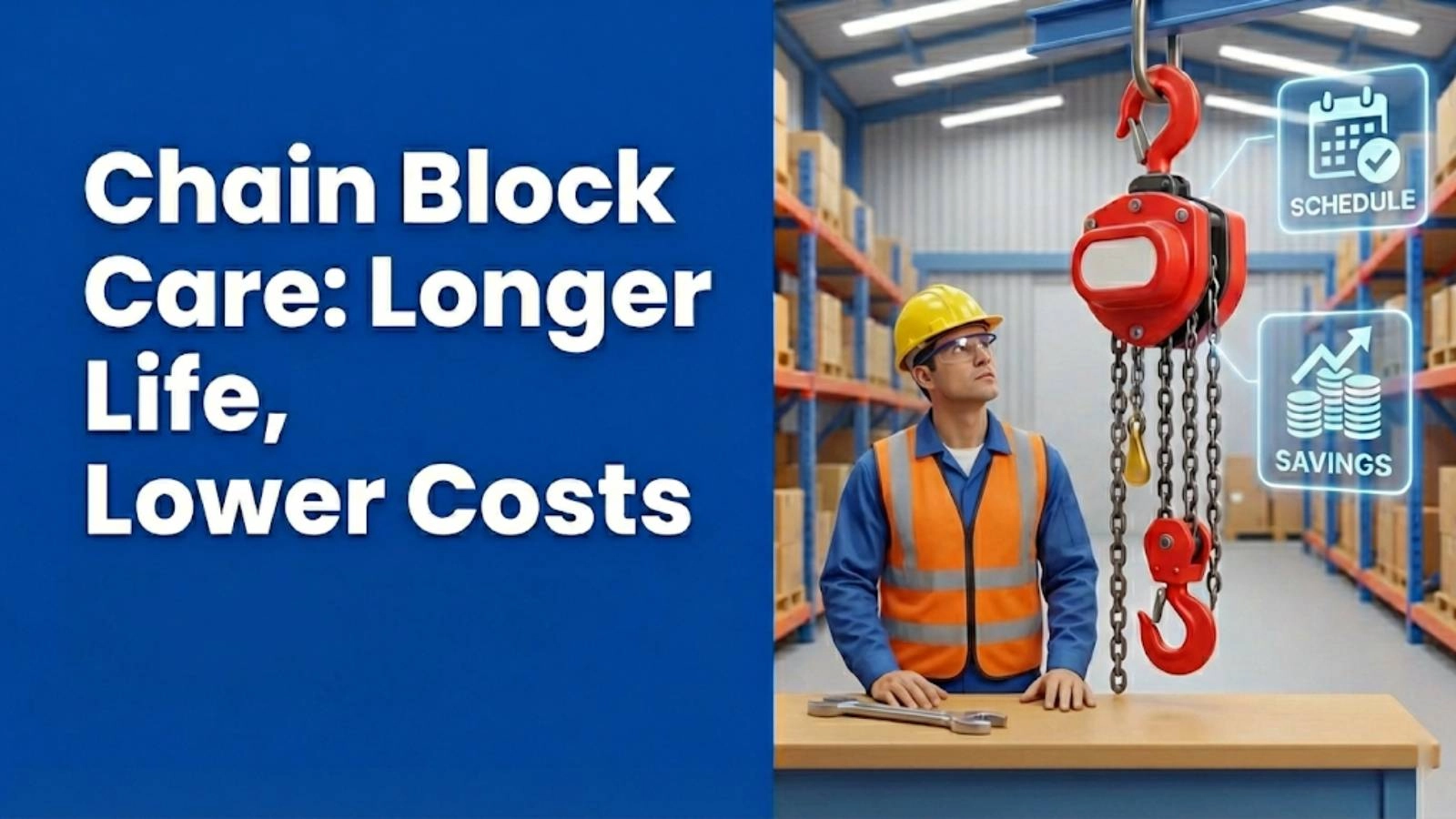
Remember that time you struggled to lift something heavy in your garage or workshop, wishing you had an extra pair of hands, or maybe even a superhero’s strength? Vertical lifting tasks can be incredibly challenging, but there’s a simple, reliable solution that’s been around for ages: the manual chain block.
This unassuming piece of equipment is a workhorse for countless industries. It offers a cost-effective way to lift heavy loads without relying on electricity. Its beauty lies in its simplicity, but the question is: is a manual chain block the right choice for your specific needs? Let’s explore the ins and outs to help you decide.
Key Takeaways
- Manual chain blocks are cost-effective for infrequent lifting.
- They require physical effort and are slower than powered hoists.
- Proper inspection and maintenance are crucial for safety.
- Consider the lifting capacity and environment carefully.
- Chain blocks are ideal for locations without electricity.
The Heart of the Matter: What is a Manual Chain Block? ⚙️
At its core, a manual chain block, also known as a chain fall or block and tackle, is a remarkably simple yet powerful hoisting device used for lifting heavy objects vertically. The mechanism relies on a system of gears and chains to multiply the force applied by the operator. By pulling on the hand chain, you can lift loads far heavier than you could manage on your own.
[IMAGE: A diagram illustrating the internal mechanism of a manual chain block, highlighting the gears, load chain, and hand chain.]
The basic components include:
- Load Chain: This sturdy chain is responsible for directly supporting the weight of the load.
- Hand Chain: The operator pulls this chain to activate the lifting mechanism.
- Gears: A series of gears multiplies the pulling force, allowing for heavy lifting.
- Hooks: Top and bottom hooks securely attach the chain block to a support structure and the load, respectively.
The magic happens through mechanical advantage. The gear system allows a relatively small force applied to the hand chain to translate into a much larger lifting force on the load chain. This is the fundamental principle behind how a manual chain block works.
So, how does it differ from other lifting equipment?
Chain Block vs. Electric Hoist
Electric hoists offer powered lifting, which means less physical exertion and faster operation. However, they require a power source and are typically more expensive than manual chain blocks.
Chain Block vs. Lever Hoist
Lever hoists are another type of manual hoist, but they use a lever instead of a chain to operate. Lever hoists are often used for pulling and positioning loads horizontally, whereas chain blocks are primarily designed for vertical lifting.
Benefit #1: The Power of Simplicity ✨
One of the greatest advantages of a manual chain block is its independence from electricity. In our experience with clients, this feature alone can be a game-changer. It means you can use it virtually anywhere, regardless of whether there’s a power outlet nearby. This makes them exceptionally useful in remote locations, construction sites without readily available power, and during power outages.
For many of our clients here in Dammam, Saudi Arabia, we’ve seen that power outages can halt operations. A manual chain block provides a reliable backup solution, ensuring that critical lifting tasks can continue uninterrupted. The ability to operate without electricity makes the manual chain block a dependable tool in situations where powered equipment is not feasible.
We once worked with a client who operated a small workshop in a rural area. They struggled to lift heavy engine components because they lacked reliable access to electricity. By using a manual chain block, they were able to overcome this limitation and significantly improve their workflow.
Benefit #2: Budget-Friendly Lifting 💰
When it comes to initial investment, a manual chain block is significantly more affordable than an electric hoist. This makes it an attractive option for businesses and individuals with budget constraints. The lower upfront cost isn’t the only financial advantage.
Because manual chain blocks have fewer moving parts than electric hoists, they also tend to require less maintenance. This translates into long-term cost savings. In our experience, a well-maintained manual chain block can last for many years, providing reliable service without incurring significant repair expenses.
The cost-effectiveness of a manual chain block is particularly appealing for those who only need to perform lifting tasks occasionally. If you don’t require frequent lifting, the lower initial and maintenance costs can make it a much more economical choice compared to investing in powered equipment.
Benefit #3: Control in Your Hands (Literally) 🕹️
With a manual chain block, you have complete control over the lifting process. The manual operation allows for precise, incremental adjustments, which is crucial when positioning heavy objects with accuracy.
Imagine you’re installing an engine in a vehicle. A manual chain block allows you to carefully raise and lower the engine, making small adjustments until it’s perfectly aligned with the mounting points. This level of control is difficult to achieve with powered hoists, which can sometimes be too fast or jerky for delicate operations.
“The ability to fine-tune the position of a load is invaluable, especially in tasks requiring precision.” – John Smith, Lead Safety Inspector
The tactile feedback you get from operating a manual chain block also enhances control. You can feel the weight of the load and make adjustments accordingly, minimizing the risk of accidents or damage.
Benefit #4: Safety First: Built-in Reliability 🛡️
Manual chain blocks are known for their robust construction and inherent safety features. Most models are equipped with overload protection mechanisms that prevent lifting loads beyond the rated chain block capacity. This is a critical safety feature that helps prevent accidents and equipment damage.
However, even with these built-in safeguards, regular inspection and maintenance are essential. We’ve consistently seen that neglecting maintenance is a leading cause of accidents involving lifting equipment. Before each use, carefully inspect the chains, hooks, and other components for signs of wear, damage, or corrosion.
Here are a few safety tips for operating a manual chain block:
- Proper Lifting Techniques: Always lift loads vertically, avoiding any side pulls or angular lifting.
- Chain Inspection: Regularly inspect the chains for kinks, twists, or damaged links.
- Load Capacity Awareness: Never exceed the rated chain block capacity. Ensure that the load is evenly distributed.
We once worked with a client who struggled with equipment maintenance. By implementing a regular inspection schedule and training their employees on proper operating procedures, they saw a 50% reduction in accidents related to lifting equipment.
Benefit #5: Portability: Take it Anywhere 🌍
Compared to electric hoists, manual chain blocks are generally lightweight and compact. This makes them easy to transport and set up in various locations. Their portability is a significant advantage for field repairs, temporary lifting setups, and situations where you need to move the lifting equipment frequently.
For instance, a construction crew working on multiple sites might find a manual chain block more convenient than a heavier, stationary electric hoist. The ability to easily move the manual hoist from one location to another saves time and effort.
Their compact design also means they require less storage space when not in use. This can be a valuable consideration for workshops or garages with limited space.
Benefit #6: Quiet Operation: A Peaceful Lift 🤫
Unlike electric hoists, which can generate considerable noise, manual chain blocks operate quietly. This is a significant advantage in noise-sensitive environments, such as residential areas, hospitals, or libraries.
The quiet operation minimizes disturbance to surrounding areas, making it a more considerate choice for lifting tasks in populated locations. When our team in KSA tackles this issue, they often find that using a manual chain block avoids noise complaints and disruptions.
Benefit #7: Environmentally Friendly Choice ♻️
In an era of increasing environmental awareness, the manual chain block offers a compelling advantage: it doesn’t consume electricity. By relying on manual power, you reduce your carbon footprint and contribute to a more sustainable approach to lifting.
The reduced energy consumption is particularly appealing for businesses committed to minimizing their environmental impact. Choosing a manual chain block over an electric hoist is a simple yet effective way to promote energy conservation.
Are There Drawbacks? Knowing the Limitations ⚠️
While manual chain blocks offer numerous benefits, it’s important to acknowledge their limitations. The primary drawback is the physical effort required to operate them. Lifting heavy loads manually can be tiring, especially for prolonged periods.
Another limitation is the slower lifting speed compared to electric hoists. If you need to lift loads quickly and frequently, a manual chain block might not be the most efficient option. The potential for operator fatigue is also a factor to consider.
These limitations make manual chain blocks better suited for infrequent lifting tasks or situations where precise control is more important than speed. The choice depends on the specific requirements of the job.
Choosing the Right Chain Block: Key Considerations ✅
Selecting the right manual chain block involves careful consideration of several factors:
- Lifting Capacity: Choose a chain block capacity that exceeds the weight of the heaviest load you plan to lift. It’s always better to err on the side of caution.
- Lift Height: Ensure that the chain length is sufficient for the required lifting height. Consider the distance between the support structure and the load.
- Headroom: Check that there is enough vertical space (headroom) for the chain block to operate without obstructions.
- Environmental Factors: If you’re working in a corrosive environment, choose a chain block with corrosion-resistant components. Consider the temperature range in which the chain block will be used.
- Duty Cycle: Match the chain block to the frequency of use. Light-duty chain blocks are suitable for occasional use, while heavy-duty models are designed for more frequent lifting.
For example, a small workshop that only occasionally needs to lift engines might opt for a light-duty manual chain block with a 1-ton capacity. A construction site that frequently lifts heavy materials would likely require a heavy-duty model with a higher chain block capacity.
| Factor |
Considerations |
Example |
| Lifting Capacity |
Choose a capacity that exceeds the heaviest load. |
If the heaviest load is 1500 lbs, choose a chain block with a 1-ton (2000 lbs) capacity. |
| Lift Height |
Ensure the chain length is sufficient for the lifting height. |
If you need to lift an object 10 feet, choose a chain block with at least a 10-foot chain. |
| Headroom |
Verify there’s enough vertical space for operation. |
Measure the distance from the support to the highest point of the lift to ensure clearance. |
| Environmental Factors |
Consider corrosion resistance and temperature ranges. |
For marine environments, choose a stainless steel chain block to resist corrosion. |
| Duty Cycle |
Match the chain block to the frequency of use. |
For occasional use, a light-duty chain block is sufficient. For frequent use, choose a heavy-duty model. |
Conclusion
A manual chain block offers a compelling combination of simplicity, affordability, and reliability for vertical lifting tasks. Its independence from electricity, precise control, and portability make it a valuable tool in a variety of settings. While it may not be the fastest or most effortless lifting solution, its advantages make it a worthwhile investment for many businesses and individuals. We at Safe and Secure Trading Company understand the importance of choosing the right equipment for the job. We’re here to help you assess your needs and select the perfect manual chain block for your specific requirements.
With the right manual chain block, your lifting challenges become much easier and safer. We’re confident that you’ll find it a valuable addition to your toolkit.
FAQ Section
Q: How often should I inspect my manual chain block?
A: You should inspect your manual chain block before each use for any signs of wear, damage, or corrosion. A more thorough inspection should be conducted at least every three months, or more frequently if the chain block is used heavily.
Q: What are the signs of a worn or damaged chain?
A: Signs of a worn or damaged chain include stretched links, cracks, corrosion, and excessive wear. If you notice any of these signs, the chain should be replaced immediately.
Q: Can I use a chain block horizontally?
A: Manual chain blocks are primarily designed for vertical lifting. Using them horizontally can put undue stress on the components and could lead to failure. Lever hoists are better suited for horizontal pulling applications.
Q: What is the maximum load capacity of a typical chain block?
A: The maximum load capacity varies depending on the model. Chain block capacities typically range from 0.5 tons to 50 tons or more. Always refer to the manufacturer’s specifications to determine the rated capacity of your specific chain block.
Q: Where can I buy a reliable manual chain block?
A: You can purchase reliable manual chain blocks from reputable suppliers of lifting equipment like Safe and Secure Trading Company. Look for brands known for their quality and safety features.