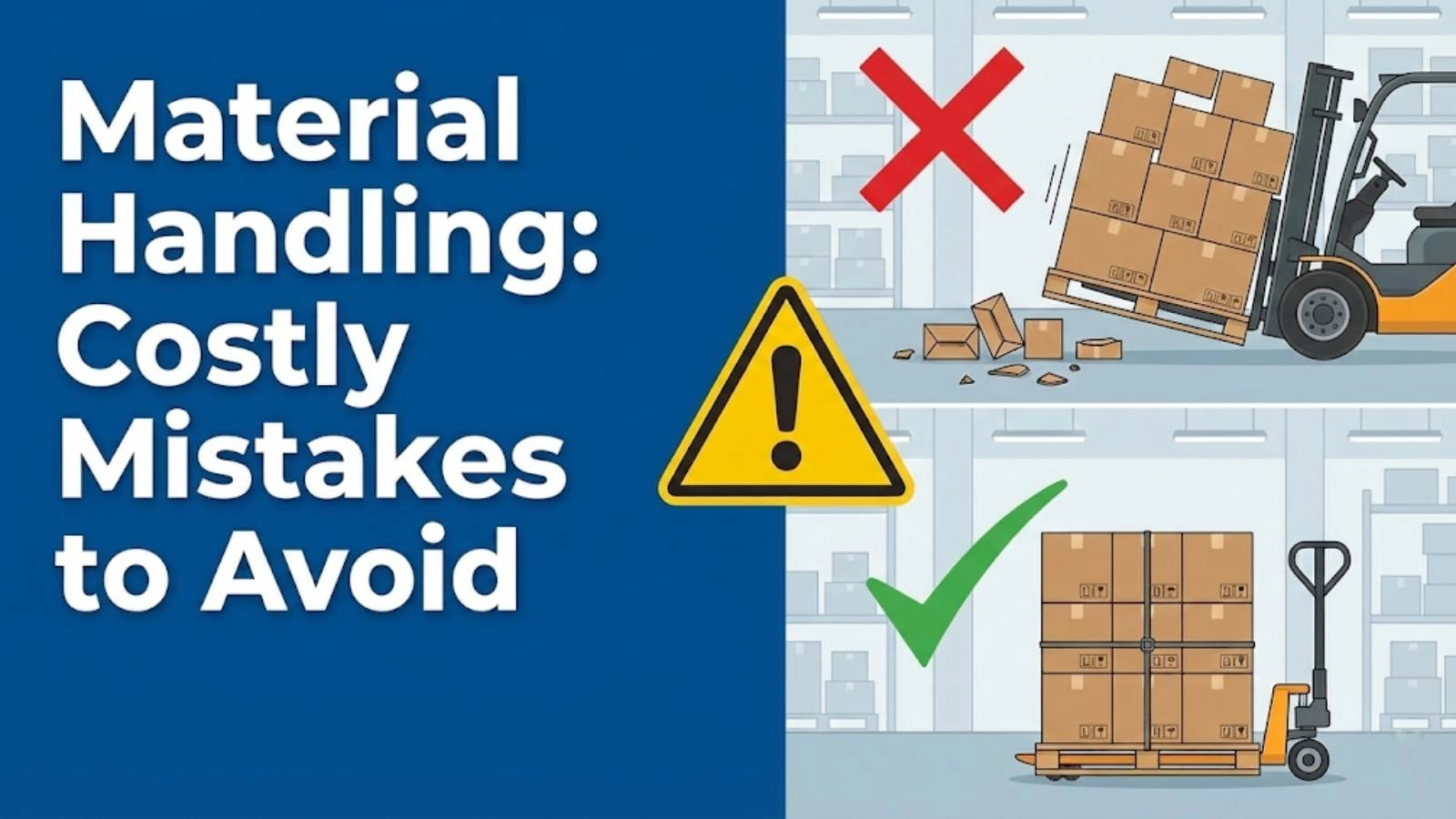
Material handling is the backbone of any efficient warehouse or distribution center. However, even the most well-intentioned operations can fall prey to common material handling mistakes that drain resources, increase costs, and compromise safety. At Safe and Secure Trading Company (SSTC), we’ve seen firsthand how these errors can impact businesses across various sectors. That’s why we’ve compiled this comprehensive list of material handling mistakes to help you identify potential issues and implement effective solutions to stop the bleeding and optimize your operations.
1. Ignoring Ergonomics: The Silent Productivity Killer
✅ Ergonomics, the science of designing the workplace to fit the worker, is often overlooked in material handling. This can lead to significant consequences. It involves adapting workplace conditions and job demands to the capabilities of workers, reducing physical strain and discomfort, and ultimately improving efficiency and productivity. When ergonomics are ignored, the results can be devastating.
1.1. Defining Ergonomics in Material Handling
Ergonomics in material handling is about fitting the job to the worker, not the worker to the job. This involves evaluating tasks, equipment, and the environment to minimize physical stress and maximize comfort. By focusing on ergonomics, companies can reduce the risk of injuries and create a more positive work environment.
1.2. Common Ergonomic Hazards
Repetitive motions, awkward postures, and excessive force are common ergonomic hazards in material handling. Tasks like continuously lifting heavy boxes, bending to pick up items, or twisting while operating equipment can lead to musculoskeletal disorders (MSDs). Vibration and impact from machinery can also contribute to ergonomic problems.
1.3. The Cost of Neglecting Ergonomics
Neglecting ergonomics can be expensive. Increased worker compensation claims, higher rates of MSDs, reduced productivity and morale, and increased absenteeism and turnover are all potential consequences. Investing in ergonomics is not just about employee well-being; it’s also a smart business decision that can save money in the long run.
1.4. Implementing Ergonomic Solutions
Implementing ergonomic solutions involves conducting risk assessments to identify hazards, providing adjustable workstations and equipment, and training employees on proper lifting techniques. Rotating tasks to reduce repetitive motions and using assistive devices like lift assists and dollies can also help. We’ve seen significant improvements in our client’s operational efficiency through these ergonomic changes here in Dammam.
2. Inefficient Warehouse Layout: Wasted Time and Space
💡 An inefficient warehouse layout can significantly hinder material flow and overall operational efficiency. It’s crucial to design your space strategically to minimize travel distances, reduce handling steps, and maximize storage density. A well-designed layout is the foundation of effective material handling.
2.1. The Impact of Layout on Material Flow
The layout of a warehouse directly affects the distance materials travel, the number of handling steps required, and the overall speed and efficiency of operations. A poorly designed layout can lead to congestion, bottlenecks, and wasted time. Optimizing the layout is crucial for improving material flow and reducing costs.
2.2. Signs of a Poorly Designed Layout
Congested aisles, excessive travel distances, poor utilization of vertical space, difficulty locating items, and frequent cross-traffic are all signs of a poorly designed layout. If workers are constantly struggling to navigate the warehouse or spending too much time searching for items, it’s time to re-evaluate the layout.
2.3. Optimizing Warehouse Layout Principles
Implementing a flow-oriented layout (straight-line or U-shaped), strategically locating high-demand items for easy access, maximizing vertical space with racking systems, and creating clear and organized aisles and storage areas are key principles for optimizing warehouse layout. Consider the flow of materials from receiving to shipping and design the layout to support that flow.
2.4. Layout Optimization Techniques
ABC analysis to categorize inventory based on velocity, slotting optimization software to determine optimal item placement, using visual cues (labels, signage) for easy identification, and regularly evaluating and adjusting the layout based on changing needs are effective layout optimization techniques. For example, we always recommend ABC analysis, where high-velocity ‘A’ items are placed in easily accessible locations to reduce picking time.
3. Ignoring Preventative Maintenance: A Recipe for Downtime
➡️ Preventative maintenance is essential for keeping material handling equipment running smoothly and avoiding costly downtime. Neglecting maintenance can lead to unexpected breakdowns, reduced equipment lifespan, and safety hazards. A proactive approach to maintenance is crucial for long-term operational efficiency.
3.1. The Importance of Preventative Maintenance
Preventative maintenance reduces the risk of equipment breakdowns, extends the lifespan of equipment, improves safety and reliability, and minimizes costly downtime and repairs. Regular maintenance can identify potential problems before they lead to major failures. Investing in preventative maintenance is a cost-effective way to protect your equipment and your operations.
3.2. Common Equipment Failures
Forklift breakdowns (engine, tires, hydraulics), conveyor system malfunctions (belts, rollers, motors), racking system damage (impact from forklifts), and automated storage and retrieval system (AS/RS) failures (sensors, software) are common equipment failures. These failures can disrupt operations, delay shipments, and increase costs. Addressing these issues proactively through maintenance can prevent major problems.
3.3. Developing a Preventative Maintenance Program
Creating a schedule for regular inspections and maintenance, training employees on proper equipment operation and maintenance procedures, keeping detailed records of maintenance activities, and establishing a system for reporting and addressing equipment issues promptly are key steps in developing a preventative maintenance program. Make sure the program is tailored to the specific equipment and needs of your operation.
3.4. Implementing Condition Monitoring
Using sensors to monitor equipment performance (vibration, temperature, pressure), analyzing data to identify potential problems before they occur, and predictive maintenance to schedule maintenance based on actual equipment condition are advanced techniques for implementing condition monitoring. These technologies can help you identify and address potential problems before they lead to equipment failures.
4. Lack of Proper Training: Setting Employees Up for Failure
✅ Proper training is crucial for ensuring the safety and efficiency of material handling operations. Untrained employees are more likely to make mistakes, cause accidents, and damage equipment. Investing in training is an investment in your employees and your business.
4.1. The Impact of Training on Safety and Efficiency
Training reduces the risk of accidents and injuries, improves employee skills and knowledge, increases productivity and efficiency, and boosts employee morale and engagement. Well-trained employees are more confident, competent, and capable of performing their jobs safely and effectively.
4.2. Key Training Areas
Forklift operation and safety certification, proper lifting techniques and ergonomics, hazard communication and safety procedures, equipment operation and maintenance, and emergency response procedures are key training areas. Make sure employees receive training in all areas relevant to their job responsibilities.
4.3. Effective Training Methods
Classroom instruction, hands-on training, on-the-job training, computer-based training (CBT), and simulations and virtual reality are effective training methods. Use a combination of methods to cater to different learning styles and ensure that employees understand and retain the information.
4.4. Continuous Training and Development
Regular refresher courses to reinforce knowledge and skills, training on new equipment and procedures, cross-training employees to handle multiple tasks, and providing opportunities for professional development are essential for continuous training and development. The material handling industry is constantly evolving, so it’s important to keep employees up-to-date on the latest best practices and technologies.
5. Poor Inventory Management: The Root of Many Evils
💡 Poor inventory management can lead to a host of problems in material handling, including stockouts, excess inventory, and inefficient picking and put-away processes. Effective inventory management is essential for optimizing material flow and reducing costs.
5.1. The Link Between Inventory and Material Handling
Inventory levels directly impact the volume of material handled, inventory accuracy affects picking and put-away efficiency, and inventory storage methods influence space utilization. Managing inventory effectively can significantly reduce the amount of material handling required and improve overall operational efficiency.
5.2. Common Inventory Management Problems
Stockouts and shortages, excess inventory and obsolescence, inaccurate inventory records, and poor visibility into inventory levels are common inventory management problems. These problems can lead to lost sales, increased costs, and dissatisfied customers.
5.3. Implementing Inventory Control Techniques
Cycle counting to verify inventory accuracy, ABC analysis to prioritize inventory management efforts, just-in-time (JIT) inventory management to minimize inventory levels, and vendor-managed inventory (VMI) to transfer inventory management responsibilities to suppliers are effective inventory control techniques. We always recommend cycle counting for our Dammam-based clients. This technique ensures the accuracy of inventory records and minimizes discrepancies.
5.4. Leveraging Technology for Inventory Management
Warehouse management system (WMS) to track and manage inventory, barcode scanners and RFID tags to improve accuracy, and real-time data analytics to optimize inventory levels are powerful tools for leveraging technology for inventory management. These technologies can provide real-time visibility into inventory levels and help you make better decisions about purchasing, storage, and distribution.
6. Neglecting Safety Procedures: A Disaster Waiting to Happen
➡️ Safety should always be a top priority in material handling. Neglecting safety procedures can lead to accidents, injuries, and even fatalities. A strong safety culture is essential for protecting employees and preventing costly incidents.
6.1. Core Safety Practices in Material Handling
Mandatory PPE (Personal Protective Equipment) usage, regular safety audits, and clearly marked and maintained walkways are core safety practices in material handling. These practices help to minimize the risk of accidents and injuries.
6.2. Potential Safety Hazards
Collisions with forklifts, falling objects, and spills and leaks are potential safety hazards in material handling. These hazards can cause serious injuries and damage to equipment. It’s important to identify and address these hazards proactively to prevent accidents.
6.3. Safety Program Implementation
Establish a safety committee, conduct regular drills, and incentivize safe behavior are key steps in safety program implementation. A strong safety program should involve all employees and promote a culture of safety throughout the organization.
7. Overlooking Vertical Space: Untapped Potential
✅ Vertical space is often underutilized in warehouses and distribution centers. By maximizing vertical storage, companies can significantly increase storage capacity and improve space utilization. Vertical storage solutions can help you make the most of your existing space.
7.1. Benefits of Vertical Storage
Maximizes storage density, reduces footprint, and improves organization are the key benefits of vertical storage. By utilizing vertical space, you can store more items in the same area, reducing the need for expansion or additional facilities.
7.2. Types of Vertical Storage Systems
Pallet racking, multi-tier shelving, and Vertical Lift Modules (VLMs) are common types of vertical storage systems. Each system has its own advantages and disadvantages, so it’s important to choose the right system for your specific needs.
7.3. Optimizing Vertical Storage
Load weight distribution, proper equipment selection, and safety barriers are crucial for optimizing vertical storage. Make sure that loads are distributed evenly to prevent racking collapse and that the right equipment is used to safely access and retrieve items.
8. Ignoring Data Analytics: Flying Blind
💡 Data analytics can provide valuable insights into material handling operations, helping companies identify bottlenecks, optimize processes, and improve efficiency. Ignoring data analytics is like flying blind, making it difficult to make informed decisions and improve performance.
8.1. Key Performance Indicators (KPIs)
Throughput, order cycle time, and inventory turnover are key performance indicators (KPIs) for material handling. Tracking these KPIs can help you identify areas for improvement and measure the effectiveness of your optimization efforts.
8.2. Data Collection Methods
Manual tracking, WMS integration, and IoT sensors are data collection methods for material handling. Using a combination of methods can provide a comprehensive view of your operations and help you identify trends and patterns.
8.3. Leveraging Data Insights
Identify bottlenecks, optimize routes, and predict maintenance needs are ways to leverage data insights. Data analytics can help you make better decisions about resource allocation, process optimization, and maintenance scheduling.
“Data is the new oil. It’s valuable, but if unrefined it cannot really be used. It has to be changed into gas, plastic, chemicals, etc. to drive revenue; so too must data be broken down, analyzed for it to have value.” – Clive Humby, Mathematician and Data Scientist
9. Disregarding Sustainable Practices: Short-Sightedness
➡️ Sustainable practices are becoming increasingly important in material handling. Companies are under growing pressure to reduce their environmental impact and adopt more sustainable practices. Ignoring sustainability is not only bad for the environment but also short-sighted from a business perspective.
9.1. Environmental Impact of Material Handling
Energy consumption, waste generation, and carbon emissions are environmental impacts of material handling. Reducing these impacts can help companies save money, improve their brand image, and comply with regulations.
9.2. Green Material Handling Strategies
Electric forklifts, optimized routing, and recycled packaging materials are green material handling strategies. These strategies can help you reduce your environmental impact and improve your bottom line.
9.3. Long-Term Benefits of Sustainability
Reduced operating costs, enhanced brand image, and compliance with regulations are long-term benefits of sustainability. Investing in sustainable practices can create long-term value for your company and help you attract environmentally conscious customers.
10. Poor Communication: A Breakdown in Efficiency
✅ Effective communication is essential for smooth and efficient material handling operations. Poor communication can lead to errors, delays, and safety hazards. Investing in communication tools and training can significantly improve operational efficiency.
10.1 The Critical Role of Communication
Clear instructions, timely updates, and accurate information are critical for effective communication. Employees need to understand their tasks, receive updates on changes, and have access to accurate information to perform their jobs effectively.
10.2 Communication Barriers
Language differences, lack of training, and ineffective tools are common communication barriers. Addressing these barriers can improve communication and reduce errors.
10.3 Solutions for Effective Communication
Multilingual signage, regular team meetings, and mobile communication devices are solutions for effective communication. Using a combination of these solutions can help you overcome communication barriers and improve operational efficiency.
11. Failure to Adapt to Technological Advancements: Getting Left Behind
💡 The material handling industry is constantly evolving, with new technologies emerging all the time. Failure to adapt to these advancements can leave companies behind, making it difficult to compete and maintain efficiency. Staying up-to-date on the latest technologies and investing in automation can give you a competitive edge.
11.1 Emerging Technologies
Robotics, Automated Guided Vehicles (AGVs), and wearable technology are emerging technologies in material handling. These technologies can automate tasks, improve efficiency, and enhance safety.
11.2 Adoption Challenges
Initial investment costs, integration complexity, and employee training are adoption challenges for new technologies. It’s important to carefully evaluate the costs and benefits of new technologies and develop a plan for implementation and training.
11.3 Benefits of Automation
Increased efficiency, reduced errors, and improved safety are benefits of automation. Automation can help you reduce labor costs, improve accuracy, and create a safer work environment.
12. Limited Cross-Departmental Collaboration: Siloed Operations
➡️ Siloed operations can hinder material flow and reduce overall efficiency. When departments don’t communicate and collaborate effectively, it can lead to duplication of effort, communication gaps, and inefficient processes. Fostering cross-departmental collaboration can improve efficiency and reduce costs.
12.1 Impact of Silos
Duplication of effort, communication gaps, and inefficient processes are impacts of silos. When departments operate in isolation, it can lead to wasted resources and missed opportunities.
12.2 Fostering Collaboration
Shared goals, joint training programs, and cross-functional teams are ways to foster collaboration. By creating shared goals and providing opportunities for employees to work together, you can break down silos and improve communication.
12.3 Improved Efficiency
Streamlined processes, better resource allocation, and faster problem-solving are results of improved efficiency. When departments collaborate effectively, it can lead to more efficient processes, better resource allocation, and faster problem-solving.
Conclusion
Avoiding these material handling mistakes is crucial for optimizing your operations, reducing costs, and improving safety. From ignoring ergonomics to neglecting data analytics, each error can have a significant impact on your bottom line. By implementing the solutions outlined in this article, you can transform your material handling processes and achieve greater efficiency and profitability. Here at Safe and Secure Trading Company, we are dedicated to ensuring our clients are operating as efficiently as possible.
FAQ Section
Q: What is the most common material handling mistake?
A: Ignoring ergonomics is one of the most common material handling mistakes. It can lead to injuries, reduced productivity, and increased costs. Addressing ergonomic hazards is essential for creating a safe and efficient work environment.
Q: How can I improve my warehouse layout?
A: To improve your warehouse layout, focus on implementing a flow-oriented design, strategically locating high-demand items, maximizing vertical space, and creating clear and organized aisles. Regularly evaluate and adjust the layout based on changing needs.
Q: Why is preventative maintenance important?
A: Preventative maintenance is important because it reduces the risk of equipment breakdowns, extends the lifespan of equipment, improves safety and reliability, and minimizes costly downtime and repairs. A proactive approach to maintenance is crucial for long-term operational efficiency.
Q: What are the benefits of proper training?
A: Proper training reduces the risk of accidents and injuries, improves employee skills and knowledge, increases productivity and efficiency, and boosts employee morale and engagement. Well-trained employees are more confident, competent, and capable of performing their jobs safely and effectively.
Q: How can I improve my inventory management?
A: To improve your inventory management, implement techniques such as cycle counting, ABC analysis, and just-in-time (JIT) inventory management. Leverage technology such as warehouse management systems (WMS) and barcode scanners to improve accuracy and visibility.