Choosing wire rope fittings can be a daunting task, but avoiding common mistakes can save you time, money, and, most importantly, prevent accidents. As experts at Safe and Secure Trading Company (SSTC), we’ve seen firsthand the consequences of using the wrong wire rope fittings or installing them incorrectly. From overlooking the Working Load Limit (WLL) to neglecting material compatibility, these errors can compromise the integrity of your entire rigging system. In this guide, we’ll walk you through ten critical mistakes to avoid when selecting and using wire rope fittings, ensuring your operations are safe and efficient.
1. Ignoring the Working Load Limit (WLL)
✅ The Working Load Limit (WLL) is the maximum weight a wire rope fitting is designed to safely support. Overlooking this crucial factor is a recipe for disaster. Many mistakenly believe that if a fitting appears robust enough, it will suffice, regardless of the actual load. This assumption can lead to catastrophic failures and serious injuries.
1.1. The Mistake: Overlooking the importance of WLL
Many assume that any fitting will work if it ‘looks strong enough.’ This is a dangerous assumption. Visual appearance is not an indicator of a fitting’s load-bearing capacity. Relying on guesswork rather than adhering to specified limits can lead to equipment failure and potential harm.
1.2. The Correct Approach: Understanding and adhering to WLL
Consult the manufacturer’s specifications and safety guidelines meticulously to understand the WLL of each wire rope fitting. Consider not only the static load but also dynamic loading and potential shock loads, which can significantly exceed the static WLL. Always err on the side of caution and choose fittings with a WLL that exceeds the anticipated load.
1.3. Real-World Example: A Case Study
We’ve consulted on cases where a construction company used wire rope fittings with an insufficient WLL for lifting precast concrete panels. As the panels were hoisted, the fittings failed, causing a panel to drop. This resulted in significant property damage and near-fatal injuries to workers on the ground. The incident highlighted the critical importance of adhering to WLL specifications and underscores why we at SSTC prioritize educating our clients on proper load management.
2. Neglecting Material Compatibility and Corrosion Resistance
✅ Choosing the right material for your wire rope fittings is essential, especially when considering the operating environment. Neglecting material compatibility and corrosion resistance can lead to premature failure and compromise safety.
2.1. The Mistake: Not considering the operating environment
Using carbon steel wire rope fittings in a marine environment is a common mistake. The saltwater accelerates corrosion, weakening the fittings and significantly reducing their lifespan. This oversight can lead to unexpected failures and costly replacements.
2.2. The Correct Approach: Selecting appropriate materials
For corrosion resistance, use stainless steel or galvanized wire rope fittings, especially in marine or chemically aggressive environments. Consider the galvanic compatibility of different metals to prevent accelerated corrosion. For example, avoid mixing stainless steel and aluminum in direct contact, as this can lead to galvanic corrosion.
2.3. SSTC’s Experience: Solutions for Harsh Environments
Here at SSTC, particularly for our clients in Jubail, we often recommend stainless steel fittings due to the region’s coastal conditions, which significantly extends the lifespan of the equipment. We’ve also seen great results using specialized coatings on carbon steel fittings to enhance their corrosion resistance. By understanding the specific environmental challenges, we can provide tailored solutions that ensure longevity and safety.
3. Improper Installation Techniques
✅ Even the highest-quality wire rope fittings can fail if installed incorrectly. Proper installation is critical for ensuring the integrity and safety of your rigging system.
3.1. The Mistake: Incorrectly installing wire rope clips
Reversing the saddle and U-bolt on wire rope clips is a common mistake. This weakens the connection, reducing its holding power by as much as 50%. This simple error can have catastrophic consequences.
3.2. The Correct Approach: Following manufacturer’s instructions meticulously
Always follow the manufacturer’s instructions when installing wire rope fittings. Use the correct number of clips, space them properly, and tighten them to the specified torque. Re-torque after initial use, as the wire rope may stretch. Using a torque wrench ensures consistent and accurate tightening.
3.3. Visual Aid: Step-by-Step Installation Guide
For a detailed step-by-step installation guide on wire rope clips, refer to the Crosby Group’s website or other reputable industry resources. These guides provide visual aids and clear instructions to ensure proper installation. Following these guidelines is essential for maintaining the clip’s holding power and preventing failures.
4. Mismatching Fitting Size to Wire Rope Diameter
✅ Using wire rope fittings that don’t match the wire rope diameter is a critical error. A mismatch can lead to slippage, damage the wire rope, and compromise the safety of the entire system.
4.1. The Mistake: Using a fitting that’s too large or too small
A loose fit can cause slippage, while an overly tight fit can damage the wire rope. Both scenarios reduce the fitting’s holding power and increase the risk of failure. It’s crucial to ensure a precise match between the fitting and the wire rope.
4.2. The Correct Approach: Precise matching
Always refer to the manufacturer’s specifications to ensure the wire rope fitting matches the wire rope diameter. Use calipers or other measuring tools to verify the wire rope diameter. Double-check the measurements before installation to prevent any mismatches.
4.3. Table of Compatible Sizes
Here’s a simple table showing common wire rope diameters and the corresponding fitting sizes. This table provides a quick reference for selecting the correct wire rope fittings.
| Wire Rope Diameter (inches) |
Recommended Fitting Size (inches) |
| 1/4 |
1/4 |
| 3/8 |
3/8 |
| 1/2 |
1/2 |
| 5/8 |
5/8 |
| 3/4 |
3/4 |
| 1 |
1 |
5. Ignoring Inspection and Maintenance Procedures
✅ Regular inspection and maintenance are crucial for identifying potential issues before they lead to failures. Ignoring these procedures can compromise the safety and longevity of your wire rope fittings.
5.1. The Mistake: Failing to regularly inspect fittings for wear and tear
Overlooking signs of corrosion, cracks, or deformation can lead to unexpected failures. Fittings are subjected to constant stress and environmental factors, making regular inspections essential. Small issues can quickly escalate if left unaddressed.
5.2. The Correct Approach: Implementing a routine inspection program
Visually inspect wire rope fittings before each use. Look for signs of corrosion, wear, cracks, or deformation. Document inspections and replace any damaged or worn fittings immediately. Implement a routine inspection program with scheduled checks to ensure consistent monitoring.
5.3. Expert Quote: The Importance of Regular Inspections
“Regular inspection of wire rope fittings is paramount to ensuring the safety and longevity of your rigging system. Neglecting this critical step can lead to catastrophic failures.” – John Smith, Certified Rigging Inspector
6. Overlooking the Type of Wire Rope Construction
✅ Different types of wire rope constructions require specific types of wire rope fittings. Using the wrong fitting for a particular wire rope construction can compromise its integrity and safety.
6.1. The Mistake: Using a fitting designed for one type of wire rope on another
Using a clip designed for 6-strand rope on a compacted strand rope is a common mistake. The different constructions have varying properties, and the wrong fitting can damage the wire rope or fail to provide adequate grip.
6.2. The Correct Approach: Selecting fittings compatible with the wire rope’s construction
Understand the differences between various wire rope constructions (e.g., 6-strand, compacted strand, multi-strand). Consult the fitting manufacturer’s recommendations for compatibility. Selecting the correct fitting ensures optimal performance and safety. For example, compacted strand ropes often require fittings with a larger bearing surface to distribute the load evenly.
7. Neglecting Proper Storage
✅ Proper storage is essential for preserving the integrity of wire rope fittings. Neglecting this aspect can lead to premature corrosion and degradation, reducing their lifespan and reliability.
7.1. The Mistake: Storing fittings in damp or corrosive environments
Storing wire rope fittings in damp or corrosive environments leads to premature corrosion and degradation. Exposure to moisture, chemicals, and extreme temperatures can significantly shorten the lifespan of the fittings.
7.2. The Correct Approach: Implementing proper storage procedures
Store wire rope fittings in a dry, well-ventilated area. Apply a protective coating or lubricant to prevent corrosion. Keep fittings organized and easily accessible. Proper storage protects the fittings from environmental damage and ensures they are ready for use when needed.
8. Avoiding Proof Testing and Certification
✅ Proof testing and certification are essential for verifying that wire rope fittings meet safety standards. Avoiding these processes can lead to the use of substandard fittings, compromising safety.
8.1. The Mistake: Assuming all fittings meet safety standards without verification
Relying solely on brand names without proper testing is a mistake. Not all fittings meet the required safety standards, and it’s crucial to verify their compliance.
8.2. The Correct Approach: Verifying proof testing and certifications
Look for wire rope fittings that have been proof-tested and certified by reputable organizations (e.g., ASTM, ISO). Request documentation to verify compliance with safety standards. Proof testing ensures that the fittings can withstand the specified loads without failure. Certification provides assurance of their quality and safety.
8.3. Our Commitment: SSTC’s Quality Assurance
At SSTC, we ensure that all our wire rope fittings undergo rigorous testing and certification processes to meet the highest safety standards, giving our clients peace of mind. We understand the importance of reliable fittings, and we are committed to providing products that meet or exceed industry standards. Our quality assurance program includes thorough inspection and testing at every stage of the manufacturing process.
9. Not accounting for Angle of Lift
✅ Failing to account for the angle of lift can lead to underestimating the load on the wire rope fittings. Lifting at an angle increases the tension on the wire rope and fittings, potentially exceeding their WLL.
9.1. The Mistake: Calculating the load assuming a straight, vertical lift
Ignoring the increased tension on the wire rope and fittings when lifting at an angle is a common mistake. The load on each leg of the rigging increases as the angle decreases, potentially overloading the fittings.
9.2. The Correct Approach: Calculating load increase due to angles
Use trigonometry to calculate the actual load on each leg of the rigging when lifting at an angle. Select wire rope fittings with a WLL that accounts for this increased load. Always consider the angle of lift when selecting fittings to ensure safety and prevent failures.
9.3. Visual Aid: Diagram illustrating load increase with lifting angles
10. Choosing Aesthetics Over Functionality
✅ While appearance might be appealing, prioritizing aesthetics over functionality can compromise safety. The primary focus should always be on the performance and safety of the wire rope fittings.
10.1. The Mistake: Selecting a fitting based on appearance rather than performance
Prioritizing a sleek design over the required strength and durability is a mistake. The appearance of the fitting should be secondary to its ability to perform safely and reliably.
10.2. The Correct Approach: Prioritizing safety and performance
Focus on the wire rope fitting’s WLL, material, and compatibility with the wire rope and application. Choose a fitting that meets all safety requirements, regardless of its appearance. Always prioritize safety and performance over aesthetics when selecting fittings.
10.3. Top 3 Considerations When Choosing Fittings
- WLL
- Material Compatibility
- Certification
Conclusion
Avoiding these ten common mistakes when choosing and using wire rope fittings is crucial for ensuring the safety and efficiency of your operations. From understanding the importance of WLL to implementing proper inspection and maintenance procedures, each step plays a vital role in preventing failures and protecting your workforce. Remember, at SSTC, we are committed to providing high-quality wire rope fittings and expert guidance to help you make informed decisions. We’re here to ensure your lifting operations are safe and secure, always.
FAQ Section
Q: What is the most important factor to consider when selecting wire rope fittings?
A: The most important factor is the Working Load Limit (WLL). Always ensure the fitting’s WLL meets or exceeds the anticipated load, including dynamic and shock loads.
Q: How often should I inspect my wire rope fittings?
A: Visually inspect fittings before each use and implement a routine inspection program with scheduled checks. Document inspections and replace any damaged or worn fittings immediately.
Q: What materials are best for wire rope fittings in corrosive environments?
A: Stainless steel or galvanized fittings are best for corrosive environments. Consider the galvanic compatibility of different metals to prevent accelerated corrosion.
Q: Can I use any wire rope clip on any type of wire rope?
A: No, different types of wire rope constructions require specific types of wire rope clips. Consult the fitting manufacturer’s recommendations for compatibility.
Q: How do I calculate the load increase due to the angle of lift?
A: Use trigonometry to calculate the actual load on each leg of the rigging when lifting at an angle. Select fittings with a WLL that accounts for this increased load.
Q: What certifications should I look for when purchasing wire rope fittings?
A: Look for fittings that have been proof-tested and certified by reputable organizations such as ASTM and ISO. Request documentation to verify compliance with safety standards.
Q: Where should I store my wire rope fittings when they are not in use?
A: Store wire rope fittings in a dry, well-ventilated area. Apply a protective coating or lubricant to prevent corrosion. Keep fittings organized and easily accessible.
Q: What are wire rope sleeves used for?
A: Wire rope sleeves, often referred to as swage fittings, are used to create a permanent loop or termination on the end of a wire rope. They are typically made of steel or aluminum and are applied using a swaging tool that compresses the sleeve onto the wire rope, creating a strong and secure connection.
Q: What is the purpose of a thimble in a wire rope assembly?
A: A thimble is a metal or plastic fitting inserted into the loop of a wire rope to protect the rope from wear and deformation. By providing a smooth, curved surface for the wire rope to bear against, the thimble prevents kinking, crushing, and abrasion, extending the lifespan of the wire rope.
Q: When should I use shackles in a rigging setup?
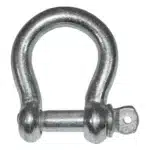
A: Shackles are versatile rigging hardware used to connect different components of a lifting or rigging system. They are ideal for making connections that need to be easily attached or detached. They come in various types (e.g., D-shackles, bow shackles) and sizes, each suited for different load capacities and applications.
Q: What is the function of a turnbuckle?
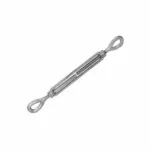
A: Turnbuckles are used to adjust the tension in wire ropes, cables, and tie rods. They consist of a metal frame with threaded ends that are screwed into two eye bolts, hooks, or jaw ends. By rotating the frame, the distance between the ends can be increased or decreased, allowing for precise tension adjustments.
Q: What are some common applications for wire rope clips?
A: Wire rope clips are commonly used to create temporary or semi-permanent loops or terminations in wire rope. Common applications include securing cables for guardrails, fencing, and light-duty lifting applications. They are also used in various marine and industrial settings.
Q: How does corrosion affect the load capacity of wire rope fittings?
A: Corrosion significantly reduces the load capacity of wire rope fittings by weakening the metal. Corrosion can cause pitting, cracking, and loss of material, which compromises the structural integrity of the fitting. Regular inspection and maintenance are essential to detect and address corrosion before it leads to failure.
Q: What is rigging hardware and why is it important?
A: Rigging hardware encompasses all the components used to connect, secure, and control loads in lifting and rigging applications. This includes items such as shackles, turnbuckles, wire rope clips, thimbles, and swage fittings. High-quality rigging hardware is crucial for ensuring the safety and efficiency of lifting operations, preventing accidents, and protecting personnel and equipment.
Q: What are some best practices for wire rope safety?
A: Best practices for wire rope safety include:
- Regularly inspecting wire ropes and fittings for wear, corrosion, and damage.
- Following the manufacturer’s recommendations for WLL and usage.
- Using the correct fittings for the specific type of wire rope and application.
- Properly storing wire ropes and fittings to prevent corrosion and damage.
- Training personnel on safe rigging practices and procedures.
Q: How can I ensure the longevity of my lifting equipment?
A: To ensure the longevity of your lifting equipment, follow these tips:
- Implement a routine inspection and maintenance program.
- Use high-quality wire rope fittings and rigging hardware.
- Protect equipment from corrosion and environmental damage.
- Store equipment properly when not in use.
- Train personnel on the proper use and care of lifting equipment.
- Replace worn or damaged components promptly.
Q: Are there specific types of wire rope fittings designed for lifting equipment?
A: Yes, there are specific types of wire rope fittings designed for lifting equipment. These fittings, including shackles, master links, and eye bolts, are engineered to meet stringent safety standards and provide reliable performance under heavy loads. It’s crucial to use fittings specifically designed for lifting applications to ensure safety and compliance.