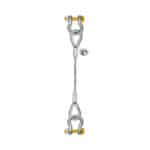
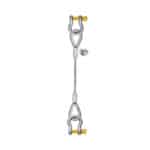
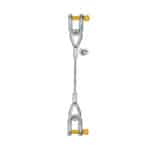
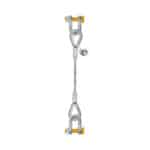
Choosing the correct lifting sling is a critical decision in any industry that relies on overhead lifting. The safety of personnel, the integrity of the load, and the efficiency of operations all depend on selecting the right equipment for the job. At Safe and Secure Trading Company (SSTC), we understand these concerns and provide expert guidance to help you make informed choices.
Introduction: Choosing the Right Lifting Sling
The Importance of Selecting the Correct Sling
Selecting the correct sling is paramount. A mismatched or inadequate sling can lead to catastrophic failures, resulting in injuries, property damage, and significant downtime. Understanding the specific requirements of each lifting task is crucial. These requirements include the weight and dimensions of the load, the lifting environment, and the frequency of use. We have seen firsthand how businesses prioritizing safety through proper sling selection significantly reduce workplace accidents and improve overall productivity.
Overview: Alloy Chain vs. Wire Rope
Alloy chain slings and wire rope slings are two of the most common types of lifting slings used in various industries. Each type offers distinct advantages and disadvantages depending on the application. Alloy chains are known for their strength, durability, and resistance to abrasion and high temperatures. Wire ropes, on the other hand, are generally more flexible and easier to handle, making them suitable for a wider range of applications. It’s critical to understand the nuanced differences between alloy chain vs. to make an informed decision. For many of our clients here in Dammam, we’ve seen that a careful assessment of lifting needs leads to better and more cost-effective sling choices.
Scope: A Comprehensive Comparison
This article provides a comprehensive comparison of alloy chain and wire rope slings. We will delve into their material composition, strength, durability, flexibility, inspection requirements, safety considerations, applications, and costs. Our aim is to equip you with the knowledge necessary to choose the most appropriate lifting sling for your specific needs, ensuring safety, efficiency, and cost-effectiveness in your lifting operations. At SSTC, we believe that a thorough understanding of these factors is essential for making informed decisions about lifting equipment.
Material Composition and Manufacturing
Understanding the material composition and manufacturing processes of alloy chain and wire rope slings is crucial to understanding their performance characteristics. The choice of materials and the precision of manufacturing directly impact the strength, durability, and safety of these slings.
Alloy Chain: Forging and Heat Treatment
Alloy chains are typically manufactured from high-strength alloy steels, such as quenched and tempered alloy steel. The specific alloy composition varies depending on the desired properties, such as tensile strength, ductility, and resistance to wear. The manufacturing process involves forging individual links, followed by heat treatment to enhance their strength and toughness.
- Steel alloys used in chain manufacturing. Common alloy steels used for chain slings include grades 80, 100, and 120. These alloys contain elements like chromium, molybdenum, and nickel to improve their mechanical properties. The higher the grade number, the greater the tensile strength of the alloy.
- Heat treatment processes for strength and durability. Heat treatment is a critical step in the manufacturing process. It involves heating the forged links to a specific temperature, followed by quenching (rapid cooling) and tempering (reheating to a lower temperature). This process refines the grain structure of the steel, increasing its strength, hardness, and resistance to impact.
- Manufacturing standards and certifications (e.g., NACM, ASTM). Alloy chain slings must adhere to strict manufacturing standards to ensure their quality and safety. Organizations like the National Association of Chain Manufacturers (NACM) and the American Society for Testing and Materials (ASTM) develop and publish these standards. These standards cover aspects like material composition, manufacturing processes, testing requirements, and marking.
Wire Rope: Strand Construction and Materials
Wire rope is constructed from multiple strands of wire twisted together to form a helical structure. The wires are typically made from high-carbon steel, although other materials like stainless steel may be used for specific applications. The core of the wire rope can be made from fiber (natural or synthetic) or steel.
- Different types of wire rope construction (e.g., regular lay, Lang lay). Wire rope construction refers to the way the wires and strands are twisted together. Common types include regular lay, where the wires in the strand are twisted in one direction and the strands are twisted in the opposite direction; Lang lay, where both the wires and strands are twisted in the same direction; and alternate lay, which combines features of both regular and Lang lay. Lang lay ropes offer greater flexibility and abrasion resistance but are more prone to kinking.
- Core materials (e.g., fiber core, steel core). The core of the wire rope provides support for the strands and helps maintain its shape. Fiber cores are typically made from natural fibers like sisal or hemp, or synthetic fibers like polypropylene. Steel cores can be either independent wire rope cores (IWRC) or wire strand cores (WSC). Steel cores offer greater strength and heat resistance than fiber cores.
- Wire materials and tensile strength. The wires used in wire rope are typically made from high-carbon steel with varying tensile strengths. The tensile strength of the wire directly affects the overall strength and load capacity of the wire rope. Different grades of wire are available, each with specific mechanical properties.
Strength and Load Capacity
The strength and load capacity of lifting slings are critical considerations for ensuring safety and preventing accidents. Understanding the Working Load Limit (WLL), design factors, and the specific characteristics of alloy chain and wire rope is essential for safe lifting operations.
Working Load Limit (WLL) and Design Factor
The Working Load Limit (WLL) is the maximum load that a lifting sling is designed to carry safely. It is typically marked on the sling and should never be exceeded. The design factor is a safety margin applied to the WLL to account for uncertainties and potential overloading.
- Defining WLL and its significance. The WLL is a critical parameter that indicates the safe lifting capacity of a sling. Exceeding the WLL can lead to sling failure and potentially catastrophic consequences. Always refer to the WLL marked on the sling and ensure that it is appropriate for the load being lifted.
- Understanding design factors and safety margins. Design factors are used to calculate the WLL by dividing the minimum breaking strength (MBS) of the sling by a safety factor. Common design factors range from 4:1 to 5:1, depending on the application and industry standards. These safety margins provide a buffer against unexpected loads or stresses.
- How WLL is determined and marked on slings. The WLL is determined through rigorous testing and calculations based on the sling’s material properties, construction, and design factor. The WLL is typically marked on the sling using tags, labels, or embossed markings. It is crucial to ensure that the markings are legible and accurate.
Alloy Chain: High Strength-to-Weight Ratio
Alloy chains offer an exceptional strength-to-weight ratio, making them suitable for heavy-duty lifting applications where high load capacities are required. Their robust construction and material properties allow them to withstand significant stress and shock loading.
- Exceptional tensile strength of alloy chains. Alloy chains are known for their high tensile strength, which is the maximum stress they can withstand before breaking. This strength is a result of the high-quality alloy steels used in their manufacturing and the heat treatment processes they undergo.
- Ability to withstand heavy loads in various configurations. Alloy chains can be used in various lifting configurations, such as vertical, choker, and basket hitches, without significant reduction in their load capacity. This versatility makes them suitable for a wide range of lifting applications.
- Resistance to shock loading. Alloy chains are highly resistant to shock loading, which is the sudden application of a large force. Their ability to absorb impact energy makes them suitable for dynamic lifting operations where loads may shift or swing.
Wire Rope: Variable Strength Based on Construction
The strength of wire rope slings varies depending on their construction, wire diameter, and core type. Different wire rope constructions offer different levels of strength and flexibility, making it important to choose the right type for the specific application.
- Influence of wire rope construction on strength. The way the wires and strands are twisted together significantly affects the strength of the wire rope. For example, Lang lay ropes generally have higher tensile strength than regular lay ropes due to their increased flexibility and surface contact.
- Effects of wire rope diameter and core type on load capacity. The diameter of the wire rope directly influences its load capacity. Larger diameter ropes can withstand greater loads. Similarly, steel core ropes offer higher strength and heat resistance compared to fiber core ropes.
- Considerations for dynamic loading. Wire rope slings are more susceptible to damage from dynamic loading than alloy chain slings. The sudden application of force can cause individual wires to break, reducing the overall strength of the rope. Proper rigging techniques and load control are essential to minimize the risk of dynamic loading.
Durability and Resistance to Environmental Factors
The durability and resistance to environmental factors of lifting slings are crucial for ensuring their longevity and reliability. Alloy chain and wire rope slings exhibit different characteristics in terms of their ability to withstand abrasion, corrosion, and extreme temperatures.
Alloy Chain: Resilience in Harsh Environments
Alloy chains are highly resilient in harsh environments, offering excellent resistance to abrasion, cutting, and high temperatures. Their robust construction and material properties make them suitable for demanding applications in industries like foundries, steel mills, and construction.
- Resistance to abrasion, cutting, and high temperatures. Alloy chains are highly resistant to abrasion and cutting, making them ideal for use in environments where they may come into contact with sharp edges or abrasive surfaces. They can also withstand high temperatures without significant loss of strength, making them suitable for lifting hot materials.
- Performance in corrosive environments (with proper coating). While alloy chains are not inherently resistant to corrosion, they can be protected with coatings like galvanizing or painting. These coatings provide a barrier against moisture and corrosive substances, extending the lifespan of the chain in harsh environments.
- Limitations in extreme chemical exposure. Alloy chains can be damaged by exposure to certain chemicals, particularly strong acids and alkalis. It is important to consult the manufacturer’s recommendations to ensure that the chain is suitable for the specific chemical environment.
Wire Rope: Vulnerability to Corrosion and Abrasion
Wire rope slings are more vulnerable to corrosion and abrasion than alloy chain slings. Their construction, which involves multiple strands of wire, provides numerous points where corrosion can initiate and propagate.
- Susceptibility to corrosion, especially in marine environments. Wire rope is particularly susceptible to corrosion in marine environments due to the presence of saltwater. The salt accelerates the corrosion process, leading to weakening of the wires and potential failure. Regular lubrication and inspection are essential to mitigate the risk of corrosion.
- Abrasion resistance and wear characteristics. Wire rope can be damaged by abrasion and wear, especially when used in contact with rough surfaces or sharp edges. The outer wires of the rope are most susceptible to abrasion, which can lead to wire breaks and reduced strength.
- Importance of lubrication and maintenance. Proper lubrication is crucial for extending the lifespan of wire rope slings. Lubrication reduces friction between the wires and strands, preventing wear and corrosion. Regular inspection and maintenance are also essential for identifying and addressing potential problems before they lead to failure.
Flexibility and Handling
Flexibility and ease of handling are important considerations when choosing lifting slings. Alloy chain and wire rope slings offer different levels of flexibility, which can affect their suitability for various applications.
Alloy Chain: Limited Flexibility and Rigidity
Alloy chains have limited flexibility and can be relatively rigid, making them challenging to use in tight spaces or when conforming to complex load shapes.
- Restricted bending radius and stiffness. Alloy chains have a restricted bending radius, meaning they cannot be bent sharply without causing damage. Their stiffness can also make them difficult to maneuver in confined areas.
- Challenges in tight spaces. The limited flexibility of alloy chains can make them challenging to use in tight spaces or when lifting loads with complex geometries.
- Potential for kinking if not handled properly. Alloy chains can kink if not handled properly, which can weaken the chain and reduce its load capacity. Proper storage and handling techniques are essential to prevent kinking.
Wire Rope: Greater Flexibility and Ease of Handling
Wire rope slings offer greater flexibility and ease of handling compared to alloy chain slings. Their construction allows them to bend and conform to load shapes more easily, making them suitable for a wider range of applications.
- Flexibility in bending and conforming to load shapes. Wire rope is more flexible than alloy chain, allowing it to bend and conform to load shapes more easily. This flexibility is particularly useful when lifting irregularly shaped objects.
- Easier to use in confined areas. The flexibility of wire rope makes it easier to use in confined areas where space is limited.
- Reduced risk of kinking with proper spooling. Wire rope is less prone to kinking than alloy chain, especially when properly spooled and handled. Proper spooling techniques help maintain the integrity of the rope and prevent damage.
Inspection and Maintenance
Regular inspection and maintenance are essential for ensuring the safety and reliability of lifting slings. Alloy chain and wire rope slings require different inspection procedures and maintenance practices.
Alloy Chain: Visual Inspection for Damage
Alloy chain slings should be visually inspected regularly for signs of damage, such as stretched, bent, or cracked links. Measuring link wear and elongation is also important for determining the chain’s remaining strength.
- Identifying stretched, bent, or cracked links. Visual inspection should focus on identifying any signs of damage to the links, such as stretching, bending, cracking, or gouges. These defects can significantly reduce the chain’s load capacity.
- Measuring link wear and elongation. Link wear and elongation should be measured using a calibrated measuring tool. Excessive wear or elongation indicates that the chain has been overloaded or subjected to excessive stress and should be removed from service.
- Importance of regular inspection intervals. Regular inspection intervals should be established based on the frequency of use and the severity of the lifting environment. More frequent inspections are required for slings used in harsh environments or for critical lifting operations.
Wire Rope: Detecting Wire Breaks and Core Damage
Wire rope slings should be inspected for broken wires, corrosion, and abrasion. Assessing the core condition and lubrication is also important for determining the rope’s overall health.
- Inspecting for broken wires, corrosion, and abrasion. Visual inspection should focus on identifying any broken wires, corrosion, or abrasion on the surface of the rope. Broken wires can be identified by their protruding ends, while corrosion appears as rust or pitting. Abrasion can be seen as wear or flattening of the wires.
- Assessing core condition and lubrication. The core condition should be assessed by visually inspecting the rope’s surface for signs of deterioration or damage. The lubrication should also be checked to ensure that the rope is adequately protected against corrosion and wear.
- Using specialized tools for internal inspection. Specialized tools, such as magnetic particle inspection (MPI) or radiography, can be used to detect internal defects in wire rope slings that are not visible during a visual inspection. These tools can help identify hidden cracks or corrosion, ensuring the rope’s continued safety and reliability.
> “Regular inspection and proper maintenance are key to ensuring the safe operation of lifting slings. Ignoring these practices can lead to catastrophic failures.” – John Smith, Lead Safety Inspector
Safety Considerations
Safety is paramount when using lifting slings. Understanding the potential failure modes and implementing appropriate safety precautions are essential for preventing accidents and injuries.
Alloy Chain: Controlled Failure and Elongation
Alloy chains exhibit a controlled failure mode, typically elongating before breaking. This elongation provides a visual warning sign of overload, allowing operators to take corrective action before failure occurs.
- Elongation as a warning sign of overload. Elongation of the chain links indicates that the chain has been subjected to excessive stress and is nearing its breaking point. Operators should immediately stop lifting and inspect the chain if elongation is observed.
- Predictable failure mode under extreme stress. Alloy chains typically fail by gradually elongating and deforming before breaking. This predictable failure mode allows operators to anticipate potential failures and take preventive measures.
- Importance of proof testing and certification. Proof testing and certification are essential for ensuring that alloy chain slings meet the required safety standards. Proof testing involves subjecting the chain to a load greater than its WLL to verify its strength and integrity. Certification provides assurance that the chain has been manufactured and tested in accordance with industry standards.
Wire Rope: Sudden Failure and Catastrophic Risk
Wire rope slings are more prone to sudden and unpredictable failure than alloy chain slings. Wire breaks can occur without warning, leading to catastrophic failure under overload conditions.
- Potential for sudden and unpredictable wire breaks. Wire breaks can occur suddenly and without warning, especially in wire ropes that have been subjected to corrosion, abrasion, or fatigue. These breaks can significantly reduce the rope’s strength and increase the risk of failure.
- Increased risk of catastrophic failure under overload. The potential for sudden wire breaks increases the risk of catastrophic failure under overload conditions. When a wire rope sling is overloaded, multiple wires can break simultaneously, leading to complete failure of the rope.
- Need for frequent and thorough inspections. Frequent and thorough inspections are essential for identifying potential wire breaks and other defects in wire rope slings. Regular inspections can help detect problems before they lead to failure, ensuring the safety of lifting operations.
Applications and Best Use Cases
Alloy chain and wire rope slings are suitable for different applications based on their unique characteristics. Understanding their strengths and weaknesses is crucial for selecting the right sling for the job.
Alloy Chain: Ideal for High-Temperature and Abrasive Environments
Alloy chains are ideal for high-temperature and abrasive environments where their robustness and resistance to damage are highly valued.
- Heavy-duty lifting in foundries and steel mills. Alloy chains are commonly used in foundries and steel mills for heavy-duty lifting of hot materials and equipment. Their resistance to high temperatures and abrasion makes them well-suited for these demanding environments.
- Use in construction and demolition. Alloy chains are also used in construction and demolition for lifting heavy loads, such as steel beams, concrete blocks, and demolition debris. Their strength and durability make them reliable for these applications.
- Applications where cut resistance is critical. Alloy chains are the preferred choice in applications where cut resistance is critical, such as logging and forestry. Their ability to withstand sharp edges and abrasive surfaces ensures their longevity and safety in these environments.
Wire Rope: Suited for General Lifting and Winching
Wire rope slings are well-suited for general lifting and winching applications where flexibility and ease of handling are important considerations.
- Crane and hoist applications. Wire rope slings are commonly used in crane and hoist applications for lifting a variety of loads. Their flexibility and ease of handling make them suitable for these applications.
- Winching and pulling operations. Wire rope is also used in winching and pulling operations, such as towing vehicles or moving heavy equipment. Its strength and flexibility make it reliable for these tasks.
- Elevator and cable car systems. Wire rope is an essential component of elevator and cable car systems, providing the necessary strength and flexibility for vertical transportation.
Cost Analysis
A comprehensive cost analysis is essential when choosing between alloy chain and wire rope slings. This analysis should consider the initial cost, maintenance costs, replacement frequency, and overall lifecycle costs.
Initial Cost vs. Long-Term Value
Comparing the initial cost against the long-term value is crucial for making an informed decision. While alloy chain slings may have a higher upfront cost, their longer lifespan and lower maintenance requirements can result in significant cost savings over time.
- Comparing the initial purchase price of alloy chain and wire rope slings. Alloy chain slings typically have a higher initial purchase price than wire rope slings due to the higher cost of materials and manufacturing.
- Considering the lifecycle costs, including maintenance and replacement. Lifecycle costs include the initial purchase price, maintenance costs, replacement frequency, and downtime costs. A thorough analysis of these costs can help determine the most cost-effective option.
- Evaluating the return on investment based on application and durability. The return on investment (ROI) should be evaluated based on the specific application and the durability of the sling. Alloy chain slings may offer a higher ROI in demanding applications where their longevity and low maintenance requirements are highly valued.
Alloy Chain: Higher Upfront Cost, Lower Maintenance
Alloy chain slings have a higher upfront cost but typically require less maintenance and have a longer lifespan, making them cost-effective in the long run.
- Discussing the higher initial investment in alloy chain slings. The higher initial investment in alloy chain slings is due to the higher cost of materials and manufacturing processes.
- Highlighting the lower maintenance requirements and longer lifespan. Alloy chain slings require less maintenance than wire rope slings due to their greater resistance to corrosion and abrasion. They also have a longer lifespan, reducing the frequency of replacements.
- Analyzing the overall cost-effectiveness for demanding applications. For demanding applications where durability and reliability are paramount, alloy chain slings offer superior cost-effectiveness due to their lower maintenance requirements and longer lifespan.
Wire Rope: Lower Initial Cost, Higher Maintenance
Wire rope slings have a lower initial cost but typically require more maintenance and have a shorter lifespan, making them more suitable for less demanding applications.
- Discussing the lower initial cost of wire rope slings. The lower initial cost of wire rope slings makes them an attractive option for budget-conscious buyers.
- Emphasizing the increased maintenance needs and potential for more frequent replacements. Wire rope slings require more frequent lubrication and inspection to prevent corrosion and wire breaks. They also have a shorter lifespan than alloy chain slings, requiring more frequent replacements.
- Analyzing the overall cost-effectiveness for less demanding applications. For less demanding applications where durability and reliability are not as critical, wire rope slings offer a cost-effective solution due to their lower initial cost.
Conclusion: Selecting the Right Sling for Your Needs
Selecting the right lifting sling requires careful consideration of several factors, including the load weight, lifting environment, frequency of use, and cost. Both alloy chain and wire rope slings offer unique advantages and disadvantages, making it essential to choose the most appropriate type for your specific needs.
Summary of Key Differences
Alloy chain slings are known for their strength, durability, and resistance to high temperatures and abrasion. They are ideal for heavy-duty lifting in harsh environments. Wire rope slings are more flexible and easier to handle, making them suitable for general lifting and winching applications. They are more vulnerable to corrosion and abrasion but offer a lower initial cost.
Recommendations Based on Application
For heavy-duty lifting in foundries, steel mills, and construction sites, alloy chain slings are the preferred choice. For general lifting, crane operations, and winching applications, wire rope slings offer a cost-effective solution. Ultimately, the best choice depends on a thorough assessment of your specific lifting needs and operational environment.
FAQ Section
Q: What is the main difference between alloy chain and wire rope slings?
A: Alloy chain slings are known for their strength, durability, and resistance to harsh environments, while wire rope slings are more flexible and easier to handle but more susceptible to corrosion and abrasion.
Q: Which type of sling is better for high-temperature environments?
A: Alloy chain slings are better suited for high-temperature environments due to their superior heat resistance compared to wire rope slings.
Q: How often should lifting slings be inspected?
A: Lifting slings should be inspected regularly, with the frequency depending on the severity of the lifting environment and frequency of use. Critical lifts and harsh environments may require daily inspections.
Q: What are the signs of a damaged alloy chain sling?
A: Signs of a damaged alloy chain sling include stretched, bent, or cracked links, as well as excessive wear or elongation.
Q: What are the signs of a damaged wire rope sling?
A: Signs of a damaged wire rope sling include broken wires, corrosion, abrasion, and core damage.
Q: Can wire rope slings be used in marine environments?
A: Yes, but wire rope slings used in marine environments require regular lubrication and inspection to prevent corrosion. Stainless steel wire rope is often preferred for enhanced corrosion resistance.
Q: What is the Working Load Limit (WLL)?
A: The Working Load Limit (WLL) is the maximum load that a lifting sling is designed to carry safely. It is typically marked on the sling and should never be exceeded.
Q: What is the design factor for lifting slings?
A: The design factor is a safety margin applied to the WLL to account for uncertainties and potential overloading. Common design factors range from 4:1 to 5:1.
Q: Are synthetic slings suitable for heavy lifting?
A: Synthetic slings can be used for heavy lifting, but their suitability depends on the specific application and load requirements. They offer advantages in terms of weight and ease of handling but may not be as durable as alloy chain or wire rope in certain environments.
Q: Where can I find reliable lifting slings?
A: Reliable lifting slings can be sourced from reputable suppliers like Safe and Secure Trading Company (SSTC), who provide high-quality products that meet industry standards and safety requirements.