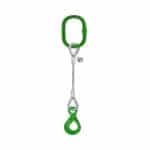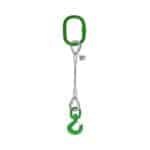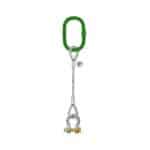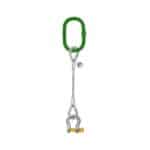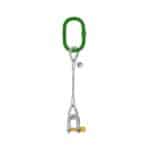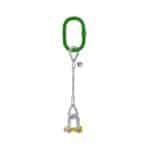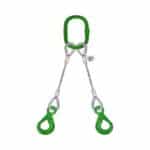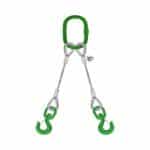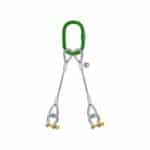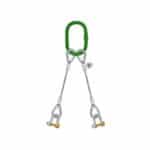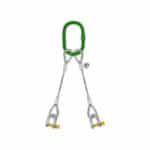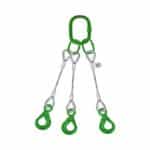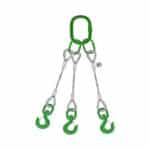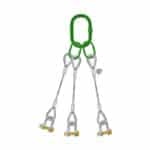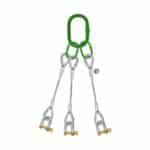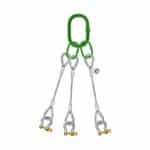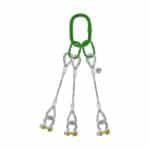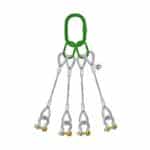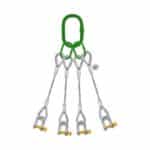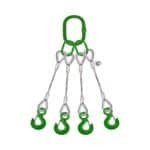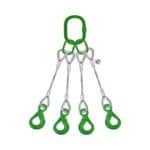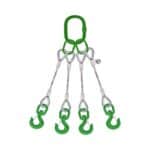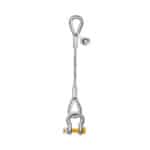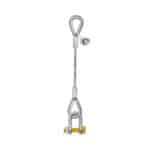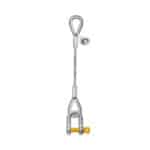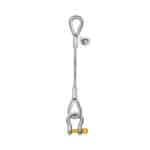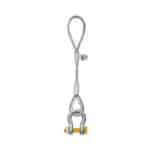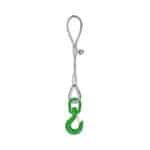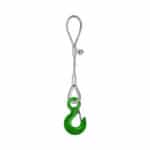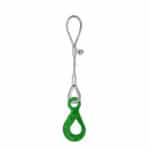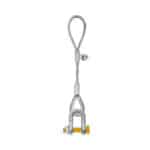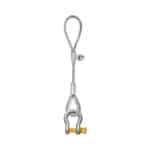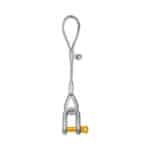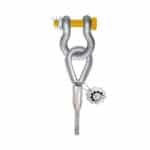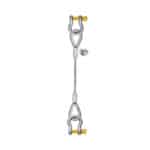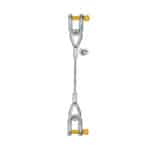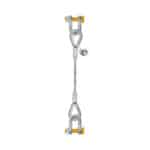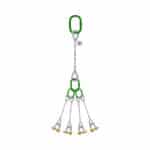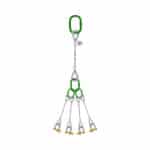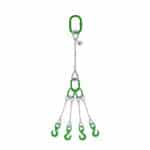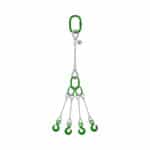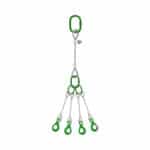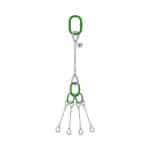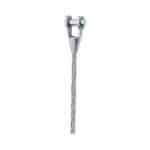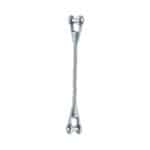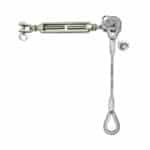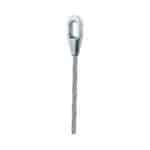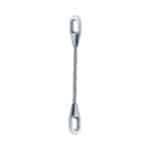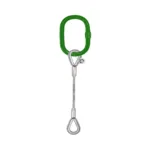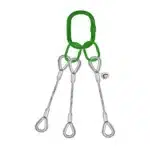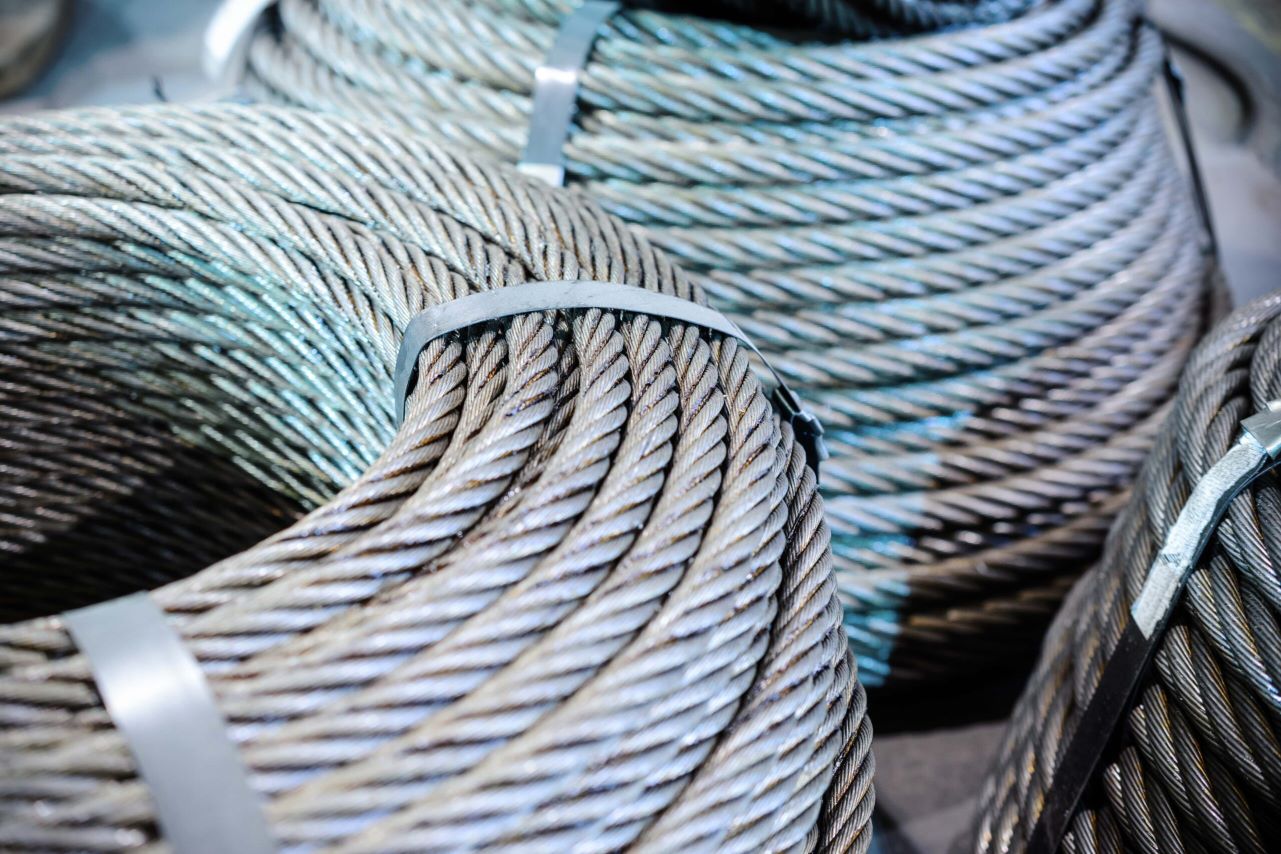
3x19S Steel Wire Rope: In the industrial world, steel wire ropes are indispensable for lifting, hoisting, towing, and structural applications. Among the many types, 3x19S steel wire rope is a preferred choice for applications requiring moderate flexibility and high strength, such as control cables, elevator cables, and rigging tasks in harsh environments like Saudi Arabia.
To ensure maximum safety, durability, and efficiency, it’s vital to understand and apply the best practices for installing and maintaining your 3x19S wire rope. In this guide, SSTC provides expert insights to help businesses across the Kingdom make the most of this versatile lifting solution.
What is 3x19S Steel Wire Rope?
The 3x19S wire rope consists of three strands, each made up of 19 single wires in a special construction (the “S” denotes a Seale wire pattern). This construction offers a smooth outer surface, good fatigue resistance, and high tensile strength while retaining some flexibility.
Common Features:
Strand Count: 3
Wires per Strand: 19
Core: Steel core (WSC or IWRC)
Diameter Range: Typically 3mm to 20mm
Applications: Control cables, winch lines, rigging, structural supports, marine uses
Before you begin installation, it’s essential to take proper preparatory steps to ensure the longevity of the wire rope and prevent accidents or premature failure.
DO:
Inspect the rope for shipping damage, corrosion, kinks, or bird-caging
Store rope properly before installation in a dry, shaded, and cool area
Use gloves and safety gear to avoid injuries from broken wires
Don’t use the rope if it has visible wire breakage or rust spots
Don’t drag the rope across rough surfaces
Don’t install the rope without checking load ratings and diameter tolerances
Don’t use substitutes for proper fittings or connectors
Best Practices for Installing and Maintaining 3x19S Steel Wire Rope
Step-by-Step Installation Guide
Proper installation is critical to maximizing the performance of a 3x19S steel wire rope. Here’s a recommended step-by-step process:
1. Unreel the Rope Correctly
Unreel the rope from a rotating reel or stand, ensuring it doesn’t coil or loop, which could cause twisting or bird-caging.
2. Avoid Reverse Bends
3x19S ropes are not as flexible as ropes with more strands, so avoid routing them over reverse bends or sheaves that are too small.
3. Use Compatible Hardware
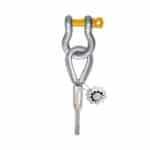
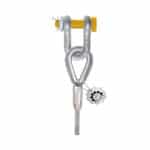
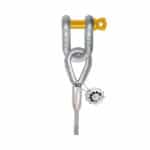
Make sure thimbles, shackles, and turnbuckles are designed for use with 3-strand ropes. The groove size should match the rope diameter.
4. Apply Proper Tension
When installing on a winch or pulley system, apply light pre-tension to prevent slack, which can lead to crushing or internal strand damage.
5. Secure Ends Properly
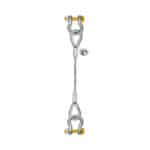
Use professionally swaged terminations or clamping hardware designed for wire ropes. Always follow industry standards for terminations.
6. Minimize Torsion
3x19S wire rope can develop torque if twisted during installation. Let the rope “settle” under a small load before full operation.
Post-Installation Checks
Once installed, do a series of inspections and verifications:
Check tension and alignment
Inspect end connections for tightness
Look for signs of deformation after initial load testing
Document the rope specs, date of installation, and first-use log
Maintenance Tips for Long-Term Performance
Routine maintenance ensures safety and extends the life of your rope. Here are essential practices:
1. Regular Visual Inspections
Inspect weekly or after every heavy use. Look for:
Broken wires
Kinks or bends
Flattened areas
Corrosion or rust
2. Lubrication
Steel wire ropes, including 3x19S, need routine lubrication to reduce internal friction. Use rope-specific lubricants (penetrating or coating types) to maintain flexibility and corrosion resistance.
Lubricate:
During installation
Every 2–4 weeks under heavy use
After exposure to moisture or chemicals
3. Tension Monitoring
Monitor and maintain proper tension to avoid wear from excessive slack or over-tensioning.
4. Rotating Ropes (if applicable)

In multi-rope systems, consider rotating ropes periodically to distribute wear evenly.

5. Retire the Rope When Necessary
Replace if:
There are 6 or more broken wires in one lay length

Severe corrosion or rusting is present

Rope has lost more than 10% of its original diameter
Kinks, loops, or core protrusions appear
Typical Applications in Saudi Arabia
Industrial Winching
Used in oilfield rigging, construction cranes, and pulling heavy equipment.
Marine Use
Excellent in mooring and anchoring tasks due to strength and moderate flexibility.
Structural and Safety Cables

Ideal for tension systems, guy wires, and fall arrest systems in high-rise construction.

Agricultural Equipment
Used for gate lifts, pulleys, and fencing systems in agricultural applications.
Safety Guidelines
Never overload the rope beyond its rated breaking strength
Always use certified shackles, eye bolts, and thimbles
Keep the rope clean, dry, and free from chemicals
Never weld or heat-treat wire rope
Have a rope failure protocol and safety procedures in place
Why Choose SSTC for 3x19S Wire Rope?
At Safe and Secure Trading Company (SSTC), we provide premium-grade 3x19S steel wire rope built to meet ISO, BS, and SASO standards, with a focus on safety, reliability, and durability.
What We Offer:
Quality Certifications (CE, ISO, SASO)
Full range of wire rope accessories (thimbles, clamps, hooks)
Custom lengths and end terminations
On-site technical support for installation and training
Nationwide delivery across Riyadh, Jeddah, Dammam, and beyond
Final Thoughts
Installing and maintaining 3x19S steel wire rope correctly can dramatically improve operational safety, reduce maintenance costs, and extend rope lifespan. By following the best practices outlined in this guide, industries in Saudi Arabia can make the most of this robust and versatile wire rope solution.
Choose SSTC for reliable products, expert support, and long-term lifting solutions tailored to your industrial needs.
This mode enables people with epilepsy to use the website safely by eliminating the risk of seizures that result from flashing or blinking animations and risky color combinations.
Visually Impaired Mode
Improves website's visuals
This mode adjusts the website for the convenience of users with visual impairments such as Degrading Eyesight, Tunnel Vision, Cataract, Glaucoma, and others.
Cognitive Disability Mode
Helps to focus on specific content
This mode provides different assistive options to help users with cognitive impairments such as Dyslexia, Autism, CVA, and others, to focus on the essential elements of the website more easily.
ADHD Friendly Mode
Reduces distractions and improve focus
This mode helps users with ADHD and Neurodevelopmental disorders to read, browse, and focus on the main website elements more easily while significantly reducing distractions.
Blindness Mode
Allows using the site with your screen-reader
This mode configures the website to be compatible with screen-readers such as JAWS, NVDA, VoiceOver, and TalkBack. A screen-reader is software for blind users that is installed on a computer and smartphone, and websites must be compatible with it.
Online Dictionary
Readable Experience
Content Scaling
Default
Text Magnifier
Readable Font
Dyslexia Friendly
Highlight Titles
Highlight Links
Font Sizing
Default
Line Height
Default
Letter Spacing
Default
Left Aligned
Center Aligned
Right Aligned
Visually Pleasing Experience
Dark Contrast
Light Contrast
Monochrome
High Contrast
High Saturation
Low Saturation
Adjust Text Colors
Adjust Title Colors
Adjust Background Colors
Easy Orientation
Mute Sounds
Hide Images
Hide Emoji
Reading Guide
Stop Animations
Reading Mask
Highlight Hover
Highlight Focus
Big Dark Cursor
Big Light Cursor
Cognitive Reading
Virtual Keyboard
Navigation Keys
Voice Navigation
Accessibility Statement
safeandsecureksa.com
16 February 2026
Compliance status
We firmly believe that the internet should be available and accessible to anyone, and are committed to providing a website that is accessible to the widest possible audience,
regardless of circumstance and ability.
To fulfill this, we aim to adhere as strictly as possible to the World Wide Web Consortium’s (W3C) Web Content Accessibility Guidelines 2.1 (WCAG 2.1) at the AA level.
These guidelines explain how to make web content accessible to people with a wide array of disabilities. Complying with those guidelines helps us ensure that the website is accessible
to all people: blind people, people with motor impairments, visual impairment, cognitive disabilities, and more.
This website utilizes various technologies that are meant to make it as accessible as possible at all times. We utilize an accessibility interface that allows persons with specific
disabilities to adjust the website’s UI (user interface) and design it to their personal needs.
Additionally, the website utilizes an AI-based application that runs in the background and optimizes its accessibility level constantly. This application remediates the website’s HTML,
adapts Its functionality and behavior for screen-readers used by the blind users, and for keyboard functions used by individuals with motor impairments.
If you’ve found a malfunction or have ideas for improvement, we’ll be happy to hear from you. You can reach out to the website’s operators by using the following email
Screen-reader and keyboard navigation
Our website implements the ARIA attributes (Accessible Rich Internet Applications) technique, alongside various different behavioral changes, to ensure blind users visiting with
screen-readers are able to read, comprehend, and enjoy the website’s functions. As soon as a user with a screen-reader enters your site, they immediately receive
a prompt to enter the Screen-Reader Profile so they can browse and operate your site effectively. Here’s how our website covers some of the most important screen-reader requirements,
alongside console screenshots of code examples:
Screen-reader optimization: we run a background process that learns the website’s components from top to bottom, to ensure ongoing compliance even when updating the website.
In this process, we provide screen-readers with meaningful data using the ARIA set of attributes. For example, we provide accurate form labels;
descriptions for actionable icons (social media icons, search icons, cart icons, etc.); validation guidance for form inputs; element roles such as buttons, menus, modal dialogues (popups),
and others. Additionally, the background process scans all the website’s images and provides an accurate and meaningful image-object-recognition-based description as an ALT (alternate text) tag
for images that are not described. It will also extract texts that are embedded within the image, using an OCR (optical character recognition) technology.
To turn on screen-reader adjustments at any time, users need only to press the Alt+1 keyboard combination. Screen-reader users also get automatic announcements to turn the Screen-reader mode on
as soon as they enter the website.
These adjustments are compatible with all popular screen readers, including JAWS and NVDA.
Keyboard navigation optimization: The background process also adjusts the website’s HTML, and adds various behaviors using JavaScript code to make the website operable by the keyboard. This includes the ability to navigate the website using the Tab and Shift+Tab keys, operate dropdowns with the arrow keys, close them with Esc, trigger buttons and links using the Enter key, navigate between radio and checkbox elements using the arrow keys, and fill them in with the Spacebar or Enter key.Additionally, keyboard users will find quick-navigation and content-skip menus, available at any time by clicking Alt+1, or as the first elements of the site while navigating with the keyboard. The background process also handles triggered popups by moving the keyboard focus towards them as soon as they appear, and not allow the focus drift outside it.
Users can also use shortcuts such as “M” (menus), “H” (headings), “F” (forms), “B” (buttons), and “G” (graphics) to jump to specific elements.
Disability profiles supported in our website
Epilepsy Safe Mode: this profile enables people with epilepsy to use the website safely by eliminating the risk of seizures that result from flashing or blinking animations and risky color combinations.
Visually Impaired Mode: this mode adjusts the website for the convenience of users with visual impairments such as Degrading Eyesight, Tunnel Vision, Cataract, Glaucoma, and others.
Cognitive Disability Mode: this mode provides different assistive options to help users with cognitive impairments such as Dyslexia, Autism, CVA, and others, to focus on the essential elements of the website more easily.
ADHD Friendly Mode: this mode helps users with ADHD and Neurodevelopmental disorders to read, browse, and focus on the main website elements more easily while significantly reducing distractions.
Blindness Mode: this mode configures the website to be compatible with screen-readers such as JAWS, NVDA, VoiceOver, and TalkBack. A screen-reader is software for blind users that is installed on a computer and smartphone, and websites must be compatible with it.
Keyboard Navigation Profile (Motor-Impaired): this profile enables motor-impaired persons to operate the website using the keyboard Tab, Shift+Tab, and the Enter keys. Users can also use shortcuts such as “M” (menus), “H” (headings), “F” (forms), “B” (buttons), and “G” (graphics) to jump to specific elements.
Additional UI, design, and readability adjustments
Font adjustments – users, can increase and decrease its size, change its family (type), adjust the spacing, alignment, line height, and more.
Color adjustments – users can select various color contrast profiles such as light, dark, inverted, and monochrome. Additionally, users can swap color schemes of titles, texts, and backgrounds, with over seven different coloring options.
Animations – person with epilepsy can stop all running animations with the click of a button. Animations controlled by the interface include videos, GIFs, and CSS flashing transitions.
Content highlighting – users can choose to emphasize important elements such as links and titles. They can also choose to highlight focused or hovered elements only.
Audio muting – users with hearing devices may experience headaches or other issues due to automatic audio playing. This option lets users mute the entire website instantly.
Cognitive disorders – we utilize a search engine that is linked to Wikipedia and Wiktionary, allowing people with cognitive disorders to decipher meanings of phrases, initials, slang, and others.
Additional functions – we provide users the option to change cursor color and size, use a printing mode, enable a virtual keyboard, and many other functions.
Browser and assistive technology compatibility
We aim to support the widest array of browsers and assistive technologies as possible, so our users can choose the best fitting tools for them, with as few limitations as possible. Therefore, we have worked very hard to be able to support all major systems that comprise over 95% of the user market share including Google Chrome, Mozilla Firefox, Apple Safari, Opera and Microsoft Edge, JAWS and NVDA (screen readers).
Notes, comments, and feedback
Despite our very best efforts to allow anybody to adjust the website to their needs. There may still be pages or sections that are not fully accessible, are in the process of becoming accessible, or are lacking an adequate technological solution to make them accessible. Still, we are continually improving our accessibility, adding, updating and improving its options and features, and developing and adopting new technologies. All this is meant to reach the optimal level of accessibility, following technological advancements. For any assistance, please reach out to