Chain Block Lifting: Your Expert Guide
Chain block lifting is a fundamental practice in numerous industries, offering a reliable and efficient way to lift heavy loads vertically. At Safe and Secure Trading Company (SSTC), we understand the critical importance of choosing the right chain block and using it safely. This comprehensive guide will walk you through everything you need to know, from understanding the basics to ensuring proper maintenance and safety.
Understanding Chain Block Lifting: An Introduction
What is a Chain Block and How Does It Work?
A chain block, also known as a manual chain block or chain hoist, is a mechanical device used to lift heavy loads using a system of gears and chains. It leverages mechanical advantage to allow a single person to lift loads far heavier than they could otherwise manage. The typical mechanism consists of two wheels mounted on a common axle. A hand chain is wrapped around one wheel, and a load chain is wrapped around the other. Pulling on the hand chain rotates the wheels, causing the load chain to lift the attached object. The gears within the chain block multiply the pulling force applied to the hand chain, resulting in a much greater lifting force on the load chain. This makes chain block lifting an indispensable part of many lifting operations.
The beauty of a chain block lies in its simplicity and portability. It requires no external power source, making it ideal for locations where electricity is unavailable or impractical. A manual chain block relies on human effort to perform the lifting, using a geared system to amplify the pulling force and move the load.
Common Applications of Chain Blocks in Various Industries
Chain blocks find widespread applications across various sectors due to their versatility and ease of use. In construction, they are used to lift heavy materials like steel beams, concrete blocks, and machinery components. Manufacturing plants rely on chain blocks to position equipment, assemble products, and load materials onto trucks. Workshops commonly employ chain blocks for automotive repairs, engine lifting, and general lifting tasks. The agricultural sector uses them for lifting heavy components on farm machinery. Chain block lifting plays a crucial role in ensuring efficiency and safety when handling heavy loads in diverse operational settings.
We’ve seen our clients use chain blocks for everything from installing HVAC systems to repairing ship engines. One particularly memorable instance involved a construction team in Dubai that needed to lift precast concrete panels into place. Their access was severely limited, and the team used a chain block to lift the panels with pinpoint accuracy, showcasing the adaptability of this lifting equipment.
Identifying Your Lifting Needs: Problem Analysis
Assessing Load Weight and Size: The First Critical Step
Before you even think about selecting a chain block, you absolutely must determine the weight and dimensions of the loads you intend to lift. This is arguably the most critical step because overloading a chain block can lead to catastrophic failure and serious accidents. Always check the manufacturer’s specifications for the maximum load capacity of the chain block and ensure that it exceeds the weight of your heaviest load. The load’s size also matters. Bulky or awkwardly shaped loads may require additional rigging or specialized lifting techniques to ensure stability and prevent shifting during the lift.
Inadequate load assessment leads to many preventable accidents. It is not uncommon to find equipment operators underestimating the weight of loads. Always err on the side of caution and use calibrated weighing equipment to accurately determine the weight of the object.
Determining Lifting Height Requirements: Calculating Vertical Distance
Next, you must determine the required lifting height. This refers to the vertical distance between the load’s starting position and its final destination. Consider any obstructions or overhead structures that might limit the available headroom. You need to select a chain block with a chain length that is sufficient to reach the desired height, with some extra slack for safety and operational flexibility.
When our team in Dubai tackles this issue, they often use laser distance meters to precisely measure the lifting height, accounting for any variations in the ground level or supporting structures. This level of accuracy is crucial for selecting the right chain length and ensuring a smooth, safe lift.
Evaluating the Frequency of Lifts: Occasional vs. Regular Use
Consider how often you will be using the chain block. If you only need it for occasional lifts, a basic manual chain block may suffice. However, if you plan to use it frequently or for repetitive tasks, investing in a more robust model or even an electric chain hoist might be a better choice. High-frequency lifting places greater stress on the chain block components, so you need to select a model that is designed to withstand the demands of regular use. Regular use also necessitates a more rigorous inspection and maintenance schedule to prevent premature wear and potential failures.
“The frequency of lifting directly impacts the lifespan of the equipment. Regular inspections and maintenance are crucial for high-frequency applications.” – John Smith, Lead Safety Inspector
Key Factors in Chain Block Selection: Solution Options
Load Capacity: Matching the Block to the Heaviest Load
The load capacity of a chain block is the maximum weight it is designed to lift safely. Always select a chain block with a load capacity that exceeds the weight of your heaviest load by a significant margin – ideally at least 20%. This provides a safety buffer and prevents overloading, which can damage the chain block and create a hazardous situation. Check the manufacturer’s specifications to confirm the load capacity and ensure that it is clearly marked on the chain block itself. Never exceed the rated load capacity, regardless of how tempting it may be. Overloading is a leading cause of chain block failures and can result in serious injuries.
Lift Height: Ensuring Sufficient Chain Length
As mentioned earlier, the lift height is the vertical distance you need to lift the load. Ensure that the chain block you select has a chain length that is sufficient to reach the desired height. It is always better to have a little extra chain length than to come up short. Keep in mind that the actual usable chain length may be slightly less than the total chain length due to the way the chain is routed through the chain block mechanism. Also, consider the height of the upper hook when fully extended; this will impact the maximum lift height achievable.
Headroom: Considering Space Limitations
Headroom refers to the vertical space available above the load. In tight spaces, the amount of headroom can limit the type of chain block you can use. Some chain blocks require more headroom than others. Lever chain blocks, for example, are often preferred in situations with limited headroom because they can be operated from the side. Always measure the available headroom and compare it to the chain block’s dimensions to ensure that it will fit comfortably in the space. Insufficient headroom can make it difficult or impossible to operate the chain block safely and efficiently.
Types of Chain Blocks Available: Exploring Your Options
Manual Chain Blocks: Simple and Reliable
Manual chain blocks are the most common type of chain block. They are operated by pulling on a hand chain, which turns a series of gears to lift the load. Manual chain blocks are simple, reliable, and relatively inexpensive. They are ideal for occasional use and situations where electricity is unavailable. However, they require more physical effort to operate than other types of chain blocks, especially when lifting heavy loads. The lifting capacity for a manual chain block typically ranges from 0.5 tons to 50 tons.
Lever Chain Blocks: Ideal for Tight Spaces
Lever chain blocks, also known as come-alongs, are similar to manual chain blocks but are operated using a lever instead of a hand chain. Lever chain blocks are particularly well-suited for tight spaces where it would be difficult to pull on a hand chain. They offer precise control and can be used for both lifting and pulling applications. Lever chain blocks are commonly used in construction, rigging, and maintenance applications. Their compact design and ease of use make them a versatile tool for various lifting and pulling tasks.
Electric Chain Hoists: For High-Frequency Lifting (Brief Overview)
Electric chain hoists are powered by electricity and offer a faster and more efficient way to lift heavy loads. They are ideal for high-frequency lifting applications where speed and ease of use are important. Electric chain hoists typically have a pendant control that allows the operator to control the lifting and lowering of the load. They are commonly used in manufacturing plants, warehouses, and other industrial settings. While more expensive than manual or lever chain blocks, electric chain hoists can significantly increase productivity and reduce operator fatigue. They also often come with advanced safety features such as overload protection and emergency stop buttons.
Safety Features and Standards: Prioritizing Safety
Overload Protection: Preventing Accidents
Overload protection is a critical safety feature that prevents the chain block from lifting loads that exceed its rated capacity. This feature typically consists of a slip clutch or a load limiter that automatically disengages the lifting mechanism when an overload is detected. Overload protection helps to prevent damage to the chain block and reduces the risk of accidents caused by overloading. Always check that the chain block you select has overload protection and that it is functioning properly. Regularly test the overload protection mechanism to ensure that it is reliable and effective.
We once had a user who got stuck because the overload protection was not functioning correctly. The lesson here is clear: always test safety mechanisms before each use.
Load Chain Quality: Inspecting Grade and Material
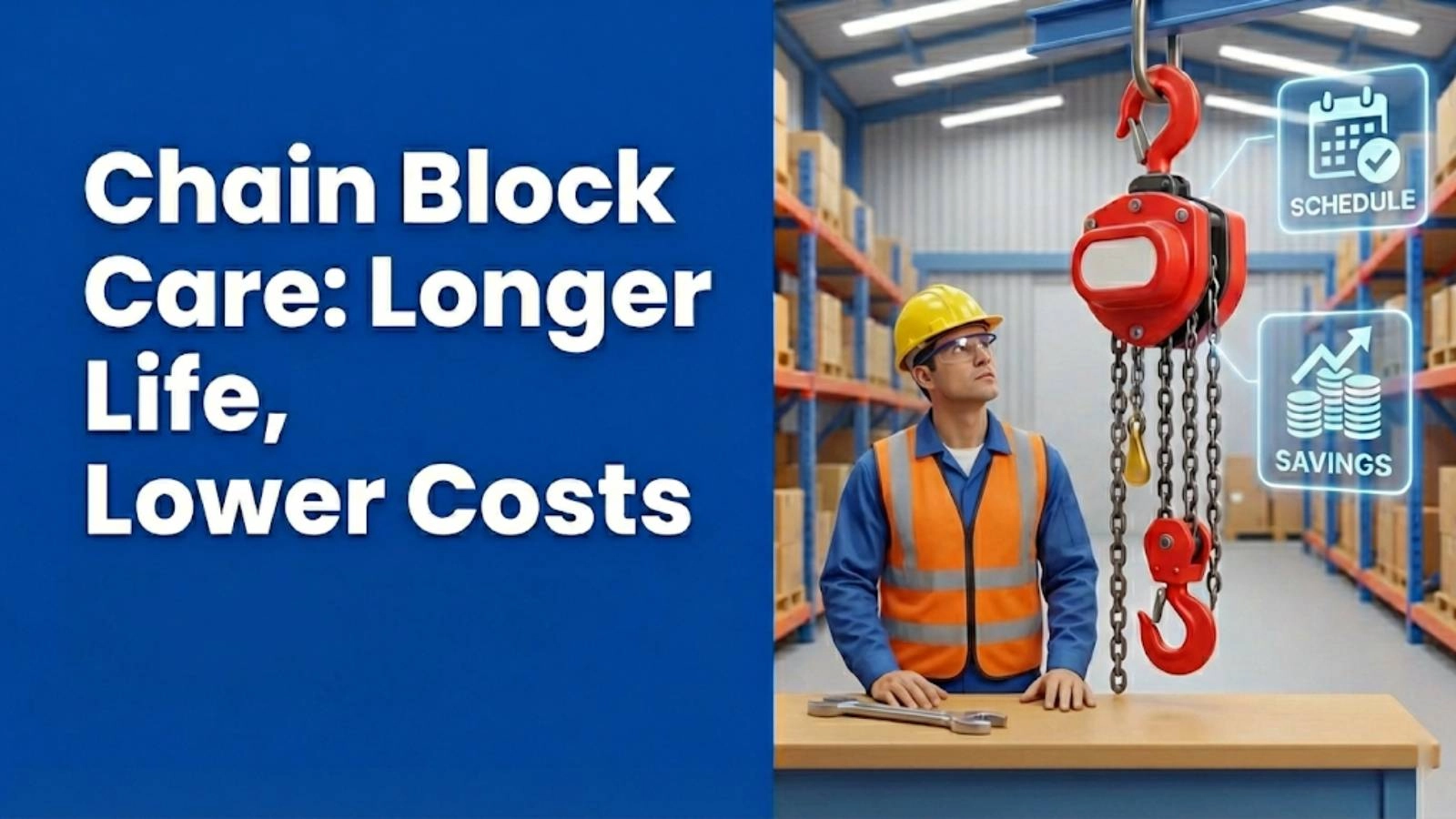
The load chain is the most critical component of a chain block, and its quality directly impacts the safety and reliability of the lifting operation. Always inspect the load chain for signs of wear, damage, or corrosion before each use. Look for cracks, kinks, twisted links, or excessive elongation. The chain should be made of high-strength alloy steel and should be clearly marked with its grade and size. Replace the load chain immediately if you detect any signs of damage or wear. Using a damaged or worn load chain can lead to catastrophic failure and serious accidents.
Compliance with Industry Standards (ASME, OSHA): Ensuring Legal Requirements
Chain block lifting operations must comply with relevant industry standards and regulations, such as those published by the American Society of Mechanical Engineers (ASME) and the Occupational Safety and Health Administration (OSHA). These standards provide guidelines for the safe design, construction, inspection, and operation of chain blocks. Compliance with these standards helps to ensure the safety of workers and reduces the risk of accidents. Always familiarize yourself with the applicable standards and regulations and ensure that your chain block lifting operations are in compliance.
Chain Block Material and Durability: Ensuring Longevity
Steel vs. Alloy Steel: Understanding Material Properties
The material used to construct a chain block significantly impacts its durability and performance. Steel is a common material for chain block components, offering good strength and affordability. However, alloy steel, which is steel that has been mixed with other elements to enhance its properties, is generally preferred for critical components like the load chain and hooks. Alloy steel offers superior strength, wear resistance, and resistance to deformation under heavy loads. Choosing a chain block with alloy steel components can significantly extend its lifespan and improve its reliability.
Corrosion Resistance: Selecting for Environmental Conditions
Corrosion can significantly weaken chain block components and reduce their lifespan. If you plan to use the chain block in a corrosive environment, such as a marine environment or a chemical plant, you should select a model that is specifically designed for corrosion resistance. Look for chain blocks with components that are made of stainless steel or that have been treated with a corrosion-resistant coating. Regular cleaning and lubrication can also help to prevent corrosion and extend the lifespan of the chain block.
Regular Inspection and Maintenance: Extending Lifespan
Regular inspection and maintenance are essential for extending the lifespan of a chain block and ensuring its safe operation. Inspect the chain block before each use for signs of wear, damage, or corrosion. Lubricate the chain and other moving parts regularly to reduce friction and prevent wear. Replace any worn or damaged components immediately. Keep a record of all inspections and maintenance activities. By following a regular inspection and maintenance schedule, you can identify potential problems early and prevent them from escalating into more serious issues.
The Importance of Proper Installation and Training: Minimizing Risks
Secure Mounting: Preventing Falls
Proper mounting is critical for ensuring the stability and safety of the chain block. Always mount the chain block on a secure and stable support structure that is capable of supporting the weight of the chain block and the load. Use appropriate mounting hardware, such as shackles, hooks, or trolleys, that are rated for the intended load. Ensure that the mounting hardware is properly installed and tightened. Never mount the chain block on a support structure that is weak, unstable, or damaged. A failure of the mounting structure can cause the chain block and the load to fall, resulting in serious injuries or property damage.
Operator Training: Ensuring Competent Use
Proper operator training is essential for ensuring the safe and efficient use of chain blocks. Operators should be trained on the proper procedures for inspecting, operating, and maintaining the chain block. They should also be trained on the potential hazards associated with chain block lifting and how to mitigate those hazards. Training should include both classroom instruction and hands-on practice. Operators should be certified or qualified to operate chain blocks. Regular refresher training should be provided to ensure that operators maintain their skills and knowledge.
Regular Inspections: Identifying Potential Problems Early
Regular inspections are critical for identifying potential problems with the chain block before they can lead to accidents or equipment failures. Inspections should be conducted before each use and at regular intervals, such as monthly or quarterly. Inspections should include a thorough examination of all critical components, including the chain, hooks, gears, and mounting hardware. Any signs of wear, damage, or corrosion should be addressed immediately. Keep a record of all inspections and any maintenance or repairs that are performed.
Troubleshooting Common Issues: Problem Solving
Chain Jamming: Identifying and Resolving Obstructions
Chain jamming is a common problem with chain blocks. It can be caused by various factors, such as dirt, debris, or improper lubrication. To resolve chain jamming, first, try to identify the source of the obstruction. If it is dirt or debris, clean the chain and the chain block mechanism thoroughly. If the chain is not properly lubricated, apply a suitable lubricant. If the chain is twisted or kinked, try to straighten it out. If you cannot resolve the chain jamming yourself, consult a qualified technician.
Slipping Loads: Diagnosing and Correcting Chain Wear
Slipping loads can be a dangerous problem, indicating that the chain or the braking mechanism is worn or damaged. If you notice that the load is slipping, stop using the chain block immediately. Inspect the chain for signs of wear or damage, such as excessive elongation or broken links. Also, check the braking mechanism to ensure that it is functioning properly. If you find any problems, replace the chain or repair the braking mechanism before using the chain block again.
Unusual Noises: Investigating Mechanical Problems
Unusual noises, such as grinding, clicking, or squealing, can indicate that there is a mechanical problem with the chain block. If you hear any unusual noises, stop using the chain block and investigate the source of the noise. Check the gears, bearings, and other moving parts for signs of wear or damage. Lubricate the moving parts and tighten any loose fasteners. If you cannot identify the source of the noise or resolve the problem yourself, consult a qualified technician.
Making the Right Choice: A Step-by-Step Decision Guide
Step 1: Define your lifting needs (weight, height, frequency)
Start by clearly defining your lifting needs. Determine the maximum weight you will need to lift, the required lifting height, and the frequency of lifts. This information will help you narrow down your options and select a chain block that is appropriate for your specific application. Accurate problem analysis is the most important part of this whole process, so make sure you take your time.
Step 2: Research available chain block options (manual, lever, electric)
Research the different types of chain blocks available, including manual chain blocks, lever chain blocks, and electric chain hoists. Consider the advantages and disadvantages of each type and select the one that best meets your needs. If you need a versatile option for tight spaces, consider the lever chain block.
Step 3: Verify compliance with safety standards (ASME, OSHA)
Ensure that the chain block you select complies with relevant safety standards and regulations, such as those published by ASME and OSHA. This will help to ensure the safety of your workers and reduce the risk of accidents. Don’t skip this step. It’s easy to assume a chain block is safe, but without proper verification, you’re taking an unnecessary risk.
Step 4: Consider material and durability
Consider the material and durability of the chain block. Select a model with high-quality components that are designed to withstand the demands of your application. If you will be using the chain block in a corrosive environment, select a model that is specifically designed for corrosion resistance. Stainless steel alloys are a good choice if corrosion is a major concern.
Step 5: Prioritize proper installation and training
Prioritize proper installation and training. Ensure that the chain block is installed correctly and that operators are properly trained on its safe and efficient use. This will help to prevent accidents and ensure that the chain block operates reliably for many years to come. Remember: even the best equipment is only as good as the people using it.
| Factor |
Considerations |
Recommendations |
| Load Weight |
Maximum weight to be lifted |
Select a chain block with a load capacity exceeding the maximum weight by at least 20% |
| Lifting Height |
Vertical distance required for lifting |
Choose a chain block with a chain length sufficient for the required lifting height |
| Frequency of Use |
How often the chain block will be used |
For high-frequency use, consider an electric chain hoist; for occasional use, a manual chain block may suffice |
| Headroom |
Vertical space available above the load |
Select a chain block that fits comfortably within the available headroom; lever chain blocks are ideal for tight spaces |
| Safety Standards |
Compliance with ASME and OSHA regulations |
Verify that the chain block complies with all relevant safety standards and regulations |
| Material Durability |
Resistance to wear, corrosion, and environmental conditions |
Choose a chain block with high-quality components and corrosion-resistant materials for harsh environments |
| Training |
Competency of operators in safe and efficient use |
Ensure operators are properly trained on inspection, operation, and maintenance |
Chain Block Maintenance Best Practices: Ensuring Longevity
Regular Cleaning and Lubrication: Preventing Corrosion
Regular cleaning and lubrication are essential for preventing corrosion and extending the lifespan of a chain block. Clean the chain block regularly with a mild detergent and water to remove dirt, debris, and contaminants. After cleaning, lubricate the chain and other moving parts with a suitable lubricant. Use a lubricant that is specifically designed for chain blocks and that is compatible with the materials used in the chain block construction. Lubrication reduces friction, prevents wear, and protects against corrosion.
Inspecting Chain and Hooks: Identifying Wear and Damage
Regularly inspect the chain and hooks for signs of wear or damage. Look for cracks, kinks, twisted links, or excessive elongation in the chain. Check the hooks for signs of bending, cracking, or deformation. Replace any worn or damaged components immediately. Using a damaged or worn chain or hook can lead to catastrophic failure and serious accidents. Proper inspection is a fundamental safe lifting practice.
Proper Storage: Protecting Against Environmental Damage
Proper storage is important for protecting the chain block from environmental damage. When not in use, store the chain block in a clean, dry place. Protect it from exposure to sunlight, rain, and extreme temperatures. If you are storing the chain block for an extended period, apply a rust inhibitor to the chain and other metal components. Proper storage will help to prevent corrosion and extend the lifespan of the chain block.
Case Studies: Real-World Examples of Chain Block Applications
Construction Site Lifting: Moving Heavy Materials Safely
On construction sites, chain blocks are invaluable for lifting and positioning heavy materials such as steel beams, concrete blocks, and precast panels. A construction team used chain blocks to safely lift steel girders into place for a bridge construction project. By using multiple chain blocks in tandem, the team was able to distribute the load evenly and ensure a smooth and controlled lift. This showcases the importance of chain block safety and proper rigging techniques.
Manufacturing Plant Operations: Streamlining Production Processes
In manufacturing plants, chain blocks are used to streamline production processes by lifting and positioning heavy components, machinery, and finished products. One manufacturing plant uses electric chain hoists to lift and move heavy engine blocks along an assembly line. This has significantly increased the plant’s production efficiency and reduced the risk of worker injuries. Without this lifting equipment, the plant would be far less productive.
Workshop Applications: Assisting with Automotive Repairs
In automotive workshops, chain blocks are commonly used for lifting engines, transmissions, and other heavy components during repairs. A mechanic used a chain block to safely lift an engine out of a car for repairs. The chain block allowed the mechanic to precisely position the engine and perform the repairs efficiently. This is a prime example of how chain block lifting increases efficiency and safety in workshop environments.
Conclusion
You’ve successfully navigated the ins and outs of chain block lifting. From understanding the fundamentals and identifying your specific needs to selecting the right equipment, prioritizing safety, and implementing best practices for maintenance, you’re now well-equipped to handle chain block lifting tasks with confidence and competence. We at Safe and Secure Trading Company are committed to providing you with the knowledge and resources you need to ensure safe and efficient lifting operations. Chain block lifting, when done correctly, significantly enhances productivity and safety.
FAQ Section
Q: How often should I inspect my chain block?
A: You should inspect your chain block before each use and at regular intervals, such as monthly or quarterly, depending on the frequency of use and the severity of the operating environment.
Q: What are the signs of a worn or damaged chain?
A: Signs of a worn or damaged chain include cracks, kinks, twisted links, excessive elongation, and corrosion. If you notice any of these signs, replace the chain immediately.
Q: Can I use a chain block to lift loads that exceed its rated capacity?
A: No, never use a chain block to lift loads that exceed its rated capacity. Overloading a chain block can lead to catastrophic failure and serious accidents.
Q: What is the difference between a manual chain block and an electric chain hoist?
A: A manual chain block is operated by hand, while an electric chain hoist is powered by electricity. Electric chain hoists are faster and more efficient for high-frequency lifting applications.
Q: How do I properly lubricate a chain block?
A: Use a lubricant that is specifically designed for chain blocks and that is compatible with the materials used in the chain block construction. Apply the lubricant to the chain and other moving parts regularly.
Q: What safety standards apply to chain block lifting?
A: Relevant safety standards include those published by ASME and OSHA. These standards provide guidelines for the safe design, construction, inspection, and operation of chain blocks.
Q: How do I choose the right chain block for my needs?
A: Consider the maximum weight you will need to lift, the required lifting height, the frequency of lifts, and the available headroom. Select a chain block that meets these requirements and complies with relevant safety standards.
Q: What should I do if the chain block is making unusual noises?
A: Stop using the chain block and investigate the source of the noise. Check the gears, bearings, and other moving parts for signs of wear or damage. Consult a qualified technician if you cannot identify the source of the noise or resolve the problem yourself.