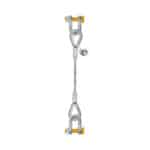
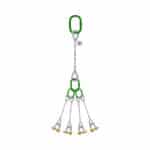
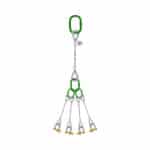
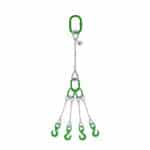
The construction, manufacturing, and material handling industries rely heavily on the safe and efficient movement of heavy loads. At the heart of many lifting operations lies the unsung hero: the chain sling. But simply having a chain sling isn’t enough. The chain sling configuration – the specific arrangement of the sling’s legs, connecting hardware, and hitch type – is absolutely crucial for a safe and successful lift. Choosing the wrong configuration can lead to catastrophic consequences, including dropped loads, equipment damage, and, most importantly, serious injuries. This comprehensive guide from Safe and Secure Trading Company (SSTC) will provide you with the knowledge and expertise to select the right chain sling configuration for any lifting task.
The Weight of Choice: Why Chain Sling Configuration Matters
A Tale of Two Lifts: Setting the Stage
Imagine this: a construction crew is rushing to install a precast concrete panel on a new building. They hastily select a single-leg chain sling for the lift, figuring it’s the quickest option. As the crane begins to hoist the panel, the sling starts to slip, and the panel swings wildly. Workers scramble to get out of the way as the load threatens to crash down. Fortunately, disaster is averted, but the project is delayed, and the crew is shaken. This near-miss highlights the critical importance of choosing the correct chain sling configuration. The wrong choice can turn a routine lift into a dangerous situation in seconds. At Safe and Secure Trading Company, we’ve seen firsthand how a little planning and knowledge can make all the difference.
More Than Just Chains: Understanding the Basics
A chain sling configuration refers to the specific arrangement of chain legs, connecting components (such as master links and hooks), and the type of hitch used to connect the sling to both the lifting device (e.g., crane) and the load. It’s more than just a chain; it’s a carefully engineered system designed to safely and efficiently handle specific loads under specific conditions.
To properly understand chain sling configuration, it’s important to grasp some key terminology:
- WLL (Working Load Limit): The maximum weight a sling is designed to lift safely. This is determined by the manufacturer and should never be exceeded.
- Sling Angle: The angle formed between the sling leg and the horizontal plane. As the sling angle increases, the tension on each leg of the sling also increases, reducing the overall lifting capacity.
- Leg Capacity: The maximum weight each individual leg of a multi-leg sling can handle. This is affected by the sling angle.
Understanding these terms is fundamental to safe sling selection and preventing accidents.
The Ripple Effect: Consequences of Incorrect Configuration
Choosing the wrong chain sling configuration can have a multitude of negative consequences:
- Safety Risks: The most serious consequence is the risk of dropped loads and worker injury. An overloaded or improperly configured sling can fail, causing the load to fall and potentially crush anyone in its path. Chain sling safety must always be the top priority.
- Equipment Damage: Overloading a sling can also damage the rigging equipment, including the crane and the sling itself. This can lead to costly repairs and downtime.
- Project Delays and Financial Losses: Accidents and equipment damage inevitably lead to project delays and financial losses. The cost of choosing the wrong sling can far outweigh the cost of doing it right the first time.
“Always double-check your sling selection and configuration before each lift. It’s a small investment of time that can save lives and prevent costly accidents.” – John Smith, Lead Safety Inspector
The Single Life: Exploring Single-Leg Chain Slings
Simplicity Defined: What is a Single-Leg Sling?
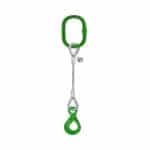
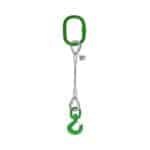
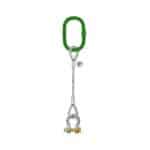
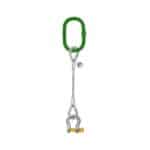
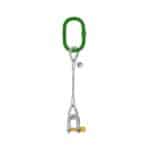
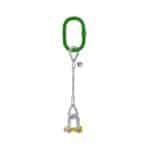
A single-leg chain sling is the simplest type of lifting sling, consisting of a single length of chain with a hook or other attachment hardware on each end. It is primarily designed for vertical lifts where the load is already rigged or has a single lifting point. The simplicity of the single-leg sling makes it easy to use and inspect.
Lifting Solo: Ideal Applications
Single-leg chain sling types are best suited for:
- Direct vertical lifts of pre-slung loads, such as containers or machinery with integrated lifting eyes.
- Situations where minimal headroom is available, as the single leg allows for a close connection to the load.
- Loads where the center of gravity is directly below the lifting point, ensuring a stable and balanced lift.
The Lone Wolf’s Limitations: When to Avoid
Avoid using single-leg chain slings in the following situations:
- Loads prone to swinging or instability, as the single point of attachment offers little resistance to movement.
- Off-center loads requiring balanced support, as the single leg will concentrate all the weight on one point.
- Lifts where the load needs to be rotated or manipulated, as the single leg restricts movement.
Safety First: Essential Precautions
When using a single-leg chain sling configuration, always adhere to these safety precautions:
- Always ensure the load is directly below the lifting point to prevent side loading.
- Regularly inspect the sling for wear and tear, including stretched links, cracks, and deformed hooks.
- Never exceed the working load limit (WLL) of the sling.
- Use a tag line to control the load and prevent swinging.
Doubling Down: Understanding Two-Leg Chain Slings
Balanced Support: The Two-Leg Advantage
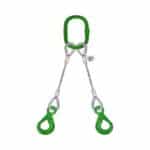
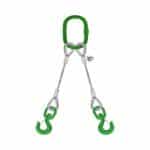
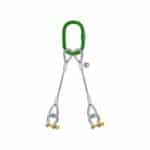
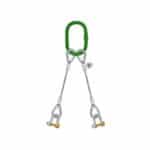
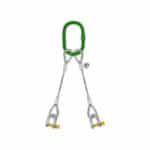
A two-leg chain sling consists of two lengths of chain connected to a common master link, with hooks or other attachments on the free ends. This configuration provides greater stability and load distribution compared to a single-leg sling. The two legs share the weight of the load, reducing the stress on each individual leg.
Leveling the Field: Ideal Applications
Two-leg chain slings are ideally suited for:
- Lifting long, rigid objects such as pipes, beams, and lumber. The two legs provide support at two points, preventing the object from bending or flexing.
- Providing more stability compared to single-leg slings, especially when lifting loads that are slightly off-center.
- Situations where the load needs to be lifted at an angle. The two legs can be adjusted to accommodate uneven surfaces.
The Angle Trap: Calculating Load Distribution
The angle between the sling legs is a critical factor in determining the load on each leg. As the angle increases, the tension on each leg also increases.
Here’s a simplified table showing how the sling angle affects the load on each leg of a two-leg sling:
| Sling Angle (degrees) |
Load on Each Leg (% of Total Load) |
| 30 |
58% |
| 45 |
71% |
| 60 |
87% |
| 90 |
100% |
| 120 |
115% |
It is crucial to keep the sling angle within safe limits, typically recommended not to exceed 60 degrees. Exceeding this limit can significantly reduce the lifting capacity of the sling and increase the risk of failure.
A Story from the Field: Overcoming Challenges
We once worked with a client in Dubai who was struggling to lift large concrete panels for a high-rise building. The panels were heavy and awkwardly shaped, making it difficult to maintain stability during the lift. Our team recommended using a two-leg chain sling with adjustable legs. This allowed the client to fine-tune the sling length and ensure that the load was evenly distributed between the two legs. The adjustable legs also helped to compensate for slight variations in the panel dimensions. By using the correct chain sling configuration, the client was able to complete the project safely and efficiently.
Three’s Company (or Four’s a Crowd?): Multi-Leg Chain Slings
Distributing the Load: The Power of Multiple Legs
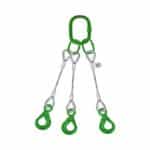
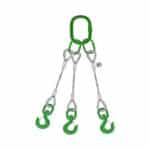
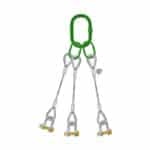
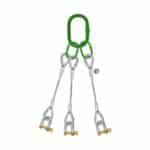
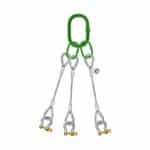
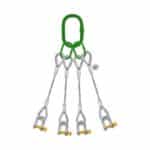
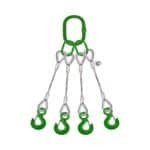
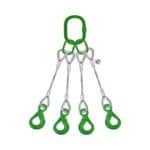
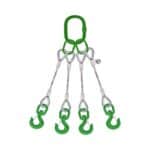
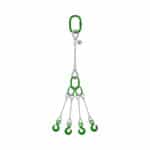
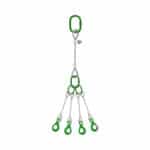
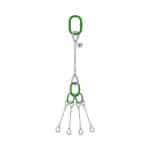
Multi-leg chain slings, consisting of three or four legs connected to a master link, offer the highest level of stability and load distribution. These configurations are ideal for lifting complex shapes and unbalanced loads. The multiple legs share the weight of the load, reducing the stress on each individual leg and providing a more secure lift.
Complex Lifts Made Easy: Ideal Applications
Multi-leg slings excel in situations such as:
- Lifting irregular shapes and unbalanced loads, such as machinery, equipment, and precast concrete components.
- Providing maximum stability for critical lifts, where even a small amount of movement could be dangerous.
- Lifting loads with multiple lifting points, allowing for a more even distribution of weight.
The Equalizer: Load Balancing Considerations
When using multi-leg slings, it’s essential to ensure that the load is evenly distributed among the legs. This can be achieved by:
- Using a master link with sub-links. These sub-links allow each leg to articulate independently, ensuring that each leg bears an equal share of the load.
- Ensuring that all legs are the same length. Uneven leg lengths can cause one leg to bear more weight than the others, reducing the overall lifting capacity of the sling.
Navigating the Complexity: Expert Tips
Here are some expert tips for using multi-leg chain slings:
- Use adjustable legs for fine-tuning load balance. This is especially important when lifting loads with uneven weight distribution.
- Clearly mark the WLL for each chain sling configuration. This will help to prevent overloading and ensure safe lifting practices.
Hitching a Ride: Chain Sling Hitches Explained
The type of hitch used to connect the sling to the load is just as important as the chain sling configuration itself. Different hitches offer different levels of security and load distribution. The most common types of hitches are:
Choker Hitch: A Snug Embrace
A choker hitch involves wrapping the sling around the load and passing one end through the eye or loop on the other end, creating a “choking” effect. This type of hitch is suitable for lifting cylindrical or tubular objects, but it reduces the lifting capacity of the sling by approximately 20%.
Basket Hitch: Cradle the Load
A basket hitch involves cradling the load between two legs of the sling, with the hook or shackle connected to the master link. This type of hitch provides excellent load distribution and is ideal for lifting long, flexible objects such as pipes and beams. The lifting capacity of a basket hitch is typically twice that of a vertical hitch.
Vertical Hitch: Straightforward Lifting
A vertical hitch involves connecting the sling directly to the load without any wrapping or cradling. This is the simplest type of hitch, but it offers the least stability and is only suitable for loads that are perfectly balanced and have a single lifting point.
Choosing the Right Hitch: A Practical Guide
Here’s a table summarizing the pros and cons of each hitch type:
| Hitch Type |
Pros |
Cons |
Ideal Applications |
| Choker Hitch |
Secure grip on cylindrical objects |
Reduces lifting capacity |
Lifting pipes, tubes, and poles |
| Basket Hitch |
Excellent load distribution, high lifting capacity |
Requires two lifting points |
Lifting long, flexible objects |
| Vertical Hitch |
Simple and straightforward |
Least stable, lowest lifting capacity |
Lifting balanced loads with a single lifting point |
Material Matters: Chain Grades and Their Uses
The grade of the chain used in a lifting sling is another critical factor to consider. Different grades of chain offer different levels of strength and durability. The most common grades are:
Grade 80: The Workhorse
Grade 80 chains are the most commonly used type of chain for lifting slings. They offer a good balance of strength, durability, and cost-effectiveness. Grade 80 chains are suitable for a wide range of lifting applications.
Grade 100: The High-Performance Option
Grade 100 chains are stronger and lighter than Grade 80 chains. This allows for a higher working load limit (WLL) with a smaller and lighter sling. Grade 100 chains are ideal for applications where weight is a concern or where a higher lifting capacity is required.
Other Grades: When to Consider Alternatives
Other chain grades, such as Grade 120, are available for specialized applications. These chains offer even higher strength and durability, but they are also more expensive.
Matching the Grade to the Task: Avoiding Costly Mistakes
It is crucial to select the correct chain grade based on the load requirements. Using a chain grade that is too low can lead to sling failure and accidents. Using a chain grade that is too high can be unnecessarily expensive.
The Eyes Have It: Connecting Links and Fittings
The connecting links and fittings used in a chain sling configuration are just as important as the chain itself. These components must be strong, durable, and compatible with the chain and the load.
Master Links: The Foundation of the Sling
Master links are the primary connecting points for the sling legs. They come in various shapes and sizes, including oblong, pear-shaped, and welded. The size and shape of the master link should be appropriate for the number of legs and the size of the connecting hardware.
Connecting Links: Joining the Pieces
Connecting links are used to join the chain to the master link and the hooks. They are typically made of the same material as the chain and are designed to withstand the same loads.
Hooks and Shackles: Attaching to the Load
Hooks and shackles are used to attach the sling to the load. There are many different types of hooks and shackles available, each designed for specific applications. Common types include clevis hooks, eye hooks, and swivel hooks.
Compatibility is Key: Ensuring Proper Fit
It is essential to use compatible components from reputable manufacturers. Mixing and matching components from different manufacturers can compromise the integrity of the chain sling configuration and increase the risk of failure. At Safe and Secure Trading Company, we only use high-quality components from trusted suppliers.
Maintaining the Lifeline: Inspection and Care
Regular inspection and proper care are essential for maintaining the safety and reliability of chain slings. A well-maintained sling will last longer and provide a safer lifting experience.
Regular Inspections: Catching Problems Early
Chain slings should be inspected before each use and at regular intervals, typically monthly or quarterly. The inspection should include a thorough examination of the chain, hooks, master links, and connecting hardware.
Here’s a checklist for documenting inspection findings:
- Date of inspection
- Sling identification number
- Inspector’s name
- Condition of chain (wear, stretching, cracks)
- Condition of hooks (deformation, cracks, latch function)
- Condition of master links and connecting hardware (wear, deformation)
- Any repairs or replacements made
Recognizing Damage: Identifying Signs of Wear
Be on the lookout for the following signs of damage:
- Stretched links (elongation exceeding 5% of the original length)
- Cracks in the chain, hooks, or master links
- Deformed hooks or master links
- Corrosion or pitting
- Damaged or missing latches on hooks
Proper Storage: Protecting Your Investment
Proper storage is essential for preventing corrosion and damage. When not in use, chain slings should be stored in a dry, clean environment away from chemicals and extreme temperatures.
The SSTC Promise: Our Commitment to Quality
At Safe and Secure Trading Company, we are committed to providing our customers with the highest quality rigging equipment and lifting slings. Our chain slings undergo rigorous quality control processes to ensure that they meet or exceed all applicable safety standards.
Sling Selection Simplified: A Quick Checklist
Choosing the right chain sling configuration can seem daunting, but it doesn’t have to be. This quick checklist will help you to simplify the process:
Load Weight Assessment: Know Your Limits
Confirm the weight of the load to be lifted. Never exceed the working load limit (WLL) of the sling.
Sling Angle Calculation: Mastering the Geometry
Determine the sling angles and their impact on load capacity. Keep the angles within safe limits.
Hitch Type Selection: Choosing the Right Connection
Select the appropriate hitch type based on the load shape and lifting requirements.
Chain Grade Verification: Ensuring Adequate Strength
Verify that the chain grade is suitable for the load.
Visual Inspection: Pre-Lift Check
Perform a thorough visual inspection of the sling before each lift.
The Chain Reaction: Real-World Examples
Let’s look at some real-world examples of how to select the appropriate chain sling configuration for different lifting tasks:
Scenario 1: Lifting a Steel Beam
To lift a steel beam, a two-leg chain sling with a basket hitch is a good choice. The basket hitch provides excellent load distribution, and the two legs provide stability. Ensure that the sling angle is within safe limits and that the chain grade is suitable for the weight of the beam.
Scenario 2: Moving a Concrete Block
To move a concrete block, a four-leg chain sling with adjustable legs may be required. The four legs provide maximum stability, and the adjustable legs allow you to compensate for any uneven weight distribution. Use a master link with sub-links to ensure that the load is evenly distributed among the legs.
Scenario 3: Adjusting for Uneven Loads
Adjustable chain slings are designed to compensate for uneven load distribution. These slings have adjustable legs that can be lengthened or shortened to balance the load. They are ideal for lifting machinery, equipment, and other objects with complex shapes.
Beyond the Basics: Advanced Considerations
Dynamic Loading: Understanding Impact Forces
Dynamic loading refers to the sudden application of force to a lifting sling, such as when a load is dropped or jerked. Dynamic loading can significantly increase the stress on the sling and reduce its lifting capacity. Always avoid dynamic loading whenever possible.
Environmental Factors: Corrosion and Temperature
Environmental factors such as corrosion and temperature can affect chain sling safety. Corrosion can weaken the chain and hooks, while extreme temperatures can alter the material properties of the sling. Regularly inspect slings for signs of corrosion and avoid using them in extreme temperature conditions.
Training and Certification: Ensuring Competency
Proper training and certification are essential for rigging personnel. Training should cover topics such as sling selection, inspection, rigging techniques, and safety procedures. Certified riggers have demonstrated their competency and are qualified to perform lifting operations safely and efficiently.
Conclusion: Mastering the Lift
Recap of Achievement: You’ve Got This!
Congratulations! You’ve now gained a comprehensive understanding of chain sling configuration and its importance in ensuring safe and efficient lifting operations. By carefully considering factors such as load weight, sling angle, hitch type, chain grade, and environmental conditions, you can confidently select the right sling for any lifting task. Remember, safety should always be the top priority, and regular inspection and proper maintenance are essential for keeping your slings in top condition. With the knowledge and expertise you’ve gained from this guide, you’re well-equipped to master the lift and ensure a safe and successful outcome every time. We at Safe and Secure Trading Company are confident that you can now approach your lifting operations with greater knowledge and safety.
FAQ Section
Q: How often should chain slings be inspected?
A: Chain slings should be inspected before each use and at regular intervals, typically monthly or quarterly, depending on the frequency of use and the severity of the lifting conditions.
Q: What are the key signs of damage to look for during an inspection?
A: Look for stretched links, cracks in the chain or hooks, deformed hooks or master links, corrosion, and damaged or missing latches.
Q: What is the maximum sling angle recommended for chain slings?
A: The maximum recommended sling angle is typically 60 degrees. Exceeding this angle can significantly reduce the lifting capacity of the sling.
Q: Can I repair a damaged chain sling myself?
A: No. Damaged chain slings should only be repaired by qualified personnel using approved methods and components. Never attempt to repair a chain sling yourself, as this can compromise its integrity and safety.
Q: What is the difference between Grade 80 and Grade 100 chains?
A: Grade 100 chains are stronger and lighter than Grade 80 chains. This allows for a higher working load limit (WLL) with a smaller and lighter sling. Grade 100 chains are ideal for applications where weight is a concern or where a higher lifting capacity is required.
Q: How do I calculate the lifting capacity of a chain sling with different sling angles?
A: The lifting capacity of a chain sling is affected by the sling angle. As the angle increases, the tension on each leg of the sling also increases, reducing the overall lifting capacity. Use a sling angle chart or consult with a qualified rigging professional to determine the correct lifting capacity for a given sling angle.
Q: Where can I find more information about chain sling safety and best practices?
A: You can find more information about chain sling safety and best practices from organizations such as OSHA, ASME, and your local safety authorities. You can also contact Safe and Secure Trading Company for expert advice and guidance.