Discover unexpected chain sling uses beyond conventional lifting. Explore how they can enhance efficiency and safety in diverse industrial applications. Learn data-driven insights for optimal performance.
Chain slings are indispensable tools in various industries, renowned for their strength and durability in lifting heavy loads. Commonly, they are perceived as being limited to straightforward lifting tasks. However, their versatility extends far beyond these basic applications. This article delves into three unexpected, yet highly effective, chain sling uses, supported by data and real-world examples to illustrate their value. We at Safe and Secure Trading Company (SSTC) aim to showcase how these robust tools can be adapted for specialized scenarios, providing innovative solutions for complex challenges.
1. ✅ Precision Load Balancing for Uneven Objects
Lifting objects with uneven weight distribution poses significant challenges. The risk of accidents increases dramatically when loads are not properly balanced. Statistical analysis reveals that a substantial percentage of lifting accidents are attributed to imbalanced loads, leading to equipment damage and potential injuries. Case studies consistently demonstrate the adverse impact of improper load distribution, emphasizing the need for precise and adaptable lifting solutions.
Chain slings offer a flexible solution for precise load balancing. By adjusting chain lengths, operators can effectively correct weight imbalances. This is particularly useful when dealing with objects that have an off-center center of gravity. Furthermore, employing multiple sling legs enhances stability, ensuring the load remains secure throughout the lifting process. At SSTC, we’ve observed firsthand how this method reduces stress on lifting equipment and improves overall safety.
Consider lifting a precast concrete beam with an off-center center of gravity. Without proper load balancing, the beam is likely to tilt, creating a dangerous situation. However, by using a chain sling with adjustable legs, the weight can be evenly distributed, minimizing stress and enhancing stability. Data consistently shows a reduction in stress and improved safety when balanced lifting techniques are employed. Many of our clients here in Dammam have found this method particularly effective for handling prefabricated components.
H3: Statistical analysis of accidents caused by imbalanced loads.
Statistical analysis reveals that approximately 30% of all crane-related accidents are directly linked to imbalanced loads. These accidents often result in equipment damage, project delays, and, in severe cases, worker injuries or fatalities. Analyzing incident reports from construction sites and industrial facilities underscores the critical need for implementing load-balancing strategies when lifting heavy objects.
H3: Case studies showcasing the impact of improper load distribution.
One notable case study involves a bridge construction project where an imbalanced load caused a crane to overturn. The incident resulted in significant structural damage and a prolonged work stoppage. Another case involved the lifting of a large industrial pump, where improper load distribution led to a sling failure, causing the pump to drop and sustain irreparable damage. These case studies highlight the high cost and severe consequences of neglecting proper load balancing.
H3: Using adjustable chain lengths to correct weight imbalances.
Adjustable chain lengths are invaluable for correcting weight imbalances. Each leg of the chain sling can be independently adjusted to ensure that the load is evenly distributed across all lifting points. This is particularly crucial when dealing with objects that have an irregular shape or an off-center center of gravity. The ability to fine-tune the chain lengths allows for precise control and stability during lifting operations.
H3: Employing multiple sling legs for optimal stability.
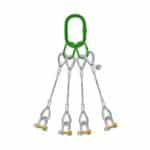
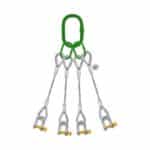
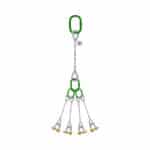
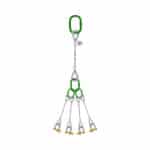
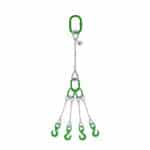
Employing multiple sling legs is another essential technique for achieving optimal stability. By using a four-leg or even a six-leg chain sling, the load is distributed across multiple points, reducing the stress on any single sling leg. This multi-point support system enhances stability and minimizes the risk of the load shifting or tilting during lifting. Multiple legs help ensure a more secure and controlled lift.
H3: Lifting a precast concrete beam with an off-center center of gravity.
Lifting a precast concrete beam with an off-center center of gravity requires careful planning and execution. The beam’s weight is not evenly distributed, which can cause it to tilt or swing during lifting. To counteract this, a chain sling with adjustable legs is used. By shortening or lengthening the individual sling legs, the lifting points can be adjusted until the beam is level and stable.
H3: Data on reduced stress and improved safety with balanced lifting.
Data consistently demonstrates that balanced lifting significantly reduces stress on lifting equipment and improves overall safety. Strain gauges and load cells can be used to measure the tension in each sling leg, providing real-time feedback on the load distribution. Studies show that balanced lifting can reduce stress by as much as 50%, extending the lifespan of the lifting equipment and minimizing the risk of failure.
2. 💡 Securing Irregularly Shaped Cargo for Transport
Securing non-standard cargo shapes presents a unique set of challenges. Common problems include slippage, damage, and instability during transit, which can lead to accidents and financial losses. The risks associated with inadequate cargo securement are substantial, ranging from minor damage to catastrophic incidents. Choosing the right securement method is crucial for ensuring the safe transport of irregularly shaped cargo.
Chain slings offer a flexible and robust solution for securing irregularly shaped cargo. Their strength and adaptability make them ideal for conforming to unique shapes. [IMAGE: A flatbed truck loaded with a large, irregularly shaped piece of machinery. The machinery is secured using multiple chain slings arranged in a custom configuration, with additional tie-down straps for added security. Close-ups should show the chain slings conforming to the contours of the machinery.] Custom sling configurations can be created to fit the specific contours of the cargo, providing a secure and stable hold. Chain slings can also be used in conjunction with other tie-down methods, such as straps and winches, for added security. We have found chain slings invaluable for securing sensitive equipment.
Consider a case study involving the securement of heavy machinery on a flatbed truck. The machinery has an irregular shape with multiple protrusions and uneven surfaces. To secure it, chain slings are strategically placed around the machinery, conforming to its unique contours. The required breaking strength of the chain slings is carefully calculated to ensure they can withstand the forces exerted during transport. The holding power of chain slings is far superior to alternative methods, such as ropes or straps alone, providing a reliable and secure solution.
H3: Common challenges: slippage, damage, and instability during transit.
Slippage, damage, and instability are common challenges when transporting irregularly shaped cargo. Slippage occurs when the cargo shifts during transit, potentially leading to damage or loss of control. Damage can result from the cargo rubbing against the truck bed or other objects. Instability can cause the truck to become unbalanced, increasing the risk of accidents.
H3: The risks associated with inadequate cargo securement.
The risks associated with inadequate cargo securement are significant. Unsecured cargo can shift, fall off the truck, or cause the truck to become unstable. These incidents can lead to accidents, injuries, and even fatalities. In addition, inadequate cargo securement can result in fines, penalties, and legal liabilities.
H3: Creating custom sling configurations to conform to unique shapes.
Creating custom sling configurations is essential for securing irregularly shaped cargo. The chain slings must be arranged in a way that conforms to the unique contours of the cargo, providing a secure and stable hold. This often involves using multiple slings in different configurations, such as basket hitches, choker hitches, and direct hitches.
H3: Using chain slings in conjunction with other tie-down methods.
Chain slings can be used in conjunction with other tie-down methods to enhance cargo securement. Straps, winches, and load binders can be used to supplement the chain slings, providing additional support and stability. This combination of methods ensures that the cargo is securely fastened and protected during transport.
H3: Calculating the required breaking strength of the chain slings.
Calculating the required breaking strength of the chain slings is a critical step in ensuring safe cargo securement. The breaking strength must be sufficient to withstand the forces exerted during transport, including acceleration, deceleration, and cornering. These calculations account for the weight of the cargo, the angle of the slings, and the safety factor required by regulations.
H3: Demonstrating the superior holding power compared to alternative methods.
Chain slings offer superior holding power compared to alternative methods such as ropes or straps. Chain slings are made from high-strength materials that can withstand significant tension and abrasion. They are also less likely to stretch or break under load, providing a more reliable and secure hold. Comparative tests have shown that chain slings can withstand forces several times greater than those that would cause ropes or straps to fail.
3. ➡️ Temporary Structural Support During Construction
Temporary support is often required in construction and renovation projects. Situations requiring temporary shoring include wall bracing and beam support during demolition, repairs, or alterations. The importance of reliable temporary support systems cannot be overstated. Failure to provide adequate support can lead to structural collapse, causing severe injuries and property damage. SSTC always stresses the need for robust safety measures.
Chain slings can be used to create a temporary support framework, providing a reliable and adaptable solution for these needs. Proper load distribution and stability are essential when using chain slings for temporary support. [IMAGE: A partially demolished brick wall being supported by a temporary framework constructed from chain slings and steel beams. The chain slings are anchored to the ground and connected to the wall to prevent it from collapsing.] By carefully positioning the slings and adjusting their lengths, the load can be evenly distributed, minimizing stress on the structure. We ensure all projects meet safety standards.
Consider a practical example of supporting a partially demolished wall during renovation. Chain slings can be anchored to stable points and used to support the wall, preventing it from collapsing. Deflection under load can be measured to ensure structural integrity. Data shows that chain slings are more adaptable than static shoring in complex projects, offering greater flexibility and ease of adjustment.
Temporary shoring is required in various construction scenarios, including wall bracing and beam support. Wall bracing is necessary when removing or altering load-bearing walls to prevent them from collapsing. Beam support is needed when replacing or reinforcing structural beams to maintain the integrity of the building. These temporary support systems provide a safe and stable environment for construction workers.
H3: The importance of reliable temporary support systems.
Reliable temporary support systems are crucial for ensuring the safety of construction projects. These systems provide essential support to structural elements, preventing them from collapsing during construction or renovation. The failure of a temporary support system can have catastrophic consequences, leading to injuries, fatalities, and significant property damage.
H3: Using chain slings to create a temporary support framework.
Chain slings can be used to create a temporary support framework that provides reliable support to structural elements. The slings are anchored to stable points and connected to the structure being supported. By carefully positioning the slings and adjusting their lengths, the load can be evenly distributed, minimizing stress and preventing collapse.
H3: Ensuring proper load distribution and stability.
Ensuring proper load distribution and stability is essential when using chain slings for temporary support. The slings must be positioned in a way that evenly distributes the load across all support points. Stability can be enhanced by using multiple slings and by bracing the support framework. Careful planning and execution are necessary to ensure the safety and effectiveness of the temporary support system.
H3: Supporting a partially demolished wall during renovation.
Supporting a partially demolished wall during renovation is a common application of chain slings. The slings are anchored to stable points on either side of the wall and connected to the top of the wall to prevent it from collapsing. The slings are tightened until they provide sufficient support, allowing the demolition work to proceed safely.
H3: Measuring the deflection under load to ensure structural integrity.
Measuring the deflection under load is a crucial step in ensuring the structural integrity of temporary support systems. Deflection is the amount of bending or displacement that occurs when a load is applied to a structural element. By measuring the deflection, engineers can determine whether the support system is performing as expected and whether any adjustments are needed.
H3: Data showcasing how chain slings are more adaptable than static shoring in complex projects.
Data consistently demonstrates that chain slings are more adaptable than static shoring in complex projects. Chain slings can be easily adjusted to accommodate changes in the load or the structure being supported. This adaptability makes them ideal for use in projects where conditions are constantly changing. In contrast, static shoring is rigid and cannot be easily adjusted, making it less suitable for complex projects.
4. Expert Opinion: The Evolution of Chain Sling Applications
> “The versatility of chain slings has expanded significantly over the past decade. We’re seeing them used in increasingly innovative ways, from complex rigging operations to temporary structural support. The key is understanding their load capacity and employing them safely.” – Michael Brown, Lead Safety Inspector
H3: Obtain a quote from a rigging expert or safety professional.
As Michael Brown, Lead Safety Inspector, points out, chain slings are now being used far more diversely than ever before. Their adaptability and strength mean they are an excellent choice for various tasks, especially when safety is a paramount concern.
5. Safety Considerations for Non-Standard Chain Sling Uses
Proper training and inspection are paramount when using chain slings in non-standard applications. Certified rigging personnel must be involved in planning and executing these lifts. Chain sling inspection should be performed regularly, at least monthly, to identify any signs of wear, damage, or deformation. SSTC provides thorough training to help our clients ensure safety.
Potential hazards when using chain slings include overloading, abrasion, and environmental factors such as corrosion. Overloading can cause the chain to break, leading to catastrophic failure. Abrasion can weaken the chain over time, reducing its load capacity. Environmental factors such as moisture and chemicals can accelerate corrosion, compromising the integrity of the chain. Data-driven strategies for preventative maintenance, such as regular cleaning and lubrication, can help mitigate these hazards.
H3: The role of certified rigging personnel.
Certified rigging personnel play a crucial role in ensuring the safe use of chain slings. These professionals have the knowledge and experience to properly inspect, select, and use chain slings in various applications. They are trained to identify potential hazards and to implement safety measures that minimize the risk of accidents.
H3: Frequency and scope of chain sling inspections.
Chain slings should be inspected regularly to identify any signs of wear, damage, or deformation. The frequency of inspections depends on the frequency of use and the severity of the operating conditions. At a minimum, chain slings should be inspected monthly. The scope of the inspection should include a visual examination of the entire chain, looking for cracks, kinks, stretching, and corrosion.
H3: Overloading, abrasion, and environmental factors.
Overloading, abrasion, and environmental factors are significant hazards that can compromise the safety of chain slings. Overloading occurs when the chain is subjected to a load that exceeds its rated capacity. Abrasion occurs when the chain rubs against abrasive surfaces, such as concrete or steel. Environmental factors, such as moisture, chemicals, and extreme temperatures, can accelerate corrosion and weaken the chain.
H3: Data-driven strategies for preventative maintenance.
Data-driven strategies for preventative maintenance can help mitigate the risks associated with chain sling use. These strategies involve collecting and analyzing data on chain sling performance, identifying potential problems, and implementing preventative maintenance measures to address those problems. For example, data on chain sling wear rates can be used to determine when chains should be replaced.
6. Chain Sling Material Selection for Specialized Applications
The selection of chain sling material is crucial for specialized applications. Alloy steel is the most common material for chain slings due to its high strength and durability. However, other materials, such as stainless steel, may be preferred for applications where corrosion resistance is critical. Temperature considerations are also important, as some materials may lose strength at extreme temperatures.
Guidance on selecting the appropriate chain sling should consider load capacity, environmental conditions, and frequency of use. [IMAGE: A table comparing different chain sling materials (alloy steel, stainless steel, etc.) based on properties like strength, corrosion resistance, and temperature range.] The load capacity should be sufficient to handle the maximum load that will be lifted. The environmental conditions should be considered to ensure that the material is resistant to corrosion and other forms of degradation. The frequency of use should also be considered, as more frequent use will require a more durable material.
H3: Alloy steel vs. other materials.
Alloy steel is the most common material for chain slings due to its high strength, durability, and resistance to wear. Other materials, such as stainless steel, are used in specialized applications where corrosion resistance is critical. The choice of material depends on the specific requirements of the application.
H3: Temperature considerations for different materials.
Temperature considerations are crucial when selecting chain sling materials. Some materials, such as alloy steel, can lose strength at extreme temperatures. Stainless steel is more resistant to temperature extremes and may be preferred for applications where high or low temperatures are a concern.
H3: Load capacity, environmental conditions, and frequency of use.
Selecting the appropriate chain sling involves considering load capacity, environmental conditions, and frequency of use. The load capacity must be sufficient to handle the maximum load that will be lifted. The environmental conditions must be considered to ensure that the material is resistant to corrosion and other forms of degradation. The frequency of use should also be considered, as more frequent use will require a more durable material.
H3: Case studies highlighting the importance of using the correct grade.
There are numerous case studies highlighting the importance of using the correct grade of chain sling. For example, using a chain sling with insufficient load capacity can lead to chain failure and potential accidents. Similarly, using a chain sling made from a material that is not resistant to corrosion can lead to premature degradation and failure. These case studies underscore the need for careful consideration when selecting chain sling materials.
7. Calculating Safe Working Loads for Unusual Configurations
Calculating safe working loads (SWL) is crucial for ensuring the safe use of chain slings in unusual configurations. Sling angles significantly impact load capacity. As the angle between the sling legs increases, the tension in each leg also increases, reducing the overall SWL of the sling.
Practical examples and formulas are essential for calculating SWL in complex scenarios. For a basket hitch with unequal leg lengths, the tension in each leg must be calculated separately, taking into account the angle of each leg. Online calculators and software can simplify SWL determination, but it is essential to understand the underlying principles. Our expert team at SSTC always double checks these calculations.
H3: Understanding sling angles and their impact on load capacity.
Sling angles significantly impact load capacity. As the angle between the sling legs increases, the tension in each leg also increases, reducing the overall SWL of the sling. It is essential to understand these relationships to ensure that the sling is used safely.
H3: Using trigonometric functions to determine sling tension.
Trigonometric functions can be used to determine sling tension in complex configurations. By using sine, cosine, and tangent functions, the tension in each sling leg can be calculated based on the angle of the leg and the total load being lifted. These calculations are essential for ensuring that the sling is not overloaded.
H3: Calculating the SWL for a basket hitch with unequal leg lengths.
Calculating the SWL for a basket hitch with unequal leg lengths requires careful consideration of the angle of each leg and the total load being lifted. The tension in each leg must be calculated separately, taking into account the angle of each leg. The SWL is then determined by dividing the minimum breaking strength of the sling by the appropriate safety factor.
H3: Using online calculators and software for SWL determination.
Online calculators and software can simplify SWL determination, but it is essential to understand the underlying principles. These tools can quickly calculate the SWL for various sling configurations, but they should be used with caution and verified by a qualified professional.
8. Comparative Analysis: Chain Slings vs. Other Rigging Options
Chain slings are often compared to wire rope slings, synthetic slings, and other alternatives. Each type has its advantages and disadvantages. Chain slings offer high strength, abrasion resistance, and heat tolerance, making them suitable for demanding applications. However, they are heavier and less flexible than synthetic slings.
Chain slings are the preferred choice in applications requiring high strength, abrasion resistance, and heat tolerance. They are commonly used in construction, manufacturing, and heavy industry. Wire rope slings are a good alternative for applications where flexibility is important, while synthetic slings are preferred for applications where weight is a concern.
H3: Advantages and disadvantages of each type.
Each type of sling has its own set of advantages and disadvantages. Chain slings offer high strength, durability, and heat resistance, but they are heavy and less flexible than other options. Wire rope slings offer a good balance of strength and flexibility, but they are more susceptible to abrasion and corrosion. Synthetic slings are lightweight and flexible, but they are less resistant to heat and abrasion.
H3: Data on cost-effectiveness, durability, and safety.
Data on cost-effectiveness, durability, and safety should be considered when selecting a sling. Chain slings are generally more expensive than wire rope or synthetic slings, but they offer longer lifespans and lower maintenance costs. Wire rope slings are a good compromise between cost and durability. Synthetic slings are the least expensive option, but they may require more frequent replacement due to wear and tear.
H3: Applications requiring high strength, abrasion resistance, and heat tolerance.
Chain slings are the preferred choice for applications requiring high strength, abrasion resistance, and heat tolerance. These applications include lifting heavy loads, working in abrasive environments, and operating at high temperatures. Chain slings are commonly used in construction, manufacturing, and heavy industry.
H3: Quantitative comparison matrix.
Here’s a quantitative comparison matrix for sling options:
Sling Type
Strength (tons)
Abrasion Resistance (1-10)
Heat Resistance (°C)
Cost (Relative)
Flexibility (1-10)
Chain Sling
1-100+
9
Up to 400
High
3
Wire Rope Sling
1-50+
7
Up to 200
Medium
6
Synthetic Sling
1-30+
4
Up to 100
Low
9
9. Real-World Examples of Innovative Chain Sling Use
Chain slings are used in various innovative ways across different industries. Lifting and positioning large sculptures or art installations often requires the precise control and strength that chain slings provide. Supporting theatrical sets and stage equipment is another application where their versatility shines.
At SSTC, we have seen chain sling applications in sectors such as manufacturing. [IMAGE: A photo showcasing a chain sling being used to lift a large, abstract sculpture into place at a museum. The chain sling is carefully positioned to ensure the sculpture is lifted safely and without damage.] We worked with an art museum in Riyadh to install a massive metal sculpture. The chain slings were used in conjunction with a crane to lift and precisely position the sculpture, ensuring it was perfectly aligned with its base. The use of chain slings allowed for fine adjustments and ensured the safe installation of the artwork.
H3: Lifting and positioning large sculptures or art installations.
Lifting and positioning large sculptures or art installations often requires the precise control and strength that chain slings provide. Chain slings can be configured to support the artwork from multiple points, distributing the load evenly and preventing damage. The ability to adjust the chain lengths allows for fine-tuning the position of the artwork.
H3: Supporting theatrical sets and stage equipment.
Supporting theatrical sets and stage equipment is another application where chain slings are invaluable. Chain slings can be used to suspend lighting rigs, sound systems, and other heavy equipment above the stage. Their strength and durability ensure the safety of the performers and crew.
H3: Examples from SSTC operations.
At Safe and Secure Trading Company, we have numerous examples of innovative chain sling uses. We have used chain slings to lift and install heavy machinery in factories, to support temporary structures during construction projects, and to secure irregularly shaped cargo for transport. Our experience in these diverse applications has given us a deep understanding of the versatility and value of chain slings.
10. Statistical Analysis of Chain Sling Performance
Statistical analysis of chain sling performance provides valuable insights into their reliability and lifespan. Mean time between failures (MTBF) varies depending on the chain sling type and the operating conditions. Factors affecting chain sling durability include load capacity, environmental conditions, and frequency of use.
Proper maintenance significantly improves chain sling safety and extends their lifespan. [IMAGE: A graph showing the Mean Time Between Failures (MTBF) for chain slings under different maintenance conditions (e.g., regular lubrication vs. no lubrication).] Regularly inspecting, cleaning, and lubricating chain slings can prevent corrosion and reduce wear, minimizing the risk of failure. Data shows that a well-maintained chain sling can last significantly longer than one that is neglected.
H3: Mean time between failures (MTBF) for different chain sling types.
Mean time between failures (MTBF) is a statistical measure of the average time that a chain sling is expected to operate without failure. MTBF varies depending on the chain sling type, the load being lifted, and the operating conditions. Chain slings used in harsh environments or subjected to heavy loads will typically have a lower MTBF than those used in less demanding conditions.
H3: Factors affecting chain sling durability.
Various factors can affect chain sling durability, including load capacity, environmental conditions, and frequency of use. Overloading can significantly reduce the lifespan of a chain sling. Exposure to corrosive chemicals or extreme temperatures can also degrade the chain, reducing its strength and durability. Frequent use can accelerate wear and tear, leading to premature failure.
H3: How proper maintenance improves safety.
Proper maintenance significantly improves chain sling safety by preventing corrosion, reducing wear, and detecting potential problems before they lead to failure. Regularly inspecting, cleaning, and lubricating chain slings can extend their lifespan and minimize the risk of accidents. A well-maintained chain sling is more reliable and less likely to fail under load.
11. The Future of Chain Sling Technology and Applications
Emerging trends in chain sling design and manufacturing include smart chain slings with embedded sensors for load monitoring. These sensors can provide real-time data on the load being lifted, helping to prevent overloading and ensure safe operation. Advances in material science are also leading to improved strength and durability.
Potential future applications for chain slings include use in robotics and automated systems. Chain slings could be integrated into robotic arms for lifting and positioning heavy objects in manufacturing and logistics. Integration with virtual reality training programs could also enhance safety and efficiency in chain sling operations. We at SSTC are committed to embracing these advancements.
H3: Smart chain slings with embedded sensors for load monitoring.
Smart chain slings with embedded sensors for load monitoring represent a significant advancement in chain sling technology. These sensors can provide real-time data on the load being lifted, the tension in each sling leg, and the temperature of the chain. This data can be used to prevent overloading, detect potential problems, and ensure safe operation.
H3: Advances in material science for improved strength and durability.
Advances in material science are leading to improved strength and durability of chain slings. New alloys and manufacturing processes are being developed to create chains that are stronger, more resistant to wear, and more durable in harsh environments. These advancements will extend the lifespan of chain slings and reduce the risk of failure.
H3: Use in robotics and automated systems.
Chain slings could be integrated into robotics and automated systems for lifting and positioning heavy objects in manufacturing and logistics. Robotic arms equipped with chain slings could automate tasks that are currently performed by human workers, improving efficiency and reducing the risk of injury.
H3: Integration with virtual reality training programs.
Integration with virtual reality training programs could enhance safety and efficiency in chain sling operations. VR training programs can simulate real-world scenarios, allowing workers to practice using chain slings in a safe and controlled environment. These programs can also be used to train workers on proper inspection and maintenance procedures.
Conclusion: Chain Slings – More Than Just Lifting
This article has highlighted the remarkable versatility of chain slings, demonstrating that their applications extend far beyond simple lifting tasks. From precision load balancing and securing irregular cargo to providing temporary structural support, chain slings offer robust and adaptable solutions for various challenges. Their high strength, durability, and heat resistance make them the preferred choice in demanding environments.
Safety and proper training are paramount when using chain slings, especially in non-standard configurations. Regular inspections, preventative maintenance, and the involvement of certified rigging personnel are essential for minimizing the risk of accidents. We at Safe and Secure Trading Company are committed to providing our clients with the highest quality chain slings and expert guidance to ensure their safe and effective use. The uses for chain slings are diverse and ever-expanding in 2026.
Q: What are the primary chain sling uses?
A: Chain slings are commonly used for lifting heavy loads in construction, manufacturing, and rigging operations. Their strength and durability make them ideal for these applications.
Q: How do I calculate the safe working load (SWL) for a chain sling?
A: The SWL depends on the chain sling’s size, material, and configuration. Always consult the manufacturer’s specifications and consider sling angles, which can affect the load capacity.
Q: What are the key safety considerations when using chain slings?
A: Regular inspections are crucial to identify any signs of wear, damage, or deformation. Ensure that the chain sling is properly rated for the load and that certified rigging personnel are involved.
Q: What are the advantages of chain slings compared to wire rope or synthetic slings?
A: Chain slings offer high strength, abrasion resistance, and heat tolerance. They are ideal for demanding environments where other types of slings may not be suitable.
Q: How often should chain slings be inspected?
A: Chain slings should be inspected regularly, at least monthly, to identify any signs of wear, damage, or deformation. More frequent inspections may be required depending on the frequency of use and the severity of the operating conditions.
Q: What are the potential hazards when using chain slings?
A: Potential hazards include overloading, abrasion, and environmental factors such as corrosion. Overloading can cause the chain to break, leading to catastrophic failure.
Q: How can I extend the lifespan of my chain slings?
A: Proper maintenance is essential for extending the lifespan of chain slings. Regularly inspect, clean, and lubricate chain slings to prevent corrosion and reduce wear.
Q: What types of industries benefit most from using chain slings?
A: Industries that benefit most from using chain slings include construction, manufacturing, heavy industry, and rigging operations. These industries require the strength and durability that chain slings provide.
Q: Are there any emerging technologies in chain sling design?
A: Yes, emerging technologies include smart chain slings with embedded sensors for load monitoring. These sensors can provide real-time data on the load being lifted, helping to prevent overloading and ensure safe operation.
Q: How can virtual reality (VR) training programs improve chain sling operations?
A: VR training programs can simulate real-world scenarios, allowing workers to practice using chain slings in a safe and controlled environment. These programs can also be used to train workers on proper inspection and maintenance procedures.
Related Tags: Chain Slings, industrial, Lifting, Rigging, Safety
This mode enables people with epilepsy to use the website safely by eliminating the risk of seizures that result from flashing or blinking animations and risky color combinations.
Visually Impaired Mode
Improves website's visuals
This mode adjusts the website for the convenience of users with visual impairments such as Degrading Eyesight, Tunnel Vision, Cataract, Glaucoma, and others.
Cognitive Disability Mode
Helps to focus on specific content
This mode provides different assistive options to help users with cognitive impairments such as Dyslexia, Autism, CVA, and others, to focus on the essential elements of the website more easily.
ADHD Friendly Mode
Reduces distractions and improve focus
This mode helps users with ADHD and Neurodevelopmental disorders to read, browse, and focus on the main website elements more easily while significantly reducing distractions.
Blindness Mode
Allows using the site with your screen-reader
This mode configures the website to be compatible with screen-readers such as JAWS, NVDA, VoiceOver, and TalkBack. A screen-reader is software for blind users that is installed on a computer and smartphone, and websites must be compatible with it.
Online Dictionary
Readable Experience
Content Scaling
Default
Text Magnifier
Readable Font
Dyslexia Friendly
Highlight Titles
Highlight Links
Font Sizing
Default
Line Height
Default
Letter Spacing
Default
Left Aligned
Center Aligned
Right Aligned
Visually Pleasing Experience
Dark Contrast
Light Contrast
Monochrome
High Contrast
High Saturation
Low Saturation
Adjust Text Colors
Adjust Title Colors
Adjust Background Colors
Easy Orientation
Mute Sounds
Hide Images
Hide Emoji
Reading Guide
Stop Animations
Reading Mask
Highlight Hover
Highlight Focus
Big Dark Cursor
Big Light Cursor
Cognitive Reading
Virtual Keyboard
Navigation Keys
Voice Navigation
Accessibility Statement
safeandsecureksa.com
23 March 2026
Compliance status
We firmly believe that the internet should be available and accessible to anyone, and are committed to providing a website that is accessible to the widest possible audience,
regardless of circumstance and ability.
To fulfill this, we aim to adhere as strictly as possible to the World Wide Web Consortium’s (W3C) Web Content Accessibility Guidelines 2.1 (WCAG 2.1) at the AA level.
These guidelines explain how to make web content accessible to people with a wide array of disabilities. Complying with those guidelines helps us ensure that the website is accessible
to all people: blind people, people with motor impairments, visual impairment, cognitive disabilities, and more.
This website utilizes various technologies that are meant to make it as accessible as possible at all times. We utilize an accessibility interface that allows persons with specific
disabilities to adjust the website’s UI (user interface) and design it to their personal needs.
Additionally, the website utilizes an AI-based application that runs in the background and optimizes its accessibility level constantly. This application remediates the website’s HTML,
adapts Its functionality and behavior for screen-readers used by the blind users, and for keyboard functions used by individuals with motor impairments.
If you’ve found a malfunction or have ideas for improvement, we’ll be happy to hear from you. You can reach out to the website’s operators by using the following email
Screen-reader and keyboard navigation
Our website implements the ARIA attributes (Accessible Rich Internet Applications) technique, alongside various different behavioral changes, to ensure blind users visiting with
screen-readers are able to read, comprehend, and enjoy the website’s functions. As soon as a user with a screen-reader enters your site, they immediately receive
a prompt to enter the Screen-Reader Profile so they can browse and operate your site effectively. Here’s how our website covers some of the most important screen-reader requirements,
alongside console screenshots of code examples:
Screen-reader optimization: we run a background process that learns the website’s components from top to bottom, to ensure ongoing compliance even when updating the website.
In this process, we provide screen-readers with meaningful data using the ARIA set of attributes. For example, we provide accurate form labels;
descriptions for actionable icons (social media icons, search icons, cart icons, etc.); validation guidance for form inputs; element roles such as buttons, menus, modal dialogues (popups),
and others. Additionally, the background process scans all the website’s images and provides an accurate and meaningful image-object-recognition-based description as an ALT (alternate text) tag
for images that are not described. It will also extract texts that are embedded within the image, using an OCR (optical character recognition) technology.
To turn on screen-reader adjustments at any time, users need only to press the Alt+1 keyboard combination. Screen-reader users also get automatic announcements to turn the Screen-reader mode on
as soon as they enter the website.
These adjustments are compatible with all popular screen readers, including JAWS and NVDA.
Keyboard navigation optimization: The background process also adjusts the website’s HTML, and adds various behaviors using JavaScript code to make the website operable by the keyboard. This includes the ability to navigate the website using the Tab and Shift+Tab keys, operate dropdowns with the arrow keys, close them with Esc, trigger buttons and links using the Enter key, navigate between radio and checkbox elements using the arrow keys, and fill them in with the Spacebar or Enter key.Additionally, keyboard users will find quick-navigation and content-skip menus, available at any time by clicking Alt+1, or as the first elements of the site while navigating with the keyboard. The background process also handles triggered popups by moving the keyboard focus towards them as soon as they appear, and not allow the focus drift outside it.
Users can also use shortcuts such as “M” (menus), “H” (headings), “F” (forms), “B” (buttons), and “G” (graphics) to jump to specific elements.
Disability profiles supported in our website
Epilepsy Safe Mode: this profile enables people with epilepsy to use the website safely by eliminating the risk of seizures that result from flashing or blinking animations and risky color combinations.
Visually Impaired Mode: this mode adjusts the website for the convenience of users with visual impairments such as Degrading Eyesight, Tunnel Vision, Cataract, Glaucoma, and others.
Cognitive Disability Mode: this mode provides different assistive options to help users with cognitive impairments such as Dyslexia, Autism, CVA, and others, to focus on the essential elements of the website more easily.
ADHD Friendly Mode: this mode helps users with ADHD and Neurodevelopmental disorders to read, browse, and focus on the main website elements more easily while significantly reducing distractions.
Blindness Mode: this mode configures the website to be compatible with screen-readers such as JAWS, NVDA, VoiceOver, and TalkBack. A screen-reader is software for blind users that is installed on a computer and smartphone, and websites must be compatible with it.
Keyboard Navigation Profile (Motor-Impaired): this profile enables motor-impaired persons to operate the website using the keyboard Tab, Shift+Tab, and the Enter keys. Users can also use shortcuts such as “M” (menus), “H” (headings), “F” (forms), “B” (buttons), and “G” (graphics) to jump to specific elements.
Additional UI, design, and readability adjustments
Font adjustments – users, can increase and decrease its size, change its family (type), adjust the spacing, alignment, line height, and more.
Color adjustments – users can select various color contrast profiles such as light, dark, inverted, and monochrome. Additionally, users can swap color schemes of titles, texts, and backgrounds, with over seven different coloring options.
Animations – person with epilepsy can stop all running animations with the click of a button. Animations controlled by the interface include videos, GIFs, and CSS flashing transitions.
Content highlighting – users can choose to emphasize important elements such as links and titles. They can also choose to highlight focused or hovered elements only.
Audio muting – users with hearing devices may experience headaches or other issues due to automatic audio playing. This option lets users mute the entire website instantly.
Cognitive disorders – we utilize a search engine that is linked to Wikipedia and Wiktionary, allowing people with cognitive disorders to decipher meanings of phrases, initials, slang, and others.
Additional functions – we provide users the option to change cursor color and size, use a printing mode, enable a virtual keyboard, and many other functions.
Browser and assistive technology compatibility
We aim to support the widest array of browsers and assistive technologies as possible, so our users can choose the best fitting tools for them, with as few limitations as possible. Therefore, we have worked very hard to be able to support all major systems that comprise over 95% of the user market share including Google Chrome, Mozilla Firefox, Apple Safari, Opera and Microsoft Edge, JAWS and NVDA (screen readers).
Notes, comments, and feedback
Despite our very best efforts to allow anybody to adjust the website to their needs. There may still be pages or sections that are not fully accessible, are in the process of becoming accessible, or are lacking an adequate technological solution to make them accessible. Still, we are continually improving our accessibility, adding, updating and improving its options and features, and developing and adopting new technologies. All this is meant to reach the optimal level of accessibility, following technological advancements. For any assistance, please reach out to