Choosing the Right Chain Sling
Chain slings are indispensable tools in various industries, providing reliable and robust solutions for lifting heavy loads. However, selecting the right chain sling for a specific job is crucial for ensuring safety, efficiency, and preventing costly accidents. This guide from Safe and Secure Trading Company (SSTC) will walk you through the essential considerations for choosing the right chain sling lifting, covering everything from understanding different sling grades and configurations to calculating lifting capacity and conducting thorough inspections.
Understanding Chain Sling Lifting: The Core Issues
Choosing the right chain sling for your lifting needs is more than just picking a random sling. It involves understanding the specific requirements of the job, the limitations of different sling types, and the potential risks associated with improper use. We at SSTC emphasize that a well-informed decision is the cornerstone of safe and efficient lifting operations.
The Risks of Using the Wrong Chain Sling
Using the wrong chain sling can lead to a cascade of negative consequences, ranging from minor inconveniences to catastrophic accidents. Here’s a breakdown of the key risks:
- Accidents and Injuries: The most severe risk is the potential for accidents and injuries. A chain sling that is not rated for the load being lifted can fail, causing the load to drop and potentially injure workers or damage property. Proper selection mitigates this risk significantly.
- Damage to Materials: Even if a chain sling doesn’t fail completely, using an inadequate sling can lead to damage to the materials being lifted. For instance, an incorrectly sized sling can cause crushing or deformation of the load, leading to costly repairs or replacements.
- Financial Losses: Accidents and material damage inevitably result in financial losses. These losses can include downtime for repairs, replacement of damaged materials, medical expenses for injured workers, and potential legal liabilities.
Key Factors for Chain Sling Selection
Selecting the right chain sling requires careful consideration of several key factors. Ignoring these factors can compromise safety and efficiency. Let’s explore these critical aspects:
- Load Weight: Determining the accurate weight of the load is the first and most crucial step. The chain sling’s Working Load Limit (WLL) must always exceed the weight of the load. Overloading a sling is a primary cause of failure. SSTC recommends adding a safety margin beyond the load’s weight to accommodate unexpected dynamic forces.
- Lift Configuration: The configuration of the lift plays a significant role in sling selection. Single-leg slings are suitable for simple, direct lifts, while multi-leg slings are better for distributing weight across multiple points. Basket hitches, where the sling wraps around the load, can increase the effective WLL, but also introduce angle considerations.
- Environmental Conditions: The environment in which the chain sling will be used is another vital consideration. Extreme temperatures, exposure to chemicals, and abrasive conditions can degrade the sling’s strength and integrity. Choose slings made from materials that are resistant to these environmental factors. For instance, our team in Dubai often encounter extremely high temperatures, requiring special high-temperature rated chain slings.
Chain Sling Grades: Choosing the Right Strength
Chain slings are available in various grades, each offering different strength and performance characteristics. Selecting the appropriate grade is critical for ensuring the sling can safely handle the intended load. At SSTC, we guide our clients through the nuances of each grade to make informed decisions.
Grade 80 Chain Slings: A Common Choice
Grade 80 chain slings are a popular choice for many lifting applications due to their high strength and durability. They offer a good balance of performance and cost-effectiveness.
- Characteristics: Grade 80 chain is made from alloy steel that has been heat-treated to achieve high strength and wear resistance. This makes it suitable for demanding lifting tasks. The black finish helps to resist corrosion and wear in normal operating environments.
- Ideal Applications: Grade 80 chain slings are commonly used in general-purpose lifting, construction, manufacturing, and rigging applications. They are well-suited for lifting heavy machinery, equipment, and materials.
- Limitations: While Grade 80 chains are strong, they are not ideal for use in extreme temperatures or highly corrosive chemical environments. Exposure to these conditions can degrade the chain’s strength and lead to premature failure. It’s vital to use appropriately rated slings for such environments.
Grade 100 Chain Slings: Enhanced Performance
Grade 100 chain slings offer enhanced performance compared to Grade 80 chains, providing a higher strength-to-weight ratio. This makes them suitable for heavier lifting applications where reducing sling weight is important.
- Characteristics: Grade 100 chain is made from a higher-grade alloy steel and undergoes a more rigorous heat treatment process than Grade 80 chains. This results in a significantly higher tensile strength and WLL for the same chain size. The distinct blue finish differentiates it from Grade 80.
- Ideal Applications: Grade 100 chain slings are ideal for heavy lifting in industries such as construction, heavy equipment manufacturing, and offshore operations. They are also suitable for applications where reducing the weight of the sling is crucial for ease of handling and safety.
- Cost Considerations: Grade 100 chain slings typically have a higher price point than Grade 80 slings due to the higher-grade materials and manufacturing processes. However, the increased lifting capacity and reduced weight can often justify the higher cost, especially in demanding applications.
Grade 120 Chain Slings: The Newest and Strongest
Grade 120 chain slings represent the latest advancement in chain sling technology, offering even higher strength and durability than Grade 100 chains. They are designed for specialized and demanding lifting scenarios.
- Characteristics: Grade 120 chain is manufactured from an advanced alloy steel and undergoes a proprietary heat treatment process to achieve exceptional strength and wear resistance. This results in a chain with a significantly higher WLL compared to Grade 80 and Grade 100 chains. A distinctive green finish identifies Grade 120 chains.
- Ideal Applications: Grade 120 chain slings are ideal for specialized lifting applications in industries such as heavy construction, mining, and offshore oil and gas. They are particularly useful for lifting extremely heavy loads in confined spaces where reducing sling weight is critical.
- Availability: Grade 120 chain slings may not be as readily available as Grade 80 and Grade 100 slings. However, SSTC can source and supply Grade 120 slings to meet specific client requirements. We ensure easy access to these high-performance slings.
Mastering Sling Configurations: Single Leg vs. Multi-Leg
The configuration of a chain sling significantly impacts its performance and safety. Understanding the differences between single-leg and multi-leg slings is crucial for selecting the right configuration for your lifting application. At SSTC, we help our clients optimize their sling configurations for maximum efficiency and safety.
Single Leg Chain Slings: Simplicity and Direct Lifting
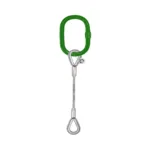
Single-leg chain slings are the simplest type of chain sling, consisting of a single length of chain with a hook or other attachment hardware at each end. They are designed for direct, vertical lifts.
- Applications: Single-leg chain slings are best suited for straight vertical lifts where the load’s center of gravity is directly below the lifting point. These are common in situations where a single, balanced load needs to be raised or lowered.
- Limitations: Single-leg slings are not ideal for unbalanced loads or lifts where the load’s center of gravity is not directly below the lifting point. Using a single-leg sling in these situations can cause the load to swing or tip, creating a safety hazard.
- Safety Precautions: When using a single-leg sling, it’s essential to ensure proper hook engagement to prevent the load from slipping. The hook should be fully engaged and the load should be stable before lifting.
Multi-Leg Chain Slings: Stability and Versatility
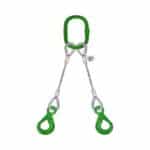
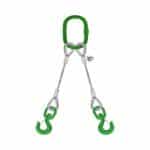
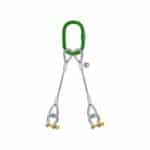
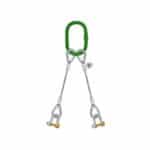
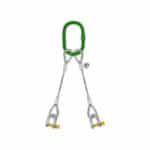
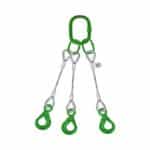
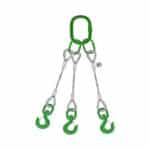
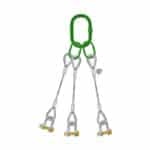
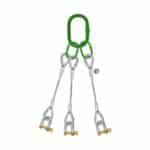
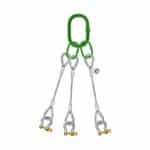
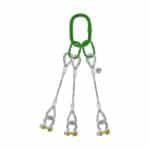
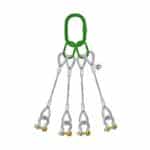
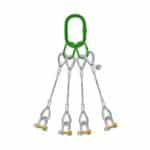
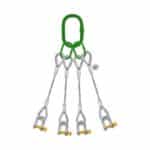
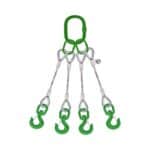
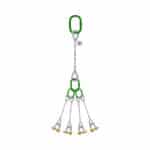
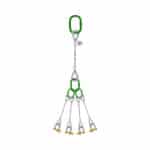
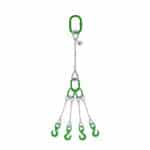
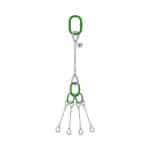
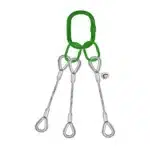
Multi-leg chain slings consist of two, three, or four legs of chain connected to a master link. They are designed to distribute the weight of the load across multiple points, providing greater stability and versatility.
- Applications: Multi-leg chain slings are ideal for lifting loads with multiple lifting points or loads where the weight needs to be distributed evenly. They are commonly used in construction, manufacturing, and rigging applications.
- Types: Multi-leg slings are available in 2-leg, 3-leg, and 4-leg configurations. The choice of configuration depends on the number of lifting points and the desired level of stability. We once had a client who was struggling to lift an oddly shaped machine. They switched to a 4-leg sling, and the stability issues vanished!
- Angle Considerations: The angle between the legs of a multi-leg sling significantly affects its lifting capacity. As the angle increases, the effective WLL decreases. It’s crucial to calculate the effect of the sling angle on capacity to ensure the sling is not overloaded.
Critical Hardware Components: Hooks, Links, and Adjusters
The hardware components of a chain sling, including hooks, links, and adjusters, are critical for its safe and reliable operation. Selecting the right hardware and ensuring its proper condition are essential for preventing accidents.
Selecting the Right Hooks: Essential Safety Features
Hooks are a critical component of any chain sling, providing the point of attachment to the load. Selecting the right type of hook and ensuring it has the necessary safety features are crucial for preventing load slippage and accidents.
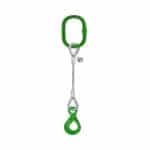
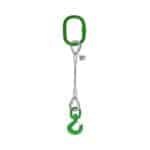
- Types of Hooks: There are several types of hooks commonly used in chain slings, including grab hooks, sling hooks, and self-locking hooks. Grab hooks are used to shorten the chain length, while sling hooks are designed for direct attachment to the load. Self-locking hooks have a locking mechanism that prevents accidental disengagement.
- Safety Latches: Safety latches are an essential safety feature on hooks, preventing the load from slipping off the hook during lifting. The latch should be in good working condition and properly engaged before lifting.
- Inspection Criteria: Hooks should be inspected regularly for signs of wear, damage, or deformation. Any hook that is bent, cracked, or shows excessive wear should be removed from service immediately.
Master Links and Connecting Links: The Foundation of the Sling
Master links and connecting links are the foundation of a chain sling, providing the connection point for the chain legs and hardware. Selecting the right size and material is crucial for ensuring the sling’s overall strength and integrity.
- Sizing: The master link and connecting links should be sized appropriately for the chain and hardware being used. The link should be large enough to accommodate the chain and hardware without causing undue stress or binding.
- Material: The master link and connecting links should be made from a material that is compatible with the chain grade. Using a lower-grade link with a high-grade chain can compromise the sling’s overall strength.
- Proper Assembly: The master link and connecting links must be properly assembled to avoid weak points in the sling. Ensure that all connections are secure and that there are no gaps or misalignments.
Chain Shortening Clutches and Adjusters: Optimizing Sling Length
Chain shortening clutches and adjusters are used to adjust the length of the chain sling, allowing for flexibility in different lifting applications. These devices must be properly selected and used to maintain the sling’s WLL.
- Functionality: Chain shortening clutches and adjusters allow the user to shorten the length of one or more legs of the chain sling. This is useful for adjusting the sling to fit different load sizes and shapes, or for leveling an unbalanced load.
- Types: There are two main types of chain shortening clutches and adjusters: mechanical and manual. Mechanical adjusters use a ratchet mechanism to shorten the chain, while manual adjusters require the user to manually adjust the chain length.
- Safety Considerations: When using chain shortening clutches and adjusters, it’s crucial to ensure that the WLL of the sling is not exceeded. Shortening the chain can change the sling angle, which can reduce the effective WLL.
Calculating Lifting Capacity: Sling Angle is Key
Calculating the lifting capacity of a chain sling involves understanding the impact of sling angle on the WLL. As the sling angle increases, the effective WLL decreases. Proper calculation is essential for ensuring safe lifting operations.
Understanding Sling Angle: The Impact on WLL
The sling angle is the angle between the horizontal plane and the sling leg. As the sling angle increases, the force on each leg of the sling increases, reducing the sling’s effective WLL. This is a critical concept to understand for safe lifting.
- Calculating Reduced Capacity: The reduction in lifting capacity due to sling angle can be calculated using trigonometric formulas. The formula is: Effective WLL = Sling WLL x Cosine (Sling Angle). For example, at a 60-degree angle, the effective WLL is reduced to 50% of the sling’s rated WLL.
- Safe Angle Limits: It’s crucial to stay within recommended angle ranges to ensure safe lifting. The maximum recommended sling angle is typically 60 degrees. Exceeding this angle can significantly reduce the sling’s lifting capacity and increase the risk of failure.
- Using Load Charts: Load charts provide a visual aid for determining the safe lifting capacity of a chain sling at different sling angles. These charts typically show the reduced WLL as a function of the sling angle.
Factors Affecting Capacity: Beyond Sling Angle
While sling angle is a primary factor affecting lifting capacity, other factors can also impact the sling’s ability to safely lift a load. These factors include dynamic loading, load distribution, and environmental factors.
- Dynamic Loading: Dynamic loading refers to sudden jerks, impacts, or rapid acceleration of the load. These dynamic forces can significantly increase the stress on the chain sling, potentially exceeding its WLL. Avoid sudden movements and ensure smooth, controlled lifting.
- Load Distribution: Ensure that the load is evenly distributed across all legs of the chain sling. Uneven load distribution can overload one or more legs, leading to premature failure. Use spreader bars or other load-equalizing devices to ensure even distribution.
- Environmental Factors: Temperature, corrosion, and wear can all affect the lifting capacity of a chain sling. Extreme temperatures can reduce the strength of the chain, while corrosion and wear can weaken the links. Regularly inspect the sling for signs of damage and remove it from service if necessary.
Chain Sling Inspection: A Proactive Approach to Safety
Regular inspection of chain slings is a proactive approach to safety, allowing for early detection of potential problems before they lead to accidents. Inspections should be conducted before each use and periodically, based on usage frequency and environmental conditions.
Pre-Use Inspection Checklist: Catching Problems Early
A pre-use inspection should be conducted before each use of a chain sling to identify any obvious signs of damage or wear. This simple check can prevent accidents and extend the life of the sling.
- Chain Wear and Elongation: Measure the chain for signs of wear and elongation. Excessive wear can reduce the chain’s strength, while elongation indicates that the chain has been overloaded or damaged.
- Link Deformities: Inspect each link for signs of bending, twisting, or cracking. Any deformed links should be cause for concern and the sling should be removed from service.
- Hook and Latch Integrity: Ensure that the hooks are not bent, cracked, or worn, and that the safety latches are functioning properly. A damaged hook or latch can allow the load to slip, leading to an accident.
Periodic Inspections: A Scheduled Maintenance Plan
Periodic inspections should be conducted on a scheduled basis, based on the frequency of use and the severity of the operating environment. These inspections should be more thorough than pre-use inspections and should be documented.
- Frequency: The frequency of periodic inspections depends on several factors, including the frequency of use, the severity of the operating environment, and any applicable regulations. A good starting point is to conduct periodic inspections every three months, but this may need to be adjusted based on experience.
- Documentation: Keep detailed records of all inspections, including the date of the inspection, the name of the inspector, the condition of the sling, and any repairs or replacements that were made. This documentation can be valuable for tracking the sling’s performance and identifying potential problems.
- Removal Criteria: Establish clear criteria for removing a sling from service. This should include specific measurements for wear, elongation, and deformation, as well as any signs of cracking or corrosion. A sling that meets any of these criteria should be removed from service immediately.
Legal and Regulatory Compliance: Staying Within the Rules
Compliance with legal and regulatory standards is essential for ensuring the safety of lifting operations and avoiding potential penalties. OSHA and ASME are two key organizations that set standards for chain sling use.
OSHA Standards for Chain Slings: Meeting Federal Requirements
OSHA (Occupational Safety and Health Administration) sets federal regulations for the safe use of chain slings in the workplace. Compliance with these regulations is mandatory for all employers.
- Specific Regulations: OSHA has specific regulations for chain slings, covering topics such as WLL, inspection, and training. These regulations are designed to protect workers from hazards associated with lifting operations.
- Training Requirements: OSHA requires that all personnel who use chain slings be properly trained in their safe use. This training should cover topics such as sling selection, inspection, rigging techniques, and hazard identification.
- Record Keeping: OSHA requires employers to maintain records of all inspections, repairs, and training related to chain slings. These records must be made available to OSHA inspectors upon request.
ASME Standards: Industry Best Practices
ASME (American Society of Mechanical Engineers) develops industry consensus standards for the design, construction, and use of chain slings. While compliance with ASME standards is not mandatory, it is widely considered to be a best practice.
- ASME B30.9: ASME B30.9 is the standard for slings, covering topics such as design, construction, inspection, and use. This standard provides detailed guidance on all aspects of chain sling safety.
- Material Certification: ASME standards require that all chain and hardware used in chain slings be certified to meet specific material and performance requirements. This certification ensures that the sling is made from high-quality materials and is capable of safely lifting the intended load.
- Staying Updated: ASME standards are periodically revised to reflect the latest technological advancements and safety practices. It’s essential to stay updated with the latest revisions to ensure that your chain sling program is in compliance with industry best practices.
> “Always prioritize safety when working with chain slings. Regular inspections and adherence to industry standards are paramount.” – John Smith, Lead Safety Inspector
Troubleshooting Common Chain Sling Problems
Despite best practices, problems can arise with chain slings. Knowing how to troubleshoot common issues can prevent minor problems from escalating into major safety hazards.
Chain Damage: Identification and Solutions
Chain damage is a common issue that can compromise the integrity of a chain sling. Identifying the causes of damage and implementing appropriate solutions is crucial for maintaining safety.
- Causes of Damage: Common causes of chain damage include overloading, misuse, corrosion, and improper storage. Overloading can stretch or break the chain, while misuse can cause bending or twisting. Corrosion can weaken the chain over time, and improper storage can lead to rust and other damage.
- Repair Options: In some cases, chain damage can be repaired. However, repair should only be performed by qualified personnel using approved methods. In many cases, it’s safer and more cost-effective to replace the damaged chain.
- Prevention Strategies: Implement strategies to prevent chain damage, such as providing proper training to personnel, establishing clear WLL limits, and storing slings in a dry, protected environment.
Hardware Issues: Resolving Problems with Hooks and Links
Hardware issues, such as bent hooks and damaged links, can also compromise the safety of a chain sling. Addressing these issues promptly is essential.
- Bent Hooks: Bent hooks are a common sign of overloading or misuse. If a hook is bent, it should be removed from service immediately. Attempting to straighten a bent hook can weaken the metal and make it more likely to fail.
- Damaged Links: Damaged links, such as cracked or deformed links, can also compromise the integrity of the chain. These links should be replaced by qualified personnel using approved methods.
- Replacement Procedures: When replacing hooks or links, it’s essential to use the correct replacement hardware. The replacement hardware should be of the same grade and size as the original hardware, and it should be properly installed.
Sling Angle Problems: Correcting Incorrect Configurations
Incorrect sling angles can significantly reduce the lifting capacity of a chain sling and increase the risk of failure. Correcting these configurations is crucial for ensuring safe lifting operations.
- Identifying Incorrect Angles: Incorrect sling angles can be identified by measuring the angle between the sling legs and the horizontal plane. If the angle exceeds the recommended limit (typically 60 degrees), the sling configuration is incorrect.
- Solutions: Several solutions can be used to correct incorrect sling angles, such as using longer slings, spreader bars, or adjusting the lifting points. Longer slings will reduce the sling angle, while spreader bars will keep the sling legs vertical.
- Training: Provide training to personnel on proper sling angle techniques. This training should cover the importance of maintaining safe sling angles and the methods for correcting incorrect configurations.
Conclusion
Selecting the right chain sling lifting involves careful consideration of load weight, lift configuration, environmental conditions, sling grade, and hardware components. Regular inspections, adherence to legal and regulatory standards, and prompt troubleshooting of common problems are essential for ensuring safe and efficient lifting operations. By following the guidelines outlined in this guide, you can confidently choose the right chain sling for your specific needs and promote a safe working environment. At SSTC, we’re committed to providing our clients with the knowledge and resources they need to make informed decisions about their lifting equipment. Let us assist you in optimizing your lifting operations for safety and efficiency.
FAQ Section
Q: What is the most important factor to consider when choosing a chain sling?
A: The most important factor is the Working Load Limit (WLL) of the sling. It must always exceed the weight of the load being lifted. Also, the sling angle must be taken into consideration, as it affects the sling’s effective WLL.
Q: How often should chain slings be inspected?
A: Chain slings should be inspected before each use and periodically, based on the frequency of use and the severity of the operating environment. A good starting point is to conduct periodic inspections every three months, but this may need to be adjusted based on experience.
Q: What are the different grades of chain slings, and which one should I choose?
A: The common grades are Grade 80, Grade 100, and Grade 120. Grade 80 is a common choice for general-purpose lifting, Grade 100 offers enhanced performance for heavier lifting, and Grade 120 is the newest and strongest, designed for specialized lifting scenarios. The choice depends on the specific lifting requirements and budget.
Q: What is the maximum recommended sling angle?
A: The maximum recommended sling angle is typically 60 degrees. Exceeding this angle can significantly reduce the sling’s lifting capacity and increase the risk of failure.
Q: Can chain slings be repaired?
A: In some cases, chain damage can be repaired, but repair should only be performed by qualified personnel using approved methods. In many cases, it’s safer and more cost-effective to replace the damaged chain.
Q: What are the OSHA requirements for chain slings?
A: OSHA has specific regulations for chain slings, covering topics such as WLL, inspection, and training. These regulations are designed to protect workers from hazards associated with lifting operations. Employers must also maintain records of inspections, repairs, and training.
Q: How does sling angle affect lifting capacity?
A: As the sling angle increases, the force on each leg of the sling increases, reducing the sling’s effective WLL. The reduction in lifting capacity can be calculated using trigonometric formulas. It’s crucial to stay within recommended angle ranges to ensure safe lifting.
Q: What should I do if I find a damaged link on a chain sling?
A: If you find a damaged link on a chain sling, the sling should be removed from service immediately. The damaged link should be replaced by qualified personnel using approved methods. Never attempt to use a chain sling with a damaged link.
Q: Are there specific chain sling types for overhead lifting?
A: Yes, chain slings used for overhead lifting must meet specific safety standards and be appropriately rated for the load. Always ensure the chain sling is certified for overhead lifting applications.
Q: How does temperature affect chain sling lifting?
A: Extreme temperatures can affect the strength and integrity of chain slings. High temperatures can reduce the tensile strength of the chain, while low temperatures can make it more brittle. Always consult the manufacturer’s specifications for temperature limitations.