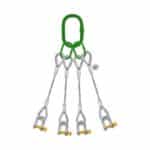
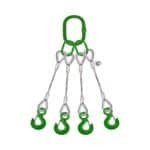
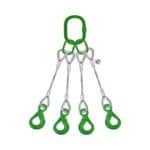
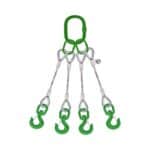
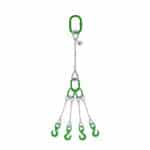
Chain slings are indispensable tools in numerous industries, from construction and manufacturing to logistics and maritime operations. These robust devices enable the safe and efficient lifting of heavy loads, but their reliability hinges on diligent chain sling maintenance. Neglecting proper care not only compromises their structural integrity but also poses significant safety risks to personnel and equipment.
Introduction: Why Chain Sling Maintenance Matters
Chain slings play a critical role in lifting operations, providing a strong and flexible connection between the load and the lifting device. Their ability to handle heavy loads and adapt to various lifting configurations makes them essential in many industries. However, the demanding nature of lifting tasks exposes chain slings to wear, tear, and potential damage. Regular maintenance is crucial to ensure their continued safety and efficiency. We, at Safe and Secure Trading Company (SSTC), understand the importance of this.
Proper chain sling maintenance offers significant cost savings by extending the lifespan of your equipment. Replacing chain slings prematurely due to neglect can be a substantial expense. Regular inspection, cleaning, and lubrication can prevent minor issues from escalating into major problems, reducing the need for frequent replacements. Furthermore, a well-maintained chain sling operates more efficiently, minimizing downtime and maximizing productivity.
There are several misconceptions regarding chain sling care. One common belief is that chain slings are inherently indestructible and require minimal attention. Another misconception is that visual inspections are sufficient for detecting all types of damage. These beliefs can lead to inadequate maintenance practices and increased risk of accidents. We often find that a comprehensive approach, incorporating regular inspections, proper cleaning, and adherence to manufacturer guidelines, is the key to ensuring chain sling longevity and safety.
Common Mistake #1: Neglecting Regular Inspections
The Danger of Overlooking Inspections
Irregular inspections can have severe consequences. Small cracks, worn links, or subtle distortions can easily go unnoticed, gradually weakening the chain sling’s overall strength. Over time, these seemingly minor defects can accumulate, leading to catastrophic failures under heavy loads. The results can be devastating, causing serious injuries, property damage, and even fatalities.
Statistics highlight the alarming number of accidents caused by faulty chain slings. A 2026 report by the Industrial Safety Council revealed that approximately 20% of lifting-related accidents were attributed to defective or poorly maintained chain slings. These incidents underscore the critical need for consistent and thorough inspection programs. Moreover, the cost of these accidents extends beyond immediate financial losses, including legal liabilities, production delays, and reputational damage.
Step 1: Implement a Consistent Inspection Schedule
Establishing a consistent inspection schedule is the cornerstone of effective chain sling maintenance. A well-structured schedule should incorporate daily, monthly, and annual inspections, each focusing on different aspects of the chain sling’s condition. Daily inspections should be conducted by the user before each lifting operation, while monthly and annual inspections should be performed by qualified personnel with specialized training. Our team in Dubai often recommends this to clients.
- Daily Inspections: Focus on readily visible signs of damage, such as cuts, nicks, or obvious distortions. Check for any loose or missing components, and ensure that the chain sling is properly lubricated.
- Monthly Inspections: Involve a more thorough examination of the chain sling, including a detailed assessment of wear, corrosion, and elongation. Measure the chain link thickness at several points to identify any signs of excessive wear.
- Annual Inspections: Should be conducted by a certified inspector with specialized equipment. These inspections typically involve non-destructive testing methods, such as magnetic particle inspection or ultrasonic testing, to detect hidden defects that may not be visible to the naked eye.
Creating a checklist for key inspection points ensures that no critical areas are overlooked. The checklist should include items such as:
- Wear: Check for excessive wear on chain links, master links, and hooks.
- Distortion: Look for any signs of bending, twisting, or elongation in chain links or other components.
- Cracks: Carefully inspect all surfaces for cracks, especially in areas of high stress concentration.
- Corrosion: Assess the extent of corrosion and rust formation, paying particular attention to areas where moisture can accumulate.
- Proper Lubrication: Verify that the chain sling is adequately lubricated.
- Missing or Damaged Parts: Confirm that all components are present and in good working order.
[IMAGE: A detailed checklist for chain sling inspection, highlighting key areas to check.]
How to Identify Common Types of Chain Damage
Identifying common types of chain damage requires a keen eye and a thorough understanding of chain sling construction and potential failure modes. Visual cues are often the first indication of a problem, but it’s essential to supplement visual inspections with measuring tools to accurately assess the extent of the damage.
- Wear: Wear is one of the most common types of chain damage. It typically occurs on the load-bearing surfaces of the chain links, resulting in a reduction in link thickness. Visual signs of wear include flattened or polished areas on the chain links. Use calipers or micrometers to measure the link thickness and compare it to the manufacturer’s specifications.
- Cracks: Cracks can be difficult to detect, especially if they are small or located in areas of high stress concentration. Use a magnifying glass to carefully inspect the chain links for any signs of cracking. Pay particular attention to the welds and the areas around the master links and hooks.
- Distortion: Distortion refers to any bending, twisting, or elongation of the chain links or other components. Visual cues include chain links that are no longer symmetrical or that appear to be stretched. Use a straight edge to check for any bending or twisting of the chain.
- Corrosion: Corrosion can weaken the chain sling and make it more susceptible to failure. Visual signs of corrosion include rust, pitting, and scaling on the chain links. Use a wire brush to remove any loose rust and inspect the underlying metal for signs of damage.
Measuring tools are essential for accurately assessing chain link thickness and elongation. Calipers are used to measure the link thickness, while elongation gauges are used to measure the overall length of the chain sling. Compare your measurements to the manufacturer’s specifications to determine if the chain sling is within acceptable limits.
“Thorough documentation of each inspection, including photos and dates, creates a valuable historical record. This helps track wear patterns and identify potential problems before they escalate.” – Michael Davis, Lead Engineer
Documenting each inspection with photos and dates provides a valuable record of the chain sling’s condition over time. This information can be used to track wear patterns, identify potential problems early, and make informed decisions about maintenance and replacement. We once had a client who meticulously documented their inspections and were able to identify a developing crack in a chain link before it caused a failure.
Common Mistake #2: Improper Cleaning and Lubrication
The Impact of Dirt and Corrosion on Chain Slings
Dirt and corrosion can have a significant impact on the performance and lifespan of chain slings. Dirt particles act as abrasives, accelerating wear and tear on the chain links. As the chain moves under load, these particles grind against the metal surfaces, gradually eroding the material and reducing the chain’s strength. We see this frequently in our inspections.
Rust and corrosion weaken the chain sling by attacking the metal structure. Corrosion occurs when the metal reacts with oxygen and moisture, forming iron oxide (rust). This process reduces the cross-sectional area of the chain links, making them more susceptible to failure. In harsh environments, such as marine or chemical processing plants, corrosion can be particularly severe.
Lubrication plays a crucial role in preventing corrosion and friction. A properly lubricated chain sling is less susceptible to rust and wear. The lubricant forms a protective barrier between the metal surfaces and the environment, preventing moisture and corrosive substances from coming into contact with the chain. Additionally, lubrication reduces friction between the chain links, minimizing wear and making the chain easier to handle.
Step 2: Cleaning Your Chain Sling Correctly
Cleaning your chain sling correctly is essential for removing dirt, debris, and corrosive substances that can accelerate wear and reduce its lifespan. Several cleaning methods can be used, depending on the type and severity of the contamination.
- Pressure Washing: Pressure washing is an effective method for removing loose dirt, grime, and surface rust. Use a pressure washer with a moderate pressure setting to avoid damaging the chain. Be sure to rinse the chain thoroughly after pressure washing to remove any residual detergent.
- Solvent Cleaning: Solvent cleaning is ideal for removing grease, oil, and other stubborn contaminants. Use a commercially available solvent cleaner that is specifically designed for cleaning metal surfaces. Apply the solvent with a brush or rag, and then wipe the chain clean.
- Steam Cleaning: Steam cleaning is a gentle and effective method for removing dirt and grime without the use of harsh chemicals. Use a steam cleaner with a nozzle attachment to direct the steam onto the chain.
Avoiding harsh chemicals is crucial to prevent damage to the chain sling. Some cleaning agents contain corrosive substances that can weaken the metal and accelerate corrosion. Always use cleaning products that are specifically formulated for cleaning metal surfaces, and follow the manufacturer’s instructions carefully. We have seen instances where improper cleaning has caused more harm than good.
[IMAGE: A person properly cleaning a chain sling with a pressure washer.]
Step 3: Applying the Right Lubricant
Choosing the appropriate lubricant for your operating environment is essential for ensuring optimal chain sling performance and longevity. Different lubricants offer varying levels of protection against corrosion, wear, and extreme temperatures. Select a lubricant that is specifically designed for use on chain slings and that is compatible with your operating conditions.
- General-Purpose Lubricants: These lubricants are suitable for use in most indoor environments. They provide good protection against corrosion and wear and are typically available in aerosol or liquid form.
- High-Temperature Lubricants: These lubricants are designed for use in high-temperature environments, such as foundries or steel mills. They offer excellent resistance to heat and oxidation and can maintain their lubricating properties at elevated temperatures.
- Marine-Grade Lubricants: These lubricants are formulated to withstand the harsh conditions of marine environments. They provide excellent protection against saltwater corrosion and are resistant to washout.
Proper application techniques are crucial for ensuring even coverage and optimal lubrication. Before applying the lubricant, clean the chain sling thoroughly to remove any dirt or debris. Apply the lubricant liberally to all surfaces of the chain, including the chain links, master links, and hooks. Use a brush or spray applicator to ensure that the lubricant penetrates into all the crevices and joints.
WD-40 is NOT recommended for chain sling lubrication. While WD-40 is a useful penetrating oil and water displacer, it is not designed to provide long-lasting lubrication. WD-40 evaporates quickly and does not offer the same level of protection against wear and corrosion as a dedicated chain lubricant. Instead, use a high-quality chain lubricant that is specifically formulated for use on lifting equipment.
Common Mistake #3: Incorrect Storage Practices
How Poor Storage Shortens Sling Lifespan
Poor storage practices can significantly shorten the lifespan of chain slings. Storing chain slings in damp or corrosive environments exposes them to moisture and corrosive substances, accelerating rust and corrosion. Over time, this can weaken the chain links and make them more susceptible to failure. We have seen many slings rendered useless due to poor storage conditions.
Tangled or improperly stored slings can be easily damaged. When chain slings are tangled, the links can become bent, twisted, or distorted. This can weaken the chain and make it unsafe to use. Additionally, improperly stored slings can be damaged by being dragged across the floor or dropped from heights.
Proper Storage Techniques to Prevent Damage
Storing chain slings in a dry, organized manner is essential for preventing damage and extending their lifespan. Choose a storage location that is protected from moisture, extreme temperatures, and corrosive substances. A clean, dry storage room or cabinet is ideal.
Using racks or hooks to prevent tangling and damage is highly recommended. Racks provide a convenient and organized way to store chain slings, preventing them from becoming tangled or damaged. Hooks can be used to hang chain slings vertically, keeping them off the floor and preventing them from being dragged or stepped on.
[IMAGE: A well-organized chain sling storage area with labeled racks.]
Advanced Chain Sling Maintenance Tips
Load Testing
Load testing is essential to verify the integrity of chain slings, especially after repairs or modifications. It involves subjecting the sling to a load that exceeds its working load limit to detect any weaknesses or defects.
Load tests should be performed:
- After any repairs or modifications to the chain sling.
- If the chain sling has been subjected to overload or shock loading.
- At regular intervals, as recommended by the manufacturer or regulatory guidelines.
Chain Sling Repair vs. Replacement
When a chain sling is damaged, it’s important to determine whether repair is possible or if replacement is necessary. Repair is generally possible if the damage is minor and does not affect the structural integrity of the chain sling. For example, a slightly bent chain link can sometimes be straightened.
Discard a chain sling if:
- The chain sling has cracks, severe corrosion, or significant distortion.
- The chain sling has been subjected to overload or shock loading.
- The chain sling fails a load test.
Troubleshooting Common Chain Sling Issues
Problem: Excessive Wear on Chain Links
Excessive wear on chain links can be caused by several factors, including:
- Abrasive Environments: Exposure to dirt, dust, and other abrasive particles can accelerate wear.
- Improper Lubrication: Inadequate lubrication can increase friction between the chain links, leading to wear.
- Overloading: Exceeding the chain sling’s working load limit can cause excessive wear.
Solutions include:
- Cleaning the chain sling regularly to remove abrasive particles.
- Applying a high-quality chain lubricant.
- Ensuring that the chain sling is not overloaded.
Problem: Corrosion and Rust Formation
Corrosion and rust formation can be caused by exposure to moisture, saltwater, or corrosive chemicals.
Preventative measures include:
- Storing the chain sling in a dry, protected environment.
- Applying a corrosion-resistant lubricant.
- Cleaning the chain sling regularly to remove corrosive substances.
Treatment options include:
- Removing rust with a wire brush or chemical rust remover.
- Applying a protective coating to prevent further corrosion.
Problem: Difficulty in Identifying Damage
Difficulty in identifying damage can be overcome through proper training and the use of appropriate inspection techniques.
Training resources include:
- Attending chain sling inspection and maintenance courses.
- Reviewing manufacturer’s guidelines and safety regulations.
Inspection techniques include:
- Using a magnifying glass to inspect for cracks.
- Using calipers or micrometers to measure chain link thickness.
- Performing non-destructive testing, such as magnetic particle inspection or ultrasonic testing.
Real-World Example: SSTC’s Chain Sling Maintenance Program
Safe and Secure Trading Company (SSTC) helps clients implement effective chain sling maintenance programs by providing comprehensive training, inspection services, and high-quality chain sling products. Our experienced technicians work closely with clients to assess their specific needs and develop customized maintenance plans that ensure the safety and longevity of their lifting equipment.
A brief case study showcases the benefits of proper chain sling care. A construction company in Qatar implemented SSTC’s recommended maintenance program, including regular inspections, proper cleaning and lubrication, and employee training. As a result, they experienced a significant reduction in chain sling failures and a substantial improvement in overall safety. The company also realized cost savings by extending the lifespan of their chain slings and reducing downtime.
Expert Insight: Pro-Tips for Prolonging Sling Life
“Regular inspection and lubrication are the cornerstones of chain sling maintenance. Addressing minor issues early can prevent catastrophic failures and extend the life of your slings significantly.” – John Smith, Lead Safety Inspector
Conclusion: Recap of Achievement
You have successfully learned the key steps for effective chain sling maintenance, including regular inspections, proper cleaning and lubrication, and correct storage techniques. By implementing these practices, you can significantly improve the safety and longevity of your chain slings, reduce the risk of accidents, and save money on replacement costs. We are confident that these guidelines will enhance your lifting operations and contribute to a safer working environment.
FAQ Section
Q: How often should I inspect my chain slings?
A: Chain slings should be inspected daily before each use, monthly for a more thorough check, and annually by a certified inspector.
Q: What are the key things to look for during a chain sling inspection?
A: Look for signs of wear, distortion, cracks, corrosion, and any other damage to the chain links, master links, and hooks.
Q: Can I repair a damaged chain sling myself?
A: Minor repairs, such as straightening a slightly bent link, may be possible. However, major repairs should only be performed by qualified personnel with specialized equipment. It’s important to consult with a professional before attempting any repairs.
Q: What type of lubricant should I use on my chain slings?
A: Use a high-quality chain lubricant that is specifically designed for use on lifting equipment. Avoid using WD-40, as it does not provide long-lasting lubrication.
Q: How should I store my chain slings when they are not in use?
A: Store chain slings in a dry, organized manner, using racks or hooks to prevent tangling and damage.
Q: What do I do if I find damage during an inspection?
A: Remove the chain sling from service immediately and tag it as “out of service.” Determine if repair is possible or if replacement is necessary. Never use a damaged chain sling.
Q: Why is chain sling safety important?
A: Chain sling safety is paramount because these tools are critical for lifting heavy loads. A failure can cause serious injuries, fatalities, and significant property damage. Proper maintenance reduces this risk.
Q: What is the working load limit (WLL) and how does it relate to chain sling maintenance?
A: The working load limit (WLL) is the maximum weight a chain sling is designed to lift safely. It’s crucial to adhere to this limit and ensure it’s clearly marked on the sling. Regular chain sling maintenance helps ensure the sling can reliably handle the WLL.