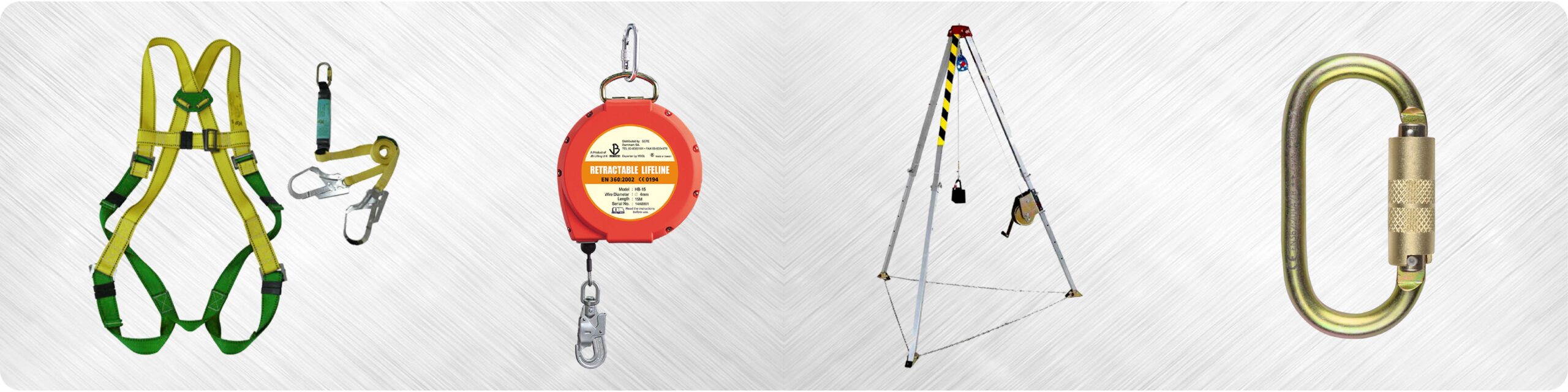
Fall Protection: A Lifeline
Falls are a leading cause of workplace injuries and fatalities, making fall protection safety a critical concern for employers and employees alike. Effective fall protection isn’t just about compliance; it’s about safeguarding lives and ensuring workers return home safely each day. At Safe and Secure Trading Company (SSTC), we understand the gravity of this issue and are dedicated to providing comprehensive solutions and guidance. Our team in Dubai frequently encounters situations where robust fall protection measures are the difference between a safe worksite and a potential tragedy.
Understanding the Gravity of Fall Hazards
The Stark Reality of Fall-Related Injuries and Fatalities
Falls can result in a range of injuries, from minor sprains and fractures to severe head trauma and even death. The human body is simply not designed to withstand the impact of a fall from even a moderate height. Statistics paint a grim picture: falls consistently rank among the top causes of workplace fatalities in various industries. The financial and emotional toll on families and businesses is immeasurable. These accidents are often preventable with the right fall protection safety measures in place.
Falls are devastating. According to the 2026 data from the Bureau of Labor Statistics, falls continue to be a leading cause of construction worker fatalities. This highlights the urgent need for comprehensive fall protection strategies. Implementing effective safety measures is not just a regulatory requirement; it’s a moral imperative.
Identifying High-Risk Work Environments: A Comprehensive Overview
Certain work environments inherently present a higher risk of falls. Construction sites, with their constantly changing landscapes and elevated platforms, are prime examples. Other high-risk areas include:
- Scaffolding: Workers on scaffolding are constantly exposed to fall hazards.
- Roofs: Roofing work is inherently dangerous due to the height and pitch of the surfaces.
- Ladders: Improper ladder use is a common cause of falls.
- Elevated Platforms: Any work performed on elevated platforms, such as those used in warehouses or factories, requires fall protection.
- Open Excavations: Edges of excavations pose a significant fall risk.
- Confined Spaces: While not always elevated, confined spaces can present unique fall hazards due to the potential for slips and trips.
Identifying these high-risk areas is the first step in implementing effective fall protection measures. A thorough risk assessment should be conducted to determine the specific hazards present in each environment.
Establishing a Proactive Fall Protection Program: The Foundation of Safety
A proactive fall protection program is the cornerstone of a safe work environment. This program should encompass all aspects of fall protection, from hazard identification and risk assessment to training, equipment selection, and emergency response. A well-designed program will not only comply with OSHA fall protection standards but also foster a culture of safety among workers.
A key component of a successful fall protection plan is regular review and updates. As work environments change and new technologies emerge, the program should be adapted accordingly. Employee involvement is also crucial. Workers should be encouraged to report hazards and provide feedback on the effectiveness of the program. “We’ve seen the most effective programs are those where workers feel empowered to contribute to the safety process,” says John Smith, Lead Safety Inspector.
Deciphering OSHA’s Fall Protection Standards: A Regulatory Deep Dive
Navigating 29 CFR 1926 Subpart M: Key Requirements Explained
OSHA’s 29 CFR 1926 Subpart M provides specific requirements for fall protection in the construction industry. This regulation outlines the types of fall protection required for various work activities, as well as the performance criteria for fall protection equipment. Understanding these requirements is essential for ensuring compliance and protecting workers from fall hazards.
Subpart M covers a wide range of topics, including:
- Unprotected sides and edges: Requires fall protection when employees are exposed to unprotected sides and edges of a walking-working surface that is 6 feet or more above a lower level.
- Holes: Mandates fall protection around holes in walking-working surfaces.
- Hoist areas: Specifies fall protection requirements for employees working in hoist areas.
- Overhand bricklaying and related work: Addresses fall protection for workers performing overhand bricklaying.
- Roofing work: Provides specific requirements for fall protection during roofing operations.
Compliance with Subpart M is not optional. Employers who fail to comply can face significant fines and penalties. More importantly, non-compliance puts workers at risk of serious injury or death.
Employer Responsibilities: Hazard Assessment, Training, and Equipment Provision
Employers have a fundamental responsibility to protect their employees from workplace hazards, including falls. This responsibility encompasses several key areas:
- Hazard Assessment: Conducting a thorough hazard assessment to identify potential fall hazards in the workplace.
- Training: Providing comprehensive fall protection training to all employees who may be exposed to fall hazards.
- Equipment Provision: Providing appropriate fall protection equipment, such as safety harnesses, lanyards, and anchorage connectors.
- Equipment Inspection: Ensuring that all fall protection equipment is inspected regularly to ensure it is in good working condition.
- Enforcement: Enforcing fall protection policies and procedures to ensure that workers are using fall protection equipment properly.
Employers should also create a culture of safety in the workplace. This means encouraging workers to report hazards, providing them with the resources they need to work safely, and recognizing and rewarding safe behavior.
Understanding Permissible Exposure Limits (PELs) and Their Significance
Permissible Exposure Limits (PELs) are legal limits set by OSHA on the amount of certain substances or hazards that workers can be exposed to in the workplace. While PELs are more commonly associated with chemical exposures, they can also be relevant to fall protection safety. For example, working at heights can increase the risk of exposure to environmental hazards such as extreme temperatures or high winds. These factors can impact a worker’s ability to maintain balance and control, increasing the risk of a fall.
It’s important to consider the environmental conditions when assessing fall hazards and implementing fall protection measures. Workers should be trained to recognize the signs of heat stress or hypothermia and take appropriate precautions. In some cases, it may be necessary to suspend work activities if environmental conditions become too hazardous.
Engineering Controls: Building a Safer Environment from the Ground Up
Guardrail Systems: Design Specifications and Best Practices
Guardrail systems are a common and effective form of fall protection. They provide a physical barrier that prevents workers from falling from elevated surfaces. OSHA specifies detailed requirements for the design and construction of guardrail systems, including:
- Height: Toprails must be 42 inches (plus or minus 3 inches) above the walking-working surface.
- Midrails: Midrails must be installed midway between the toprail and the walking-working surface.
- Strength: Guardrail systems must be capable of withstanding a force of at least 200 pounds applied in a downward or outward direction within 2 inches of the top edge.
Proper installation and maintenance of guardrail systems are essential for ensuring their effectiveness. Guardrails should be inspected regularly for damage or deterioration. Any damaged or missing components should be replaced immediately.
Safety Net Systems: Proper Installation and Maintenance Protocols
Safety net systems are another effective form of fall protection, particularly in situations where guardrails are not feasible. Safety nets are designed to catch workers in the event of a fall, minimizing the risk of serious injury. OSHA provides specific requirements for the design, installation, and maintenance of safety net systems, including:
- Proximity: Safety nets must be installed as close as practicable to the walking-working surface, but never more than 30 feet below.
- Strength: Safety nets must be capable of withstanding the impact of a drop test with a 400-pound bag of sand.
- Inspection: Safety nets must be inspected regularly for damage or deterioration.
Proper installation is critical for the effectiveness of safety net systems. The net must be properly anchored and tensioned to ensure it can catch a falling worker. Regular inspections are also essential to identify any damage or deterioration that could compromise the net’s ability to perform its function.
Controlled Access Zones (CAZ): Implementing Effective Restrictions
Controlled Access Zones (CAZ) are designated areas where certain work activities are restricted to authorized personnel. CAZs are often used in situations where fall protection is not feasible or practical, such as during leading edge work or precast concrete erection. The purpose of a CAZ is to limit the number of workers exposed to fall hazards and to ensure that those workers are properly trained and equipped.
Implementing a CAZ involves several key steps:
- Identification: Clearly identify the boundaries of the CAZ using ropes, tapes, or other physical barriers.
- Authorization: Restrict access to the CAZ to authorized personnel only.
- Training: Ensure that all workers authorized to enter the CAZ are properly trained in fall protection procedures.
- Supervision: Provide adequate supervision to ensure that workers within the CAZ are following safe work practices.
CAZs are not a substitute for other forms of fall protection. They should be used in conjunction with other measures, such as personal fall arrest systems, whenever possible.
Personal Fall Arrest Systems (PFAS): Your Personal Lifeline
Harness Selection: Ensuring Proper Fit and Functionality
A personal fall arrest system (PFAS) is a critical piece of fall protection equipment. It is designed to protect workers from serious injury or death in the event of a fall. A PFAS consists of three main components:
- Harness: A full-body harness is used to distribute the impact forces of a fall across the worker’s body.
- Lanyard or Lifeline: A lanyard or lifeline connects the harness to an anchorage point.
- Anchorage Connector: An anchorage connector provides a secure point of attachment for the lanyard or lifeline.
Selecting the right harness is essential for ensuring proper fit and functionality. Harnesses come in a variety of sizes and styles to accommodate different body types and work environments. A properly fitted harness should be snug but not too tight, and it should allow the worker to move freely.
Lanyard and Lifeline Considerations: Choosing the Right Equipment for the Job
Lanyards and lifelines are the connecting links between the harness and the anchorage point. They are designed to absorb the energy of a fall and reduce the impact forces on the worker’s body. There are several types of lanyards and lifelines available, each with its own advantages and disadvantages.
- Shock-absorbing lanyards: These lanyards are designed to gradually decelerate a falling worker, reducing the impact forces on the body.
- Self-retracting lifelines (SRLs): SRLs provide a greater range of motion than lanyards and are ideal for situations where workers need to move frequently.
- Vertical lifelines: Vertical lifelines are used for climbing and descending structures.
Choosing the right lanyard or lifeline depends on the specific work environment and the type of fall hazard present. Factors to consider include the fall distance, the swing fall hazard, and the worker’s mobility requirements.
Anchorage Points: Identifying and Inspecting Secure Attachment Options
The anchorage point is the secure point of attachment for the lanyard or lifeline. It is the most critical component of a PFAS, as it must be strong enough to withstand the forces generated during a fall. OSHA requires that anchorage points be capable of supporting at least 5,000 pounds per worker attached.
Identifying and inspecting secure anchorage points is essential for ensuring the effectiveness of a PFAS. Acceptable anchorage points include:
- Structural steel members: Steel beams and columns can often be used as anchorage points.
- Concrete structures: Properly designed concrete structures can also be used as anchorage points.
- Engineered anchorages: These are specifically designed and installed to serve as anchorage points.
Before using an anchorage point, it should be inspected to ensure it is in good condition and capable of supporting the required load. Any questionable anchorage points should be rejected. When our team in Dubai tackles this issue, they often find that pre-planning and consulting with a structural engineer is the best approach.
The Importance of Proper Fall Protection Equipment Inspection
Pre-Use Inspections: A Daily Checklist for Safety
Regular inspection of fall protection equipment is crucial for ensuring its continued effectiveness. Pre-use inspections should be conducted by the worker each day before using the equipment. This inspection should include a visual examination of all components of the PFAS, including the harness, lanyard, lifeline, and anchorage connector.
The pre-use inspection checklist should include the following:
- Harness: Check for any signs of damage, such as cuts, tears, or abrasions. Inspect the buckles and D-rings for proper function.
- Lanyard/Lifeline: Check for any signs of damage, such as cuts, abrasions, or broken fibers. Inspect the snap hooks and carabiners for proper function.
- Anchorage Connector: Check for any signs of damage, such as cracks or corrosion. Ensure that the connector is properly attached to the anchorage point.
Any equipment that fails the pre-use inspection should be removed from service immediately.
Periodic Inspections: A Deeper Dive into Equipment Integrity
In addition to pre-use inspections, periodic inspections should be conducted by a competent person at least every six months, or more frequently if required by the manufacturer. These inspections are more thorough than pre-use inspections and involve a more detailed examination of the equipment.
Periodic inspections should include the following:
- Detailed visual examination: A thorough visual examination of all components of the PFAS, looking for any signs of damage or deterioration.
- Functional testing: Testing the function of all moving parts, such as buckles, snap hooks, and carabiners.
- Recordkeeping: Maintaining records of all inspections, including the date of the inspection, the name of the inspector, and the results of the inspection.
Periodic inspections help to identify potential problems that may not be apparent during pre-use inspections.
Removal Criteria: When to Retire Compromised Equipment
Even with regular inspections, fall protection equipment will eventually need to be retired from service. There are several criteria that should be used to determine when to retire equipment:
- Damage: Any equipment that is damaged, such as cuts, tears, abrasions, or corrosion, should be removed from service immediately.
- Impact: Any equipment that has been subjected to a fall arrest should be removed from service immediately, even if there is no visible damage.
- Expiration Date: Some fall protection equipment has an expiration date. This equipment should be removed from service on or before the expiration date.
- Manufacturer’s Recommendations: Follow the manufacturer’s recommendations for the service life of the equipment.
It is important to err on the side of caution when it comes to retiring fall protection equipment. If there is any doubt about the integrity of the equipment, it should be removed from service.
Implementing a Comprehensive Fall Protection Plan
Hazard Identification and Risk Assessment: A Step-by-Step Guide
Implementing a comprehensive fall protection plan begins with a thorough hazard identification and risk assessment. This process involves identifying potential fall hazards in the workplace and assessing the risk of a fall occurring.
Here is a step-by-step guide to conducting a hazard identification and risk assessment:
1. Walkthrough: Conduct a walkthrough of the workplace to identify potential fall hazards.
2. Data Collection: Collect data on past fall incidents and near misses.
3. Risk Assessment: Assess the risk of a fall occurring, considering factors such as the height of the work surface, the frequency of exposure, and the severity of potential injuries.
4. Prioritization: Prioritize the hazards based on their level of risk.
5. Control Measures: Develop and implement control measures to eliminate or minimize the identified fall hazards.
The hazard identification and risk assessment should be documented and reviewed regularly.
Developing Site-Specific Procedures: Tailoring Your Plan to the Environment
A generic fall protection plan is not sufficient. The plan should be tailored to the specific work environment and the types of fall hazards present. This involves developing site-specific procedures that address the unique challenges of each job site.
Site-specific procedures should include the following:
- Fall Protection Methods: Specifying the types of fall protection that will be used for each task.
- Equipment Requirements: Identifying the specific fall protection equipment that is required for each task.
- Inspection Procedures: Detailing the procedures for inspecting fall protection equipment.
- Emergency Response: Outlining the procedures for responding to a fall incident.
Site-specific procedures should be communicated to all workers and enforced consistently.
Emergency Response Planning: Preparing for the Unexpected
Even with the best fall protection measures in place, falls can still occur. It is essential to have a well-developed emergency response plan in place to ensure a swift and effective response in the event of a fall.
The emergency response plan should include the following:
- Notification Procedures: Procedures for notifying emergency services.
- Rescue Procedures: Procedures for rescuing a fallen worker.
- First Aid Procedures: Procedures for providing first aid to a fallen worker.
- Investigation Procedures: Procedures for investigating the fall incident.
The emergency response plan should be practiced regularly through drills and training exercises. We once had a user who got stuck on this step. The key is to ensure that the plan is clearly communicated and that all workers understand their roles and responsibilities.
Fall Protection Training: Empowering Workers with Knowledge
Initial Training Requirements: Core Competencies for Safe Work Practices
Fall protection training is a critical component of any fall protection program. Training should provide workers with the knowledge and skills they need to work safely at heights. OSHA requires that all workers who may be exposed to fall hazards receive initial training on the following topics:
- Fall Hazards: Identifying potential fall hazards in the workplace.
- Fall Protection Systems: Understanding the different types of fall protection systems and how they work.
- Equipment Inspection: Inspecting fall protection equipment for damage or defects.
- Proper Use of Equipment: Using fall protection equipment properly.
- Emergency Procedures: Understanding emergency procedures in the event of a fall.
Initial training should be conducted by a competent person and should be documented.
Ongoing Training and Refresher Courses: Reinforcing Safety Culture
Initial training is not enough. Ongoing training and refresher courses are essential for reinforcing safety culture and ensuring that workers retain their knowledge and skills. Refresher courses should be conducted at least annually, or more frequently if required by changes in the work environment or fall protection equipment.
Ongoing training should cover the following topics:
- Review of Fall Hazards: Reviewing potential fall hazards in the workplace.
- Updates on Fall Protection Systems: Providing updates on new fall protection systems and technologies.
- Lessons Learned from Incidents: Sharing lessons learned from past fall incidents.
- Hands-on Practice: Providing opportunities for workers to practice using fall protection equipment.
Ongoing training helps to keep safety top of mind and ensures that workers are prepared to work safely at heights.
Specialized Training: Addressing Unique Hazards and Equipment
In addition to general fall protection training, specialized training may be required for certain work activities or equipment. For example, workers who use aerial lifts or scaffolding may require specialized training on the safe operation of that equipment. Similarly, workers who use specialized fall protection equipment, such as rope access systems, may require specialized training on the proper use of that equipment.
Specialized training should be tailored to the specific hazards and equipment involved in the work activity. It should be conducted by a competent person and should be documented.
| Training Type |
Target Audience |
Key Topics |
Frequency |
| Initial Fall Protection Training |
All workers exposed to fall hazards |
Hazard identification, equipment use, emergency procedures |
Before starting work |
| Refresher Training |
All workers exposed to fall hazards |
Review of hazards, updates on equipment, lessons learned |
Annually (or more frequently as needed) |
| Aerial Lift Training |
Workers operating aerial lifts |
Safe operation, inspection, hazard awareness |
Before operating aerial lifts |
| Scaffolding Training |
Workers erecting or using scaffolding |
Safe erection, inspection, load capacity |
Before working on scaffolding |
| Rope Access Training |
Workers using rope access systems |
Rope techniques, equipment maintenance, rescue procedures |
Before using rope access systems |
Rescue and Recovery: Swift Action in the Event of a Fall
Developing a Rescue Plan: Pre-Planning for Rapid Response
Even with the best fall protection measures in place, falls can still occur. It’s crucial to have a well-developed rescue plan in place to ensure a swift and effective response. A rescue plan outlines the steps to be taken to rescue a fallen worker and provide medical assistance.
The rescue plan should include the following:
- Notification Procedures: Procedures for notifying emergency services and designated rescue personnel.
- Assessment Procedures: Procedures for assessing the fallen worker’s condition and the surrounding environment.
- Rescue Techniques: Identifying appropriate rescue techniques based on the situation.
- Equipment Requirements: Identifying the necessary rescue equipment, such as ropes, harnesses, and lowering devices.
- First Aid Procedures: Procedures for providing first aid to the fallen worker.
The rescue plan should be practiced regularly through drills and training exercises.
Self-Rescue Techniques: Empowering Workers to Take Control
In some situations, a fallen worker may be able to self-rescue. Self-rescue techniques involve the worker using their own skills and equipment to return to a safe location. Empowering workers with self-rescue techniques can significantly reduce the time it takes to rescue a fallen worker and minimize the risk of serious injury.
Self-rescue techniques may include:
- Using a Descent Device: Using a descent device to lower themselves to the ground.
- Climbing Back Up: Climbing back up to the work surface using a ladder or other means.
- Swinging to Safety: Swinging to a nearby safe location.
Workers should be trained on self-rescue techniques and provided with the necessary equipment.
Assisted Rescue Procedures: Ensuring Safe Extraction
In many cases, a fallen worker will require assistance to be rescued. Assisted rescue procedures involve trained rescue personnel using specialized equipment to safely extract the fallen worker.
Assisted rescue procedures may include:
- Raising and Lowering Systems: Using a raising and lowering system to move the fallen worker to a safe location.
- Rope Rescue Techniques: Using rope rescue techniques to access and extract the fallen worker.
- Aerial Lift Rescue: Using an aerial lift to rescue a fallen worker from an elevated location.
Rescue personnel should be properly trained and equipped to perform assisted rescues safely and effectively.
Advanced Fall Protection Technologies and Innovations
Smart Harnesses: Real-time Monitoring and Alert Systems
Smart harnesses are equipped with sensors and communication technology that provide real-time monitoring of worker safety. These harnesses can detect falls, monitor worker posture, and provide alerts if a worker enters a hazardous zone. Smart harnesses can significantly improve fall protection safety by providing early warning of potential problems and enabling rapid response in the event of a fall.
Some features of smart harnesses include:
- Fall Detection: Automatically detects when a fall has occurred and sends an alert to emergency services.
- Posture Monitoring: Monitors worker posture and provides alerts if a worker is in an awkward or unsafe position.
- Hazard Zone Alerts: Provides alerts if a worker enters a designated hazardous zone.
- GPS Tracking: Tracks the location of workers in real-time.
Smart harnesses are a valuable tool for enhancing fall protection safety in a variety of industries.
Automated Fall Arrest Systems: Enhancing Safety in Dynamic Environments
Automated fall arrest systems (AFAS) are designed to provide continuous fall protection in dynamic environments where workers are constantly moving. These systems typically consist of a self-propelled trolley that moves along a track or cable, providing a continuous point of attachment for the worker’s lanyard or lifeline.
AFAS can significantly improve fall protection safety in situations where traditional fall protection methods are not practical or feasible. For example, AFAS are commonly used in aircraft maintenance hangars and on construction sites where workers need to move freely while working at heights.
Exoskeletons for Fall Prevention: The Future of Worker Support
Exoskeletons are wearable devices that augment the wearer’s strength and endurance. Exoskeletons can be used to reduce the risk of falls by providing workers with additional support and stability.
Exoskeletons for fall prevention are typically designed to support the worker’s legs and back, reducing the strain on these muscles and improving balance. These devices can be particularly beneficial for workers who perform repetitive tasks or work in awkward positions.
“Investing in advanced fall protection technologies is not just about compliance; it’s about creating a safer and more productive work environment.” – Maria Garcia, Safety Technology Consultant
The Financial Impact of Fall-Related Incidents
Direct Costs: Medical Expenses and Workers’ Compensation Claims
Fall-related incidents can result in significant direct costs for businesses. These costs include medical expenses, workers’ compensation claims, and legal fees. The cost of treating a serious fall injury can be substantial, and workers’ compensation claims can drive up insurance premiums.
In addition to these direct costs, there are also indirect costs to consider.
Indirect Costs: Productivity Loss and Project Delays
Indirect costs associated with fall-related incidents can be even greater than direct costs. These costs include productivity loss, project delays, damage to equipment, and decreased morale. When a worker is injured in a fall, it can disrupt operations and lead to significant delays. The cost of repairing or replacing damaged equipment can also be substantial.
The negative impact on worker morale can also be significant. Workers who witness a fall incident may become fearful and less productive.
The Return on Investment (ROI) of Proactive Fall Protection Measures
Investing in proactive fall protection measures can provide a significant return on investment (ROI). By preventing falls, businesses can reduce direct and indirect costs, improve productivity, and enhance worker morale.
The ROI of fall protection measures can be calculated by comparing the cost of implementing the measures to the savings resulting from reduced fall incidents. In many cases, the ROI can be substantial. For example, a study by OSHA found that for every dollar invested in fall protection, businesses can save between \$4 and \$11.
Conclusion
Fall protection safety is not just a regulatory requirement; it’s a moral imperative. By implementing a comprehensive fall protection program, providing workers with the necessary training and equipment, and staying up-to-date on the latest fall protection technologies, businesses can significantly reduce the risk of fall-related injuries and fatalities. We, at Safe and Secure Trading Company, are committed to helping you create a safe and secure work environment for your employees. We’ve covered the harsh realities, regulatory frameworks, and practical strategies to combat fall hazards effectively. Remember, a robust fall protection plan, proper equipment, and continuous training are key to preventing falls and ensuring worker safety. When you invest in fall protection, you invest in your people.
With a comprehensive approach, you’ve learned how to mitigate risks, comply with regulations, and implement effective rescue strategies.
FAQ Section
Q: What is the minimum height requirement for fall protection according to OSHA?
A: In general industry, fall protection is required at 4 feet. In the construction industry, the trigger height is 6 feet.
Q: What are the three main components of a personal fall arrest system (PFAS)?
A: The three main components of a PFAS are a full-body harness, a lanyard or lifeline, and an anchorage connector.
Q: How often should fall protection equipment be inspected?
A: Fall protection equipment should be inspected before each use and at least every six months by a competent person.
Q: What is a controlled access zone (CAZ)?
A: A controlled access zone (CAZ) is a designated area where certain work activities are restricted to authorized personnel.
Q: What is the difference between a lanyard and a lifeline?
A: A lanyard is a short rope or strap used to connect a harness to an anchorage point. A lifeline is a longer rope or cable used to provide a continuous point of attachment for a worker moving along a structure.
Q: What is the proper way to fit a full-body harness?
A: A full-body harness should be snug but not too tight, and it should allow the worker to move freely. The harness should be adjusted so that the D-ring is positioned in the middle of the worker’s back.
Q: What are some common fall hazards in the workplace?
A: Some common fall hazards in the workplace include unprotected edges, holes, slippery surfaces, and ladders.
Q: What are some engineering controls that can be used to prevent falls?
A: Some engineering controls that can be used to prevent falls include guardrails, safety nets, and controlled access zones.
Q: What is the importance of fall protection training?
A: Fall protection training is essential for providing workers with the knowledge and skills they need to work safely at heights.
Q: What should be included in an emergency response plan for fall incidents?
A: An emergency response plan for fall incidents should include procedures for notifying emergency services, rescuing a fallen worker, providing first aid, and investigating the incident.