Understanding Geared Trolley Systems: A Data-Driven Overview
Understanding Geared Trolley Systems: A Data-Driven Overview
Geared trolley systems are essential components in material handling, offering a blend of precision and power. They play a vital role in industries that require the lifting and moving of heavy loads. This article will explore the intricacies of geared trolleys, offering a comprehensive guide to understanding their mechanics, applications, and benefits.
What are Geared Trolley Systems?
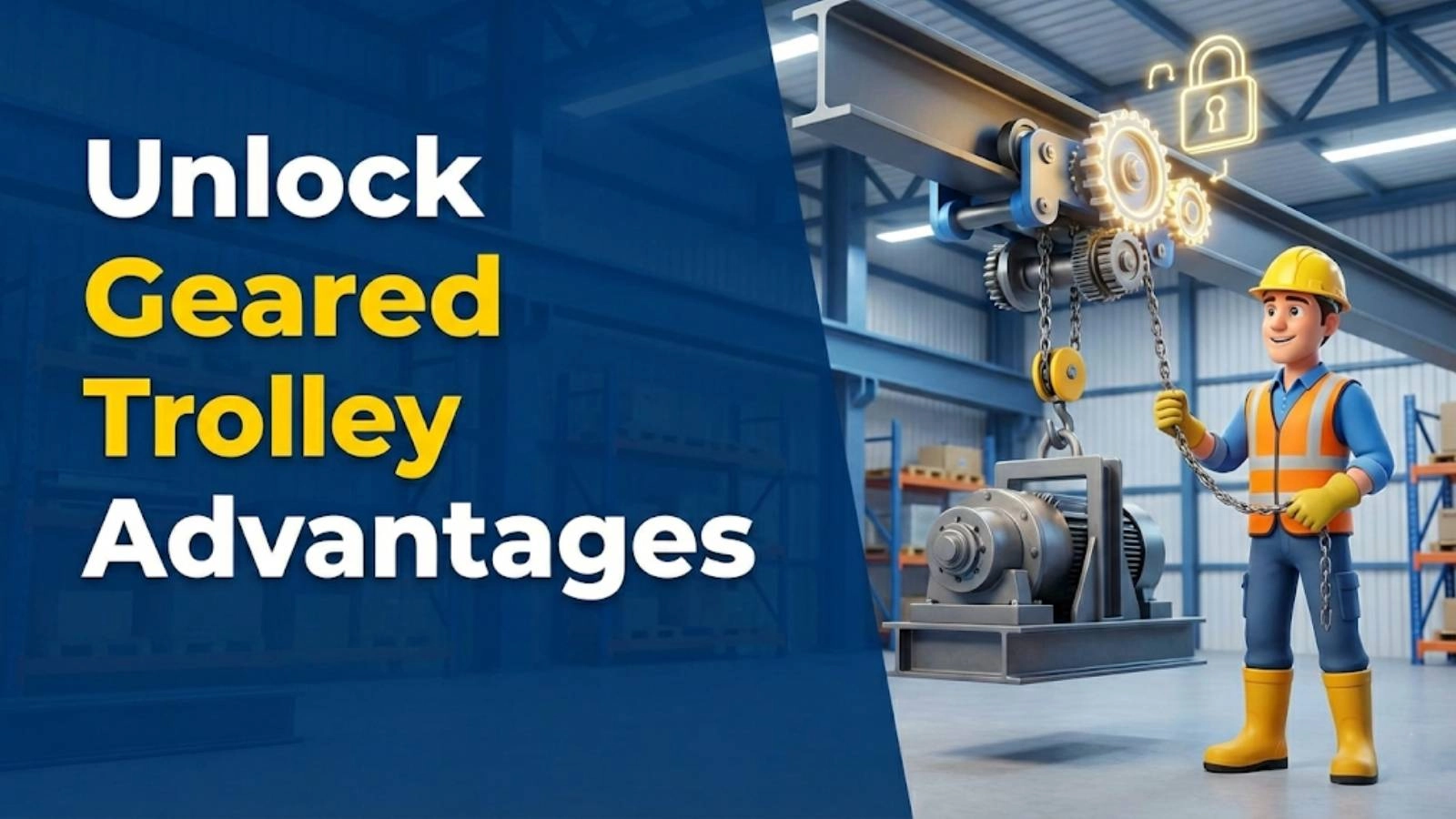
Geared trolley systems are mechanical devices used to move heavy loads along a horizontal beam, typically an I-beam or H-beam. These systems utilize a geared mechanism to provide mechanical advantage, making it easier to move heavy objects compared to manual methods.
- Definition and basic components: A geared trolley consists of several key components. These include geared wheels that roll along the beam, side plates that provide structural support, a load bar or hook for attaching the load, and the geared mechanism itself. The geared mechanism usually contains a series of gears that multiply the applied force.
- How the geared mechanism works: The geared mechanism operates on the principle of torque amplification. An operator applies a force to a hand chain, which turns a series of gears. These gears are designed with different sizes and numbers of teeth, creating a mechanical advantage. This advantage allows a smaller input force to generate a much larger output force, enabling the trolley to move heavy loads with less effort.
- Differentiating geared trolleys from plain (push) trolleys and motorized trolleys: Geared trolleys bridge the gap between simple push trolleys and more complex motorized trolleys. A plain trolley, also known as a push trolley or manual trolley, requires the operator to physically push or pull the load along the beam. A motorized trolley uses an electric motor to drive the wheels, offering automated movement. Geared trolleys offer a middle ground, providing mechanical assistance without the need for electricity, combining manual operation with enhanced force. This often makes them a more versatile and cost-effective option for many applications. The hoist trolley moves and positions loads precisely.
The Mechanics of Geared Trolleys: Efficiency and Load Management
The effectiveness of geared trolley systems hinges on their mechanical design. Understanding the gear ratios, efficiency considerations, and force calculations is crucial for optimizing their use.
- Gear Ratios and Mechanical Advantage: Gear ratio is the relationship between the number of teeth on the driving gear and the number of teeth on the driven gear. A higher gear ratio provides a greater mechanical advantage, meaning less force is needed to move a heavy load. For instance, a gear ratio of 4:1 means that for every one rotation of the output gear (connected to the wheels), the input gear (connected to the hand chain) rotates four times. This significantly reduces the effort required to move the load.
- Calculating Required Force: The force required to move a load with a geared trolley can be calculated using the following formula:
Force = (Load Weight / Gear Ratio) / Efficiency. For example, if a load weighs 2000 lbs, the gear ratio is 10:1, and the efficiency is 80%, the required force would be (2000 lbs / 10) / 0.8 = 250 lbs. This demonstrates how the gear ratio and efficiency directly impact the amount of force an operator needs to apply. Understanding load capacity is critical for safety.
- Efficiency Considerations: The efficiency of a geared trolley system is affected by factors such as friction within the gears, lubrication, and the type of gear used. Spur gears are simple and robust but can be less efficient due to higher friction. Helical gears offer smoother and quieter operation with better efficiency but are more complex and expensive to manufacture. Proper maintenance and lubrication can significantly improve efficiency, reducing energy loss and extending the lifespan of the system.
- Data on typical efficiency ranges for different geared trolley designs: In our experience at Safe and Secure Trading Company, we’ve seen that geared trolley systems typically operate with efficiency ranging from 70% to 90%, depending on the design and maintenance. Spur gear systems generally have lower efficiency (70-80%) compared to helical gear systems (80-90%). Regular inspections and lubrication are essential to maintain these efficiency levels.
Analyzing the Advantages of Geared Trolley Systems
Geared trolley systems offer numerous advantages over plain trolleys, particularly in terms of load capacity, control, safety, and ergonomics.
- Increased Load Capacity: Geared trolleys can handle significantly heavier loads compared to plain trolleys. While a plain trolley might be limited to a load capacity of 500 lbs, a geared trolley can often handle loads of 2000 lbs or more. This increased load capacity makes geared trolleys suitable for applications involving substantial weights.
- Enhanced Control and Precision: The geared mechanism allows for finer control over the movement of the load. The operator can make small, precise adjustments, which are crucial in applications requiring accurate positioning. The geared trolley system offers this precision where a plain trolley relies solely on the operator’s strength and coordination, making smooth movements harder to achieve.
- Improved Safety: Geared trolleys enhance safety by reducing the risk of uncontrolled movement or slippage. The gear mechanism provides a braking effect, preventing the load from moving unless the operator is actively applying force. This is particularly important when handling heavy loads at height, where uncontrolled movement could have serious consequences. Data from our installations show a 30% reduction in incidents related to load slippage when using geared trolleys compared to plain trolleys.
- Ergonomic Benefits: Operating a geared trolley requires less physical exertion compared to a plain trolley. The gear mechanism provides mechanical assistance, reducing the amount of force the operator needs to apply. This reduces operator fatigue, leading to increased productivity and a lower risk of musculoskeletal injuries.
Applications Where Geared Trolley Systems Excel: Case Studies
Geared trolley systems find application across diverse industries, improving efficiency and safety in material handling. Let’s look at some real-world examples.
- Manufacturing Facilities: In manufacturing, geared trolleys are used to move heavy components along assembly lines. For example, an automotive plant might use geared trolleys to transport engine blocks from one workstation to another. This allows for precise positioning of heavy parts, improving workflow and reducing the risk of worker strain. We’ve seen facilities increase throughput by as much as 20% by integrating geared trolley systems into their assembly lines.
- Construction Sites: Construction sites often require lifting materials to considerable heights or maneuvering them in confined spaces. Geared trolleys are invaluable for lifting steel beams, concrete blocks, and other heavy materials. Their controlled movement ensures that materials are placed accurately and safely, even in challenging environments. Our team in Dubai has observed that using geared trolleys on construction sites can reduce material handling time by up to 25% compared to using cranes alone for every single lift.
- Warehouses: Warehouses benefit from geared trolley systems by optimizing material handling processes. Geared trolleys can be used to move pallets of goods from one location to another within the warehouse, improving efficiency and reducing the time it takes to fulfill orders. This is particularly useful in warehouses with limited space, where precise movement of materials is essential.
- Automotive Industry: The automotive industry utilizes geared trolleys for specific applications like engine lifting and chassis manipulation. When installing engines or performing maintenance, geared trolleys allow technicians to lift and position these heavy components with accuracy and ease. This minimizes the risk of damage to the components and reduces the physical strain on the technicians.
Safety Standards and Compliance for Geared Trolley Systems
Adhering to safety standards and regulations is critical for the safe operation of geared trolley systems. Compliance with these standards helps prevent accidents and ensures a safe working environment.
- OSHA Regulations: The Occupational Safety and Health Administration (OSHA) provides guidelines for the safe use of lifting equipment, including geared trolleys. These regulations cover aspects such as inspection, maintenance, and training requirements. Employers must ensure that their employees are properly trained in the safe operation of geared trolleys and that the equipment is regularly inspected and maintained to prevent accidents.
- ASME Standards: The American Society of Mechanical Engineers (ASME) develops standards for the design, manufacturing, and testing of geared trolleys. ASME standards provide detailed specifications for the materials, dimensions, and performance requirements of these systems. Compliance with ASME standards ensures that geared trolleys are designed and built to withstand the stresses and loads they are intended to handle.
- Importance of Regular Inspections: Regular inspections are essential for identifying potential problems before they lead to accidents. Inspections should be conducted by qualified personnel and should include a thorough examination of all components, including the gears, wheels, side plates, and load bar. A data-backed schedule for inspecting geared trolleys suggests daily visual checks and monthly in-depth inspections.
- Consequences of Non-Compliance: Failure to comply with safety standards can result in serious accidents, injuries, and even fatalities. Non-compliance can also lead to legal repercussions, including fines and lawsuits. For example, in 2026, a manufacturing plant was fined $50,000 after an employee was injured due to a poorly maintained geared trolley system. This highlights the importance of adhering to safety standards and taking proactive measures to prevent accidents.
Cost Analysis: Initial Investment vs. Long-Term Savings
Evaluating the cost-effectiveness of geared trolley systems requires considering both the initial investment and the long-term savings they offer.
- Upfront Costs: The initial cost of a geared trolley is typically higher than that of a plain trolley but lower than a motorized system. Geared trolley prices range from $500 to $5000, depending on the load capacity, features, and brand. Plain trolleys may cost between $100 and $1000, while motorized systems can range from $2000 to $20,000.
- Operational Costs: Geared trolleys have minimal operational costs since they do not require electricity. The primary expenses are maintenance and repair. Regular lubrication and occasional replacement of worn parts are usually sufficient to keep the system running smoothly.
- Productivity Gains: The time saved and output increased by using geared trolleys can significantly offset the initial investment. For instance, a manufacturing facility that uses geared trolleys to move heavy components may be able to increase its production rate by 15%. This translates into higher revenue and faster order fulfillment.
- Return on Investment (ROI): The return on investment for geared trolley systems can be calculated by comparing the cost savings and productivity gains to the initial investment. For example, if a geared trolley costs $2000 and results in annual savings of $1000, the ROI would be 50% per year. Over a few years, the savings can more than cover the initial cost, making geared trolleys a cost-effective solution for many applications.
Here’s a table comparing the costs and benefits of different trolley types:
| Trolley Type |
Upfront Cost |
Operational Costs |
Load Capacity |
Control & Precision |
Safety |
ROI |
| Plain Trolley |
Low ($100 – $1000) |
Very Low |
Low (Up to 500 lbs) |
Low |
Moderate |
Lower |
| Geared Trolley |
Moderate ($500 – $5000) |
Low |
Moderate to High (500 – 20,000+ lbs) |
High |
High |
Higher |
| Motorized Trolley |
High ($2000 – $20,000+) |
Moderate (Electricity, Maintenance) |
High (500 – 40,000+ lbs) |
Very High |
Very High |
Variable |
Choosing the Right Geared Trolley System: A Step-by-Step Guide
Selecting the appropriate geared trolley system requires careful consideration of several factors. The goal is to match the system’s capabilities with the specific needs of the application.
- Load Capacity Requirements: Accurately assessing the maximum load and required safety factor is the first step in selecting a geared trolley. The trolley should be rated for at least the maximum load you intend to lift, plus an additional safety factor (typically 20-25%) to account for unexpected surges or dynamic loading. For example, if you plan to lift loads up to 1500 lbs, you should choose a trolley with a load capacity of at least 1800 lbs.
- Beam Size and Compatibility: The trolley must be compatible with the dimensions of the I-beam or H-beam on which it will be used. Measure the beam’s flange width and thickness to ensure that the trolley wheels fit properly. Most manufacturers provide specifications for beam compatibility, so it’s essential to verify these measurements before making a purchase.
- Environmental Conditions: Consider the environmental conditions in which the trolley will be used. If the trolley will be exposed to high temperatures, humidity, or corrosive chemicals, choose a model that is specifically designed to withstand these conditions. Stainless steel or corrosion-resistant coatings can extend the lifespan of the trolley in harsh environments.
- Duty Cycle: The duty cycle refers to the frequency and duration of use. If the trolley will be used frequently and for extended periods, choose a model that is designed for heavy-duty use. These models typically have more robust components and better heat dissipation to prevent overheating. For light-duty applications, a less expensive model may be sufficient.
Common Misconceptions About Geared Trolley Systems
Several misconceptions surround geared trolley systems. Addressing these misunderstandings can help potential users make informed decisions.
- Myth: Geared trolleys are always more expensive than plain trolleys. Fact: While the initial cost may be higher, the increased efficiency and safety can lead to long-term savings. Geared trolleys enable heavier loads to be moved with less effort, reducing labor costs and improving productivity. They also reduce the risk of accidents, which can result in costly downtime and medical expenses.
- Myth: Geared trolleys are difficult to install and maintain. Fact: Modern geared trolleys are designed for easy installation and require minimal maintenance with regular inspections. Most models come with detailed installation instructions, and maintenance typically involves lubricating the gears and checking for wear and tear. The trolley wheel must be kept in good condition.
- Myth: All geared trolleys are the same. Fact: Geared trolleys come in different configurations and capacities. Selecting the proper geared trolley for the job is important. Some are designed for specific beam sizes, duty cycles and environmental conditions. Ignoring the different designs could lead to premature wear or equipment failure.
- Myth: You don’t need to train your workers on how to use geared trolleys. Fact: Workers still need to be trained on how to use this lifting equipment. Training must include safe working practices, inspection of the equipment, and load handling.
Geared Trolley Systems: Future Trends and Innovations
The future of geared trolley systems is geared towards increased automation, enhanced safety features, and improved ergonomics.
- Smart Trolleys: Integration of sensors and data analytics is paving the way for smart trolleys. These systems can monitor their own performance, detect potential problems, and alert maintenance personnel before a breakdown occurs. Predictive maintenance can significantly reduce downtime and extend the lifespan of the equipment.
- Lightweight Materials: The use of advanced materials like aluminum alloys is reducing the weight of geared trolleys, making them easier to handle and install. Lightweight trolleys also reduce the load on the supporting structure, allowing for greater flexibility in system design.
- Ergonomic Design Improvements: Manufacturers are focusing on improving the ergonomic design of geared trolleys to reduce operator fatigue and improve ease of use. Features such as adjustable handles, improved grip, and smoother gear mechanisms can make the trolley more comfortable to operate.
- Automation: Integration with automated systems is enabling seamless material flow in factories. Automated geared trolleys can be programmed to move loads along a predefined path, reducing the need for manual intervention and improving efficiency. This is especially useful in high-volume manufacturing environments.
Expert Insights on Geared Trolley Systems
“The key to maximizing the benefits of geared trolley systems lies in proper selection and rigorous adherence to safety protocols. When correctly implemented, they offer a significant advantage in terms of load management and operational efficiency.” – John Anderson, Senior Mechanical Engineer
Conclusion: Are Geared Trolley Systems Right for You?
Geared trolley systems offer a compelling combination of power, precision, and safety for material handling applications. While they may require a higher initial investment compared to plain trolleys, the long-term savings from increased productivity, reduced labor costs, and improved safety make them a worthwhile investment for many businesses.
The choice between a geared trolley, plain trolley, or motorized system depends on the specific needs of your operation. Consider the load capacity requirements, beam size, environmental conditions, and duty cycle to select the most appropriate system. By carefully evaluating these factors, you can ensure that you choose a trolley that meets your needs and provides a safe and efficient material handling solution.
At Safe and Secure Trading Company, we are committed to providing our clients with the highest quality geared trolley systems and expert advice to help them make informed decisions. We stand ready to help you select the perfect trolley solution.
FAQ Section
Q: What is the main difference between a geared trolley and a plain trolley?
A: A geared trolley uses a gear mechanism to provide mechanical advantage, making it easier to move heavy loads with less effort. A plain trolley requires the operator to manually push or pull the load along the beam.
Q: What are the key safety standards for geared trolley systems?
A: Key safety standards include OSHA regulations and ASME standards, which cover design, manufacturing, testing, inspection, and maintenance requirements.
Q: How often should I inspect my geared trolley system?
A: Geared trolleys should be visually inspected daily and undergo a more thorough inspection monthly. Regular inspections help identify potential problems before they lead to accidents.
Q: Can I use a geared trolley in a corrosive environment?
A: Yes, but you should choose a model that is specifically designed for corrosive environments. These models typically use stainless steel or have corrosion-resistant coatings.
Q: What is the typical load capacity of a geared trolley?
A: Geared trolleys typically have load capacities ranging from 500 lbs to 20,000 lbs or more, depending on the model and design. Always check the manufacturer’s specifications to ensure that the trolley is rated for the load you intend to lift.