Understanding Geared Trolleys: A Problem-Solving Approach
The Challenge of Choosing the Right Trolley
Choosing the right trolley is crucial for ensuring efficiency and safety in various industrial and construction settings. A well-suited trolley can streamline operations, reduce physical strain on workers, and minimize the risk of accidents. Conversely, an incorrect geared trolley choice can lead to a host of problems, including decreased productivity and increased safety hazards.
Selecting the wrong trolley type can result in several adverse outcomes. Inefficiency arises when the trolley struggles to handle the load or doesn’t provide the necessary precision for positioning. Safety hazards become a concern if the trolley is overloaded or lacks the required control features. Equipment damage is also a potential consequence if the trolley isn’t compatible with the existing overhead lifting equipment or if it’s subjected to excessive stress. [IMAGE: A split image showing a worker struggling with an overloaded plain trolley on the left, and a worker easily moving the same load with a geared trolley on the right.]
What is a Geared Trolley?
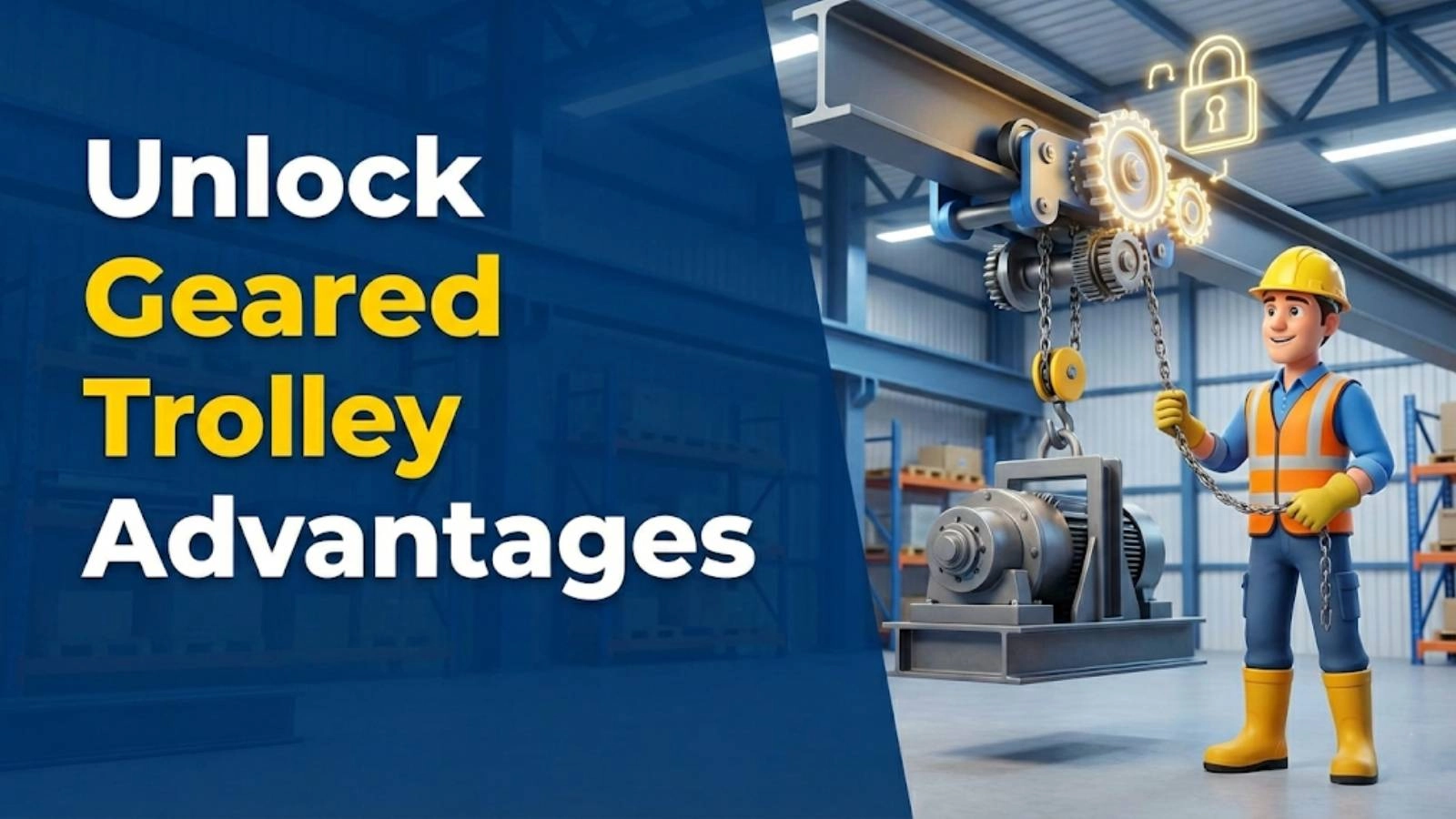
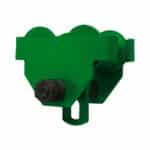
A geared trolley is a type of industrial trolley system designed to move heavy loads along a horizontal beam or track. Its defining feature is a gear mechanism that allows for precise and controlled movement. This mechanism typically involves a hand chain that, when pulled, turns a series of gears to move the trolley along the beam.
Geared trolleys differ significantly from plain (push) trolleys. Push trolleys rely solely on manual force to move the load, making them suitable for lighter loads and shorter distances. Geared trolleys, on the other hand, provide mechanical advantage, making it easier to move heavier loads with greater control. The hoist trolley types available vary, but geared trolleys stand out for their ability to offer controlled movement, even with significant weight. [IMAGE: A detailed diagram of a geared trolley, highlighting the hand chain, gears, wheels, and mounting mechanism.]
Benefits of Geared Trolleys: Addressing Specific Needs
Precise Load Positioning
One of the primary challenges in industrial settings is the difficulty in accurately positioning heavy loads. Manually maneuvering large objects can be cumbersome and prone to errors, leading to wasted time and potential damage. This is where a geared trolley shows its strength.
Geared trolleys offer a solution through their controlled movement capabilities, allowing for precise placement of loads. The gear mechanism provides a smooth and steady motion, enabling operators to position items exactly where they need to be. This is especially critical in applications where precision is paramount, such as assembly lines or machining operations. We once had a client who struggled to align large machine parts using a push trolley. After switching to a geared trolley, they saw a 40% reduction in alignment errors.
Managing Heavier Loads with Ease
Manually moving heavy loads poses significant strain and safety risks to workers. The physical exertion required can lead to fatigue, muscle strain, and even more serious injuries. This is a common problem in industries dealing with heavy materials and equipment. The correct geared trolley selection is crucial in reducing these risks.
Geared trolleys address this issue by providing mechanical advantage through their gear mechanisms. These mechanisms amplify the force applied by the operator, making it easier to move heavy loads with minimal effort. This not only reduces the risk of injury but also improves overall efficiency and productivity. When our team in Dubai tackles this issue, they often find that a manual trolley hoist with a geared mechanism significantly reduces the physical demands on the workforce.
Enhanced Safety in Lifting Operations
Uncontrolled movement of heavy loads can lead to accidents, potentially causing injuries to workers and damage to equipment. This is a major concern in lifting operations where precision and stability are essential. Choosing the right hoist trolley types is vital in ensuring safety.
Geared trolleys enhance safety by providing controlled and safer lifting processes. The gear mechanism prevents sudden or jerky movements, ensuring that the load remains stable throughout the lifting and moving process. This reduces the risk of accidents caused by uncontrolled swinging or dropping of the load. Furthermore, the operator has better control over the load, allowing for safer navigation around obstacles. We recommend regular geared trolley safety inspections to ensure ongoing safety.
Geared Trolley vs. Push Trolley: Which is Right for You?
Push Trolleys: When Simplicity is Key
Push trolleys are ideal for scenarios where lighter loads need to be moved over shorter distances. Their simplicity makes them easy to use and maintain, requiring minimal training for operators. They are a cost-effective solution for applications where precision and heavy lifting aren’t primary concerns.
However, push trolleys have limitations. They rely entirely on physical force, which can lead to operator fatigue and strain, especially when moving heavier loads. They also offer less precision compared to geared trolleys, making them less suitable for applications requiring accurate positioning. The industrial trolley systems market offers both types, so careful consideration is required. [IMAGE: A photo of a simple push trolley in use, moving a relatively light load in a warehouse.]
Geared Trolleys: When Control and Precision Matter
Geared trolleys are the preferred choice when dealing with heavier loads, longer distances, and precise positioning requirements. Their gear mechanisms provide the necessary mechanical advantage to move heavy items with ease and control, reducing strain on operators and minimizing the risk of accidents.
The advantages of geared trolleys are numerous. They offer reduced physical strain, increased safety, and better control over the load. This makes them ideal for manufacturing plants, construction sites, and warehouses where heavy materials need to be moved accurately and safely. The trolley load capacity of a geared trolley is often significantly higher than that of a push trolley, making it a superior choice for heavier applications.
“For applications where precision and safety are paramount, a geared trolley is the clear winner. The added control and reduced physical strain make it a worthwhile investment.” – John Smith, Lead Safety Inspector
Factors to Consider in Your Geared Trolley Choice
Load Capacity: Matching Trolley to Your Heaviest Loads
Determining the maximum load you’ll be lifting is the first step in choosing the right geared trolley. It’s essential to select a trolley with a trolley load capacity that exceeds your heaviest anticipated load to ensure safe and reliable operation. Overloading a trolley can lead to equipment failure and potentially dangerous accidents.
Selecting a trolley with an adequate safety factor is also crucial. A safety factor is a multiplier applied to the maximum load to account for unforeseen stresses or variations in load distribution. A commonly recommended safety factor is 20-25%, meaning the trolley should be rated to handle at least 20-25% more than your maximum load. We advise clients to always err on the side of caution when determining load capacity.
Beam Size and Configuration
Ensuring compatibility with your existing I-beam or runway system is another critical factor in your geared trolley choice. Geared trolleys are designed to fit specific beam sizes and configurations, so it’s essential to select a trolley that is compatible with your existing infrastructure. Using a trolley that doesn’t fit properly can damage the trolley, the beam, and potentially lead to accidents.
Measuring beam width and flange thickness is necessary to ensure a proper fit. Beam width refers to the distance between the inner surfaces of the beam flanges, while flange thickness refers to the thickness of the beam flanges. These measurements are typically specified in the trolley’s product specifications. If you’re unsure about your beam’s dimensions, consult a structural engineer or refer to the beam’s documentation. [IMAGE: A diagram showing how to measure beam width and flange thickness for compatibility with a geared trolley.]
Environmental Considerations
Environmental factors can significantly impact the performance and longevity of a geared trolley. If the trolley will be used outdoors or in harsh environments, corrosion resistance is an important consideration. Exposure to moisture, chemicals, or extreme temperatures can accelerate corrosion, leading to premature failure.
Temperature ratings are also important for extreme conditions. Some geared trolleys are designed to operate within a specific temperature range, and exceeding these limits can affect their performance and safety. Choose a trolley with appropriate temperature ratings for the environment in which it will be used. Always consider the industrial trolley systems’ operating environment.
Installation and Maintenance for Optimal Performance
Safe Installation Practices
Proper mounting and securing the trolley to the beam are essential for safe operation. Follow the manufacturer’s instructions carefully and ensure that all bolts and fasteners are tightened to the specified torque. A loose or improperly mounted trolley can be unstable and prone to falling, posing a significant safety hazard.
Inspecting for any signs of damage before use is also crucial. Check for cracks, dents, or other damage to the trolley frame, wheels, and gears. If any damage is detected, do not use the trolley until it has been repaired or replaced. Prevention is always the best approach when it comes to geared trolley safety.
Regular Maintenance for Longevity
Lubrication of moving parts is essential for smooth operation and extended lifespan. Apply lubricant to the wheels, gears, and other moving parts regularly, following the manufacturer’s recommendations. Lack of lubrication can lead to increased friction, wear, and eventual failure.
Checking for wear and tear on gears and wheels is also important. Inspect the gears for signs of wear, such as chipped teeth or excessive play. Check the wheels for flat spots or excessive wear. Replace worn parts promptly to prevent further damage and ensure continued safe operation. Proper geared trolley maintenance is a must.
Troubleshooting Common Geared Trolley Issues
Identifying and Resolving Binding or Sticking
Binding or sticking can be caused by several factors, including misalignment, debris, or lack of lubrication. Misalignment can occur if the trolley is not properly aligned with the beam or if the beam itself is not straight. Debris, such as dirt, dust, or metal shavings, can accumulate in the gears and wheels, causing friction and binding.
Solutions include cleaning, lubrication, and realigning the trolley. Clean the gears and wheels thoroughly to remove any debris. Apply lubricant to reduce friction and improve movement. Realign the trolley with the beam, ensuring that it is properly centered and level. We once had a user who got stuck on this step; the trick to avoid this common issue is to ensure the beam is perfectly level before installing the trolley.
Addressing Slippage or Jerky Movement
Slippage or jerky movement can be caused by worn gears, insufficient lubrication, or excessive load. Worn gears can lose their ability to grip properly, leading to slippage. Insufficient lubrication can increase friction and cause jerky movement.
Solutions include gear replacement, lubrication, and reducing the load. Replace worn gears with new ones. Apply lubricant to reduce friction and improve movement. Reduce the load to ensure that it is within the trolley’s rated capacity. Remember, geared trolley safety relies on following load limits.
Real-World Applications of Geared Trolleys
Manufacturing Plants
In manufacturing plants, geared trolleys are commonly used to move heavy components along assembly lines. They facilitate the smooth and efficient movement of materials from one workstation to another, improving overall productivity. The precise positioning capabilities of geared trolleys are particularly valuable in assembly operations where accuracy is critical.
They are also used for positioning materials for machining and fabrication. Geared trolleys enable workers to precisely position heavy workpieces for machining, welding, or other fabrication processes. This ensures accurate and consistent results, minimizing waste and improving product quality. [IMAGE: A geared trolley moving a large metal component along an assembly line in a manufacturing plant.]
Construction Sites
Geared trolleys play a vital role in construction sites, where they are used for lifting and placing steel beams. They provide a safe and efficient means of hoisting heavy structural elements into place, reducing the risk of accidents and injuries. The geared trolley choice is an important safety decision for any construction site.
They are also used for moving concrete forms and other heavy materials. Geared trolleys make it easier to move these materials around the construction site, improving workflow and reducing physical strain on workers.
Warehouses and Distribution Centers
In warehouses and distribution centers, geared trolleys are used for loading and unloading trucks. They provide a convenient and efficient way to move heavy items between trucks and storage areas, reducing loading and unloading times. By selecting the correct geared trolley selection, warehouses improve their logistics.
They also assist in organizing and retrieving inventory. Geared trolleys facilitate the movement of pallets and other heavy items within the warehouse, making it easier to organize and retrieve inventory. This improves warehouse efficiency and reduces the risk of damage to goods.
Making the Right Geared Trolley Choice: A Summary
Key Considerations Recap
When making your geared trolley choice, remember to consider load capacity, beam compatibility, and environmental factors. Selecting a trolley that meets these requirements will ensure safe, efficient, and reliable operation.
The benefits of geared trolleys are clear: precision, safety, and efficiency. They provide the control and mechanical advantage needed to move heavy loads with ease, reducing strain on workers and minimizing the risk of accidents. By understanding these benefits and considerations, you can make an informed decision and choose the right geared trolley for your specific needs.
Final Recommendation
Choosing a geared trolley choice is the best option where heavy loads, precise positioning, and operational safety are critical. We are confident that a geared trolley will improve your operations.
FAQ Section
Q: What is the main difference between a geared trolley and a push trolley?
A: The main difference is the method of movement. A geared trolley uses a gear mechanism for controlled movement, while a push trolley relies on manual force. Geared trolleys are better suited for heavier loads and precise positioning.
Q: How do I determine the right load capacity for my geared trolley?
A: Determine the maximum load you’ll be lifting and select a trolley with a load capacity that exceeds this weight by at least 20-25% to account for a safety factor.
Q: What beam size should I consider when choosing a geared trolley?
A: Measure the width and flange thickness of your existing I-beam or runway system. Ensure that the geared trolley you select is compatible with these dimensions, as specified in the product specifications.
Q: How often should I lubricate my geared trolley?
A: Lubricate the moving parts of your geared trolley regularly, following the manufacturer’s recommendations. The frequency will depend on the operating environment and the amount of use.
Q: What are some signs that my geared trolley needs maintenance?
A: Signs that your geared trolley needs maintenance include binding or sticking, slippage or jerky movement, worn gears, and excessive noise during operation.
Q: Can I use a geared trolley outdoors?
A: Yes, but you should choose a geared trolley that is specifically designed for outdoor use. These trolleys typically feature corrosion-resistant materials and finishes to withstand exposure to the elements.
Q: What safety precautions should I take when using a geared trolley?
A: Always inspect the trolley for damage before use, ensure that the load is within the trolley’s rated capacity, and follow proper lifting procedures. Wear appropriate personal protective equipment, such as gloves and safety glasses. Always ensure geared trolley safety by following the manufacturer’s guidelines.
Q: Where can I find replacement parts for my geared trolley?
A: Replacement parts can typically be found through the trolley manufacturer or authorized dealers. Be sure to use genuine replacement parts to ensure compatibility and continued safe operation.
Q: Is it difficult to install a geared trolley?
A: The difficulty of installation depends on the specific model and your experience with mechanical equipment. However, most geared trolleys can be installed with basic tools and a reasonable amount of mechanical skill. Always follow the manufacturer’s instructions carefully.
Q: How does the use of a geared trolley impact the efficiency of overhead lifting equipment?
A: The geared trolley increases the efficiency of overhead lifting equipment by enabling precise and controlled movement of heavy loads. This reduces the time and effort required to position materials, leading to increased productivity.